欢迎访问《中国农学通报》,

中国农学通报 ›› 2025, Vol. 41 ›› Issue (35): 110-121.doi: 10.11924/j.issn.1000-6850.casb2025-0255
曾婷1( ), 胡晋豪1,2, 龚颖婷1, 姚建武1, 申健1, 王荣辉1, 李盟军1()
收稿日期:2025-03-31
修回日期:2025-08-28
出版日期:2025-12-11
发布日期:2025-12-11
通讯作者:
作者简介:曾婷,女,1999年出生,广东佛山人,研究实习员,主要从事农业面源污染防控与温室气体排放研究。通信地址:510640 广东省广州市天河区金颖路66号,E-mail:522483255@qq.com。
基金资助:
ZENG Ting1(), HU Jinhao1,2, GONG Yingting1, YAO Jianwu1, SHEN Jian1, WANG Ronghui1, LI Mengjun1()
Received:2025-03-31
Revised:2025-08-28
Published:2025-12-11
Online:2025-12-11
摘要:
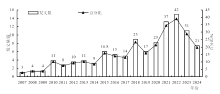
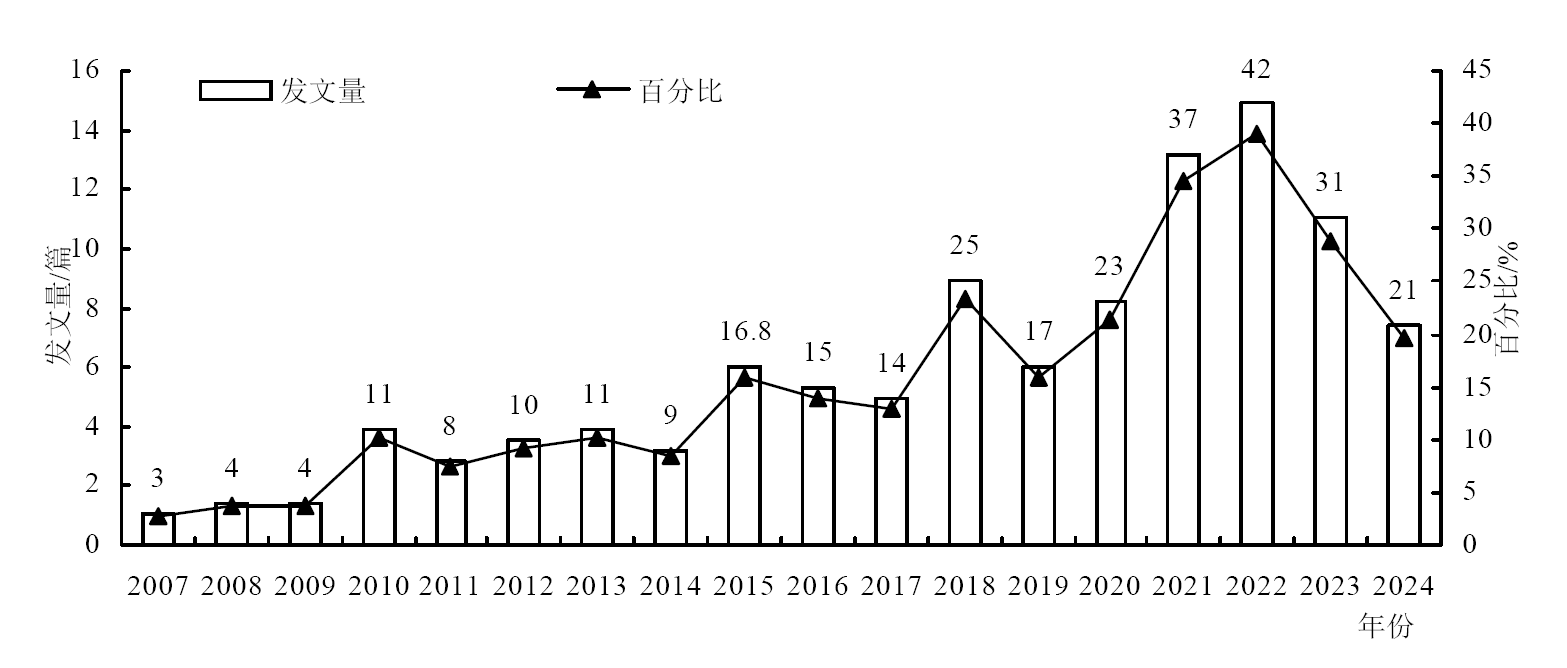
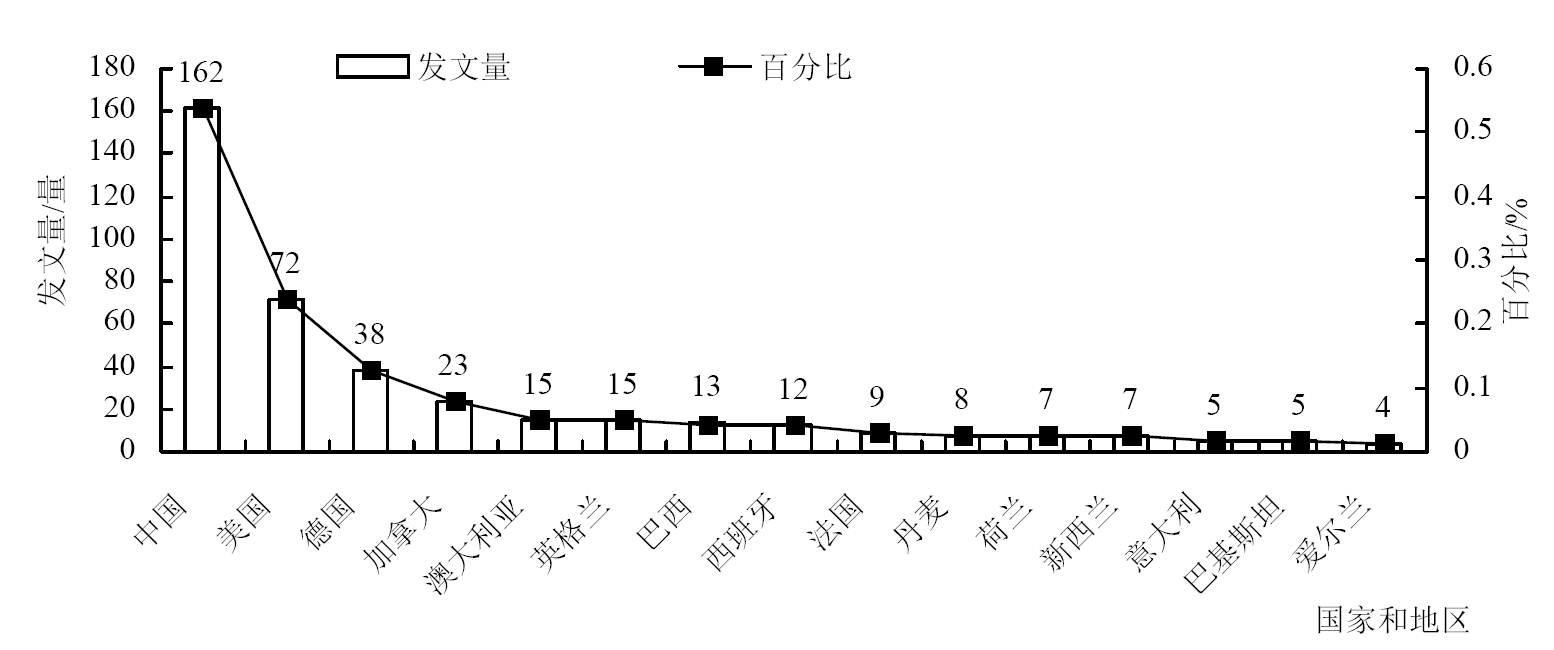
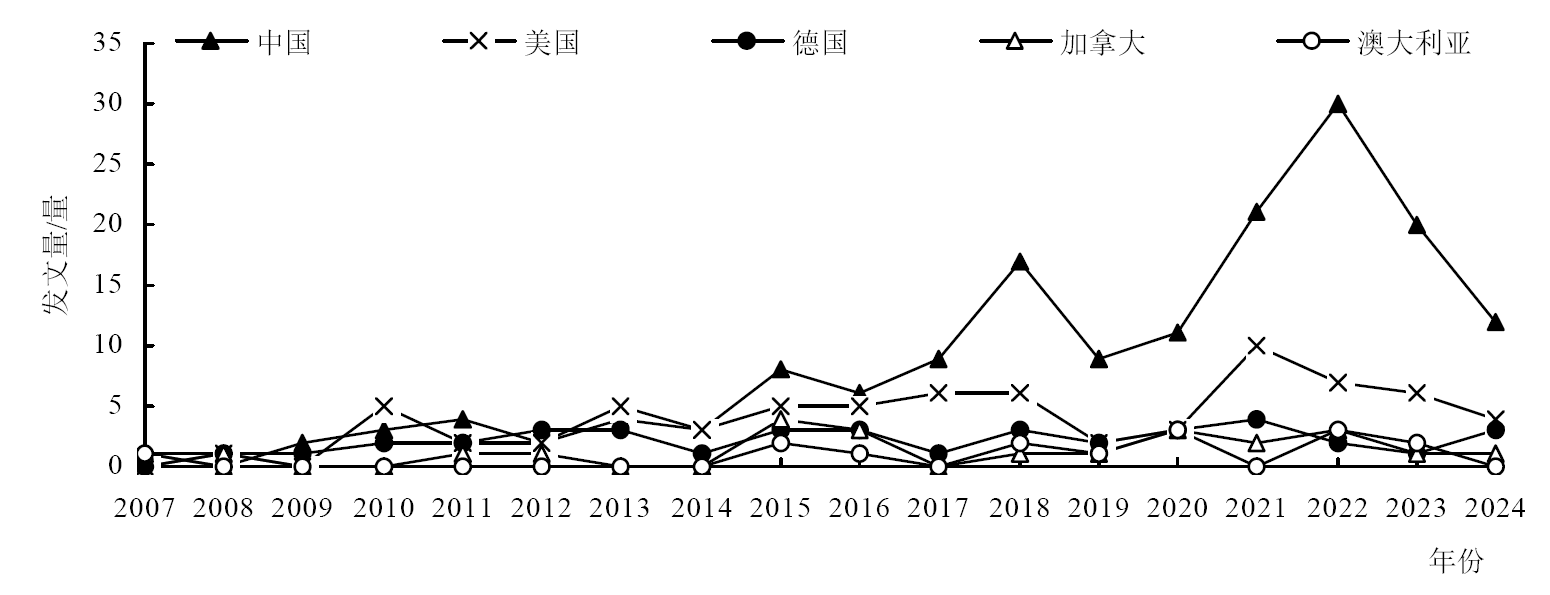
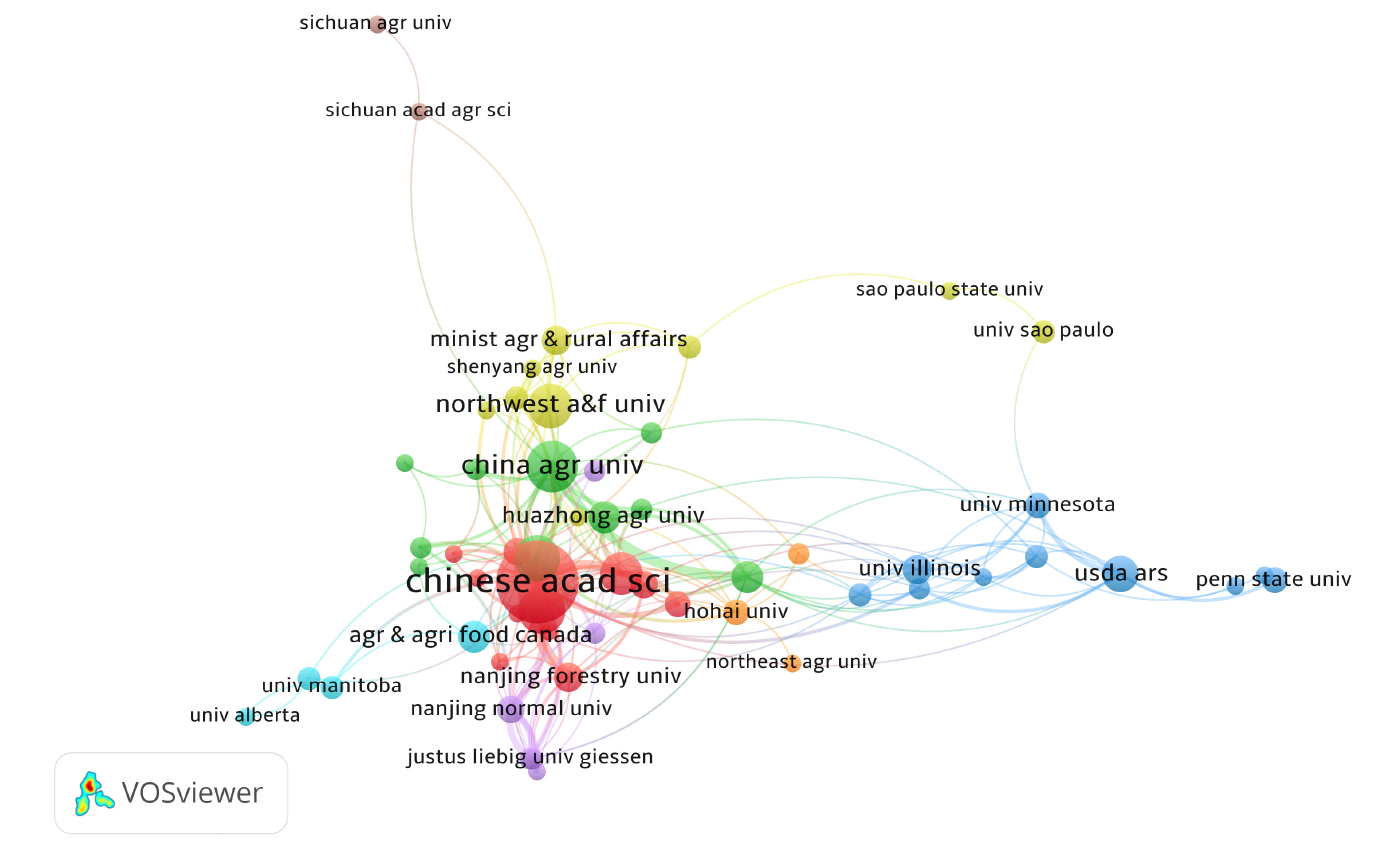
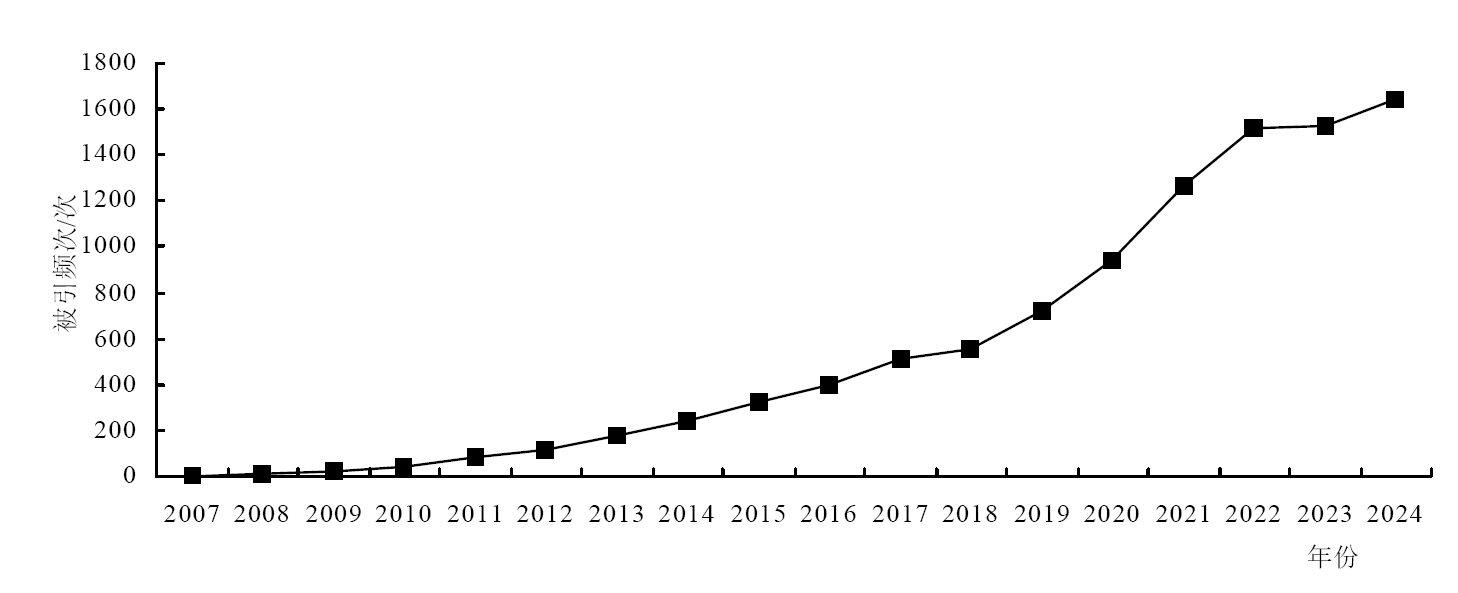
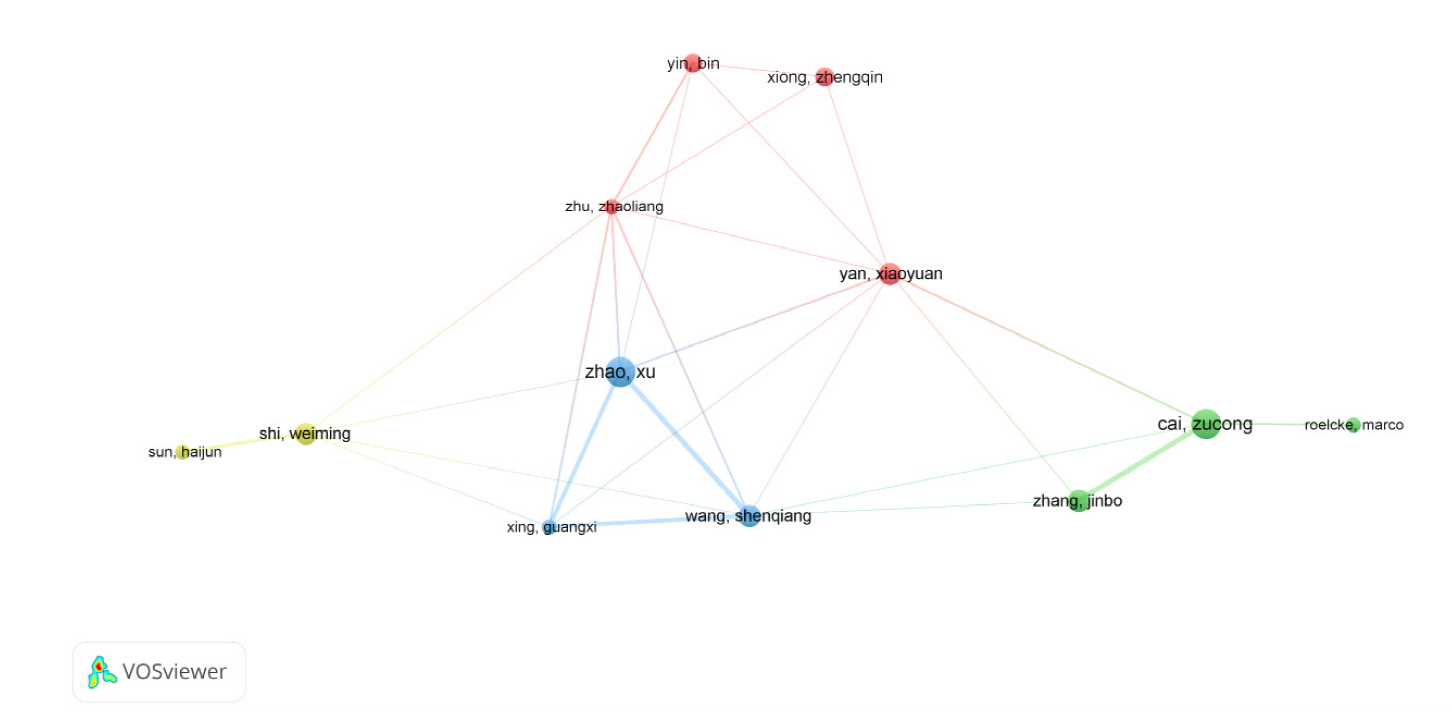
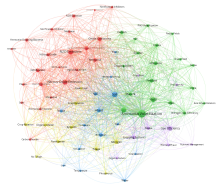
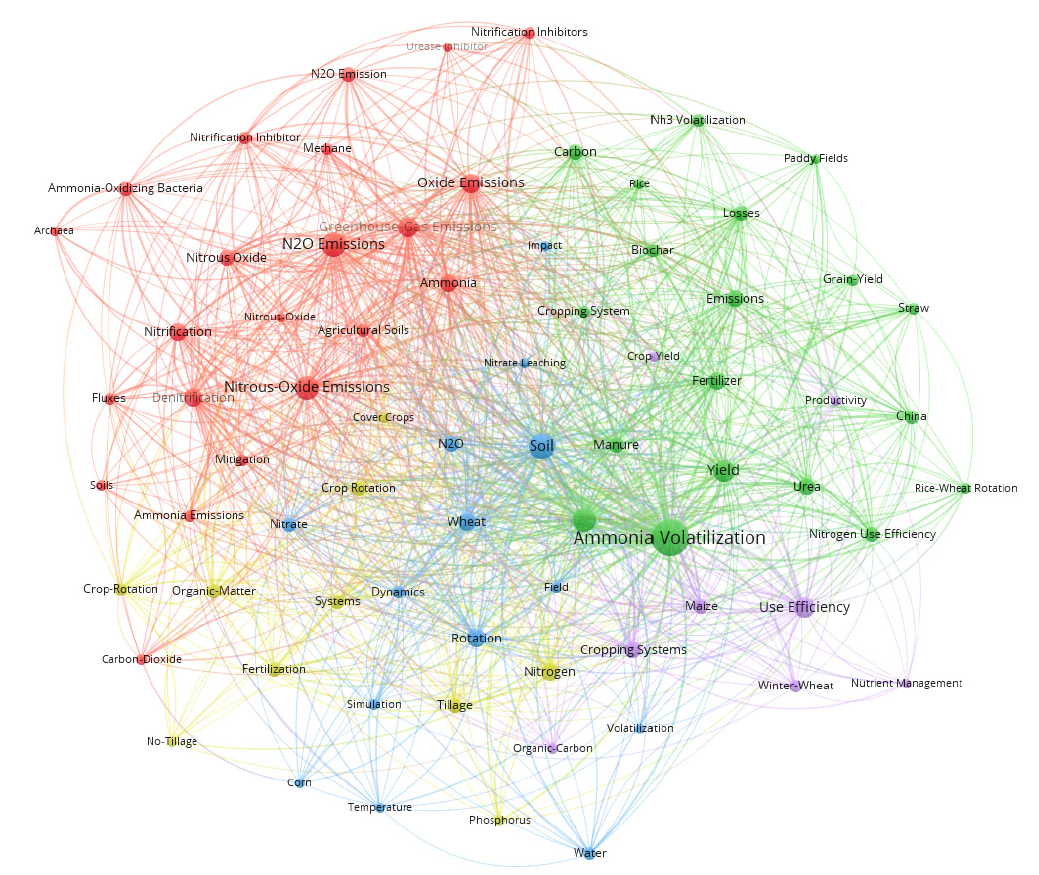
农业氨排放不仅关乎氮肥利用效率(影响农业生产效益),也是大气环境污染物及温室气体间接生成的重要来源,而稻麦轮作模式是影响农田氨排放的典型轮作系统。本研究以Web of Science数据库为基础,运用文献计量法,客观分析2007—2024年轮作模式影响氨排放的研究现状及趋势,为相关学者提供科学的数据参考。结果表明:(1)该领域学术研究历经起步(2007—2012年)、平稳波动(2013—2017年)、快速增长(2018—2022年)和回落(2023—2024年)四阶段,2021—2022年发文量达到高峰;(2)研究机构与高产作者均以中国为主(中科院南京土壤所5人入选高产作者),国内合作网络紧密,但国际合作集中于中-美-欧局部区域,需深化全球协作;(3)文献被引频次逐年上升,2018—2022年快速增长后增速放缓,高被引论文来自中、美、德等12个国家;(4)关键词共现分析发现,研究聚焦氨挥发、N2O排放、土壤理化性质、氮肥利用效率等主题,涉及农学、环境科学和生态学等多学科交叉融合。基于文献计量结果,当前研究存在3个方面关键问题:国际合作网络局限、长期定位试验数据不足、新兴技术应用率低。未来需加强跨国机构协作,推动长期定位试验与物联网、机器学习技术结合,促进多学科协同创新,从而为全球农业氨污染治理提供理论支撑和实践指导。
曾婷, 胡晋豪, 龚颖婷, 姚建武, 申健, 王荣辉, 李盟军. 基于文献计量法的轮作影响氨排放研究进展及热点分析[J]. 中国农学通报, 2025, 41(35): 110-121.
ZENG Ting, HU Jinhao, GONG Yingting, YAO Jianwu, SHEN Jian, WANG Ronghui, LI Mengjun. Research Progress and Hotspot Analysis of Impact of Crop Rotation on Ammonia Emissions Based on Bibliometric Methods[J]. Chinese Agricultural Science Bulletin, 2025, 41(35): 110-121.
| 排名 | 研究机构(英文) | 研究机构(中文) | 国家 | 发文量/篇 | 占比/% |
|---|---|---|---|---|---|
| 1 | Chinese Academy of Sciences | 中国科学院 | 中国 | 64 | 21.19 |
| 2 | Nanjing Institute of Soil Science, CAS | 中国科学院南京土壤研究所 | 中国 | 32 | 10.60 |
| 3 | Ministry of Agriculture Rural Affairs | 中国农业农村部 | 中国 | 29 | 9.60 |
| 4 | China Agricultural University | 中国农业大学 | 中国 | 23 | 7.62 |
| 5 | Chinese Academy of Agricultural Sciences | 中国农业科学院 | 中国 | 23 | 7.62 |
| 6 | University of Chinese Academy of Sciences | 中国科学院大学 | 中国 | 22 | 7.29 |
| 7 | United States Department of Agriculture | 美国农业部 | 美国 | 20 | 6.62 |
| 8 | Northwest A&F University | 西北农林科技大学 | 中国 | 18 | 5.96 |
| 9 | Nanjing Agricultural University | 南京农业大学 | 中国 | 16 | 5.30 |
| 10 | Institute of Agricultural Resources Regional Planning, CAAS | 中国农业科学院农业资源与农业区划研究所 | 中国 | 14 | 4.64 |
| 排名 | 研究机构(英文) | 研究机构(中文) | 国家 | 发文量/篇 | 占比/% |
|---|---|---|---|---|---|
| 1 | Chinese Academy of Sciences | 中国科学院 | 中国 | 64 | 21.19 |
| 2 | Nanjing Institute of Soil Science, CAS | 中国科学院南京土壤研究所 | 中国 | 32 | 10.60 |
| 3 | Ministry of Agriculture Rural Affairs | 中国农业农村部 | 中国 | 29 | 9.60 |
| 4 | China Agricultural University | 中国农业大学 | 中国 | 23 | 7.62 |
| 5 | Chinese Academy of Agricultural Sciences | 中国农业科学院 | 中国 | 23 | 7.62 |
| 6 | University of Chinese Academy of Sciences | 中国科学院大学 | 中国 | 22 | 7.29 |
| 7 | United States Department of Agriculture | 美国农业部 | 美国 | 20 | 6.62 |
| 8 | Northwest A&F University | 西北农林科技大学 | 中国 | 18 | 5.96 |
| 9 | Nanjing Agricultural University | 南京农业大学 | 中国 | 16 | 5.30 |
| 10 | Institute of Agricultural Resources Regional Planning, CAAS | 中国农业科学院农业资源与农业区划研究所 | 中国 | 14 | 4.64 |
| 排名 | 研究机构或高校 | 发文量/篇 | 占比/% |
|---|---|---|---|
| 1 | 中国科学院 | 64 | 39.51 |
| 2 | 中国科学院南京土壤研究所 | 32 | 19.75 |
| 3 | 农业农村部 | 29 | 17.90 |
| 4 | 中国农业大学 | 23 | 14.20 |
| 5 | 中国农业科学院 | 23 | 14.20 |
| 6 | 中国科学院大学 | 22 | 13.58 |
| 7 | 西北农林科技大学 | 18 | 11.11 |
| 8 | 南京农业大学 | 16 | 9.88 |
| 9 | 中国农业科学院农业资源与农业区划研究所 | 14 | 8.64 |
| 10 | 华中农业大学 | 9 | 5.56 |
| 排名 | 研究机构或高校 | 发文量/篇 | 占比/% |
|---|---|---|---|
| 1 | 中国科学院 | 64 | 39.51 |
| 2 | 中国科学院南京土壤研究所 | 32 | 19.75 |
| 3 | 农业农村部 | 29 | 17.90 |
| 4 | 中国农业大学 | 23 | 14.20 |
| 5 | 中国农业科学院 | 23 | 14.20 |
| 6 | 中国科学院大学 | 22 | 13.58 |
| 7 | 西北农林科技大学 | 18 | 11.11 |
| 8 | 南京农业大学 | 16 | 9.88 |
| 9 | 中国农业科学院农业资源与农业区划研究所 | 14 | 8.64 |
| 10 | 华中农业大学 | 9 | 5.56 |
| 排名 | 题目 | 第一作者 | 第一作者所属机构 | 文献来源 | 被引频次/次 | 发表年份 |
|---|---|---|---|---|---|---|
| 1 | Does organic farming reduce environmental impacts? - A meta-analysis of European research | Tuomisto H L | 英国牛津大学 | Journal of Environmental Management | 550 | 2012 |
| 2 | Climate, duration, and N placement determine N2O emissions in reduced tillage systems: a meta-analysis | Van Kessel Chris | 美国加利福尼亚大学戴维斯分校 | Global Change Biology | 352 | 2013 |
| 3 | Effect of nitrogen fertilization on the abundance of nitrogen cycling genes in agricultural soils: A meta-analysis of field studies | Ouyang Yang | 美国密歇根州立大学 | Soil Biology & Biochemistry | 253 | 2018 |
| 4 | Nitrogen, sustainable agriculture and food security. A review | Spiertz, J. H. J. | 荷兰瓦赫宁根大学 | Agronomy for Sustainable Development | 237 | 2010 |
| 5 | Nitrogen fate and environmental consequence in paddy soil under rice-wheat rotation in the Taihu lake region, China | 赵旭 | 中国科学院南京土壤研究所 | Plant and Soil | 214 | 2009 |
| 6 | Effects of anaerobic digestion on soil carbon and nitrogen turnover, N emissions, and soil biological activity. A review | Moeller, Kurt | 德国霍恩海姆大学 | Agronomy for Sustainable Development | 199 | 2015 |
| 7 | Nitrogen cycling and environmental impacts in upland agricultural soils in North China: A review | 巨晓棠 | 中国农业大学 | Journal of Integrative Agriculture | 168 | 2017 |
| 8 | Effects of different manuring systems with and without biogas digestion on nitrogen cycle and crop yield in mixed organic dairy farming systems | Moeller, Kurt | 德国吉森大学 | Nutrient Cycling in Agroecosystems | 146 | 2008 |
| 9 | Effects of water regime during rice-growing season on annual direct N2O emission in a paddy rice-winter wheat rotation system in southeast China | 刘树伟 | 中国南京农业大学 | Science of the Total Environment | 135 | 2010 |
| 10 | Successive straw biochar application as a strategy to sequester carbon and improve fertility: A pot experiment with two rice/wheat rotations in paddy soil | 赵旭 | 中国科学院南京土壤研究所 | Plant and Soil | 133 | 2014 |
| 排名 | 题目 | 第一作者 | 第一作者所属机构 | 文献来源 | 被引频次/次 | 发表年份 |
|---|---|---|---|---|---|---|
| 1 | Does organic farming reduce environmental impacts? - A meta-analysis of European research | Tuomisto H L | 英国牛津大学 | Journal of Environmental Management | 550 | 2012 |
| 2 | Climate, duration, and N placement determine N2O emissions in reduced tillage systems: a meta-analysis | Van Kessel Chris | 美国加利福尼亚大学戴维斯分校 | Global Change Biology | 352 | 2013 |
| 3 | Effect of nitrogen fertilization on the abundance of nitrogen cycling genes in agricultural soils: A meta-analysis of field studies | Ouyang Yang | 美国密歇根州立大学 | Soil Biology & Biochemistry | 253 | 2018 |
| 4 | Nitrogen, sustainable agriculture and food security. A review | Spiertz, J. H. J. | 荷兰瓦赫宁根大学 | Agronomy for Sustainable Development | 237 | 2010 |
| 5 | Nitrogen fate and environmental consequence in paddy soil under rice-wheat rotation in the Taihu lake region, China | 赵旭 | 中国科学院南京土壤研究所 | Plant and Soil | 214 | 2009 |
| 6 | Effects of anaerobic digestion on soil carbon and nitrogen turnover, N emissions, and soil biological activity. A review | Moeller, Kurt | 德国霍恩海姆大学 | Agronomy for Sustainable Development | 199 | 2015 |
| 7 | Nitrogen cycling and environmental impacts in upland agricultural soils in North China: A review | 巨晓棠 | 中国农业大学 | Journal of Integrative Agriculture | 168 | 2017 |
| 8 | Effects of different manuring systems with and without biogas digestion on nitrogen cycle and crop yield in mixed organic dairy farming systems | Moeller, Kurt | 德国吉森大学 | Nutrient Cycling in Agroecosystems | 146 | 2008 |
| 9 | Effects of water regime during rice-growing season on annual direct N2O emission in a paddy rice-winter wheat rotation system in southeast China | 刘树伟 | 中国南京农业大学 | Science of the Total Environment | 135 | 2010 |
| 10 | Successive straw biochar application as a strategy to sequester carbon and improve fertility: A pot experiment with two rice/wheat rotations in paddy soil | 赵旭 | 中国科学院南京土壤研究所 | Plant and Soil | 133 | 2014 |
| 序号 | 作者 | 机构 | 发文量/篇 | 发文量占比/% | 总被引频次/次 | 篇均被引频次/次/篇 |
|---|---|---|---|---|---|---|
| 1 | 赵旭 | 中国科学院南京土壤研究所 | 8 | 2.65 | 654 | 81.75 |
| 2 | 蔡祖聪 | 南京师范大学 | 8 | 2.65 | 375 | 46.88 |
| 3 | 张佳宝 | 中国科学院南京土壤研究所 | 8 | 2.65 | 375 | 46.88 |
| 4 | 刘学军 | 中国农业大学 | 8 | 2.65 | 164 | 20.5 |
| 5 | 熊正琴 | 南京农业大学 | 7 | 2.32 | 569 | 81.29 |
| 6 | 颜晓元 | 中国科学院南京土壤研究所 | 7 | 2.32 | 394 | 56.29 |
| 7 | 施卫明 | 中国科学院南京土壤研究所 | 6 | 1.99 | 331 | 55.17 |
| 8 | 邢光熹 | 中国科学院南京土壤研究所 | 6 | 1.99 | 675 | 112.5 |
| 9 | 朱波 | 中国科学院水利部成都山地灾害与环境研究所 | 6 | 1.99 | 180 | 30 |
| 10 | 张福锁 | 中国农业大学 | 5 | 1.66 | 95 | 19 |
| 序号 | 作者 | 机构 | 发文量/篇 | 发文量占比/% | 总被引频次/次 | 篇均被引频次/次/篇 |
|---|---|---|---|---|---|---|
| 1 | 赵旭 | 中国科学院南京土壤研究所 | 8 | 2.65 | 654 | 81.75 |
| 2 | 蔡祖聪 | 南京师范大学 | 8 | 2.65 | 375 | 46.88 |
| 3 | 张佳宝 | 中国科学院南京土壤研究所 | 8 | 2.65 | 375 | 46.88 |
| 4 | 刘学军 | 中国农业大学 | 8 | 2.65 | 164 | 20.5 |
| 5 | 熊正琴 | 南京农业大学 | 7 | 2.32 | 569 | 81.29 |
| 6 | 颜晓元 | 中国科学院南京土壤研究所 | 7 | 2.32 | 394 | 56.29 |
| 7 | 施卫明 | 中国科学院南京土壤研究所 | 6 | 1.99 | 331 | 55.17 |
| 8 | 邢光熹 | 中国科学院南京土壤研究所 | 6 | 1.99 | 675 | 112.5 |
| 9 | 朱波 | 中国科学院水利部成都山地灾害与环境研究所 | 6 | 1.99 | 180 | 30 |
| 10 | 张福锁 | 中国农业大学 | 5 | 1.66 | 95 | 19 |
| 序号 | 发文期刊 | 发文量/篇 | 发文量占比/% | 总被引频次 | 篇均被引频次/次 |
|---|---|---|---|---|---|
| 1 | Agriculture, Ecosystems& Environment | 36 | 11.92 | 1647 | 45.75 |
| 2 | Science of the Total Environment | 21 | 6.95 | 679 | 32.33 |
| 3 | Nutrient Cycling in Agroecosystems | 16 | 5.30 | 333 | 20.81 |
| 4 | European Journal of Agronomy | 11 | 3.64 | 288 | 26.18 |
| 5 | Agronomy Journal | 9 | 2.98 | 133 | 14.78 |
| 6 | Soil Science Society of America Journal | 9 | 2.98 | 415 | 46.11 |
| 7 | Journal of Environmental Management | 7 | 2.32 | 595 | 85 |
| 8 | Journal of Environmental Quality | 7 | 2.32 | 135 | 19.29 |
| 9 | Plant and Soil | 7 | 2.32 | 648 | 92.57 |
| 10 | Soil Biology & Biochemistry | 7 | 2.32 | 519 | 74.14 |
| 序号 | 发文期刊 | 发文量/篇 | 发文量占比/% | 总被引频次 | 篇均被引频次/次 |
|---|---|---|---|---|---|
| 1 | Agriculture, Ecosystems& Environment | 36 | 11.92 | 1647 | 45.75 |
| 2 | Science of the Total Environment | 21 | 6.95 | 679 | 32.33 |
| 3 | Nutrient Cycling in Agroecosystems | 16 | 5.30 | 333 | 20.81 |
| 4 | European Journal of Agronomy | 11 | 3.64 | 288 | 26.18 |
| 5 | Agronomy Journal | 9 | 2.98 | 133 | 14.78 |
| 6 | Soil Science Society of America Journal | 9 | 2.98 | 415 | 46.11 |
| 7 | Journal of Environmental Management | 7 | 2.32 | 595 | 85 |
| 8 | Journal of Environmental Quality | 7 | 2.32 | 135 | 19.29 |
| 9 | Plant and Soil | 7 | 2.32 | 648 | 92.57 |
| 10 | Soil Biology & Biochemistry | 7 | 2.32 | 519 | 74.14 |
| 排名 | 关键词 | 引用起始年份 | 强度 | 爆发起始年份 | 爆发结束年份 |
|---|---|---|---|---|---|
| 1 | Denitrification | 2008 | 2.78 | 2008 | 2013 |
| 2 | Carbon Dioxide | 2008 | 2.64 | 2008 | 2017 |
| 3 | Field | 2009 | 3.32 | 2009 | 2011 |
| 4 | System | 2012 | 2.87 | 2012 | 2019 |
| 5 | Wheat | 2015 | 4.37 | 2015 | 2018 |
| 6 | Greenhouse Gas Emission | 2008 | 2.54 | 2018 | 2019 |
| 7 | Grain Yield | 2009 | 3.35 | 2019 | 2021 |
| 8 | Maize | 2017 | 2.67 | 2019 | 2020 |
| 9 | Flux | 2007 | 2.38 | 2019 | 2020 |
| 10 | Nitrogen | 2014 | 3.4 | 2022 | 2024 |
| 排名 | 关键词 | 引用起始年份 | 强度 | 爆发起始年份 | 爆发结束年份 |
|---|---|---|---|---|---|
| 1 | Denitrification | 2008 | 2.78 | 2008 | 2013 |
| 2 | Carbon Dioxide | 2008 | 2.64 | 2008 | 2017 |
| 3 | Field | 2009 | 3.32 | 2009 | 2011 |
| 4 | System | 2012 | 2.87 | 2012 | 2019 |
| 5 | Wheat | 2015 | 4.37 | 2015 | 2018 |
| 6 | Greenhouse Gas Emission | 2008 | 2.54 | 2018 | 2019 |
| 7 | Grain Yield | 2009 | 3.35 | 2019 | 2021 |
| 8 | Maize | 2017 | 2.67 | 2019 | 2020 |
| 9 | Flux | 2007 | 2.38 | 2019 | 2020 |
| 10 | Nitrogen | 2014 | 3.4 | 2022 | 2024 |
| 排名 | 研究学科 | 出现频次/次 | 占比/% |
|---|---|---|---|
| 1 | 农业 | 196 | 65.33 |
| 2 | 环境科学(生态学) | 130 | 43.33 |
| 3 | 植物科学 | 20 | 6.67 |
| 4 | 科学技术 | 15 | 5.00 |
| 5 | 工程学 | 12 | 4.00 |
| 6 | 气象学(大气科学) | 11 | 3.67 |
| 7 | 水资源 | 10 | 3.33 |
| 8 | 地质学 | 7 | 2.33 |
| 9 | 生物技术(应用微生物学) | 5 | 1.67 |
| 10 | 化学 | 5 | 1.67 |
| 排名 | 研究学科 | 出现频次/次 | 占比/% |
|---|---|---|---|
| 1 | 农业 | 196 | 65.33 |
| 2 | 环境科学(生态学) | 130 | 43.33 |
| 3 | 植物科学 | 20 | 6.67 |
| 4 | 科学技术 | 15 | 5.00 |
| 5 | 工程学 | 12 | 4.00 |
| 6 | 气象学(大气科学) | 11 | 3.67 |
| 7 | 水资源 | 10 | 3.33 |
| 8 | 地质学 | 7 | 2.33 |
| 9 | 生物技术(应用微生物学) | 5 | 1.67 |
| 10 | 化学 | 5 | 1.67 |
| [1] |
邓明君, 罗文兵. 中国农业氨排放的时空演变趋势与减排潜力分析[J]. 中国生态农业学报, 2018, 26(9):1257-1268.
|
| [2] |
宋晓聪, 杜帅, 沈鹏, 等. 中国农业氨排放和PM2.5空间分布特征分析[J]. 生态经济, 2023, 39(10):200-207.
|
| [3] |
王琛. 中国高分辨率氨排放的时空格局、驱动机理及其环境健康效应[D]. 杭州: 浙江大学, 2023.
|
| [4] |
doi: 10.1016/j.apr.2024.102049 URL |
| [5] |
朱影, 庄国强, 吴尚华, 等. 农田土壤氨挥发的过程和控制技术研究[J]. 环境保护科学, 2020, 46(6):88-96.
|
| [6] |
刘学军, 沙志鹏, 宋宇, 等. 我国大气氨的排放特征、减排技术与政策建议[J]. 环境科学研究, 2021, 34(1):149-157.
|
| [7] |
doi: 10.1016/j.geoderma.2023.116460 URL |
| [8] |
doi: 10.1038/s41586-024-07020-z |
| [9] |
房效凤. 太湖流域稻麦轮作氨排放特征研究[D]. 上海: 华东理工大学, 2015.
|
| [10] |
杨羚, 廖文华, 高志岭, 等. 不同饲粮轮作模式生物质、粗蛋白生产潜力和氨排放研究[J]. 水土保持学报, 2018, 32(2):312-320.
|
| [11] |
江晗, 王磊, 卢艳丽, 等. 长期秸秆还田对典型潮土区冬小麦-夏玉米轮作体系产量及氨挥发的影响[J]. 植物营养与肥料学报, 2025, 31(2):213-225.
|
| [12] |
doi: 10.1016/j.scitotenv.2022.157635 URL |
| [13] |
曹树金, 曹茹烨, 李睿婧. 数智时代的知识组织研究进展[J]. 情报学进展, 2024(15):318-347.
|
| [14] |
邱均平, 徐中阳. 数据计量学的学科构建及其发展趋势[J]. 情报学进展, 2024(15):1-40.
|
| [15] |
杨玲珊. 学术趋势分析工具研究[D]. 北京: 中国农业科学院, 2023.
|
| [16] |
农业大数据研究进展(2024)[J]. 农业大数据学报, 2024, 6(4):433-471.
|
| [17] |
林子婕, 唐星龙, 王延飞. 基于引用与关注指标的论文学术影响力评价模型研究[J]. 现代情报, 2025, 45(9):120-129.
|
| [18] |
李强, 孟宪飞, 董照辉. 世界各国科研机构及高等院校优势学科比较——基于1981—2020年著名国际科技奖项的探讨[J]. 科学学研究, 2024, 42(11):2365-2375,2444.
|
| [19] |
doi: 10.1016/j.jenvman.2012.08.018 URL |
| [20] |
doi: 10.1111/gcb.2012.19.issue-1 URL |
| [21] |
doi: 10.1016/j.soilbio.2018.08.024 URL |
| [22] |
|
| [23] |
doi: 10.1007/s11104-008-9865-0 URL |
| [24] |
doi: 10.1007/s13593-015-0284-3 URL |
| [25] |
doi: 10.1016/S2095-3119(17)61743-X URL |
| [26] |
doi: 10.1007/s10705-008-9196-9 URL |
| [27] |
doi: 10.1016/j.scitotenv.2009.11.002 URL |
| [28] |
doi: 10.1007/s11104-014-2025-9 URL |
| [29] |
赵华, 刘涵, 周虹洁, 等. 科技文献中方法实体及其关系抽取研究综述[J]. 北京信息科技大学学报(自然科学版), 2025, 40(1):40-51.
|
| [30] |
孙志高, 刘景双, 王金达, 等. 三江平原典型小叶章湿地土壤氨挥发特征及影响因素[J]. 生态学杂志, 2006(8):931-937.
|
| [31] |
doi: 10.1097/00010694-199910000-00006 URL |
| [32] |
吕梦真, 吴内, 沈建国, 等. 1990—2023年国内外生物固氮研究热点和发展趋势的计量分析[J]. 植物营养与肥料学报, 2025, 31(2):375-394.
|
| [33] |
彭科研, 赵凯男, 周发宝, 等. 氮肥减量后移对冬小麦-夏玉米两熟体系籽粒产量和氮素吸收利用的影响[J]. 华北农学报, 2025, 40(1):133-145.
doi: 10.7668/hbnxb.20194705 |
| [34] |
刘丹. 大蒜-玉米复种轮作系统农田土壤化学生物特性和N2O排放效应与氮利用机制研究[D]. 杨凌: 西北农林科技大学, 2024.
|
| [35] |
|
| [36] |
doi: 10.1016/j.eja.2025.127804 URL |
| [37] |
欧阳威, 石常卿, 逯颖, 等. 全球主要国家农田温室气体排放现状、减排措施及未来展望[J]. 农业环境科学学报, 2025, 44(7):1687-1696.
|
| [38] |
蒋嘉伟, 张洁, 张闪烁, 等. 不同施肥措施对小麦-玉米轮作土壤温室气体排放和氮素运移的调控作用[J]. 植物营养与肥料学报, 2025, 31(1):48-62.
|
| [39] |
胡明明, 李志欣, 丁峰, 等. 不同水旱轮作模式下秸秆还田与精量减氮对水稻产量、氮素吸收利用及土壤氮含量的影响[J]. 植物营养与肥料学报, 2024, 30(8):1500-1514.
|
| [40] |
doi: 10.3389/fsoil.2024.1518511 URL |
| [41] |
邓姣, 李心雨, 朱杰, 等. 秸秆还田和水旱轮作模式对稻季土壤温室气体排放的影响[J]. 植物营养与肥料学报, 2024, 30(2):268-278.
|
| [42] |
韦思成. 我国文化数字化研究的发展脉络与趋势——基于CiteSpace知识图谱的分析[J]. 文化创新比较研究, 2024, 8(34):178-183.
|
| [43] |
|
| [44] |
doi: 10.1016/j.still.2016.05.006 URL |
| [45] |
|
| [46] |
doi: 10.1016/j.scib.2024.02.027 URL |
| [47] |
doi: 10.1016/j.eja.2022.126657 URL |
| [48] |
doi: 10.1016/j.agee.2022.108217 URL |
| [49] |
doi: 10.1002/fes3.546 URL |
| [50] |
doi: 10.1016/j.agee.2021.107850 URL |
| [51] |
doi: 10.3390/atmos14020283 URL |
| [52] |
|
| [1] | 徐静, 王超, 万小刚, 赵岳, 伍勇. 基于文献计量的中国植物内生真菌学位论文研究热点与趋势分析[J]. 中国农学通报, 2025, 41(8): 140-148. |
| [2] | 卢云峰, 李锐群, 曾润华, 李树忠, 王忠美, 李智海, 贾冬冬. 基于Web of Science文献计量的香蕉枯萎病研究态势分析[J]. 中国农学通报, 2025, 41(8): 149-158. |
| [3] | 王彦, 刘晓丽, 张怡, 陈宏灏. 基于CiteSpace的葡萄阿小叶蝉研究进展可视化分析[J]. 中国农学通报, 2025, 41(7): 121-127. |
| [4] | 王浩毅, 乔巍, 林玉莹, 杨昊博, 接伟光. 细菌降解大豆农药残留研究现状[J]. 中国农学通报, 2025, 41(6): 126-131. |
| [5] | 刘雅君, 何涵, 李爽, 孙晓春, 汪晓蕊, 史鑫波, 蔡兴航, 黄文静. 珠子参研究的全球知识网络:文献计量与可视化分析[J]. 中国农学通报, 2025, 41(31): 47-59. |
| [6] | 魏丹, 崔福星, 李虹, 潘虹, 郭媛, 杨立宾, 付晓宇, 李海军. 基于CiteSpace的土壤动物研究现状与热点分析[J]. 中国农学通报, 2025, 41(29): 137-145. |
| [7] | 杨笑楠, 赵国瑞, 赵玲玲, 胡静波, 王嘉乐, 杜娇, 刘国顺, 刘战卿, 陈冲, 张松涛. 基于文献计量学的可溶性有机碳研究知识图谱分析[J]. 中国农学通报, 2025, 41(28): 111-121. |
| [8] | 王彦, 陈宏灏, 刘晓丽, 马建华. 基于VOSviewer和CiteSpace的介壳虫研究进展及趋势[J]. 中国农学通报, 2025, 41(24): 151-164. |
| [9] | 辛银平, 胡峰, 孔德芳, 韩忠宇, 李国强. 河南省典型农区农田地膜残留量分析特征研究[J]. 中国农学通报, 2025, 41(24): 51-57. |
| [10] | 胡明航, 周玉柳, 叶彦辉, 荆澳航, 刘爽, 任世强, 韩艳英. 水肥耦合研究的演进脉络、热点跃迁与未来路径——基于CiteSpace的文献计量与知识图谱解析[J]. 中国农学通报, 2025, 41(22): 89-99. |
| [11] | 郭媛, 张士芳, 魏丹, 常旭东, 付晓宇, 李海军, 刘应竹, 朱世兵. 基于CiteSpace的东北林蛙研究热点及趋势的可视化分析[J]. 中国农学通报, 2025, 41(17): 137-143. |
| [12] | 田媛, 李靖思, 张艳华, 姜睿原. 基于CiteSpace的四照花研究进展可视化分析[J]. 中国农学通报, 2025, 41(17): 45-53. |
| [13] | 周玉柳, 荆澳航, 叶彦辉, 任世强, 韩艳英. 基于文献计量学对苹果树施肥研究的可视化分析[J]. 中国农学通报, 2025, 41(16): 108-118. |
| [14] | 胡利喆, 张博, 胡丹玲, 戴小枫, 陈捷胤, 孙永伟, 孔志强. 基于VOSviewer和CiteSpace的可视化图谱分析黄芪的研究现状和发展趋势[J]. 中国农学通报, 2025, 41(14): 137-148. |
| [15] | 顾宗丽, 姜春前, 黄兴召, 刘建中, 臧毅明, 白彦锋. 近40 a杉木人工林土壤的研究进展分析——基于CiteSpace的知识图谱可视化分析[J]. 中国农学通报, 2025, 41(11): 40-48. |
| 阅读次数 | ||||||
|
全文 |
|
|||||
|
摘要 |
|
|||||
