欢迎访问《中国农学通报》,

中国农学通报 ›› 2026, Vol. 42 ›› Issue (8): 38-43.doi: 10.11924/j.issn.1000-6850.casb2025-0514
余林闯( ), 陈庆明, 陆云, 申关望, 祁玉良, 扶定(), 余新春, 常幸远, 沈光辉
收稿日期:2025-06-23
修回日期:2025-10-11
出版日期:2026-04-25
发布日期:2026-04-23
通讯作者:
作者简介:余林闯,男,1996年出生,河南信阳人,研究实习员,硕士,研究方向:水稻遗传育种研究。通信地址:464000 河南信阳浉河区民权南街20号 信阳市农业科学院水稻所,E-mail:1476357032@qq.com。
基金资助:
YU Linchuang(), CHEN Qingming, LU Yun, SHEN Guanwang, QI Yuliang, FU Ding(), YU Xinchun, CHANG Xingyuan, SHEN Guanghui
Received:2025-06-23
Revised:2025-10-11
Published:2026-04-25
Online:2026-04-23
摘要:
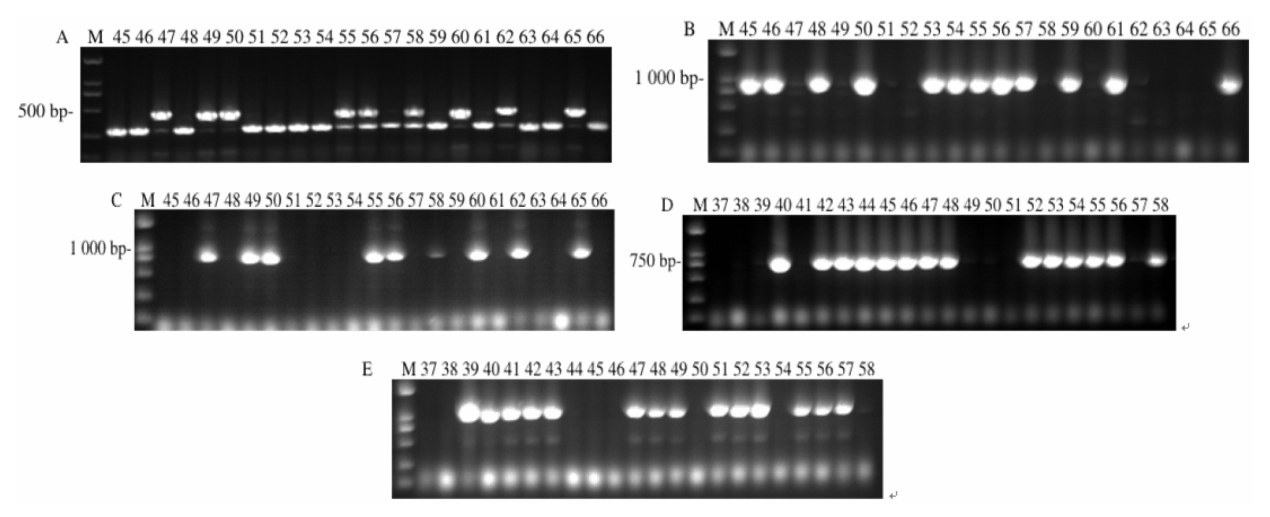
针对豫南稻区水稻骨干亲本稻瘟病抗性基因背景不清、抗性育种缺乏精准依据的问题,为明确核心抗源分布与优异基因组合,以93份水稻骨干亲本为材料,通过分子标记技术分析河南省豫南稻区籼稻骨干亲本的稻瘟病抗性基因分布特征。采用pi2、pita、pi5、pia和pigm共5个抗性基因的特异性分子标记,结合SDS微量法抽提水稻全基因组DNA,并运用琼脂糖凝胶电泳对样本进行系统鉴定。结果表明:93份材料中,单基因频率以pia最高(66.67%),pita次之(59.14%),pi5为51.61%,pi2与pigm均为33.33%;携带2个抗性基因的材料占比最高(38.71%,36份),含3个基因的占26.88%(25份),仅2份材料不含目标基因;抗性基因组合,pia+pita占比最高(22份,23.66%),其次是pia+pita+pi5占比11份;组合基因数0-4区间中都存在占比最少,为2份。综上,豫南稻区亲本以pia、pita、pi5为优势抗源,双基因聚合为主要类型,筛选出的多基因聚合材料可直接用于抗病育种。本研究为当地水稻广谱持久抗稻瘟病育种提供了精准抗源信息与理论支撑,后续可结合病菌小种监测开展表型验证与基因聚合育种。
中图分类号:
余林闯, 陈庆明, 陆云, 申关望, 祁玉良, 扶定, 余新春, 常幸远, 沈光辉. 93份水稻骨干亲本稻瘟病抗性基因分子初步鉴定及分析[J]. 中国农学通报, 2026, 42(8): 38-43.
YU Linchuang, CHEN Qingming, LU Yun, SHEN Guanwang, QI Yuliang, FU Ding, YU Xinchun, CHANG Xingyuan, SHEN Guanghui. Preliminary Molecular Characterization and Allelic Profiling of Blast Resistance Genes in 93 Core Parental Lines of Oryza sativa L[J]. Chinese Agricultural Science Bulletin, 2026, 42(8): 38-43.
| 编号 | 材料名称 | 编号 | 材料名称 |
|---|---|---|---|
| 1 | R900(恢复系) | 48 | 华航丝苗(常规稻,已审定) |
| 2 | R1928(恢复系) | 49 | 禾粤丝苗(常规稻,已审定) |
| 3 | R1128(恢复系) | 50 | 九香粘(常规稻,已审定) |
| 4 | R7118(恢复系) | 51 | 赣香占1号(常规稻,已审定) |
| 5 | R279(恢复系) | 52 | 丰香丝苗(两系杂交,已审定) |
| 6 | HNR15-2(恢复系) | 53 | 合美占(常规稻,已审定) |
| 7 | R704(恢复系) | 54 | 粤美丝苗(常规稻,已审定) |
| 8 | 绿稻Q7(常规稻,已审定) | 55 | 桂晶丝苗(常规稻,已审定) |
| 9 | R916(恢复系) | 56 | 合丰丝苗(常规稻,已审定) |
| 10 | 香优63(三系杂交) | 57 | 2326(常规稻) |
| 11 | R1313(恢复系) | 58 | 航育995(常规稻) |
| 12 | 赣晚籼30(常规稻,已审定) | 59 | 赣晚籼30(常规稻,已审定) |
| 13 | R938(恢复系) | 60 | 粤晶丝苗2号(常规稻,已审定) |
| 14 | 香优21(常规稻) | 61 | 桂育9号(常规稻,已审定) |
| 15 | 绿稻24(常规稻,已审定) | 62 | 桂育12(常规稻,已审定) |
| 16 | JWR221(恢复系) | 63 | 玉香丝苗(常规稻,已审定) |
| 17 | 鄂禾丝苗(常规稻) | 64 | 中香丝苗(常规稻,已审定) |
| 18 | 长粒籼(常规稻) | 65 | 润珠银占(常规稻,已审定) |
| 19 | 长粒香(常规稻) | 66 | 农晶丝苗(常规稻,已审定) |
| 20 | 02428(常规稻) | 67 | 美香粤占(常规稻,已审定) |
| 21 | 9311(常规稻) | 68 | 鄂香1号(常规稻,已审定) |
| 22 | 甬恢6号(恢复系) | 69 | 黄广华占1号(常规稻,已审定) |
| 23 | 粤晶丝苗(常规稻,已审定) | 70 | 雪峰丝苗(两系杂交,已审定) |
| 24 | 粤油丝苗(常规稻,已审定) | 71 | N12160(两系杂交) |
| 25 | 远恢2号(常规稻) | 72 | N12162(两系杂交) |
| 26 | HR1138(恢复系) | 73 | N12164(两系杂交) |
| 27 | 鄂丰丝苗(常规稻,已审定) | 74 | N12182(两系杂交) |
| 28 | 盐恢888(常规稻,已审定) | 75 | 美香占2号(常规稻,已审定) |
| 29 | 豫珍占(常规稻) | 76 | 黄广油占(常规稻,已审定) |
| 30 | 中糯2005(常规稻糯) | 77 | 粤金银占(常规稻,已审定) |
| 31 | 珍珠糯(常规稻糯,已审定) | 78 | 泰丽丝占(常规稻) |
| 32 | 籼糯98-01(常规稻糯) | 79 | 耕云丝苗(常规稻) |
| 33 | 禾盛糯(常规稻糯) | 80 | 凤营丝苗(常规稻,已审定) |
| 34 | 信糯2020(常规稻糯) | 81 | 齐华占(常规稻,已审定) |
| 35 | 雅恢2115(常规稻) | 82 | 粤莉占(常规稻,已审定) |
| 36 | 玉晶丝苗-1(常规稻,已审定) | 83 | 五山美占(常规稻,已审定) |
| 37 | 玉晶丝苗-2(常规稻,已审定) | 84 | 黄丝莉占(常规稻,已审定) |
| 38 | 金信丝苗(常规稻,已审定) | 85 | 黄华占(常规稻,已审定) |
| 39 | 徽占706(常规稻,已审定) | 86 | 华占(常规稻) |
| 40 | 万香丝苗(常规稻,已审定) | 87 | 远优丝苗(常规稻) |
| 41 | 特糯2072(常规稻糯,已审定) | 88 | 隆稻3号(常规稻,已审定) |
| 42 | 珍福糯(常规稻糯) | 89 | 特籼占25(常规稻,已审定) |
| 43 | 象牙香占(常规稻,已审定) | 90 | 惠丰丝苗(常规稻,已审定) |
| 44 | 五山丝苗(常规稻,已审定) | 91 | 南晶香占(常规稻,已审定) |
| 45 | 合丰占(常规稻,已审定) | 92 | 农香39(常规稻,已审定) |
| 46 | 黄莉占(常规稻,已审定) | 93 | 十九香选(常规稻,已审定) |
| 47 | 粤泰油占(常规稻,已审定) |
| 编号 | 材料名称 | 编号 | 材料名称 |
|---|---|---|---|
| 1 | R900(恢复系) | 48 | 华航丝苗(常规稻,已审定) |
| 2 | R1928(恢复系) | 49 | 禾粤丝苗(常规稻,已审定) |
| 3 | R1128(恢复系) | 50 | 九香粘(常规稻,已审定) |
| 4 | R7118(恢复系) | 51 | 赣香占1号(常规稻,已审定) |
| 5 | R279(恢复系) | 52 | 丰香丝苗(两系杂交,已审定) |
| 6 | HNR15-2(恢复系) | 53 | 合美占(常规稻,已审定) |
| 7 | R704(恢复系) | 54 | 粤美丝苗(常规稻,已审定) |
| 8 | 绿稻Q7(常规稻,已审定) | 55 | 桂晶丝苗(常规稻,已审定) |
| 9 | R916(恢复系) | 56 | 合丰丝苗(常规稻,已审定) |
| 10 | 香优63(三系杂交) | 57 | 2326(常规稻) |
| 11 | R1313(恢复系) | 58 | 航育995(常规稻) |
| 12 | 赣晚籼30(常规稻,已审定) | 59 | 赣晚籼30(常规稻,已审定) |
| 13 | R938(恢复系) | 60 | 粤晶丝苗2号(常规稻,已审定) |
| 14 | 香优21(常规稻) | 61 | 桂育9号(常规稻,已审定) |
| 15 | 绿稻24(常规稻,已审定) | 62 | 桂育12(常规稻,已审定) |
| 16 | JWR221(恢复系) | 63 | 玉香丝苗(常规稻,已审定) |
| 17 | 鄂禾丝苗(常规稻) | 64 | 中香丝苗(常规稻,已审定) |
| 18 | 长粒籼(常规稻) | 65 | 润珠银占(常规稻,已审定) |
| 19 | 长粒香(常规稻) | 66 | 农晶丝苗(常规稻,已审定) |
| 20 | 02428(常规稻) | 67 | 美香粤占(常规稻,已审定) |
| 21 | 9311(常规稻) | 68 | 鄂香1号(常规稻,已审定) |
| 22 | 甬恢6号(恢复系) | 69 | 黄广华占1号(常规稻,已审定) |
| 23 | 粤晶丝苗(常规稻,已审定) | 70 | 雪峰丝苗(两系杂交,已审定) |
| 24 | 粤油丝苗(常规稻,已审定) | 71 | N12160(两系杂交) |
| 25 | 远恢2号(常规稻) | 72 | N12162(两系杂交) |
| 26 | HR1138(恢复系) | 73 | N12164(两系杂交) |
| 27 | 鄂丰丝苗(常规稻,已审定) | 74 | N12182(两系杂交) |
| 28 | 盐恢888(常规稻,已审定) | 75 | 美香占2号(常规稻,已审定) |
| 29 | 豫珍占(常规稻) | 76 | 黄广油占(常规稻,已审定) |
| 30 | 中糯2005(常规稻糯) | 77 | 粤金银占(常规稻,已审定) |
| 31 | 珍珠糯(常规稻糯,已审定) | 78 | 泰丽丝占(常规稻) |
| 32 | 籼糯98-01(常规稻糯) | 79 | 耕云丝苗(常规稻) |
| 33 | 禾盛糯(常规稻糯) | 80 | 凤营丝苗(常规稻,已审定) |
| 34 | 信糯2020(常规稻糯) | 81 | 齐华占(常规稻,已审定) |
| 35 | 雅恢2115(常规稻) | 82 | 粤莉占(常规稻,已审定) |
| 36 | 玉晶丝苗-1(常规稻,已审定) | 83 | 五山美占(常规稻,已审定) |
| 37 | 玉晶丝苗-2(常规稻,已审定) | 84 | 黄丝莉占(常规稻,已审定) |
| 38 | 金信丝苗(常规稻,已审定) | 85 | 黄华占(常规稻,已审定) |
| 39 | 徽占706(常规稻,已审定) | 86 | 华占(常规稻) |
| 40 | 万香丝苗(常规稻,已审定) | 87 | 远优丝苗(常规稻) |
| 41 | 特糯2072(常规稻糯,已审定) | 88 | 隆稻3号(常规稻,已审定) |
| 42 | 珍福糯(常规稻糯) | 89 | 特籼占25(常规稻,已审定) |
| 43 | 象牙香占(常规稻,已审定) | 90 | 惠丰丝苗(常规稻,已审定) |
| 44 | 五山丝苗(常规稻,已审定) | 91 | 南晶香占(常规稻,已审定) |
| 45 | 合丰占(常规稻,已审定) | 92 | 农香39(常规稻,已审定) |
| 46 | 黄莉占(常规稻,已审定) | 93 | 十九香选(常规稻,已审定) |
| 47 | 粤泰油占(常规稻,已审定) |
| 基因 | 序列信息5′-3′ | 片段长度/bp |
|---|---|---|
| pi2 | F:CAGCGATGGTATGAGCACAA;R:CGTTCCTATACTGCCACATCG | 450 |
| pita | F:GTCAAATCAGCAACTAACGAGG;R:CCAGTATGATTCATGGCTCGAT | 1246 |
| pi5 | F:TCTGGTGAAAACTCTGAACG;R:CGGTGAGTTTAGCGAAGACC | 740 |
| pia | F:GAGCAATGCCCAATCTCCAG;R:TTTACCGTTCACTGACGCAG | 1000 |
| pigm | F:GTTCTCCACTTCACCTCCAT;R:TTGCTCTACCCAAACCTTTA | 856 |
| 基因 | 序列信息5′-3′ | 片段长度/bp |
|---|---|---|
| pi2 | F:CAGCGATGGTATGAGCACAA;R:CGTTCCTATACTGCCACATCG | 450 |
| pita | F:GTCAAATCAGCAACTAACGAGG;R:CCAGTATGATTCATGGCTCGAT | 1246 |
| pi5 | F:TCTGGTGAAAACTCTGAACG;R:CGGTGAGTTTAGCGAAGACC | 740 |
| pia | F:GAGCAATGCCCAATCTCCAG;R:TTTACCGTTCACTGACGCAG | 1000 |
| pigm | F:GTTCTCCACTTCACCTCCAT;R:TTGCTCTACCCAAACCTTTA | 856 |
| 每份材料基因个数/个 | 基因组合 | 材料含基因组合数 | 材料编号 |
|---|---|---|---|
| 0 | 无 | 2 | 25,26 |
| 1 | pia | 9 | 6,10,11,32,37,59,66,74,88 |
| pi5 | 4 | 29,61,64,84 | |
| pita | 2 | 51,68 | |
| 2 | pia+pita | 22 | 2,3,5,7,8,9,13,15,16,18,19,20,28,33,34,35,39,41,57,67,69,93 |
| pita+pi5 | 6 | 43,52,63,85,87,89 | |
| pia+pi5 | 6 | 45,46,54,70,78,92 | |
| pi2+pigm | 2 | 38,82 | |
| 3 | pia+pita+pi5 | 11 | 1,4,12,14,31,36,40,42,48,53,75 |
| pi5+pi2+pigm | 8 | 17,23,27,58,62,76,81,90 | |
| pia+pi2+pigm | 4 | 21,50,79,80 | |
| pita+pi2+pigm | 2 | 49,71 | |
| 4 | pita+pi5+pi2+pigm | 6 | 47,60,65,72,86,91 |
| pia+pi5+pi2+pigm | 2 | 22,44 | |
| pia+pita+pi2+pigm | 2 | 30,73 | |
| 5 | pia+pita+pi5+pi2+pigm | 5 | 24,55,56,77,83 |
| 每份材料基因个数/个 | 基因组合 | 材料含基因组合数 | 材料编号 |
|---|---|---|---|
| 0 | 无 | 2 | 25,26 |
| 1 | pia | 9 | 6,10,11,32,37,59,66,74,88 |
| pi5 | 4 | 29,61,64,84 | |
| pita | 2 | 51,68 | |
| 2 | pia+pita | 22 | 2,3,5,7,8,9,13,15,16,18,19,20,28,33,34,35,39,41,57,67,69,93 |
| pita+pi5 | 6 | 43,52,63,85,87,89 | |
| pia+pi5 | 6 | 45,46,54,70,78,92 | |
| pi2+pigm | 2 | 38,82 | |
| 3 | pia+pita+pi5 | 11 | 1,4,12,14,31,36,40,42,48,53,75 |
| pi5+pi2+pigm | 8 | 17,23,27,58,62,76,81,90 | |
| pia+pi2+pigm | 4 | 21,50,79,80 | |
| pita+pi2+pigm | 2 | 49,71 | |
| 4 | pita+pi5+pi2+pigm | 6 | 47,60,65,72,86,91 |
| pia+pi5+pi2+pigm | 2 | 22,44 | |
| pia+pita+pi2+pigm | 2 | 30,73 | |
| 5 | pia+pita+pi5+pi2+pigm | 5 | 24,55,56,77,83 |
| [1] |
徐春春, 闻军清, 纪龙, 等. 中国水稻种业发展现状、问题与展望[J]. 中国稻米, 2022, 28(5):74-78.
doi: 10.3969/j.issn.1006-8082.2022.05.012 |
| [2] |
韩雪琴, 沈文娟, 张振海, 等. 水稻稻瘟病抗性基因在抗性育种中的研究进展[J]. 新疆农业科学, 2021, 58(3):483-492.
doi: 10.6048/j.issn.1001-4330.2021.03.011 |
| [3] |
张传清, 周明国, 朱国念. 稻瘟病化学防治药剂的历史沿革与研究现状[J]. 农药学学报, 2009, 11(1):72-80.
|
| [4] |
王如意, 刘杰, 冯琴, 等. 稻瘟病抗性分子机制及抗病育种策略研究进展[J]. 植物保护, 2023, 49(5):32-42,70.
|
| [5] |
周江鸿, 王久林, 蒋琬如, 等. 我国稻瘟病菌毒力基因的组成及其地理分布[J]. 作物学报, 2003, 29(5):646-651.
|
| [6] |
doi: S1369-5266(18)30180-8 pmid: 31163394 |
| [7] |
doi: 10.1105/tpc.002493 pmid: 12119369 |
| [8] |
doi: 10.1094/PD-80-0052 URL |
| [9] |
doi: 10.1007/s11032-012-9751-6 URL |
| [10] |
doi: 10.1186/s12284-016-0139-9 pmid: 27905090 |
| [11] |
|
| [12] |
王生轩, 李俊周, 谢瑛, 等. 河南粳稻抗稻瘟病基因pi9、pita和piz-t的分子检测[J]. 分子植物育种, 2017, 15(3):951-955.
|
| [13] |
高利军, 高汉亮, 颜群, 等. 4个抗稻瘟病基因分子标记的建立及在水稻亲本中的分布[J]. 杂交水稻, 2010, 25(增刊1):294-298.
|
| [14] |
李俊周, 吕传威, 王伟杰, 等. 利用分子标记辅助选育抗稻瘟病粳稻品种'豫农粳12'[J]. 分子植物育种, 2022, 20(8):2650-2656.
|
| [15] |
宛柏杰, 刘凯, 赵绍路, 等. 水稻抗稻瘟病基因pi-ta, pi-b, pigm和pi54在骨干亲本中的分布以及对穗颈瘟抗性的作用[J]. 西南农业学报, 2020, 33(1):1-6.
|
| [16] |
邢鹏, 张幸, 李冬梅, 等. 稻瘟病抗性基因在主要育种亲本中的分布研究[J]. 分子植物育种, 2015, 13(3):505-512.
|
| [17] |
宋晓华, 刘秋员, 彭波, 等. 豫南“籼改粳”理论与技术研究进展[J]. 中国稻米, 2017, 23(6):32-36.
doi: 10.3969/j.issn.1006-8082.2017.06.006 |
| [18] |
祁玉良, 崔满星, 张明年, 等. 豫南优质稻米开发的现状、目标与发展对策[J]. 河南农业科学, 2001(11):7-8.
doi: 10.3969/j.issn.1004-3268.2001.11.003 |
| [19] |
王晓玲, 吴婷, 唐书升, 等. 82份籼粳稻骨干亲本抗稻瘟病基因的分子检测[J]. 热带作物学报, 2021, 42(5):1199-1208.
doi: 10.3969/j.issn.1000-2561.2021.05.001 |
| [20] |
杨秀荣, 闫双勇, 李月娇, 等. 黄淮稻区水稻品种稻瘟病抗性表现及Pib和Pi5抗性基因分析[J]. 分子植物育种, 2024, 22(22):7319-7326.
|
| [21] |
房文文, 王海凤, 郭涛, 等. 12个抗稻瘟病基因在山东省地方水稻品种中的分布[J]. 山东农业科学, 2023, 55(10):7-14.
|
| [22] |
张金霞, 张倩倩, 王书玉, 等. 94份水稻骨干材料抗稻瘟病基因和恢复基因的分子检测与分析[J]. 江苏农业科学, 2024, 52(5):58-64.
|
| [23] |
田维逵, 董丽英, 资鸿强, 等. 6个抗稻瘟病基因在云南省勐海县水稻主栽品种中的分布[J]. 中国农学通报, 2024, 40(20):130-134.
doi: 10.11924/j.issn.1000-6850.casb2023-0524 |
| [24] |
姚继攀, 梁传斌, 刘博, 等. 辽宁常规稻水稻育种中抗稻瘟病基因分析与利用[J]. 北方水稻, 2023, 53(6):16-19.
|
| [25] |
翟荣荣, 叶胜海, 朱国富, 等. 浙江省12个常规稻晚粳稻品种抗稻瘟病基因的分子检测[J]. 分子植物育种, 2020, 18(11):3626-3633.
|
| [26] |
陈晴晴, 杨雪, 张爱芳. 长江中下游区试水稻品种稻瘟病抗性评价及抗性基因检测[J]. 南方农业学报, 2022, 53(1):21-28.
|
| [27] |
毛艇, 李鑫, 刘研, 等. 聚合gs3、pita及pib基因创制长粒高抗稻瘟病核心粳稻种质[J]. 分子植物育种, 2023, 21(6):1990-1998.
|
| [28] |
朱永生, 蔡秋华, 官华忠, 等. 多基因聚合改良杂交稻恢复系福恢676的稻瘟病抗性[J]. 科学通报, 2023, 68(21):2812-2823.
|
| [29] |
杨德卫, 何旎清, 黄凤凰. 利用分子标记辅助选择聚合水稻抗病基因Pigm-1和Xa23[J]. 西北农林科技大学学报(自然科学版), 2023, 51(11):37-45.
|
| [30] |
杨德卫, 王莫, 韩利波, 等. 水稻稻瘟病抗性基因的克隆、育种利用及稻瘟菌无毒基因研究进展[J]. 植物学报, 2019, 54(2):265-276.
doi: 10.11983/CBB18194 |
| [31] |
黎玲, 吕启明, 彭志荣, 等. 籼型水稻中稻瘟病抗性基因分布及抗性研究[J]. 杂交水稻, 2022, 37(1):30-37.
|
| [1] | 张洁, 邵文奇, 马洪波, 陈川, 章安康, 李传哲. 缓释氮肥对江苏水稻产量及肥料利用率的影响[J]. 中国农学通报, 2026, 42(8): 104-109. |
| [2] | 陆萍, 陈宇佳, 王站付, 张逸鸣, 蒋杭峰, 汪超凡, 张蓉, 邱韩英. 一次性基施新配比控释掺混尿素对水稻'南粳46'性状、产量及氮素利用的影响[J]. 中国农学通报, 2026, 42(8): 95-103. |
| [3] | 商小兰, 李丹, 方文英, 徐著, 王强, 陈照明. 机插同步侧深施肥对水稻产量和氮肥利用及土壤氮的影响[J]. 中国农学通报, 2026, 42(7): 1-7. |
| [4] | 文建川, 赖峥嵘, 吴虑, 阮玲丽, 吴必良, 梁平. 黔东南州稻瘟病发生风险等级气象预报[J]. 中国农学通报, 2026, 42(7): 171-175. |
| [5] | 韦晓娟, 杨德任, 张幸, 刘凯, 蓝金宣. 应用SSR分子标记技术对山茶属杂交品种F1代的初步鉴定[J]. 中国农学通报, 2026, 42(3): 57-64. |
| [6] | 孙天琦, 周蕾, 徐林贵, 孙晓波, 陈勇, 隋春. 菘蓝基因组SSR位点分析及分子标记开发[J]. 中国农学通报, 2026, 42(2): 50-56. |
| [7] | 徐军辉, 陈丽妮, 黄芳, 连聪, 莫博程. 两种叶面阻控剂对稻米镉吸收累积的影响及健康风险评价[J]. 中国农学通报, 2026, 42(2): 113-119. |
| [8] | 兰波, 陈明, 周琦娜, 李云鹏, 李保嘉, 邓兴, 孙清华, 杨紫玉, 段灵涛, 阴长发, 邵见阳, 涂雪琴, 杨迎青, 赵志珍. 水稻恶苗病综合防控技术研究进展[J]. 中国农学通报, 2026, 42(1): 176-183. |
| [9] | 梁文召, 周诗意, 韦瑞燕, 石琳亚, 刘乃新, 于清涛. 氧化石墨烯引发对盐胁迫下水稻种子萌发的影响[J]. 中国农学通报, 2025, 41(9): 1-7. |
| [10] | 李阳阳, 陈帅民, 徐铭鸿, 迟畅, 马巍, 王胤平, 宋艳, 范作伟, 吴海燕. 腐解菌剂耦合尿素对水稻秸秆腐解率及产量的影响[J]. 中国农学通报, 2025, 41(9): 18-24. |
| [11] | 陈澎军, 张蛟, 韩继军, 缪源卿, 崔士友. 不同外源硅肥喷施对滩涂水稻产量、各器官干物质和养分积累及转运的影响[J]. 中国农学通报, 2025, 41(9): 8-17. |
| [12] | 汪峰, 朱诗君, 应虹, 柴伟纲, 戴瑶璐, 袁晴, 金树权. 有机改良剂配合适度深耕对丘陵复垦稻田生产力提升效果[J]. 中国农学通报, 2025, 41(9): 91-98. |
| [13] | 王俊江, 尹媛红, 陆楚盛, 陆展华, 蔡昊炀, 叶群欢, 廖嘉晖, 卢钰升, 梁开明, 傅友强. 水稻关键生育期灌溉对干旱胁迫下稻谷产量和水分利用效率的影响[J]. 中国农学通报, 2025, 41(8): 1-10. |
| [14] | 莫俊杰, 郑嘉成, 蔡继葳, 刘嘉威, 冯永成. 基于收获指数的水稻单株选择效应[J]. 中国农学通报, 2025, 41(7): 1-8. |
| [15] | 王铭铰, 毛瑞清, 旷娜, 陈玉梅, 邹丹, 张明, 肖芳曦, 刘桂. 水稻镉吸收及调控研究进展[J]. 中国农学通报, 2025, 41(6): 94-99. |
| 阅读次数 | ||||||
|
全文 |
|
|||||
|
摘要 |
|
|||||
