欢迎访问《中国农学通报》,

中国农学通报 ›› 2026, Vol. 42 ›› Issue (1): 211-218.doi: 10.11924/j.issn.1000-6850.casb2025-0348
• 农业信息·科技教育 • 上一篇
俞静( ), 许士芳, 韩小双
收稿日期:2025-05-09
修回日期:2025-10-10
出版日期:2026-01-15
发布日期:2026-01-15
作者简介:俞静,女,1993年出生,安徽宣城人,助理农艺师,博士,研究方向:植物逆境胁迫响应机理研究。通信地址:201600 上海市松江区泖港镇中二路1999号 上海松江区农业推广中心,E-mail:2280434263@qq.com。
YU Jing(), XU Shifang, HAN Xiaoshuang
Received:2025-05-09
Revised:2025-10-10
Published:2026-01-15
Online:2026-01-15
摘要:
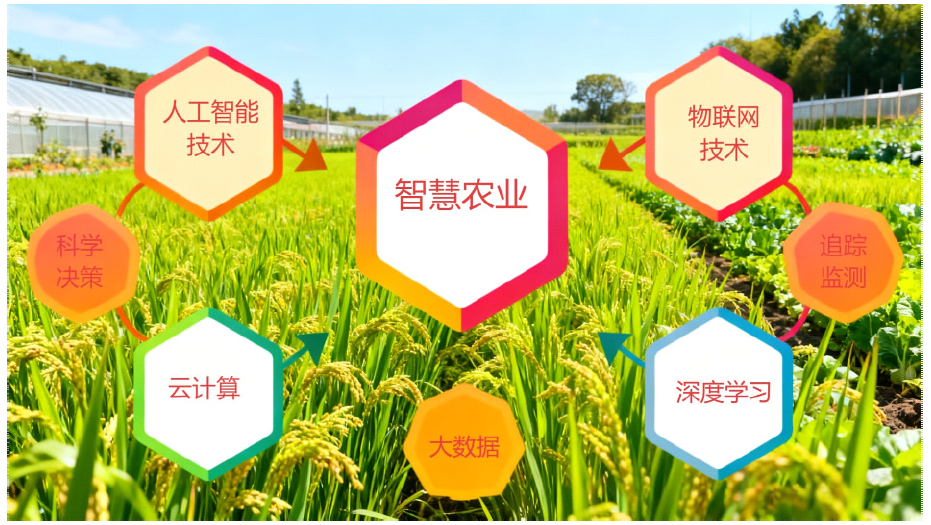
探讨物联网与人工智能技术如何推动现代农业的智能化转型,以期为智慧农业发展提供理论依据。本研究采用文献综述法,系统梳理大数据时代背景下,物联网、大数据和人工智能等关键技术在现代智慧农业中的具体应用现状。结果表明,物联网技术实现了农业环境的实时监测,大数据技术为农业生产决策提供了数据支持,而人工智能则在智能育种、产量预测、病虫害识别等领域展现出巨大潜力。物联网、大数据与人工智能的深度融合是提升生产智能化水平的关键。本文剖析了当前在数据、成本、标准与人才方面面临的挑战,并展望了跨模态数据融合、轻量化AI、迁移学习、区块链安全及人机协同等未来方向,以期为相关研究提供借鉴,推动该领域的理论创新与实践落地。
俞静, 许士芳, 韩小双. 物联网与人工智能技术在智慧农业中的应用研究[J]. 中国农学通报, 2026, 42(1): 211-218.
YU Jing, XU Shifang, HAN Xiaoshuang. Research on Integrated Application of Internet of Things and AI Technologies in Smart Agriculture[J]. Chinese Agricultural Science Bulletin, 2026, 42(1): 211-218.

| [1] |
|
| [2] |
张宇, 成海燕. 我国智慧农业高质量发展的困境及对策[J]. 智慧农业导刊, 2025, 5(4):6-9.
|
| [3] |
doi: 10.1002/jsfa.v103.4 URL |
| [4] |
|
| [5] |
|
| [6] |
|
| [7] |
DOS SANTOS U J L,
|
| [8] |
doi: 10.1104/pp.105.060483 URL |
| [9] |
李良涛, 毛振强, 牛灵安, 等. 基于作物生长模型的冬小麦灌溉方案研究[J]. 灌溉排水学报, 2010, 29(2):22-27.
|
| [10] |
刘家稷, 杨挺, 汪文勇. 使用双区块链的防伪溯源系统[J]. 信息安全学报, 2018, 3(3):17-29.
|
| [11] |
doi: 10.1093/ee/14.3.199 URL |
| [12] |
|
| [13] |
|
| [14] |
刘志, 翟瑞芳, 彭万伟, 等. 融合注意力机制的Cascade R-CNN田间害虫检测方法[J]. 华中农业大学学报, 2023, 42(3):133-142.
|
| [15] |
周维, 牛永真, 王亚炜, 等. 基于改进的YOLOv4-GhostNet水稻病虫害识别方法[J]. 江苏农业学报, 2022, 38(3):685-695.
|
| [16] |
王忠培, 张萌, 董伟, 等. 基于迁移学习的多模型水稻病害识别方法研究[J]. 安徽农业科学, 2021, 49(20):236-242.
|
| [17] |
doi: 10.3390/s23073752 URL |
| [18] |
|
| [19] |
|
| [20] |
doi: 10.1016/j.jjimei.2022.100076 URL |
| [21] |
|
| [22] |
|
| [23] |
doi: 10.3390/mca27050077 URL |
| [24] |
doi: 10.1038/s41746-022-00700-y |
| [25] |
doi: 10.1016/j.icte.2017.03.004 URL |
| [26] |
|
| [27] |
|
| [28] |
|
| [29] |
刘文静, 刘章娥, 赖勇, 等. 物联网技术在智慧农业中的应用及发展[J]. 中外食品工业, 2025(17):76-78.
|
| [30] |
|
| [31] |
|
| [32] |
朱艾青, 田文婕, 李梅芳. 我国人工智能技术在农业生产领域中的应用研究综述及展望——以番茄生产中的应用为例[J/OL]. 东北农业科学,1-9[2025-11-25].
|
| [33] |
彭天蓝. 基于区块链技术的生鲜农产品信息追溯系统优势与发展趋势[J]. 物流科技, 2025, 48(15):43-46.
|
| [34] |
王菲, 吕可. 浅析区块链和农业物联网在养殖业中的应用——以众安科技“步步鸡”为例[J]. 农村经济与科技, 2020, 31(1):71-72.
|
| [35] |
|
| [36] |
|
| [37] |
向琳娜, 杨鸥, 张艳, 等. 农业信息化技术在辣椒病虫害防治中的应用[J]. 长江蔬菜, 2024(19):50-52.
|
| [38] |
|
| [39] |
|
| [40] |
|
| [41] |
|
| [42] |
|
| [43] |
|
| [44] |
doi: 10.1007/s11119-014-9371-8 URL |
| [45] |
doi: 10.3390/s17010214 URL |
| [46] |
|
| [47] |
|
| [48] |
doi: 10.1109/JIoT.6488907 URL |
| [49] |
刘雪梅, 刘英涛, 党信凯. 人工智能技术与设施农业智能化管理的融合在智能灌溉系统中的实践与应用[J]. 农业工程技术, 2024, 44(23):34-35.
|
| [50] |
师连鑫, 李海雄, 张博龙, 等. 基于物联网与云计算技术的陕北智慧节水无人灌溉系统[J]. 农业工程, 2025, 15(2):128-133.
|
| [51] |
夏张, 赵敏, 王诗成. 水肥一体化技术在密植型玉米上的应用研究[J]. 安徽农学通报, 2025, 31(5):6-9.
doi: 10.16377/j.cnki.issn1007-7731.2025.05.002 |
| [1] | 夏晓玲, 李想, 吴昌航, 雷坤江, 王星, 王加敏. 基于人工智能算法与气象数据的烟草单叶重可预报性研究[J]. 中国农学通报, 2026, 42(11): 186-194. |
| [2] | 杜超凡, 汪睿琪, 吴天翊, 沈翠玉, 沈福龙, 赖日君, 林晓路, 马旭东, 谢小芳. 基于深度学习的雪茄茄衣智能分级模型构建与优选[J]. 中国农学通报, 2025, 41(34): 157-164. |
| [3] | 张永淋, 赵庆旭, 李大鹏. 营养与功能成分的生物制造新技术[J]. 中国农学通报, 2025, 41(26): 83-87. |
| [4] | 史晓婧. 气候变化背景下农业灾害防控技术的创新与应用[J]. 中国农学通报, 2025, 41(26): 13-19. |
| [5] | 张志从, 崔东, 郭金锋, 吾木提·艾山江, 李亮. 基于迁移学习ResNet-18的水稻病虫害识别研究[J]. 中国农学通报, 2025, 41(2): 109-116. |
| [6] | 令世豪, 杨粉莉, 黄博涵, 李瑶, 杨联安, 闫琳悦, 郝贝贝. 基于U-Net骨架变体的内陆盐碱地信息遥感提取[J]. 中国农学通报, 2025, 41(19): 151-158. |
| [7] | 王苗苗, 王贝贝, 李明放, 张志红, 严雪. 冬小麦发育期识别方法研究进展[J]. 中国农学通报, 2025, 41(1): 1-7. |
| [8] | 李边豪, 张国良, 李鹏程, 赵宏亮, 闫飞宇, 黄志炜, 牛远, 齐波, 张林青, 范松. 机器视觉在稻种识别和分类上的应用进展[J]. 中国农学通报, 2024, 40(31): 152-158. |
| [9] | 狄标, 林娟, 刘现. 基于近红外光谱数据的李子可溶性固形物含量预测模型研究[J]. 中国农学通报, 2024, 40(31): 133-138. |
| [10] | 黄怡, 米国华. ChatGPT在农业领域的应用前景分析与策略建议[J]. 中国农学通报, 2024, 40(19): 149-153. |
| [11] | 徐鹏, 张冠智, 李洋, 徐晓东, 杨振超. 智慧设施农业中控制系统的研究进展[J]. 中国农学通报, 2023, 39(3): 156-154. |
| [12] | 吕星辰, 孟军. 基于区块链的农产品溯源:优势与挑战[J]. 中国农学通报, 2022, 38(9): 157-164. |
| [13] | 徐硕, 鲁峰, 方辉, 王立华. 渔业生产大数据助推渔业高质量发展建设研究[J]. 中国农学通报, 2022, 38(7): 144-152. |
| [14] | 李婷婷, 马娟娟, 张建华. 农业大数据信息采集平台建设研究[J]. 中国农学通报, 2022, 38(3): 158-164. |
| [15] | 郝菁, 贾宗维. 基于图像识别的苹果叶片病害识别模型对比研究[J]. 中国农学通报, 2022, 38(12): 153-158. |
| 阅读次数 | ||||||
|
全文 |
|
|||||
|
摘要 |
|
|||||
