欢迎访问《中国农学通报》,

中国农学通报 ›› 2026, Vol. 42 ›› Issue (5): 212-218.doi: 10.11924/j.issn.1000-6850.casb2025-0492
• 水产/渔业 • 上一篇
李文盛1( ), 陈度煌1, 梁萍1, 薛凌展1, 胡振禧1, 赖铭勇1, 兰竹青2
收稿日期:2025-06-18
修回日期:2025-11-03
出版日期:2026-03-18
发布日期:2026-03-18
作者简介:李文盛,男,1993年出生,安徽太和人,助理农艺师,研究生,主要从事水产动物营养与饲料方面的研究。通信地址:350002 福建省福州市鼓楼区西洪路555号 福建省淡水水产研究所,E-mail:liwensheng59@126.com。
基金资助:
LI Wensheng1(), CHEN Duhuang1, LIANG Ping1, XUE Lingzhan1, HU Zhenxi1, LAI Mingyong1, LAN Zhuqing2
Received:2025-06-18
Revised:2025-11-03
Published:2026-03-18
Online:2026-03-18
摘要:
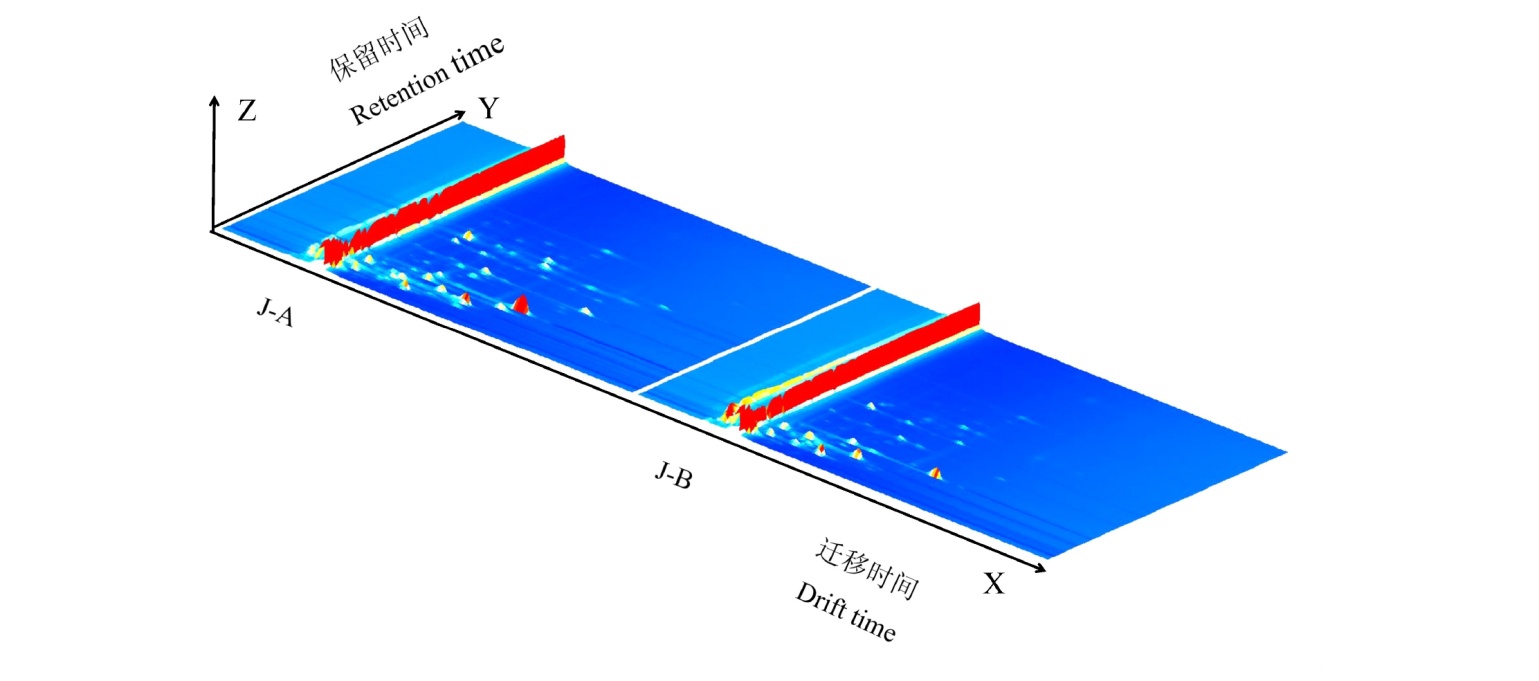
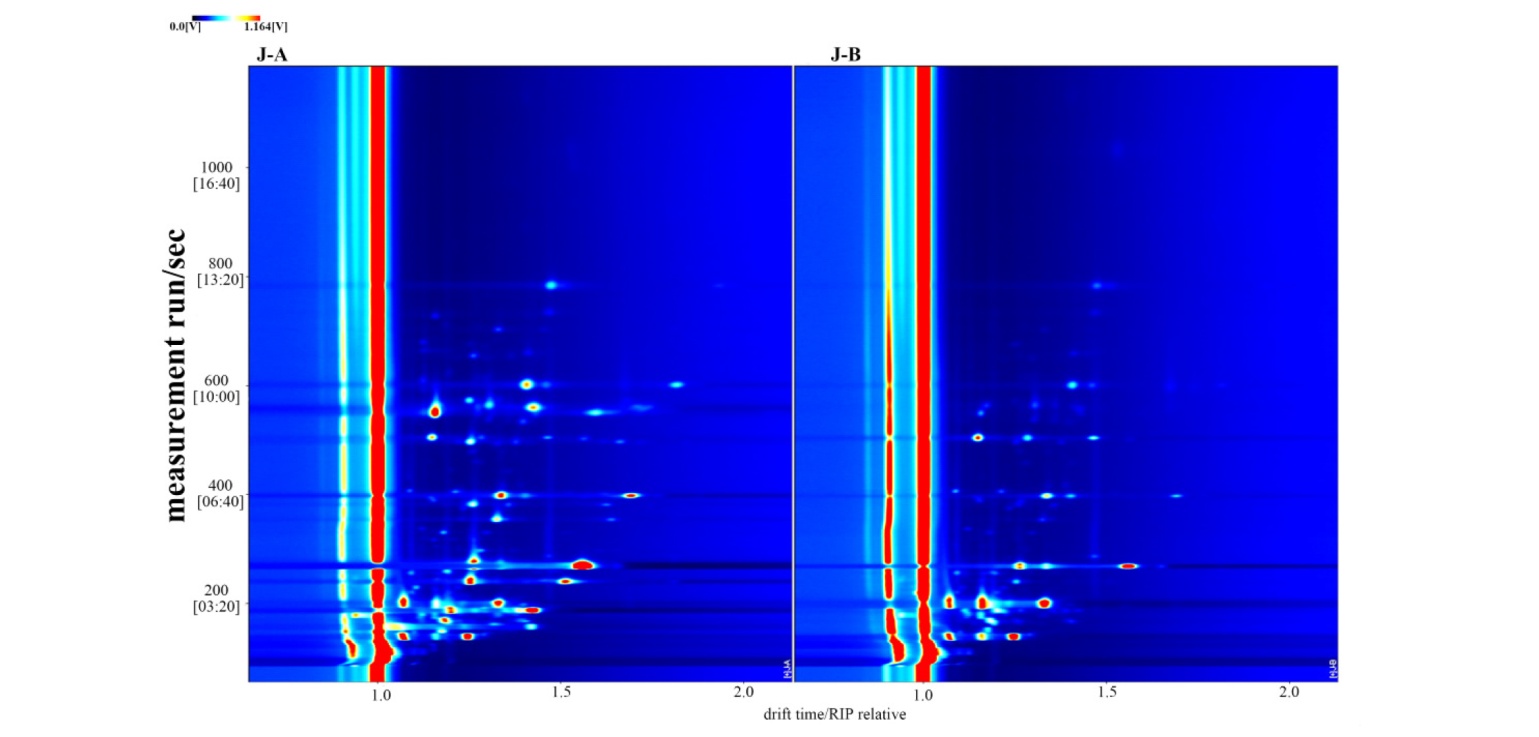
为探讨投喂生物饵料(对照组J-A)与人工配合饲料(试验组J-B)对棘胸蛙(Quasipaa spinosa)肌肉挥发性风味物质的影响,本研究采用气相色谱-离子迁移谱(gas chromatography-ion mobility spectroscopy,GC-IMS)技术,分析了检测两种饵料饲养棘胸蛙后肌肉挥发性风味物质的组成与相对含量差异,并进行指纹图谱对比。结果显示,二组肌肉均检测出45个峰,共鉴定出30种挥发性物质,主要包括醛类、酮类和醇类;J-A组和J-B组的主要挥发性物质相对含量构成存在显著差异,具体为:醛类占比分别为50.45%和43.13%,醇类占比分别为18.72%和5.08%,酮类占比分别为28.40%和49.56%。与J-A组相比,J-B组肌肉中己醛、壬醛和庚醛等腥味物质的含量显著降低,表明投喂人工配合饲料可以明显降低棘胸蛙肌肉的腥味,改善其肌肉品质。本研究结果可为棘胸蛙肌肉品质评价以及产品鉴别提供参考。
李文盛, 陈度煌, 梁萍, 薛凌展, 胡振禧, 赖铭勇, 兰竹青. 投喂不同饵料对棘胸蛙肌肉挥发性风味物质的影响[J]. 中国农学通报, 2026, 42(5): 212-218.
LI Wensheng, CHEN Duhuang, LIANG Ping, XUE Lingzhan, HU Zhenxi, LAI Mingyong, LAN Zhuqing. Effects of Different Feed on Volatile Flavor Compounds in Muscle of Quasipaa spinosa[J]. Chinese Agricultural Science Bulletin, 2026, 42(5): 212-218.
| 成分 | 人工配合饲料 | 黄粉虫 |
|---|---|---|
| 水分 | 9.58±1.52 | 69.30±0.83 |
| 粗蛋白 | 38.86±0.96 | 15.27±0.58 |
| 粗脂肪 | 5.36±0.34 | 8.19±0.17 |
| 粗灰分 | 14.75±0.68 | 1.20±0.06 |
| 钙 | 2.85±0.16 | 0.02±0.01 |
| 磷 | 2.18±0.09 | 0.24±0.01 |
| 成分 | 人工配合饲料 | 黄粉虫 |
|---|---|---|
| 水分 | 9.58±1.52 | 69.30±0.83 |
| 粗蛋白 | 38.86±0.96 | 15.27±0.58 |
| 粗脂肪 | 5.36±0.34 | 8.19±0.17 |
| 粗灰分 | 14.75±0.68 | 1.20±0.06 |
| 钙 | 2.85±0.16 | 0.02±0.01 |
| 磷 | 2.18±0.09 | 0.24±0.01 |
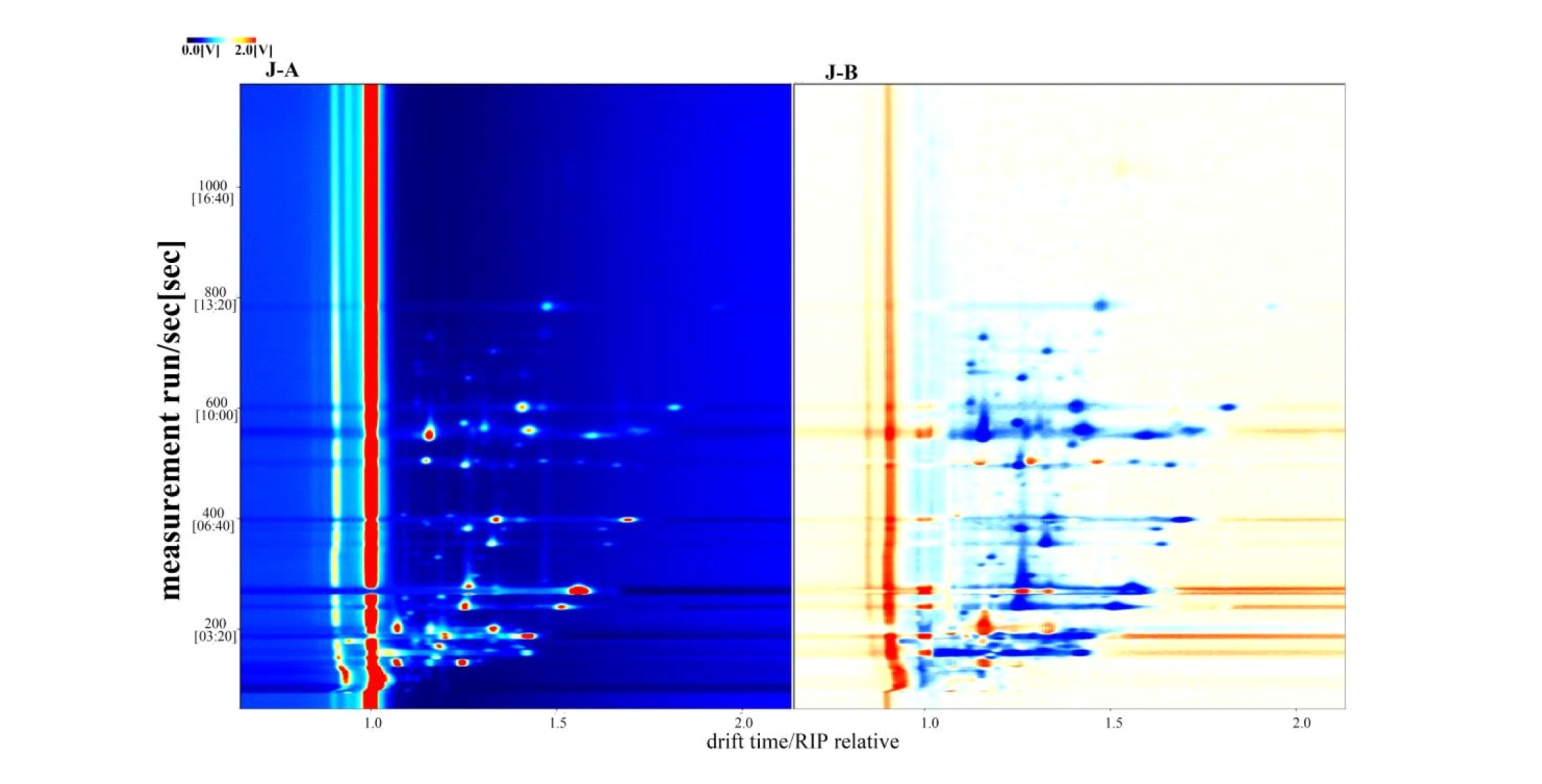
| 种类 | 序号 | 名称 | J-A相对含量 | J-B相对含量 |
|---|---|---|---|---|
| 醛类 aldehydes | 1 | 戊醛Pentanal D | 5.65±0.22 | 0.92±0.12 |
| 2 | 戊醛Pentanal M | 2.29±0.08 | 2.48±0.15 | |
| 3 | 己醛Hexanal D | 15.14±0.26 | 9.52±0.48 | |
| 4 | 己醛Hexanal M | 5.21±0.23 | 7.03±0.2 | |
| 5 | 庚醛Heptanal D | 2.54±0.2 | 1.18±0.13 | |
| 6 | 庚醛Heptanal M | 4.05±0.21 | 4.04±0.15 | |
| 7 | 辛醛Octanal M | 3.63±0.13 | 2.8±0.09 | |
| 8 | 辛醛Octanal D | 0.92±0.13 | 0.4±0.01 | |
| 9 | 壬醛Nonanal M | 1.82±0.13 | 1.99±0.02 | |
| 10 | 壬醛Nonanal D | 0.49±0.06 | 0.75±0.14 | |
| 11 | 癸醛Decanal | 0.81±0.09 | 1.6±0.45 | |
| 12 | 苯甲醛Benzaldehyde D | 0.53±0.04 | 1.68±0.06 | |
| 13 | 苯甲醛Benzaldehyde M | 1.91±0.03 | 4.89±0.04 | |
| 14 | 反-2-庚烯醛(E)-2-Heptenal M | 1.84±0.12 | 1.25±0.04 | |
| 15 | 反-2-庚烯醛(E)-2-Heptenal D | 0.35±0.05 | 0.29±0.01 | |
| 16 | 2-己烷醛2-Hexenal M | 0.32±0.04 | 0.26±0.01 | |
| 17 | 3-甲硫基丙醛Methional | 0.28±0.01 | 0.78±0.06 | |
| 18 | 2-甲基丁醛2-Methyl butanal | 0.6±0.09 | 0.47±0.12 | |
| 19 | 3-甲基丁醛3-Methyl butanal | 1.17±0.17 | 0.17±0.02 | |
| 20 | (E)-2-辛烯醛(E)-2-Octenal | 0.37±0.02 | 0.26±0.02 | |
| 21 | 苯乙醛Benzeneacetaldehyde | 0.45±0.06 | 0.25±0.01 | |
| 22 | 2-己烷醛2-Hexenal D | 0.08±0.01 | 0.12±0.01 | |
| 醇类 alcohols | 23 | 1-戊醇1-Pentanol M | 4.68±0.09 | 1.65±0.04 |
| 24 | 1-戊醇1-Pentanol D | 2.89±0.33 | 0.25±0.02 | |
| 25 | 1-己醇1-Hexanol D | 0.27±0.02 | 0.08±0 | |
| 26 | 1-己醇1-Hexanol M | 1.75±0.08 | 0.73±0.01 | |
| 27 | 1-辛烯-3-醇1-Octen-3-ol M | 7.06±0.16 | 1.89±0.03 | |
| 28 | 1-辛烯-3-醇1-Octen-3-ol D | 2.07±0.19 | 0.48±0.02 | |
| 酮类 ketone | 29 | 2-丁酮2-Butanone M | 4.12±0.25 | 7.68±0.24 |
| 30 | 2-丁酮2-Butanone D | 4.23±0.34 | 10.36±0.67 | |
| 31 | 2-己酮2-Hexanone | 0.72±0.07 | 1.08±0.02 | |
| 32 | 2,3-丁二酮2,3-Butanedione | 0.8±0.08 | 1.6±0.13 | |
| 33 | 2-庚酮2-Heptanone M | 1.46±0.05 | 0.85±0.03 | |
| 34 | 2-庚酮2-Heptanone D | 0.31±0.04 | 0.15±0.01 | |
| 35 | 3-辛酮3-Octanone M | 1.19±0.04 | 1.19±0.12 | |
| 36 | 3-辛酮3-Octanone D | 0.33±0.05 | 0.09±0.02 | |
| 37 | 3-羟基-2-丁酮2-Butanone, 3-hydroxy- M | 4.63±0.09 | 10.18±0.68 | |
| 38 | 3-羟基-2-丁酮2-Butanone, 3-hydroxy- D | 4.64±0.3 | 13.03±0.48 | |
| 39 | 1-羟基-2-丙酮1-Hydroxy-2-propanone D | 1.61±0.5 | 0.38±0.03 | |
| 40 | 1-羟基-2-丙酮1-Hydroxy-2-propanone M | 3.78±0.34 | 2.79±0.04 | |
| 41 | 1-辛烯-3-酮1-Octen-3-one | 0.58±0.04 | 0.18±0.02 | |
| 其他 | 42 | 二甲基三硫醚Dimethyl trisufide | 0.14±0.01 | 0.27±0.03 |
| 43 | 2-戊基呋喃2-Pentylfuran | 1.31±0.18 | 0.39±0.02 | |
| 44 | 2-甲基丁酸2-Methylbutanoic acid | 0.65±0.07 | 0.84±0.03 | |
| 45 | ND | 0.3±0.02 | 0.72±0.09 |
| 种类 | 序号 | 名称 | J-A相对含量 | J-B相对含量 |
|---|---|---|---|---|
| 醛类 aldehydes | 1 | 戊醛Pentanal D | 5.65±0.22 | 0.92±0.12 |
| 2 | 戊醛Pentanal M | 2.29±0.08 | 2.48±0.15 | |
| 3 | 己醛Hexanal D | 15.14±0.26 | 9.52±0.48 | |
| 4 | 己醛Hexanal M | 5.21±0.23 | 7.03±0.2 | |
| 5 | 庚醛Heptanal D | 2.54±0.2 | 1.18±0.13 | |
| 6 | 庚醛Heptanal M | 4.05±0.21 | 4.04±0.15 | |
| 7 | 辛醛Octanal M | 3.63±0.13 | 2.8±0.09 | |
| 8 | 辛醛Octanal D | 0.92±0.13 | 0.4±0.01 | |
| 9 | 壬醛Nonanal M | 1.82±0.13 | 1.99±0.02 | |
| 10 | 壬醛Nonanal D | 0.49±0.06 | 0.75±0.14 | |
| 11 | 癸醛Decanal | 0.81±0.09 | 1.6±0.45 | |
| 12 | 苯甲醛Benzaldehyde D | 0.53±0.04 | 1.68±0.06 | |
| 13 | 苯甲醛Benzaldehyde M | 1.91±0.03 | 4.89±0.04 | |
| 14 | 反-2-庚烯醛(E)-2-Heptenal M | 1.84±0.12 | 1.25±0.04 | |
| 15 | 反-2-庚烯醛(E)-2-Heptenal D | 0.35±0.05 | 0.29±0.01 | |
| 16 | 2-己烷醛2-Hexenal M | 0.32±0.04 | 0.26±0.01 | |
| 17 | 3-甲硫基丙醛Methional | 0.28±0.01 | 0.78±0.06 | |
| 18 | 2-甲基丁醛2-Methyl butanal | 0.6±0.09 | 0.47±0.12 | |
| 19 | 3-甲基丁醛3-Methyl butanal | 1.17±0.17 | 0.17±0.02 | |
| 20 | (E)-2-辛烯醛(E)-2-Octenal | 0.37±0.02 | 0.26±0.02 | |
| 21 | 苯乙醛Benzeneacetaldehyde | 0.45±0.06 | 0.25±0.01 | |
| 22 | 2-己烷醛2-Hexenal D | 0.08±0.01 | 0.12±0.01 | |
| 醇类 alcohols | 23 | 1-戊醇1-Pentanol M | 4.68±0.09 | 1.65±0.04 |
| 24 | 1-戊醇1-Pentanol D | 2.89±0.33 | 0.25±0.02 | |
| 25 | 1-己醇1-Hexanol D | 0.27±0.02 | 0.08±0 | |
| 26 | 1-己醇1-Hexanol M | 1.75±0.08 | 0.73±0.01 | |
| 27 | 1-辛烯-3-醇1-Octen-3-ol M | 7.06±0.16 | 1.89±0.03 | |
| 28 | 1-辛烯-3-醇1-Octen-3-ol D | 2.07±0.19 | 0.48±0.02 | |
| 酮类 ketone | 29 | 2-丁酮2-Butanone M | 4.12±0.25 | 7.68±0.24 |
| 30 | 2-丁酮2-Butanone D | 4.23±0.34 | 10.36±0.67 | |
| 31 | 2-己酮2-Hexanone | 0.72±0.07 | 1.08±0.02 | |
| 32 | 2,3-丁二酮2,3-Butanedione | 0.8±0.08 | 1.6±0.13 | |
| 33 | 2-庚酮2-Heptanone M | 1.46±0.05 | 0.85±0.03 | |
| 34 | 2-庚酮2-Heptanone D | 0.31±0.04 | 0.15±0.01 | |
| 35 | 3-辛酮3-Octanone M | 1.19±0.04 | 1.19±0.12 | |
| 36 | 3-辛酮3-Octanone D | 0.33±0.05 | 0.09±0.02 | |
| 37 | 3-羟基-2-丁酮2-Butanone, 3-hydroxy- M | 4.63±0.09 | 10.18±0.68 | |
| 38 | 3-羟基-2-丁酮2-Butanone, 3-hydroxy- D | 4.64±0.3 | 13.03±0.48 | |
| 39 | 1-羟基-2-丙酮1-Hydroxy-2-propanone D | 1.61±0.5 | 0.38±0.03 | |
| 40 | 1-羟基-2-丙酮1-Hydroxy-2-propanone M | 3.78±0.34 | 2.79±0.04 | |
| 41 | 1-辛烯-3-酮1-Octen-3-one | 0.58±0.04 | 0.18±0.02 | |
| 其他 | 42 | 二甲基三硫醚Dimethyl trisufide | 0.14±0.01 | 0.27±0.03 |
| 43 | 2-戊基呋喃2-Pentylfuran | 1.31±0.18 | 0.39±0.02 | |
| 44 | 2-甲基丁酸2-Methylbutanoic acid | 0.65±0.07 | 0.84±0.03 | |
| 45 | ND | 0.3±0.02 | 0.72±0.09 |
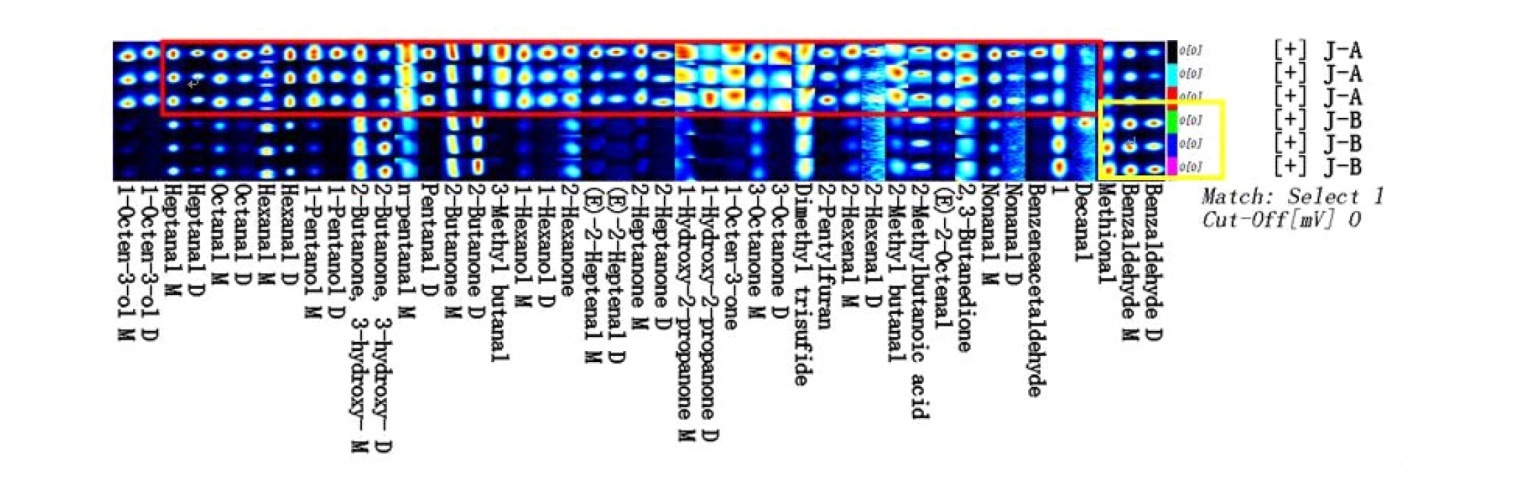
| [1] |
费梁, 叶昌媛, 江建平, 等. 中国两栖动物检索及图解[M]. 成都: 四川科学技术出版社,2005:102-139.
|
| [2] |
谢永广, 汪小冬, 吴亚峰, 等. 棘胸蛙胚胎发育观察与相关抗氧化酶活性变化研究[J]. 水产科学, 2023, 42(6):1054-1062.
|
| [3] |
高士贤. 中国动物药志[M]. 长春: 吉林科学技术出版社,1996:572-573.
|
| [4] |
刘芳彬, 王伟, 黄永春, 等. 棘胸蛙肌肉营养成分季节变化分析与评价[J]. 食品工业科技, 2022, 43(9):365-371.
|
| [5] |
赵蒙蒙, 郑荣泉, 宋婷婷, 等. 饲料营养水平和温度对棘胸蛙蝌蚪变态发育的影响[J]. 广东农业科学, 2014, 41(20):119-122.
|
| [6] |
项婷婷, 郑荣泉, 施诺, 等. 饲料配方对棘胸蛙蝌蚪死亡率、变态率影响及肝脏转录组分析[J]. 浙江师范大学学报(自然科学版), 2025, 48(3):313-322.
|
| [7] |
孙佳顺. 棘胸蛙养殖技术[J]. 中国水产, 2024(7):41-42.
|
| [8] |
任思宇, 吴春艳, 刘震坤, 等. 一株高致病性棘胸蛙源嗜水气单胞菌的全基因组测序及其感染后脾的超微病理损伤[J]. 四川农业大学学报, 2025, 43(1):48-56.
|
| [9] |
张燕萍, 章海鑫, 习宏斌, 等. 基于线粒体COI基因对棘胸蛙养殖群体的遗传多样性分析[J]. 江西水产科技, 2023(4):1-5.
|
| [10] |
侯金亮, 余建波, 向建国, 等. 3种棘胸蛙体成分的比较[J]. 安徽农业科学, 2022, 50(23):75-77,89.
|
| [11] |
doi: 10.1016/j.foodchem.2019.126158 URL |
| [12] |
doi: 10.1002/cche.v97.2 URL |
| [13] |
姜宁, 董浩然, 李巧珍, 等. 不同光质培养下香菇挥发性风味物质的比较分析[J]. 上海农业学报, 2023, 39(6):32-40.
|
| [14] |
郑荣美, 张磊, 郑淮升, 等. 不同杀菌方式对白切香猪肉品质和挥发性成分的影响[J]. 食品与发酵工业, 2024, 50(22):246-253.
doi: 10.13995/j.cnki.11-1802/ts.037945 |
| [15] |
崔明仙, 李妍, 付睛睛, 等. 三种扇贝挥发性风味物质指纹图谱分析[J]. 海洋与湖沼, 2022, 53(3):743-758.
|
| [16] |
陈东杰, 张明岗, 聂小宝, 等. 基于气相离子迁移谱检测静电场处理的大菱鲆品质[J]. 食品科学, 2019, 40(24):313-319.
doi: 10.7506/spkx1002-6630-20180904-044 |
| [17] |
doi: 10.3390/foods12030517 URL |
| [18] |
赵素娟, 刘林, 郭登峰, 等. 不同饲喂方式对猪肉品质和风味的影响[J]. 食品与发酵工业, 2018, 44(5):194-200.
|
| [19] |
李敏, 胡高宇, 滕爽爽, 等. 养殖与野生鮻营养成分和挥发性物质比较[J]. 水产科学, 2024, 43(1):51-60.
|
| [20] |
曹静, 张凤枰, 龙斌, 等. 野生和养殖长吻鮠肌肉挥发性风味成分分析[J]. 食品科学, 2015, 36(16):170-174.
|
| [21] |
于继英. 性别和饲料对固城湖河蟹(Eriocheir sinensis)可食部位营养和风味的影响[D]. 南京: 南京农业大学, 2015.
|
| [22] |
林瑞榕, 袁红飞, 钟小清, 等. 不同熬制工艺对“佛跳墙”营养成分及风味物质的影响[J]. 食品科学, 2023, 44(4):240-246.
|
| [23] |
屠云洁, 栾德琴, 单艳菊, 等. 3种乌骨鸡肌肉中挥发性有机物差异分析[J]. 家畜生态学报, 2023, 44(11):36-41.
|
| [24] |
doi: 10.1002/ejlt.v119.10 URL |
| [25] |
于慧子. 中华绒螯蟹与锯缘青蟹中关键气味活性化合物的鉴定[D]. 上海: 上海海洋大学, 2011.
|
| [26] |
崔保威, 欧阳远鑫, 马杨柳, 等. 不同产地秀丽白虾干风味物质GC-IMS指纹图谱分析[J]. 食品工业, 2022, 43(7):311-315.
|
| [27] |
江津津, 严静, 郑玉玺, 等. 不同产地传统鱼露风味特征差异分析[J]. 食品科学, 2021, 42(12):206-214.
|
| [28] |
刘芳, 张健, 赵云苹, 等. 基于GC-IMS分析盐渍海参挥发性风味物质[J]. 安徽农业科学, 2024, 52(1):195-198,217.
|
| [29] |
方心如, 肖乃勇, 郭全友, 等. 基于顶空-气相色谱-离子迁移谱分析蒸制过程中草鱼肉挥发性成分的变化[J]. 食品与发酵工业, 2023, 49(24):241-250.
doi: 10.13995/j.cnki.11-1802/ts.034713 |
| [30] |
赵勇, 蒋东丰, 朱克卫, 等. 不同产地进口三文鱼挥发风味物质组成特征研究[J]. 食品安全质量检测学报, 2020, 11(3):734-744.
|
| [31] |
马姗, 于文龙, 焦英帅, 等. 不同减菌处理对凡纳对虾贮藏期间品质的影响[J]. 食品科技, 2022, 47(3):116-124.
|
| [32] |
韦毓, 翁旭东, 于瑾, 等. 不同养殖模式对鲫鱼(Carassius auratus)营养品质及特征风味的影响研究[J]. 海洋与湖沼, 2024, 55(1):243-252.
|
| [33] |
韩乃瑄, 马成莹, 李敏, 等. 电子鼻和GC-IMS联用分析不同条件发酵山楂糯米酒的香气成分[J]. 食品与发酵工业, 2024, 50(23):312-320.
doi: 10.13995/j.cnki.11-1802/ts.038437 |
| [1] | 朱淑钦. 中华蛸人工饲料物理性状及粘合剂的研究[J]. 中国农学通报, 2026, 42(3): 183-188. |
| [2] | 李文盛. 雌雄马口鱼肌肉营养成分的分析和比较[J]. 中国农学通报, 2025, 41(5): 151-156. |
| [3] | 刘建新, 郑文新, 吕雪峰, 邢巍婷, 全凯丽. 德新肉用细毛羊肌肉生长相关基因挖掘[J]. 中国农学通报, 2025, 41(21): 76-84. |
| [4] | 赵仲孟, 周剑, 李强, 魏震, 柯红雨, 赵瀚, 段元亮, 黄志鹏, 吴鲤校, 张露. 不同年龄段养殖长吻鮠肌肉的营养成分比较及评价[J]. 中国农学通报, 2023, 39(23): 102-108. |
| [5] | 史晋绒, 刘点, 王永明, 韩毓, 谢碧文. 美丽华沙鳅肌肉营养成分分析与评价[J]. 中国农学通报, 2023, 39(17): 124-130. |
| [6] | 安丽, 胡斌, 马汝芳, 张志山, 董学飒, 朱永安, 李娴, 朱树人. 乌鳢和金黄色乌鳢肌肉营养成分分析与评价[J]. 中国农学通报, 2022, 38(20): 143-148. |
| [7] | 秦志清, 林建斌, 梁萍, 邱曼丽. 侧条厚唇鱼肌肉营养成分分析与营养价值评价[J]. 中国农学通报, 2021, 37(5): 111-116. |
| [8] | 管崇武, 杨菁, 单建军, 张海耿, 宋红桥. 不同养殖模式下俄罗斯鲟肌肉营养成分的比较与分析[J]. 中国农学通报, 2020, 36(8): 145-150. |
| [9] | 郑文涌, 杨涛, 李双全, 吕常旭, 石敏, 马立保, 晏向华. 新型酿酒酵母培养物对育肥猪生产性能、肌肉品质和肠道微生物的影响[J]. 中国农学通报, 2020, 36(21): 145-154. |
| [10] | 张坤, 樊海平, 邱曼丽, 张蕉南, 胡兵, 薛凌展, 陈斌, 钟全福. 配合饲料在不同密度大刺鳅精养模式中的应用效果[J]. 中国农学通报, 2020, 36(21): 126-131. |
| [11] | 樊海平,薛凌展,秦志清,钟全福,郑 磊,杨晓燕,黄德荣,张树兴. 不同品种稻花鲤肌肉中脂肪酸组成比较分析[J]. 中国农学通报, 2019, 35(31): 139-143. |
| [12] | 周裕华,周文玉,潘桂平. 不同饵料投喂对菊黄东方鲀营养品质的影响[J]. 中国农学通报, 2019, 35(21): 137-140. |
| [13] | 樊海平,邱曼丽,钟全福,薛凌展,秦志清. 养殖与野生大刺鳅不同生长阶段肌肉脂肪酸组成的比较研究[J]. 中国农学通报, 2018, 34(29): 131-136. |
| [14] | 钟全福. 黑莓鲈苗种土池生态培育及人工驯食技术研究[J]. 中国农学通报, 2017, 33(14): 138-142. |
| [15] | 詹忠根,刘 悦,黄伟素,秦 钢,程宏毅,郑荣泉. 棘胸蛙种质资源研究进展[J]. 中国农学通报, 2016, 32(2): 77-81. |
| 阅读次数 | ||||||
|
全文 |
|
|||||
|
摘要 |
|
|||||
