欢迎访问《中国农学通报》,

中国农学通报 ›› 2025, Vol. 41 ›› Issue (35): 46-54.doi: 10.11924/j.issn.1000-6850.casb2025-0322
单晓宇( ), 吕宗勇, 张杰, 王晓菡, 孟光范()
收稿日期:2025-04-22
修回日期:2025-10-22
出版日期:2025-12-11
发布日期:2025-12-11
通讯作者:
作者简介:单晓宇,女,2001年出生,山东潍坊人,硕士研究生,研究方向:农业微生物在盐碱地中的应用。通信地址:250353 山东省济南市长清区齐鲁工业大学生物工程学部,E-mail:shanxiaoyu2025@163.com。
基金资助:
SHAN Xiaoyu(), LYU Zongyong, ZHANG Jie, WANG Xiaohan, MENG Guangfan()
Received:2025-04-22
Revised:2025-10-22
Published:2025-12-11
Online:2025-12-11
摘要:
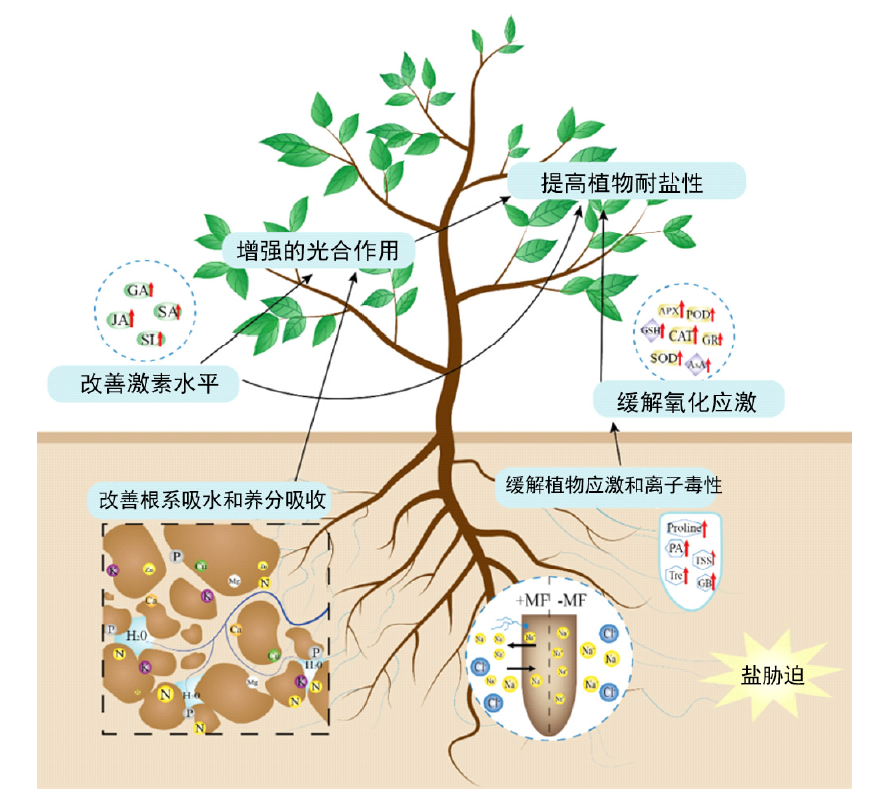
全球粮食安全正面临日益严峻的耕地盐渍化威胁,开发可持续治理方案迫在眉睫。盐胁迫通过诱导渗透失衡、离子毒性及氧化损伤等机制抑制作物生长,传统物理与化学修复技术虽短期有效,但易引发二次污染且成本高昂,而生物修复技术凭借其环境友好性与可持续性成为研究热点。本文系统综述了盐胁迫下植物-微生物互作机制的研究进展:首先解析盐胁迫对植物生理代谢(光合、养分吸收、抗氧化系统)及土壤微生态(微生物多样性、养分转化)的负面影响;其次,从有机渗透调节物质积累、激素代谢协同、光合途径优化、抗氧化酶激活及抗逆基因调控等方面,阐明植物自身耐盐的内在分子机制;重点评述根际促生菌(如芽孢杆菌属、假单胞菌属等)与内生真菌(如丛枝菌根真菌、木霉菌、印度梨形孢等)通过调节离子稳态、增强养分吸收、激活抗氧化防御及协同激素信号等多途径提升植物耐盐性的作用机制,并归纳不同微生物类群的功能差异与应用潜力;最后指出当前研究中微生物-植物适配规律不明、复合菌剂田间稳定性不足等关键问题,提出未来应整合多组学与合成生物技术,深化微生物-植物-环境互作网络解析,构建标准化生物修复技术体系,为盐渍化耕地治理与边际土地资源开发提供理论支撑与技术参考。
单晓宇, 吕宗勇, 张杰, 王晓菡, 孟光范. 植物耐盐机理及生物修复策略[J]. 中国农学通报, 2025, 41(35): 46-54.
SHAN Xiaoyu, LYU Zongyong, ZHANG Jie, WANG Xiaohan, MENG Guangfan. Salt-tolerant Mechanisms and Bioremediation Strategy of Plants[J]. Chinese Agricultural Science Bulletin, 2025, 41(35): 46-54.
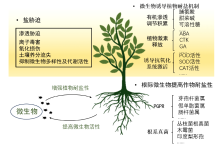
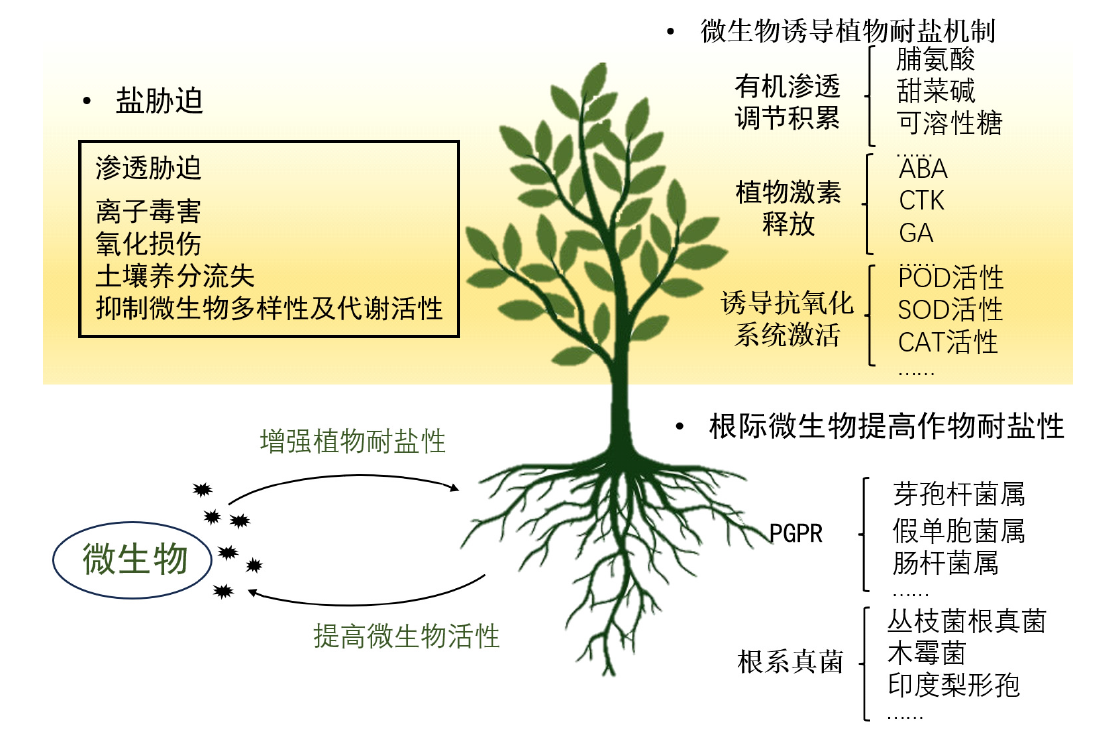
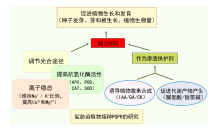
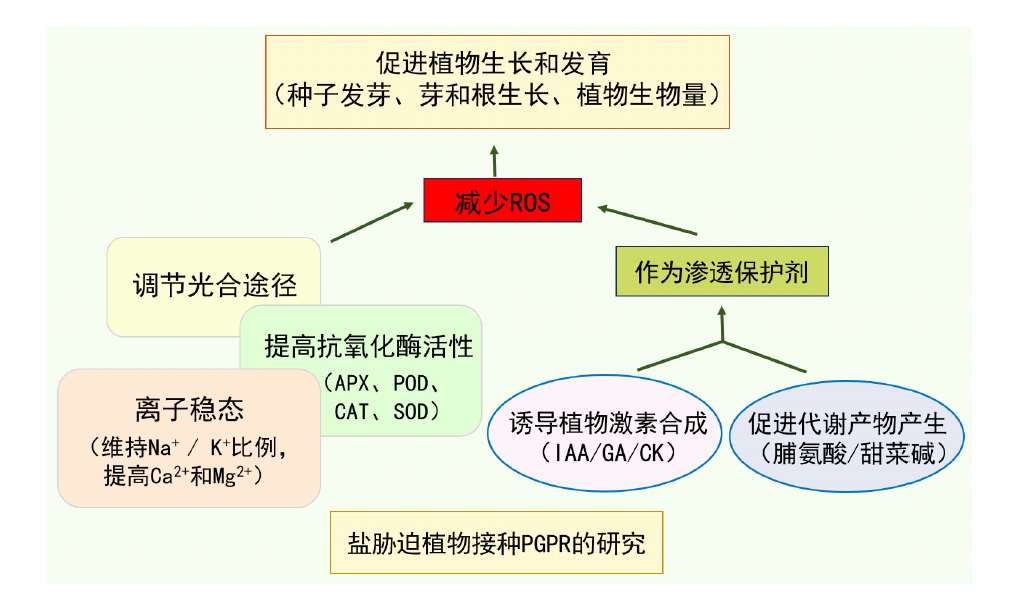
| [1] |
郑红新. 山东菏泽30万亩盐渍化土地如何变良田?[J]. 环境经济, 2024(21):54-55.
|
| [2] |
贾壮壮, 谭亚男, 管孝艳, 等. 宁夏盐碱地成因及分区治理措施综述[J]. 灌溉排水学报, 2023, 42(5):122-134.
|
| [3] |
李宏旭. 条带秸秆还田与耕作对滨海盐碱地土壤水盐运移及冬小麦产量的影响[D]. 泰安: 山东农业大学, 2024.
|
| [4] |
doi: 10.1016/j.scitotenv.2022.156946 URL |
| [5] |
杨正虎, 张涛, 张智, 等. 不同耐盐碱水稻根系生长特征对土壤盐渍化的响应[J]. 农业科学研究, 2024, 45(4):78-84.
|
| [6] |
王新富, 王彦君, 周晓芳, 等. 新疆盐碱地区土壤变化情况及固碳潜力分析[J]. 中国煤炭地质, 2024, 36(5):50-55,75.
|
| [7] |
马兴羽, 黄彩变, 曾凡江, 等. 沙地盐胁迫对油莎豆幼苗生理生长影响的模拟研究[J]. 干旱区研究, 2022, 39(6):1862-1874.
doi: 10.13866/j.azr.2022.06.17 |
| [8] |
李岩岩. 盐胁迫对苦参种子萌发和幼苗生长的影响[J]. 新农民, 2025(3):63-65.
|
| [9] |
陈晨, 杨凯波, 王奎萍. 不同胁迫对植物生长发育的影响及植物抗胁迫机制综述[J]. 江苏农业科学, 2024, 52(19):15-24.
|
| [10] |
doi: S0981-9428(19)30509-1 pmid: 31837557 |
| [11] |
|
| [12] |
|
| [13] |
顾逸彪, 颜佳倩, 薛张逸, 等. 耐盐性不同水稻品种根系对盐胁迫的响应差异及其机理研究[J]. 作物杂志, 2023(2):67-76.
|
| [14] |
张美茜, 王晓琴, 关海滨, 等. 盐胁迫对桔梗幼苗生长及其根际土壤微生物数量的影响[J]. 华西药学杂志, 2024, 39(1):89-93.
|
| [15] |
杨富玲, 石杨, 李斌, 等. 植物根系分泌物在污染及沙化土壤修复中的应用现状与前景[J]. 应用生态学报, 2021, 32(7):2623-2632.
doi: 10.13287/j.1001-9332.202107.039 |
| [16] |
doi: 10.3390/ijms24097737 URL |
| [17] |
doi: 10.1016/j.envexpbot.2023.105397 URL |
| [18] |
田甜, 王海江, 王金刚, 等. 盐胁迫下施加氮素对饲用油菜有机渗透调节物质积累的影响[J]. 草业学报, 2021, 30(10):125-136.
doi: 10.11686/cyxb2020397 |
| [19] |
doi: 10.15666/aeer URL |
| [20] |
|
| [21] |
doi: 10.1093/pcp/pcad029 URL |
| [22] |
|
| [23] |
梁爽, 王光野. 盐生植物耐盐结构研究进展[J]. 长春师范大学学报, 2015, 34(10):71-74.
|
| [24] |
宋俊志, 许承轩, 武文韬, 等. NaCl胁迫对非洲菊幼苗生长与生理特性的影响[J]. 井冈山大学学报(自然科学版), 2024, 45(3):43-50.
|
| [25] |
秦红艳, 艾军, 许培磊, 等. 盐胁迫对山葡萄叶绿素荧光参数及超微结构的影响[J]. 西北植物学报, 2013, 33(6):1159-1164.
|
| [26] |
王继莲, 李明源, 周茜, 等. 盐胁迫下植物与根际微生物互作研究进展[J]. 北方园艺, 2021(17):143-149.
|
| [27] |
|
| [28] |
石婧. 棉花对盐胁迫的生理响应及耐盐机理研究[D]. 石河子: 石河子大学, 2020.
|
| [29] |
doi: 10.3390/ijms19061634 URL |
| [30] |
doi: 10.1038/s41467-023-39167-0 pmid: 37321989 |
| [31] |
周杰. 苏打盐碱地典型植物土壤生境特征及修复机制研究[D]. 长春: 中国科学院大学(中国科学院东北地理与农业生态研究所), 2024.
|
| [32] |
doi: 10.3390/biology12111416 URL |
| [33] |
伍国强, 于祖隆, 魏明. PGPR调控植物响应逆境胁迫的作用机制[J]. 草业学报, 2024, 33(6):203-218.
doi: 10.11686/cyxb2023276 |
| [34] |
doi: 10.1007/s13205-020-2104-y |
| [35] |
doi: 10.3389/fsufs.2024.1386079 URL |
| [36] |
doi: 10.1007/s11356-023-27820-6 |
| [37] |
doi: 10.1007/s10265-019-01160-4 |
| [38] |
马福林, 王昌玲, 仁增卓玛, 等. 西藏沙棘根瘤内生菌假单胞菌属的分离与鉴定[J]. 甘肃农业大学学报, 2023, 58(3):76-81,90.
|
| [39] |
doi: 10.1038/s41598-020-62725-1 |
| [40] |
doi: 10.1016/j.stress.2023.100306 URL |
| [41] |
冯健茹, 俄文慧, 朱秀玲, 等. 一株栖稻假单胞菌NYCS1-5的鉴定及其对玉米的耐盐促生功能[J]. 山东农业大学学报(自然科学版), 2021, 52(5):723-730.
|
| [42] |
doi: 10.3390/agronomy14081642 URL |
| [43] |
doi: 10.1007/s11104-023-06360-5 |
| [44] |
doi: 10.3389/fpls.2024.1502659 URL |
| [45] |
doi: 10.1186/s12870-023-04641-w |
| [46] |
李梦娇, 彭晟, 徐绍忠, 等. 克雷伯氏菌在农业与环境治理上的应用[J]. 生物技术进展, 2014, 4(6):415-420.
doi: 10.3969/j.issn.2095-2341.2014.06.07 |
| [47] |
doi: 10.7717/peerj.11963 URL |
| [48] |
杨丽娟, 王玉凤, 张翼飞, 等. 产酸克雷伯氏菌提高玉米幼苗耐盐碱胁迫的机理[J]. 植物营养与肥料学报, 2021, 27(6):1044-1054.
|
| [49] |
doi: 10.3390/molecules26071894 URL |
| [50] |
张军民, 罗燕萍, 赵莉萍, 等. 临床分离洋葱伯克霍尔德菌鉴定方法的探讨[J]. 中华检验医学杂志, 2002(6):333-335.
|
| [51] |
doi: 10.3389/fmicb.2022.1050901 URL |
| [52] |
doi: 10.3390/agronomy10020168 URL |
| [53] |
doi: 10.3390/plants9060672 URL |
| [54] |
doi: 10.30638/eemj.2021.053 URL |
| [55] |
doi: 10.1016/j.bcab.2020.101878 URL |
| [56] |
doi: 10.3390/agriculture11030224 URL |
| [57] |
doi: 10.1016/j.envexpbot.2024.105724 URL |
| [58] |
doi: 10.1016/j.jes.2020.06.032 URL |
| [59] |
杨晏哲, 梁静, 隋晓娜, 等. 滨海盐渍土野大豆根瘤菌分离筛选及其在大豆中的应用[J]. 微生物学报, 2023, 63(11):4154-4166.
|
| [60] |
doi: 10.1007/s00344-023-10919-y |
| [61] |
|
| [62] |
李娥, 胡华冉, 李蛟男, 等. 内生真菌提高植物抵御盐胁迫的研究进展[J]. 生物技术通报, 2019, 35(11):169-178.
doi: 10.13560/j.cnki.biotech.bull.1985.2019-0499 |
| [63] |
doi: 10.1016/j.plantsci.2024.112261 URL |
| [64] |
doi: 10.1007/s11738-024-03741-w |
| [65] |
doi: 10.1016/j.micres.2024.127906 URL |
| [66] |
doi: 10.3390/jof10040283 URL |
| [67] |
|
| [68] |
doi: 10.3390/su132313226 URL |
| [69] |
doi: 10.1093/jxb/erab335 pmid: 34279634 |
| [70] |
doi: 10.1080/01490451.2025.2452568 URL |
| [71] |
doi: 10.3389/fpls.2022.1037273 URL |
| [72] |
doi: 10.1021/acs.jafc.4c00700 URL |
| [73] |
doi: 10.1016/j.rhisph.2024.100987 URL |
| [74] |
|
| [75] |
|
| [1] | 徐静, 王超, 万小刚, 赵岳, 伍勇. 基于文献计量的中国植物内生真菌学位论文研究热点与趋势分析[J]. 中国农学通报, 2025, 41(8): 140-148. |
| [2] | 丛添玥, 邢翔宇, 尤梦瑶, 程丽, 郑春英. 基于黄酮类化合物生物合成的工业大麻内生真菌HMY07次生代谢产物研究[J]. 中国农学通报, 2025, 41(5): 56-62. |
| [3] | 王娜娜, 何宗均, 董昱辰, 路垚, 路来风, 赵琳娜, 沈晓梅. 耐盐碱菌株的筛选及其对玉米幼苗促生效果的评估[J]. 中国农学通报, 2025, 41(30): 8-17. |
| [4] | 相微微, 王雨司, 彭军, 王建武, 陈花. 2株根际促生菌对水稻营养品质的影响[J]. 中国农学通报, 2025, 41(3): 158-164. |
| [5] | 刘炜烨, 孙铭婕, 刘幸红, 董国良, 王延平, 刘方春, 马海林. 膨润土保水剂特征及其在盐碱地改良中的应用研究进展[J]. 中国农学通报, 2025, 41(29): 84-90. |
| [6] | 公丹, 胡媚茹, 林云, 刘金洋, 吴然然, 闫强, 陈景斌, 薛晨晨, 袁娜, 吴燕, 袁星星, 陈新. 作物耐盐育种前沿技术研究进展[J]. 中国农学通报, 2025, 41(21): 18-26. |
| [7] | 王楷予, 王兆轩, 敖国旭, 葛菁萍, 凌宏志, 孙珊珊. 生物修复重金属污染的研究进展:基于微生物诱导碳酸盐沉淀技术[J]. 中国农学通报, 2025, 41(17): 62-71. |
| [8] | 杨义, 赵守祺, 葛菁萍, 宋刚, 杜仁鹏. 微生物胞外多糖在环境中的应用[J]. 中国农学通报, 2024, 40(9): 66-74. |
| [9] | 赵铭, 常春艳, 王卓然, 赵庚星. 黄三角濒海区土壤盐渍化的驱动力分析及预测模拟[J]. 中国农学通报, 2024, 40(6): 75-83. |
| [10] | 宋小双, 张瑶, 李亚洲, 邓勋. 植物内生真菌多样性及功能研究进展[J]. 中国农学通报, 2024, 40(30): 114-118. |
| [11] | 邢翔宇, 丛添玥, 关昕, 祁可香, 李宛儒, 张赫, 尤梦瑶, 吴桐, 郑春英. 工业大麻内生真菌HDM07挥发性成分分析[J]. 中国农学通报, 2024, 40(30): 103-113. |
| [12] | 巨亚雯, 徐蓬, 陈亚丽, 付佑胜, 曹凯歌. 盐胁迫下内生真菌发酵液对小麦种子萌发以及幼苗生长的影响[J]. 中国农学通报, 2024, 40(3): 26-32. |
| [13] | 吕雨泽, 蔡柏岩. AMF介导的菌根植物抵抗重金属Pb胁迫的研究进展[J]. 中国农学通报, 2024, 40(2): 77-83. |
| [14] | 胡诗钦, 顾怀应, 郭龙彪, 郝芷圻, 刘长华, 孟丽君. 盐碱地的生物修复方法[J]. 中国农学通报, 2024, 40(17): 36-42. |
| [15] | 陈丽楠, 刘秀春, 周晏起, 朱红. 设施土壤次生盐渍化特征及修复进展[J]. 中国农学通报, 2023, 39(9): 79-84. |
| 阅读次数 | ||||||
|
全文 |
|
|||||
|
摘要 |
|
|||||
