欢迎访问《中国农学通报》,

中国农学通报 ›› 2026, Vol. 42 ›› Issue (18): 100-110.doi: 10.11924/j.issn.1000-6850.casb2026-0422

• 资源·环境·生态·土壤·气象 • 上一篇    下一篇

1972—2025年朔州市降水时空演变及其对农业的影响

李睿1(), 吴林栋2(), 罗焕梅3, 王倩君1, 张宏4   

  1. 1 山西省朔州市气象局, 山西朔州 036002
    2 山西省气象数据中心, 太原 030006
    3 朔州市朔城区气象局, 山西朔州 036002
    4 朔州市平鲁区气象局, 山西平鲁 036800
  • 收稿日期:2026-05-09 修回日期:2026-07-10 出版日期:2026-09-25 发布日期:2026-09-24
  • 通讯作者:
    吴林栋,男,1976年出生,工程师,本科,主要从事气象探测与气象服务工作。通信地址:030006山西省太原市平阳路80号 山西省气象数据中心,Tel:0351-7421197,E-mail:。
  • 作者简介:

    李睿,男,1977年出生,高级工程师,本科,学士,主要从事天气气候分析和气象预报服务技术方法的研究及应用。通信地址:036002 山西省朔州市朔城区开发北路 朔州市气象局,Tel:0349-2161927,E-mail:。

  • 基金资助:
    山西省气象局面上项目“气候变化对雁门关农牧交错带农牧业气候资源的影响研究”(SXKMSQH20246708); 山西省气象局揭榜挂帅项目“朔州市强对流天气特征及预报预警技术指标研究”(SXKJBGS202410)

Temporal and Spatial Evolution of Precipitation in Shuozhou City from 1972 to 2025 and Its Impact on Agriculture

LI Rui1(), WU Lindong2(), LUO Huanmei3, WANG Qianjun1, ZHANG Hong4   

  1. 1 Shuozhou Meteorological Bureau of Shanxi Province, Shuozhou, Shanxi 036002
    2 Shanxi Meteorological Data Center, Taiyuan 030006
    3 Shuocheng District Meteorological Bureau of Shuozhou City, Shuozhou, Shanxi 036002
    4 Pinglu District Meteorological Bureau of Shuozhou City, Pinglu, Shanxi 036800
  • Received:2026-05-09 Revised:2026-07-10 Published:2026-09-25 Online:2026-09-24

摘要:

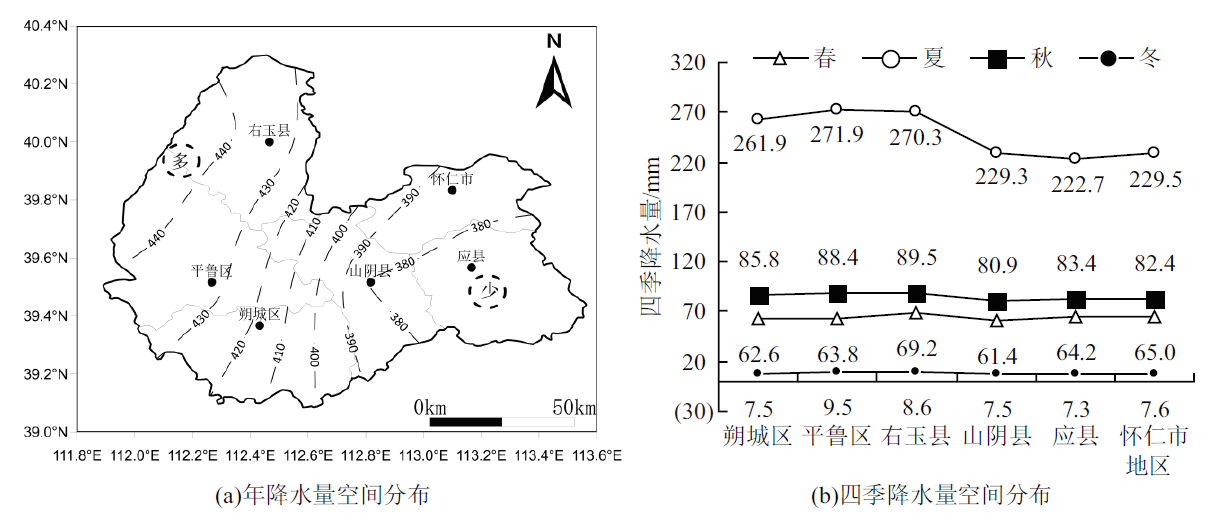
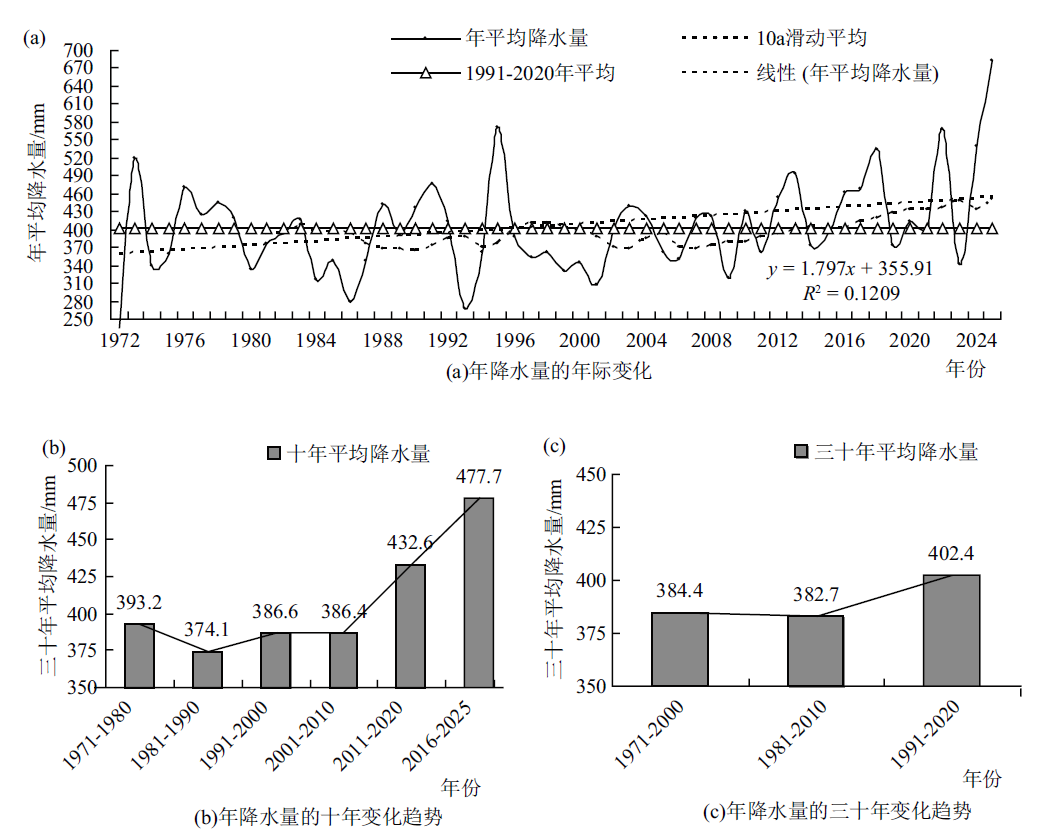
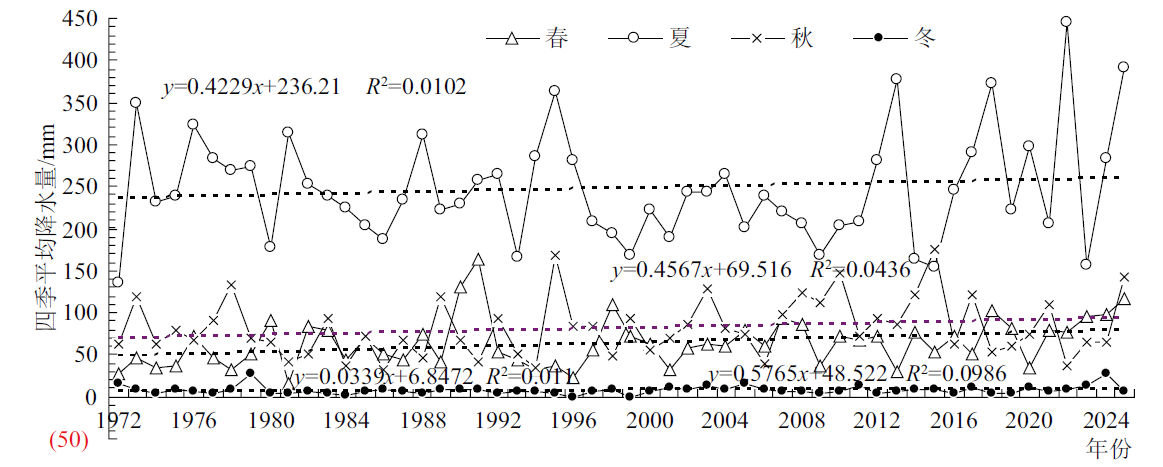
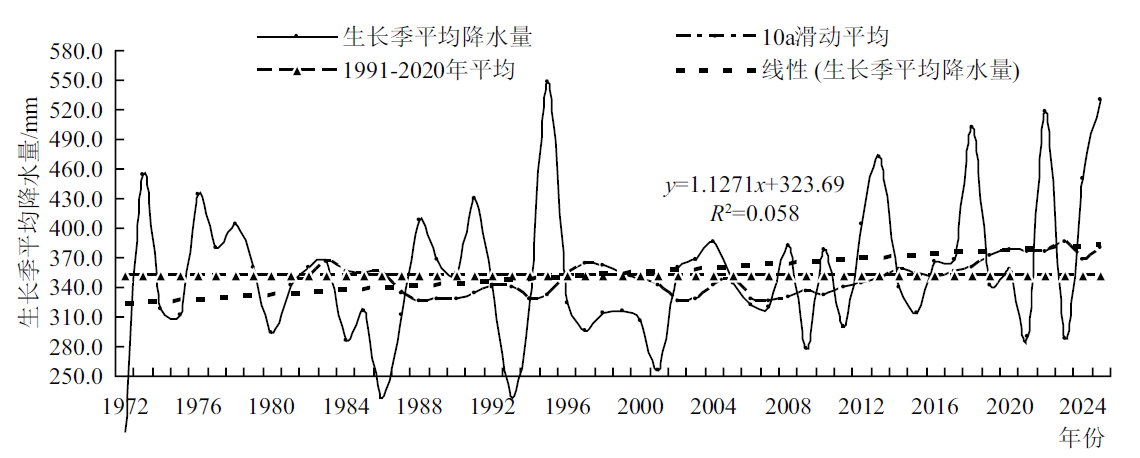
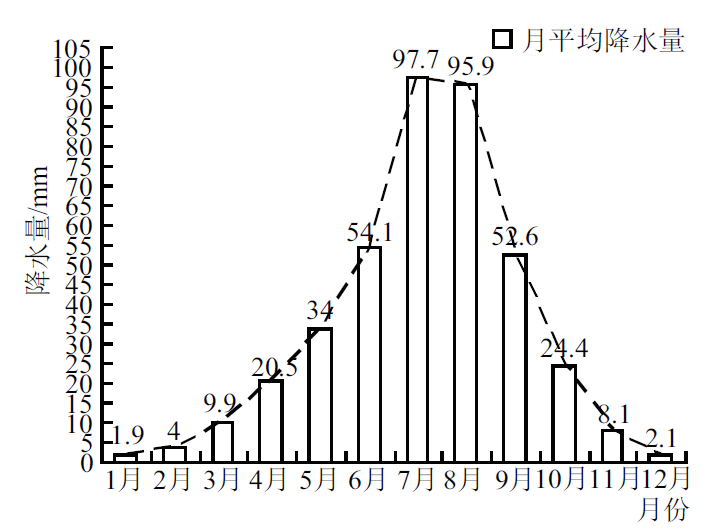
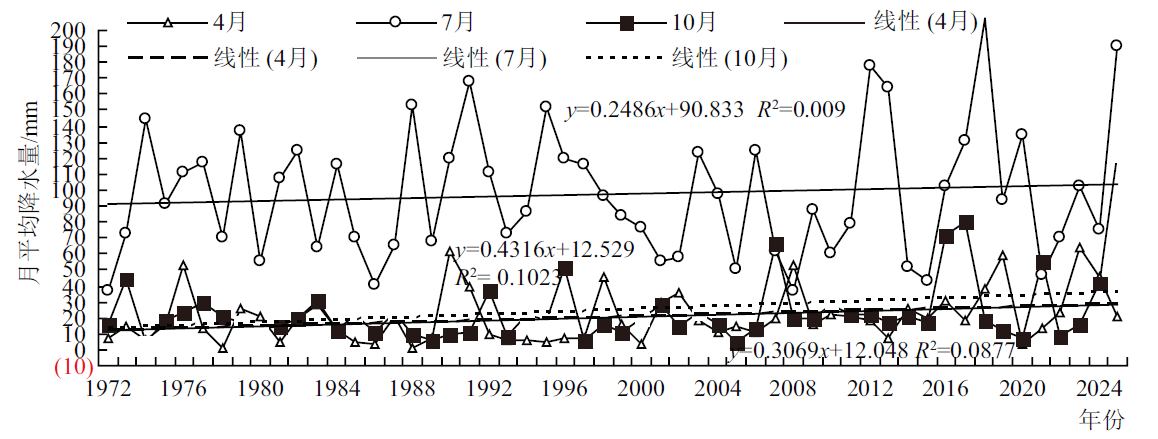
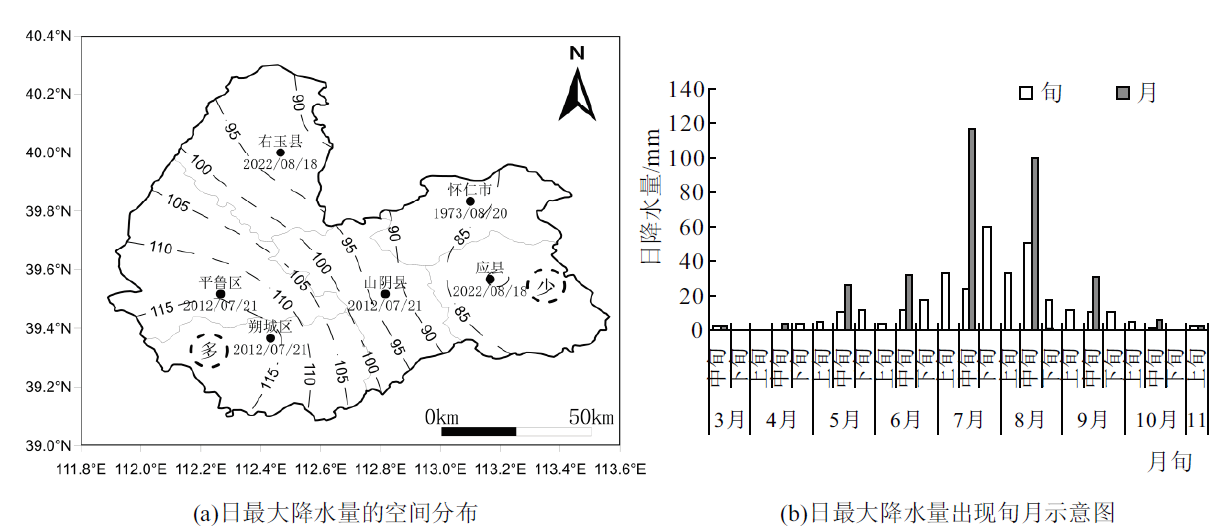
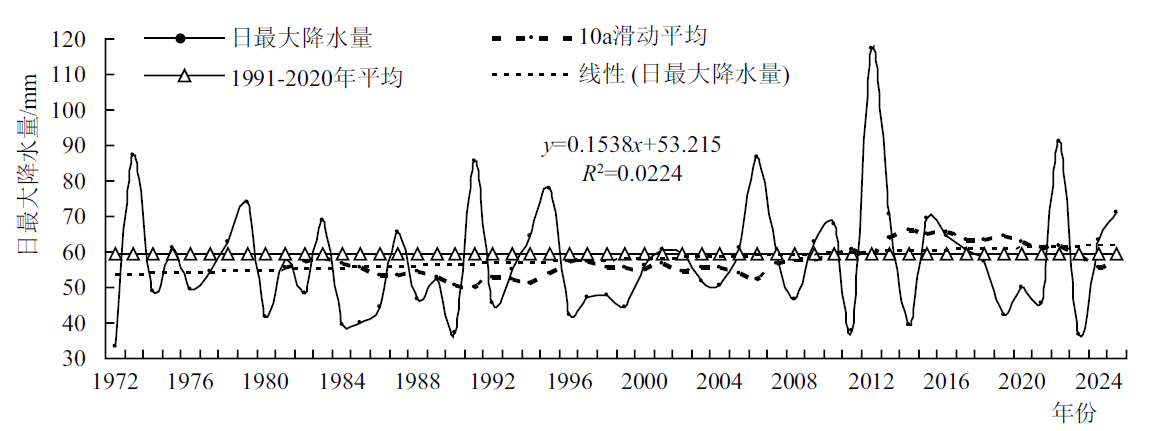
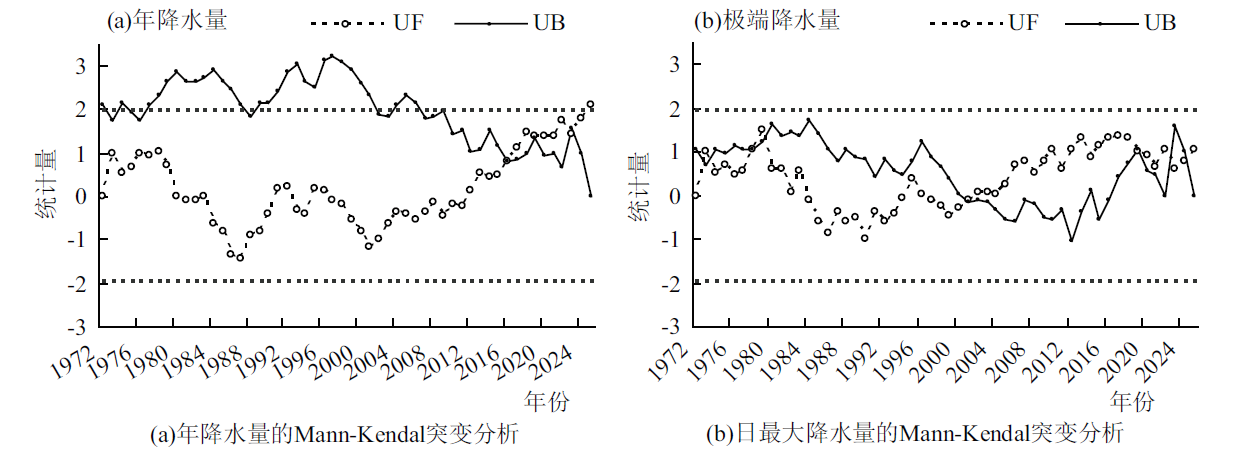
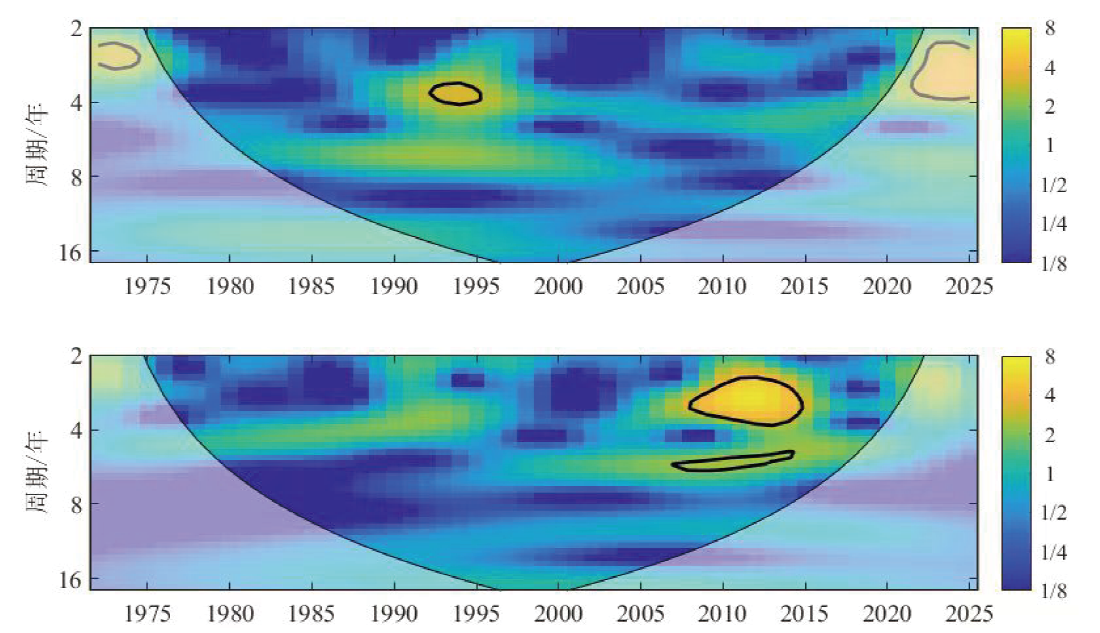
朔州市为晋北半干旱生态脆弱区,其以雨养农业为主的耕作模式对降水变化高度敏感。气候变化正加剧该区域降水时空分布的波动性,导致旱涝灾害频发,严重影响农业生产稳定。本文旨在揭示朔州市降水时空演变规律及其对农业生产的双重影响,为当地优化农业布局、提升灾害风险防控能力提供科学依据。基于朔州市6县区1972—2025年54 a的降水数据,采用线性倾向估计、M-K检验、Morlet小波分析等方法,分析降水变化的时空演变特征及其对农业的影响。结果表明:朔州降水呈西多东少、自西向东递减分布。年降水量与日最大降水量均呈上升趋势,增幅分别为18.0 mm/10 a、1.5 mm/10 a;春、夏、秋三季降水均呈增多趋势,其中春季增幅最为显著,而冬季降水变化不明显。1991年以来逐年代降水量持续增加,2016—2025年增幅最显著,近30 a平均降水量较前期显著偏高。降水集中于5—9月,占全年降水的70%,其中7—8月占48%;极端降水集中在7月下旬—8月中旬,极值117.1 mm出现在朔城区。年降水于2023年发生了显著突变,并呈现约3 a的周期性波动,日最大降水量则在1979年和2001年经历了两次突变,并表现出2~5 a周期性特征。降水变化对农业利弊并存:降水量增加可缓解春旱伏旱、改善墒情、促进耐旱作物增产;但夏季短时强降水与秋季连阴雨增多,易引发洪涝渍涝、作物倒伏、病害蔓延,加之空间分布不均,进一步加剧区域农业风险分化。综上,近54 a来,朔州市降水呈增多趋势,集中度与极端性显著增强,虽总体利于旱作农业,但季节不均和极端事件频发威胁生产稳定。未来应依东西部区域差异,东部完善排水防涝设施,西部推进集雨补灌措施,并优化作物品种与播期,以实现降水资源高效利用与防灾减灾协同。本研究成果可为朔州市的气候资源利用和农业布局优化提供科学依据。

关键词: 朔州市, 降水时空变化, 线性倾向估计, Mann-Kendall 检验, 农业影响

Abstract:

Shuozhou City, located in the semi-arid and ecologically fragile region of northern Shanxi, is highly sensitive to precipitation changes due to its rain-fed agricultural system. Climate change has intensified spatiotemporal fluctuations in precipitation and increased the frequency of droughts and floods, severely affecting agricultural stability. This study aims to reveal the spatiotemporal patterns of precipitation evolution and their dual impacts on agriculture, providing scientific support for optimizing local agricultural planning and disaster risk prevention and management capabilities. Based on precipitation data of 54 years (1972-2025) from six counties and districts in Shuozhou, we applied linear trend estimation, the Mann-Kendall test, and Morlet wavelet analysis to examine precipitation trends and their effects on agriculture. Results showed that the annual precipitation in Shuozhou decreased gradually from west to east, with higher values in the western regions. Both annual and daily maximum precipitations showed increasing trends, rising by 18.0 mm per decade and 1.5 mm per decade, respectively. Precipitation during spring, summer, and autumn had all increased significantly, while winter precipitation showed no notable change. Since 1991, precipitation had steadily increased across decades, with the most pronounced growth occurring between 2016 and 2025; average precipitation over the past 30 years had been significantly higher than in earlier periods. Precipitation was concentrated from May to September, accounting for 70% of the annual total, with July and August alone contributing 48%. Extreme precipitation events peaked from late July to mid-August, with a record high of 117.1 mm recorded in Shuocheng District. Annual precipitation showed a sudden shift in 2023 and exhibited a 3-year cycle, while daily extreme precipitation experienced two abrupt shifts (in 1979 and 2001) and followed a 2-5 year cycle. The impact of precipitation changes on agriculture is mixed: increased rainfall helps alleviate spring and summer droughts, improves soil moisture, and promotes higher yields of drought-tolerant crops. However, more frequent short-term heavy rains in summer and prolonged rainy spells in autumn increase risks of flooding, water logging, crop lodging, and disease outbreaks. Uneven spatial distribution further intensifies regional disparities in agricultural vulnerability. Overall, over the past 54 years, Shuozhou has experienced an upward trend in precipitation, with greater concentration and increased extremity. While this generally benefits dry land farming, seasonal imbalance and frequent extreme events threaten production stability. Future strategies should account for regional differences-improving drainage and flood prevention in eastern areas and promoting rainwater harvesting and supplementary irrigation in western areas, while optimizing crop varieties and sowing schedules to achieve efficient water use and effective disaster mitigation. This research provides a scientific basis for climate resource utilization and agricultural planning in the region.

Key words: Shuozhou City, spatial-temporal variation of precipitation, linear trend estimation, Mann-Kendall test, impact on agricultural

中图分类号: