欢迎访问《中国农学通报》,

中国农学通报 ›› 2026, Vol. 42 ›› Issue (10): 87-95.doi: 10.11924/j.issn.1000-6850.casb2025-0757
武文宇1( ), 张荣涛1, 王申正2, 曹文博1, 钟海秀1(), 付晓宇1()
收稿日期:2025-09-07
修回日期:2026-04-28
出版日期:2026-05-25
发布日期:2026-05-27
通讯作者:
作者简介:武文宇,男,1999年出生,黑龙江哈尔滨人,研究实习员,硕士,主要从事生态学研究。通信地址:150040 黑龙江省哈尔滨市香坊区哈平路103号,Tel:0451-86664613,E-mail:2950140845@qq.com。
基金资助:
WU Wenyu1(), ZHANG Rongtao1, WANG Shenzheng2, CAO Wenbo1, ZHONG Haixiu1(), FU Xiaoyu1()
Received:2025-09-07
Revised:2026-04-28
Published:2026-05-25
Online:2026-05-27
摘要:
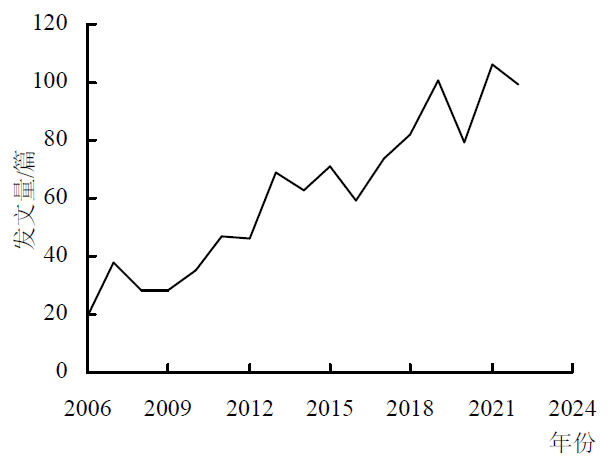
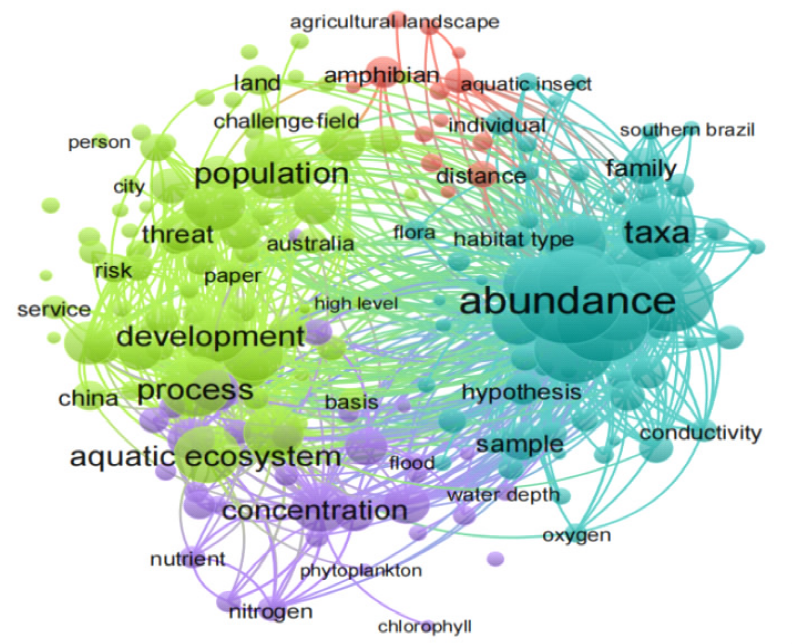
水生生物对于维护全球生态安全和生物多样性具有重要的作用。为揭示全球湿地水生生物多样性研究演进规律、研究热点与合作格局,基于Web of Science核心数据库,以aquatic biodiversity和wetland为检索词,检索2003—2022年发表的相关文献,采用文献计量学与可视化分析方法,从发文趋势、国家、机构、高被引文献、关键词聚类、国际合作等维度开展系统分析。结果表明,2003—2022年湿地水生生物多样性的研究呈持续快速增长态势,研究聚焦湿地生态系统、群落结构、环境胁迫、人类活动影响4个方向。美国、巴西、澳大利亚为主要发文国家,法国国家科学研究中心在该领域的发文量最大,并且与其他机构存在着非常紧密的合作关系。中国和美国合作最为紧密,是国际合作网络枢纽。全球湿地水生生物多样性的研究热点方向可以归纳为4个聚类,分别为水生生态系统发展、水生生物群落结构、水生生物多样性所受影响、人类活动所带来的生态问题。目前,湿地水生生物多样性研究正处于发展阶段,具有稳定的发展潜力。中国研究发文规模已跻身国际前列,但仍存在研究布局不均衡、多主题交叉融合不足、核心科学机制探究薄弱等问题。未来需构建标准化长期监测网络,强化多因子耦合与生态功能机制研究,为湿地水生生物多样性保护与可持续管理提供科学支撑。
中图分类号:
武文宇, 张荣涛, 王申正, 曹文博, 钟海秀, 付晓宇. 基于Web of Science分析湿地水生生物多样性研究态势[J]. 中国农学通报, 2026, 42(10): 87-95.
WU Wenyu, ZHANG Rongtao, WANG Shenzheng, CAO Wenbo, ZHONG Haixiu, FU Xiaoyu. Analysis of Research Trends in Wetland Aquatic Biodiversity Based on Web of Science[J]. Chinese Agricultural Science Bulletin, 2026, 42(10): 87-95.
| 排名 | 机构 | 发文量/篇 |
|---|---|---|
| 1 | 法国国家科学研究中心 | 43 |
| 2 | 美国内政部 | 36 |
| 3 | 美国地质调查局 | 35 |
| 4 | 中国科学院 | 30 |
| 5 | 西班牙高等科研理事会 | 28 |
| 6 | 法国国家科学研究中心生态与环境研究所 | 22 |
| 6 | 里约多锡诺斯淡水河谷大学 | 22 |
| 8 | 阿根廷国家科学技术研究委员会 | 21 |
| 8 | 格里菲斯大学 | 21 |
| 8 | 格里菲斯大学 黄金海岸校区 | 21 |
| 排名 | 机构 | 发文量/篇 |
|---|---|---|
| 1 | 法国国家科学研究中心 | 43 |
| 2 | 美国内政部 | 36 |
| 3 | 美国地质调查局 | 35 |
| 4 | 中国科学院 | 30 |
| 5 | 西班牙高等科研理事会 | 28 |
| 6 | 法国国家科学研究中心生态与环境研究所 | 22 |
| 6 | 里约多锡诺斯淡水河谷大学 | 22 |
| 8 | 阿根廷国家科学技术研究委员会 | 21 |
| 8 | 格里菲斯大学 | 21 |
| 8 | 格里菲斯大学 黄金海岸校区 | 21 |
| 排名 | 论文题目 | 第一作者 | 来源期刊 | ||||
|---|---|---|---|---|---|---|---|
| 刊名 | 分区 | 5年影响因子 | 被引频次 | ||||
| 1 | A global perspective on wetland salinization: Ecological consequences of a growing threat to freshwater wetlands | Herbert E R | Ecosphere | 中科院二区 | 3.4 | 491 | |
| 2 | Hydrologic connectivity and the contribution of stream headwaters to ecological integrity at regional scales | Freeman M C | Journal of the American water resources association | 中科院四区 | 3 | 364 | |
| 3 | Climate change impacts on groundwater and dependent ecosystems | Klove B | Journal of hydrology | 中科院一区 | 6.6 | 353 | |
| 4 | Molecular detection of vertebrates in stream water: A demonstration using rocky mountain tailed frogs and idaho giant salamanders | Goldberg C S | Plos one | 中科院三区 | 3.8 | 320 | |
| 5 | Multiple stressors in coupled river-floodplain ecosystems | Tockner K | Freshwater biology | 中科院二区 | 3.3 | 309 | |
| 6 | Scientists' warning to humanity on the freshwater biodiversity crisis | Albert J S | Ambio | 中科院二区 | 6.5 | 307 | |
| 7 | Managing water in agriculture for food production and other ecosystem services | Gordon L J | Agricultural water management | 中科院一区 | 6.6 | 259 | |
| 8 | The ecology of European ponds: Defining the characteristics of a neglected freshwater habitat | Céréghino R | Hydrobiologia | 中科院三区 | 2.6 | 250 | |
| 9 | Comparative biodiversity of aquatic habitats in the European agricultural landscape | Davies B | Agriculture ecosystems & environment | 中科院一区 | 6.7 | 209 | |
| 10 | Ecologically functional floodplains: Connectivity, flow regime, and scale | Opperman J J | Journal of the American water resources association | 中科院四区 | 3 | 183 | |
| 排名 | 论文题目 | 第一作者 | 来源期刊 | ||||
|---|---|---|---|---|---|---|---|
| 刊名 | 分区 | 5年影响因子 | 被引频次 | ||||
| 1 | A global perspective on wetland salinization: Ecological consequences of a growing threat to freshwater wetlands | Herbert E R | Ecosphere | 中科院二区 | 3.4 | 491 | |
| 2 | Hydrologic connectivity and the contribution of stream headwaters to ecological integrity at regional scales | Freeman M C | Journal of the American water resources association | 中科院四区 | 3 | 364 | |
| 3 | Climate change impacts on groundwater and dependent ecosystems | Klove B | Journal of hydrology | 中科院一区 | 6.6 | 353 | |
| 4 | Molecular detection of vertebrates in stream water: A demonstration using rocky mountain tailed frogs and idaho giant salamanders | Goldberg C S | Plos one | 中科院三区 | 3.8 | 320 | |
| 5 | Multiple stressors in coupled river-floodplain ecosystems | Tockner K | Freshwater biology | 中科院二区 | 3.3 | 309 | |
| 6 | Scientists' warning to humanity on the freshwater biodiversity crisis | Albert J S | Ambio | 中科院二区 | 6.5 | 307 | |
| 7 | Managing water in agriculture for food production and other ecosystem services | Gordon L J | Agricultural water management | 中科院一区 | 6.6 | 259 | |
| 8 | The ecology of European ponds: Defining the characteristics of a neglected freshwater habitat | Céréghino R | Hydrobiologia | 中科院三区 | 2.6 | 250 | |
| 9 | Comparative biodiversity of aquatic habitats in the European agricultural landscape | Davies B | Agriculture ecosystems & environment | 中科院一区 | 6.7 | 209 | |
| 10 | Ecologically functional floodplains: Connectivity, flow regime, and scale | Opperman J J | Journal of the American water resources association | 中科院四区 | 3 | 183 | |
| [1] |
doi: 10.3390/w11040788 URL |
| [2] |
doi: 10.1002/aqc.v26.5 URL |
| [3] |
|
| [4] |
doi: 10.3390/w15132410 URL |
| [5] |
doi: 10.1016/j.scitotenv.2017.02.001 URL |
| [6] |
doi: 10.1016/j.ecolind.2023.109990 URL |
| [7] |
doi: 10.1016/j.envres.2022.113808 URL |
| [8] |
doi: 10.1111/brv.2019.94.issue-3 URL |
| [9] |
doi: 10.1016/j.scitotenv.2023.166566 URL |
| [10] |
doi: 10.1016/j.ecolind.2018.01.069 URL |
| [11] |
doi: 10.1007/s10750-007-0579-8 URL |
| [12] |
doi: 10.1016/j.agee.2007.10.006 URL |
| [13] |
杨杰峰, 杜丹, 田思思, 等. 湖北省典型湖泊湿地生物多样性评价研究[J]. 水生态学杂志, 2017, 38(3):15-22.
|
| [14] |
崔玲宇, 喻曼, 乔宇颖, 等. 基于Web of Science数据库的土壤质量评价及其微生物指标研究趋势分析[J]. 浙江农业学报, 2023, 35(11):2688-2697.
doi: 10.3969/j.issn.1004-1524.20230785 |
| [15] |
doi: 10.2147/PRBM.S394693 pmid: 36846313 |
| [16] |
王晴, 杨宗帅, 尹立普, 等. 有机污染土壤和地下水生物修复研究热点和趋势——基于Web of Science数据库的文献计量学分析[J]. 生物工程学报, 2021, 37(10):3549-3564.
|
| [17] |
程智超, 王文浩, 隋心, 等. 基于文献计量分析的湿地土壤微生物研究热点趋势[J]. 中国农学通报, 2020, 36(29):145-152.
doi: 10.11924/j.issn.1000-6850.casb2020-0056 |
| [18] |
刘莎, 黄文欣, 罗天相. 基于CiteSpace的湿地生态服务功能文献计量与可视化分析[J]. 安徽农业科学, 2023, 51(13):215-220.
|
| [19] |
何燕敏, 蔡小虎, 郑欢, 等. 基于CiteSpace分析的湿地恢复技术研究热点与前沿[J]. 应用与环境生物学报, 2024, 30(1):186-196.
|
| [20] |
郑林胜, 朱仔伟, 迟韵阳, 等. 基于CNKI文献计量分析的湿地植物研究现状[J]. 特种经济动植物, 2022, 25(10):158-163.
|
| [21] |
李前正, 易斯倚, 武俊梅, 等. 基于CNKI数据库的人工湿地文献计量分析[J]. 水生态学杂志, 2022, 43(3):63-69.
|
| [22] |
张孜璇, 于洪文, 孟龙月. 土壤中微塑料污染现状及其热点趋势可视化分析[J]. 中国农业大学学报, 2023, 28(6):36-49.
|
| [23] |
刘杏梅, 赵健, 徐建明. 污染农田土壤的重金属钝化技术研究——基于Web of Science数据库的计量分析[J]. 土壤学报, 2021, 58(2):445-455.
|
| [24] |
胡远妹, 周俊, 刘海龙, 等. 基于Web of Science对土壤重金属污染修复研究的计量分析[J]. 土壤学报, 2018, 55(3):707-720.
|
| [25] |
doi: 10.1177/1940082919872634 URL |
| [26] |
doi: 10.1007/s00027-011-0232-5 URL |
| [27] |
肖春艳, 胡情情, 陈晓舒, 等. 基于文献计量法的大气氮沉降研究进展[J]. 生态学报, 2023(3):1-15.
|
| [28] |
陈江洪. 德法最大国立科研机构的科学文化传播[J]. 科普研究, 2012, 7(3):47-51.
|
| [29] |
陈静, 汤文豪, 陈丽萍, 等. 美国内政部自然资源管理[J]. 国土资源情报, 2020(1):38-45.
|
| [30] |
陈杨, 王学评, 宋韦剑. 从科学战略演变看美国地质调查局科研领域的发展[J]. 自然资源情报, 2022(5):14-21.
|
| [31] |
徐旭, 时光宇, 徐斌, 等. 湿地生态保护现状与资源可持续管理模式[J]. 现代农业, 2022(5):92-95.
|
| [32] |
|
| [33] |
doi: 10.1111/jawr.2008.43.issue-1 URL |
| [34] |
doi: 10.1016/j.jhydrol.2013.06.037 URL |
| [35] |
张增可, 王齐, 吴雅华, 等. 基于CiteSpace植物功能性状的研究进展[J]. 生态学报, 2020, 40(3):1101-1112.
|
| [36] |
严陶韬, 薛建辉. 中国生物多样性研究文献计量分析[J]. 生态学报, 2021, 41(19):7879-7892.
|
| [37] |
doi: 10.1016/j.physa.2016.01.017 URL |
| [38] |
|
| [39] |
doi: 10.1002/asi.v61.12 URL |
| [40] |
doi: 10.1002/asi.v57:3 URL |
| [41] |
doi: 10.1002/aqc.v31.3 URL |
| [42] |
doi: 10.1016/j.quascirev.2022.107867 URL |
| [43] |
doi: 10.1038/416617a |
| [44] |
doi: 10.1016/j.joi.2010.07.002 URL |
| [45] |
doi: 10.1016/j.joi.2013.03.003 URL |
| [46] |
李华. 武汉市湖泊与河流湿地动态变化及驱动力分析研究[D]. 武汉: 华中农业大学, 2008.
|
| [47] |
doi: 10.1007/s11769-015-0767-9 URL |
| [1] | 黄殷洪, 郭金金, 薛杨, 曾文, 陈亚娟, 袁勇. 基于知识图谱的三七总皂苷文献计量与可视化分析[J]. 中国农学通报, 2026, 42(9): 207-218. |
| [2] | 彭翠仙, 王灿, 杨玉玲, 李玲, 李桂琳, 孙宏伟, 陶永宏. 不同生长年限野生叠鞘石斛根际土壤微生物群落的结构特征[J]. 中国农学通报, 2026, 42(7): 130-140. |
| [3] | 魏丹, 崔福星, 潘虹, 李虹, 郭媛, 杨立宾, 付晓宇, 李海军. 火干扰对土壤动物的影响—基于文献计量分析[J]. 中国农学通报, 2026, 42(6): 111-119. |
| [4] | 骆国辉, 俞世康, 翟扬妮, 顾会战, 李富程, 王彬, 吴涛. 不同连作障碍类型下植烟土壤化感物质和微生物多样性特征[J]. 中国农学通报, 2026, 42(5): 101-108. |
| [5] | 周佳慧, 唐浦林, 张诗野, 张爱华, 汪树理, 魏航, 任新龙, 郜玉钢, 王艳芳. 基于CNKI数据库的土壤酸化调节措施文献计量分析[J]. 中国农学通报, 2026, 42(2): 203-210. |
| [6] | 秦小欢, 焦多朵, 金铁棚, 孙师, 郜坤媛, 胡建霖. 人参属植物根系微生态研究态势分析[J]. 中国农学通报, 2026, 42(2): 84-92. |
| [7] | 陈秋如, 王静静, 卢灿, 肖石红, 魏龙, 李一凡, 汪小珺, 谢嘉炜, 殷祚云. 基于CiteSpace的植物净化水质研究前沿趋势探究[J]. 中国农学通报, 2026, 42(10): 106-116. |
| [8] | 郭家隆, 胡峰, 杨张青, 张杰, 臧贺藏, 常宝方, 李国强, 辛银平. 基于文献计量的土壤养分检测传感器研究进展[J]. 中国农学通报, 2026, 42(10): 171-178. |
| [9] | 李荣, 胡婷婷, 韦持章, 李茜茜, 闭吉圆, 孙宇. 耕整地农机装备研究现状、热点与展望——基于文献计量学[J]. 中国农学通报, 2026, 42(10): 179-194. |
| [10] | 徐静, 王超, 万小刚, 赵岳, 伍勇. 基于文献计量的中国植物内生真菌学位论文研究热点与趋势分析[J]. 中国农学通报, 2025, 41(8): 140-148. |
| [11] | 卢云峰, 李锐群, 曾润华, 李树忠, 王忠美, 李智海, 贾冬冬. 基于Web of Science文献计量的香蕉枯萎病研究态势分析[J]. 中国农学通报, 2025, 41(8): 149-158. |
| [12] | 王彦, 刘晓丽, 张怡, 陈宏灏. 基于CiteSpace的葡萄阿小叶蝉研究进展可视化分析[J]. 中国农学通报, 2025, 41(7): 121-127. |
| [13] | 曾婷, 胡晋豪, 龚颖婷, 姚建武, 申健, 王荣辉, 李盟军. 基于文献计量法的轮作影响氨排放研究进展及热点分析[J]. 中国农学通报, 2025, 41(35): 110-121. |
| [14] | 钱海林, 王诗岩, 任鹏, 杨芳, 常佳琪, 常阳阳, 王东印. 基于文献计量分析的油莎豆研究热点及趋势[J]. 中国农学通报, 2025, 41(32): 145-157. |
| [15] | 钱帅, 王明达, 祝慧, 刘淑媛, 王浩宇, 范利超. 文献计量学视角下蚯蚓对土壤有机碳转化累积的影响研究[J]. 中国农学通报, 2025, 41(32): 61-73. |
| 阅读次数 | ||||||
|
全文 |
|
|||||
|
摘要 |
|
|||||
