Welcome to Chinese Agricultural Science Bulletin,

Chinese Agricultural Science Bulletin ›› 2026, Vol. 42 ›› Issue (3): 125-132.doi: 10.11924/j.issn.1000-6850.casb2025-0746
Previous Articles Next Articles
WANG Ying1,2( ), LI Lu3, ZHU Jiayi1,2, JIA Yuanyuan3, GAO Qi4, HU Zhichao1,2()
Received:2025-09-05
Revised:2025-11-20
Online:2026-02-15
Published:2026-02-09
WANG Ying, LI Lu, ZHU Jiayi, JIA Yuanyuan, GAO Qi, HU Zhichao. Research on Identification and Yield Estimation of Artificial Alfalfa in Green-up Period in Hohhot Based on Satellite Remote Sensing[J]. Chinese Agricultural Science Bulletin, 2026, 42(3): 125-132.
Add to citation manager EndNote|Ris|BibTeX
URL: https://www.casb.org.cn/EN/10.11924/j.issn.1000-6850.casb2025-0746
| 取值范围 | 代表性含义 | 植被覆盖情况 |
|---|---|---|
| [-1,0] | 水体 | - |
| 接近0 | 裸土、岩石或植被覆盖极低区域 | 差 |
| (0,0.2) | 表示稀疏植被或低覆盖度区域(如草地、灌木丛) | 较差 |
| (0.2,0.7) | 表示中等覆盖度植被(如农田、疏林) | 中等、较好 |
| (0.7,1] | 表示高覆盖度植被(如森林、郁闭度较高的草地) | 好 |
| 取值范围 | 代表性含义 | 植被覆盖情况 |
|---|---|---|
| [-1,0] | 水体 | - |
| 接近0 | 裸土、岩石或植被覆盖极低区域 | 差 |
| (0,0.2) | 表示稀疏植被或低覆盖度区域(如草地、灌木丛) | 较差 |
| (0.2,0.7) | 表示中等覆盖度植被(如农田、疏林) | 中等、较好 |
| (0.7,1] | 表示高覆盖度植被(如森林、郁闭度较高的草地) | 好 |
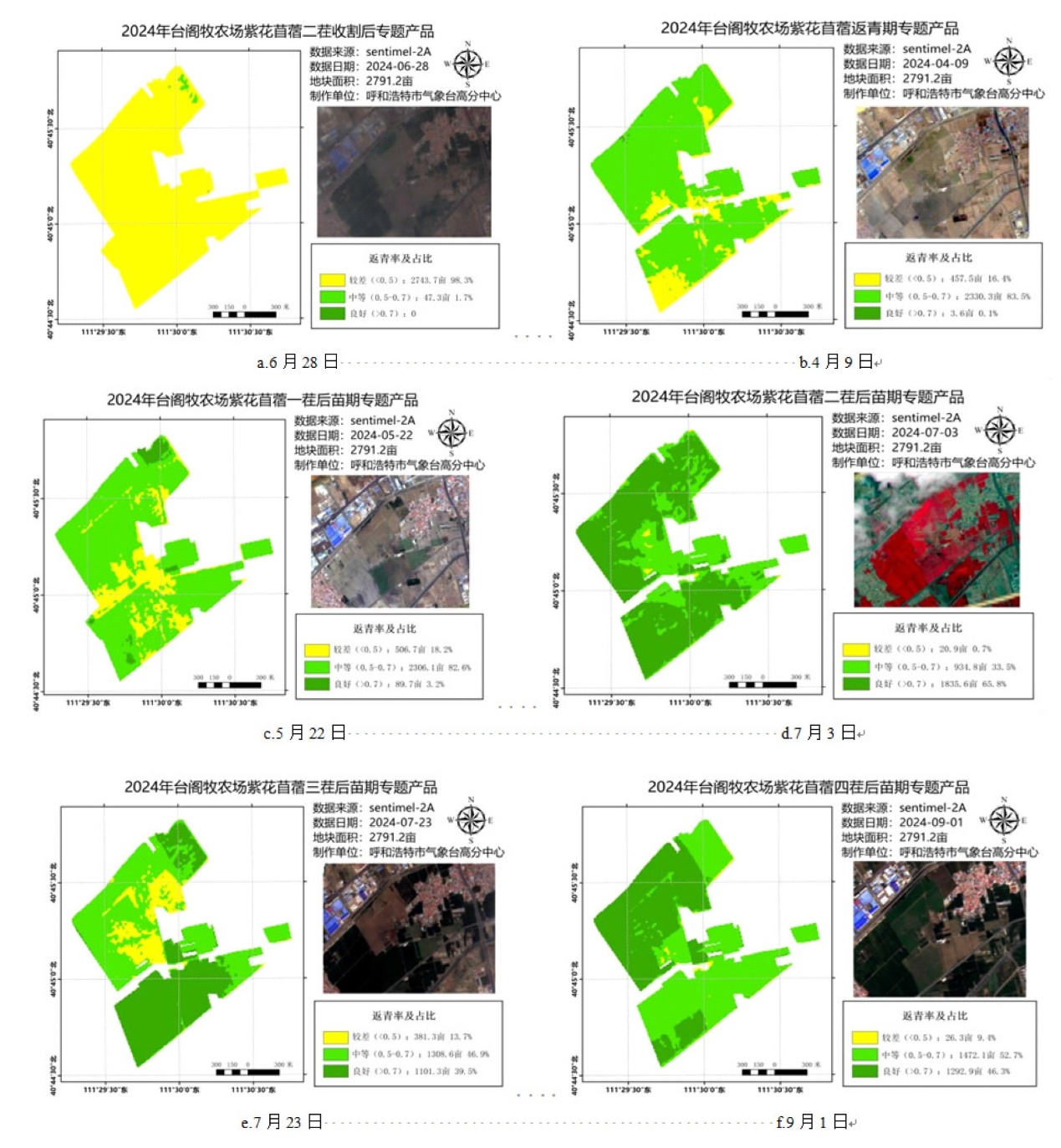
| 时期 | 地面观测日期/(月.日) | 地面观测结果 | 遥感图像日期/(月.日) | 遥感图像结果 |
|---|---|---|---|---|
| 返青期 | 4.9 | 普遍返青 | 4.9 | >0.5占比83.6%,已进入普遍返青 |
| 一茬后苗期 | 5.24 | 普遍返青 | 5.22 | >0.5占比85.8%,已进入普遍返青 |
| 二茬收割后(对比数据) | 6.25 | 二茬收割 | 6.28 | >0.5占比1.7%,未进入返青期 |
| 二茬后苗期 | 6.30 | 普遍返青 | 7.3 | >0.5占比99.3%,已进入普遍返青 |
| 三茬后苗期 | 7.24 | 普遍返青 | 7.23 | >0.5占比86.3%,已进入普遍返青 |
| 三茬后苗期(对比数据) | 7.24 | 普遍返青 | 7.26 | >0.5占比99.8%,已进入普遍返青 |
| 四茬后苗期 | 8.28 | 普遍返青 | 9.1 | >0.5占比90.6%,已进入普遍返青 |
| 时期 | 地面观测日期/(月.日) | 地面观测结果 | 遥感图像日期/(月.日) | 遥感图像结果 |
|---|---|---|---|---|
| 返青期 | 4.9 | 普遍返青 | 4.9 | >0.5占比83.6%,已进入普遍返青 |
| 一茬后苗期 | 5.24 | 普遍返青 | 5.22 | >0.5占比85.8%,已进入普遍返青 |
| 二茬收割后(对比数据) | 6.25 | 二茬收割 | 6.28 | >0.5占比1.7%,未进入返青期 |
| 二茬后苗期 | 6.30 | 普遍返青 | 7.3 | >0.5占比99.3%,已进入普遍返青 |
| 三茬后苗期 | 7.24 | 普遍返青 | 7.23 | >0.5占比86.3%,已进入普遍返青 |
| 三茬后苗期(对比数据) | 7.24 | 普遍返青 | 7.26 | >0.5占比99.8%,已进入普遍返青 |
| 四茬后苗期 | 8.28 | 普遍返青 | 9.1 | >0.5占比90.6%,已进入普遍返青 |
| 样地号 | 一茬鲜重 | 一茬干重 | 二茬鲜重 | 二茬干重 | 三茬鲜重 | 三茬干重 | 四茬鲜重 | 四茬干重 |
|---|---|---|---|---|---|---|---|---|
| 1 | 3812.2 | 827.2 | 2111.0 | 492.7 | 931.4 | 298.0 | 1229.3 | 360.7 |
| 2 | 4177.6 | 766.7 | 2782.5 | 459.5 | 1965.1 | 451.4 | 1405.0 | 350.3 |
| 3 | 3951.0 | 860.1 | 2722.3 | 557.5 | 1773.2 | 427.2 | 1322.9 | 329.8 |
| 4 | 3443.9 | 720.5 | 2689.1 | 530.3 | 1829.9 | 374.7 | 1604.0 | 350.1 |
| 5 | 2459.7 | 665.5 | 2936.1 | 614.4 | 1393.8 | 385.7 | 989.2 | 294.3 |
| 6 | 2909.9 | 664.8 | 3051.0 | 421.9 | 2189.6 | 509.2 | 1447.5 | 402.6 |
| 7 | 2814.4 | 715.9 | 2408.2 | 592.1 | 1846.5 | 483.0 | 1655.3 | 431.3 |
| 8 | 3059.1 | 764.7 | 2426.5 | 579.2 | 1682.5 | 408.6 | 1567.8 | 375.4 |
| 样地号 | 一茬鲜重 | 一茬干重 | 二茬鲜重 | 二茬干重 | 三茬鲜重 | 三茬干重 | 四茬鲜重 | 四茬干重 |
|---|---|---|---|---|---|---|---|---|
| 1 | 3812.2 | 827.2 | 2111.0 | 492.7 | 931.4 | 298.0 | 1229.3 | 360.7 |
| 2 | 4177.6 | 766.7 | 2782.5 | 459.5 | 1965.1 | 451.4 | 1405.0 | 350.3 |
| 3 | 3951.0 | 860.1 | 2722.3 | 557.5 | 1773.2 | 427.2 | 1322.9 | 329.8 |
| 4 | 3443.9 | 720.5 | 2689.1 | 530.3 | 1829.9 | 374.7 | 1604.0 | 350.1 |
| 5 | 2459.7 | 665.5 | 2936.1 | 614.4 | 1393.8 | 385.7 | 989.2 | 294.3 |
| 6 | 2909.9 | 664.8 | 3051.0 | 421.9 | 2189.6 | 509.2 | 1447.5 | 402.6 |
| 7 | 2814.4 | 715.9 | 2408.2 | 592.1 | 1846.5 | 483.0 | 1655.3 | 431.3 |
| 8 | 3059.1 | 764.7 | 2426.5 | 579.2 | 1682.5 | 408.6 | 1567.8 | 375.4 |
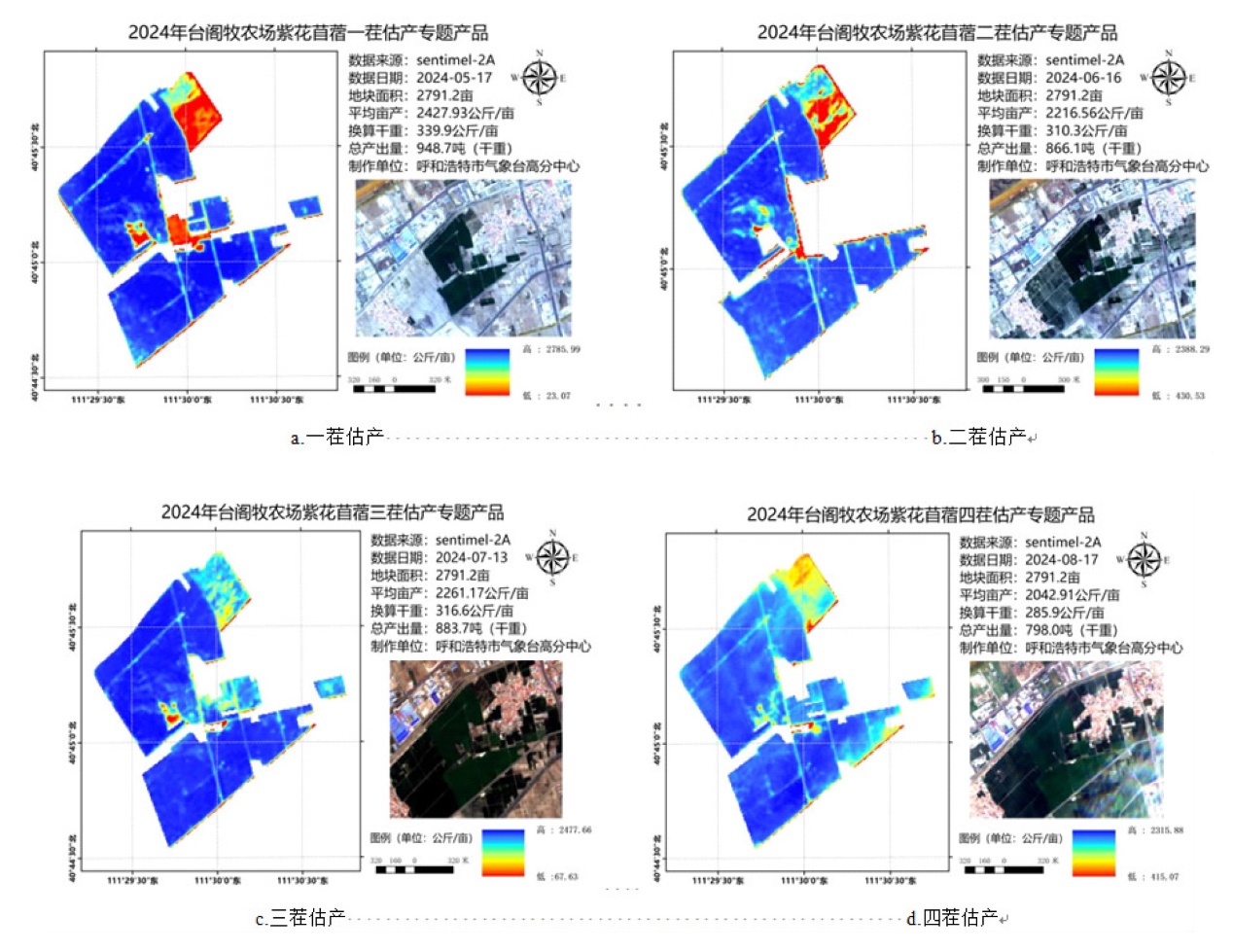
| 茬次 | 观测日期 /(月.日) | 遥感图像日期 /(月.日) | 观测实况数据 /(kg/hm2) | 公司实况数据 /(kg/hm2) | 遥感估产数据 /(kg/hm2) | 遥感对比观测 准确率/% | 遥感对比公司 准确率/% |
|---|---|---|---|---|---|---|---|
| 一茬 | 5.20 | 5.17 | 7486.5 | 4500~3450 | 5098.5 | 68.1 | 88.3~94.1 |
| 二茬 | 6.24 | 6.16 | 5310.0 | 3900~4500 | 4654.5 | 87.7 | 83.8~96.7 |
| 三茬 | 7.20 | 7.13 | 4173.0 | 3600~3900 | 4749.0 | 87.9 | 75.8~82.1 |
| 四茬 | 8.24 | 8.17 | 3168.0 | 3600~3900 | 4288.5 | 84.4 | 83.9~90.9 |
| 合计 | 20587.5 | 15600~17100 | 18790.5 | 91.3 | 83.0~91.0 |
| 茬次 | 观测日期 /(月.日) | 遥感图像日期 /(月.日) | 观测实况数据 /(kg/hm2) | 公司实况数据 /(kg/hm2) | 遥感估产数据 /(kg/hm2) | 遥感对比观测 准确率/% | 遥感对比公司 准确率/% |
|---|---|---|---|---|---|---|---|
| 一茬 | 5.20 | 5.17 | 7486.5 | 4500~3450 | 5098.5 | 68.1 | 88.3~94.1 |
| 二茬 | 6.24 | 6.16 | 5310.0 | 3900~4500 | 4654.5 | 87.7 | 83.8~96.7 |
| 三茬 | 7.20 | 7.13 | 4173.0 | 3600~3900 | 4749.0 | 87.9 | 75.8~82.1 |
| 四茬 | 8.24 | 8.17 | 3168.0 | 3600~3900 | 4288.5 | 84.4 | 83.9~90.9 |
| 合计 | 20587.5 | 15600~17100 | 18790.5 | 91.3 | 83.0~91.0 |
| [1] |
郭剑, 陈实, 徐斌, 等. 基于SPOT-VGT数据的锡林郭勒盟草原返青期遥感监测[J]. 地理研究, 2017, 36(1):37-48.
doi: 10.11821/dlyj201701003 |
| [2] |
高娃. 草原返青期遥感监测分析[J]. 草地学报, 2009, 17(2):227-233.
doi: 10.11733/j.issn.1007-0435.2009.02.018 |
| [3] |
范德芹, 朱文泉, 赵学胜, 等. 内蒙古羊草草原返青期遥感识别方法研究[J]. 北京师范大学学报(自然科学版), 2016, 52(5):639-644.
|
| [4] |
游松财, 宋春桥, 柯灵红, 等. 基于MODIS植被指数的藏北高原植被物候空间分布特征[J]. 生态学杂志, 2011, 30(7):1513-1520.
|
| [5] |
金云翔, 徐斌, 杨秀春, 等. 内蒙古锡林郭勒盟草原产草量动态遥感估算[J]. 中国科学:生命科学, 2011, 41(12):1185-1195.
|
| [6] |
辜智慧, 陈晋, 史培军, 等. 锡林郭勒草原1983—1999年NDVI逐旬变化量与气象因子的相关分析[J]. 植物生态学报, 2005(5):753-765.
doi: 10.17521/cjpe.2005.0100 |
| [7] |
关欣, 安沙舟, 荀其蕾, 等. 巴音布鲁克草原高寒草原植被覆盖度反演模型构建与评价[J]. 草业科学, 2018, 35(5):949-955.
|
| [8] |
潘竞. 基于Sentinel数据的栽培苜蓿遥感识别与估产研究[D]. 乌鲁木齐: 新疆农业大学,2024:63-67.
|
| [9] |
包旭莹. 甘肃河西地区栽培苜蓿遥感识别与估产研究[D]. 兰州: 兰州大学,2022:29-43.
|
| [10] |
宛敏渭, 刘秀珍. 中国物候观测方法[M]. 北京: 科学出版社,1979:47-56.
|
| [11] |
国家气象局. 农业气象观测规范[M]. 北京: 气象出版社,1993:172-174.
|
| [12] |
苗百岭, 梁存柱, 韩芳, 等. 内蒙古主要草原类型植物物候对气候波动的响应[J]. 生态学报, 2016, 36(23):7689-7701.
|
| [13] |
任海娟. 苜蓿人工草地遥感信息提取与估产研究[D]. 呼和浩特: 内蒙古大学,2016:13.
|
| [14] |
任海娟, 董建军, 李晓媛, 等. 利用多时相Landsat8图像提取苜蓿人工草地信息[J]. 中国草地学报, 2015, 37(2):81-87,120.
|
| [15] |
董建军. 基于多源卫星数据的典型草原遥感估产研究[D]. 呼和浩特: 内蒙古大学,2013:17-24.
|
| [16] |
邓泽坤. 苜蓿人工牧草地遥感信息提取、动态变化及其影响因素研究[D]. 呼和浩特: 内蒙古大学,2023:16-19.
|
| [17] |
王婷. 利用卫星遥感技术监测紫花苜蓿人工草地返青状况及氮磷含量[D]. 呼和浩特: 内蒙古大学,2021:9-11.
|
| [1] | JIA Yuanyuan, WANG Ying, XIA Junbo, TIAN Xin, LI Haibo, GONG Zihui, LI Lu. Effects of Sowing Date Adjustment on Maize Yield and Meteorological Adaptability in Hohhot City [J]. Chinese Agricultural Science Bulletin, 2025, 41(32): 95-101. |
| [2] | LIANG Yan, ZHANG Lanjing, SU Lijun, ZHANG Zhijie, ZHANG Caiyun. Variations of Agricultural Climate Resources of Hohhot and Its Impact on Alfalfa Production [J]. Chinese Agricultural Science Bulletin, 2025, 41(25): 117-125. |
| [3] | WU Dongli, LIU Cong, GUO Chaofan, DING Mingming, WU Su, QUE Yanhong, JIANG Mingliang, LI Yan. Regional Monitoring of Soil Moisture Content in Winter Wheat Field Based on Multi-source Remote Sensing Data and Optimal Model Selection [J]. Chinese Agricultural Science Bulletin, 2024, 40(25): 147-154. |
| [4] | ZHANG Juan, LIAO Juyang, LIU Yan, WANG Ling, LI Qiaoyun, WU Linshi, HUANG Yaqi. Application Status and Development Trend of Multi-source Remote Sensing Data in Forest Resource Monitoring [J]. Chinese Agricultural Science Bulletin, 2023, 39(19): 159-164. |
| [5] | SU Lijun, PAN Yaoting. Photothermal Performance of Different Types of Solar Greenhouses in Hohhot [J]. Chinese Agricultural Science Bulletin, 2022, 38(2): 106-118. |
| [6] | Lv Xiaoyan, Jing Xia, Xue Lin, Xu Haiqing, Zhang Chao, Huang Jianxi. Remote Sensing Technology Applied in Growth Monitoring and Yield Estimation of Tobacco: A Review [J]. Chinese Agricultural Science Bulletin, 2020, 36(25): 137-141. |
| [7] | . Optimization and Simulation of Urban Land Use Pattern Based on the Perspective of Objective Constraint: A Case of Hohhot [J]. Chinese Agricultural Science Bulletin, 2019, 35(9): 86-94. |
| [8] | . Spectral Remote Sensing Technology Applied in Crop Yield Estimation: Research Progress [J]. Chinese Agricultural Science Bulletin, 2019, 35(3): 69-75. |
| [9] | Si Qin,Tong Liga and Zhang Jing. Pollution Characteristics of PM2.5 and PM10 and Their Relationships with Meteorological Conditions in Hohhot, 2015 [J]. Chinese Agricultural Science Bulletin, 2017, 33(11): 112-118. |
| [10] | Mu Chenying,Xu Quanhui,Zhang Jing,Li Shi,Song Xiaowei,Jin Yu,Wang Min and Liu Qing. Application of RS and GIS in Fire Disaster Monitoring in Shenyang [J]. Chinese Agricultural Science Bulletin, 2016, 32(9): 179-182. |
| [11] | Zhang Yuping and Ma Zhanhong. Study of Wheat Hyperspectral Remote Sensing Yield Estimation Model Under Stress of Nitrogen and Wheat Stripe Rust [J]. Chinese Agricultural Science Bulletin, 2014, 30(36): 133-140. |
| [12] | . Evaluation of different storage period of soil amendment effect on suppressing root-knot nematode(Meloidogyn incognita) [J]. Chinese Agricultural Science Bulletin, 2010, 26(21): 324-328. |
| [13] | Jia Liangliang,, Shou Lina, Li Fei, Chen Xinping, Zhang Fusuo. Overview of Remote Sensing Technology be used in Plant Nitrogen Status Diagnosis and N Fertilizer Recommendation [J]. Chinese Agricultural Science Bulletin, 2007, 23(12): 396-396. |
| [14] | The Application Development of Satellite Remote Sensing Technology in the Assessment of Forest Damage. The Application Development of Satellite Remote Sensing Technology in the Assessment of Forest Damage [J]. Chinese Agricultural Science Bulletin, 2006, 22(2): 113-113. |
| [15] | Yu Zegao, Tang Baigao, Gu Zhengqing, Mao Hongxi. The Study on New Method of Yield Estimation of Rapeseed [J]. Chinese Agricultural Science Bulletin, 2005, 21(11): 99-99. |
| Viewed | ||||||
|
Full text |
|
|||||
|
Abstract |
|
|||||
