欢迎访问《中国农学通报》,

中国农学通报 ›› 2026, Vol. 42 ›› Issue (6): 133-140.doi: 10.11924/j.issn.1000-6850.casb2025-0359

• 资源·环境·生态·土壤·气象 • 上一篇    下一篇

基于气象条件的河套灌区向日葵籽粒品质区划

刘伟1,2(), 段晓凤3(), 吴国舟3, 包佳婧1,2, 李淑褀1,2   

  1. 1 内蒙古巴彦淖尔市气象局, 内蒙古巴彦淖尔 015000
    2 中国气象局乌梁素海湿地生态气象野外科学试验基地, 内蒙古巴彦淖尔 015000
    3 内蒙古气象局, 呼和浩特 010052
  • 收稿日期:2025-05-12 修回日期:2025-12-10 出版日期:2026-03-25 发布日期:2026-03-30
  • 通讯作者:
    段晓凤,女,1982年出生,内蒙古呼和浩特人,正高,硕士,主要从事应用气象方面的研究。通信地址:010052 内蒙古自治区呼和浩特市新城区海拉尔大街49号,Tel:0471- 3335738,E-mail:
  • 作者简介:

    刘伟,男,1966年出生,内蒙古四子王旗人,副高,本科,学士,研究方向:应用气象。通信地址:015000 内蒙古巴彦淖尔市临河区曙光西街临河区气象局,Tel:0478-8272352,E-mail:

  • 基金资助:
    中央引导地方科技发展资金“河套向日葵乳熟期冷害指标等级”(2022ZY0145); 内蒙古自然科学基金“河套向日葵主栽品种早霜冻指标研究”(2022MS04017); “基于多源数据同化的作物模型评估雹灾技术”(2024LHMS04015); 内蒙古自治区气象局科技创新项目“向日葵菌核病气象等级预报方法”(nmqxkjcx202435); “向日葵籽粒锈斑与气象条件关系研究”(nmqxkjcx202536)

Sunflower Seed Quality Zoning in Hetao Irrigation District Based on Meteorological Conditions

LIU Wei1,2(), DUAN Xiaofeng3(), WU Guozhou3, BAO Jiajing1,2, LI Shuqi1,2   

  1. 1 Meteorological Bureau of Bayannur City of Inner Mongolia, Bayannur, Inner Mongolia 015000
    2 Wuliangsuhai Wetland Ecological Meteorological Field Scientific Experiment Base of China Meteorological Administration, Bayannur, Inner Mongolia 015000
    3 Inner Mongolia Meteorological Bureau, Hohhot 010052
  • Received:2025-05-12 Revised:2025-12-10 Published:2026-03-25 Online:2026-03-30

摘要:

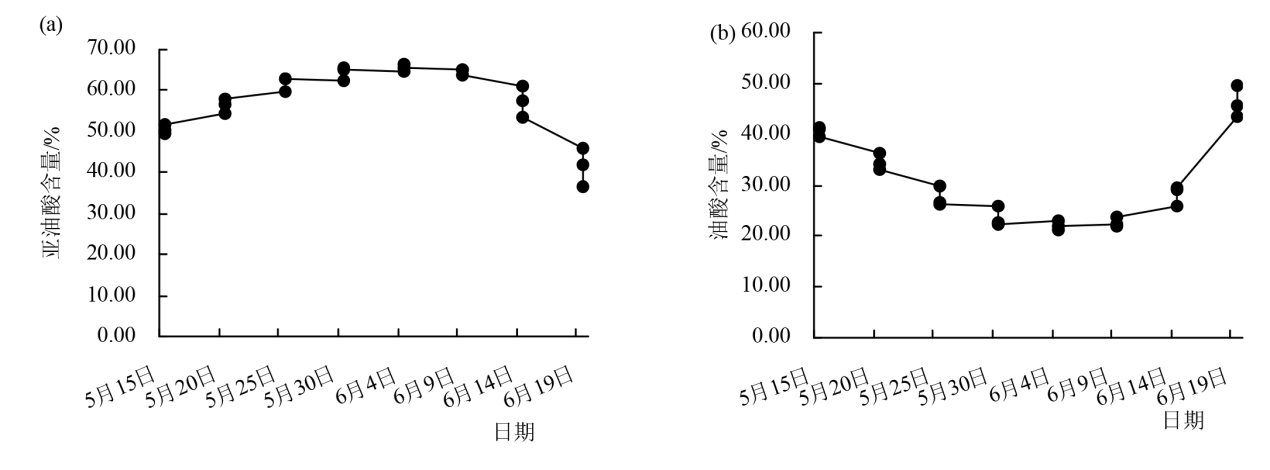
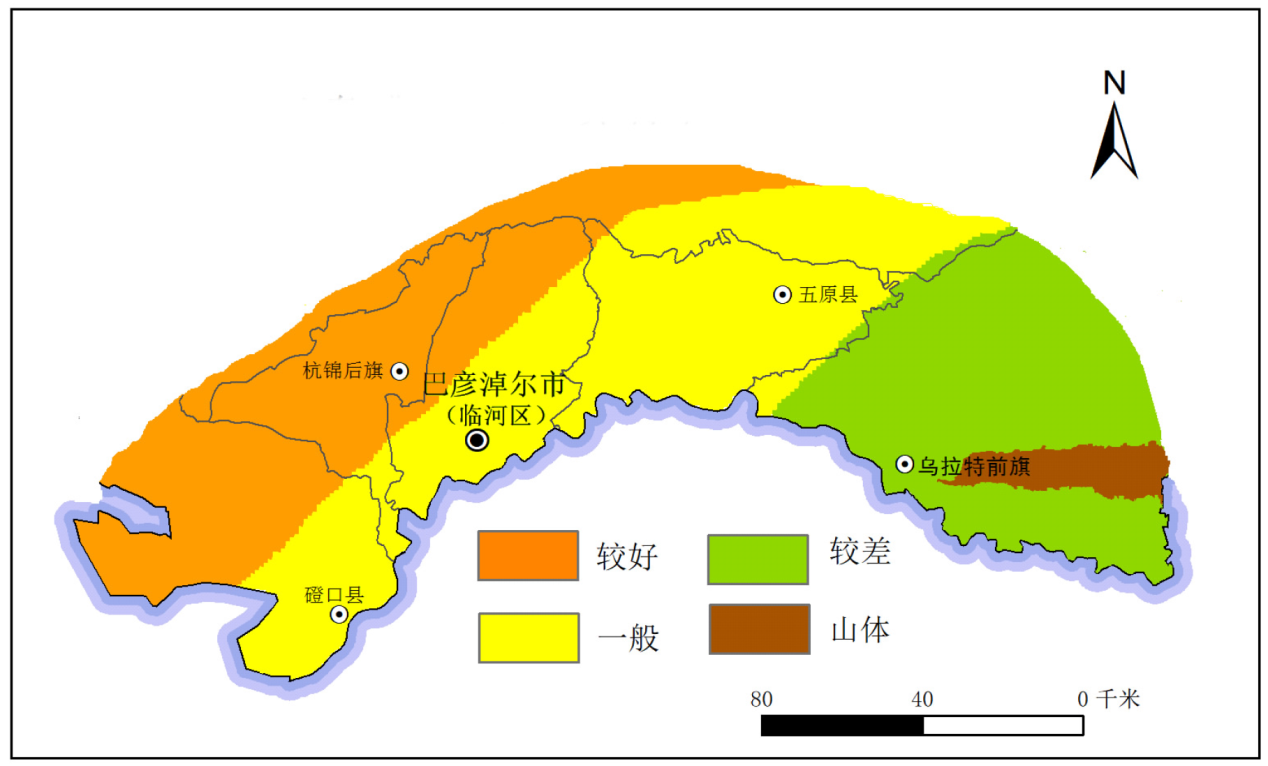
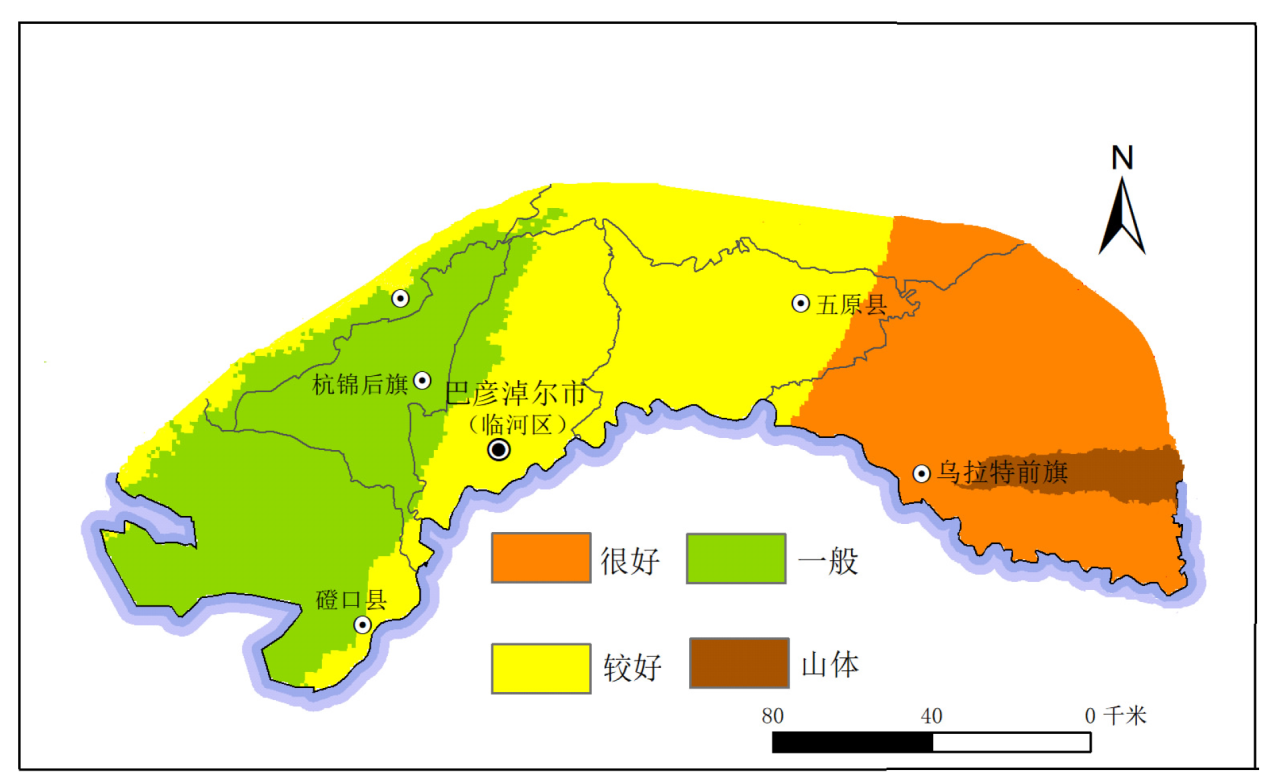
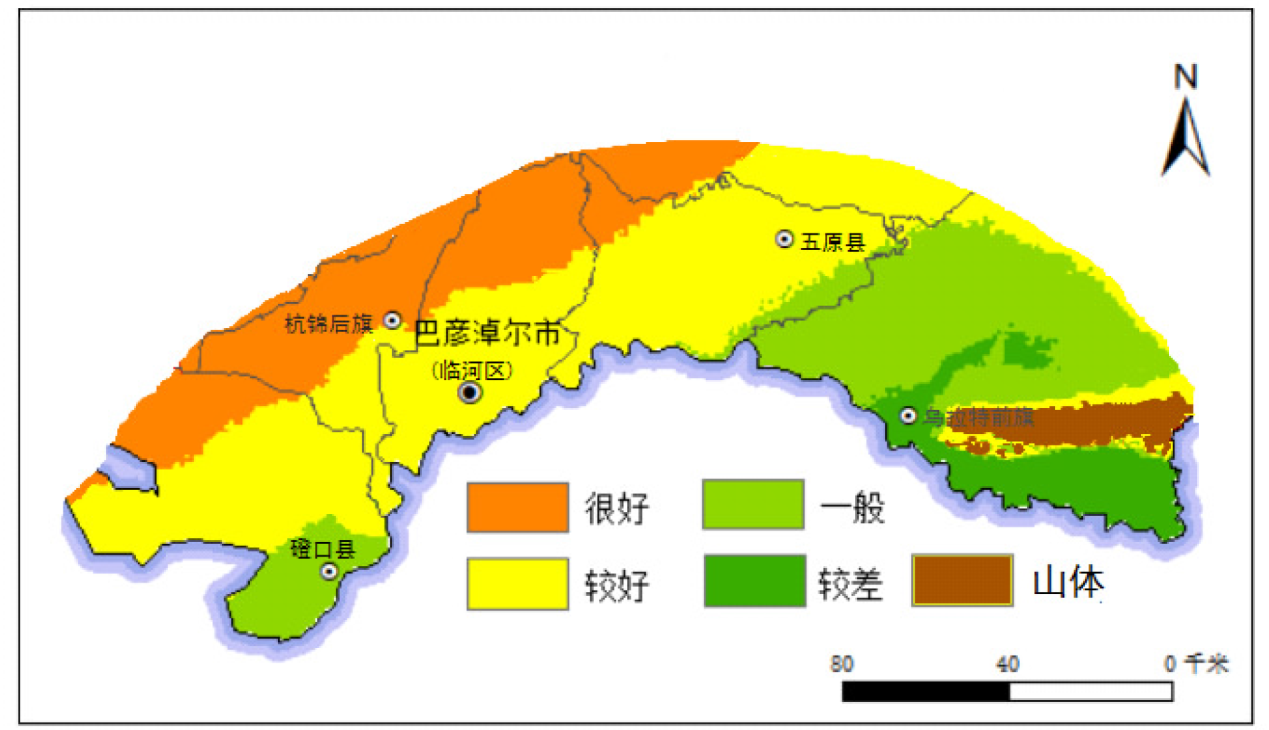
为探究河套灌区气象条件对向日葵籽仁内在品质(亚油酸、油酸含量)和籽粒外观品质(锈斑指数)的影响,本研究采用分期播种试验,记录向日葵生长发育期,分析籽仁成分,统计向日葵籽粒锈斑指数,并利用Excel 2010构建响应模型,解析关键气象因子及其敏感时段。结果表明,开花—成熟期水汽压、相对湿度、日均气温、日照时数、日均最高气温、日均最低气温、降水量等气候因子与向日葵亚油酸、油酸含量显著相关:对亚油酸的影响呈开口向下的抛物线关系,对油酸和葵螟啃食率的影响呈开口向上的抛物线特征,而对籽粒锈斑病发病率的影响呈指数曲线下降趋势。亚油酸含量随播种期变化呈一元二次曲线,5月31日—6月1日播种时含量最高;籽粒锈斑病发病指数随播期推迟呈指数曲线上升趋势。综合考虑,5月25日—6月2日为兼顾内在和外观品质的最佳播期。此外,利用开花—成熟期气温、日较差、水汽压、相对湿度、日照时数、水热系数、降水量与亚油酸建立二元一次方程,确定品质拐点;发现开花期降水量、相对湿度、水汽压均与向日葵锈斑发生指数呈显著负相关。水分和湿度增加可有效抑制喜旱害虫蓟马,从而降低锈斑指数。为综合评估内在品质和外观品质,本研究对两种变量进行归一化处理,并结合小网格推算方法和地理信息系统(ArcGIS),实现了向日葵籽粒的综合品质区划,为河套灌区向日葵产业的合理布局和农业结构调整提供了科学参考。

关键词: 籽仁, 亚油酸, 籽粒, 葵花籽粒锈斑, 归一化处理, 品质区划

Abstract:

To study the influence of meteorological conditions in the Hetao Irrigation District on the intrinsic quality and the appearance quality of sunflower seed kernels, a staged sowing experiment was adopted. The growth period of sunflowers was recorded. The contents of substances such as linoleic acid and oleic acid in sunflower seed kernels were analyzed, and the rust spot index of sunflower seeds was statistically analyzed. Excel 2010 was used to construct a response model to analyze the key meteorological factors and sensitive periods affecting the quality of sunflowers. The results show that the climatic factors such as water vapor pressure, relative humidity, average daily temperature, sunshine duration, average daily maximum temperature, average daily minimum temperature and precipitation from flowering to maturity are closely related to the content of linoleic acid and oleic acid in sunflower kernels. The influence on linoleic acid shows a parabolic characteristic with the opening downward. The influence on oleic acid and the eating rate of palm borers shows a parabolic characteristic with an upward opening, while the effect on the incidence of seed rust spot disease shows an exponential downward trend. The content of linoleic acid shows a quadratic curve with the sowing date. The content of linoleic acid is the highest when sown from May 31st to June 1st. The incidence index of grain rust spot disease increases exponentially with the extension of the sowing date. The optimal sowing period that takes both into account to achieve the best results is from May 25th to June 2nd. A binary linear equation was established to determine the inflection point by using the temperature, daily range, vapor pressure, relative humidity, sunshine duration, hydrothermal coefficient, precipitation and linoleic acid during the flowering and ripening period. During the flowering period, precipitation, relative humidity and vapor pressure are all negatively correlated with the rust spot occurrence index of sunflowers. With the increase of water and humidity, the number of drought-loving pests (thrips) sharply decreases, and thus the rust spot index also decreases accordingly. In order to facilitate the statistics of intrinsic quality and appearance quality, the two variables were normalized. By using the small grid calculation method and with the help of the Geographic Information System (ArcGIS), the quality zoning of sunflower seeds that takes into account both internal and external aspects was carried out, providing a scientific basis for the rational layout of the Hetao Irrigation District and the adjustment of agricultural structure.

Key words: seed kernel, linoleic acid, seeds, sunflower seed rust spot, normalization processing, quality division