欢迎访问《中国农学通报》,

中国农学通报 ›› 2026, Vol. 42 ›› Issue (20): 71-79.doi: 10.11924/j.issn.1000-6850.casb2026-0317
王婧婧1( ), 卫磊嘉2, 林槿1, 袁佳琪1, 陈丹1, 房焕1, 毕利东1()
收稿日期:2026-04-20
修回日期:2026-07-25
出版日期:2026-10-25
发布日期:2026-10-26
通讯作者:
作者简介:王婧婧,女,2000年出生,江苏盐城人,在读硕士生,研究方向:土壤物理结构与水土保持工程技术。通信地址:210098 江苏省南京市江宁区佛城西路8号 河海大学农业科学与工程学院,E-mail:2733471277@qq.com。
基金资助:
WANG Jingjing1(), WEI Leijia2, LIN Jin1, YUAN Jiaqi1, CHEN Dan1, FANG Huan1, BI Lidong1()
Received:2026-04-20
Revised:2026-07-25
Published:2026-10-25
Online:2026-10-26
摘要:
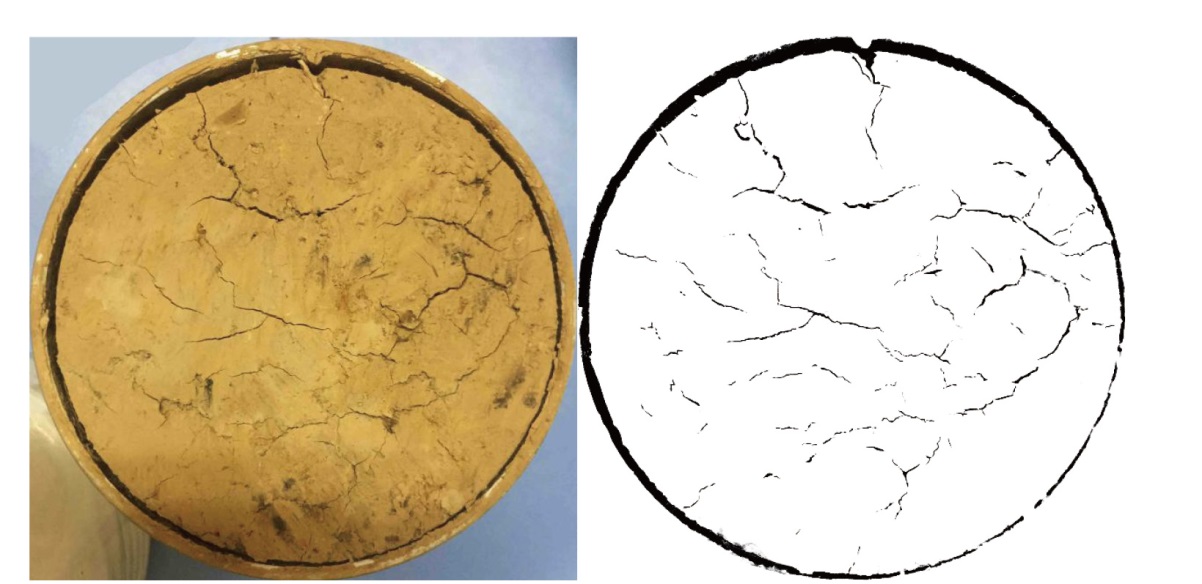
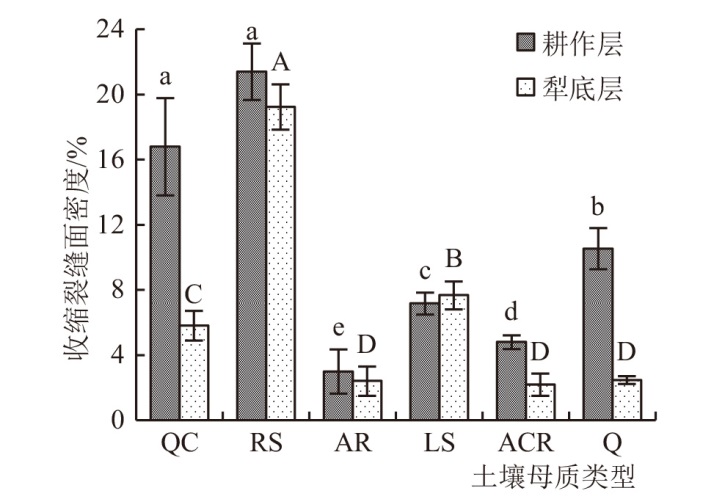
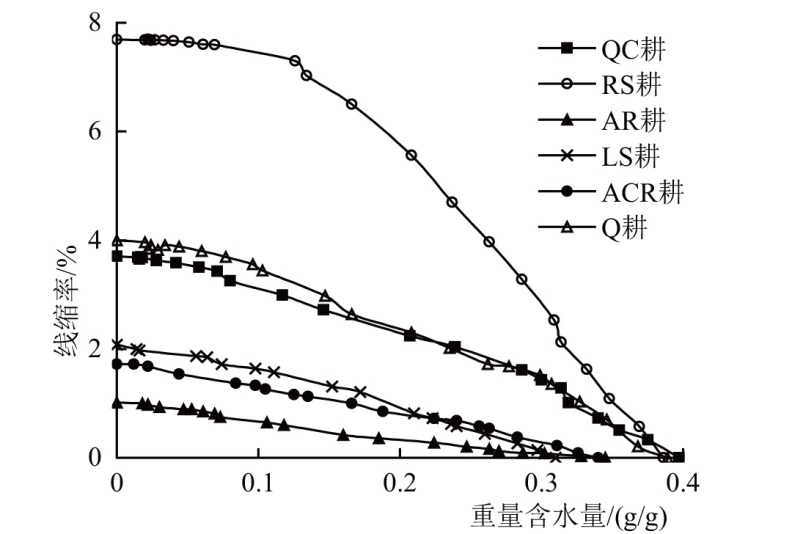
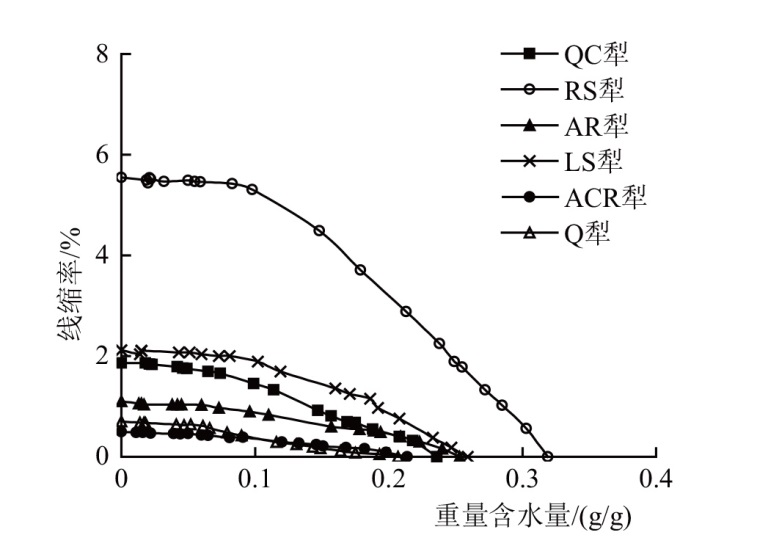
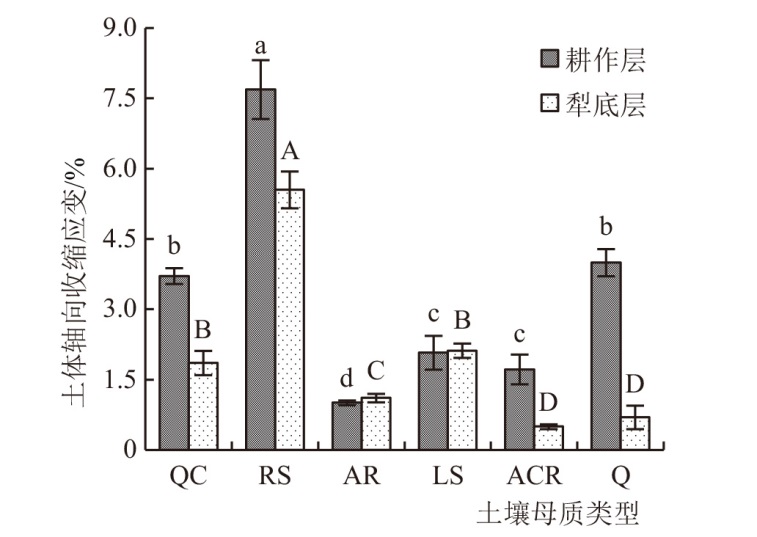
本研究旨在揭示红壤区不同母质发育水稻土的干燥收缩特征差异,为理解该区域水稻土结构形成机制及优化田间管理措施提供理论依据。研究选取红壤区6种不同母质发育水稻土的耕作层与犁底层原状土样,开展干燥收缩试验,利用图像分析法获取土壤裂缝面积密度,并计算几何因子,分析其干燥收缩特征。结果表明:耕作层土壤的收缩裂缝面密度具有显著母质差异,排序为:河积物(21.41%)>第四纪红黏土(16.80%)>石英岩类风化物(10.54%)>湖积物(7.17%)>酸性结晶岩类风化物(4.80%)>泥质岩类风化物(2.99%)。轴向收缩应变的分布亦呈现相同母质效应,排序为:河积物(7.69%)>石英岩类风化物(4.00%)>第四纪红黏土(3.71%)>湖积物(2.08%)>酸性结晶岩类风化物(1.72%)>泥质岩类风化物(1.01%)。耕作层和犁底层土壤收缩特征曲线的斜率基本一致,表明土壤垂直方向具有相似的变形特性。总体而言,母质类型显著影响水稻土的干燥收缩特征。河积物发育的水稻土在耕作层和犁底层均表现出最高的收缩裂缝面密度,泥质岩类风化物(耕作层)和酸性结晶岩类风化物(犁底层)分别最低。进一步分析表明,土壤轴向收缩应变与裂缝面密度呈极显著正相关关系,说明垂直收缩与水平开裂密切相关;而几何因子与土壤轴向收缩应变和收缩裂缝面密度均无显著的相关关系。
中图分类号:
王婧婧, 卫磊嘉, 林槿, 袁佳琪, 陈丹, 房焕, 毕利东. 红壤区不同母质对水稻土干燥收缩特征影响的研究[J]. 中国农学通报, 2026, 42(20): 71-79.
WANG Jingjing, WEI Leijia, LIN Jin, YUAN Jiaqi, CHEN Dan, FANG Huan, BI Lidong. Impact of Different Parent Materials on Drying Shrinkage Characteristics of Paddy Soils in Red Soil Regions[J]. Chinese Agricultural Science Bulletin, 2026, 42(20): 71-79.
| 土样编号 | 土样母质 | 发生层次 | 土层深度/cm | 采样地点 |
|---|---|---|---|---|
| QC | 第四纪红色黏土 | 耕作层 | 0~17 | 江西省红壤研究所 (28°21′ N,116°10′ E) |
| 犁底层 | 17~28 | |||
| RS | 河积物 | 耕作层 | 0~17 | 南昌市进贤县温圳镇联里村 (28°20′ N,116°6′ E) |
| 犁底层 | 17~31 | |||
| AR | 泥质岩类风化物 | 耕作层 | 0~13 | 南昌市进贤县白圩乡连沅村 (28°15′ N,116°14′ E) |
| 犁底层 | 13~22 | |||
| LS | 湖积物 | 耕作层 | 0~11 | 南昌市进贤县民和镇寺前万家 (28°24′ N,116°13′ E) |
| 犁底层 | 11~20 | |||
| ACR | 酸性结晶岩类风化物 | 耕作层 | 0~14 | 南昌市进贤县民和镇白家合 (28°19′ N,116°22′ E) |
| 犁底层 | 14~26 | |||
| Q | 石英岩类风化物 | 耕作层 | 0~18 | 南昌市进贤县观花岭林场南 (28°25′ N,116°27′ E) |
| 犁底层 | 18~27 |
| 土样编号 | 土层 | 土层深度/cm | 土壤容重/(g/cm3) | 土粒密度/(g/cm3) | 黏粒量/% | 粉粒量/% | 有机质量/(g/kg) | >0.25 mm的土壤水稳性团聚体质量百分数/% | pH |
|---|---|---|---|---|---|---|---|---|---|
| QC | 耕作层 | 0~17 | 1.16 | 2.49 | 17.16 | 79.67 | 20.10 | 34.23 | 6.46 |
| 犁底层 | 17~28 | 1.60 | 2.60 | 17.90 | 78.95 | 14.00 | 26.57 | 6.41 | |
| RS | 耕作层 | 0~17 | 1.28 | 2.57 | 22.27 | 74.74 | 27.74 | 42.47 | 5.96 |
| 犁底层 | 17~31 | 1.41 | 2.65 | 21.83 | 75.60 | 14.06 | 34.00 | 5.93 | |
| AR | 耕作层 | 0~13 | 1.31 | 2.49 | 11.66 | 81.96 | 28.77 | 24.17 | 5.32 |
| 犁底层 | 13~22 | 1.56 | 2.69 | 16.92 | 78.79 | 9.70 | 17.40 | 5.49 | |
| LS | 耕作层 | 0~11 | 1.40 | 2.48 | 16.51 | 78.84 | 35.75 | 54.90 | 5.28 |
| 犁底层 | 11~20 | 1.51 | 2.65 | 20.43 | 77.72 | 8.54 | 20.77 | 5.62 | |
| ACR | 耕作层 | 0~14 | 1.33 | 2.45 | 13.06 | 78.58 | 44.49 | 58.63 | 4.83 |
| 犁底层 | 14~26 | 1.64 | 2.63 | 16.88 | 79.34 | 9.89 | 35.37 | 4.70 | |
| Q | 耕作层 | 0~18 | 1.24 | 2.45 | 18.81 | 77.61 | 37.83 | 64.50 | 4.93 |
| 犁底层 | 18~27 | 1.63 | 2.62 | 20.48 | 76.95 | 10.33 | 36.73 | 5.37 |
| 指标 | 土壤轴向收缩应变 | 收缩裂缝面密度 | 几何因子 | 土壤容重 | 土壤总孔隙度 | 黏粒含量 | 粉粒含量 | 有机质含量 | 水稳性团聚体含量 |
|---|---|---|---|---|---|---|---|---|---|
| 土壤轴向收缩应变 | 1 | 0.958** | 0.007 | -0.579* | 0.676* | 0.602* | -0.708** | 0.219 | 0.261 |
| 收缩裂缝面密度 | 0.958** | 1 | 0.246 | -0.610* | 0.719** | 0.585* | -0.620* | 0.126 | 0.184 |
| 几何因子 | 0.007 | 0.246 | 1 | -0.027 | 0.048 | 0.166 | 0.083 | -0.327 | -0.089 |
| [1] |
魏翠兰, 高伟达, 李录久, 等. 不同初始条件对砂姜黑土收缩特征的影响[J]. 农业机械学报, 2017, 48(10):229-236,271.
|
| [2] |
邢旭光, 马孝义. 土壤失水过程对土体收缩特性的影响[J]. 农业机械学报, 2016, 47(6):148-153.
|
| [3] |
魏玉杰, 吴新亮, 蔡崇法. 崩岗体剖面土壤收缩特性的空间变异性[J]. 农业机械学报, 2015, 46(6):153-159.
|
| [4] |
doi: 10.1016/S1002-0160(20)60041-8 URL |
| [5] |
doi: 10.1007/BF00300424 URL |
| [6] |
doi: 10.1016/S0016-7061(02)00136-2 URL |
| [7] |
doi: 10.1016/j.enggeo.2013.07.001 URL |
| [8] |
doi: 10.2136/sssaj2004.0146 URL |
| [9] |
|
| [10] |
张展羽, 朱文渊, 朱磊, 等. 根系及盐分含量对农田土壤干缩裂缝发育规律的影响[J]. 农业工程学报, 2014, 30(20):83-89.
|
| [11] |
doi: 10.1007/s11769-015-0779-5 URL |
| [12] |
邢旭光, 马孝义, 康端刚. 盐阳离子类型及浓度对土壤持水及干缩开裂的作用效果[J]. 农业工程学报, 2016, 32(9):115-122.
|
| [13] |
doi: 10.2136/sssaj2006.0156 URL |
| [14] |
冷挺, 唐朝生, 施斌. 干湿循环条件下重塑膨胀土的裂隙发育特征及量化研究[J]. 工程地质学报, 2016, 24(5):856-862.
|
| [15] |
张展羽, 李文杰, 王策, 等. 多级干湿循环对农田土壤干缩裂缝演变特征的影响[J]. 农业机械学报, 2016, 47(12):172-177,252.
|
| [16] |
李焱, 汤红英, 邹晨阳. 多次干湿循环对红土裂隙性和力学特性影响[J]. 南昌大学学报(工科版), 2018, 40(3):253-256,261.
|
| [17] |
李雄威, 王爱军, 王勇, 等. 持续蒸发作用下膨胀土裂隙和湿热特性室内模型试验[J]. 岩土力学, 2014, 35(S1):141-148.
|
| [18] |
周云艳, 徐琨, 陈建平, 等. 基于CT扫描与细观力学的植物侧根固土机理分析[J]. 农业工程学报, 2014, 30(1):1-9.
|
| [19] |
邢旭光, 柳烨, 马孝义. 土壤添加物对土-水曲线和土体收缩的影响[J]. 水科学进展, 2016, 27(1):40-48.
|
| [20] |
诸莉燕, 毕利东, 柳开楼. 基于图像处理的土壤颜色判别方法研究[J]. 广东农业科学, 2018, 45(12):125-130.
|
| [21] |
江西省进贤县农业区划委员会. 进贤县土壤[M]. 南昌: 江西科学技术出版社, 1985.
|
| [22] |
中国科学院南京土壤研究所. 土壤理化分析[M]. 上海: 上海科学技术出版社, 1978.
|
| [23] |
南京农学院. 土壤农化分析[M]. 北京: 农业出版社, 1980.
|
| [24] |
毕利东, 张斌, 潘继花. 运用Image J软件分析土壤结构特征[J]. 土壤, 2009, 41(4):654-658.
|
| [25] |
doi: 10.3390/environments5040045 URL |
| [26] |
|
| [27] |
赵诚斋, 赵渭生. 水稻土的水理性质与土壤耕作的关系[J]. 土壤学报, 1983(2):140-153.
|
| [28] |
黄传琴. 干湿交替过程中土壤胀缩特征的试验研究[D]. 杨陵: 西北农林科技大学, 2008.
|
| [29] |
刘艳丽. 长期施肥下水稻土土壤性质变化及其与生产力的关系研究[D]. 南京: 南京农业大学, 2007.
|
| [30] |
马毅杰. 长江中下游土壤矿物组成与其土壤肥力[J]. 长江流域资源与环境, 1994(1):1-8.
|
| [31] |
张中彬, 彭新华. 土壤裂隙及其优先流研究进展[J]. 土壤学报, 2015, 52(3):477-488.
|
| [32] |
宋春丽. 旱作条件下不同母质红壤磷吸附作用及其影响因素研究[J]. 中国农学通报, 2016, 32(2):129-134.
doi: 10.11924/j.issn.1000-6850.casb15080072 |
| [33] |
袁红, 盛浩, 廖超林, 等. 湖南省几种母质类型水稻土土壤肥力特征[J]. 中国农学通报, 2014, 30(3):151-156.
|
| [34] |
林少雯, 陈延玲, 刘树堂, 等. 长期定位施肥对潮土土壤黏土矿物影响的研究[J]. 华北农学报, 2017, 32(4):142-147.
doi: 10.7668/hbnxb.2017.04.023 |
| [35] |
刘智杰, 黄丽, 李峰, 等. 秸秆还田对水稻土黏土矿物组成和钾素释放的影响[J]. 土壤通报, 2018, 49(6):1390-1396.
|
| [36] |
邓博, 郭澎, 卫磊嘉, 等. 外源添加物对不同土地利用方式下土壤肥力的影响[J]. 中国农学通报, 2024, 40(8):91-100.
doi: 10.11924/j.issn.1000-6850.casb2023-0569 |
| [37] |
doi: 10.1016/j.geoderma.2009.08.018 URL |
| [38] |
赵颖文, 孔令伟, 郭爱国, 等. 典型红粘土与膨胀土的对比试验研究[J]. 岩石力学与工程学报, 2004(15):2593-2598.
|
| [39] |
陈宇龙. 云南膨胀土的微观结构特征[J]. 岩土工程学报, 2013, 35 (S1):334-339.
|
| [1] | 李晔男, 刘彬昕, 贾鹏博, 尹智勇, 隋金超, 张国栋. 黑龙江省3种林分类型土壤养分特征与肥力评价[J]. 中国农学通报, 2026, 42(4): 67-74. |
| [2] | 黄英梅, 梁永鑫, 吴家龙, 张俊涛, 许昌超, 梁春梅. 园林绿化废弃物生物炭的碳释放特征及对土壤碳组分的影响[J]. 中国农学通报, 2026, 42(16): 147-156. |
| [3] | 刘晓阳, 尹梅, 付利波, 王伟, 王志远, 陈华, 杨艳鲜, 张庆, 杨济达, 王应学, 陈检锋. 羊粪等氮替代化肥对西葫芦产量和品质的影响[J]. 中国农学通报, 2025, 41(32): 23-29. |
| [4] | 叶诚诚, 朱洁, 李紫成, 章明奎. 典型水稻土不同有机碳组分对有机碳积累的响应[J]. 中国农学通报, 2025, 41(28): 78-86. |
| [5] | 刘佳, 万里, 夏文建, 刘光荣, 彭春瑞, 陈金. 南方红壤区耕地质量与产能提升的机遇与挑战[J]. 中国农学通报, 2025, 41(26): 9-12. |
| [6] | 刘艳, 董铭, 黄倩, 梁家凤, 王梦洁. 土壤矿物对烧失法测定红壤有机质含量的影响研究[J]. 中国农学通报, 2025, 41(12): 74-79. |
| [7] | 孙鹏鹏, 查倩, 殷向静, 简攀煜, 蒋爱丽, 奚晓军. 葡萄园行间土壤覆盖方式对土壤理化性质及树体生长的影响[J]. 中国农学通报, 2025, 41(10): 115-121. |
| [8] | 热伊罕古丽·喀迪尔, 周一诺, 张艺, 张梓硙, 邢如平, 马新, 许冲, 刘文利, 吴景贵, 李建明. 施用不同畜禽粪对黑土区坡耕地土壤物理性质影响的差异性[J]. 中国农学通报, 2024, 40(35): 89-98. |
| [9] | 殷红慧, 胡棕棂, 余小芬, 赵兴能, 李鹏飞, 胡加云, 毛妍婷, 张丽霞, 邱学礼. 施氯对贫氯红壤烤烟生长发育及烟叶产质量的影响[J]. 中国农学通报, 2024, 40(35): 76-81. |
| [10] | 梁辉, 陈韵松, 李杰, 陈玉蓝, 黄容, 王昌全, 李冰. 干湿交替对植烟土壤钾素有效形态变化的影响[J]. 中国农学通报, 2024, 40(27): 83-89. |
| [11] | 李华健, 邓国军, 罗贞媛, 农全东, 李春情, 农彬, 陈碧钦, 胡校章, 刘娜, 文和明. 间作模式对红壤理化性质和大豆品质的影响[J]. 中国农学通报, 2024, 40(26): 8-14. |
| [12] | 王灿, 杨玉玲, 彭翠仙, 赵大伟, 李玲, 杨清松, 孙宏伟, 屈用函, 陶永宏. 三七籽条对文山红壤土真菌群落结构的影响研究[J]. 中国农学通报, 2024, 40(24): 87-91. |
| [13] | 郭军成, 王明国, 耿荣, 王彦琪, 尹学红, 王旭敏, 朱志明, 李珍. 秸秆还田和有机肥对宁夏银北盐碱地改良效果研究[J]. 中国农学通报, 2024, 40(24): 73-78. |
| [14] | 王豪吉, 官会林, 施梦馨, 邓思迪, 董明星, 鲁子存, 王海波, 郝芸莹, 徐武美. 不同粒径烟秆炭对酸性红壤理化性质的影响[J]. 中国农学通报, 2023, 39(33): 85-91. |
| [15] | 刘建香, 郭云周, 杜东英, 张勤斌, 李聪平. 不同有机肥对云南高原红壤生产力的影响[J]. 中国农学通报, 2023, 39(26): 67-75. |
| 阅读次数 | ||||||
|
全文 |
|
|||||
|
摘要 |
|
|||||
