欢迎访问《中国农学通报》,

中国农学通报 ›› 2026, Vol. 42 ›› Issue (20): 6-18.doi: 10.11924/j.issn.1000-6850.casb2025-0768
马祥1,2( ), 马雯婷1,2, 琚泽亮1,2, 刘文辉1,2, 梁国玲1,2, 贾志锋1,2()
收稿日期:2025-09-21
修回日期:2026-01-11
出版日期:2026-10-25
发布日期:2026-10-26
通讯作者:
作者简介:马祥,男,1987年出生,青海民和人,副研究员,博士,研究方向:牧草育种与栽培。通信地址:810016 青海省西宁市城北生物园区纬二路1号 青海省畜牧兽医科学院,Tel:0971-8210200,E-mail:373536152@qq.com。
基金资助:
MA Xiang1,2(), MA Wenting1,2, JU Zeliang1,2, LIU Wenhui1,2, LIANG Guoling1,2, JIA Zhifeng1,2()
Received:2025-09-21
Revised:2026-01-11
Published:2026-10-25
Online:2026-10-26
摘要:
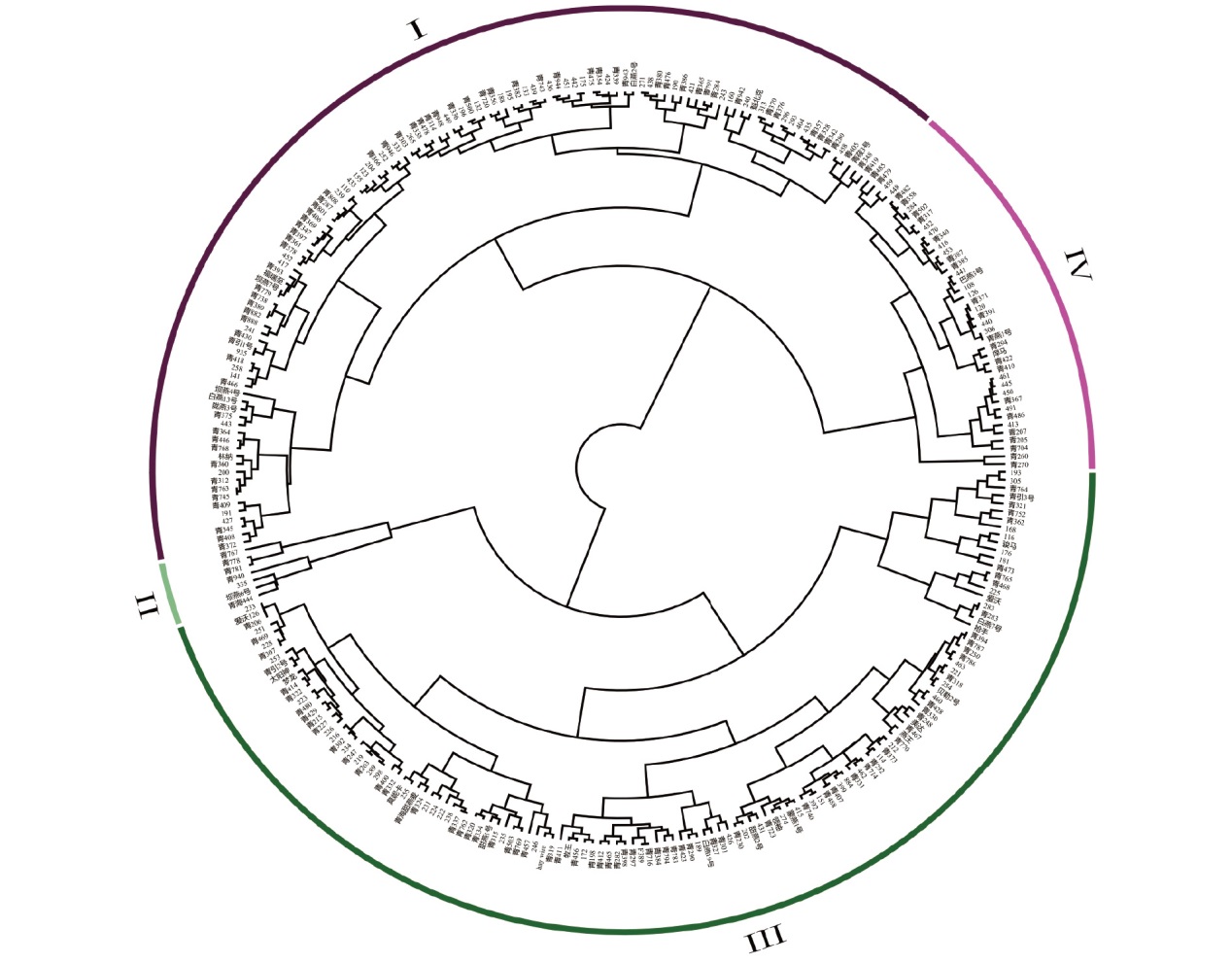
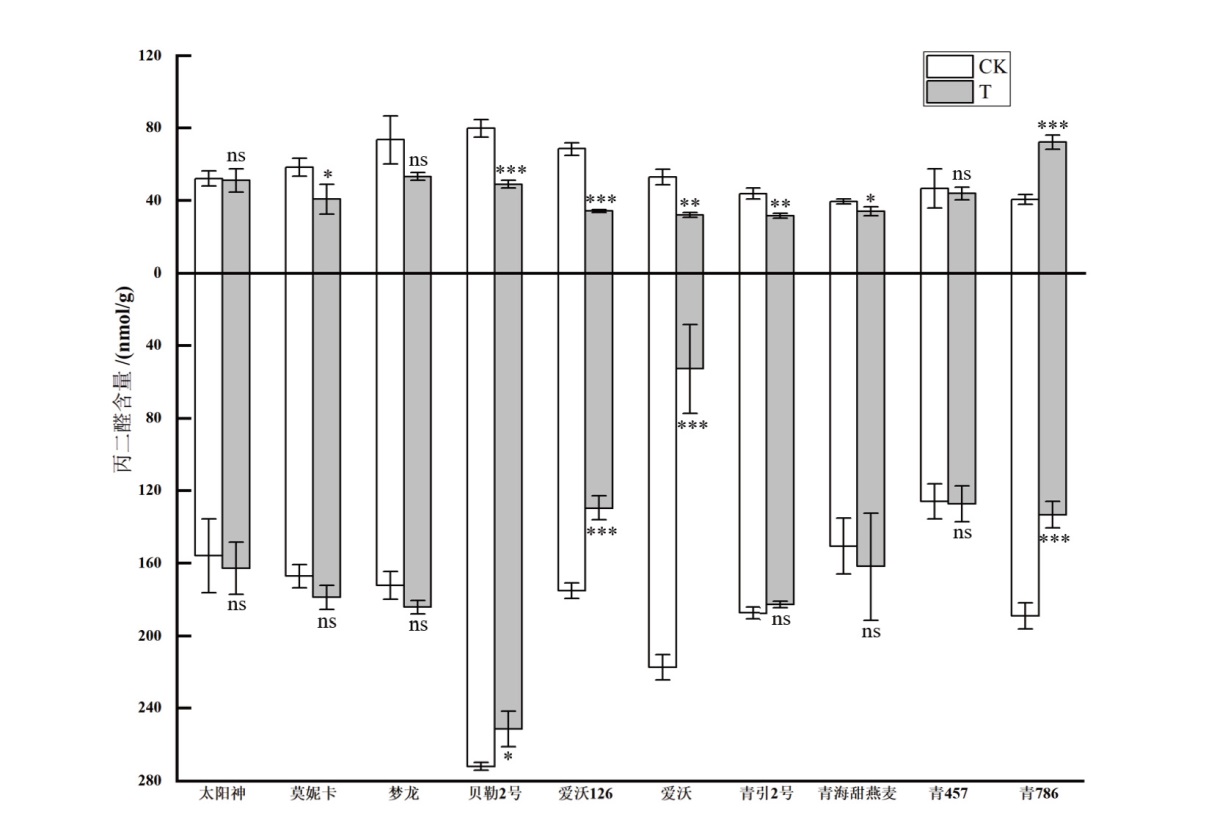
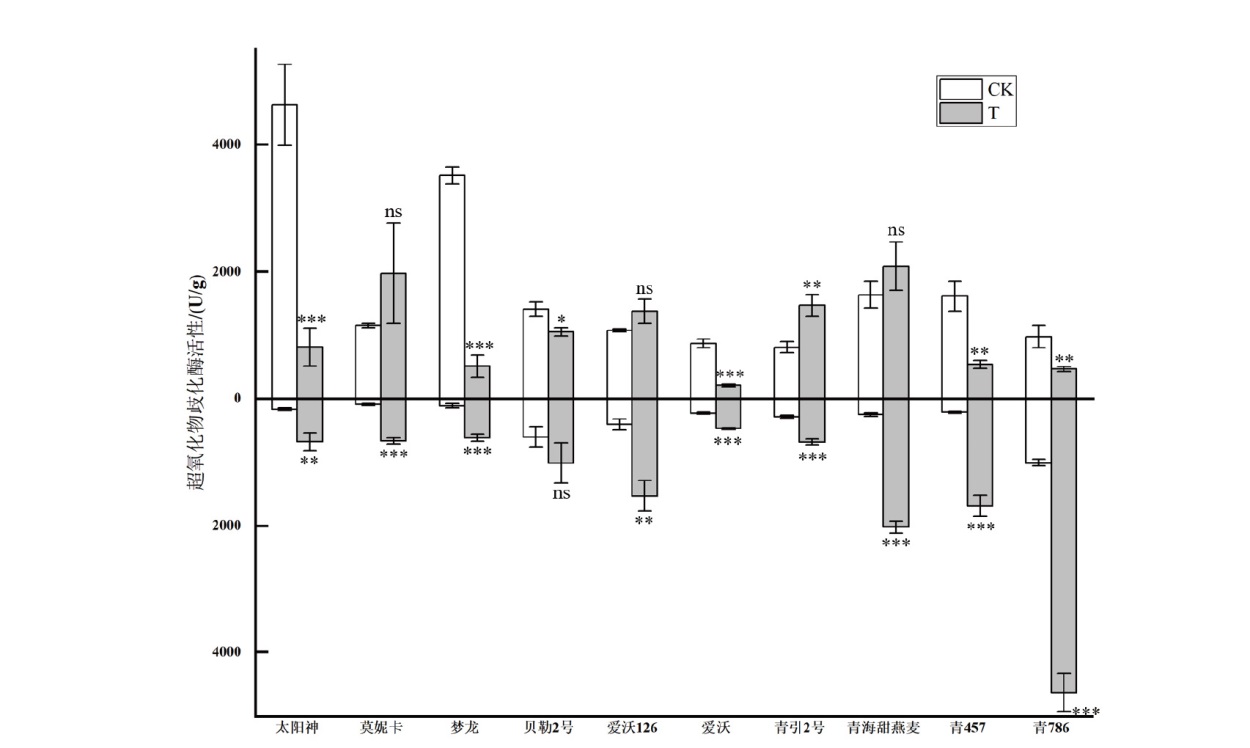
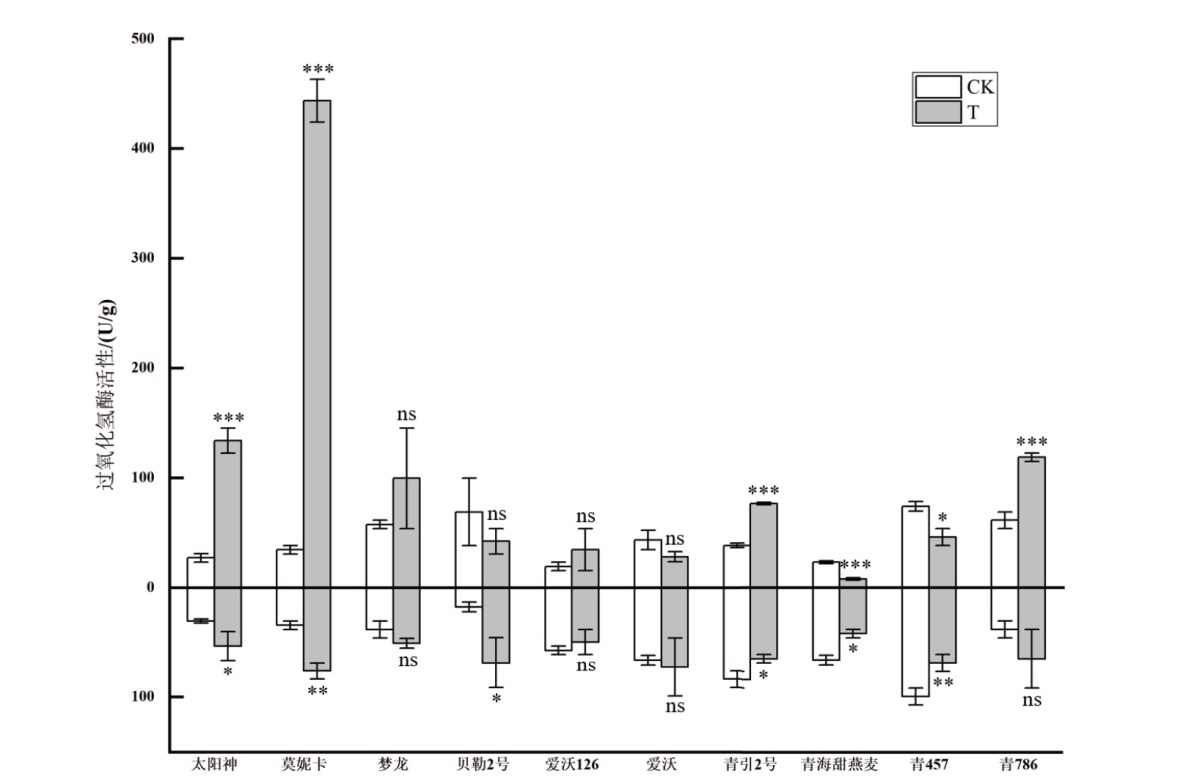
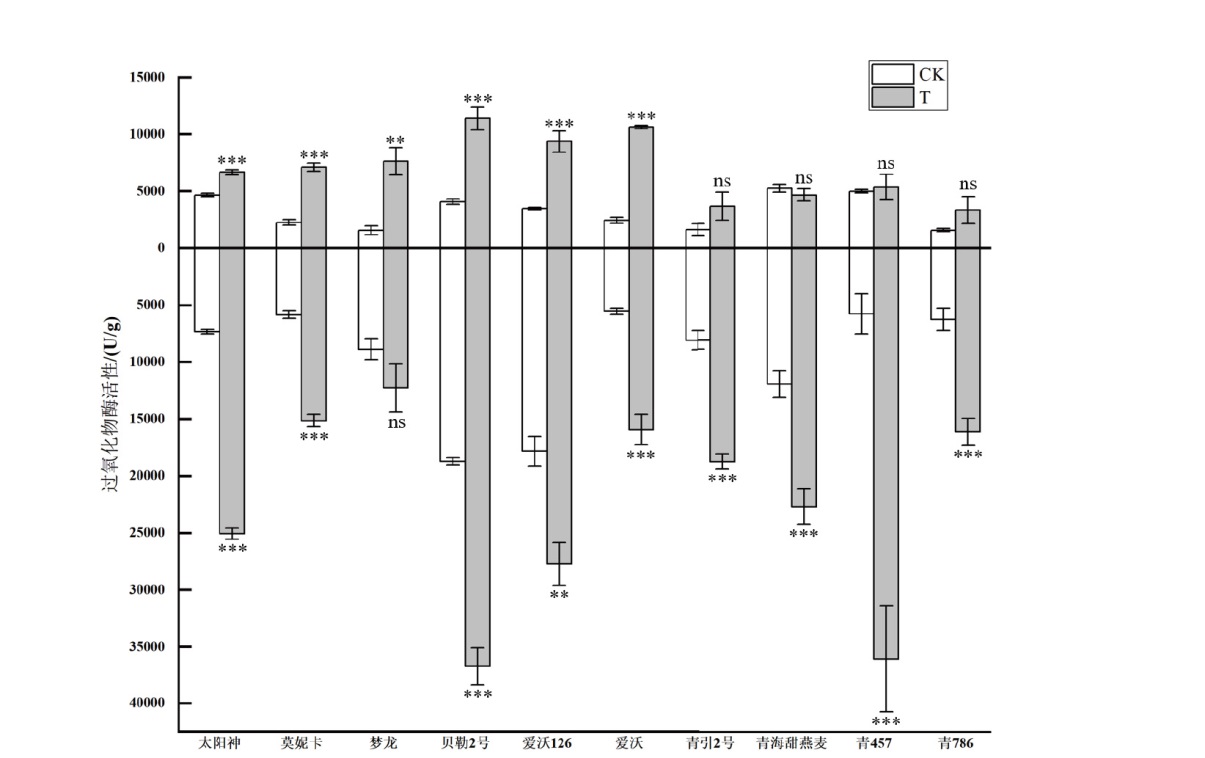
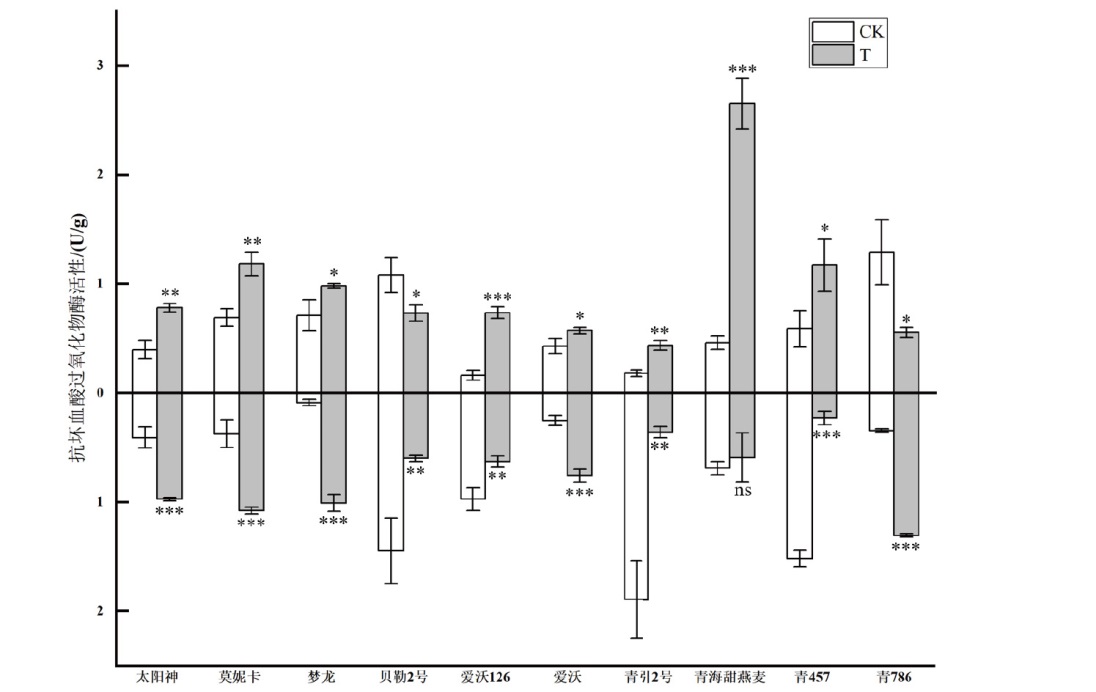
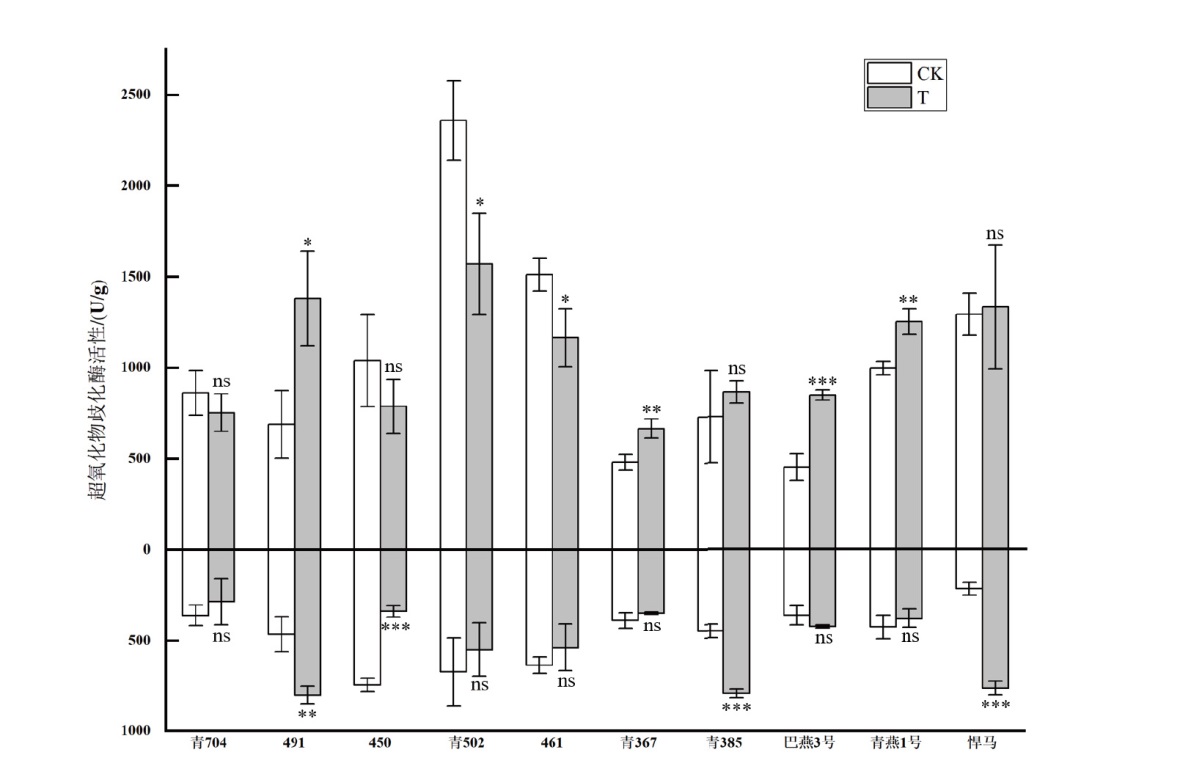
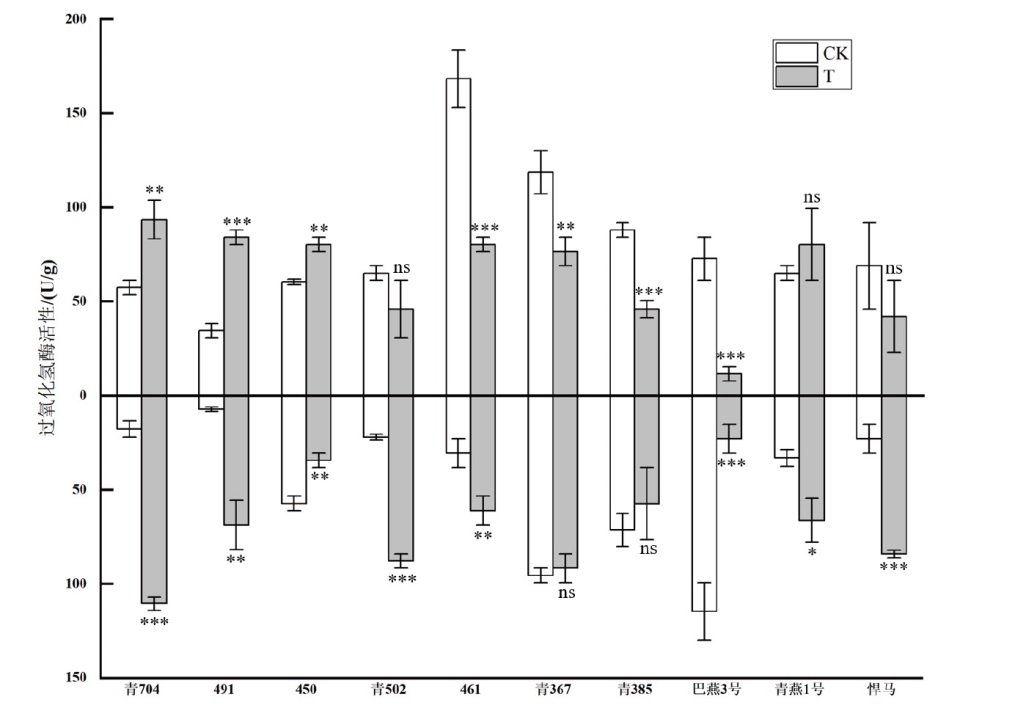
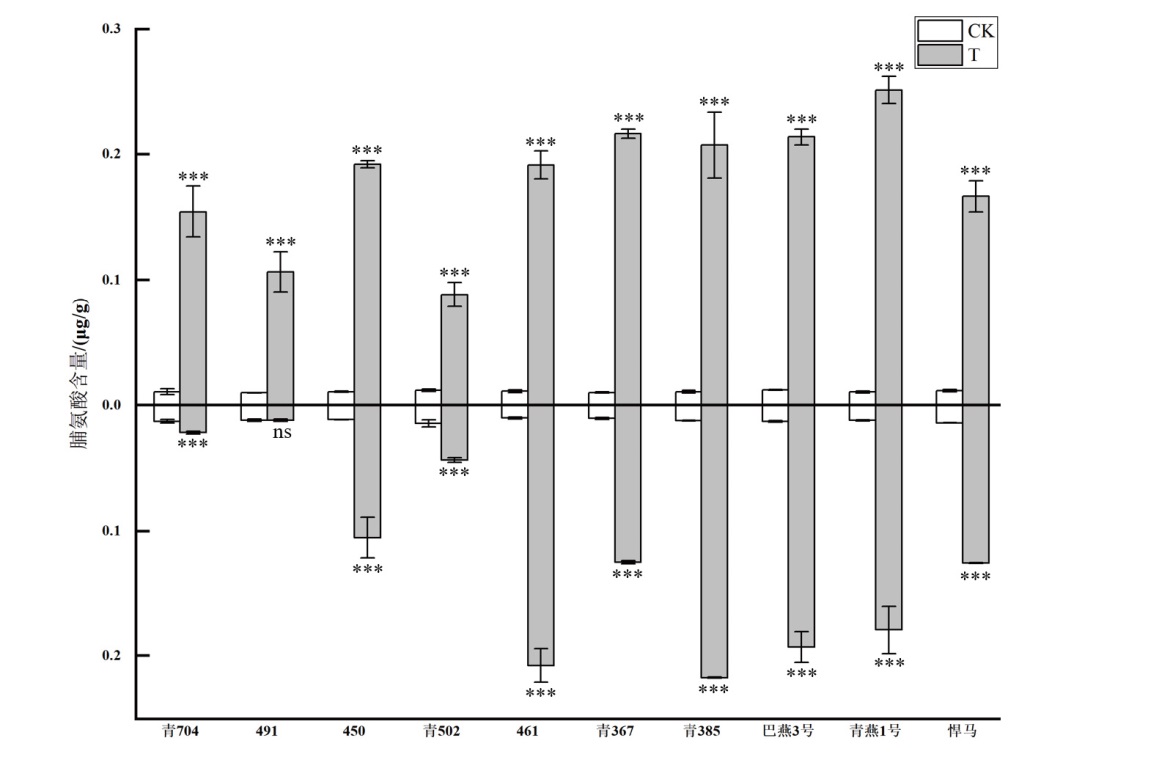
为了探究燕麦耐盐生理机制并筛选优异种质,本研究旨在为盐渍地治理及品种选育提供理论依据。以300份燕麦核心种质为试材,采用K均值分类法结合盐胁迫处理,测定幼苗6项关键生理指标,并利用隶属函数法进行综合耐盐性评价。300份品种根据其耐盐系数被分为4类,从中筛选出20个极端材料进行验证。结果显示,盐敏感品种‘青永久786’在盐胁迫下地上部分的丙二醛(MDA)含量显著增加77.88%,而极耐盐品种‘悍马’的地下部分MDA含量降低74.22%,表明其膜脂过氧化程度较低。耐盐品种‘青燕1号’在地上部分的脯氨酸(Pro)含量激增2329.36%,超氧化物歧化酶(SOD)、过氧化物酶(POD)等抗氧化酶的活性显著增强,表现出优异的生理调节能力。研究进一步证实,燕麦的耐盐性与其抗氧化酶活性的有效维持及脯氨酸大量积累正相关,最终鉴定出3份极耐盐核心种质,包括‘悍马’、‘青永久461’和‘青永久491’,以及3份敏盐核心种质,包括‘太阳神’、‘青引2号’和‘贝勒2号’。这些鉴定出的种质为后续燕麦耐盐机制的深入解析、分子育种以及盐碱地高效利用提供了宝贵的遗传资源。
中图分类号:
马祥, 马雯婷, 琚泽亮, 刘文辉, 梁国玲, 贾志锋. 燕麦种质资源耐盐性能的评估及耐盐种质筛选研究[J]. 中国农学通报, 2026, 42(20): 6-18.
MA Xiang, MA Wenting, JU Zeliang, LIU Wenhui, LIANG Guoling, JIA Zhifeng. Evaluation of Salt Tolerance Performance of Oat Germplasm Resources and Screening of Salt Tolerance Germplasm[J]. Chinese Agricultural Science Bulletin, 2026, 42(20): 6-18.
| 材料名称 | 耐盐性 | 材料名称 | 耐盐性 |
|---|---|---|---|
| 太阳神 | 盐敏感燕麦种质 | 青永久704 | 耐盐燕麦种质 |
| 莫妮卡 | 盐敏感燕麦种质 | 青永久461 | 耐盐燕麦种质 |
| 梦龙 | 盐敏感燕麦种质 | 青永久450 | 耐盐燕麦种质 |
| 青引2号 | 盐敏感燕麦种质 | 青永久502 | 耐盐燕麦种质 |
| 爱沃126 | 盐敏感燕麦种质 | 青永久491 | 耐盐燕麦种质 |
| 爱沃 | 盐敏感燕麦种质 | 青永久367 | 耐盐燕麦种质 |
| 贝勒2号 | 盐敏感燕麦种质 | 青永久385 | 耐盐燕麦种质 |
| 青海甜燕麦 | 盐敏感燕麦种质 | 巴燕3号 | 耐盐燕麦种质 |
| 青永久457 | 盐敏感燕麦种质 | 青燕1号 | 耐盐燕麦种质 |
| 青永久786 | 盐敏感燕麦种质 | 悍马 | 耐盐燕麦种质 |
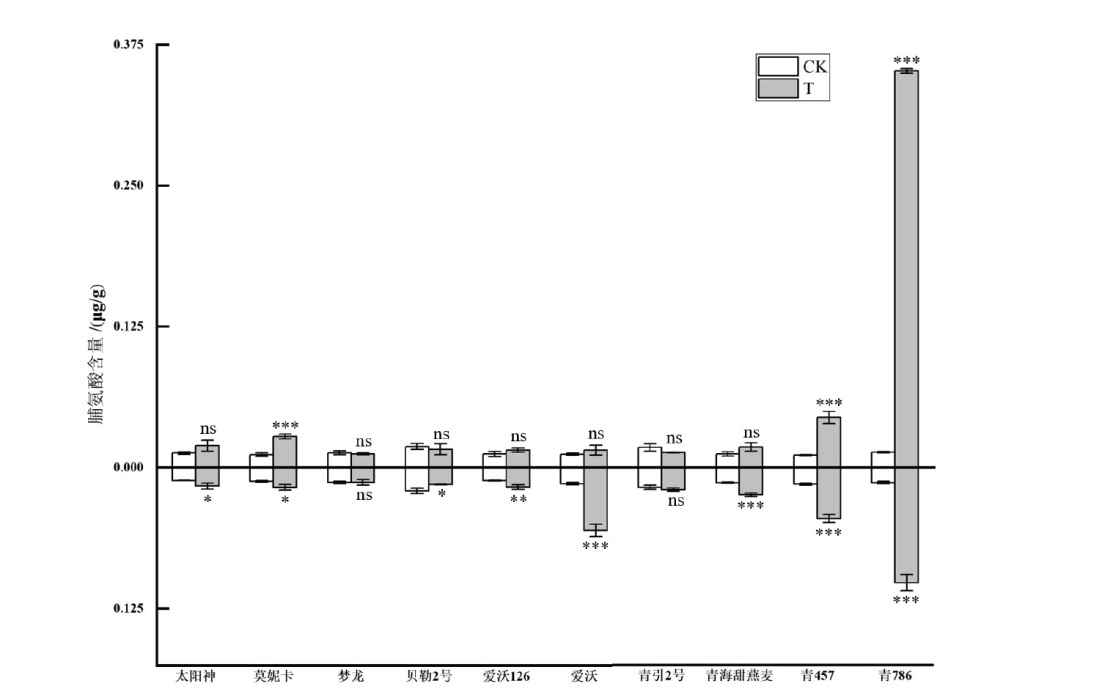
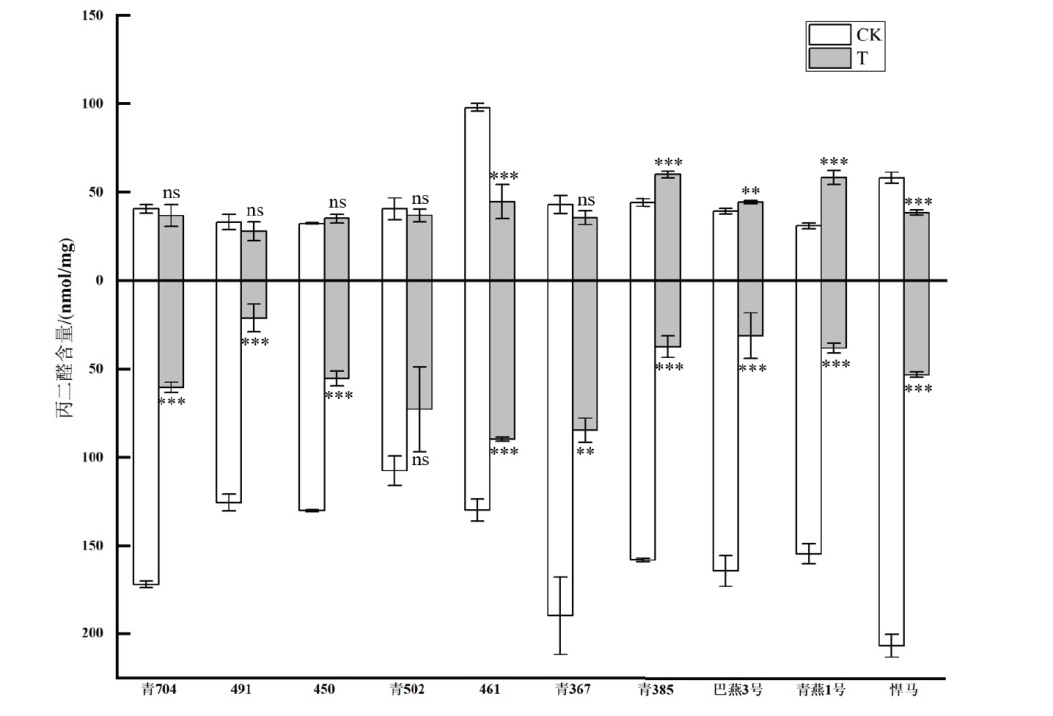
| 材料 | 地上部分隶属函数值 | 地下部分隶属函数值 | 平均数 | 排名 | |||||||||||
|---|---|---|---|---|---|---|---|---|---|---|---|---|---|---|---|
| CAT | POD | SOD | Pro | MDA | APX | CAT | POD | SOD | Pro | MDA | APX | ||||
| 太阳神 | 0.376 | 0.101 | 0.016 | 0.030 | 0.595 | 0.356 | 0.168 | 0.540 | 0.478 | 0.035 | 0.034 | 0.201 | 0.244 | 20 | |
| 莫妮卡 | 1.000 | 0.247 | 0.847 | 0.066 | 0.782 | 0.295 | 0.220 | 0.401 | 0.901 | 0.035 | 0.006 | 0.247 | 0.421 | 4 | |
| 梦龙 | 0.124 | 0.395 | 0.000 | 0.007 | 0.763 | 0.219 | 0.123 | 0.196 | 0.667 | 0.013 | 0.006 | 1.000 | 0.293 | 17 | |
| 青引2号 | 0.059 | 0.308 | 0.540 | 0.013 | 0.968 | 0.103 | 0.408 | 0.294 | 0.163 | 0.010 | 0.283 | 0.035 | 0.265 | 19 | |
| 爱沃126 | 0.129 | 0.208 | 0.612 | 0.022 | 0.911 | 0.959 | 0.072 | 0.225 | 0.439 | 0.039 | 0.379 | 0.045 | 0.337 | 10 | |
| 爱沃 | 0.038 | 0.349 | 0.050 | 0.023 | 0.843 | 0.209 | 0.097 | 0.448 | 0.212 | 0.160 | 0.939 | 0.256 | 0.302 | 14 | |
| 贝勒2号 | 0.137 | 0.164 | 0.898 | 0.000 | 0.701 | 0.389 | 0.062 | 0.354 | 0.231 | 0.020 | 0.116 | 0.004 | 0.256 | 18 | |
| 青海甜燕麦 | 0.014 | 0.054 | 0.609 | 0.032 | 0.671 | 1.228 | 0.047 | 0.283 | 1.000 | 0.054 | 0.000 | 0.064 | 0.338 | 9 | |
| 青永久457 | 0.036 | 0.070 | 0.102 | 0.132 | 0.621 | 0.358 | 0.054 | 1.000 | 0.974 | 0.118 | 0.073 | 0.000 | 0.295 | 16 | |
| 青永久786 | 0.140 | 0.160 | 0.179 | 1.000 | 0.066 | 0.000 | 0.163 | 0.398 | 0.547 | 0.351 | 0.418 | 0.328 | 0.313 | 12 | |
| 青永久704 | 0.116 | 0.000 | 0.393 | 0.555 | 0.644 | 0.319 | 0.654 | 0.007 | 0.045 | 0.049 | 0.817 | 0.029 | 0.302 | 13 | |
| 青永久491 | 0.156 | 0.134 | 1.000 | 0.335 | 0.619 | 0.931 | 1.000 | 0.000 | 0.143 | 0.014 | 0.908 | 0.124 | 0.447 | 3 | |
| 青永久450 | 0.092 | 0.291 | 0.330 | 0.695 | 0.522 | 0.746 | 0.043 | 0.039 | 0.000 | 0.433 | 0.734 | 0.091 | 0.335 | 11 | |
| 青永久502 | 0.043 | 1.000 | 0.281 | 0.271 | 0.641 | 0.063 | 0.411 | 0.191 | 0.048 | 0.116 | 0.449 | 0.068 | 0.298 | 15 | |
| 青永久461 | 0.048 | 0.097 | 0.413 | 0.723 | 1.000 | 0.779 | 0.287 | 0.240 | 0.059 | 1.000 | 0.705 | 0.036 | 0.449 | 2 | |
| 青永久367 | 0.038 | 0.014 | 0.669 | 0.836 | 0.697 | 0.800 | 0.083 | 0.078 | 0.059 | 0.566 | 0.711 | 0.131 | 0.390 | 5 | |
| 青永久385 | 0.029 | 0.022 | 0.562 | 0.745 | 0.344 | 0.250 | 0.066 | 0.077 | 0.174 | 0.855 | 0.948 | 0.095 | 0.347 | 8 | |
| 巴燕3号 | 0.000 | 0.060 | 0.934 | 0.674 | 0.495 | 0.165 | 0.000 | 0.219 | 0.096 | 0.717 | 1.000 | 0.040 | 0.367 | 6 | |
| 青燕1号 | 0.085 | 0.036 | 0.600 | 0.933 | 0.000 | 0.416 | 0.196 | 0.159 | 0.058 | 0.717 | 0.936 | 0.071 | 0.350 | 7 | |
| 悍马 | 0.036 | 0.146 | 0.478 | 0.555 | 0.804 | 0.752 | 0.377 | 0.289 | 0.407 | 0.420 | 0.923 | 0.233 | 0.452 | 1 | |
| [1] |
孟然, 李赵嘉, 冯薇, 等. 大豆不同生育时期耐盐性综合评价及耐盐种质筛选[J]. 作物学报, 2025, 51(8):1991-2008.
doi: 10.3724/SP.J.1006.2025.55013 |
| [2] |
doi: 10.1890/150159 URL |
| [3] |
王苗苗, 赵桂琴, 梁国玲, 等. 不同耐盐性燕麦对盐胁迫的生理响应[J]. 草业科学, 2021, 38(11):2200-2209.
|
| [4] |
李树华, 许兴, 惠红霞, 等. 土壤盐碱胁迫对春小麦K+、Na+选择性吸收的影响[J]. 西北植物学报, 2002, 22(3):587-594.
|
| [5] |
殷立娟, 祝玲. 羊草苗对盐碱胁迫的反应和适应性[J]. 东北师大学报(自然科学版), 1989(4):87-95.
|
| [6] |
doi: 10.1016/s1369-5266(03)00085-2 pmid: 12972044 |
| [7] |
陈晓晶, 徐忠山, 赵宝平, 等. 盐胁迫对燕麦根系呼吸代谢、抗氧化酶活性及产量的影响[J]. 生态学杂志, 2021, 40(9):2773-2782.
|
| [8] |
王苗苗, 周向睿, 梁国玲, 等. 5份燕麦材料苗期耐盐性综合评价[J]. 草业学报, 2020, 29(8):143-154.
doi: 10.11686/cyxb2019492 |
| [9] |
王彦龙, 施建军, 盛丽, 等. 柴达木盆地重度盐碱地燕麦引种适应性评价[J]. 青海畜牧兽医杂志, 2019, 49(1):7.
|
| [10] |
李松子, 沈霖, 林祖恩, 等. 浅谈种子发芽势检验应纳于《农作物种子检验规程》[J]. 农业科技通讯, 2009(8):29-30.
|
| [11] |
doi: 10.1016/j.plaphy.2010.08.016 URL |
| [12] |
doi: 10.1111/pce.2006.29.issue-7 URL |
| [13] |
芦翔, 汪强, 赵惠萍, 等. 盐胁迫对不同燕麦品种种子萌发和出苗影响的研究[J]. 草业科学, 2009, 26(7):77-81.
|
| [14] |
李建设, 沈国伟, 任长忠, 等. 燕麦种子萌发和幼苗生长对不同盐胁迫的反应[J]. 麦类作物学报, 2009, 29(6):1043-1047.
|
| [15] |
张彦威, 张礼凤, 李伟, 等. 大豆发芽期和苗期耐盐性的隶属函数分析[J]. 山东农业科学, 2016, 48(1):21-25.
|
| [16] |
范惠玲, 路妍, 金文海, 等. 基于根系表型性状的蚕豆耐盐碱性鉴定与综合评价[J]. 植物学报, 2025, 60(2):204-217.
doi: 10.11983/CBB24093 |
| [17] |
高彩婷, 刘景辉, 张玉芹, 等. 短期盐胁迫下燕麦幼苗的生理响应[J]. 草地学报, 2017, 25(2):337-343.
doi: 10.11733/j.issn.1007-0435.2017.02.017 |
| [18] |
白健慧. 燕麦对盐碱胁迫的生理响应机制研究[D]. 呼和浩特: 内蒙古农业大学, 2016.
|
| [19] |
刘建新, 王金成, 王瑞娟, 等. 燕麦幼苗对盐胁迫的响应及过氧化氢对响应的调节[J]. 生态学杂志, 2015, 34(9):2506-2511.
|
| [20] |
刘凤歧, 刘杰淋, 朱瑞芬, 等. 4种燕麦对NaCl胁迫的生理响应及耐盐性评价[J]. 草业学报, 2015, 24(1):183-189.
doi: 10.11686/cyxb20150122 |
| [21] |
|
| [22] |
何晓群. 多元统计分析[M]. 北京: 中国人民大学出版社, 2015:152-174.
|
| [23] |
|
| [24] |
于馥榕, 李毅丹, 程云清, 等. 油莎豆种质资源苗期耐盐性鉴定与评价[J]. 干旱地区农业研究, 2023, 41(2):1-10,85.
|
| [25] |
陈雅琦, 苏楷淇, 陈泰祥, 等. 混合盐碱胁迫对醉马草种子萌发及幼苗生理特性的影响[J]. 草业学报, 2021, 30(3):137-157.
doi: 10.11686/cyxb2020416 |
| [26] |
doi: 10.3390/plants11141842 URL |
| [27] |
doi: 10.1034/j.1399-3054.2000.100410.x URL |
| [28] |
doi: 10.1109/TCBB.2008.123 pmid: 21030741 |
| [1] | 徐名伟, 冯国军, 刘大军, 刘畅, 闫志山, 张泰丰, 徐镝, 杨晓旭. 耐盐促生菌的筛选及对盐胁迫下菜豆生长的影响[J]. 中国农学通报, 2026, 42(9): 59-67. |
| [2] | 王硕, 杨和团, 王芳, 张丽纯, 杨润, 马玉莲, 李姗姗, 杨楠, 胡倩倩, 付昌昊, 李明禹, 梁艳丽. 川续断优势种质筛选和不同颜色花药植株的农艺性状对比[J]. 中国农学通报, 2026, 42(7): 113-120. |
| [3] | 李春林, 杨美丽, 王帮太, 鹿红卫, 程翠, 秦贵文. 豫北地区夏播宜机收玉米品种(系)适应性初筛[J]. 中国农学通报, 2026, 42(6): 14-21. |
| [4] | 郑筱媛, 陈靖瑜, 王惠聪, 王振江, 王丹. 38份桑椹种质资源果实品质分析及综合评价[J]. 中国农学通报, 2026, 42(6): 72-84. |
| [5] | 杨伟, 张晨旭, 刘敏洁, 马国盛, 刘文辉, 鲍根生, 孔繁梅. 青海高寒地区不同燕麦品种生产性能和营养品质综合评价[J]. 中国农学通报, 2026, 42(19): 154-162. |
| [6] | 苏雨娟, 钟海龙, 唐慧娟, 栾明宝, 李建军, 黄思齐. 盐胁迫下油菜素内酯对红麻幼苗生长的促进效应[J]. 中国农学通报, 2026, 42(19): 30-37. |
| [7] | 刘雪峰, 信海峰, 黄亚东, 王红梅, 吕继龙, 李平芳. 基于主成分和聚类分析的黄淮海麦区60个冬小麦品种筛选[J]. 中国农学通报, 2026, 42(17): 11-22. |
| [8] | 王亚楠, 李涛, 何世昊, 帕丽努尔·艾外力, 王嘉丰, 王鑫, 李志元, 秦勇. 赤霉素和水杨酸对盐胁迫下万寿菊种子萌发、幼苗生长及生理的影响[J]. 中国农学通报, 2026, 42(16): 100-109. |
| [9] | 邵梦瑶, 孔祥军, 贾佩佩, 李恒彬, 闫思慧, 孙辰昕, 李丽杰, 李增强, 张志勇. 不同花生品种苗期耐盐性比较及生理响应机制解析[J]. 中国农学通报, 2026, 42(14): 46-56. |
| [10] | 李兴华, 涂军明, 张文超, 曹志刚, 王欢, 陈杰, 张盛, 蔡星星, 邓秋雨, 刘道乐. 鄂东再生稻品种筛选与再生力评价研究[J]. 中国农学通报, 2026, 42(14): 1-6. |
| [11] | 王辰飞, 张景欣, 蒲小明, 沈会芳, 刘平平, 杨祁云, 汪文毅, 孙大元. 甘薯白绢病菌生物学特性、侵染过程和防治药剂筛选[J]. 中国农学通报, 2026, 42(14): 147-157. |
| [12] | 王跃卿, 李丽峰, 王洁琼, 岳雨露, 卢家顶, 蔡海霞, 杨智博, 李德锋. 晚播情况下饲用燕麦在豫西地区的生产性能研究[J]. 中国农学通报, 2026, 42(12): 162-169. |
| [13] | 孙乌日娜, 梁爽, 刘佳, 韩烽, 温丽, 罗巍, 白璐, 薛海楠, 韩磊, 刘季骢, 马奔驰, 李子凡, 高雅楠, 徐兴健. 内蒙稻区香型水稻种质的适应性评价及优异亲本筛选[J]. 中国农学通报, 2026, 42(11): 1-8. |
| [14] | 任丽华, 高秋美, 曹健, 汪经轴, 董秋颖, 韩加坤, 韩金龙. 芍药田土壤封闭及茎叶除草剂的安全性筛选及除草效果[J]. 中国农学通报, 2026, 42(11): 157-162. |
| [15] | 曾红力, 张朝辉, 时世华, 谭正宝, 朱保侠, 王晓丽, 魏小星. 柴达木沙漠盐碱地13个饲用燕麦品种适应性综合评价[J]. 中国农学通报, 2026, 42(10): 163-170. |
| 阅读次数 | ||||||
|
全文 |
|
|||||
|
摘要 |
|
|||||
