欢迎访问《中国农学通报》,

中国农学通报 ›› 2026, Vol. 42 ›› Issue (19): 30-37.doi: 10.11924/j.issn.1000-6850.casb2025-0902
苏雨娟1( ), 钟海龙1, 唐慧娟1, 栾明宝1,2, 李建军1,2, 黄思齐1()
收稿日期:2025-11-03
修回日期:2026-07-30
出版日期:2026-10-15
发布日期:2026-10-15
通讯作者:
作者简介:苏雨娟,女,1998年出生,湖南湘阴人,硕士研究生,研究方向为作物科学。通信地址:410205 湖南省长沙市岳麓区咸嘉湖街道348号 中国农科院麻类研究所,E-mail:18075715730@163.com。
基金资助:
SU Yujuan1(), ZHONG Hailong1, TANG Huijuan1, LUAN Mingbao1,2, LI Jianjun1,2, HUANG Siqi1()
Received:2025-11-03
Revised:2026-07-30
Published:2026-10-15
Online:2026-10-15
摘要:
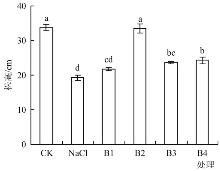
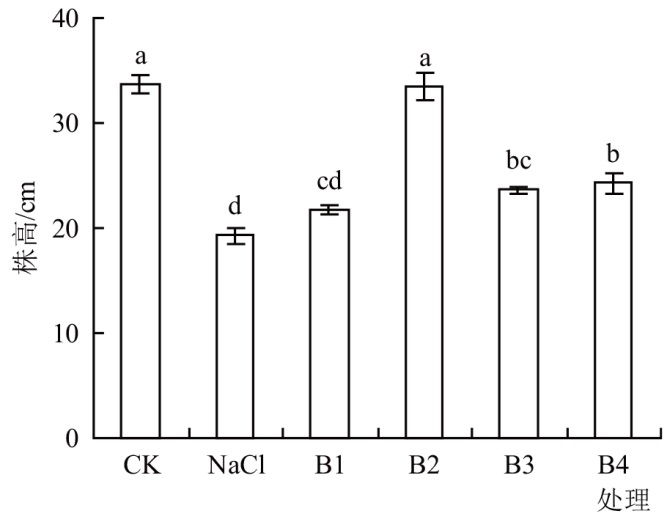
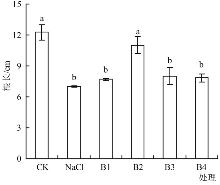
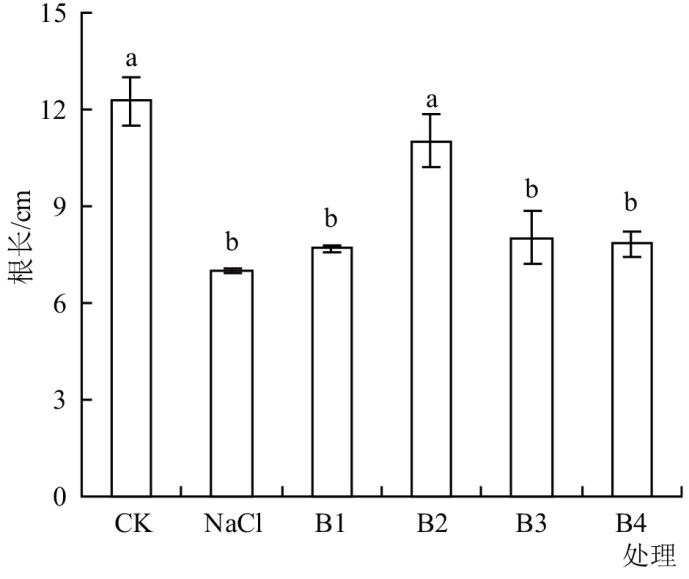
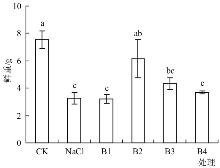
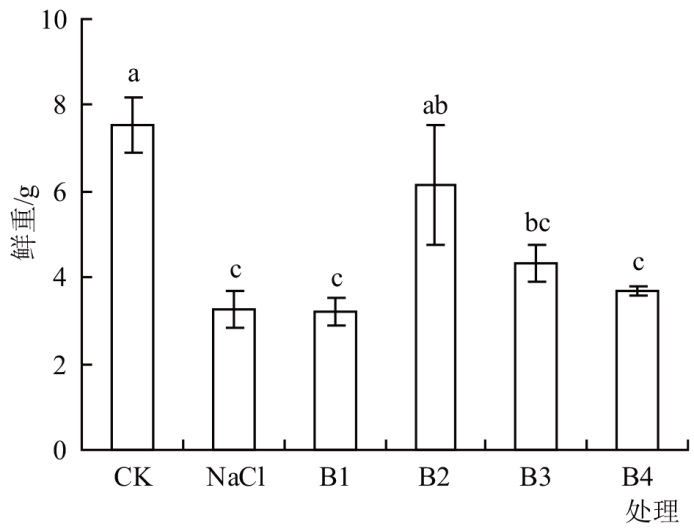
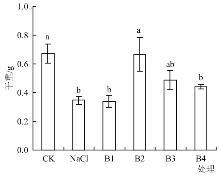
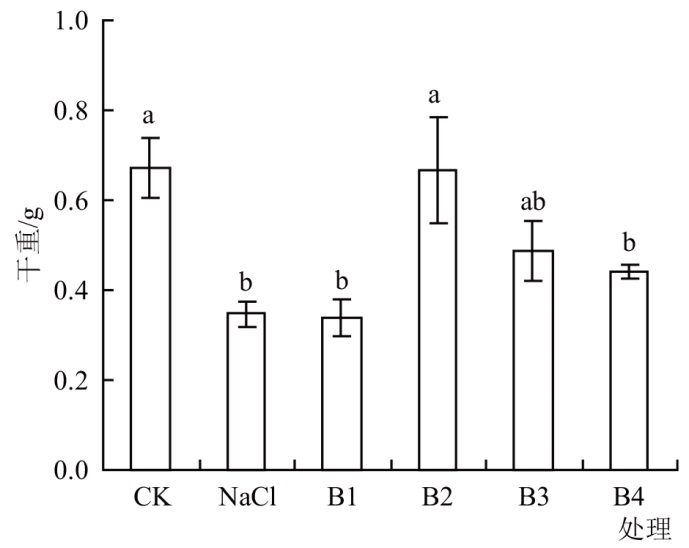
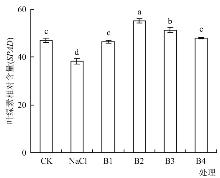
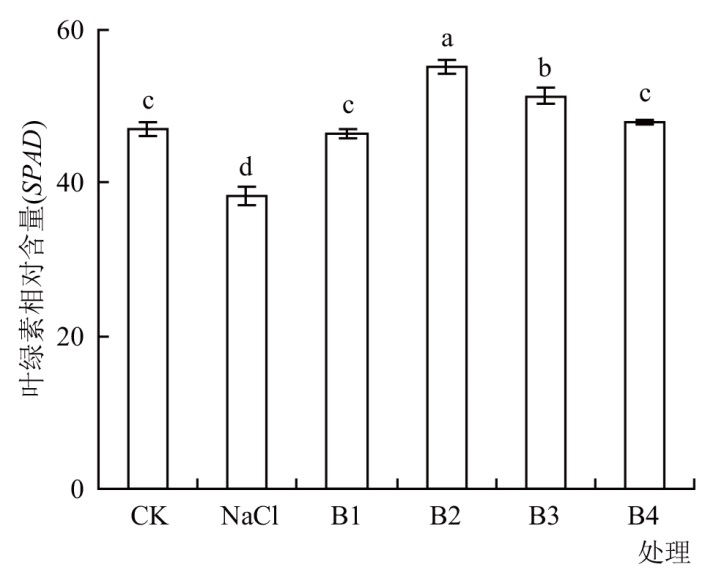
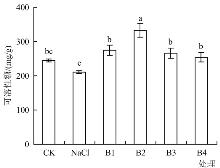
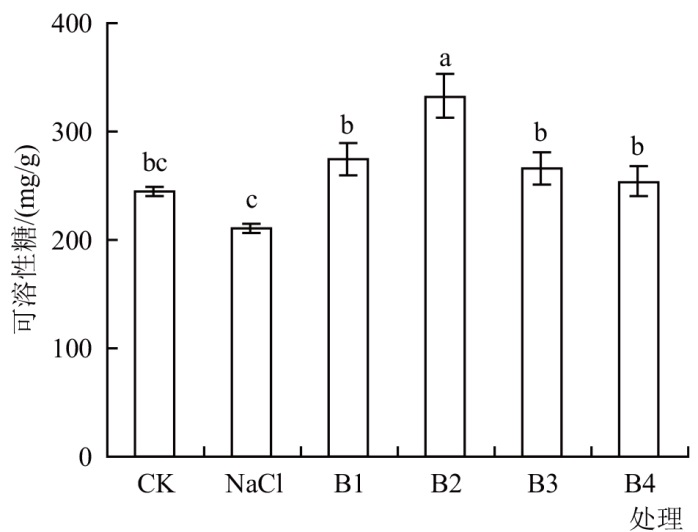
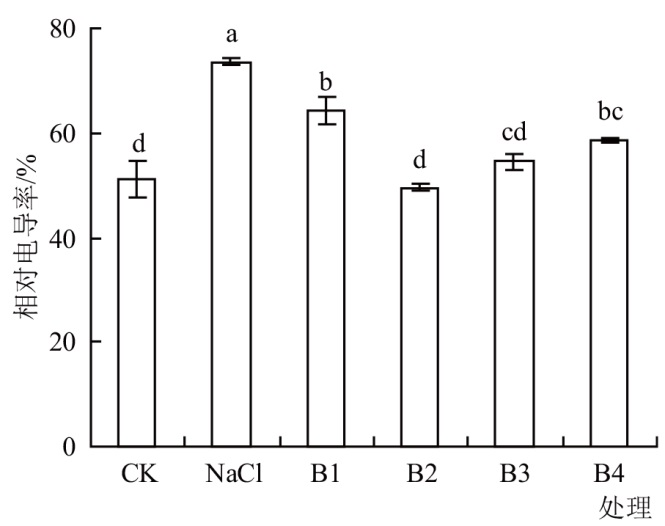
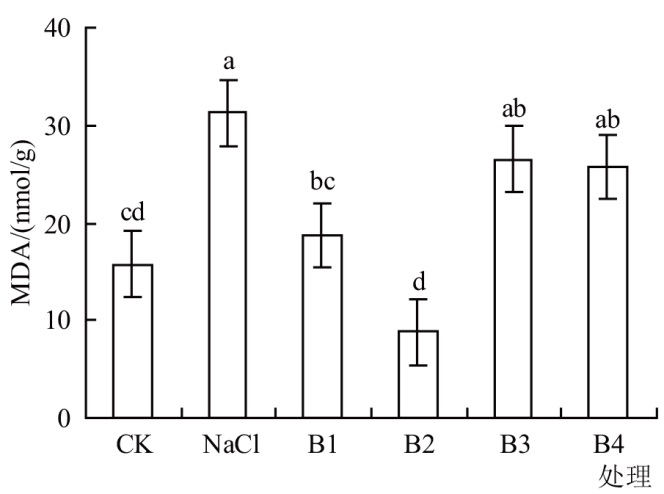
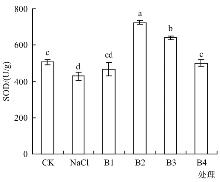
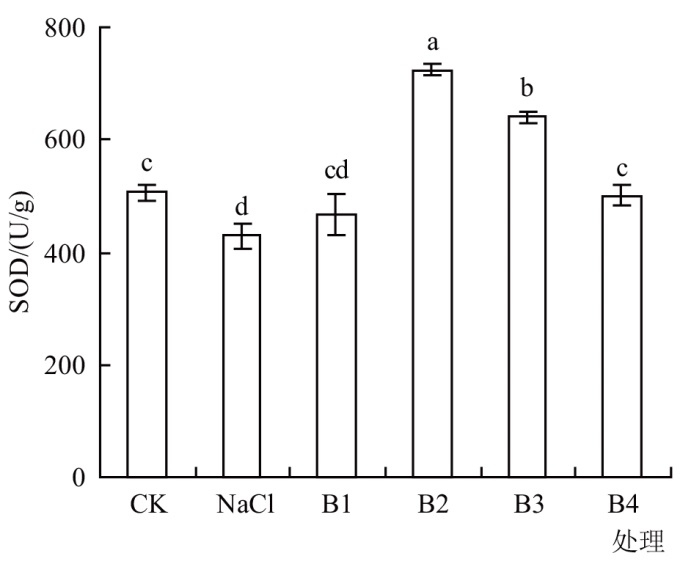
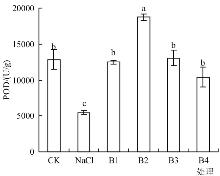
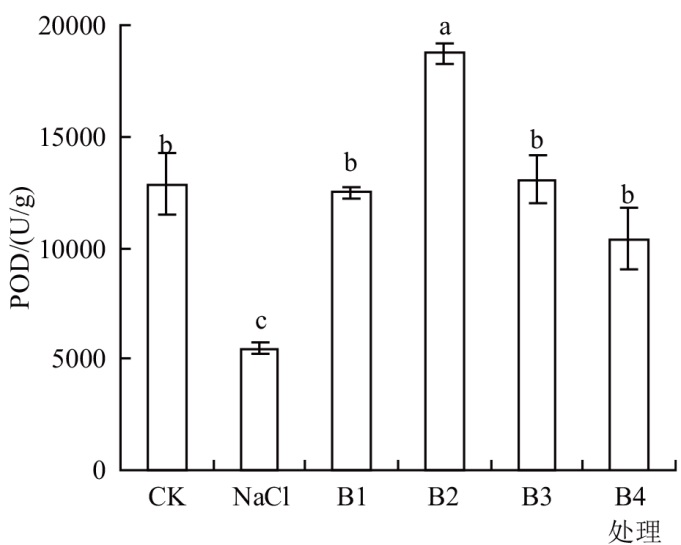
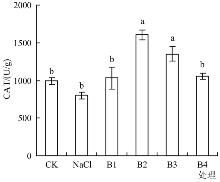
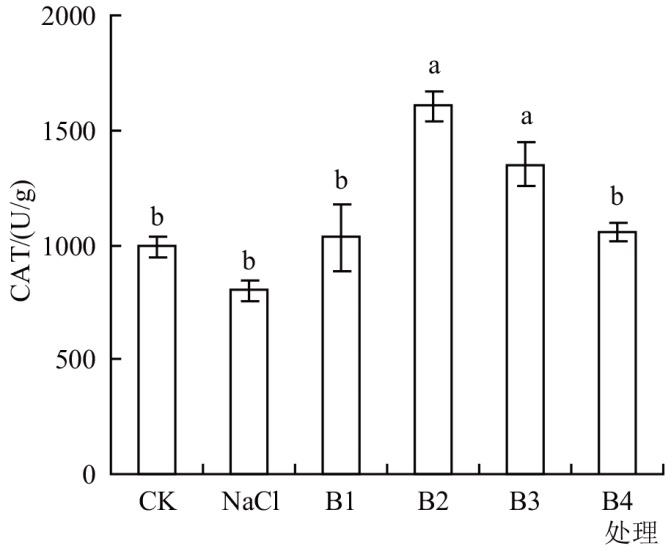
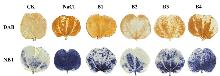
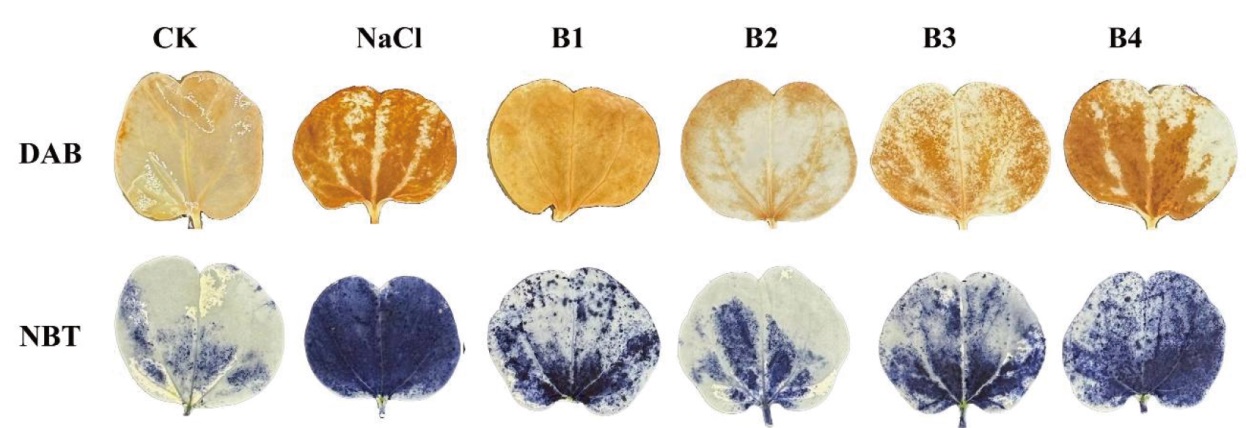
为研究外源油菜素内酯(brassinolide,BR)对盐胁迫下红麻幼苗生长的缓解效应及其生理机制,以中国农业科学院麻类研究所培育的‘中红麻21号’为材料,在水培条件下,用125 mmol/L NaCl溶液模拟盐胁迫,设置0.025、0.05、0.075、0.1 mg/L 4个BR浓度处理。研究表明,与单一盐胁迫处理相比,外源BR处理能有效缓解盐胁迫对红麻幼苗的抑制作用,其中0.05 mg/L BR的缓解效果最为显著。在生长方面,与NaCl处理相比,0.05 mg/L BR浓度处理使幼苗株高、根长、鲜重和干重分别显著提高了74.1%、57.6%、88.6%和92.2%(P<0.05),表明BR可有效促进盐胁迫下红麻幼苗的生物量积累和形态建成。在生理响应方面,与NaCl处理相比,0.05 mg/L BR处理使叶绿素相对含量、可溶性糖含量分别提高了44.0%、58.3%,这些变化有助于维持细胞渗透平衡和光合作用效率。在抗氧化系统方面,0.05 mg/L BR处理显著增强了超氧化物歧化酶(SOD)、过氧化物酶(POD)和过氧化氢酶(CAT)的活性,分别比盐胁迫对照提高了68.4%、241.9%和100.6%,并有效清除了过量的过氧化氢(H2O2)和超氧阴离子(O2·-),使膜脂过氧化产物丙二醛(MDA)含量与相对电导率显著下降,细胞膜结构的完整性得以维持。本研究证实,外源BR可通过协同调控渗透调节物质积累与抗氧化酶系统,有效增强红麻幼苗的耐盐性。
中图分类号:
苏雨娟, 钟海龙, 唐慧娟, 栾明宝, 李建军, 黄思齐. 盐胁迫下油菜素内酯对红麻幼苗生长的促进效应[J]. 中国农学通报, 2026, 42(19): 30-37.
SU Yujuan, ZHONG Hailong, TANG Huijuan, LUAN Mingbao, LI Jianjun, HUANG Siqi. Promotive Effect of Brassinolide on Growth of Kenaf Seedlings Under Salt Stress[J]. Chinese Agricultural Science Bulletin, 2026, 42(19): 30-37.
| [1] |
doi: 10.1016/j.jgg.2023.08.007 URL |
| [2] |
FAO. FAO launches first major global assessment of salt-affected soils in 50 years[EB/OL]. FAO Newsroom,2024-12-11/2026-05-26.
|
| [3] |
张越, 魏秋杨, 王鑫宇, 等. 29个黄瓜品种萌发期耐盐碱性分析[J]. 中国瓜菜, 2026, 39(3):75-83.
|
| [4] |
王佳丽, 黄贤金, 钟太洋, 等. 盐碱地可持续利用研究综述[J]. 地理学报, 2011, 66(5):673-684.
|
| [5] |
doi: 10.1016/j.chemosphere.2020.128211 URL |
| [6] |
|
| [7] |
熊和平. 我国麻类生产的现状与政策建议[J]. 中国麻业科学, 2010, 32(6):301-304.
|
| [8] |
刘淑丽, 张瑞,
doi: 10.16819/j.1001-7216.2023.220404 |
| [9] |
doi: 10.1038/2251065a0 |
| [10] |
陈慧泽, 刁丽曼, 周佳佳, 等. 油菜素内酯与其他植物激素互作调控植物生长发育及胁迫响应的研究进展[J]. 植物研究, 2024, 44(6):812-821.
doi: 10.7525/j.issn.1673-5102.2024.06.002 |
| [11] |
魏茜, 何敏, 胡小京. 外源油菜素内酯对盐胁迫下紫罗兰幼苗生长及生理特性的影响[J]. 西南农业学报, 2023, 36(6):1165-1171.
|
| [12] |
doi: 10.1016/j.eja.2022.126656 URL |
| [13] |
|
| [14] |
doi: 10.1007/s12298-020-00765-7 pmid: 32205926 |
| [15] |
高战武, 范春燕, 鄢上钦, 等. 盐碱胁迫下外源油菜素内酯与AM真菌对羊草光合特性及抗氧化酶系统的影响[J]. 山东农业科学, 2022, 54(05):44-52.
|
| [16] |
杨大为. NO缓解红麻盐胁迫的功能分析[D]. 长沙: 中国农业科学院,2022:7-15.
|
| [17] |
周倩文, 杨瑞芳, 王昕慧, 等. SPAD-502叶绿素计在苎麻高光效种质筛选上的应用研究[J]. 现代农业科技, 2022(3):40-43.
|
| [18] |
陈爱葵, 韩瑞宏, 李东洋, 等. 植物叶片相对电导率测定方法比较研究[J]. 广东教育学院学报, 2010, 30(5):88-91.
|
| [19] |
doi: 10.1007/s10343-016-0376-2 URL |
| [20] |
doi: 10.1111/pce.v43.12 URL |
| [21] |
doi: 10.1007/s00425-009-1016-1 URL |
| [22] |
郭小倩. 油菜素内酯作用于盐分胁迫条件下高粱的效应及机理研究[D]. 扬州: 扬州大学,2024:54-58.
|
| [23] |
王卓沛. 外源褪黑素和2,4-表油菜素内酯对无刺蔷薇盐碱胁迫的缓解效应[D]. 泰安: 山东农业大学,2023:33-47.
|
| [24] |
doi: 10.1016/j.indcrop.2007.10.003 URL |
| [25] |
doi: 10.1007/s11434-010-0092-8 URL |
| [26] |
|
| [27] |
doi: 10.2298/ABS171019001F URL |
| [28] |
doi: 10.1007/s11099-013-0021-6 URL |
| [29] |
束红梅, 郭书巧, 巩元勇, 等. 油菜素内酯对NaCl胁迫下棉花叶片生理特征和基因表达谱的影响[J]. 应用生态学报, 2016, 27(1):150-156.
|
| [30] |
doi: 10.1146/annurev.arplant.59.032607.092911 pmid: 18444910 |
| [31] |
毛爽, 周万里, 杨帆, 等. 植物根系应答盐碱胁迫机理研究进展[J]. 浙江农业学报, 2021, 33(10):1991-2000.
doi: 10.3969/j.issn.1004-1524.2021.10.23 |
| [32] |
doi: 10.1111/tpj.2006.45.issue-4 URL |
| [33] |
宋冰. 油菜素内酯对盐胁迫下紫羊茅生长的影响及其坪用性评价[D]. 乌鲁木齐: 新疆农业大学,2024:20-34.
|
| [34] |
王京华. 外源褪黑素对杜梨耐盐碱能力的影响[D]. 泰安: 山东农业大学,2024:33-43.
|
| [35] |
pmid: 16760489 |
| [36] |
雷新慧, 万晨茜, 陶金才, 等. 褪黑素与2,4-表油菜素内酯浸种对盐胁迫下荞麦发芽与幼苗生长的促进效应[J]. 作物学报, 2022, 48(5):1210-1221.
doi: 10.3724/SP.J.1006.2022.11040 |
| [37] |
doi: 10.1007/s12229-020-09231-1 |
| [38] |
doi: 10.1038/s41598-022-24747-9 |
| [1] | 徐名伟, 冯国军, 刘大军, 刘畅, 闫志山, 张泰丰, 徐镝, 杨晓旭. 耐盐促生菌的筛选及对盐胁迫下菜豆生长的影响[J]. 中国农学通报, 2026, 42(9): 59-67. |
| [2] | 刘雪玲, 梁博铨, 姚彬, 杨云海, 展澈, 申时才, 张付斗, 杨韶松, 郑凤萍, 孔燕, 袁静静, 闫培睿, 闫茂鹏, 徐高峰. 油菜根系分泌物对4种农田入侵杂草的化感作用研究[J]. 中国农学通报, 2026, 42(8): 183-190. |
| [3] | 毕言亮, 齐仕涵, 李琼玮, 邹晓霞, 司彤. 种衣剂促进花生种子低温下萌发和幼苗生长的生理机制[J]. 中国农学通报, 2026, 42(8): 44-52. |
| [4] | 赵倩云, 李得禄, 王飞, 李亚. 粘液和去粘液油蒿种子萌发对盐胁迫的响应[J]. 中国农学通报, 2026, 42(8): 60-66. |
| [5] | 刘桂民, 宿磊, 郑晓宁, 陈迪, 刘丙花, 孙铭婕, 刘幸红, 徐英梅. 中低产土壤接种根际促生细菌对玉米叶片生理特性的影响[J]. 中国农学通报, 2026, 42(3): 119-124. |
| [6] | 王亚楠, 李涛, 何世昊, 帕丽努尔·艾外力, 王嘉丰, 王鑫, 李志元, 秦勇. 赤霉素和水杨酸对盐胁迫下万寿菊种子萌发、幼苗生长及生理的影响[J]. 中国农学通报, 2026, 42(16): 100-109. |
| [7] | 朱晓江, 扁青永, 付彦博, 孟阿静, 王治国, 饶晓娟, 阚德兴, 吴晨, 吴洋, 李宁. 不同功能性肥料对棉花种子萌发特性的影响[J]. 中国农学通报, 2026, 42(16): 37-45. |
| [8] | 邵梦瑶, 孔祥军, 贾佩佩, 李恒彬, 闫思慧, 孙辰昕, 李丽杰, 李增强, 张志勇. 不同花生品种苗期耐盐性比较及生理响应机制解析[J]. 中国农学通报, 2026, 42(14): 46-56. |
| [9] | 杨世波, 朱一帆, 吴会平, 余达文, 滕世华, 和旺伟, 万静, 段恒曦, 祖朝龙, 董庆, 沈嘉, 汪季涛. 外源植物调节剂对云南烤烟上部叶开片及品质的影响[J]. 中国农学通报, 2026, 42(1): 12-19. |
| [10] | 梁文召, 周诗意, 韦瑞燕, 石琳亚, 刘乃新, 于清涛. 氧化石墨烯引发对盐胁迫下水稻种子萌发的影响[J]. 中国农学通报, 2025, 41(9): 1-7. |
| [11] | 汪宝卿, 解备涛, 张立明. 不同耐旱性甘薯根系的转录组分析[J]. 中国农学通报, 2025, 41(9): 47-55. |
| [12] | 黄文茵, 张白鸽, 常静静, 陈潇, 李静, 陈雷, 赵俊宏, 罗谋雄, 宋钊. 外源肌醇对盐胁迫下番茄产量和品质的影响[J]. 中国农学通报, 2025, 41(9): 73-80. |
| [13] | 王丽丽, 朱诗君, 卢晓红, 金树权. 木霉菌W1生物有机肥对滨海番茄种植的影响[J]. 中国农学通报, 2025, 41(7): 100-106. |
| [14] | 周波, 唐劲驰, 黎健龙, 陈义勇, 张曼, 崔莹莹, 黄秀鑫. 茶树叶片对干旱胁迫的生理响应[J]. 中国农学通报, 2025, 41(7): 67-74. |
| [15] | 田沁雨, 胡华兵, 王荣华, 王茂芊. L-抗坏血酸浸种对盐胁迫下甜菜种子萌发的影响[J]. 中国农学通报, 2025, 41(6): 53-59. |
| 阅读次数 | ||||||
|
全文 |
|
|||||
|
摘要 |
|
|||||
