欢迎访问《中国农学通报》,

中国农学通报 ›› 2026, Vol. 42 ›› Issue (14): 46-56.doi: 10.11924/j.issn.1000-6850.casb2025-0713
邵梦瑶( ), 孔祥军, 贾佩佩, 李恒彬, 闫思慧, 孙辰昕, 李丽杰, 李增强(), 张志勇
收稿日期:2026-01-12
修回日期:2026-04-28
出版日期:2026-07-25
发布日期:2026-07-24
通讯作者:
作者简介:邵梦瑶,女,2001年出生,河南汝州人,在读硕士,研究方向:作物逆境分子生物学。通信地址:453003 河南省新乡市红旗区华兰大道655号 河南科技学院,E-mail:shaomengyao2001@163.com。
基金资助:
SHAO Mengyao(), KONG Xiangjun, JIA Peipei, LI Hengbin, YAN Sihui, SUN Chenxin, LI Lijie, LI Zengqiang(), ZHANG Zhiyong
Received:2026-01-12
Revised:2026-04-28
Published:2026-07-25
Online:2026-07-24
摘要:
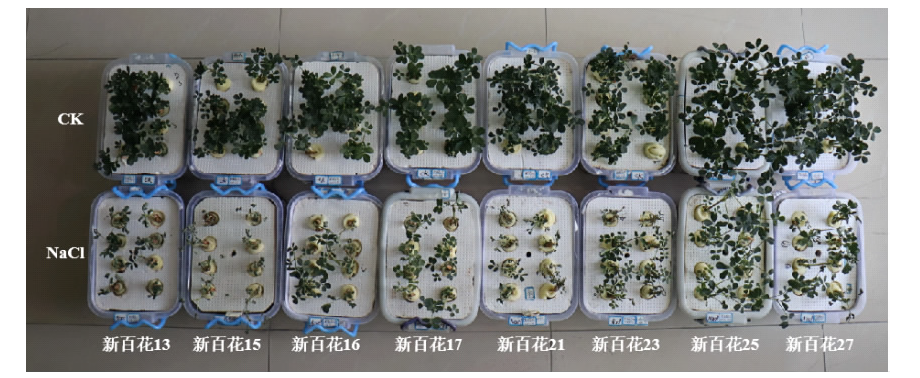
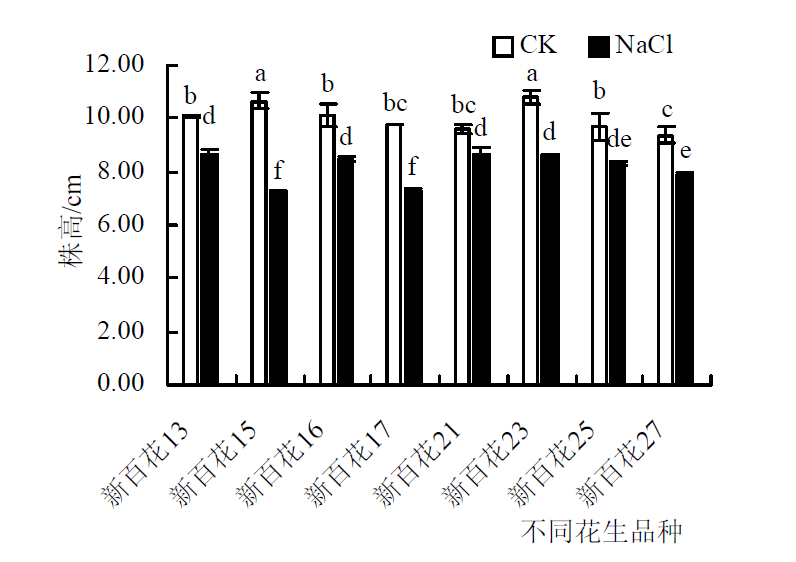
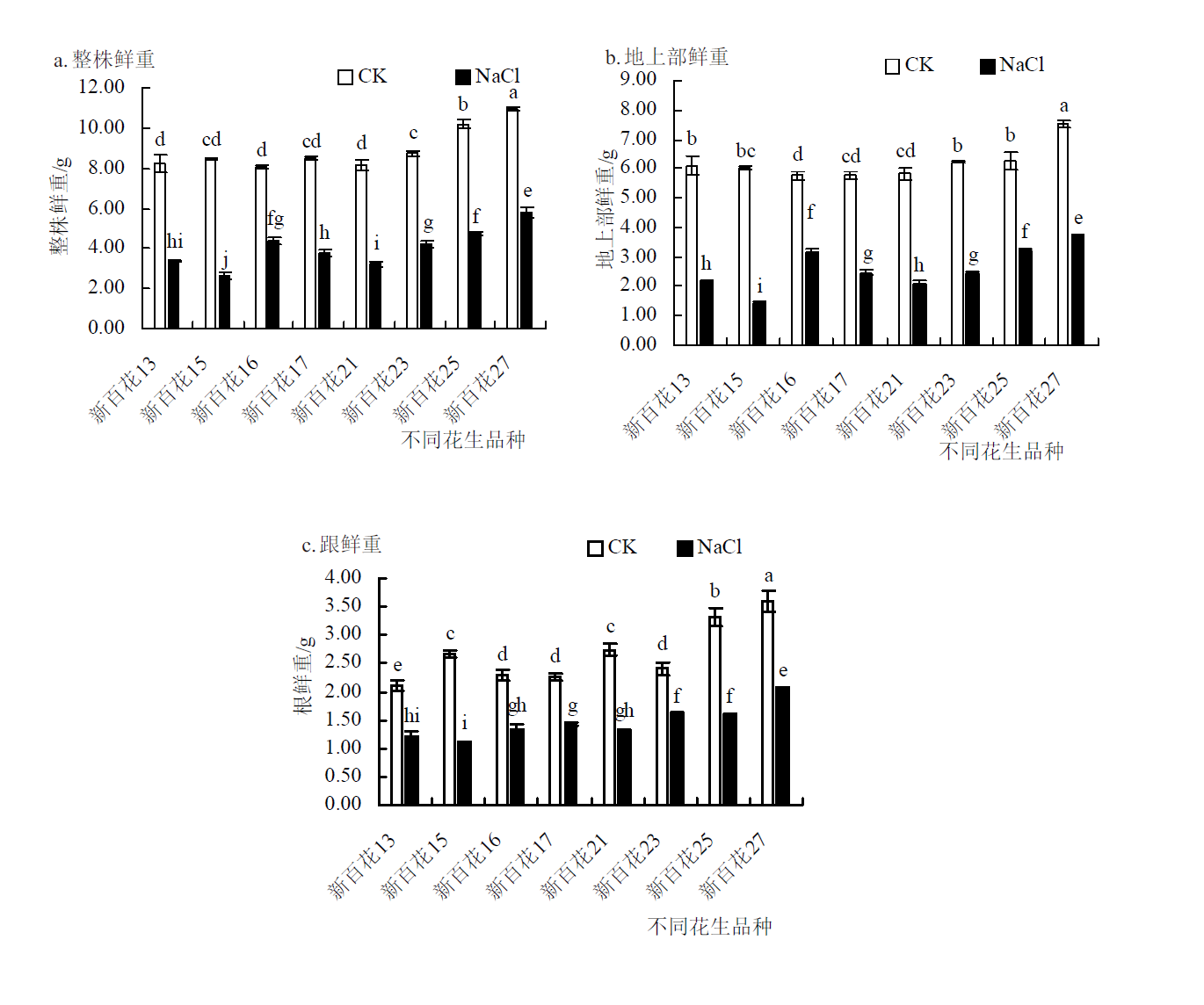
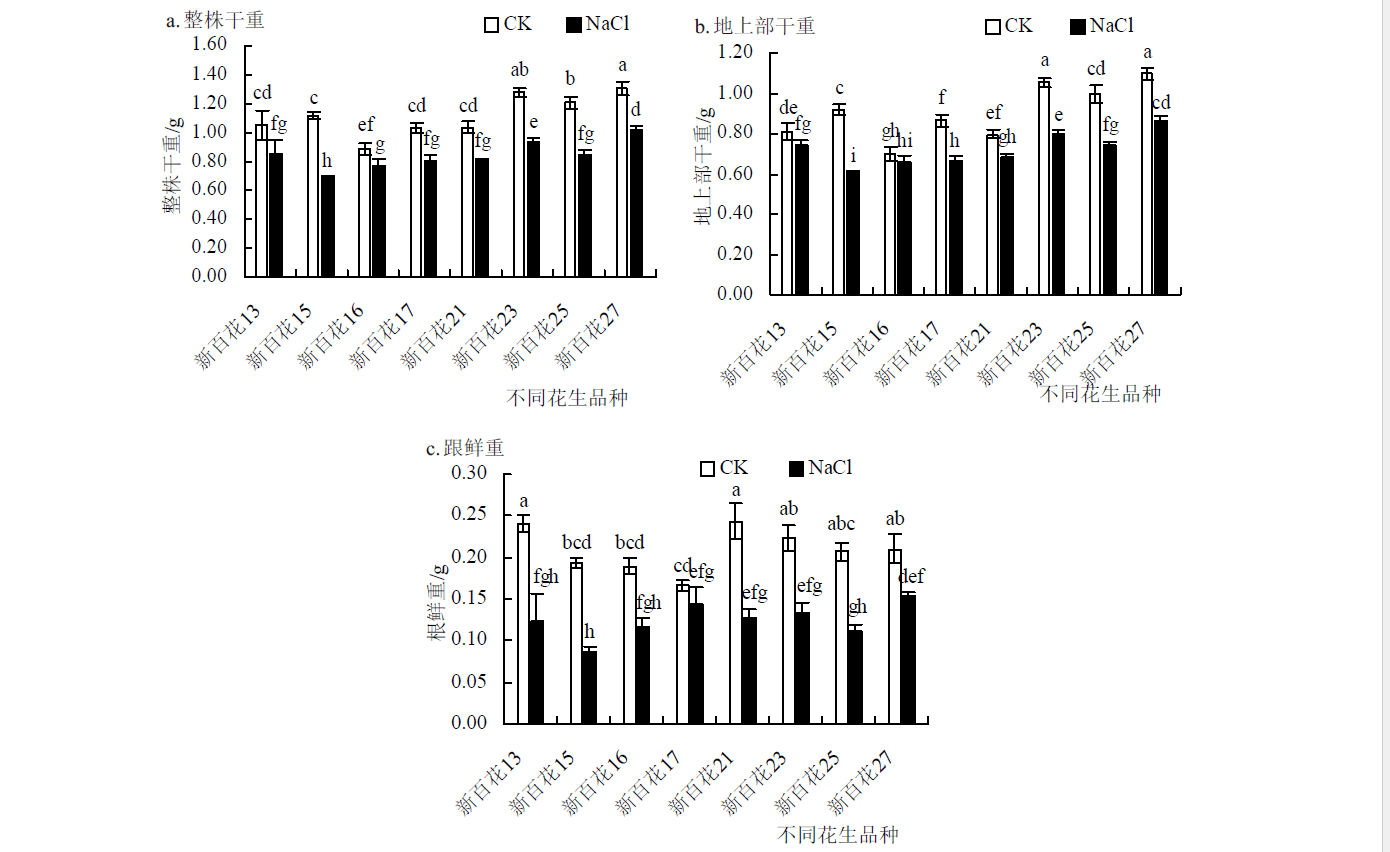
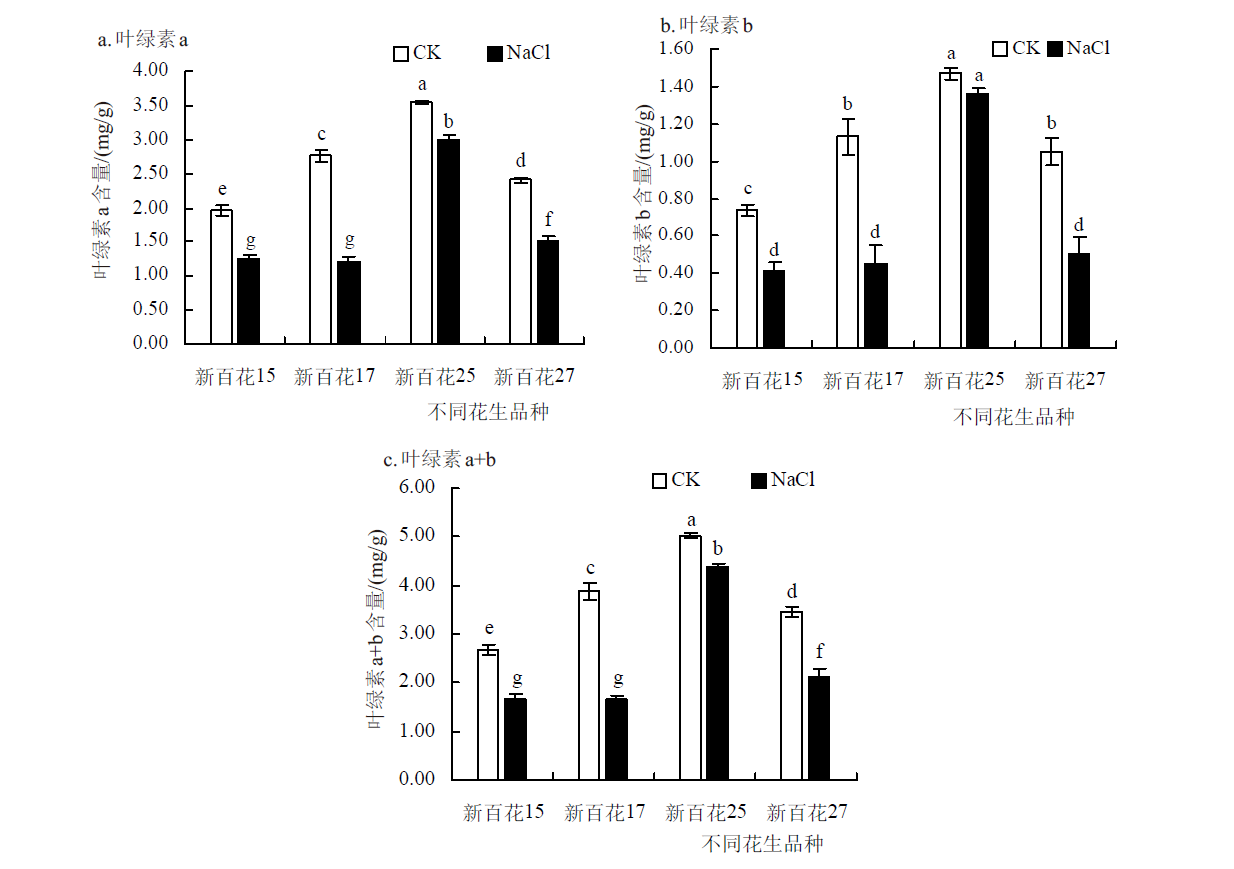
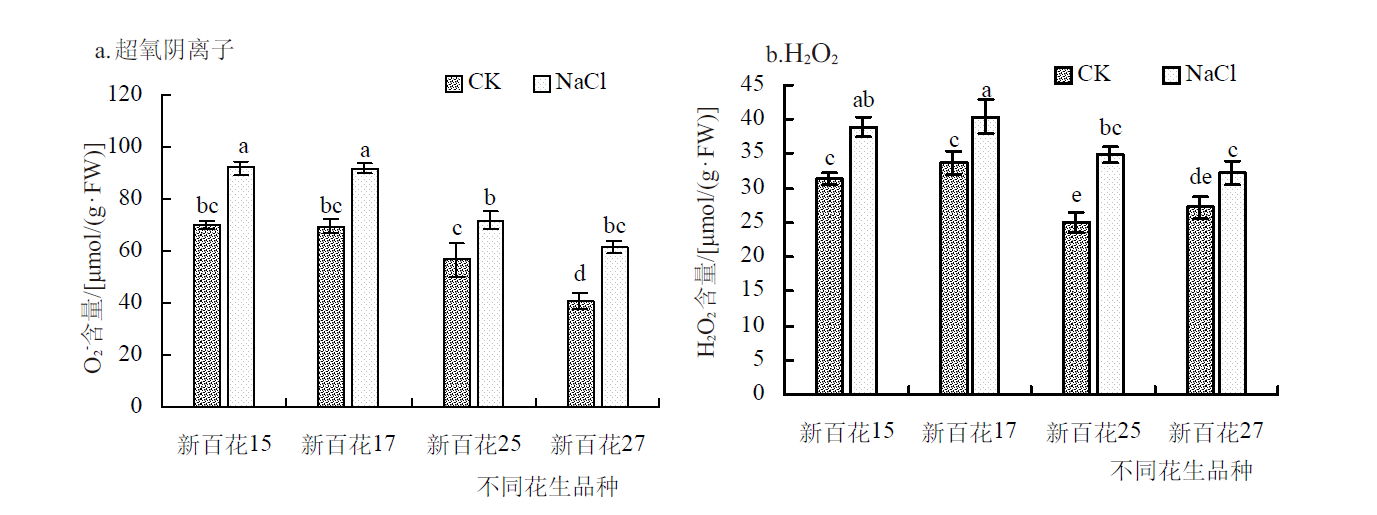
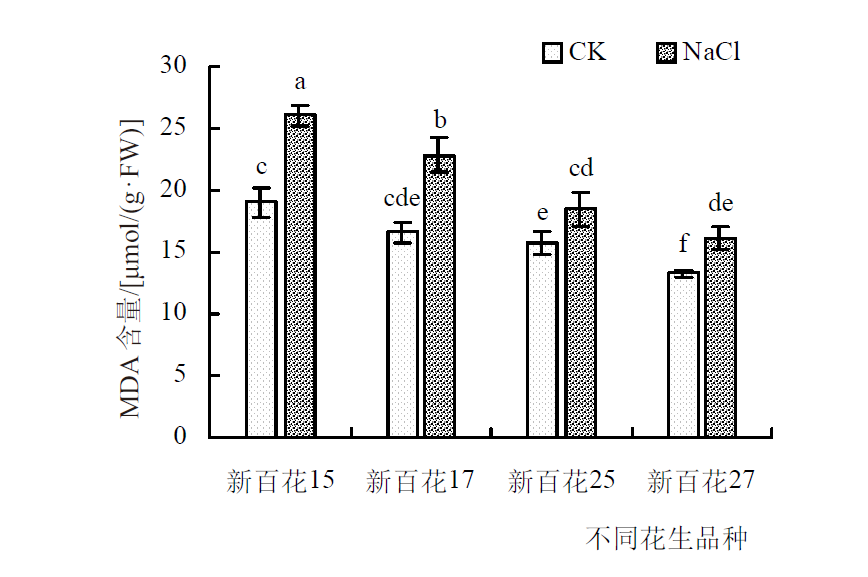
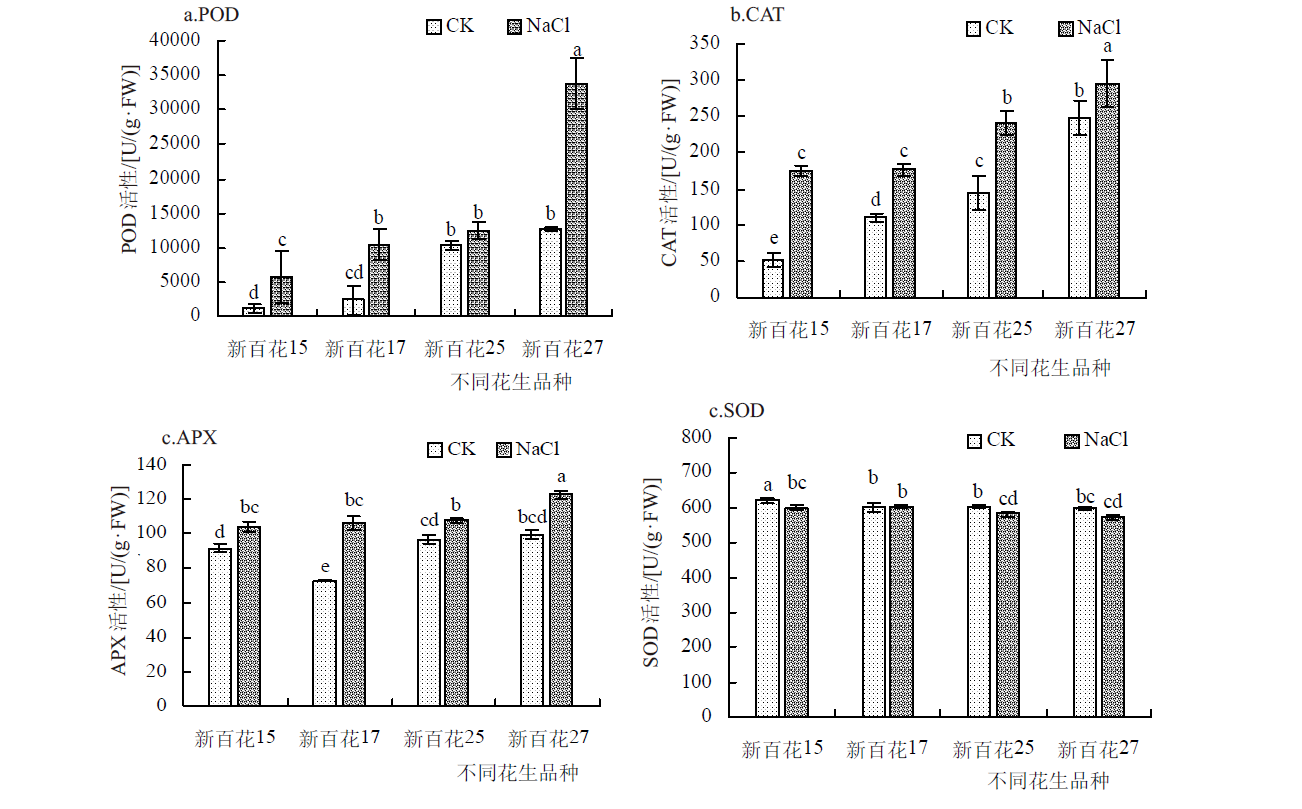
为比较8个‘新百花’系列花生品种在盐胁迫下的耐受能力,并揭示其内在的生理响应机制,本研究采用水培法,在300 mmol/L NaCl胁迫条件下,对各品种进行了为期7天的处理。通过测定各品种的株高、生物量(鲜重和干重)及根系形态等关键生长指标,并利用隶属函数法综合评价其耐盐性。基于结果,选取耐盐性差异最大的4个品种,分析其叶片叶绿素含量和活性氧(ROS)含量,以及抗氧化酶活性等生理指标。结果表明:盐胁迫均显著抑制了各品种的株高、生物量和根系长势,其中‘新百花25’受抑制程度最低,其株高、整株鲜重、整株干重和总根长分别显著降低了14.29%、53.69%、29.64%和43.63%;而‘新百花15’受抑制程度最严重,相应指标分别显著降低了32.19%、68.94%、37.72%和54.82%。结合隶属函数耐盐性综合评价结果表明,‘新百花25’的耐盐性最强,其次是‘新百花27’;‘新百花15’和‘新百花17’则被鉴定为最不耐盐的品种。生理指标分析结果表明,耐盐性强的‘新百花25’和‘新百花27’在盐胁迫下,其叶片中O2-、H2O2和MDA含量显著降低,叶绿素含量及POD、CAT、APX等抗氧化酶的活性显著升高,表明耐盐性强的花生品种具有更强的抗氧化能力和光合作用能力,从而缓解了盐胁迫对花生生长的抑制。综上,本研究对8个花生品种的耐盐性进行了比较分析,为进一步研究花生响应盐胁迫的分子机制提供了理论依据,更为培育耐盐新品种提供了宝贵的种质资源。
中图分类号:
邵梦瑶, 孔祥军, 贾佩佩, 李恒彬, 闫思慧, 孙辰昕, 李丽杰, 李增强, 张志勇. 不同花生品种苗期耐盐性比较及生理响应机制解析[J]. 中国农学通报, 2026, 42(14): 46-56.
SHAO Mengyao, KONG Xiangjun, JIA Peipei, LI Hengbin, YAN Sihui, SUN Chenxin, LI Lijie, LI Zengqiang, ZHANG Zhiyong. Comparison of Salt Tolerance at Seedling Stage and Analysis of Physiological Response Mechanism in Different Peanut Varieties[J]. Chinese Agricultural Science Bulletin, 2026, 42(14): 46-56.
| 品种(品系) | 处理 | 总根长/cm | 根表面积/cm2 | 根体积/cm3 |
|---|---|---|---|---|
| 新百花13 | CK | 462.58±78.97cd | 118.43±27.49cd | 2.43±0.39cde |
| NaCl | 243.13±72.93ghi | 49.36±13.63f | 1.15±0.56ef | |
| 新百花15 | CK | 477.68±99.04c | 112.10±49.12cd | 3.25±1.24bc |
| NaCl | 215.81±24.62hi | 53.59±14.41f | 0.92±0.21f | |
| 新百花16 | CK | 448.13±88.66cde | 141.85±12.14bc | 4.26±0.67ab |
| NaCl | 239.09±13.95ghi | 59.88±3.98f | 1.17±0.16ef | |
| 新百花17 | CK | 787.78±67.86a | 224.13±24.96a | 5.08±1.61a |
| NaCl | 223.87±44.11hi | 56.67±5.32f | 1.15±0.09ef | |
| 新百花21 | CK | 693.74±68.39ab | 212.46±13.57a | 4.60±1.09a |
| NaCl | 366.80±12.16def | 46.79±6.90f | 1.23±0.32ef | |
| 新百花23 | CK | 599.35±72.90b | 153.08±31.43b | 2.73±0.91cd |
| NaCl | 181.46±17.90hi | 100.37±15.42de | 1.88±0.36def | |
| 新百花25 | CK | 275.15±5.68fgh | 64.65±2.68f | 1.38±0.39ef |
| NaCl | 155.10±83.49i | 49.83±10.64f | 1.21±0.12ef | |
| 新百花27 | CK | 650.51±70.76b | 170.57±8.73b | 3.23±0.73bc |
| NaCl | 346.63±40.67efg | 70.62±3.59ef | 1.36±0.08ef |
| 品种(品系) | 处理 | 总根长/cm | 根表面积/cm2 | 根体积/cm3 |
|---|---|---|---|---|
| 新百花13 | CK | 462.58±78.97cd | 118.43±27.49cd | 2.43±0.39cde |
| NaCl | 243.13±72.93ghi | 49.36±13.63f | 1.15±0.56ef | |
| 新百花15 | CK | 477.68±99.04c | 112.10±49.12cd | 3.25±1.24bc |
| NaCl | 215.81±24.62hi | 53.59±14.41f | 0.92±0.21f | |
| 新百花16 | CK | 448.13±88.66cde | 141.85±12.14bc | 4.26±0.67ab |
| NaCl | 239.09±13.95ghi | 59.88±3.98f | 1.17±0.16ef | |
| 新百花17 | CK | 787.78±67.86a | 224.13±24.96a | 5.08±1.61a |
| NaCl | 223.87±44.11hi | 56.67±5.32f | 1.15±0.09ef | |
| 新百花21 | CK | 693.74±68.39ab | 212.46±13.57a | 4.60±1.09a |
| NaCl | 366.80±12.16def | 46.79±6.90f | 1.23±0.32ef | |
| 新百花23 | CK | 599.35±72.90b | 153.08±31.43b | 2.73±0.91cd |
| NaCl | 181.46±17.90hi | 100.37±15.42de | 1.88±0.36def | |
| 新百花25 | CK | 275.15±5.68fgh | 64.65±2.68f | 1.38±0.39ef |
| NaCl | 155.10±83.49i | 49.83±10.64f | 1.21±0.12ef | |
| 新百花27 | CK | 650.51±70.76b | 170.57±8.73b | 3.23±0.73bc |
| NaCl | 346.63±40.67efg | 70.62±3.59ef | 1.36±0.08ef |
| 株高 | 鲜重 | 干重 | 总根长 | 根表面积 | |
|---|---|---|---|---|---|
| 鲜重 | 0.785** | ||||
| 干重 | 0.713** | 0.892** | |||
| 总根长 | 0.663** | 0.716** | 0.627** | ||
| 根表面积 | 0.630** | 0.695** | 0.569* | 0.923** | |
| 根体积 | 0.679** | 0.669** | 0.457 | 0.876** | 0.948** |
| 株高 | 鲜重 | 干重 | 总根长 | 根表面积 | |
|---|---|---|---|---|---|
| 鲜重 | 0.785** | ||||
| 干重 | 0.713** | 0.892** | |||
| 总根长 | 0.663** | 0.716** | 0.627** | ||
| 根表面积 | 0.630** | 0.695** | 0.569* | 0.923** | |
| 根体积 | 0.679** | 0.669** | 0.457 | 0.876** | 0.948** |
| 品种(品系) | 隶属函数值(μ) | 耐盐性综合评价值(D) | ||||||||||||
|---|---|---|---|---|---|---|---|---|---|---|---|---|---|---|
| μ1 | μ2 | μ3 | μ4 | 值 | 排名 | |||||||||
| 新百花13 | 0.40 | 0.26 | 0.61 | 0.74 | 0.42 | 6 | ||||||||
| 新百花15 | 0.00 | 0.20 | 0.55 | 0.32 | 0.16 | 8 | ||||||||
| 新百花16 | 0.47 | 0.47 | 0.70 | 0.35 | 0.49 | 5 | ||||||||
| 新百花17 | 0.40 | 0.03 | 0.74 | 0.33 | 0.34 | 7 | ||||||||
| 新百花21 | 0.46 | 0.82 | 0.84 | 1.00 | 0.66 | 3 | ||||||||
| 新百花23 | 0.84 | 0.35 | 0.00 | 0.56 | 0.56 | 4 | ||||||||
| 新百花25 | 0.64 | 1.00 | 0.69 | 0.00 | 0.69 | 1 | ||||||||
| 新百花27 | 1.00 | 0.00 | 1.00 | 0.45 | 0.67 | 2 | ||||||||
| 品种(品系) | 隶属函数值(μ) | 耐盐性综合评价值(D) | ||||||||||||
|---|---|---|---|---|---|---|---|---|---|---|---|---|---|---|
| μ1 | μ2 | μ3 | μ4 | 值 | 排名 | |||||||||
| 新百花13 | 0.40 | 0.26 | 0.61 | 0.74 | 0.42 | 6 | ||||||||
| 新百花15 | 0.00 | 0.20 | 0.55 | 0.32 | 0.16 | 8 | ||||||||
| 新百花16 | 0.47 | 0.47 | 0.70 | 0.35 | 0.49 | 5 | ||||||||
| 新百花17 | 0.40 | 0.03 | 0.74 | 0.33 | 0.34 | 7 | ||||||||
| 新百花21 | 0.46 | 0.82 | 0.84 | 1.00 | 0.66 | 3 | ||||||||
| 新百花23 | 0.84 | 0.35 | 0.00 | 0.56 | 0.56 | 4 | ||||||||
| 新百花25 | 0.64 | 1.00 | 0.69 | 0.00 | 0.69 | 1 | ||||||||
| 新百花27 | 1.00 | 0.00 | 1.00 | 0.45 | 0.67 | 2 | ||||||||
| [1] |
李晓婷, 胡畅丽, 李鑫, 等. 花生萌发期耐盐性鉴定及耐盐种质筛选[J]. 花生学报, 2022, 51(4):35-43.
|
| [2] |
doi: 10.3389/fpls.2023.1215343 URL |
| [3] |
常长越, 颜宏, 卢雨欣, 等. 作物盐胁迫研究进展[J]. 中国农学通报, 2025, 41(22):82-88.
doi: 10.11924/j.issn.1000-6850.casb2025-0403 |
| [4] |
公丹, 胡媚茹, 林云, 等. 作物耐盐育种前沿技术研究进展[J]. 中国农学通报, 2025, 41(21):18-26.
doi: 10.11924/j.issn.1000-6850.casb2025-0503 |
| [5] |
doi: 10.3390/ijms23126376 URL |
| [6] |
doi: 10.1016/j.plaphy.2025.110206 URL |
| [7] |
doi: 10.1186/s12864-023-09219-2 pmid: 36927268 |
| [8] |
徐扬, 张岱, 康涛, 等. 盐胁迫对花生幼苗离子动态及耐盐基因表达的影响[J]. 作物学报, 2023, 49(9):2373-2384.
doi: 10.3724/SP.J.1006.2023.24242 |
| [9] |
doi: 10.1186/s12951-024-02832-7 pmid: 39272089 |
| [10] |
闫彩霞, 王娟, 赵小波, 等. 全生育期鉴定筛选耐盐碱花生品种[J]. 作物学报, 2021, 47(3):556-565.
doi: 10.3724/SP.J.1006.2021.04107 |
| [11] |
陈杨, 吕玉英, 杨会, 等. 水培法鉴定花生苗期耐盐性研究[J]. 山东农业科学, 2019, 51(9):125-131.
|
| [12] |
王亮, 王睿, 朱金成, 等. 50份花生品种(系)幼苗期耐盐性分析[J]. 作物杂志, 2025(5):35-41.
|
| [13] |
doi: 10.1016/j.stress.2022.100063 URL |
| [14] |
doi: 10.3390/ijms242316762 URL |
| [15] |
doi: 10.3390/cells10082023 URL |
| [16] |
doi: 10.1038/s41580-022-00499-2 |
| [17] |
doi: 10.1038/s41576-021-00413-0 |
| [18] |
doi: 10.1016/j.ygeno.2022.110285 URL |
| [19] |
doi: 10.3390/antiox13020233 URL |
| [20] |
doi: 10.3390/ijms252010940 URL |
| [21] |
刘中杰, 鲁俊田, 曲江波, 等. 不同行比配置对间作花生叶绿素前体合成、光合生理及产量的影响[J]. 花生学报, 2025, 54(3):255-265.
|
| [22] |
doi: 10.1038/s41598-024-82173-5 |
| [23] |
李玉青, 张佩佩, 史俊博. Cd2+胁迫对棉花种子萌发及苗期生理特性的影响[J]. 河南科技学院学报(自然科学版), 2026, 54(1):10-16.
|
| [24] |
厉广辉, 郭鑫, 孙艳斌, 等. 盐胁迫下不同花生品种的类黄酮含量和抗氧化酶活性[J]. 中国油料作物学报, 2023, 45(4):803-809.
doi: 10.19802/j.issn.1007-9084.2022139 |
| [25] |
doi: 10.1080/07388551.2022.2093695 URL |
| [26] |
doi: 10.1111/pce.v45.3 URL |
| [27] |
doi: 10.3390/plants11212836 URL |
| [28] |
doi: 10.1186/s12870-023-04053-w pmid: 36642709 |
| [29] |
doi: 10.3389/fpls.2024.1368260 URL |
| [30] |
doi: 10.1016/j.plaphy.2025.109819 URL |
| [31] |
doi: 10.3389/fpls.2023.1137211 URL |
| [32] |
doi: 10.1016/j.envexpbot.2023.105274 URL |
| [33] |
doi: 10.1016/j.ygeno.2021.12.015 URL |
| [34] |
doi: 10.3390/ijms24098394 URL |
| [35] |
doi: 10.1016/j.ijbiomac.2023.128492 URL |
| [36] |
doi: 10.3390/horticulturae7060132 URL |
| [1] | 李婷婷, 张建成, 迟晓元, 姜骁, 刘晓芹. 花生胚小叶高效离体再生体系的建立与优化[J]. 中国农学通报, 2026, 42(9): 145-154. |
| [2] | 方瑞元, 郭峰, 孙卿, 李晓英, 彭美祥, 赵孝东, 田磊, 孙伟. 花生辐照新品种‘临花16号’选育与适应性评价[J]. 中国农学通报, 2026, 42(9): 16-23. |
| [3] | 徐名伟, 冯国军, 刘大军, 刘畅, 闫志山, 张泰丰, 徐镝, 杨晓旭. 耐盐促生菌的筛选及对盐胁迫下菜豆生长的影响[J]. 中国农学通报, 2026, 42(9): 59-67. |
| [4] | 毕言亮, 齐仕涵, 李琼玮, 邹晓霞, 司彤. 种衣剂促进花生种子低温下萌发和幼苗生长的生理机制[J]. 中国农学通报, 2026, 42(8): 44-52. |
| [5] | 徐芬芬, 韩金多. 外源EBR调控大豆幼苗抗旱的根系响应[J]. 中国农学通报, 2026, 42(8): 53-59. |
| [6] | 赵倩云, 李得禄, 王飞, 李亚. 粘液和去粘液油蒿种子萌发对盐胁迫的响应[J]. 中国农学通报, 2026, 42(8): 60-66. |
| [7] | 周立垚, 刘娟, 刘海礁, 崔亚男, 刘兵, 罗艺龙, 于泷程, 陈亚菲, 许日升, 马腾飞. 生物炭在花生种植中的应用研究进展[J]. 中国农学通报, 2026, 42(7): 15-21. |
| [8] | 王丽丽, 王月福, 徐杰, 司彤, 李英科, 江伟. 山东省不同年代花生品种产量及其构成因素的调查研究[J]. 中国农学通报, 2026, 42(5): 21-26. |
| [9] | 纪冰祎. 2017—2024年辽宁省花生登记品种主要性状演变分析[J]. 中国农学通报, 2026, 42(2): 40-49. |
| [10] | 李保嘉, 段灵涛, 王希, 杨紫玉, 孙清华, 邓兴, 孟雨琪, 王萍, 阴长发, 黄建华, 陈洪凡, 兰波, 杨迎青, 李云鹏. 花生叶斑病的发生与综合防控技术研究进展[J]. 中国农学通报, 2026, 42(14): 158-165. |
| [11] | 梁文召, 周诗意, 韦瑞燕, 石琳亚, 刘乃新, 于清涛. 氧化石墨烯引发对盐胁迫下水稻种子萌发的影响[J]. 中国农学通报, 2025, 41(9): 1-7. |
| [12] | 姜子健, 杨茂林, 杨晓旭, 刘畅, 刘大军, 冯国军. 脱落酸对低温胁迫下菜豆幼苗生长及抗寒性的影响[J]. 中国农学通报, 2025, 41(9): 38-46. |
| [13] | 黄文茵, 张白鸽, 常静静, 陈潇, 李静, 陈雷, 赵俊宏, 罗谋雄, 宋钊. 外源肌醇对盐胁迫下番茄产量和品质的影响[J]. 中国农学通报, 2025, 41(9): 73-80. |
| [14] | 王丽丽, 朱诗君, 卢晓红, 金树权. 木霉菌W1生物有机肥对滨海番茄种植的影响[J]. 中国农学通报, 2025, 41(7): 100-106. |
| [15] | 黄志鹏, 唐秀梅, 吴海宁, 张宗急, 钟丽, 毛玲莉, 许显发, 明日, 贺梁琼, 钟瑞春, 韩柱强, 唐荣华, 蒋菁. 天然富硒花生品种的筛选[J]. 中国农学通报, 2025, 41(6): 38-43. |
| 阅读次数 | ||||||
|
全文 |
|
|||||
|
摘要 |
|
|||||
