欢迎访问《中国农学通报》,

中国农学通报 ›› 2026, Vol. 42 ›› Issue (7): 15-21.doi: 10.11924/j.issn.1000-6850.casb2025-0629
周立垚( ), 刘娟(), 刘海礁, 崔亚男, 刘兵, 罗艺龙, 于泷程, 陈亚菲, 许日升, 马腾飞
收稿日期:2025-07-23
修回日期:2026-03-16
出版日期:2026-04-15
发布日期:2026-04-15
通讯作者:
作者简介:周立垚,女,1993年出生,河南许昌人,博士,主要从事花生栽培生理生态研究。通信地址:450002 河南省郑州市花园路116号 河南省农业科学院花生研究所,E-mail:1402579685@qq.com。
基金资助:
ZHOU Liyao(), LIU Juan(), LIU Haijiao, CUI Yanan, LIU Bing, LUO Yilong, YU Longcheng, CHEN Yafei, XU Risheng, MA Tengfei
Received:2025-07-23
Revised:2026-03-16
Published:2026-04-15
Online:2026-04-15
摘要:
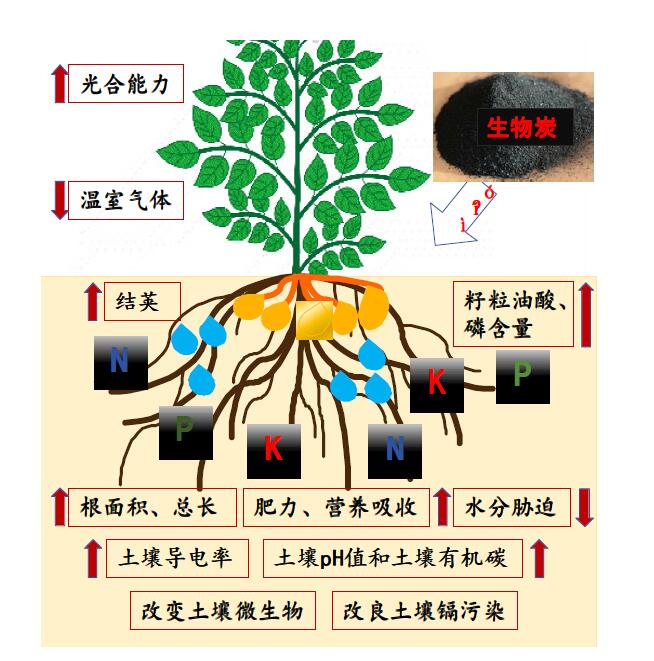
花生主产区存在土壤酸化、连作障碍突出、化肥减量与固碳减排压力大等问题。为系统梳理生物炭在花生优质高效生产中的应用成效与机制,推动秸秆资源化与耕地质量提升,综述了花生种植中生物炭的原材料种类、施用量和施用方式,重点分析生物炭对花生生长发育、产量品质、土壤理化性质、微生物群落、污染修复及固碳减排的影响。结果表明,适宜原料与用量的生物炭可促进花生出苗与根系生长、提高光合效率、增加荚果产量,提升油酸等品质指标;能有效改良酸化土壤,提升有机质与养分有效性,优化微生物群落结构,降低镉等重金属有效性;同时显著减少N2O、CH4排放,增强土壤固碳能力,实现增产与减排协同。但当前研究仍存在试验周期偏短、长期效应与机制不清、专用化与区域化不足等短板。综上所述,生物炭是花生田绿色提质、固碳减排的高效改良材料,与减氮、耕作、灌溉等协同增效显著。未来应加强长期定位研究、机制解析与区域专用产品研发,推进生物炭在黄淮海等花生主产区规模化应用。
周立垚, 刘娟, 刘海礁, 崔亚男, 刘兵, 罗艺龙, 于泷程, 陈亚菲, 许日升, 马腾飞. 生物炭在花生种植中的应用研究进展[J]. 中国农学通报, 2026, 42(7): 15-21.
ZHOU Liyao, LIU Juan, LIU Haijiao, CUI Yanan, LIU Bing, LUO Yilong, YU Longcheng, CHEN Yafei, XU Risheng, MA Tengfei. Research Progress on Application of Biochar in Peanut Cultivation[J]. Chinese Agricultural Science Bulletin, 2026, 42(7): 15-21.
| [1] |
doi: 10.1007/s11104-011-0957-x URL |
| [2] |
谢祖彬, 刘琦, 许燕萍. 生物炭研究进展及其研究方向[J]. 土壤, 2011, 43(6):857-861.
|
| [3] |
|
| [4] |
闫新伟, 王艳芳, 李继伟, 等. 施用生物炭对旱作花生生长和产量构成及土壤酶活性的影响[J]. 河南科技大学学报(自然科学版), 2018, 39(3):66-78.
|
| [5] |
|
| [6] |
doi: 10.1038/s43016-023-00694-0 pmid: 37118263 |
| [7] |
中华人民共和国农业农村部. 中国农业统计资料[M]. 北京: 中国农业出版社, 2025:131.
|
| [8] |
doi: 10.1002/jsfa.v104.5 URL |
| [9] |
doi: 10.1088/1755-1315/59/1/012021 URL |
| [10] |
doi: 10.3390/su71013713 URL |
| [11] |
|
| [12] |
|
| [13] |
doi: 10.1007/s11368-015-1242-z URL |
| [14] |
doi: 10.15244/pjoes/164404 URL |
| [15] |
刘小虎, 赖鸿雁, 韩晓日. 炭基缓释花生专用肥对花生产量和土壤养分的影响[J]. 土壤通报, 2013, 44(3):698-702.
|
| [16] |
|
| [17] |
doi: 10.1016/j.fcr.2017.09.012 URL |
| [18] |
doi: 10.1016/j.agee.2016.12.026 URL |
| [19] |
赵耀东, 侯江涛. 减氮配施生物炭对花生—油菜轮作系统土壤肥力和花生产量与氮素利用的影响[J]. 江苏农业科学, 2023, 51(23):81-87.
|
| [20] |
陈东, 周欣, 姜浩, 等. 不同滴灌方式下生物炭对采煤沉陷区花生根系形态及土壤无机氮的影响[J]. 生态学杂志, 2024, 43(7):2134-2142.
|
| [21] |
王淑君, 夏桂敏, 李永发, 等. 生物炭基肥和水分胁迫对花生生理及产量的影响[J]. 中国油料作物学报, 2017, 39(6):827-833.
doi: 10.7505/j.issn.1007-9084.2017.06.014 |
| [22] |
徐婷, 柳延涛, 王海江. 不同改良剂对盐碱地花生生长特性和产量的影响[J]. 西南农业学报, 2023, 36(1):62-74.
|
| [23] |
王淑君, 夏桂敏, 李永发, 等. 生物炭基肥和水分胁迫对花生产量、耗水和养分吸收的影响[J]. 水土保持学报, 2017, 31(6):285-290.
|
| [24] |
姜涛, 倪皖莉, 王嵩, 等. 炭基缓释花生专用肥对砂姜黑土夏花生干物质积累及产量的影响[J]. 花生学报, 2018, 47(3):75-80.
|
| [25] |
徐晓楠, 陈坤, 冯小杰, 等. 生物炭提高花生干物质与养分利用的优势研究[J]. 植物营养与肥料学报, 2018, 24(2):444-453.
|
| [26] |
doi: 10.1080/01904167.2019.1702203 URL |
| [27] |
夏桂敏, 李永发, 王淑君, 等. 生物炭基肥和调亏灌溉互作对花生根冠比及水分利用效率的影响[J]. 沈阳农业大学学报, 2018, 49(3):315-321.
|
| [28] |
于立宏, 易祎, 王一博, 等. 生物炭基肥料对花生生长及产量的影响研究[J]. 辽宁农业科学, 2017(6):31-34.
|
| [29] |
顾博文, 杨劲峰, 鲁晓玲, 等. 连续施用生物炭对花生不同生育时期叶绿素荧光特性的影响[J]. 中国农业科学, 2021, 54(21):4552-4561.
doi: 10.3864/j.issn.0578-1752.2021.21.006 |
| [30] |
doi: 10.1016/j.agwat.2023.108565 URL |
| [31] |
索炎炎, 张翔, 司贤宗, 等. 施用石灰与生物炭对酸性土壤花生氮素吸收及产量的影响报[J]. 中国油料作物学, 2023, 45(1):148-154.
|
| [32] |
|
| [33] |
doi: 10.1016/j.geoderma.2016.11.004 URL |
| [34] |
doi: 10.2136/sssaj2010.0325 URL |
| [35] |
邱文静, 栾璐, 郑洁, 等. 秸秆还田方式对根际固氮菌群落及花生产量的影响[J]. 植物营养与肥料学报, 2021, 27(12):2063-2072.
|
| [36] |
于滨杭, 姬建梅, 王丽学, 等. 中国主粮作物生物炭产量效应的Meta分析[J]. 环境科学, 2023, 44(1):520-530.
|
| [37] |
夏桂敏, 刘宇庭, 罗秀兰, 等. 覆膜条件下铁改性磷负载生物炭对花生磷素利用及产量的影响[J]. 农业工程学报, 2023, 39(20):176-187.
|
| [38] |
于天一, 王春晓, 路亚, 等. 不同改良剂对酸化土壤花生钙素吸收利用及生长发育的影响[J]. 核农学报, 2018, 32(8):1619-1626.
doi: 10.11869/j.issn.100-8551.2018.08.1619 |
| [39] |
胡宇迪, 汪玉瑛, 刘玉学, 等. 不同来源生物炭与化肥减量配施对土壤养分、花生产量及品质的影响[J]. 江苏农业科学, 2024, 52(1):105-111.
|
| [40] |
doi: 10.1016/j.scitotenv.2024.173061 URL |
| [41] |
doi: 10.1007/s10343-022-00702-6 |
| [42] |
苏旭, 栾策, 吴奇, 等. 生物炭对玉米/大豆、玉米/花生间作系统土壤水肥热及产量的影响[J]. 生态学杂志, 2021, 40(1):115-122.
|
| [43] |
doi: 10.31545/intagr/144133 URL |
| [44] |
|
| [45] |
徐晓楠. 生物炭对土壤NPK养分含量动态及花生产量形成的影响[D]. 沈阳: 沈阳农业大学, 2018.
|
| [46] |
doi: 10.1016/j.agwat.2021.107129 URL |
| [47] |
|
| [48] |
杨劲峰, 江彤, 韩晓日, 等. 连续施用炭基肥对花生土壤性质和产量的影响[J]. 中国土壤与肥料, 2015(3):68-73.
|
| [49] |
doi: S0045-6535(16)31363-7 pmid: 27743533 |
| [50] |
doi: 10.1016/j.scitotenv.2018.01.022 URL |
| [51] |
张福锁. 我国农田土壤酸化现状及影响[J]. 民主与科学, 2016(6):26-27.
|
| [52] |
夏桂敏, 王宇佳, 王淑君, 等. 灌溉方式与生物炭对花生根系、磷素利用及产量的影响[J]. 农业机械学报, 2022, 53(2):316-326.
|
| [53] |
|
| [54] |
战秀梅, 彭靖, 王月, 等. 生物炭及炭基肥改良棕壤理化性状及提高花生产量的作用[J]. 植物营养与肥料学报, 2015, 21(6):1633-1641
|
| [55] |
|
| [56] |
黄庆, 张建文, 黄连喜, 等. 生物炭+碱渣钙镁肥对镉污染土壤、花生产量和品质的影响[J]. 广东农业科学, 2019, 46(10):48-55.
|
| [57] |
doi: S0147-6513(18)31014-5 pmid: 30384059 |
| [58] |
doi: 10.1007/s11356-017-1116-6 |
| [59] |
doi: 10.1080/09593330.2019.1620344 URL |
| [60] |
中华人民共和国农业农村部. 中国农业统计资料[M]. 北京: 中国农业出版社, 2024:123.
|
| [61] |
李克让. 土地利用变化和温室气体净排放与陆地生态系统碳循环[M]. 北京: 气象出版社, 2002:89.
|
| [1] | 李国龙, 陆钊华, 姚洁玲, 马留银, 杨德明, 徐建民, 胡志康, 张云东, 熊珊, 李光友. 修枝对桉树107无性系生长及碳汇效益的影响[J]. 中国农学通报, 2026, 42(7): 70-76. |
| [2] | 管西林, 田慎重, 刘振田, 董勤德, 董亮, 李强, 高新昊, 边文范, 张玉凤. 豆磷脂调理菌剂施用量对玉米-小麦轮作体系产量及养分吸收的影响[J]. 中国农学通报, 2026, 42(7): 8-14. |
| [3] | 商小兰, 李丹, 方文英, 徐著, 王强, 陈照明. 机插同步侧深施肥对水稻产量和氮肥利用及土壤氮的影响[J]. 中国农学通报, 2026, 42(7): 1-7. |
| [4] | 袁梦, 马梓涵, 熊欢, 姜爱丽. 海带的生物降解及海藻提取物在农业领域中的应用[J]. 中国农学通报, 2026, 42(7): 105-112. |
| [5] | 彭翠仙, 王灿, 杨玉玲, 李玲, 李桂琳, 孙宏伟, 陶永宏. 不同生长年限野生叠鞘石斛根际土壤微生物群落的结构特征[J]. 中国农学通报, 2026, 42(7): 130-140. |
| [6] | 王丽花, 晏慧君, 杨秀梅, 廖家伟, 段金辉, 王慧纯, 陈敏, 杨维, 王其刚. 不同栽培模式下切花月季根际养分含量和微生物多样性研究[J]. 中国农学通报, 2026, 42(7): 141-152. |
| [7] | 陈燕, 吴玲, 曹凡, 郭聪, 黄欣, 金雨晴, 王莹, 徐秋霞, 谷青青, 柯裴蓓, 宁仪杭, 李玉娟. 人工纳米材料在植物抗性提升及土壤改良中的研究进展[J]. 中国农学通报, 2026, 42(7): 153-162. |
| [8] | 徐培智, 李海锋, 李文光, 董云, 张捷鑫, 顾文杰, 卢钰升. 广东省肥料行业20年的科技创新与展望[J]. 中国农学通报, 2026, 42(7): 163-170. |
| [9] | 张桂芝, 赵红军, 王文良, 陈兰, 张晓洁, 刘国栋. 喷施脱叶催熟剂对棉花轻简化区域试验品种产量及纤维品质的影响[J]. 中国农学通报, 2026, 42(7): 22-29. |
| [10] | 赵成坤, 陈亮, 时向东, 李蒙旭, 吕尚举, 曹缠华, 丁松爽, 杨占伟. 氮肥用量对温室栽培茄衣烟株生长发育和烟叶品质的影响[J]. 中国农学通报, 2026, 42(7): 48-54. |
| [11] | 李政葵, 夏玉红, 赵莎, 韩天凯, 孙龙, 刘嘉欣, 陈敏. 黄河水滴灌协同土壤调理技术对土壤理化性质及玉米产量的影响[J]. 中国农学通报, 2026, 42(6): 102-110. |
| [12] | 魏丹, 崔福星, 潘虹, 李虹, 郭媛, 杨立宾, 付晓宇, 李海军. 火干扰对土壤动物的影响—基于文献计量分析[J]. 中国农学通报, 2026, 42(6): 111-119. |
| [13] | 丁丽华, 童监萍, 吴群, 王同亮, 顾振海. 胡柚气候品质模型构建及等级评价[J]. 中国农学通报, 2026, 42(6): 127-132. |
| [14] | 刘伟, 段晓凤, 吴国舟, 包佳婧, 李淑褀. 基于气象条件的河套灌区向日葵籽粒品质区划[J]. 中国农学通报, 2026, 42(6): 133-140. |
| [15] | 凯迪日耶·克日木, 王雪姣, 王森, 克日木·阿巴司, 郭燕云, 火勋国, 张立祯, 黄彬香. 新疆叶城县核桃花期冻害气象条件及成因分析[J]. 中国农学通报, 2026, 42(6): 141-149. |
| 阅读次数 | ||||||
|
全文 |
|
|||||
|
摘要 |
|
|||||
