欢迎访问《中国农学通报》,

中国农学通报 ›› 2026, Vol. 42 ›› Issue (22): 67-75.doi: 10.11924/j.issn.1000-6850.casb2025-0988
乔佳乐1( ), 刘长庆2, 郭新送1(), 王晶1, 张凯悦3, 李岩4(), 李巧玉1, 孔维众1
收稿日期:2025-12-12
修回日期:2026-09-20
出版日期:2026-11-19
发布日期:2026-11-19
通讯作者:
作者简介:乔佳乐,男,1998年出生,河北石家庄人,助理工程师,硕士,研究方向为土壤养分管理。通信地址:271000 山东省泰安市肥城市高新区创业路249号 山东农大肥业科技股份有限公司,E-mail:qiaojiale2199@163.com。
基金资助:
QIAO Jiale1(), LIU Changqing2, GUO Xinsong1(), WANG Jing1, ZHANG Kaiyue3, LI Yan4(), LI Qiaoyu1, KONG Weizhong1
Received:2025-12-12
Revised:2026-09-20
Published:2026-11-19
Online:2026-11-19
摘要:
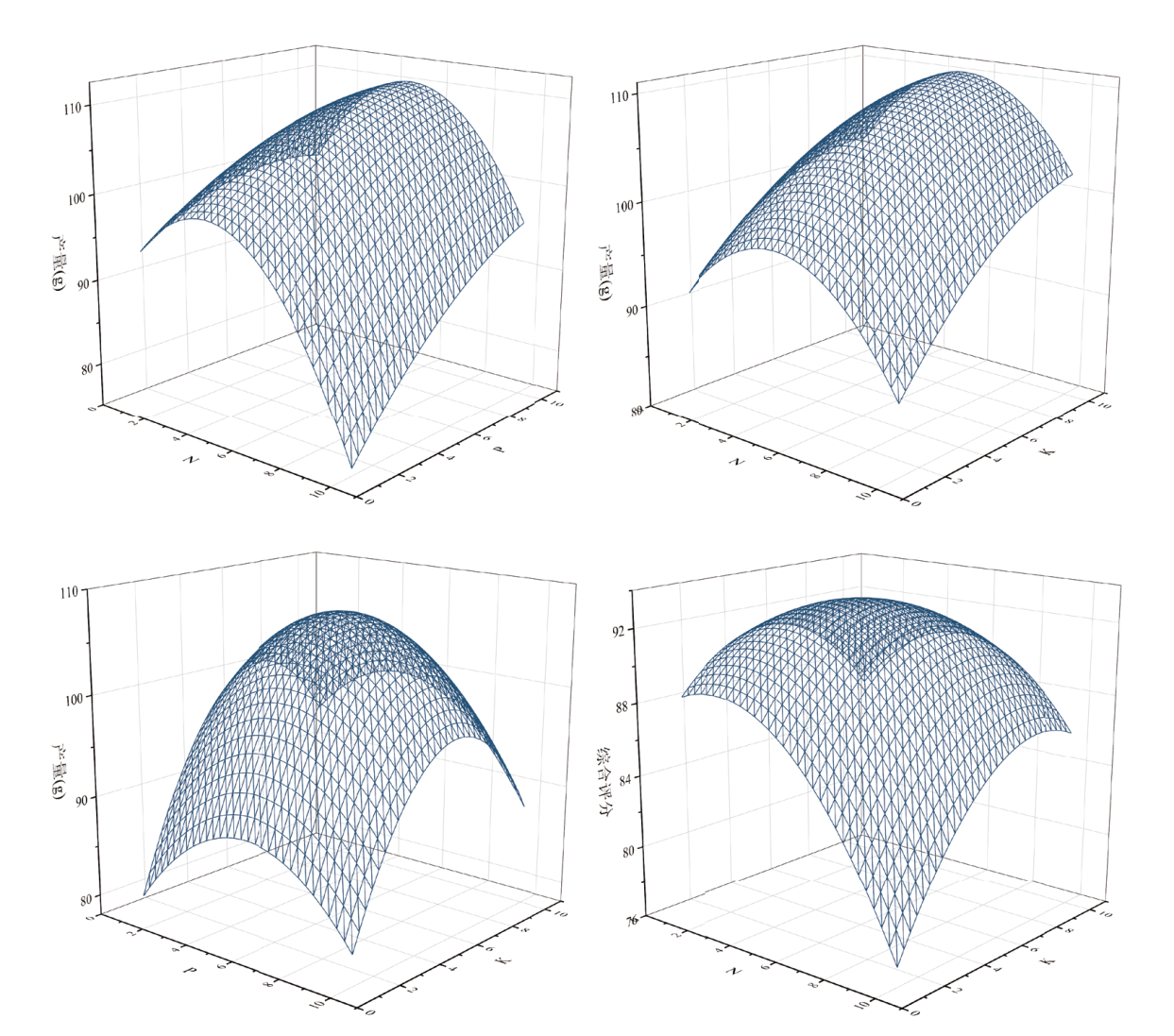
为探明不同氮、磷、钾浓度对水培生菜产量和品质的影响,采用三因子二次饱和D-最优设计,构建以氮磷钾浓度为变量、生菜产量和品质综合评分为目标函数的多元二次回归模型。结果表明,氮、磷、钾浓度对生菜产量的影响程度为氮>磷>钾;在品质形成过程中,钾元素的影响程度最高,其次为氮和磷。交互效应显示,氮磷互作对产量影响最突出,磷钾和氮钾次之;对于品质,氮钾交互最为关键,磷钾和氮磷次之。生菜产量和品质均随着氮磷钾浓度的不断提升呈先升高后下降趋势。当氮、磷、钾浓度范围分别为5.952~6.263、0.480~0.498、3.840~4.043 mmol/L时,生菜单株产量能够达到100 g以上。当氮、磷、钾浓度范围分别为6.215~6.482、0.493~0.518、3.732~3.895 mmol/L时,生菜品质综合评分可超过90分。综上所述,在本试验条件下,当营养液中氮、磷、钾浓度分别控制在6.215~6.263、0.493~0.498、3.840~3.895 mmol/L,水培生菜可实现单株产量100 g以上且品质综合评分90分以上的高产优质目标。
中图分类号:
乔佳乐, 刘长庆, 郭新送, 王晶, 张凯悦, 李岩, 李巧玉, 孔维众. 氮磷钾浓度对水培生菜产量和品质的影响[J]. 中国农学通报, 2026, 42(22): 67-75.
QIAO Jiale, LIU Changqing, GUO Xinsong, WANG Jing, ZHANG Kaiyue, LI Yan, LI Qiaoyu, KONG Weizhong. Effects of Nitrogen, Phosphorus, and Potassium Concentrations on Yield and Quality of Hydroponic Lettuce[J]. Chinese Agricultural Science Bulletin, 2026, 42(22): 67-75.
| 处理 | 因子编码 | 肥料用量/(mg/L) | |||||
|---|---|---|---|---|---|---|---|
| 氮水平 | 磷水平 | 钾水平 | Ca(NO3)2·4H2O | NH4H2PO4 | KNO3 | ||
| T1 | -1 | -1 | -1 | 201 | 49 | 344 | |
| T2 | 1 | -1 | -1 | 432 | 49 | 344 | |
| T3 | -1 | 1 | -1 | 184 | 67 | 344 | |
| T4 | -1 | -1 | 1 | 59 | 49 | 465 | |
| T5 | 0.1925 | 0.1925 | -1 | 328 | 59 | 344 | |
| T6 | 0.1925 | -1 | 0.1925 | 253 | 49 | 417 | |
| T7 | -1 | 0.1925 | 0.1925 | 106 | 59 | 417 | |
| T8 | -0.2912 | 1 | 1 | 123 | 67 | 465 | |
| T9 | 1 | -0.2912 | 1 | 283 | 55 | 465 | |
| T10 | 1 | 1 | -0.2912 | 364 | 67 | 387 | |
| 因子 | 变化间距 | 变量设计水平及编码 | ||||
|---|---|---|---|---|---|---|
| -1 | -0.2912 | 0 | 0.1925 | 1 | ||
| N | 0.98 | 5.53 | 6.22 | 6.50 | 6.69 | 7.48 |
| P | 0.08 | 0.43 | 0.48 | 0.50 | 0.51 | 0.58 |
| K | 0.60 | 3.40 | 3.83 | 4.00 | 4.12 | 4.60 |
| 因子 | 变化间距 | 变量设计水平及编码 | ||||
|---|---|---|---|---|---|---|
| -1 | -0.2912 | 0 | 0.1925 | 1 | ||
| N | 0.98 | 5.53 | 6.22 | 6.50 | 6.69 | 7.48 |
| P | 0.08 | 0.43 | 0.48 | 0.50 | 0.51 | 0.58 |
| K | 0.60 | 3.40 | 3.83 | 4.00 | 4.12 | 4.60 |
| 处理 | 单株产量/g | 可溶性蛋白/(mg/g) | 纤维素/(mg/g) | 可溶性糖/% | 维生素C/(mg/100 g) | 干物质/% | 品质综合评分 |
|---|---|---|---|---|---|---|---|
| T1 | 93.06±8.54abc | 2.15±0.11ab | 33.20±0.20bc | 1.52±0.07bc | 10.73±1.93bc | 2.62±0.05bcde | 82.23 |
| T2 | 89.08±5.41abc | 2.27±0.03a | 34.23±0.69abc | 1.69±0.11b | 9.67±0.92bc | 2.76±0.06bc | 84.91 |
| T3 | 85.87±5.27bc | 2.12±0.05ab | 34.56±0.71ab | 1.64±0.12b | 12.41±1.64ab | 2.64±0.13bcd | 86.02 |
| T4 | 89.33±6.78abc | 2.24±0.03a | 34.27±0.85abc | 1.58±0.08b | 8.20±1.26c | 3.13±0.05a | 84.49 |
| T5 | 96.34±4.14abc | 2.27±0.13a | 35.20±0.16a | 1.79±0.15b | 15.77±0.96a | 2.38±0.05e | 91.37 |
| T6 | 97.46±7.14ab | 2.31±0.03a | 33.41±0.44bc | 1.74±0.05b | 12.41±1.47ab | 2.82±0.10bc | 89.11 |
| T7 | 109.10± 9.76a | 2.16±0.08ab | 34.59±0.34ab | 2.15±0.19a | 11.36±0.96bc | 2.77±0.07bc | 90.23 |
| T8 | 83.99±3.81bc | 2.22±0.04ab | 34.03±0.61abc | 1.87±0.05ab | 8.62±0.56bc | 2.45±0.11de | 82.36 |
| T9 | 87.72±8.49bc | 1.99±0.09b | 32.68±0.09c | 1.25±0.04c | 8.62±0.21bc | 2.88±0.03b | 77.44 |
| T10 | 75.28±2.63c | 2.18±0.04ab | 33.72±0.34abc | 1.85±0.10ab | 10.94±1.28bc | 2.59±0.06cde | 85.60 |
| 单因子效应方程 | 极大值 | 变量因子 | 变量水平 | 元素浓度 |
|---|---|---|---|---|
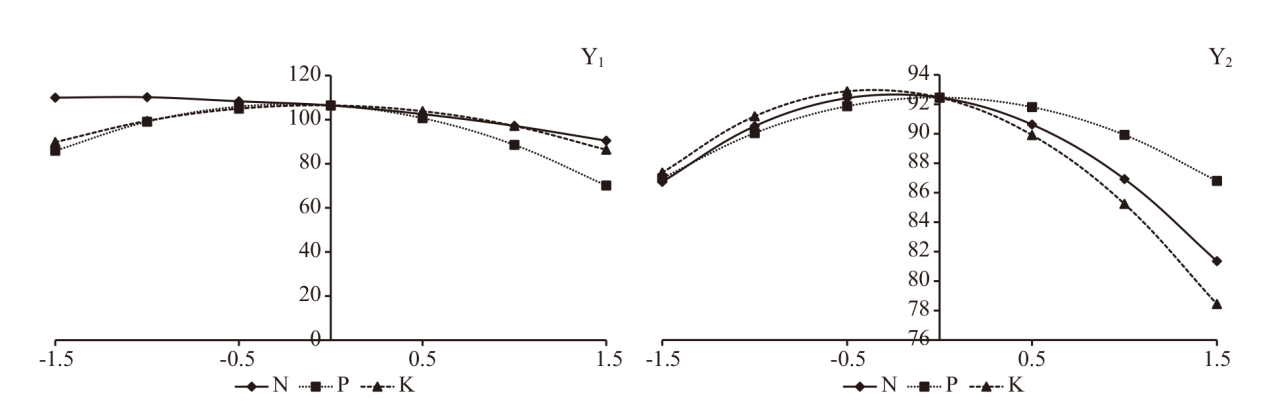
| Y11=106.437-6.502X1-2.769X12 | 110.25 | X1 | -1.174 | 氮浓度5.355 mmol/L |
| Y12=106.437-5.254X2-12.632X22 | 106.98 | X2 | -0.208 | 磷浓度0.484 mmol/L |
| Y13=106.437-1.157X3-8.158X32 | 106.48 | X3 | -0.071 | 钾浓度3.957 mmol/L |
| Y21=92.459-1.794X1-3.739X12 | 92.67 | X1 | -0.240 | 氮浓度6.266 mmol/L |
| Y22=92.459-0.060X2-2.474X22 | 92.46 | X2 | -0.012 | 磷浓度0.499 mmol/L |
| Y23=92.459-2.974X3-4.247X32 | 92.98 | X3 | -0.350 | 钾浓度3.790 mmol/L |
| 变量因子 | X1 | X2 | X3 | ||||||
|---|---|---|---|---|---|---|---|---|---|
| 次数 | 频率 | 次数 | 频率 | 次数 | 频率 | ||||
| 因子水平 | -1.0000 | 13 | 0.32 | 2 | 0.049 | 6 | 0.15 | ||
| -0.2912 | 13 | 0.32 | 15 | 0.37 | 10 | 0.24 | |||
| 0.0000 | 9 | 0.22 | 17 | 0.41 | 13 | 0.32 | |||
| 0.1925 | 6 | 0.15 | 7 | 0.17 | 10 | 0.24 | |||
| 1.0000 | 0 | 0 | 0 | 0 | 2 | 0.049 | |||
| 加权平均值 | -0.4024 | -0.1463 | -0.0976 | ||||||
| 标准误 | 0.0813 | 0.0628 | 0.0866 | ||||||
| 95%置信区间 | -0.562~-0.243 | -0.269~-0.023 | -0.267~0.072 | ||||||
| 农艺方案/(mmol/L) | 5.952~6.263 | 0.480~0.498 | 3.840~4.043 | ||||||
| 变量因子 | X1 | X2 | X3 | ||||||
|---|---|---|---|---|---|---|---|---|---|
| 次数 | 频率 | 次数 | 频率 | 次数 | 频率 | ||||
| 因子水平 | -1.0000 | 5 | 0.11 | 3 | 0.067 | 9 | 0.2 | ||
| -0.2912 | 14 | 0.31 | 11 | 0.24 | 15 | 0.33 | |||
| 0.0000 | 16 | 0.36 | 13 | 0.29 | 16 | 0.36 | |||
| 0.1925 | 10 | 0.22 | 12 | 0.27 | 5 | 0.11 | |||
| 1.0000 | 0 | 0 | 6 | 0.13 | 0 | 0 | |||
| 加权平均值 | -0.1556 | 0.0778 | -0.3111 | ||||||
| 标准误 | 0.0700 | 0.0846 | 0.0690 | ||||||
| 95%置信区间 | -0.293~-0.018 | -0.088~0.244 | -0.446~-0.176 | ||||||
| 农艺方案/(mmol/L) | 6.215~6.482 | 0.493~0.518 | 3.732~3.895 | ||||||
| [1] |
李石恒, 王毅, 卜令豪. 寒旱区氮磷钾元素缺乏对小白菜生长的影响[J]. 安徽农业科学, 2021, 49(17):136-139.
|
| [2] |
高艳, 乔亚丽, 赵兆, 等. 氮素水平对基质栽培娃娃菜光合生理产量及品质的影响[J]. 河北农业科学, 2021, 25(2):83-89.
|
| [3] |
张蕊, 彭勇政, 朱进铭, 等. 营养液浓度对草莓生长发育的影响[J]. 上海交通大学学报(农业科学版), 2019, 37(6):156-163.
|
| [4] |
|
| [5] |
吴绍军, 杨年福, 孟佳丽, 等. 不同氮素浓度对无土栽培韭菜生长、产量和品质的影响[J]. 北方园艺, 2024, 46(23):17-23.
|
| [6] |
|
| [7] |
赵嘉诺, 时建业, 魏昊泰, 等. 氮素水平对基质培番茄不同成熟期果实品质的影响[J]. 中国蔬菜, 2024, 44(12):79-89.
|
| [8] |
崔佩佩, 丁玉川, 焦晓燕, 等. 氮肥对作物的影响研究进展[J]. 山西农业科学, 2017, 45(4):663-668.
|
| [9] |
苏苑君, 胡笑涛, 王文娥, 等. 磷对水培生菜生长及矿质元素动态吸收的影响[J]. 中国生态农业学报, 2015, 23(10):1244-1252.
|
| [10] |
刘瑜, 闫实, 赵凯丽, 等. 不同磷水平设施菜田上结球生菜的适宜施磷量推荐研究[J]. 中国农学通报, 2024, 40(9):55-59.
|
| [11] |
冯磊, 刘世琦, 成波, 等. 不同水培磷素水平对大蒜产量、光合特性和品质的影响[J]. 中国土壤与肥料, 2014, 46(3):38-43.
|
| [12] |
侯赛赛, 李畅, 李青云, 等. 不同供磷水平下大白菜的生长和磷吸收策略研究[J]. 作物杂志, 2025(1):220-226.
|
| [13] |
王小娟, 陈健晓, 伍壮生, 等. 不同钾水平下厚皮甜瓜生育后期氮磷钾吸收及利用特征[J]. 热带作物学报, 2019, 40(6):1046-1054.
|
| [14] |
林黄昉, 庄团达, 申宝营, 等. 光质与钾浓度交互模式对紫叶生菜生长、营养与品质的影响[J]. 西北农业学报, 2024, 33(12):2295-2305.
|
| [15] |
陈琪, 董静, 杨加仪, 等. 培养液供钾浓度对番茄生长、产量和品质的影响[J]. 江苏农业科学, 2023, 51(23):165-170.
|
| [16] |
秦华伟, 高俊杰, 王婷, 等. 氮磷钾配施对韭菜产量和品质的影响[J]. 农学学报, 2025, 15(6):71-76.
|
| [17] |
李冬梅, 魏珉, 张海森, 等. 氮、磷、钾用量和配比对温室黄瓜叶片相关代谢酶活性的影响[J]. 植物营养与肥料学报, 2006, 12(3):382-387.
|
| [18] |
杨小锋, 别之龙. 氮磷钾施用量对水培生菜生长和品质的影响[J]. 农业工程学报, 2008, 24(S2):265-269.
|
| [19] |
李子双, 王薇, 张世文, 等. 氮磷与硅钙肥配施对辣椒产量和品质的影响[J]. 植物营养与肥料学报, 2015, 21(2):458-466.
|
| [20] |
袁亭亭, 杨建平, 徐坤. 秋延迟番茄氮、磷、钾优化施肥方案研究[J]. 植物营养与肥料学报, 2010, 16(5):1246-1251.
|
| [21] |
赵锴, 李瑾, 徐宁, 等. 氮磷钾配施对洋葱产量和品质的影响[J]. 植物营养与肥料学报, 2008, 14(3):558-563.
|
| [22] |
郭世荣. 无土栽培学[M]. 北京: 中国农业出版社, 2011:77,89.
|
| [23] |
高俊凤. 植物生理学实验指导[M]. 北京: 高等教育出版社, 2006:74-84.
|
| [24] |
聂金, 谭芷, 王军伟, 等. 氮磷钾配施对辣椒产量、品质的影响[J]. 中国瓜菜, 2021, 34(10):80-87.
|
| [25] |
杨阳, 宋炳彦, 刘云, 等. 氮磷钾配比对日光温室番茄产量和品质的影响[J]. 华北农学报, 2018, 33(S1):191-194.
|
| [26] |
郭美玲. 水培油麦菜营养液配方优化研究[D]. 泰安: 山东农业大学, 2022:4-6.
|
| [27] |
张俊峰, 蒯佳琳, 王晓巍, 等. 氮磷钾配施对戈壁日光温室基质槽培番茄产量和品质的影响[J]. 西北农林科技大学学报(自然科学版), 2022, 50(8):94-102.
|
| [28] |
王欢, 李建设, 高艳明. 营养液不同氮磷钾配比对基质培番茄的产量及品质的影响[J]. 甘肃农业大学学报, 2024, 59(5):83-92.
|
| [29] |
张森焱, 李鸿萍, 栗思佳, 等. 氮磷钾配施缓解花期高温胁迫对玉米产量形成的影响[J]. 植物营养与肥料学报, 2025, 31(12):2457-2471.
|
| [30] |
陈晨, 贾丽丽, 陈雪琼, 等. 不同浓度氮、磷、钾对水培芹菜生长及叶绿素含量的影响[J]. 蔬菜, 2022, 40(10):31-37.
|
| [31] |
张倩, 孔小平, 齐晓雨. 不同施肥水平对胡萝卜生长发育的影响[J]. 中国土壤与肥料, 2024(11):98-106.
|
| [32] |
杨振超. 生菜水培营养液配方模型构建及专家系统的建立[D]. 杨凌: 西北农林科技大学, 2002:26-28.
|
| [33] |
史亮亮, 聂俊, 李艳红, 等. 氮素水平对樱桃番茄氮磷钾吸收及利用率的影响研究[J]. 江西农业学报, 2021, 33(2):15-21.
|
| [34] |
王军伟, 黄科, 毛舒香, 等. 基质栽培番茄营养液中氮、钾最佳浓度研究[J]. 植物营养与肥料学报, 2019, 25(11):2019-2028.
|
| [35] |
吴一群, 林琼, 颜明娟, 等. 不同磷素水平对番茄生长及养分吸收的影响[J]. 中国农学通报, 2017, 33(9):74-77.
|
| [36] |
朱静妍, 刘强, 黎鑫宇, 等. 不同氮磷钾水平下水培小白菜产量的研究[J]. 南方农机, 2019, 50(17):72-73.
|
| [37] |
王昊, 贾丽丽, 刘洁霞, 等. 不同氮磷钾浓度对水培芹菜农艺性状及光合特性的影响[J]. 上海农业学报, 2022, 38(6):15-21.
|
| [38] |
弓瑶, 王利春, 王朝军, 等. 不同营养液钾浓度对水培生菜生长、品质和营养液利用效率的影响[J]. 农业工程, 2021, 11(7):120-126.
|
| [39] |
曲明山, 董海泉, 邢文鑫, 等. 调整山崎生菜营养液配方对生菜产量及品质的影响[J]. 河北农业科学, 2012, 16(8):31-35.
|
| [40] |
张栋, 胡笑涛, 王文娥, 等. 水培生菜氮磷钾产量模型的构建与分析[J]. 北方园艺, 2016, 38(14):11-16.
|
| [41] |
郭美玲, 刘燕, 孟凡龙, 等. 氮水平对水培蕹菜生长、产量和品质的影响[J]. 农业工程技术, 2021, 41(28):22-28.
|
| [42] |
余意, 杨其长, 刘文科. LED短期连续光照与氮营养对水培生菜品质的影响[J]. 应用生态学报, 2015, 26(11):3361-3366.
|
| [43] |
乔佳乐. 生菜水培营养液配方优化研究[D]. 泰安: 山东农业大学, 2023:38-40.
|
| [44] |
刘红梅, 梁妙妍. 氮磷钾比例·氮肥浓度和微量元素浓度对温室盆栽绿萝生长的影响[J]. 安徽农业科学, 2021, 49(19):139-141.
|
| [45] |
马晟, 陈震, 杨凤娟, 等. 茄子无土栽培氮磷钾浓度优化施肥方案[J]. 应用生态学报, 2018, 29(9):2935-2942.
|
| [1] | 易永, 李民华. 杨梅气候品质评价方法及等级划分[J]. 中国农学通报, 2026, 42(9): 130-137. |
| [2] | 王毅, 刘婷婷, 靳丰蔚, 马晓伟, 董云. 几种茎叶除草剂对甘蓝型春油菜产量和品质的影响[J]. 中国农学通报, 2026, 42(9): 190-196. |
| [3] | 赵文辉, 井玉丹, 汪霄, 王赢, 王家嘉. 有机替代对大豆产量及土壤肥力影响的研究[J]. 中国农学通报, 2026, 42(9): 24-30. |
| [4] | 张玉龙, 周丽娟, 郭颂, 陈晶, 林彩霞, 完玛草. 高海拔环境下8个青稞品种的种植表现研究[J]. 中国农学通报, 2026, 42(9): 9-15. |
| [5] | 马德栗, 鞠英芹, 陈城. 基于AquaCrop作物模型的茶叶产量预报研究[J]. 中国农学通报, 2026, 42(9): 97-106. |
| [6] | 陆萍, 陈宇佳, 王站付, 张逸鸣, 蒋杭峰, 汪超凡, 张蓉, 邱韩英. 一次性基施新配比控释掺混尿素对水稻'南粳46'性状、产量及氮素利用的影响[J]. 中国农学通报, 2026, 42(8): 95-103. |
| [7] | 张洁, 邵文奇, 马洪波, 陈川, 章安康, 李传哲. 缓释氮肥对江苏水稻产量及肥料利用率的影响[J]. 中国农学通报, 2026, 42(8): 104-109. |
| [8] | 徐宇东, 李海洋, 杨建明, 王桂芳, 位改改. 宁夏干旱区双垄全膜沟播马铃薯种植密度的产量影响试验研究[J]. 中国农学通报, 2026, 42(8): 11-16. |
| [9] | 颜宏, 陈太春, 冯志珍, 陈志杰, 徐进, 许西梅, 董振, 付博. 耕作措施对小麦土壤理化性质、微生物群落及产量的影响[J]. 中国农学通报, 2026, 42(8): 110-119. |
| [10] | 杨佳群, 王祥华, 周志华, 胡兵, 任涛, 鲁剑巍. 采薹量对菜油两用油菜产量的影响[J]. 中国农学通报, 2026, 42(8): 23-29. |
| [11] | 管西林, 田慎重, 刘振田, 董勤德, 董亮, 李强, 高新昊, 边文范, 张玉凤. 豆磷脂调理菌剂施用量对玉米-小麦轮作体系产量及养分吸收的影响[J]. 中国农学通报, 2026, 42(7): 8-14. |
| [12] | 商小兰, 李丹, 方文英, 徐著, 王强, 陈照明. 机插同步侧深施肥对水稻产量和氮肥利用及土壤氮的影响[J]. 中国农学通报, 2026, 42(7): 1-7. |
| [13] | 周立垚, 刘娟, 刘海礁, 崔亚男, 刘兵, 罗艺龙, 于泷程, 陈亚菲, 许日升, 马腾飞. 生物炭在花生种植中的应用研究进展[J]. 中国农学通报, 2026, 42(7): 15-21. |
| [14] | 张桂芝, 赵红军, 王文良, 陈兰, 张晓洁, 刘国栋. 喷施脱叶催熟剂对棉花轻简化区域试验品种产量及纤维品质的影响[J]. 中国农学通报, 2026, 42(7): 22-29. |
| [15] | 赵成坤, 陈亮, 时向东, 李蒙旭, 吕尚举, 曹缠华, 丁松爽, 杨占伟. 氮肥用量对温室栽培茄衣烟株生长发育和烟叶品质的影响[J]. 中国农学通报, 2026, 42(7): 48-54. |
| 阅读次数 | ||||||
|
全文 |
|
|||||
|
摘要 |
|
|||||
