欢迎访问《中国农学通报》,

中国农学通报 ›› 2026, Vol. 42 ›› Issue (3): 28-36.doi: 10.11924/j.issn.1000-6850.casb2025-0352
徐圣慧1( ), 汤金融2, 李智龙1, 李静祎1, 于洪涛2, 张娟1, 孙磊1()
收稿日期:2025-05-12
修回日期:2025-10-11
出版日期:2026-02-15
发布日期:2026-02-09
通讯作者:
作者简介:徐圣慧,男,1999年出生,黑龙江肇州人,硕士研究生,研究方向:马铃薯养分管理。通信地址:150030 黑龙江省哈尔滨市香坊区长江路600号 东北农业大学,E-mail:1569289176@qq.com。
基金资助:
XU Shenghui1(), TANG Jinrong2, LI Zhilong1, LI Jingyi1, YU Hongtao2, ZHANG Juan1, SUN Lei1()
Received:2025-05-12
Revised:2025-10-11
Published:2026-02-15
Online:2026-02-09
摘要:
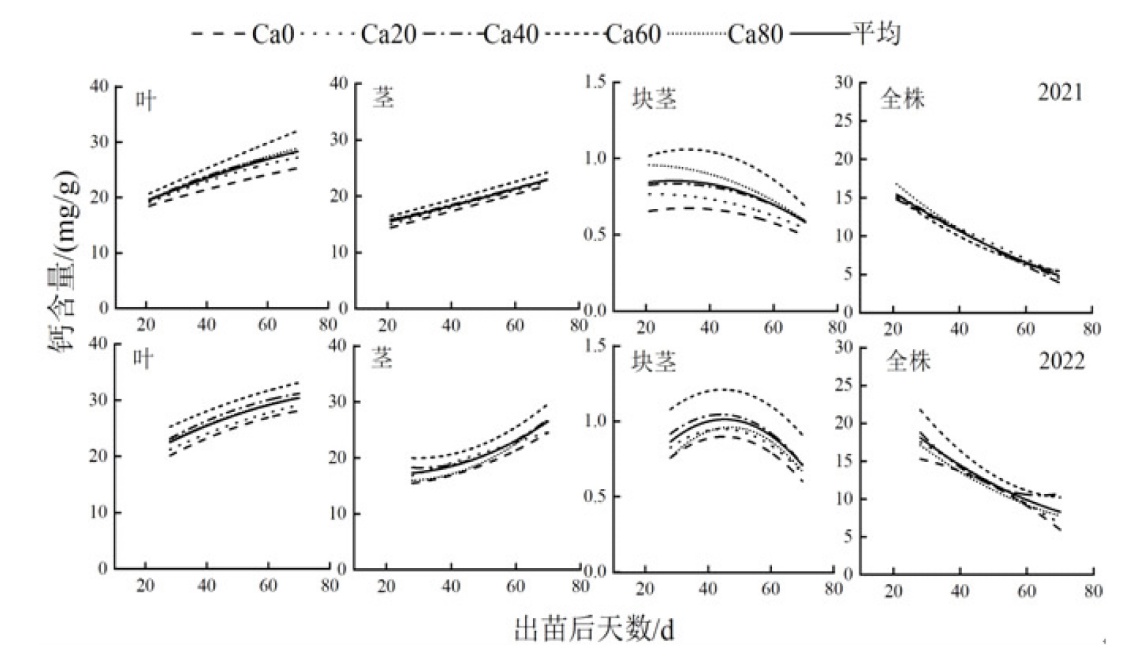
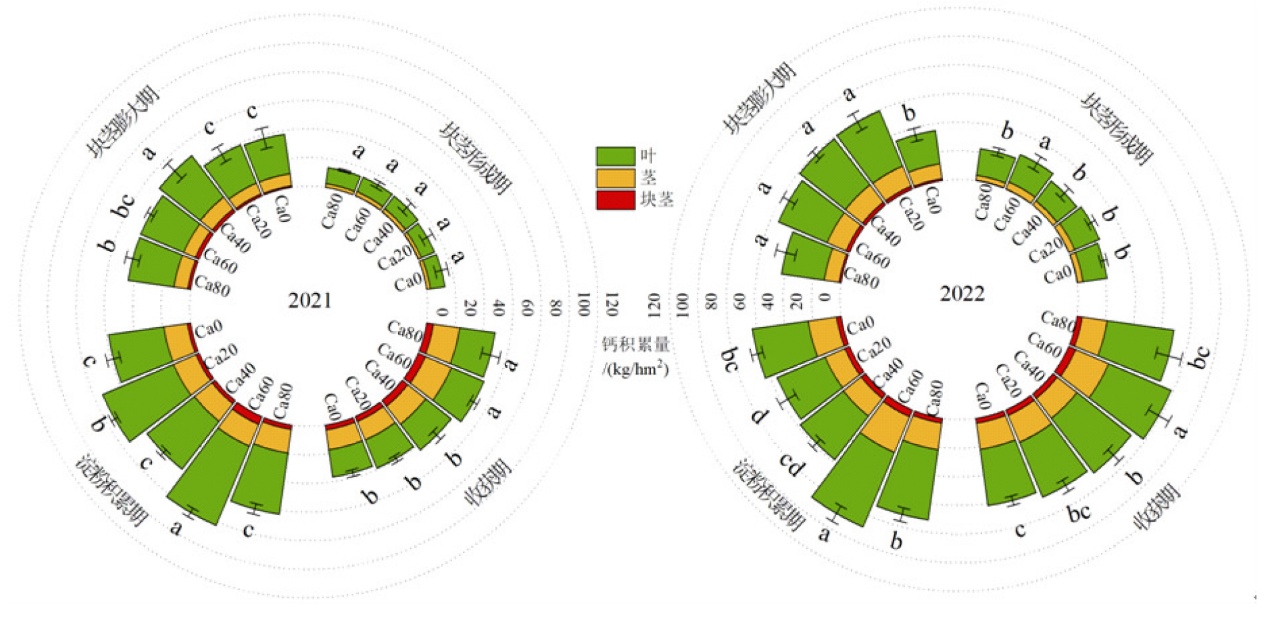
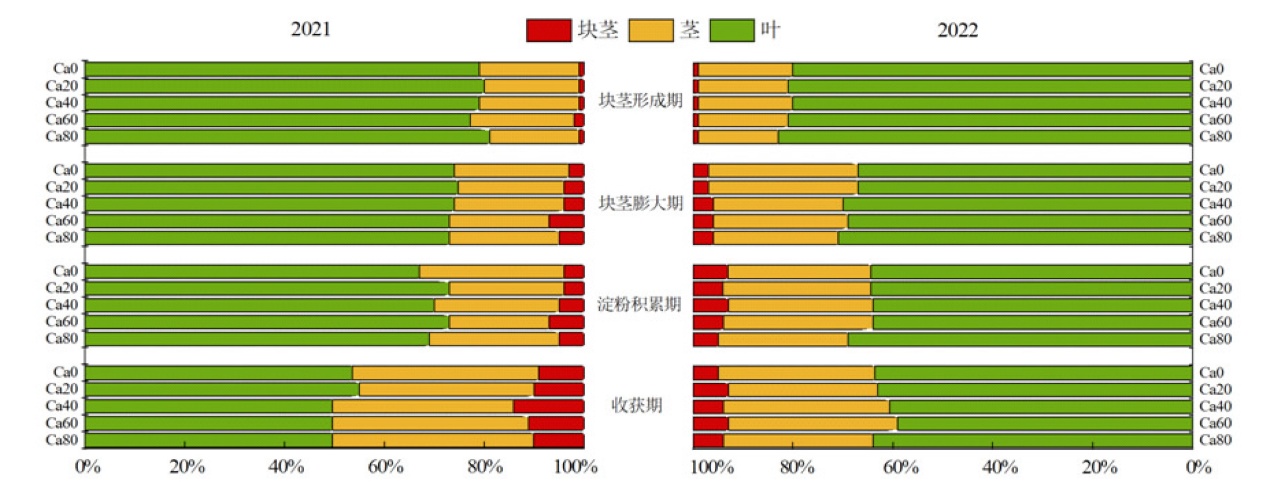
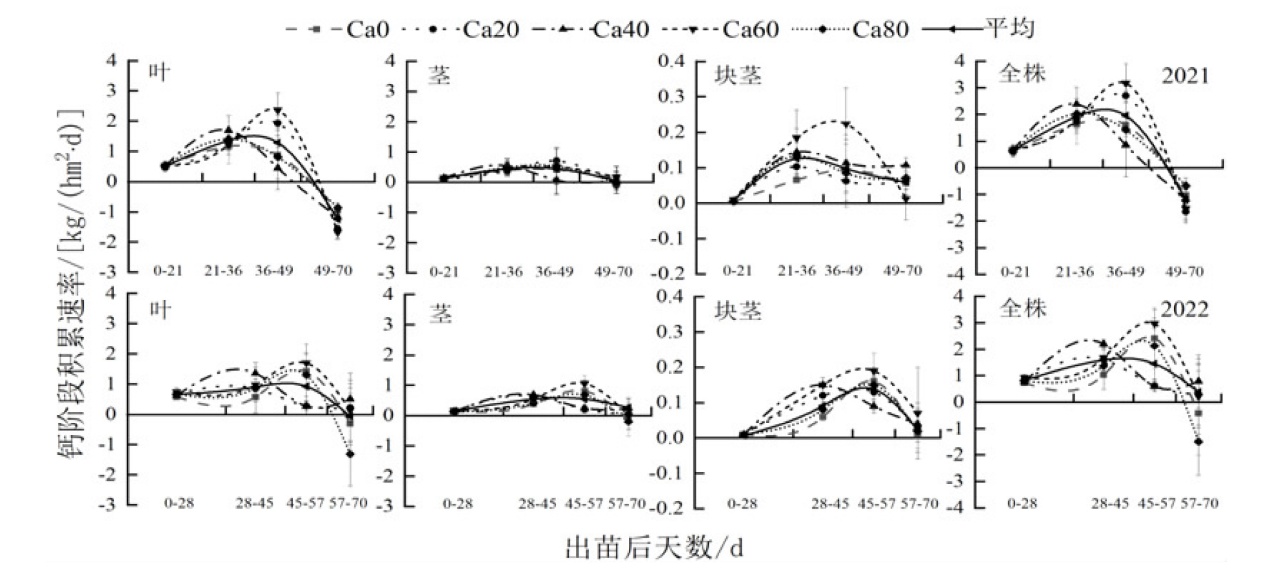
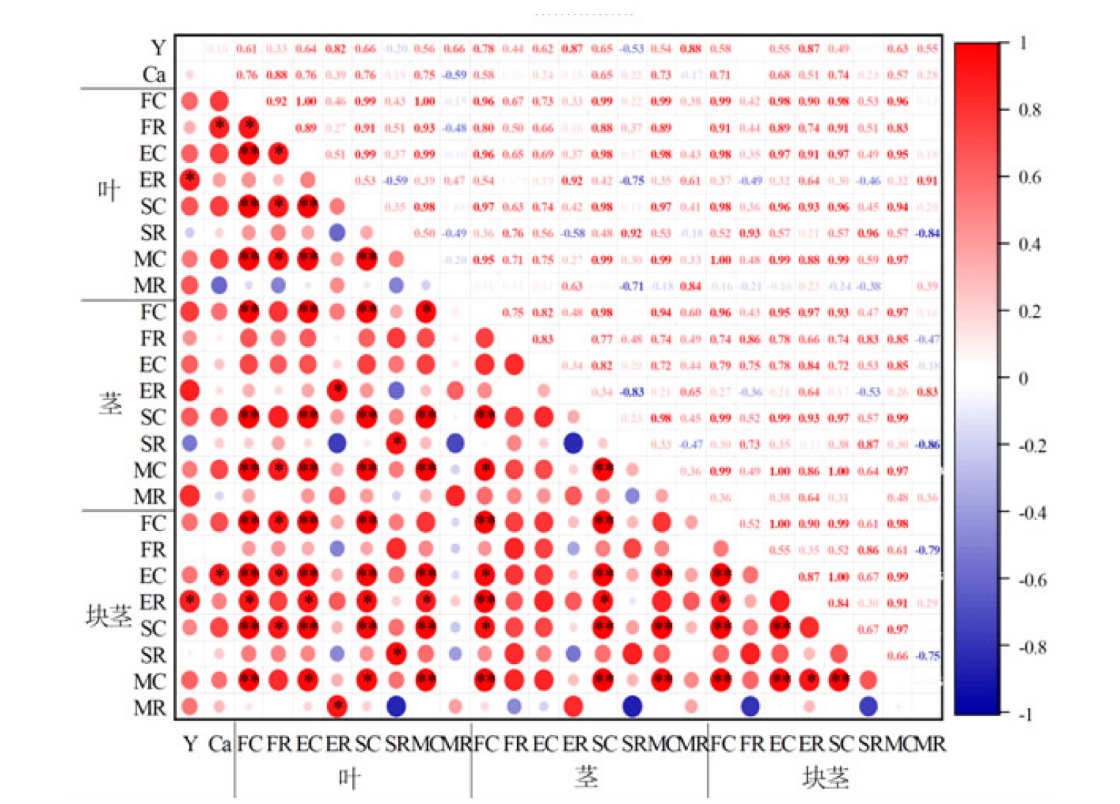
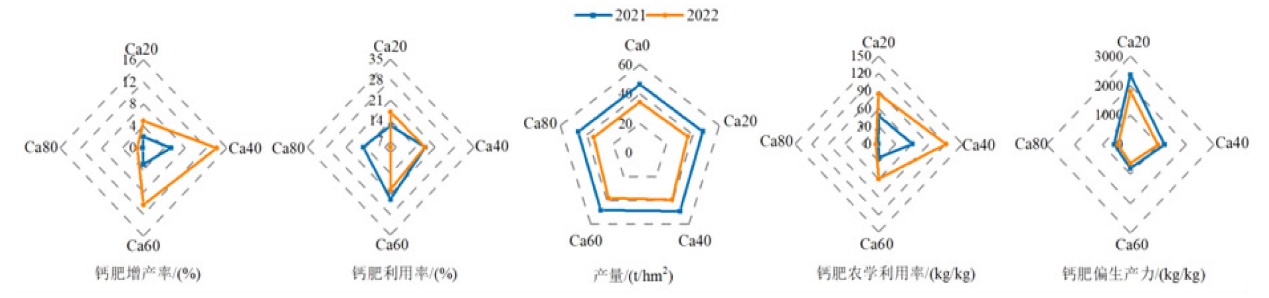
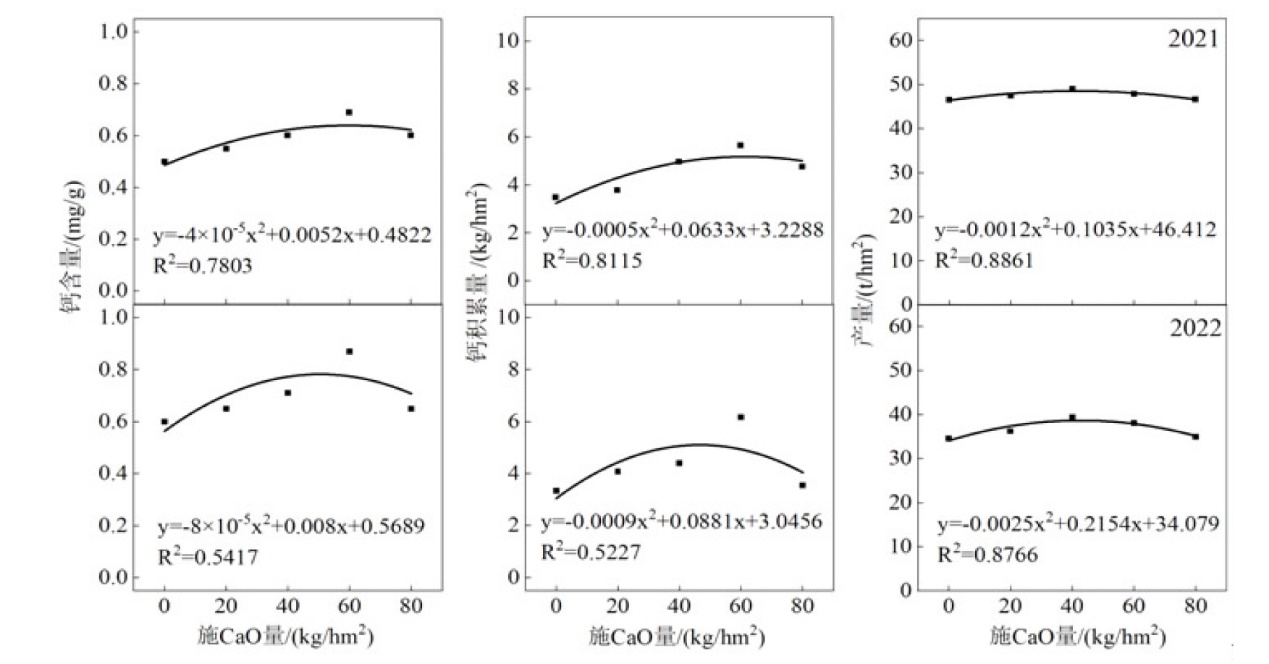
针对马铃薯块茎钙吸收能力弱、钙含量低,且适宜钙用量与钙营养特征不明确的问题,研究探讨了马铃薯钙吸收和积累分配规律及外源钙对马铃薯钙营养特征的影响。为提高块茎钙含量与产量,本研究以早熟马铃薯‘尤金’为材料,在黑龙江绥化开展2年田间试验,设置5个钙施用水平(CaO用量为0、20、40、60和80 kg/hm2),测定不同生育期各器官钙含量、积累量、积累速率,结合相关性分析与函数拟合,明确钙营养特征及适宜施用量。结果表明,马铃薯茎叶钙含量随生育期持续上升,块茎钙含量则在膨大期达到峰值后持续下降。叶片钙积累量在淀粉积累期达峰后下降,茎和块茎则持续上升至收获期。马铃薯各器官钙积累速率随生育期均呈“慢-快-慢”变化,叶和块茎在形成期-膨大期最高,而茎延迟到膨大期-淀粉积累期。施钙使块茎钙积累速率增幅显著高于茎叶,但其钙含量、积累量、分配比例和积累速率始终远低于茎叶。与不施钙相比,施钙可提高块茎钙含量(9.4%~46.7%)、积累量(12.6%~90.2%)、积累速率(13.4%~97.4%)和分配比例(7.3%~46.5%),但钙肥利用率仅为2.0%~22.8%。施钙可增产0.2%~14.0%,以产量为评价指标,钙适宜用量为43~58 kg/hm2。相关性分析显示,收获块茎钙含量与块茎形成期各器官的钙含量呈极显著正相关(P<0.01),块茎产量与块茎膨大期叶片和块茎的钙积累速率均呈显著正相关(P<0.05)。综上,施钙可有效改善马铃薯钙营养状况,显著提高块茎钙含量,块茎形成期-块茎膨大期是改善块茎钙营养的关键时期。
徐圣慧, 汤金融, 李智龙, 李静祎, 于洪涛, 张娟, 孙磊. 马铃薯钙营养特征及其对钙调控的响应[J]. 中国农学通报, 2026, 42(3): 28-36.
XU Shenghui, TANG Jinrong, LI Zhilong, LI Jingyi, YU Hongtao, ZHANG Juan, SUN Lei. Characteristics of Potato Calcium Nutrition and its Response to Calcium Regulation[J]. Chinese Agricultural Science Bulletin, 2026, 42(3): 28-36.
| 年份 | 有机质/(g/kg) | 碱解氮/(mg/kg) | 速效磷/(mg/kg) | 速效钾/(mg/kg) | 水溶性钙/(mg/kg) | 交换性钙/(mg/kg) | pH |
|---|---|---|---|---|---|---|---|
| 2021 | 35.71 | 156.33 | 34.58 | 132.67 | 81.33 | 3876.93 | 5.56 |
| 2022 | 31.80 | 138.25 | 12.23 | 206.00 | 129.33 | 3508.52 | 5.84 |
| 年份 | 有机质/(g/kg) | 碱解氮/(mg/kg) | 速效磷/(mg/kg) | 速效钾/(mg/kg) | 水溶性钙/(mg/kg) | 交换性钙/(mg/kg) | pH |
|---|---|---|---|---|---|---|---|
| 2021 | 35.71 | 156.33 | 34.58 | 132.67 | 81.33 | 3876.93 | 5.56 |
| 2022 | 31.80 | 138.25 | 12.23 | 206.00 | 129.33 | 3508.52 | 5.84 |
| 处理 | 养分施用量/(kg/hm2) | ||||||
|---|---|---|---|---|---|---|---|
| 基肥 | 追肥 | ||||||
| N | P2O5 | K2O | N | K2O | CaO | ||
| Ca0 | 100 | 90 | 67 | 100 | 133 | - | |
| Ca20 | 100 | 90 | 67 | 100 | 133 | 20 | |
| Ca40 | 100 | 90 | 67 | 100 | 133 | 40 | |
| Ca60 | 100 | 90 | 67 | 100 | 133 | 60 | |
| Ca80 | 100 | 90 | 67 | 100 | 133 | 80 | |
| 处理 | 养分施用量/(kg/hm2) | ||||||
|---|---|---|---|---|---|---|---|
| 基肥 | 追肥 | ||||||
| N | P2O5 | K2O | N | K2O | CaO | ||
| Ca0 | 100 | 90 | 67 | 100 | 133 | - | |
| Ca20 | 100 | 90 | 67 | 100 | 133 | 20 | |
| Ca40 | 100 | 90 | 67 | 100 | 133 | 40 | |
| Ca60 | 100 | 90 | 67 | 100 | 133 | 60 | |
| Ca80 | 100 | 90 | 67 | 100 | 133 | 80 | |
| [1] |
联合国粮食及农业组织统计数据库[EB/OL]. (2024-10-07)[2025-03-10]. https://www.fao.org/faostat/zh/#data/FBS.
|
| [2] |
doi: 10.1016/j.jfca.2023.105529 URL |
| [3] |
doi: 10.1016/j.ijbiomac.2023.124248 URL |
| [4] |
孙磊, 汤金融, 符强, 等. 外源钙对马铃薯产量和贮藏品质的影响[J]. 东北农业大学学报, 2023, 54(7):1-13.
|
| [5] |
靖吉越, 王三红. 园艺植物细胞内钙稳态调控机制研究进展[J]. 植物生理学报, 2023, 59(1):13-20.
|
| [6] |
doi: 10.1007/BF02872012 URL |
| [7] |
doi: 10.1111/ppl.2017.159.issue-2 URL |
| [8] |
doi: 10.1016/j.celrep.2024.114794 URL |
| [9] |
程李香. 细胞分裂素调控马铃薯离体块茎发育的生理机制及磷酸化蛋白质组研究[D]. 兰州: 甘肃农业大学, 2021.
|
| [10] |
王宇, 郜耿东, 葛萌萌, 等. 钙在作物生长发育中的功能及应用[J]. 作物学报, 2024, 50(4):793-807.
doi: 10.3724/SP.J.1006.2024.34145 |
| [11] |
doi: 10.1007/s11738-024-03733-w |
| [12] |
doi: 10.1007/BF02732215 URL |
| [13] |
贾立国, 李利, 秦永林, 等. 马铃薯钙素营养研究进展[J]. 北方农业学报, 2018, 46(1):72-75.
|
| [14] |
王西亚, 盛寅生, 何萍, 等. 我国马铃薯施肥现状与减肥潜力[J]. 植物营养与肥料学报, 2023, 29(11):2059-2070.
|
| [15] |
doi: 10.3390/plants10020419 URL |
| [16] |
吴楚红, 黄成东. 钙调控马铃薯产量、品质和抗逆性的关键作用研究进展[J]. 植物营养与肥料学报, 2024, 30(6):1199-1210.
|
| [17] |
doi: 10.3389/fpls.2021.669053 URL |
| [18] |
|
| [19] |
李玉鹏, 杨光, 李飞, 等. 糖醇螯合钙肥对马铃薯产量、品质及养分吸收的影响[J]. 土壤, 2020, 52(4):773-780.
|
| [20] |
李利. 马铃薯钙素营养及钾钙相互作用的特性研究[D]. 呼和浩特: 内蒙古农业大学, 2023.
|
| [21] |
辛建华, 李天来, 张丽秋. 马铃薯干物质积累与钙含量变化的动态分析[J]. 沈阳农业大学学报, 2008(4):396-399.
|
| [22] |
张洪瑞. 硝酸钙镁减施对马铃薯生长生理、产量及品质的影响[D]. 呼和浩特: 内蒙古农业大学, 2021.
|
| [23] |
徐亚锦, 陈梦, 刘春江, 等. 不同颜色马铃薯品种对疮痂病的抗性分析[J]. 西南农业学报, 2025, 38(5):1060-1068.
|
| [24] |
doi: 10.3390/agronomy7040068 URL |
| [25] |
鲍士旦. 土壤农化分析[M]. 第3版. 北京: 中国农业出版社, 2000.
|
| [26] |
doi: 10.1007/s12230-008-9025-3 URL |
| [27] |
|
| [28] |
doi: 10.1016/j.bcab.2016.06.004 URL |
| [29] |
党宏波. 钙、镁元素对马铃薯产量和品质的影响[D]. 呼和浩特: 内蒙古农业大学, 2018.
|
| [30] |
张昕. 外源钙对马铃薯克新18号形态、生理、产量与品质性状的影响[D]. 哈尔滨: 东北农业大学, 2015.
|
| [31] |
doi: 10.17221/72/2012-HORTSCI URL |
| [32] |
doi: 10.1080/01904167.2017.1346665 URL |
| [33] |
doi: 10.1016/j.plaphy.2022.05.033 URL |
| [34] |
doi: 10.1007/s00425-013-2001-2 URL |
| [35] |
黄鹏翔, 刘玉汇, 刘震, 等. 滴灌模式下苗期追施钙肥对马铃薯产量及块茎贮藏品质的影响[J]. 西南农业学报, 2021, 34(11):2404-2411.
|
| [36] |
李文霞, 张昕, 石瑛, 等. 外源钙对马铃薯形态、生理、产量与品质性状的影响[J]. 东北农业大学学报, 2015, 46(7):1-8.
|
| [37] |
高静. 钙肥对马铃薯生长生理、产量及品质的影响[D]. 呼和浩特: 内蒙古农业大学, 2020.
|
| [38] |
王建国, 张昊, 李林, 等. 施钙与覆膜栽培对缺钙红壤花生钙素积累、分配及利用率的影响[J]. 华北农学报, 2017, 32(6):205-212.
doi: 10.7668/hbnxb.2017.06.030 |
| [39] |
陈明昌, 许仙菊, 张强, 等. 磷、钾与钙配合对保护地番茄钙吸收的影响[J]. 植物营养与肥料学报, 2005(2):236-242.
|
| [1] | 王克秀, 唐铭霞, 程明军, 胡建军, 李兵, 廖霏霏, 李华鹏, 杨雯婷, 郭展, 崔阔澍. 施氮量与氮肥类型对马铃薯生长发育及氮素利用的影响[J]. 中国农学通报, 2026, 42(1): 1-11. |
| [2] | 刘颖, 耿丹丹, 刘柳, 魏敏, 石治强. 60Co-γ射线辐照处理对马铃薯淀粉膜性能的影响[J]. 中国农学通报, 2025, 41(6): 153-158. |
| [3] | 汪扬媚, 刘言, 冯奎, 董红平, 刘绍文, 杨勇, 张荣, 何莲. 川西高原不同马铃薯品种农艺性状与产量的关系研究[J]. 中国农学通报, 2025, 41(6): 29-37. |
| [4] | 边巴卓玛, 宋国英, 刘国一. 有机肥替代部分化学氮肥、磷肥对春青稞干物质、养分积累分配的影响[J]. 中国农学通报, 2025, 41(5): 69-76. |
| [5] | 陈芬, 李恺, 张雪梅, 李应龙, 段柯帆, 曹恒茂, 高鑫, 张景华, 黄敏, 董瑜. 硼硅对烤烟马铃薯Y病毒病防效与抗氧化酶活性的影响[J]. 中国农学通报, 2025, 41(4): 108-113. |
| [6] | 卢晓宁, 徐丹丹, 刘轲, 徐维新, 徐保东. 西南复杂地形区10 m级马铃薯叶面积指数反演研究[J]. 中国农学通报, 2025, 41(34): 147-156. |
| [7] | 黄礼佳, 张招娟, 郭玉春, 张鑫. 14个彩色马铃薯品种主要性状表现及其SSR遗传多样性分析[J]. 中国农学通报, 2025, 41(32): 17-22. |
| [8] | 刘燕, 韩伟. 不同药剂处理对马铃薯晚疫病的田间防治效果[J]. 中国农学通报, 2025, 41(2): 117-122. |
| [9] | 王亚婷, 吴志岐, 张连花, 王鲜丽. 气候变化背景下宁夏马铃薯气候适宜性分析[J]. 中国农学通报, 2025, 41(18): 150-157. |
| [10] | 周洋, 杨永森, 丁月花. 减施化肥、施用堆肥对宁夏半干旱地区马铃薯产量和品质的影响[J]. 中国农学通报, 2025, 41(15): 32-36. |
| [11] | 李璐, 胡志超, 秦洁, 王盈, 常江. 液态地膜对马铃薯产量结构和土壤理化结构的影响[J]. 中国农学通报, 2025, 41(15): 88-94. |
| [12] | 马小英, 满本菊, 李涛, 刘威帆, 马风兰, 万猛虎, 刘吉利, 吴娜. 马铃薯/豆类复合系统对宁南旱区土壤酶活性及马铃薯产量的影响[J]. 中国农学通报, 2025, 41(14): 13-24. |
| [13] | 肖卓熙, 张智, 刘东海, 乔艳, 李世涛, 胡诚. 生物炭基肥料减量基施对中低产田水稻产量、养分吸收和经济效益的影响[J]. 中国农学通报, 2025, 41(11): 123-131. |
| [14] | 吴志岐, 王亚婷, 王鲜丽. 马铃薯新品种气候生态适应性分析[J]. 中国农学通报, 2025, 41(11): 140-145. |
| [15] | 黄水龙. 适宜漳州市龙海区冬种马铃薯新品种的筛选[J]. 中国农学通报, 2025, 41(10): 25-31. |
| 阅读次数 | ||||||
|
全文 |
|
|||||
|
摘要 |
|
|||||
