欢迎访问《中国农学通报》,

中国农学通报 ›› 2026, Vol. 42 ›› Issue (4): 67-74.doi: 10.11924/j.issn.1000-6850.casb2025-0498
李晔男( ), 刘彬昕(), 贾鹏博, 尹智勇, 隋金超, 张国栋
收稿日期:2025-06-16
修回日期:2025-11-24
出版日期:2026-02-27
发布日期:2026-02-27
通讯作者:
作者简介:李晔男,男,1980年出生,河北唐山人,高级工程师,本科,主要从事林业研究。通信地址:154000 黑龙江省佳木斯市前进区54号,Tel:0454-6019210,E-mail:565185582@qq.com。
基金资助:
LI Yenan(), LIU Binxin(), JIA Pengbo, YIN Zhiyong, SUI Jinchao, ZHANG Guodong
Received:2025-06-16
Revised:2025-11-24
Published:2026-02-27
Online:2026-02-27
摘要:
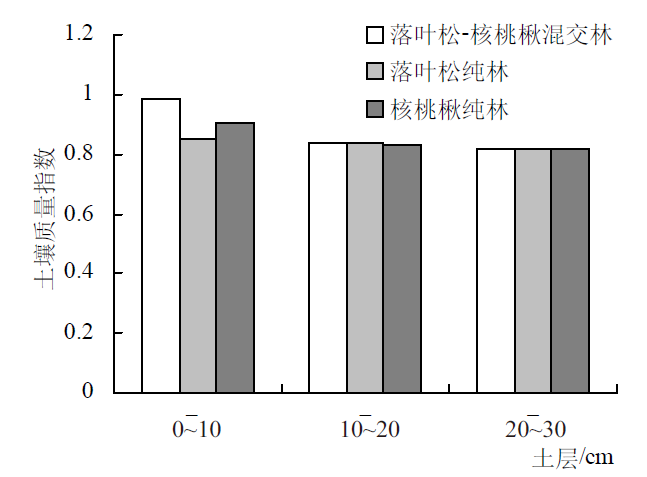
探究黑龙江省不同林分类型下土壤养分特征与肥力状况,阐明林分结构、树种组成对土壤肥力形成与演变的影响机制,为改善土壤理化性质、优化养分循环过程提供理论依据,并为黑龙江省林业产业可持续发展的资源利用规划提供参考。以落叶松纯林、落叶松-胡桃楸混交林及胡桃楸纯林3种不同林分类型为研究对象,对0~10、10~20、20~30 cm土层的土壤进行取样测定,量化分析土壤物理和化学性质,并运用单因素方差分析和主成分分析法进行数据分析。结果表明:(1)随着土壤深度的增加,土壤容重增大,而土壤的自然含水量、饱和含水量以及毛管含水量均呈现减少趋势,且不同林分类型下变化程度存在差异。(2)林分类型对部分土壤化学性质影响显著。其中,落叶松纯林的各项理化指标值普遍低于胡桃楸纯林和落叶松-胡桃楸混交林。(3)采用主成分分析法评价土壤肥力状况,土壤肥力排序为落叶松-胡桃楸混交林>胡桃楸纯林>落叶松纯林。建议在现有林林分经营中推广近自然育林,及时进行林下补植更新,并营造针阔混交林,构建复层异龄混交林结构,通过凋落物归还与微生物驱动的养分转化过程来提升土壤质量,以改善该区针叶林地的肥力状况。
李晔男, 刘彬昕, 贾鹏博, 尹智勇, 隋金超, 张国栋. 黑龙江省3种林分类型土壤养分特征与肥力评价[J]. 中国农学通报, 2026, 42(4): 67-74.
LI Yenan, LIU Binxin, JIA Pengbo, YIN Zhiyong, SUI Jinchao, ZHANG Guodong. Soil Nutrient Characteristics and Fertility Evaluation of Three Forest Types in Heilongjiang Province[J]. Chinese Agricultural Science Bulletin, 2026, 42(4): 67-74.
| 林分类型 | 样地编号 | 坡度/° | 海拔/m | 株数密度/(株/hm2) | 平均树高/m | 平均胸径/cm | 平均冠幅/m×m |
|---|---|---|---|---|---|---|---|
| 落叶松-胡桃楸混交林 | 1 | 2.3 | 297 | 651 | 17.5 | 27.9 | 8.3×8.5 |
| 2 | 4.7 | 308 | 518 | 18.3 | 31.5 | 8.9×7.0 | |
| 3 | 3.8 | 321 | 718 | 16.9 | 25.3 | 6.12×8.0 | |
| 落叶松纯林 | 4 | 2.8 | 316 | 468 | 20.9 | 25.4 | 11.2×11.5 |
| 5 | 3.9 | 362 | 534 | 19.0 | 20.7 | 9.2×10.5 | |
| 6 | 4.1 | 312 | 484 | 21.0 | 20.3 | 9.8×11.2 | |
| 胡桃楸纯林 | 7 | 5.4 | 442 | 384 | 16.9 | 24.8 | 12.3×11.0 |
| 8 | 6.1 | 419 | 351 | 17.1 | 18.6 | 10.0×10.5 | |
| 9 | 4.8 | 384 | 418 | 19.4 | 22.9 | 11.4×12.5 |
| 林分类型 | 样地编号 | 坡度/° | 海拔/m | 株数密度/(株/hm2) | 平均树高/m | 平均胸径/cm | 平均冠幅/m×m |
|---|---|---|---|---|---|---|---|
| 落叶松-胡桃楸混交林 | 1 | 2.3 | 297 | 651 | 17.5 | 27.9 | 8.3×8.5 |
| 2 | 4.7 | 308 | 518 | 18.3 | 31.5 | 8.9×7.0 | |
| 3 | 3.8 | 321 | 718 | 16.9 | 25.3 | 6.12×8.0 | |
| 落叶松纯林 | 4 | 2.8 | 316 | 468 | 20.9 | 25.4 | 11.2×11.5 |
| 5 | 3.9 | 362 | 534 | 19.0 | 20.7 | 9.2×10.5 | |
| 6 | 4.1 | 312 | 484 | 21.0 | 20.3 | 9.8×11.2 | |
| 胡桃楸纯林 | 7 | 5.4 | 442 | 384 | 16.9 | 24.8 | 12.3×11.0 |
| 8 | 6.1 | 419 | 351 | 17.1 | 18.6 | 10.0×10.5 | |
| 9 | 4.8 | 384 | 418 | 19.4 | 22.9 | 11.4×12.5 |
| 林分类型 | 土层深度/cm | 土壤容重/(g/cm3) | 土壤自然含水量/% | 土壤饱和含水量/% | 土壤毛管持水量/% |
|---|---|---|---|---|---|
| 落叶松-胡桃楸混交林 | 0~10 | 0.82 | 36.65 | 57.65 | 51.54 |
| 10~20 | 1.02 | 29.18 | 47.72 | 43.39 | |
| 20~30 | 1.18 | 23.84 | 35.86 | 28.15 | |
| 落叶松纯林 | 0~10 | 0.88 | 37.06 | 46.49 | 38.42 |
| 10~20 | 0.96 | 35.74 | 41.87 | 36.48 | |
| 20~30 | 1.13 | 32.53 | 37.53 | 33.85 | |
| 胡桃楸纯林 | 0~10 | 0.88 | 38.59 | 49.52 | 41.08 |
| 10~20 | 1.05 | 24.96 | 35.46 | 29.36 | |
| 20~30 | 1.11 | 24.45 | 34.83 | 27.01 |
| 林分类型 | 土层深度/cm | 土壤容重/(g/cm3) | 土壤自然含水量/% | 土壤饱和含水量/% | 土壤毛管持水量/% |
|---|---|---|---|---|---|
| 落叶松-胡桃楸混交林 | 0~10 | 0.82 | 36.65 | 57.65 | 51.54 |
| 10~20 | 1.02 | 29.18 | 47.72 | 43.39 | |
| 20~30 | 1.18 | 23.84 | 35.86 | 28.15 | |
| 落叶松纯林 | 0~10 | 0.88 | 37.06 | 46.49 | 38.42 |
| 10~20 | 0.96 | 35.74 | 41.87 | 36.48 | |
| 20~30 | 1.13 | 32.53 | 37.53 | 33.85 | |
| 胡桃楸纯林 | 0~10 | 0.88 | 38.59 | 49.52 | 41.08 |
| 10~20 | 1.05 | 24.96 | 35.46 | 29.36 | |
| 20~30 | 1.11 | 24.45 | 34.83 | 27.01 |
| 林分类型 | 土层深度/cm | pH | 有机质/(g/kg) | 全氮/(g/kg) | 全磷/(g/kg) | 全钾/(g/kg) | 速效磷/(mg/kg) | 速效钾/(mg/kg) |
|---|---|---|---|---|---|---|---|---|
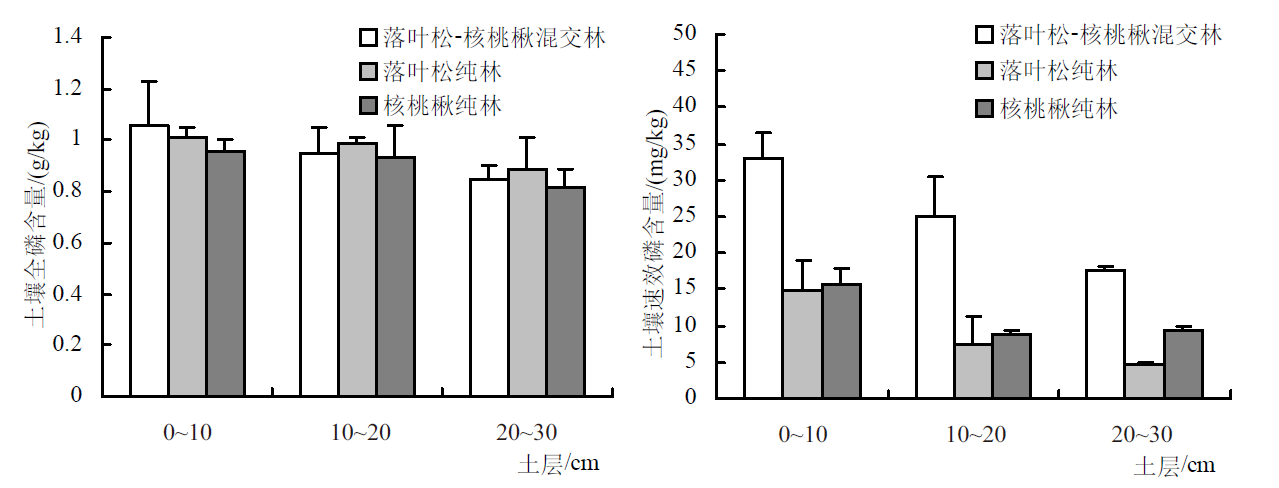
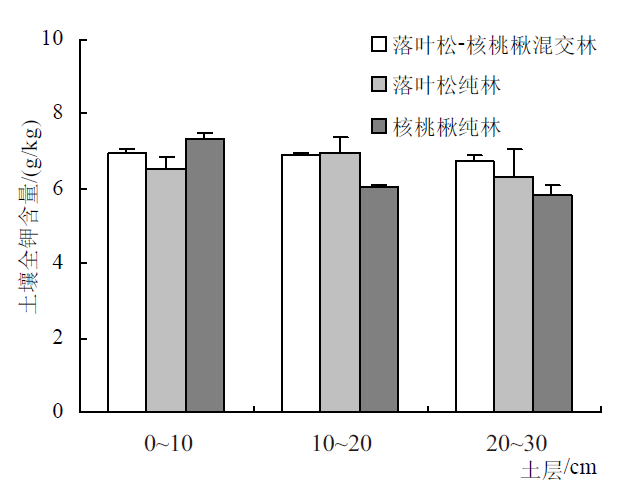
| 胡桃楸纯林 | 0~10 | 5.65±0.11 | 126.66±4.38 | 6.88±1.90 | 1.06±0.17 | 6.93±0.11 | 32.93±3.63 | 243.82±12.90 |
| 10~20 | 5.69±0.06 | 87.83±6.25 | 4.54±1.01 | 0.95±0.10 | 6.90±0.05 | 25.11±8.39 | 156.75±6.26 | |
| 20~30 | 5.70±0.09 | 75.33±6.03 | 3.81±0.96 | 0.85±0.05 | 6.72±0.16 | 17.55±0.69 | 156.51±6.21 | |
| 落叶松纯林 | 0~10 | 5.93±0.19 | 122.56±7.83 | 5.77±1.09 | 1.01±0.04 | 6.54±0.28 | 14.71±5.20 | 156.24±6.44 |
| 10~20 | 5.67±0.06 | 106.72±4.92 | 5.11±0.64 | 0.99±0.02 | 6.93±0.44 | 7.45±4.73 | 134.57±8.67 | |
| 20~30 | 5.76±0.11 | 97.27±3.27 | 4.83±0.41 | 0.89±0.12 | 6.30±0.75 | 4.62±0.31 | 112.50±6.27 | |
| 落叶松-胡桃楸混交林 | 0~10 | 5.83±0.11 | 216.16±9.23 | 9.08±1.69 | 0.96±0.04 | 7.34±0.14 | 15.55±2.30 | 283.42±8.82 |
| 10~20 | 5.89±0.04 | 109.24±1.57 | 5.15±0.81 | 0.93±0.13 | 6.06±0.06 | 8.86±0.61 | 143.06±10.00 | |
| 20~30 | 5.89±0.06 | 105.07±5.91 | 3.89±0.32 | 0.82±0.07 | 5.84±0.25 | 9.38±0.44 | 160.94±10.09 |
| 林分类型 | 土层深度/cm | pH | 有机质/(g/kg) | 全氮/(g/kg) | 全磷/(g/kg) | 全钾/(g/kg) | 速效磷/(mg/kg) | 速效钾/(mg/kg) |
|---|---|---|---|---|---|---|---|---|
| 胡桃楸纯林 | 0~10 | 5.65±0.11 | 126.66±4.38 | 6.88±1.90 | 1.06±0.17 | 6.93±0.11 | 32.93±3.63 | 243.82±12.90 |
| 10~20 | 5.69±0.06 | 87.83±6.25 | 4.54±1.01 | 0.95±0.10 | 6.90±0.05 | 25.11±8.39 | 156.75±6.26 | |
| 20~30 | 5.70±0.09 | 75.33±6.03 | 3.81±0.96 | 0.85±0.05 | 6.72±0.16 | 17.55±0.69 | 156.51±6.21 | |
| 落叶松纯林 | 0~10 | 5.93±0.19 | 122.56±7.83 | 5.77±1.09 | 1.01±0.04 | 6.54±0.28 | 14.71±5.20 | 156.24±6.44 |
| 10~20 | 5.67±0.06 | 106.72±4.92 | 5.11±0.64 | 0.99±0.02 | 6.93±0.44 | 7.45±4.73 | 134.57±8.67 | |
| 20~30 | 5.76±0.11 | 97.27±3.27 | 4.83±0.41 | 0.89±0.12 | 6.30±0.75 | 4.62±0.31 | 112.50±6.27 | |
| 落叶松-胡桃楸混交林 | 0~10 | 5.83±0.11 | 216.16±9.23 | 9.08±1.69 | 0.96±0.04 | 7.34±0.14 | 15.55±2.30 | 283.42±8.82 |
| 10~20 | 5.89±0.04 | 109.24±1.57 | 5.15±0.81 | 0.93±0.13 | 6.06±0.06 | 8.86±0.61 | 143.06±10.00 | |
| 20~30 | 5.89±0.06 | 105.07±5.91 | 3.89±0.32 | 0.82±0.07 | 5.84±0.25 | 9.38±0.44 | 160.94±10.09 |
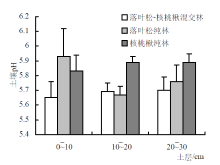
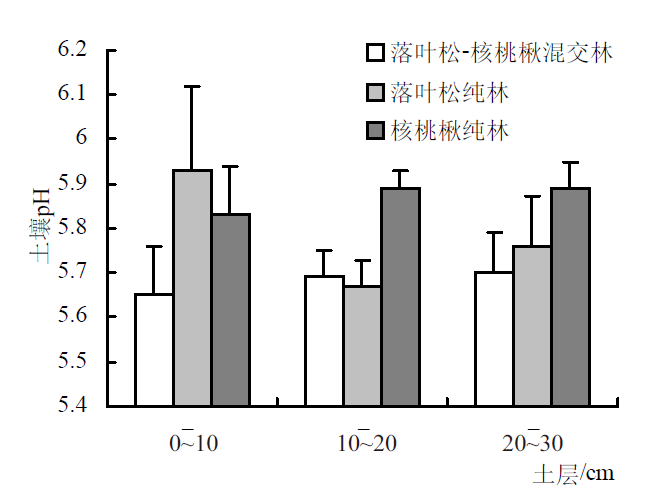
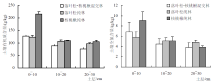
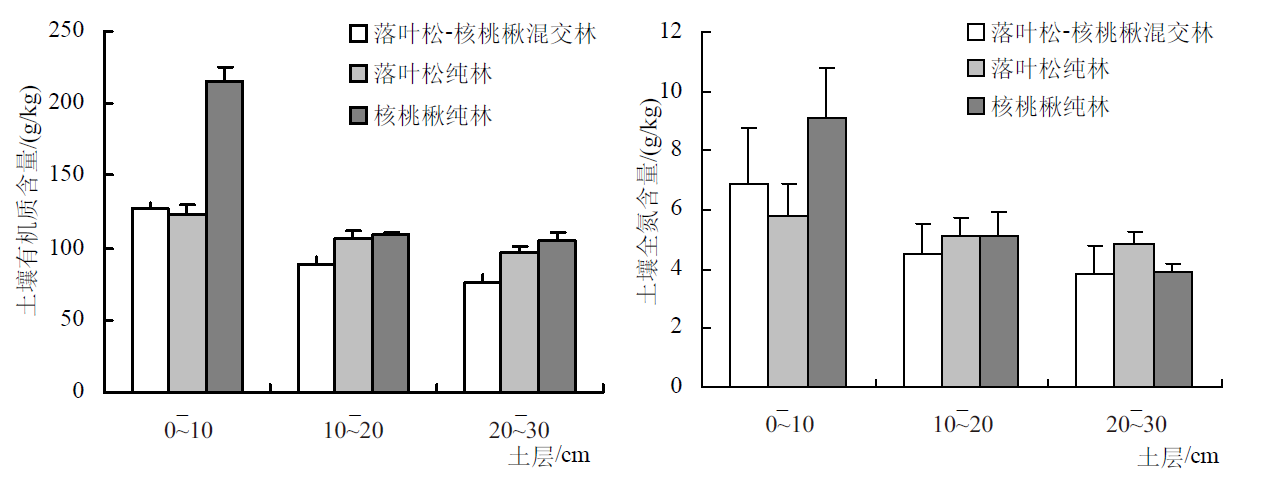
| 容重 | 土壤自然含水量 | 土壤饱和含水量 | 土壤毛管持水量 | pH | 有机质 | 全氮 | 全磷 | 全钾 | 速效磷 | 速效钾 | |
|---|---|---|---|---|---|---|---|---|---|---|---|
| 容重 | 1 | ||||||||||
| 土壤自然含水量 | -0.845** | 1 | |||||||||
| 土壤饱和含水量 | -0.803** | 0.783* | 1 | ||||||||
| 土壤毛管持水量 | -0.812** | 0.733* | 0.967** | 1 | |||||||
| pH | -0.084 | -0.176 | 0.100 | 0.134 | 1 | ||||||
| 有机质 | -0.828** | 0.783* | 0.967** | 0.900** | -0.167 | 1 | |||||
| 全氮 | -0.895** | 0.883** | 0.967** | 0.950** | -0.050 | 0.950** | 1 | ||||
| 全磷 | -0.828** | 0.900** | 0.683* | 0.650 | -0.251 | 0.733** | 0.800** | 1 | |||
| 全钾 | -0.727* | 0.577 | 0.393 | 0.385 | -0.622 | 0.393 | 0.510 | 0.586 | 1 | ||
| 速效磷 | -0.335 | 0.150 | 0.017 | -0.017 | -0.360 | 0.100 | 0.117 | 0.267 | 0.460 | 1 | |
| 速效钾 | -0.351 | 0.100 | 0.283 | 0.183 | -0.084 | 0.400 | 0.283 | 0.183 | 0.402 | 0.767* | 1 |
| 容重 | 土壤自然含水量 | 土壤饱和含水量 | 土壤毛管持水量 | pH | 有机质 | 全氮 | 全磷 | 全钾 | 速效磷 | 速效钾 | |
|---|---|---|---|---|---|---|---|---|---|---|---|
| 容重 | 1 | ||||||||||
| 土壤自然含水量 | -0.845** | 1 | |||||||||
| 土壤饱和含水量 | -0.803** | 0.783* | 1 | ||||||||
| 土壤毛管持水量 | -0.812** | 0.733* | 0.967** | 1 | |||||||
| pH | -0.084 | -0.176 | 0.100 | 0.134 | 1 | ||||||
| 有机质 | -0.828** | 0.783* | 0.967** | 0.900** | -0.167 | 1 | |||||
| 全氮 | -0.895** | 0.883** | 0.967** | 0.950** | -0.050 | 0.950** | 1 | ||||
| 全磷 | -0.828** | 0.900** | 0.683* | 0.650 | -0.251 | 0.733** | 0.800** | 1 | |||
| 全钾 | -0.727* | 0.577 | 0.393 | 0.385 | -0.622 | 0.393 | 0.510 | 0.586 | 1 | ||
| 速效磷 | -0.335 | 0.150 | 0.017 | -0.017 | -0.360 | 0.100 | 0.117 | 0.267 | 0.460 | 1 | |
| 速效钾 | -0.351 | 0.100 | 0.283 | 0.183 | -0.084 | 0.400 | 0.283 | 0.183 | 0.402 | 0.767* | 1 |
| [1] |
杨晓娟, 王海燕, 刘玲, 等. 吉林省东部低山丘陵区4种林分类型林地的土壤肥力分析[J]. 水土保持通报, 2013, 33(4):142-148.
|
| [2] |
渠开跃, 代力民, 冯慧敏, 等. 辽东山区不同林型土壤有机质和NPK分布特征[J]. 土壤通报, 2009, 40(3):558-562.
|
| [3] |
doi: 10.3906/tar-2106-17 URL |
| [4] |
doi: 10.1016/j.foreco.2005.06.004 URL |
| [5] |
董希斌, 杨学春, 杨桂香. 采伐对落叶松人工林土壤性质的影响[J]. 东北林业大学学报, 2007, 35(10):7-10.
|
| [6] |
余玉珠, 石国欢, 苏强, 等. 广西国有钦廉林场桉树人工林土壤肥力评价[J]. 广西林业科学, 2022, 51(2):249-254.
doi: 10.19692/j.issn.1006-1126.202202013 |
| [7] |
杨斌, 王家学, 郭小玮, 等. 景谷县思茅松人工林土壤养分特征与肥力评价[J]. 西部林业科学, 2023, 52(4):7-12.
|
| [8] |
刘巧娟. 大兴安岭北部白桦林土壤微生物生物量及土壤酶活性研究[D]. 哈尔滨: 东北林业大学, 2024.
|
| [9] |
翁晓虹, 隋心. 基于Web of Science的森林土壤微生物多样性研究趋势分析[J]. 中国农学通报, 2022, 38(10):157-164.
doi: 10.11924/j.issn.1000-6850.casb2021-0481 |
| [10] |
杨真真, 刘琳. 数学视角下黑龙江省地表水pH值影响因素分析[J]. 广东化工, 2021, 48(16):200-201.
|
| [11] |
韩铭, 李华, 蔡体久. 黑龙江太平沟国家级自然保护区森林群落植物多样性特征[J]. 森林工程, 2025, 23(1):1-8.
|
| [12] |
管惠文, 董希斌, 曲杭峰, 等. 抚育间伐强度对大兴安岭落叶松次生林土壤肥力的影响[J]. 中南林业科技大学学报, 2019, 39(2):27-33.
|
| [13] |
卢纹岱. SPSS for Windows统计分析[M]. 北京: 电子工业出版社, 2000:336-374.
|
| [14] |
王晋波, 李那, 高志丽, 等. 滇中人工林土壤的斥水性及其对土壤理化性质的响应[J]. 森林与环境学报, 2025, 17(1):1-13.
|
| [15] |
|
| [16] |
周永斌, 张飞, 殷鸣放, 等. 白石砬子自然保护区不同森林类型土壤化学性质与养分状况分析[J]. 中国农学通报, 2010, 26(11):118-122.
|
| [17] |
冉健民, 宋小艳, 王丹, 等. 退化高寒草甸土壤有机碳组分变化与增汇潜力研究[J]. 草业学报, 2025(3):1-15.
|
| [18] |
杨志远, 徐灵颖, 续勇波, 等. 土壤pH和有机物料碳氮比对强还原处理去除设施土壤硝酸盐效果和途径的影响[J]. 土壤, 2025(3):1-11.
|
| [19] |
陆珍先, 曹宇轩, 曾莉, 等. 广西人工林土壤养分分布特征及土壤肥力综合评价[J]. 桉树科技, 2025(3):1-9.
|
| [20] |
赵雅涵, 李宝珍, 付皓宇, 等. 高氮有机物料添加对稻田土壤碳及pH的调控作用[J]. 土壤通报, 2025(3):1-8.
|
| [21] |
李悦. 贺兰山东麓葡萄园自然生草对土壤理化性质和微生物多样性的影响研究[D]. 银川: 宁夏大学, 2023.
|
| [22] |
梁小翠. 亚热带4种森林土壤微生物呼吸及其驱动机制研究[D]. 长沙: 中南林业科技大学, 2022.
|
| [23] |
陈春晓. 不同区域森林土壤有机碳组分对氮添加的响应[D]. 曲阜: 曲阜师范大学, 2024.
|
| [24] |
doi: 10.1016/j.saa.2025.125716 URL |
| [25] |
刘鸿雁, 黄建国. 缙云山森林群落次生演替中土壤理化性质的动态变化[J]. 应用生态学报, 2005, 16(11):2041-2046.
|
| [26] |
金哲浩, 王克勤, 黄帅, 等. 基于MDS的滇池流域5种典型林分土壤质量评价[J]. 水土保持学报, 2025, 39(1):141-151.
|
| [27] |
薄延素, 李昊明, 王葛霏, 等. 松嫩平原西部草地土壤有机质含量预测[J]. 水土保持研究, 2025, 32(3):63-71.
|
| [28] |
黄英梅, 梁春梅, 许昌超, 等. 不同类型有机质对高山榕根系形态性状及土壤养分含量的影响[J]. 江西农业学报, 2024, 36(12):46-57.
|
| [1] | 吴佳, 商小兰, 洪春来, 姚燕来, 周瑛, 朱为静. 稻麦轮作区秸秆还田对土壤性质及小麦产量的影响[J]. 中国农学通报, 2025, 41(30): 122-130. |
| [2] | 黎小勇, 钟军辉, 魏彦强, 王鹏年, 喻龙, 艾书涛. 新疆塔里木盆地东北缘绿洲不同土地利用类型土壤肥力评价[J]. 中国农学通报, 2025, 41(19): 64-72. |
| [3] | 孙鹏鹏, 查倩, 殷向静, 简攀煜, 蒋爱丽, 奚晓军. 葡萄园行间土壤覆盖方式对土壤理化性质及树体生长的影响[J]. 中国农学通报, 2025, 41(10): 115-121. |
| [4] | 王望, 于泽, 崔晶晶, 宋柏权, 王秋红. 施氮对甜菜根际土壤化学性质的影响及相关性分析[J]. 中国农学通报, 2024, 40(22): 88-93. |
| [5] | 张凯, 程彦弟, 胡皓楠, 冯海萍, 吴宏亮, 康建宏. 不同轮作模式通过改善西兰花土壤养分和真菌群落在土壤健康中的应用[J]. 中国农学通报, 2024, 40(18): 73-82. |
| [6] | 唐健, 赵隽宇, 覃祚玉, 王会利, 覃其云, 赵泽洪. 1993—2018年广西桉树主产区土壤肥力演变特征分析[J]. 中国农学通报, 2021, 37(1): 94-99. |
| [7] | 陈传信, 赛力汗·赛, 张永强, 薛丽华, 雷钧杰, 陈兴武, 刘云霄, 刘新艳, 吴伟, 库勒达那·卡达尔江. 耕作方式对伊犁河谷旱地农田土壤物理性质和小麦产量的影响[J]. 中国农学通报, 2020, 36(8): 17-20. |
| [8] | 李华芝, 马锐, 侯萌, 陈一民, 隋跃宇, 焦晓光. 加格达奇市黄芪种植地土壤形态描述及适宜性分析[J]. 中国农学通报, 2020, 36(17): 71-75. |
| [9] | 李自林, 赵磊峰, 陆亚春, 周文亮, 罗刚, 廖小琳, 年夫照, 范东升. 隆林县植烟土壤养分含量丰缺评价[J]. 中国农学通报, 2020, 36(10): 25-32. |
| [10] | 乔锋,肖洋,赵淑苹. 海林农场沼肥连年施用对玉米产量和土壤化学性质的影响[J]. 中国农学通报, 2018, 34(36): 93-98. |
| [11] | 丛晓峰,余刚,谢斌,闫会玲,陈昊. 基于模糊数学法的新建绿地土壤物理性能评价[J]. 中国农学通报, 2018, 34(29): 59-63. |
| [12] | 杭玉浩,王强盛,许国春,刘 欣,杨 冰,金 梅. 稻田土壤养分特性对不同耕作方式的生态响应[J]. 中国农学通报, 2017, 33(10): 106-112. |
| [13] | 丛晓峰,刘立成,王宇超,李为民,闫会玲,陈 昊. 不同干扰对城市绿化用地土壤物理性质的影响[J]. 中国农学通报, 2015, 31(28): 166-172. |
| [14] | 舒馨 朱安宁 张佳宝 陈文超 杨文亮 张文国. 保护性耕作对潮土物理性质的影响[J]. 中国农学通报, 2014, 30(6): 175-181. |
| [15] | 郭春秀,王理德,韩福贵,马剑平,何芳兰,刘淑娟,王方琳,张莹花,魏林源. 石羊河下游民勤绿洲不同年限退耕地土壤物理性质变化研究[J]. 中国农学通报, 2014, 30(27): 72-76. |
| 阅读次数 | ||||||
|
全文 |
|
|||||
|
摘要 |
|
|||||
