Welcome to Chinese Agricultural Science Bulletin,

Chinese Agricultural Science Bulletin ›› 2026, Vol. 42 ›› Issue (5): 186-195.doi: 10.11924/j.issn.1000-6850.casb2025-0712
Previous Articles Next Articles
LIANG Yan1( ), ZHANG Lanjing1, SU Lijun1(), WEN Xiaodong2, WANG Ni3
Received:2025-08-26
Revised:2025-11-28
Online:2026-03-18
Published:2026-03-18
LIANG Yan, ZHANG Lanjing, SU Lijun, WEN Xiaodong, WANG Ni. Evaluation of Climatic Suitability and Zoning for Alfalfa Cultivation in Hohhot Region[J]. Chinese Agricultural Science Bulletin, 2026, 42(5): 186-195.
Add to citation manager EndNote|Ris|BibTeX
URL: https://www.casb.org.cn/EN/10.11924/j.issn.1000-6850.casb2025-0712
| 区划指标 | 适宜 | 较适宜 | 不适宜 | |||
|---|---|---|---|---|---|---|
| C1(4—10月日照时数)/h | C1≥1738 | 1645≤C1<1737 | C1<1645 | |||
| C2(冬季日最低气温≤-25℃日数)/d | C2≤6 | 7<C2≤13 | C2≥14 | |||
| C3(冬季日最低气温≤-30℃日数)/d | C3≤2 | 3≤C3≤4 | C3≥5 | |||
| C4(积雪深度≥3 cm日数)/d | C4≥16 | 11≤C4≤15 | C4≤10 | |||
| C5(日最低气温稳定通过0℃日期) | C5≤3月14日 | 3月15日≤C5≤3月24日 | C5≥3月25日 | |||
| C6(日最低气温稳定通过5℃日期) | C6≤4月7日 | 4月8日≤C6≤4月20日 | C6≥4月21日 | |||
| C7(年降水量)/mm | C7≥390 | 365≤C7≤389 | C7≤364 | |||
| C8(4—10月日平均气温≥5℃的活动积温)/℃ | C8≥3300 | 2900≤C8≤3299 | C8≤2899 | |||
| C9(无霜期日数)/d | C9>220 | 150≤C9≤219 | C9≤149 | |||
| C10(4月10日—5月10日≤-4℃日数)/d | C10≤3 | 4≤C10≤6 | C10≥7 | |||
| C11(收获期连续3 d以上无降水次数)/次 | C11≥6 | 2<C11<6 | C11≤2 | |||
| 区划指标 | 适宜 | 较适宜 | 不适宜 | |||
|---|---|---|---|---|---|---|
| C1(4—10月日照时数)/h | C1≥1738 | 1645≤C1<1737 | C1<1645 | |||
| C2(冬季日最低气温≤-25℃日数)/d | C2≤6 | 7<C2≤13 | C2≥14 | |||
| C3(冬季日最低气温≤-30℃日数)/d | C3≤2 | 3≤C3≤4 | C3≥5 | |||
| C4(积雪深度≥3 cm日数)/d | C4≥16 | 11≤C4≤15 | C4≤10 | |||
| C5(日最低气温稳定通过0℃日期) | C5≤3月14日 | 3月15日≤C5≤3月24日 | C5≥3月25日 | |||
| C6(日最低气温稳定通过5℃日期) | C6≤4月7日 | 4月8日≤C6≤4月20日 | C6≥4月21日 | |||
| C7(年降水量)/mm | C7≥390 | 365≤C7≤389 | C7≤364 | |||
| C8(4—10月日平均气温≥5℃的活动积温)/℃ | C8≥3300 | 2900≤C8≤3299 | C8≤2899 | |||
| C9(无霜期日数)/d | C9>220 | 150≤C9≤219 | C9≤149 | |||
| C10(4月10日—5月10日≤-4℃日数)/d | C10≤3 | 4≤C10≤6 | C10≥7 | |||
| C11(收获期连续3 d以上无降水次数)/次 | C11≥6 | 2<C11<6 | C11≤2 | |||
| 目标层(A) | 准则层(B) | 指标层(C) |
|---|---|---|
| 呼和浩特苜蓿种植气候区划(A) | 日照条件(B1) | 4—10月日照时数(C1) |
| 越冬条件(B2) | 冬季日最低气温≤-25℃日数(C2) | |
| 冬季日最低气温≤-30℃日数(C3) | ||
| 积雪深度≥3 cm日数(C4) | ||
| 返青条件(B3) | 日最低气温稳定通过0℃日期(C5) | |
| 春季播种条件(B4) | 日最低气温稳定通过5℃日期(C6) | |
| 水分条件(B5) | 年降水量(C7) | |
| 生长期热量条件(B6) | 4—10月日平均气温≥5℃的活动积温(C8) | |
| 主要气象灾害(B7) | 无霜期日数(C9) | |
| 4月10日—5月10日≤-4℃日数(C10) | ||
| 收获期连续3 d以上无降水次数(C11) |
| 目标层(A) | 准则层(B) | 指标层(C) |
|---|---|---|
| 呼和浩特苜蓿种植气候区划(A) | 日照条件(B1) | 4—10月日照时数(C1) |
| 越冬条件(B2) | 冬季日最低气温≤-25℃日数(C2) | |
| 冬季日最低气温≤-30℃日数(C3) | ||
| 积雪深度≥3 cm日数(C4) | ||
| 返青条件(B3) | 日最低气温稳定通过0℃日期(C5) | |
| 春季播种条件(B4) | 日最低气温稳定通过5℃日期(C6) | |
| 水分条件(B5) | 年降水量(C7) | |
| 生长期热量条件(B6) | 4—10月日平均气温≥5℃的活动积温(C8) | |
| 主要气象灾害(B7) | 无霜期日数(C9) | |
| 4月10日—5月10日≤-4℃日数(C10) | ||
| 收获期连续3 d以上无降水次数(C11) |
| 层次模型 | 权重 | 一致性检验 | ||||||||
|---|---|---|---|---|---|---|---|---|---|---|
| A-B | A | B1 | B2 | B3 | B4 | B5 | B6 | B7 | λmax=7.2453 CI=0.0409 CR=0.0301<0.10 | |
| B1 | 1.00 | 0.50 | 0.25 | 0.50 | 2.01 | 0.20 | 0.50 | 0.0597 | ||
| B2 | 1.99 | 1.00 | 1.00 | 1.50 | 3.02 | 0.25 | 0.50 | 0.1134 | ||
| B3 | 3.99 | 1.01 | 1.00 | 2.00 | 4.02 | 0.26 | 0.50 | 0.1369 | ||
| B4 | 2.01 | 0.60 | 0.50 | 1.00 | 2.01 | 0.20 | 0.40 | 0.0799 | ||
| B5 | 0.50 | 0.33 | 0.25 | 0.50 | 1.00 | 0.17 | 0.33 | 0.0425 | ||
| B6 | 5.01 | 4.00 | 3.99 | 5.01 | 6.02 | 1.00 | 3.01 | 0.3971 | ||
| B7 | 2.00 | 2.00 | 1.99 | 2.49 | 3.00 | 0.33 | 1.00 | 0.1706 | ||
| B1-C | B1 | C1 | ||||||||
| C1 | 1.00 | 1.0000 | ||||||||
| B2-C | B2 | C2 | C3 | C4 | λmax=3.0182 CI=0.0091 CR=0.0157<0.10 | |||||
| C2 | 1.00 | 0.33 | 1.00 | 0.2098 | ||||||
| C3 | 3.00 | 1.00 | 2.00 | 0.5499 | ||||||
| C4 | 1.00 | 0.50 | 1.00 | 0.2402 | ||||||
| B3-C | B3 | C5 | ||||||||
| C5 | 1.00 | 1.0000 | ||||||||
| B4-C | B4 | C6 | ||||||||
| C6 | 1.00 | 1.0000 | ||||||||
| B5-C | B5 | C7 | ||||||||
| C7 | 1.00 | 1.0000 | ||||||||
| B6-C | B6 | C8 | ||||||||
| C8 | 1.00 | 1.0000 | ||||||||
| B7-C | B7 | C9 | C10 | C11 | λmax=3.0711 CI=0.0356 CR=0.0613<0.10 | |||||
| C9 | 1.00 | 5.00 | 4.50 | 0.6928 | ||||||
| C10 | 0.20 | 1.00 | 0.40 | 0.1058 | ||||||
| C11 | 0.22 | 2.50 | 1.00 | 0.2014 | ||||||
| 层次模型 | 权重 | 一致性检验 | ||||||||
|---|---|---|---|---|---|---|---|---|---|---|
| A-B | A | B1 | B2 | B3 | B4 | B5 | B6 | B7 | λmax=7.2453 CI=0.0409 CR=0.0301<0.10 | |
| B1 | 1.00 | 0.50 | 0.25 | 0.50 | 2.01 | 0.20 | 0.50 | 0.0597 | ||
| B2 | 1.99 | 1.00 | 1.00 | 1.50 | 3.02 | 0.25 | 0.50 | 0.1134 | ||
| B3 | 3.99 | 1.01 | 1.00 | 2.00 | 4.02 | 0.26 | 0.50 | 0.1369 | ||
| B4 | 2.01 | 0.60 | 0.50 | 1.00 | 2.01 | 0.20 | 0.40 | 0.0799 | ||
| B5 | 0.50 | 0.33 | 0.25 | 0.50 | 1.00 | 0.17 | 0.33 | 0.0425 | ||
| B6 | 5.01 | 4.00 | 3.99 | 5.01 | 6.02 | 1.00 | 3.01 | 0.3971 | ||
| B7 | 2.00 | 2.00 | 1.99 | 2.49 | 3.00 | 0.33 | 1.00 | 0.1706 | ||
| B1-C | B1 | C1 | ||||||||
| C1 | 1.00 | 1.0000 | ||||||||
| B2-C | B2 | C2 | C3 | C4 | λmax=3.0182 CI=0.0091 CR=0.0157<0.10 | |||||
| C2 | 1.00 | 0.33 | 1.00 | 0.2098 | ||||||
| C3 | 3.00 | 1.00 | 2.00 | 0.5499 | ||||||
| C4 | 1.00 | 0.50 | 1.00 | 0.2402 | ||||||
| B3-C | B3 | C5 | ||||||||
| C5 | 1.00 | 1.0000 | ||||||||
| B4-C | B4 | C6 | ||||||||
| C6 | 1.00 | 1.0000 | ||||||||
| B5-C | B5 | C7 | ||||||||
| C7 | 1.00 | 1.0000 | ||||||||
| B6-C | B6 | C8 | ||||||||
| C8 | 1.00 | 1.0000 | ||||||||
| B7-C | B7 | C9 | C10 | C11 | λmax=3.0711 CI=0.0356 CR=0.0613<0.10 | |||||
| C9 | 1.00 | 5.00 | 4.50 | 0.6928 | ||||||
| C10 | 0.20 | 1.00 | 0.40 | 0.1058 | ||||||
| C11 | 0.22 | 2.50 | 1.00 | 0.2014 | ||||||
| 准则层B | 权重 | 指标层C | 权重 | 总排序权重 |
|---|---|---|---|---|
| 日照条件(B1) | 0.0597 | 4—10月日照时数(C1) | 1.0000 | 0.0597 |
| 越冬条件(B2) | 0.1134 | 冬季日最低气温≤-25℃日数(C2) | 0.2098 | 0.0238 |
| 冬季日最低气温≤-30℃日数(C3) | 0.5499 | 0.0624 | ||
| 积雪深度≥3 cm日数(C4) | 0.2402 | 0.0272 | ||
| 返青条件(B3) | 0.1369 | 日最低气温稳定通过0℃日期(C5) | 1.0000 | 0.1369 |
| 春季播种条件(B4) | 0.0799 | 日最低气温稳定通过5℃日期(C6) | 1.0000 | 0.0799 |
| 水分条件(B5) | 0.0425 | 年降水量(C7) | 1.0000 | 0.0425 |
| 生长期热量条件(B6) | 0.3971 | 4—10月日平均气温≥5℃的活动积温(C8) | 1.0000 | 0.3971 |
| 主要气象灾害(B7) | 0.1706 | 无霜期日数(C9) | 0.6928 | 0.1182 |
| 4月10日—5月10日≤-4℃日数(C10) | 0.1058 | 0.0180 | ||
| 收获期连续3 d以上无降水次数(C11) | 0.2014 | 0.0344 |
| 准则层B | 权重 | 指标层C | 权重 | 总排序权重 |
|---|---|---|---|---|
| 日照条件(B1) | 0.0597 | 4—10月日照时数(C1) | 1.0000 | 0.0597 |
| 越冬条件(B2) | 0.1134 | 冬季日最低气温≤-25℃日数(C2) | 0.2098 | 0.0238 |
| 冬季日最低气温≤-30℃日数(C3) | 0.5499 | 0.0624 | ||
| 积雪深度≥3 cm日数(C4) | 0.2402 | 0.0272 | ||
| 返青条件(B3) | 0.1369 | 日最低气温稳定通过0℃日期(C5) | 1.0000 | 0.1369 |
| 春季播种条件(B4) | 0.0799 | 日最低气温稳定通过5℃日期(C6) | 1.0000 | 0.0799 |
| 水分条件(B5) | 0.0425 | 年降水量(C7) | 1.0000 | 0.0425 |
| 生长期热量条件(B6) | 0.3971 | 4—10月日平均气温≥5℃的活动积温(C8) | 1.0000 | 0.3971 |
| 主要气象灾害(B7) | 0.1706 | 无霜期日数(C9) | 0.6928 | 0.1182 |
| 4月10日—5月10日≤-4℃日数(C10) | 0.1058 | 0.0180 | ||
| 收获期连续3 d以上无降水次数(C11) | 0.2014 | 0.0344 |
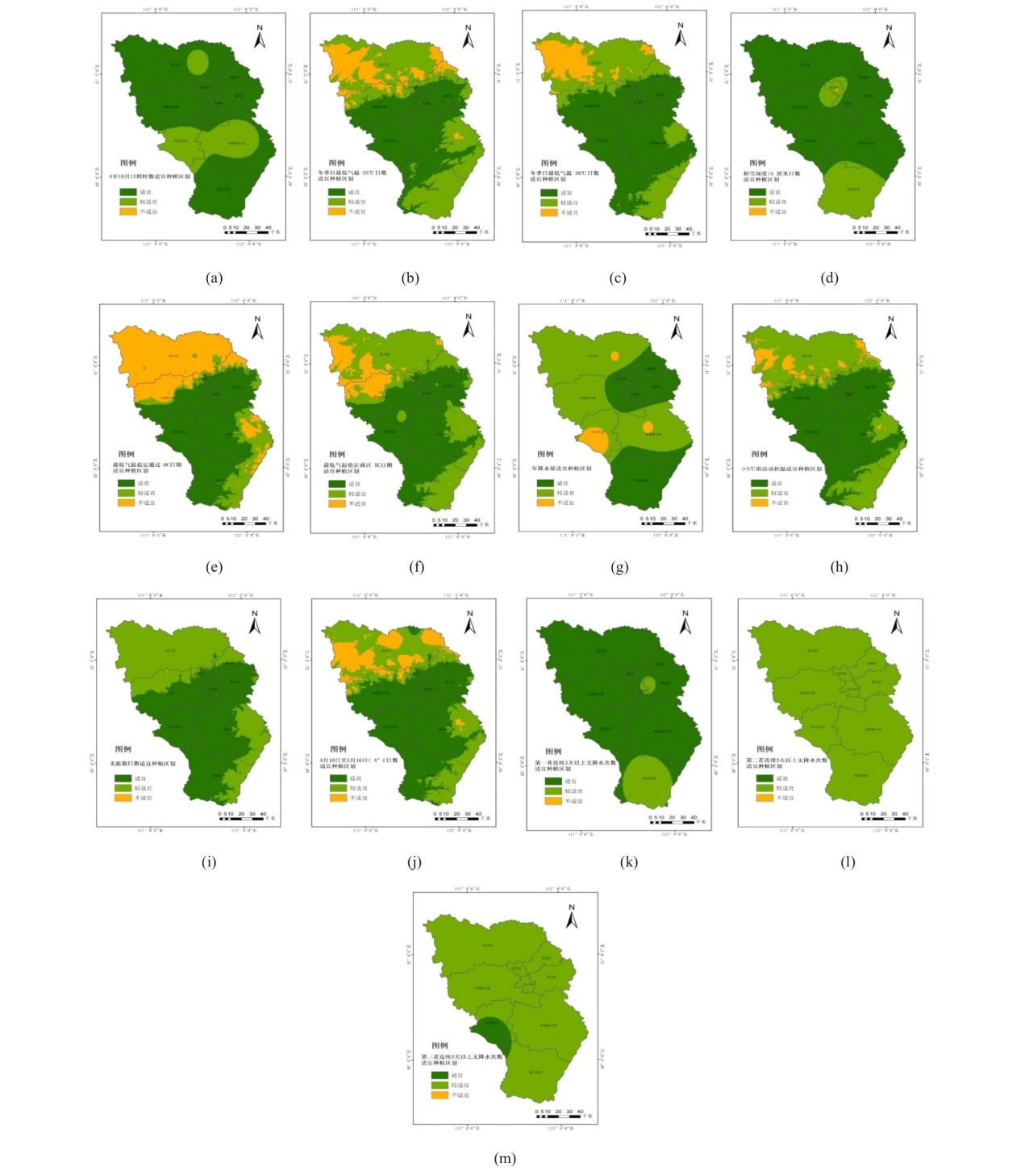
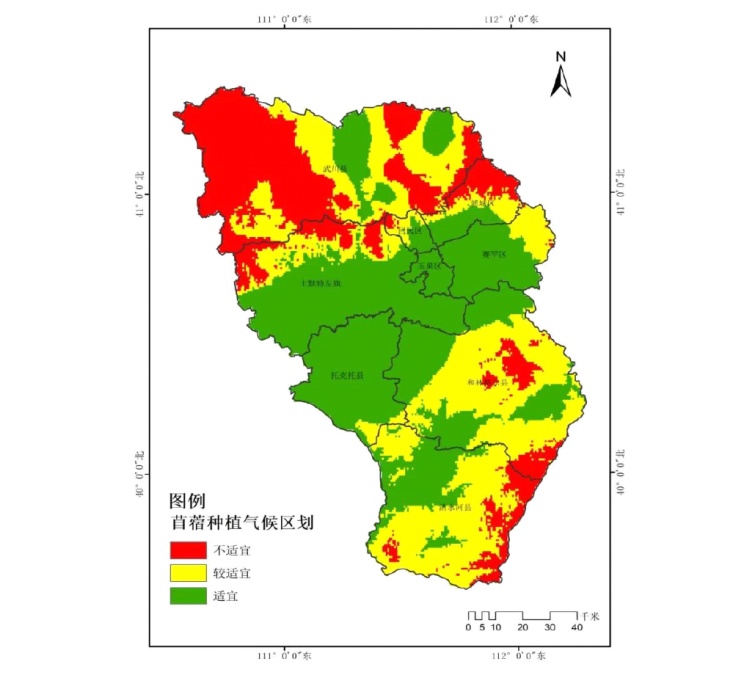
| [1] |
林克剑, 陶雅, 梅花, 等. 优质苜蓿高质量栽培技术[M]. 北京: 中国农业科学技术出版社,2022:11-14.
|
| [2] |
聂正英, 王娟, 高月红, 等. 浅析中外苜蓿产业及标准化现状[J]. 中国标准化, 2024(9):72-77.
|
| [3] |
谢华玲, 杨艳萍, 董瑜, 等. 苜蓿国际发展态势分析[J]. 植物学报, 2021, 56(6):740-750.
doi: 10.11983/CBB21121 |
| [4] |
陶雅, 孙启忠, 徐丽君, 等. 我国苜蓿产业发展态势与面临的挑战[J]. 草原与草业, 2022, 34(1):1-11.
|
| [5] |
龙雪芬, 孙雨萌, 张浩, 等. 我国苜蓿进口依赖性分析及中西苜蓿贸易展望[J]. 中国饲料, 2025(5):138-148.
|
| [6] |
易鹏. 紫花苜蓿气候生态区划初步研究[D]. 北京: 中国农业大学,2004:67-88.
|
| [7] |
李昊. 从一棵草到一杯奶“链力”十足——内蒙古呼和浩特市奶业高质量发展记[N]. 农民日报,2023-5-15(1).
|
| [8] |
翟钦奇. 聚焦优质牧草供给、优良品种培育,内蒙古呼和浩特——建链强链,推动乳业高质量发展[N]. 人民日报,2023-4-7(6).
|
| [9] |
储少林. 基于GIS的中国紫花苜蓿综合气候区划研究[D]. 兰州: 兰州大学,2008:19-24.
|
| [10] |
高菲. 基于秋眠性的中国紫花苜蓿气候适应区区划研究[D]. 北京: 北京林业大学,2012:37-52.
|
| [11] |
徐丽君, 徐大伟, 逄焕成, 等. 中国苜蓿种植物适宜性区划[J]. 草业科学, 2017, 34(11):2347-2358.
|
| [12] |
苏力合, 张凡凡, 王旭哲, 等. 自然覆雪对5个不同秋眠级紫花苜蓿越冬率及抗寒性的影响[J]. 新疆农业科学, 2021, 58(11):2122-2132.
doi: 10.6048/j.issn.1001-4330.2021.11.019 |
| [13] |
刘丽英, 常春, 刘红梅, 等. 环境因子对苜蓿干燥过程中营养物质的影响[J]. 中国草地学报, 2022, 44(12):55-63.
|
| [14] |
doi: 10.11648/j.aff.20150406.21 URL |
| [15] |
刘玉华. 紫花苜蓿生长发育及产量形成与气象条件关系的研究[D]. 陕西: 西北农林科技大学,2003:36.
|
| [16] |
雷文韬. 中高海拔地区苜蓿种子种植技术研究[J]. 种子科技, 2021, 39(24):34-35.
|
| [17] |
朱万斌. 紫花苜蓿品种区划指标初步研究[D]. 北京: 中国农业大学,2002:37-54.
|
| [18] |
王树廷. 关于日平均气温稳定通过各级界限温度初终日期的统计方法[J]. 气象, 1982(6):29-30.
|
| [19] |
顾润源. 内蒙古自治区天气预报手册[M]. 北京: 气象出版社,2012:22-57.
|
| [20] |
杨青川, 孙彦. 中国苜蓿育种的历史、现状与发展趋势[J]. 中国草地学报, 2011, 33(6):95-101.
|
| [21] |
王丽学, 吴洪新, 霍文娟, 等. 紫花苜蓿营养品质与气象因子的关系研究[J]. 中国草地学报, 2017, 39(6):14-20.
|
| [22] |
普宗朝, 张山清. 气候变暖对新疆不同区域面积紫花苜蓿种植适宜性的影响[J]. 草业科学, 2021, 38(1):110-121.
|
| [23] |
孙启忠, 陶雅, 徐丽君. 刍议苜蓿产业中的风险及其应对策略[J]. 草业科学, 2013, 30(10):1676-1684.
|
| [24] |
刘罡, 张庆昕, 张玉霞, 等. 夏季不同播期对苜蓿抗寒性及越冬的影响研究[J]. 内蒙古民族大学学报(自然科学版), 2024, 39(2):39-45.
|
| [25] |
王云涛, 于林清, 萨仁. 苜蓿抗寒性研究进展[J]. 草原与草坪, 2012, 32(3):91-96.
|
| [26] |
赵一航, 孟令东, 张晓萌, 等. 4个紫花苜蓿品种对低温胁迫的生理响应及抗寒性评价[J]. 草业科学, 2021, 38(4):683-692.
|
| [27] |
李如来, 申晓慧, 姜成, 等. 积雪覆盖对苜蓿越冬及返青生长的影响[J]. 中国草地学报, 2016, 38(1):67-92.
|
| [28] |
刘香萍, 李国良, 杜广明, 等. 不同紫花苜蓿品种春季返青期性状比较[J]. 当代畜牧, 2016(9):36-38.
|
| [29] |
赵义, 赵权, 杨文超, 等. 吉林西部苜蓿人工草地最佳播种期试验研究[J]. 吉林畜牧兽医, 2010, 31(8):50-52.
|
| [30] |
沈生初, 范林洁, 周南镚. 播种期对紫花苜蓿种子发芽率和生长特性的影响[J]. 浙江农业科学, 2009(5):1006-1008.
|
| [31] |
孙洪仁, 刘国荣, 张英俊, 等. 紫花苜蓿的需水量、耗水量、需水强度、耗水强度和水分利用效率研究[J]. 草业科学, 2005, 22(12):24-30.
|
| [32] |
doi: 10.2135/cropsci1992.0011183X003200060015x URL |
| [33] |
孙洪仁, 杨晓洁, 吴雅娜, 等. 阿鲁科尔沁旗紫花苜蓿需水规律与灌溉定额[J]. 草业科学, 2017, 34(6):1272-127.
|
| [34] |
孙洪仁, 刘琳, 曹影, 等. 紫花苜蓿灌溉的理论与技术[J]. 中国奶牛, 2014(Z2):13-16.
|
| [1] | WANG Ying, LI Lu, ZHU Jiayi, JIA Yuanyuan, GAO Qi, HU Zhichao. Research on Identification and Yield Estimation of Artificial Alfalfa in Green-up Period in Hohhot Based on Satellite Remote Sensing [J]. Chinese Agricultural Science Bulletin, 2026, 42(3): 125-132. |
| [2] | JIA Yuanyuan, WANG Ying, XIA Junbo, TIAN Xin, LI Haibo, GONG Zihui, LI Lu. Effects of Sowing Date Adjustment on Maize Yield and Meteorological Adaptability in Hohhot City [J]. Chinese Agricultural Science Bulletin, 2025, 41(32): 95-101. |
| [3] | LIANG Yan, ZHANG Lanjing, SU Lijun, ZHANG Zhijie, ZHANG Caiyun. Variations of Agricultural Climate Resources of Hohhot and Its Impact on Alfalfa Production [J]. Chinese Agricultural Science Bulletin, 2025, 41(25): 117-125. |
| [4] | YU Fuxin, CHEN Zechang, LI Xin, WANG Yusen, JIANG Qingyue, TANG Yanyan, WANG Jingshan, QIAO Lixian. Selection of Peanut Varieties Suitable for Sprout Vegetable Production [J]. Chinese Agricultural Science Bulletin, 2025, 41(10): 66-71. |
| [5] | ZHANG Qiulu. A Comprehensive Evaluation of the Colored-leaf Tree Species Introduced to the Huai’an Section of Beijing-Hangzhou Grand Canal Based on Analytic Hierarchy Process [J]. Chinese Agricultural Science Bulletin, 2023, 39(8): 15-20. |
| [6] | SU Lijun, PAN Yaoting. Photothermal Performance of Different Types of Solar Greenhouses in Hohhot [J]. Chinese Agricultural Science Bulletin, 2022, 38(2): 106-118. |
| [7] | Wan Xin, Xu Yanping, Han Lanying, Yao Xiaohong, Jia Jianying. Climatic Zoning of Puccinia striiformis f. sp. tritici Overwintering in Hedong of Gansu [J]. Chinese Agricultural Science Bulletin, 2021, 37(22): 111-115. |
| [8] | Guo Fangqi, Hei Yinxiu, Liu Jun, Wu Chao, Ye Qiming, Zhang Zhi. Spray Cut Chrysanthemum: Evaluation of Quality Characters by AHP [J]. Chinese Agricultural Science Bulletin, 2020, 36(17): 51-56. |
| [9] | . Optimization and Simulation of Urban Land Use Pattern Based on the Perspective of Objective Constraint: A Case of Hohhot [J]. Chinese Agricultural Science Bulletin, 2019, 35(9): 86-94. |
| [10] | . Introduction and Application of Good Herbal Flowers [J]. Chinese Agricultural Science Bulletin, 2019, 35(25): 78-83. |
| [11] | . Evaluation of Water Environmental Carrying Capacity of Jiangsu Province 2004-2015 [J]. Chinese Agricultural Science Bulletin, 2019, 35(20): 50-54. |
| [12] | . Returning Farmland to Forest in Northern Shaanxi and Guanzhong: Comprehensive Benefit Evaluation [J]. Chinese Agricultural Science Bulletin, 2018, 34(20): 70-74. |
| [13] | . Comprehensive Evaluation of Street Trees in Xi ’an Based on AHP Method [J]. Chinese Agricultural Science Bulletin, 2017, 33(7): 70-74. |
| [14] | . Contrastive Analysis of Land Use Efficiency: Before and After Village Construction Planning in Yongyue Village, Heilongjiang [J]. Chinese Agricultural Science Bulletin, 2017, 33(28): 158-164. |
| [15] | Si Qin,Tong Liga and Zhang Jing. Pollution Characteristics of PM2.5 and PM10 and Their Relationships with Meteorological Conditions in Hohhot, 2015 [J]. Chinese Agricultural Science Bulletin, 2017, 33(11): 112-118. |
| Viewed | ||||||
|
Full text |
|
|||||
|
Abstract |
|
|||||
