Welcome to Chinese Agricultural Science Bulletin,

Chinese Agricultural Science Bulletin ›› 2026, Vol. 42 ›› Issue (11): 57-64.doi: 10.11924/j.issn.1000-6850.casb2026-0179
Previous Articles Next Articles
LI Yinshuang1( ), LI Xiaohua1, ZHAO Youliang1, CHEN Zhen1, WANG Chunguang1, SU Yinsen1, LUO Fafu2, LI Yirong2
Received:2026-03-03
Revised:2026-04-14
Online:2026-06-12
Published:2026-06-12
CLC Number:
LI Yinshuang, LI Xiaohua, ZHAO Youliang, CHEN Zhen, WANG Chunguang, SU Yinsen, LUO Fafu, LI Yirong. Effects of Different Isolation Methods on Mycelial Growth, Fruiting Phenology and Yield of Morchella sextelata[J]. Chinese Agricultural Science Bulletin, 2026, 42(11): 57-64.
Add to citation manager EndNote|Ris|BibTeX
URL: https://www.casb.org.cn/EN/10.11924/j.issn.1000-6850.casb2026-0179
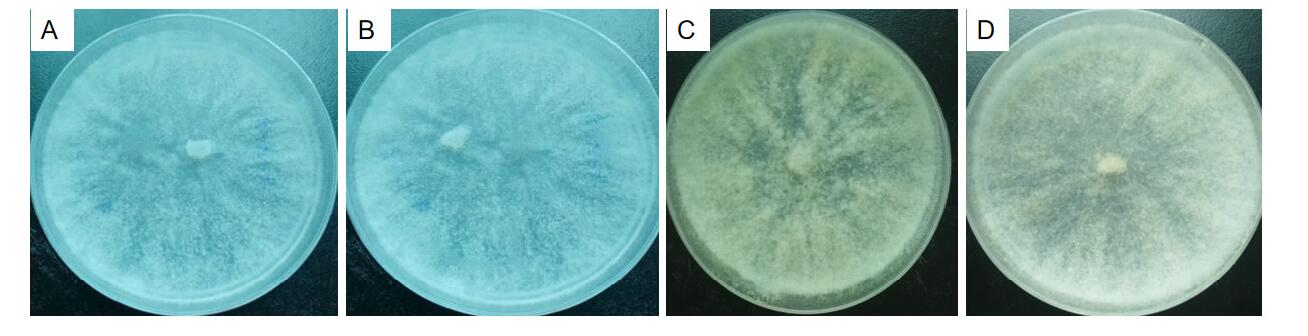
| 菌株编号 | PDA平板生长速度/(mm/d) | 菌落形态特征 | 栽培种满袋时间/d |
|---|---|---|---|
| TS1 | 14.3±0.5a | 菌丝较稀疏,气生菌丝少,边缘欠整齐 | 34.2±1.8a |
| TS2 | 14.1±0.7a | 菌丝较稀疏,气生菌丝少,边缘欠整齐 | 35.5±1.6a |
| MS1 | 14.8±0.6a | 菌丝浓密洁白,气生菌丝旺盛,边缘整齐,产生淡黄色色素 | 29.8±1.5b |
| MS2 | 15.2±0.6a | 菌丝浓密洁白,气生菌丝旺盛,边缘整齐,产生淡黄色色素 | 26.5±1.3c |
| 菌株编号 | PDA平板生长速度/(mm/d) | 菌落形态特征 | 栽培种满袋时间/d |
|---|---|---|---|
| TS1 | 14.3±0.5a | 菌丝较稀疏,气生菌丝少,边缘欠整齐 | 34.2±1.8a |
| TS2 | 14.1±0.7a | 菌丝较稀疏,气生菌丝少,边缘欠整齐 | 35.5±1.6a |
| MS1 | 14.8±0.6a | 菌丝浓密洁白,气生菌丝旺盛,边缘整齐,产生淡黄色色素 | 29.8±1.5b |
| MS2 | 15.2±0.6a | 菌丝浓密洁白,气生菌丝旺盛,边缘整齐,产生淡黄色色素 | 26.5±1.3c |
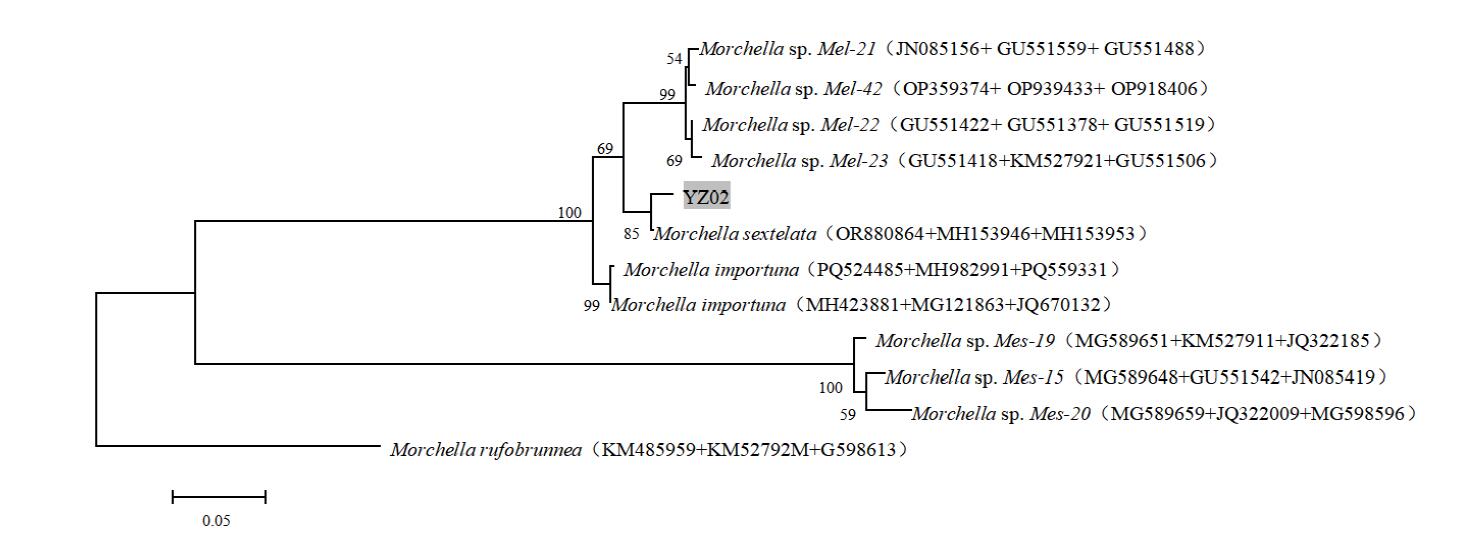
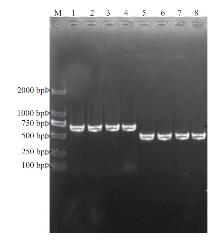
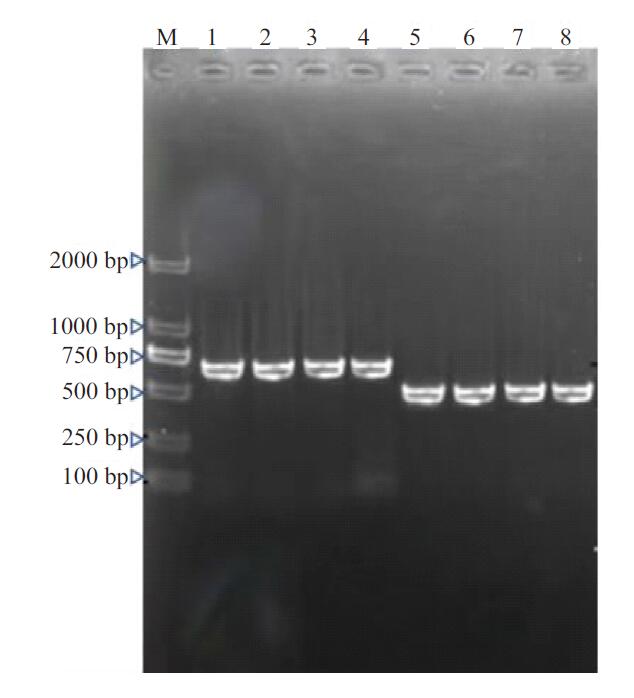
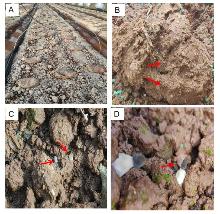
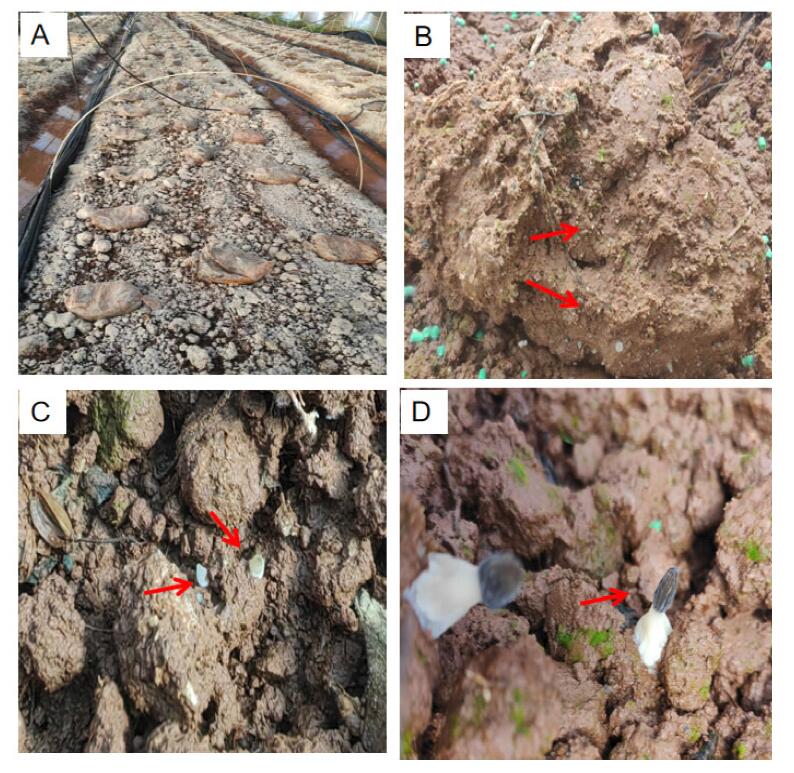
| 菌株 | 菌霜出现时间 | 原基出现时间 | 菌霜—原基间隔 | 针尖期出现时间 | 桑葚期出现时间 | 首次采收时间 |
|---|---|---|---|---|---|---|
| TS1 | 12.3±1.5a | 49.7±1.2ab | 37.4±0.6ab | 52.7±1.2a | 56.0±1.0a | 75.0±1.0a |
| TS2 | 12.7±1.5a | 50.3±0.6a | 38.0±1.0a | 53.5±1.2b | 56.7±1.2a | 76.0±1.0a |
| MS1 | 14.0±1.0b | 49.0±1.0b | 35.0±0.0b | 51.3±1.2c | 54.3±1.2b | 74.0±0.0b |
| MS2 | 14.3±1.5b | 49.7±1.5ab | 35.2±1.2ab | 52.0±0.0ab | 55.0±0.0ab | 73.3±1.2b |
| 菌株 | 菌霜出现时间 | 原基出现时间 | 菌霜—原基间隔 | 针尖期出现时间 | 桑葚期出现时间 | 首次采收时间 |
|---|---|---|---|---|---|---|
| TS1 | 12.3±1.5a | 49.7±1.2ab | 37.4±0.6ab | 52.7±1.2a | 56.0±1.0a | 75.0±1.0a |
| TS2 | 12.7±1.5a | 50.3±0.6a | 38.0±1.0a | 53.5±1.2b | 56.7±1.2a | 76.0±1.0a |
| MS1 | 14.0±1.0b | 49.0±1.0b | 35.0±0.0b | 51.3±1.2c | 54.3±1.2b | 74.0±0.0b |
| MS2 | 14.3±1.5b | 49.7±1.5ab | 35.2±1.2ab | 52.0±0.0ab | 55.0±0.0ab | 73.3±1.2b |
| [1] |
赵永昌, 柴红梅, 刘萍, 等. 羊肚菌栽培理论、技术进展及未来热点[J]. 食药用菌, 2025, 33(2):73-85.
|
| [2] |
周杨洁, 明建, 饶哲楠, 等. 羊肚菌多糖免疫调节的分子机制与构效关系研究进展[J]. 食品与机械, 2025, 41(12):171-179.
|
| [3] |
doi: 10.1002/ppp3.v6.4 URL |
| [4] |
doi: 10.1007/s11010-022-04508-y |
| [5] |
李银双, 李晓花, 陈珍, 等. 永兴地区羊肚菌分布资源调查与分子鉴定[J]. 中国农学通报, 2025, 41(18):158-164.
doi: 10.11924/j.issn.1000-6850.casb2025-0026 |
| [6] |
刘伟, 何培新, 蔡英丽, 等. 羊肚菌衰老特性的测定分析[J]. 食药用菌, 2021, 29(1):44-49.
|
| [7] |
邵改革, 张瑞颖. 羊肚菌生物学和栽培技术研究进展[J]. 中国食用菌, 2025, 44(3):1-11,19.
|
| [8] |
何艳晴, 申超峰, 孙倩楠, 等. 基于继代培养的羊肚菌优良菌株筛选[J]. 食药用菌, 2026, 34(1):59-64.
|
| [9] |
朱锦福, 雷艳, 李鹏业. 粗柄羊肚菌生境及组织分离优化条件的研究[J]. 安徽农业科学, 2012, 40(24):11966-11967.
|
| [10] |
王万坤, 潘家喜, 康超, 等. 云贵地区羊肚菌栽培现状调查与分析[J]. 食药用菌, 2021, 29(6):466-469.
|
| [11] |
赵瑞华, 贺晓龙. 羊肚菌分子鉴定及功能基因研究进展[J]. 微生物学杂志, 2022, 42(1):112-117.
|
| [12] |
doi: 10.1080/00275514.2018.1543509 URL |
| [13] |
doi: 10.1128/MMBR.00220-20 URL |
| [14] |
doi: 10.3390/jof9080855 URL |
| [15] |
宋彩云, 刘萍, 李仔密, 等. 梯棱羊肚菌杂交子代单孢菌株在新品种选育中的应用[J]. 食用菌学报, 2024, 31(2):42-49.
|
| [16] |
doi: 10.1016/j.fgb.2012.03.006 URL |
| [17] |
doi: 10.1038/s41598-017-01682-8 |
| [18] |
苗人云, 刘天海, 罗建华, 等. 羊肚菌营养袋制作原料的化学成分分析及配方优化[J]. 食药用菌, 2020, 28(2):112-118.
|
| [19] |
钟娟, 初奕杉, 王晓艳, 等. 不同方法分离的梯棱羊肚菌菌种的交配型检测[J]. 中国食用菌, 2022, 41(6):19-23.
|
| [20] |
曾婷婷. 羊肚菌菌种的交配型研究[D]. 长沙: 湖南师范大学, 2019.
|
| [21] |
王如江, 孙文化, 方若天, 等. 可栽培黄色羊肚菌Mes-21组织分离物交配型基因缺失现象分析[J]. 中国瓜菜, 2026, 39(3):27-33.
|
| [22] |
王青, 李闯, 汪国莲. 六妹羊肚菌多孢分离和组织分离菌株栽培出菇试验[J]. 中国食用菌, 2023, 42(4):80-84.
|
| [23] |
柴红梅, 刘萍, 马渊浩, 等. 梯棱羊肚菌营养亲和调控行为[J]. 菌物学报, 2024, 43(12):116-127.
|
| [24] |
刘萍, 马渊浩, 赵永昌, 等. 羊肚菌单孢菌株的性亲和与营养体亲和特性[J]. 食用菌学报, 2021, 28(1):40-47.
|
| [1] | ZHAO Wenhui, JING Yudan, WANG Xiao, WANG Ying, WANG Jiajia. Impact of Organic Alternatives on Soybean Yield and Soil Fertility [J]. Chinese Agricultural Science Bulletin, 2026, 42(9): 24-30. |
| [2] | ZHANG Yulong, ZHOU Lijuan, GUO Song, CHEN Jing, LIN Caixia, WAN Macao. Study on Planting Performance of Eight Highland Barley Varieties in High-altitude Environments [J]. Chinese Agricultural Science Bulletin, 2026, 42(9): 9-15. |
| [3] | GAO Licong, FENG Guojun, LIU Dajun, YANG Xiaoxu, ZHANG Taifeng, LIU Chang. Crop Stay-green Trait: Research Progress and Breeding Trends [J]. Chinese Agricultural Science Bulletin, 2026, 42(8): 77-83. |
| [4] | LU Ping, CHEN Yujia, WANG Zhanfu, ZHANG Yiming, JIANG Hangfeng, WANG Chaofan, ZHANG Rong, QIU Hanying. Effects of One-time Basal Application of a Newly Formulated Controlled-release Blended Urea on Traits, Yield and Nitrogen Utilization of Rice (Oryza sativa L. 'Nanjing 46') [J]. Chinese Agricultural Science Bulletin, 2026, 42(8): 95-103. |
| [5] | ZHANG Jie, SHAO Wenqi, Ma Hongbo, CHEN Chuan, ZHANG Ankang, LI Chuanzhe. Effect of Slow-release Nitrogen Fertilizer on Rice Yield and Fertilizer Utilization Efficiency in Jiangsu Province [J]. Chinese Agricultural Science Bulletin, 2026, 42(8): 104-109. |
| [6] | XU Yudong, LI Haiyang, YANG Jianming, WANG Guifang, WEI Gaigai. Experimental Study on Yield Impact of Potato Planting Density Under Double Ridge Full Film Furrow Sowing in Arid Area of Ningxia [J]. Chinese Agricultural Science Bulletin, 2026, 42(8): 11-16. |
| [7] | YAN Hong, CHEN Taichun, FENG Zhizhen, CHEN Zhijie, XU Jin, XU Ximei, DONG Zhen, FU Bo. Effects of Tillage Practices on Soil Physicochemical Properties, Microbial Communities and Yield of Wheat [J]. Chinese Agricultural Science Bulletin, 2026, 42(8): 110-119. |
| [8] | YANG Jiaqun, WANG Xianghua, ZHOU Zhihua, HU Bing, REN Tao, LU Jianwei. Effects of Bolting Yield on Yield of Vegetable and Oilseed Dual Purpose Rape [J]. Chinese Agricultural Science Bulletin, 2026, 42(8): 23-29. |
| [9] | MA Yongpeng, LIU Yuanjian, LONG Yunxing, QUAN Shenchun, YUE Kai, GAO Chaowen, PAN Zengrong, WANG Xi. Study on Responses of Yield and Quality of Angelica sinensis In Yunnan Province to Altitude and Climatic Factors [J]. Chinese Agricultural Science Bulletin, 2026, 42(8): 30-37. |
| [10] | GUAN Xilin, TIAN Shenzhong, LIU Zhentian, DONG Qinde, DONG Liang, LI Qiang, GAO Xinhao, BIAN Wenfan, ZHANG Yufeng. Effects of Different Application Rates of Soybean Phospholipid Amendments on Yield and Nutrients Uptake in Maize-Wheat Rotation System [J]. Chinese Agricultural Science Bulletin, 2026, 42(7): 8-14. |
| [11] | SHANG Xiaolan, LI Dan, FANG Wenying, XU Zhu, WANG Qiang, CHEN Zhaoming. Effect of Machine-Transplanting Synchronized with Side-deep Fertilization on Rice Yield, Nitrogen Fertilizer Utilization and Soil Nitrogen Content [J]. Chinese Agricultural Science Bulletin, 2026, 42(7): 1-7. |
| [12] | ZHOU Liyao, LIU Juan, LIU Haijiao, CUI Yanan, LIU Bing, LUO Yilong, YU Longcheng, CHEN Yafei, XU Risheng, MA Tengfei. Research Progress on Application of Biochar in Peanut Cultivation [J]. Chinese Agricultural Science Bulletin, 2026, 42(7): 15-21. |
| [13] | ZHANG Guizhi, ZHAO Hongjun, WANG Wenliang, CHEN Lan, ZHANG Xiaojie, LIU Guodong. Effects of Defoliation and Ripening Agent on Yield and Fiber Quality of Cotton Cultivars in Light and Simplified Regional Trials [J]. Chinese Agricultural Science Bulletin, 2026, 42(7): 22-29. |
| [14] | LI Zhengkui, XIA Yuhong, ZHAO Sha, HAN Tiankai, SUN Long, LIU Jiaxin, CHEN Min. Effect of Yellow River Water Drip Irrigation Coordinated with Soil Regulation Technology on Soil Physicochemical Properties and Maize Yield [J]. Chinese Agricultural Science Bulletin, 2026, 42(6): 102-110. |
| [15] | LI Shimeng, NAN Zhiqiang, BAIMA Yangzhen, WANG Jinxiong. Comprehensive Evaluation and Adaptability Analysis of Rapeseed Agronomic Traits in Xizang [J]. Chinese Agricultural Science Bulletin, 2026, 42(6): 31-40. |
| Viewed | ||||||
|
Full text |
|
|||||
|
Abstract |
|
|||||
