Welcome to Chinese Agricultural Science Bulletin,

Chinese Agricultural Science Bulletin ›› 2026, Vol. 42 ›› Issue (7): 204-209.doi: 10.11924/j.issn.1000-6850.casb2025-0600
Previous Articles Next Articles
GAO Qin1( ), CHEN Huanhuan2, ZHU Qifa1, XIA Hao2, YU Fei2, SHEN Jia2, JIANG Chaoqiang2()
Received:2025-07-16
Revised:2026-03-16
Online:2026-04-15
Published:2026-04-15
GAO Qin, CHEN Huanhuan, ZHU Qifa, XIA Hao, YU Fei, SHEN Jia, JIANG Chaoqiang. Study on Relationship Between Chemical Composition and Sensory Quality of Tobacco Middle Leaves in Southern Anhui Tobacco Area[J]. Chinese Agricultural Science Bulletin, 2026, 42(7): 204-209.
Add to citation manager EndNote|Ris|BibTeX
URL: https://www.casb.org.cn/EN/10.11924/j.issn.1000-6850.casb2025-0600
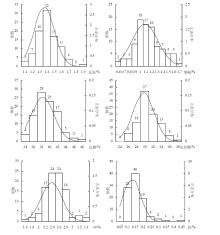
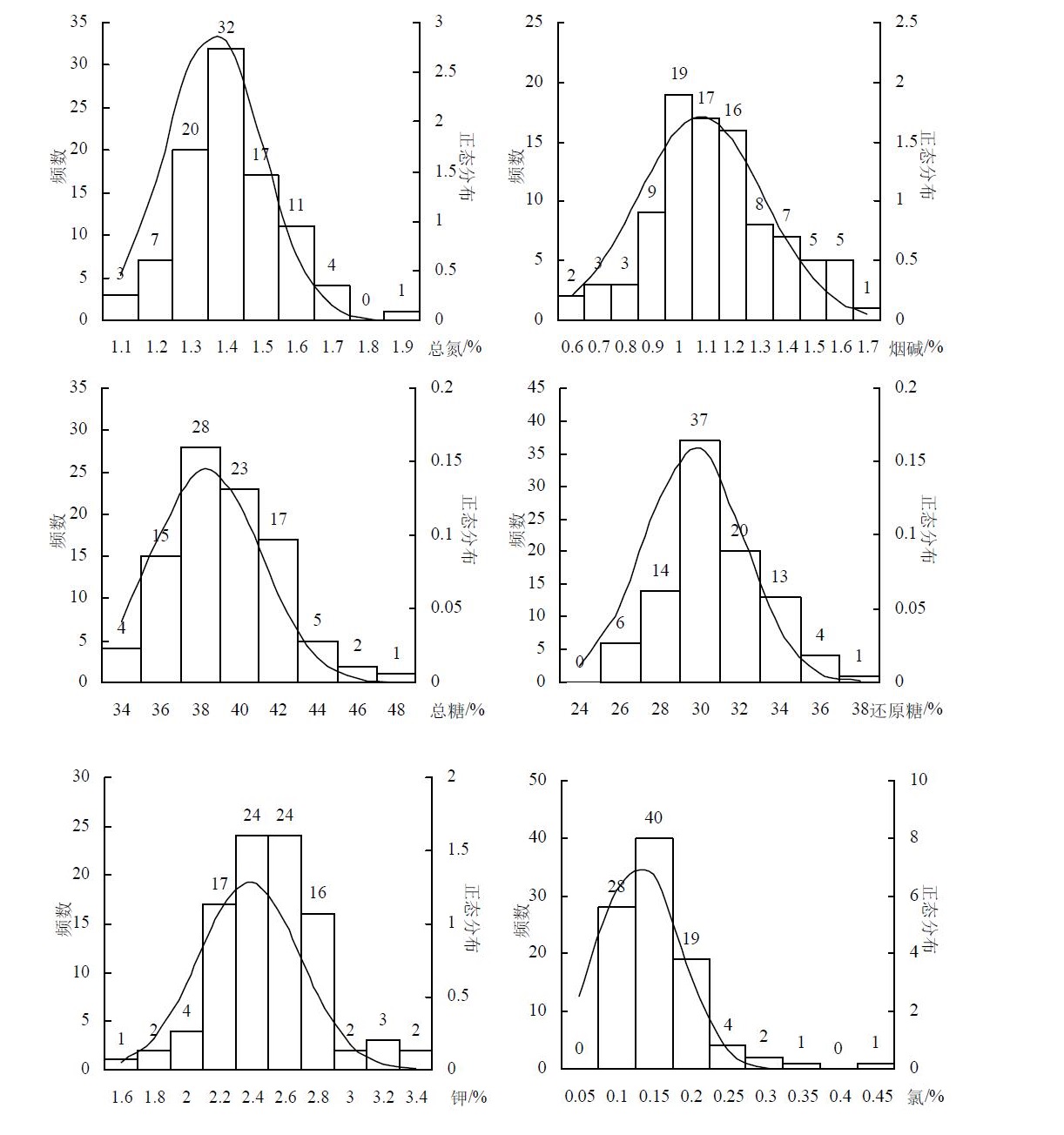
| 指标 | 总氮 | 烟碱 | 总糖 | 还原糖 | 钾 | 氯 |
|---|---|---|---|---|---|---|
| 均值 | 1.36 | 1.08 | 38.33 | 29.72 | 2.39 | 0.13 |
| 极小值 | 1.05 | 0.55 | 32.35 | 24.11 | 1.56 | 0.05 |
| 极大值 | 1.83 | 1.64 | 47.52 | 36.07 | 3.27 | 0.41 |
| 标准差 | 0.14 | 0.23 | 2.74 | 2.48 | 0.31 | 0.06 |
| 变异系数 | 10.04 | 21.46 | 7.15 | 8.35 | 12.93 | 42.30 |
| 指标 | 总氮 | 烟碱 | 总糖 | 还原糖 | 钾 | 氯 |
|---|---|---|---|---|---|---|
| 均值 | 1.36 | 1.08 | 38.33 | 29.72 | 2.39 | 0.13 |
| 极小值 | 1.05 | 0.55 | 32.35 | 24.11 | 1.56 | 0.05 |
| 极大值 | 1.83 | 1.64 | 47.52 | 36.07 | 3.27 | 0.41 |
| 标准差 | 0.14 | 0.23 | 2.74 | 2.48 | 0.31 | 0.06 |
| 变异系数 | 10.04 | 21.46 | 7.15 | 8.35 | 12.93 | 42.30 |
| 指标 | 平均值 | 方差 | 25分位数 | 中位数 | 75分位数 | 变异系数/% |
|---|---|---|---|---|---|---|
| 香气质 | 6.82±0.36 | 0.13 | 6.50 | 7.00 | 7.00 | 5.32 |
| 香气量 | 6.72±0.46 | 0.21 | 6.50 | 6.50 | 7.00 | 6.84 |
| 杂气 | 6.68±0.44 | 0.20 | 6.50 | 6.50 | 7.00 | 6.65 |
| 浓度 | 6.04±0.27 | 0.07 | 6.00 | 6.00 | 6.00 | 4.46 |
| 劲头 | 5.78±0.27 | 0.08 | 5.50 | 6.00 | 6.00 | 4.83 |
| 细腻程度 | 6.83±0.38 | 0.15 | 6.50 | 7.00 | 7.00 | 5.61 |
| 柔和程度 | 6.35±0.29 | 0.09 | 6.00 | 6.50 | 6.50 | 4.68 |
| 圆润感 | 6.29±0.30 | 0.09 | 6.00 | 6.50 | 6.50 | 4.85 |
| 刺激性 | 6.63±0.40 | 0.16 | 6.50 | 6.50 | 7.00 | 6.05 |
| 干燥感 | 6.08±0.38 | 0.15 | 6.00 | 6.00 | 6.50 | 6.30 |
| 余味 | 6.78±0.41 | 0.17 | 6.50 | 7.00 | 7.00 | 6.14 |
| 甜度 | 6.24±0.39 | 0.16 | 6.00 | 6.00 | 6.50 | 6.38 |
| 加权总分 | 73.00±3.56 | 12.71 | 71.00 | 74.00 | 76.00 | 4.83 |
| 指标 | 平均值 | 方差 | 25分位数 | 中位数 | 75分位数 | 变异系数/% |
|---|---|---|---|---|---|---|
| 香气质 | 6.82±0.36 | 0.13 | 6.50 | 7.00 | 7.00 | 5.32 |
| 香气量 | 6.72±0.46 | 0.21 | 6.50 | 6.50 | 7.00 | 6.84 |
| 杂气 | 6.68±0.44 | 0.20 | 6.50 | 6.50 | 7.00 | 6.65 |
| 浓度 | 6.04±0.27 | 0.07 | 6.00 | 6.00 | 6.00 | 4.46 |
| 劲头 | 5.78±0.27 | 0.08 | 5.50 | 6.00 | 6.00 | 4.83 |
| 细腻程度 | 6.83±0.38 | 0.15 | 6.50 | 7.00 | 7.00 | 5.61 |
| 柔和程度 | 6.35±0.29 | 0.09 | 6.00 | 6.50 | 6.50 | 4.68 |
| 圆润感 | 6.29±0.30 | 0.09 | 6.00 | 6.50 | 6.50 | 4.85 |
| 刺激性 | 6.63±0.40 | 0.16 | 6.50 | 6.50 | 7.00 | 6.05 |
| 干燥感 | 6.08±0.38 | 0.15 | 6.00 | 6.00 | 6.50 | 6.30 |
| 余味 | 6.78±0.41 | 0.17 | 6.50 | 7.00 | 7.00 | 6.14 |
| 甜度 | 6.24±0.39 | 0.16 | 6.00 | 6.00 | 6.50 | 6.38 |
| 加权总分 | 73.00±3.56 | 12.71 | 71.00 | 74.00 | 76.00 | 4.83 |
| [1] |
蒋佳磊, 陆扬, 苏燕, 等. 我国主要烟叶产区烤烟化学成分特征与可用性评价[J]. 中国烟草学报, 2017, 23(2):13-27.
|
| [2] |
董建江, 王新胜, 张丽娜. 安徽特色优质烟叶开发管理的探索与思考[J]. 中国烟草科学, 2015(4):106-109.
|
| [3] |
刘福童, 王学瑛, 程学文, 等. 皖南烟区植烟土壤理化指标及肥力评价研究[J]. 江西农业学报, 2025, 37(5):69-76.
|
| [4] |
白茂军, 邓小华. 浓香型和清香型烤烟主产区中部烟叶彰显度与主要化学成分的关系研究[J]. 作物研究, 2015, 29(3):267-271.
|
| [5] |
张瑜, 郝浩浩, 许自成, 等. 中国主产烟区不同焦油量中部烟叶化学成分差异及其与烟气质量的关系[J]. 湖北农业科学, 2024, 63(10):160-164.
|
| [6] |
黄建, 杨新士, 唐民, 等. 江西省烟叶化学指标分析及感官质量分类模型构建[J]. 湖北农业科学, 2024, 63(10):153-159.
|
| [7] |
薛琳, 朱启法, 季学军, 等. 皖南烤烟烟叶化学成分与感官品质的相关性[J]. 烟草科技, 2016, 49(11):26-32.
|
| [8] |
邵惠芳, 许自成, 李东亮, 等. 烤烟还原糖含量与主要挥发性香气物质及感官质量关系的统计学分析[J]. 中国烟草学报, 2011, 17(2):8-12.
|
| [9] |
罗俊华, 李鑫, 邓倩霞, 等. 不同成熟度烟叶香味提取物感官品质关联分析[J]. 云南农业大学学报, 2025, 40(1):118-127.
|
| [10] |
李志, 史宏志, 刘国顺, 等. 土壤质地对皖南烤后烟叶中性香气成分含量及焦甜香风格的影响[J]. 中国烟草学报, 2010, 16(2):6-10.
|
| [11] |
张志灵, 林隆, 张炳辉, 等. 不同部位烤烟主要化学成分特征及其与感官评吸质量的关系[J]. 江西农业学报, 2022, 34(6):28-33.
|
| [12] |
郭东锋, 胡海洲, 刘新民, 等. 烤烟化学成分平衡与感官质量关系分析[J]. 安徽农业大学学报, 2014, 41(2):333-337.
|
| [13] |
张辉红, 张亚恒, 沈勰, 等. 黔西南州烤烟烟叶化学成分与外观质量、感官质量的相关性研究[J]. 中国农学通报, 2024, 40(22):149-157.
doi: 10.11924/j.issn.1000-6850.casb2023-0621 |
| [14] |
陈彬, 马君红, 于晓娜, 等. 重庆烟区烟叶化学成分与感官质量关系研究[J]. 西南农业学报, 2014, 27(4):1756-1761.
|
| [15] |
许晓敬, 张小全, 侯冰清, 等. 生态、品种和栽培措施及其互作对烤烟主要化学成分含量的影响[J]. 中国农学通报, 2015, 31(13):62-66.
doi: 10.11924/j.issn.1000-6850.casb14120167 |
| [16] |
姜超强, 李德成, 王火焰, 等. 亳州烟区烤烟不同品种和产区间烟叶钾氯含量的差异分析[J]. 中国农业科技导报, 2016, 18(1):120-128.
|
| [17] |
江春, 周小兵, 朱启法, 等. 基于化学成分的皖南各区域烟叶质量评价[J]. 安徽农业科学, 2016, 44(15):73-75.
|
| [18] |
吴飞跃, 申燕, 杨振智, 等. 不同施肥对烤烟中部叶碳氮代谢及基因表达的影响[J]. 中国农业科技导报, 2018, 20(10):21-28.
doi: 10.13304/j.nykjdb.2017.0655 |
| [19] |
陈克玲, 王德权, 宋德伟, 等. 施氮量对烟草品种上部叶生长发育及碳氮代谢的影响[J]. 华北农学报, 2025, 40(1):122-132.
doi: 10.7668/hbnxb.20194972 |
| [20] |
邱标仁, 周冀衡, 郑开强, 等. 施氮量对烤烟产质量和烟碱含量的影响[J]. 烟草科技, 2003(11):41-43.
|
| [21] |
李飞, 杨铁钊, 张小全, 等. 不同施氮量烤烟氮素代谢差异及其对香气前体物形成的影响[J]. 华北农学报, 2014(1):170-177.
doi: 10.7668/hbnxb.2014.01.031 |
| [22] |
姚芳, 王慧方, 徐世杰, 等. 施氮水平对海南茄衣中性致香物质含量的影响[J]. 中国农学通报, 2017, 33(16):83-90.
doi: 10.11924/j.issn.1000-6850.casb16060112 |
| [1] | YANG Xin, ZHANG Mingjin, LI Bin, ZHANG Yonghui, XIE Qiang, WANG Jian’an. Effect of Different Harvesting Methods with Stems on Curing Quality of Upper Leaves [J]. Chinese Agricultural Science Bulletin, 2026, 42(7): 210-218. |
| [2] | ZHAO Chengkun, CHEN Liang, SHI Xiangdong, LI Mengxu, LYU Shangju, CAO Chanhua, DING Songshuang, YANG Zhanwei. Effects of Nitrogen Fertilizer Application Rates on Growth and Development of Cigar Wrapper Tobacco and Quality of Tobacco Leaves in Greenhouse Cultivation [J]. Chinese Agricultural Science Bulletin, 2026, 42(7): 48-54. |
| [3] | ZENG Pei, YU Honglei, LI Yuekang, LIU Boyi. Abrupt Change Characteristics of Meteorological Elements in Ganfupingyuan Irrigation Area Based on Pettitt Test and Its Correlation Study [J]. Chinese Agricultural Science Bulletin, 2026, 42(6): 164-170. |
| [4] | ZHENG Xiaoyuan, CHEN Jingyu, WANG Huicong, WANG Zhenjiang, WANG Dan. Fruit Quality Analysis and Comprehensive Evaluation of 38 Mulberry Germplasm Resources [J]. Chinese Agricultural Science Bulletin, 2026, 42(6): 72-84. |
| [5] | LIAO Yuanyuan, ZHENG Zhangyun, ZHANG Zitao, CHEN Li, XIA Chuanlin, REN Jiequn, TAN Lixin. Analysis of Phenotypic and Leaf Nutritional Traits of 42 Mulberry Germplasm Resources [J]. Chinese Agricultural Science Bulletin, 2026, 42(4): 105-116. |
| [6] | YUAN Yanhua, LAN Jun, YANG Mengmeng, LIU Yingjie, YANG Xiaodong, ZHAO Li, ZHANG Jiasheng, YANG Yan, ZHOU Jintao, XIAO Lu, QI Liang, HUANG Lei, WANG Jianwei. Effects of Sealed Hypoxia and Summer Temperature Control in Warehouse on Key Chemical Components During Tobacco Lamina Aging [J]. Chinese Agricultural Science Bulletin, 2026, 42(4): 193-203. |
| [7] | XIONG Ying, YANG Junjie, JIANG Jiazhu, LI Qiang, WANG Yong, ZHANG Yang, DONG Xiaowei, ZHANG Dongdong. Analysis of Differences and Usability of Chemical Components in Flue-cured Tobacco from Different Production Areas of Shandong Province [J]. Chinese Agricultural Science Bulletin, 2026, 42(4): 210-218. |
| [8] | FU Kairui, SHI Haoliang, ZHOU Shunbao, WANG Zhongyuan, ZHOU Hongxia, LI Wenting, YANG Yunli, LI Guangyang, TIAN Minghui, FU Limei, YU Lei, HUANG Feiyan, ZHOU Houfa. Effects of Different Cultivation Measures on Growth and Quality of ‘Yunyan 116’ in Shuangjiang of Yunnan [J]. Chinese Agricultural Science Bulletin, 2026, 42(4): 34-45. |
| [9] | LUO Jing, DU Shanshan, YAO Qingqing, WANG Dongli, HE Zhongsheng, SUN Huijian, WANG Ruijun. Effect of NaCl and Na2SO4 Salt Stress on the Germination of Upland Cotton Seeds and Screening of Salt-tolerant Germplasm [J]. Chinese Agricultural Science Bulletin, 2026, 42(3): 48-56. |
| [10] | JIANG Kunlian, FENG Changchun, HAN Lihong, SUN Long, HUANG Kanghui, JIANG Hong, CAI Yan. Effects of New Bio-organic Fertilizer on Growth of Flue-cured Tobacco [J]. Chinese Agricultural Science Bulletin, 2026, 42(1): 20-26. |
| [11] | LIU Fengfeng, BI Qingwen, ZHANG Guochao, HE Jiewang, SUN Fushan, DAI Yingpeng. Analysis of Key Influencing Factors of Upper Tobacco Leaves Quality in Stalk-Cutting and Curing [J]. Chinese Agricultural Science Bulletin, 2025, 41(4): 126-133. |
| [12] | YE Tianhui, YANG Xue, JIANG Chaoqiang, YANG Jianchun, YAN Fangfang, YANG Xingyou, ZU Chaolong, YAN Yifeng. Comparative Analysis of Quality of Tobacco Leaves in Different Altitude Tobacco Growing Areas of Panzhihua [J]. Chinese Agricultural Science Bulletin, 2025, 41(4): 144-148. |
| [13] | XU Shuaihua, DANG Xia, CHU Han, LI Qiujian, ZHANG Panfeng, CHEN Xi, DING Yifei, WANG Xuan, ZHANG Xianghui. Research on Re-drying Parameter Control Technology for Strong Flavor Type Tobacco Leaves in Henan Based on Sensory Quality Stability [J]. Chinese Agricultural Science Bulletin, 2025, 41(34): 121-128. |
| [14] | LI Ting, PENG Chuyun, MA Daocheng, GAN Wen, YANG Mei, LONG Min. Comprehensive Evaluation of Growth, Physiological and Nutrient Accumulation Characteristics of Seven Lauraceae Species [J]. Chinese Agricultural Science Bulletin, 2025, 41(34): 30-38. |
| [15] | LONG Libing, LIANG Wei, YU Guo, QIN Zhenghao, HUANG Rongshao, YAO Shaochang. Phenotypic Diversity Analysis of Guangxi Cinnamomum cassia Leaves and Screening for Excellent Germplasm [J]. Chinese Agricultural Science Bulletin, 2025, 41(34): 63-73. |
| Viewed | ||||||
|
Full text |
|
|||||
|
Abstract |
|
|||||
