欢迎访问《中国农学通报》,

中国农学通报 ›› 2026, Vol. 42 ›› Issue (15): 165-170.doi: 10.11924/j.issn.1000-6850.casb2026-0233

• 资源·环境·生态·土壤·气象 • 上一篇    下一篇

基于长时序档案资料的索伦热量资源变化特征分析

乌兰图雅1(), 贾晓燕2, 杨玉辉3()   

  1. 1 兴安盟气象局, 内蒙古乌兰浩特 137400
    2 内蒙古自治区气象数据中心, 呼和浩特 010051
    3 扎赉特旗气象局, 内蒙古兴安盟 137600
  • 收稿日期:2026-03-26 修回日期:2026-05-01 出版日期:2026-08-15 发布日期:2026-08-13
  • 通讯作者:
    杨玉辉,男,1983年出生,辽宁康平人,高级工程师,硕士研究生,研究方向:气象服务与应用气象、综合观测。通信地址:137600 内蒙古扎赉特旗 内蒙古兴安盟扎赉特旗音德尔镇东升村湖西路东、盟泉路北,E-mail:
  • 作者简介:

    乌兰图雅,女,1985年出生,兴安盟乌兰浩特人,工程师,本科,研究方向:气象服务与档案管理。通信地址:137400内蒙古自治区兴安盟乌兰浩特市圣山街2号 兴安盟气象局,E-mail:

Analysis of Variation Characteristics of Thermal Resources in Suolun Based on Long-term Archival Data

WULANTUYA1(), JIA Xiaoyan2, YANG Yuhui3()   

  1. 1 Xing'an League Meteorological Bureau, Wulanhaote, Inner Mongolia 137400
    2 Inner Mongolia Meteorological Data Center, Hohhot 010051
    3 Zhalaiteqi Banner Meteorological Bureau, Xing’an League, Inner Mongolia 137600
  • Received:2026-03-26 Revised:2026-05-01 Published:2026-08-15 Online:2026-08-13

摘要:

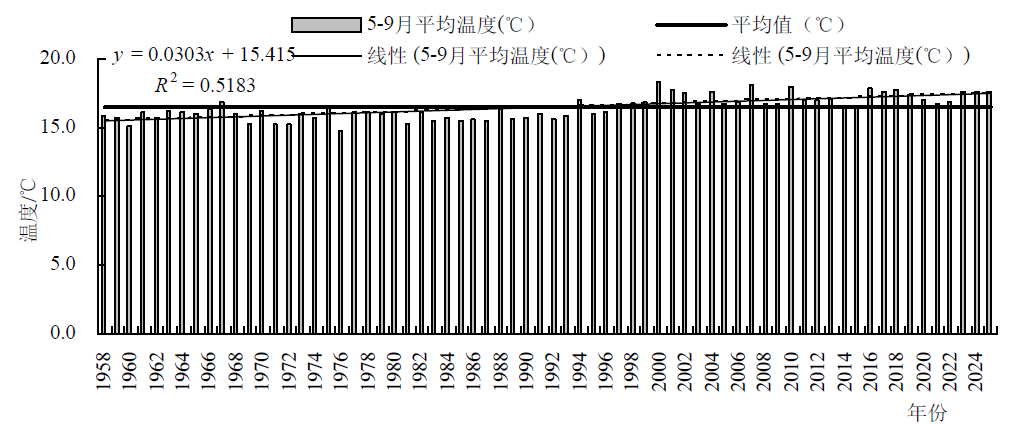
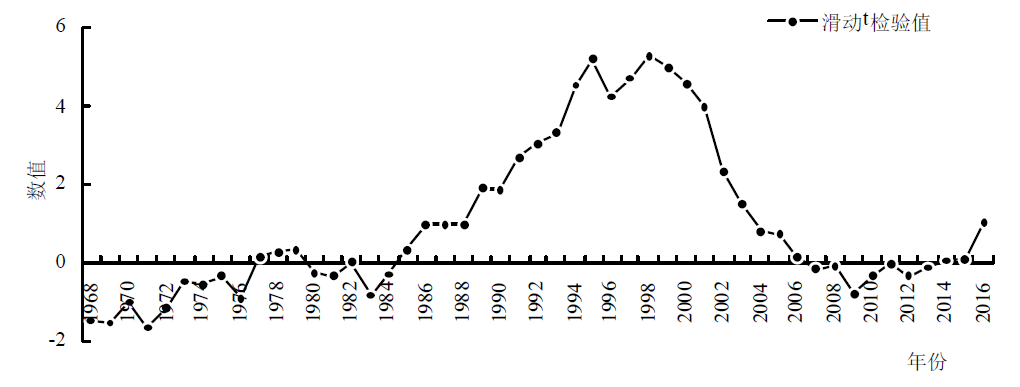
基于索伦气象站1958—2025年近68 a长时序逐月气温档案数据,采用线性趋势分析、滑动t检验方法,系统揭示了大兴安岭南麓索伦地区农业热量资源的时间维度演变特征及其对区域种植制度的驱动机制,研究结果表明:近68 a来,索伦地区的农业热量资源呈显著优化趋势,生长季(5—9月)平均气温的气候倾向率达0.3℃/10a (P<0.01),累积活动积温增加150~200℃·d,升温速率明显高于全球及全国平均水平。热量资源演变过程呈现明显的三阶段特征:1958—1985年基准期呈微弱下降趋势(-0.1℃/10a),1986—2005年过渡期出现跃升式增温(1.1℃/10a),2006—2025年近期进入高位波动期(0.1℃/10a)。其中,1990年代中后期被识别为关键突变节点(滑动t检验t=5.314,P<0.01),驱动区域种植制度发生根本性转变;季节性差异显著,春季增温速率最高(0.481℃/10a),对作物播种期提前和幼苗生长影响最为直接。农业气候潜力显著提升,生长季活动积温由1958—1985年(2240.5~2562.7℃·d)的“较适宜”等级跃升至1986—2005年(2365.1~2790.7℃·d)的“适宜”等级,并于2006—2025年(2517.1~2748.2℃·d)进一步接近中晚熟品种(≥2750℃·d)的需求阈值;农业适宜性分区呈现明显北移趋势,玉米种植比例由1985年前的不足20%跃升至1990年代的50%以上,种植制度由小麦主导型转为玉米主导型。建议将播种期由传统的5月上旬提前至4月下旬,建立每5 a更新一次的动态种植区划机制,加强气象档案的数字化建设,充分发挥长时序气象档案在智慧农业和乡村振兴中的战略支撑价值。

关键词: 气象档案, 农业气候资源, 生长季积温, 气候倾向率, 种植制度

Abstract:

Based on the long-term monthly temperature archives data of Suolon Meteorological Station in the past 68 years (1958-2025), this study systematically reveals the temporal evolution characteristics of agricultural thermal resources in the southern foothills of the Greater Khingan Mountains and their driving mechanisms on cropping systems. The results indicated that over the past 68 years, agricultural thermal resources in Suolun had shown a significant optimization trend, with a climate warming rate of 0.3℃ per decade (P<0.01) during the growing season (May-September), an accumulated active temperature increase of 150-200℃·d, and a warming rate significantly higher than global and national averages. The thermal resource evolution exhibited distinct three-phase characteristics: a slight decline (-0.1℃ per decade) from 1958-1985 (baseline period), a rapid warming surge (1.1℃ per decade) from 1986-2005 (transition period), and a recent high-fluctuation phase (0.1℃ per decade) from 2006-2025, with the mid-late 1990s serving as a critical turning point (sliding t-test t=5.314, P<0.01) that fundamentally transformed cropping systems. Seasonal differences were pronounced, with the highest warming rate in spring (0.481℃ per decade), directly influencing earlier sowing dates and seedling growth. Agricultural climate potential had significantly improved, with accumulated active temperatures rising from the "relatively suitable" range (2240.5-2562.7℃·d) in 1958-1985 to the "suitable" range (2365.1-2790.7℃·d) in 1986-2005, and further approaching the threshold for mid-late maturing varieties (≥2750℃·d) in 2006-2025. Agricultural suitability zones had shifted significantly northward, with corn planting proportions increasing from less than 20% before 1985 to over 50% in the 1990s, and cropping systems transitioning from wheat-dominated to corn-dominated. Recommendations include advancing the sowing period from the traditional early May to late April, establishing a dynamic zoning mechanism updated every five years, enhancing meteorological archive digitization, and fully leveraging the strategic support value of long-term meteorological records in smart agriculture and rural revitalization.

Key words: meteorological archives, agro-climatic resources, growing season accumulated temperature, climate tendency rate, cropping system

中图分类号: