欢迎访问《中国农学通报》,

中国农学通报 ›› 2026, Vol. 42 ›› Issue (6): 150-163.doi: 10.11924/j.issn.1000-6850.casb2025-0798
徐恩( ), 沈伟(), 周航, 王锦杰, 颜雅琼, 姚海涛
收稿日期:2025-09-17
修回日期:2026-01-07
出版日期:2026-03-25
发布日期:2026-03-30
通讯作者:
作者简介:徐恩,女,1995年出生,江苏宿迁人,工程师,本科,研究方向:极端天气与气候变化。通信地址:223800 江苏省宿迁市宿城区洪泽湖路722号 宿迁市气象局,E-mail:512553690@qq.com。
基金资助:
XU En(), SHEN Wei(), ZHOU Hang, WANG Jinjie, YAN Yaqiong, YAO Haitao
Received:2025-09-17
Revised:2026-01-07
Published:2026-03-25
Online:2026-03-30
摘要:
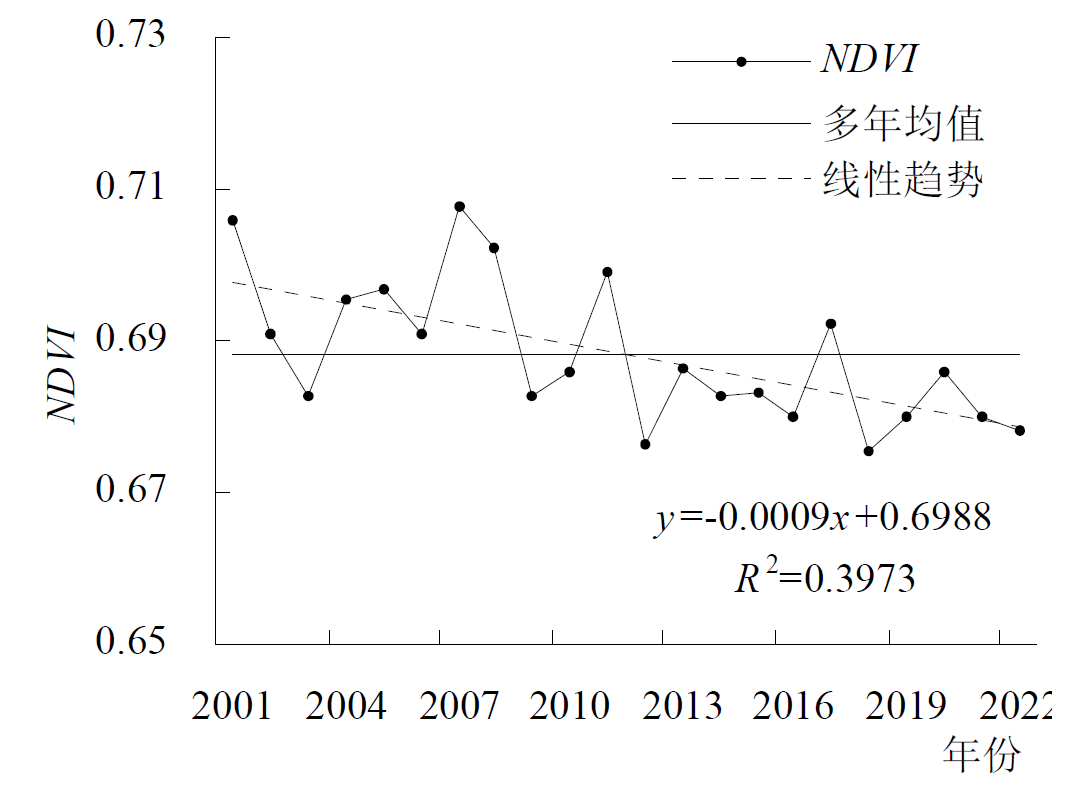
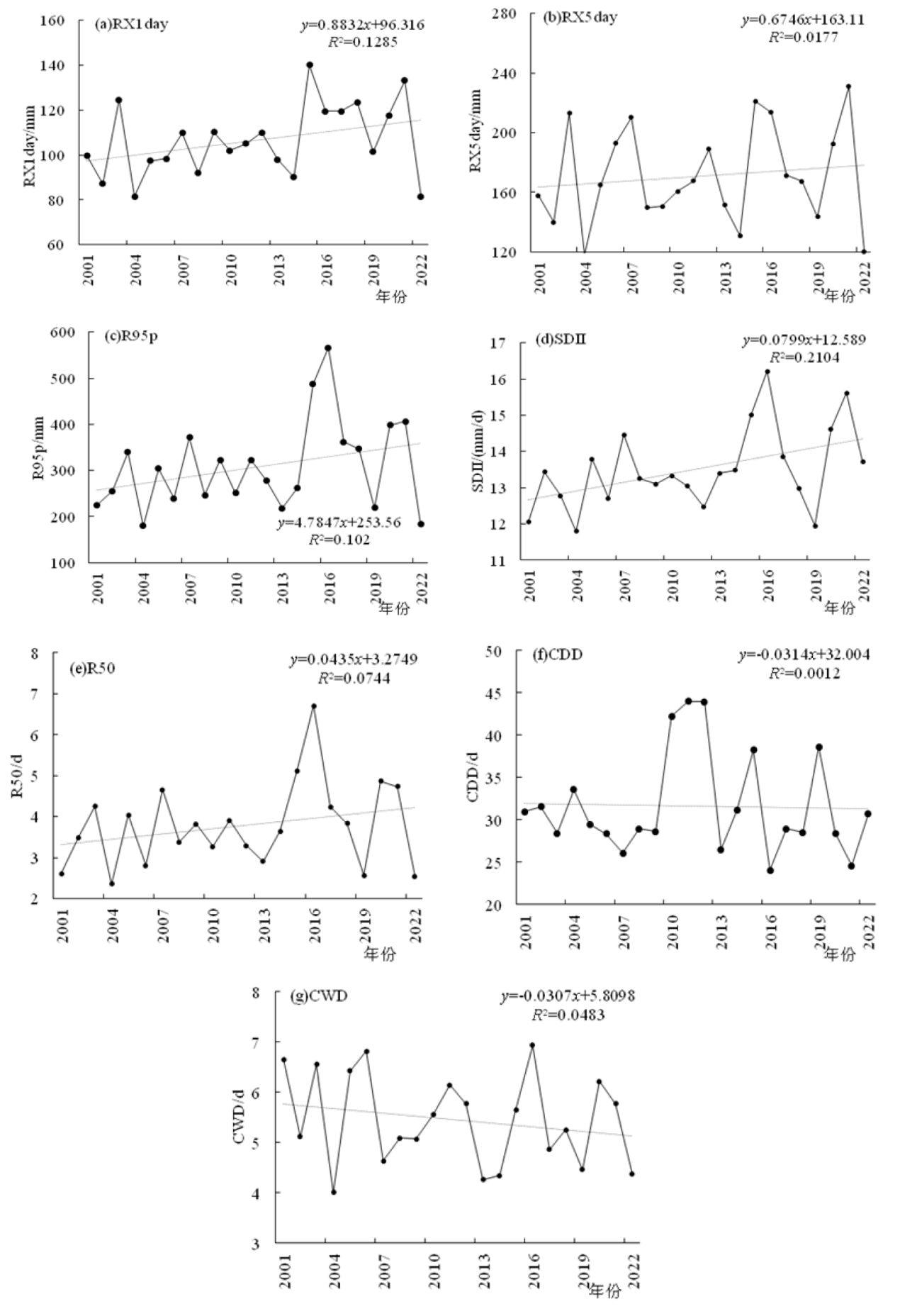
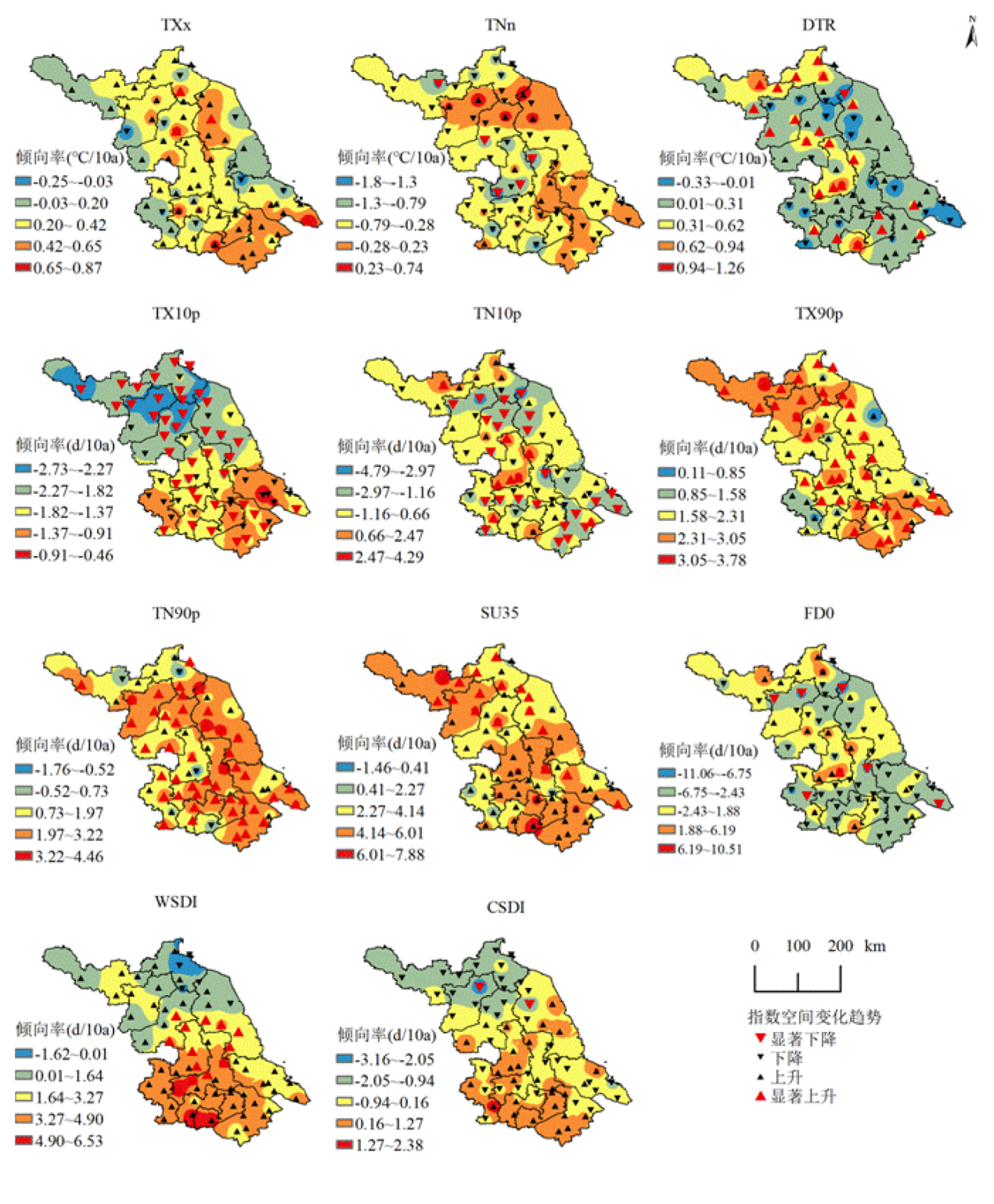
本研究基于2001—2022年江苏省NDVI遥感数据和气象数据,旨在探讨江苏省极端气候对植被的影响,重点关注植被和极端气候指数的时空演变及二者响应关系。研究计算了18个极端气候指数,采用Sen趋势分析、MK检验、R/S分析和相关分析等方法进行分析。结果表明:(1)2001—2022年江苏省年最大NDVI呈波动下降趋势,空间呈“北高南低”格局,未来51.70%的地区可能退化。(2)江苏省极端高温和极端低温的强度均增强,暖指数变化幅度大于冷指数,白天变化速率高于夜间,极端降水整体呈上升趋势,南部增幅大于中北部。(3)NDVI与极端气温暖指数在沿淮及其以北地区主要呈正相关,淮河以南以负相关为主;与冷指数在沿江及长江以北的东部沿海地区呈负相关,长江以北中西部和东南沿海则以正相关为主;NDVI与极端降水指数主要呈负相关。研究结果可为江苏省生态保护、植被恢复及气候变化适应性管理提供科学支撑。
徐恩, 沈伟, 周航, 王锦杰, 颜雅琼, 姚海涛. 2001—2022年江苏NDVI变化及其对极端气候的响应[J]. 中国农学通报, 2026, 42(6): 150-163.
XU En, SHEN Wei, ZHOU Hang, WANG Jinjie, YAN Yaqiong, YAO Haitao. NDVI Variation and Its Response to Extreme Climate in Jiangsu During 2001-2022[J]. Chinese Agricultural Science Bulletin, 2026, 42(6): 150-163.
| 类型 | 名称 | 代码 | 定义 | 单位 | |
|---|---|---|---|---|---|
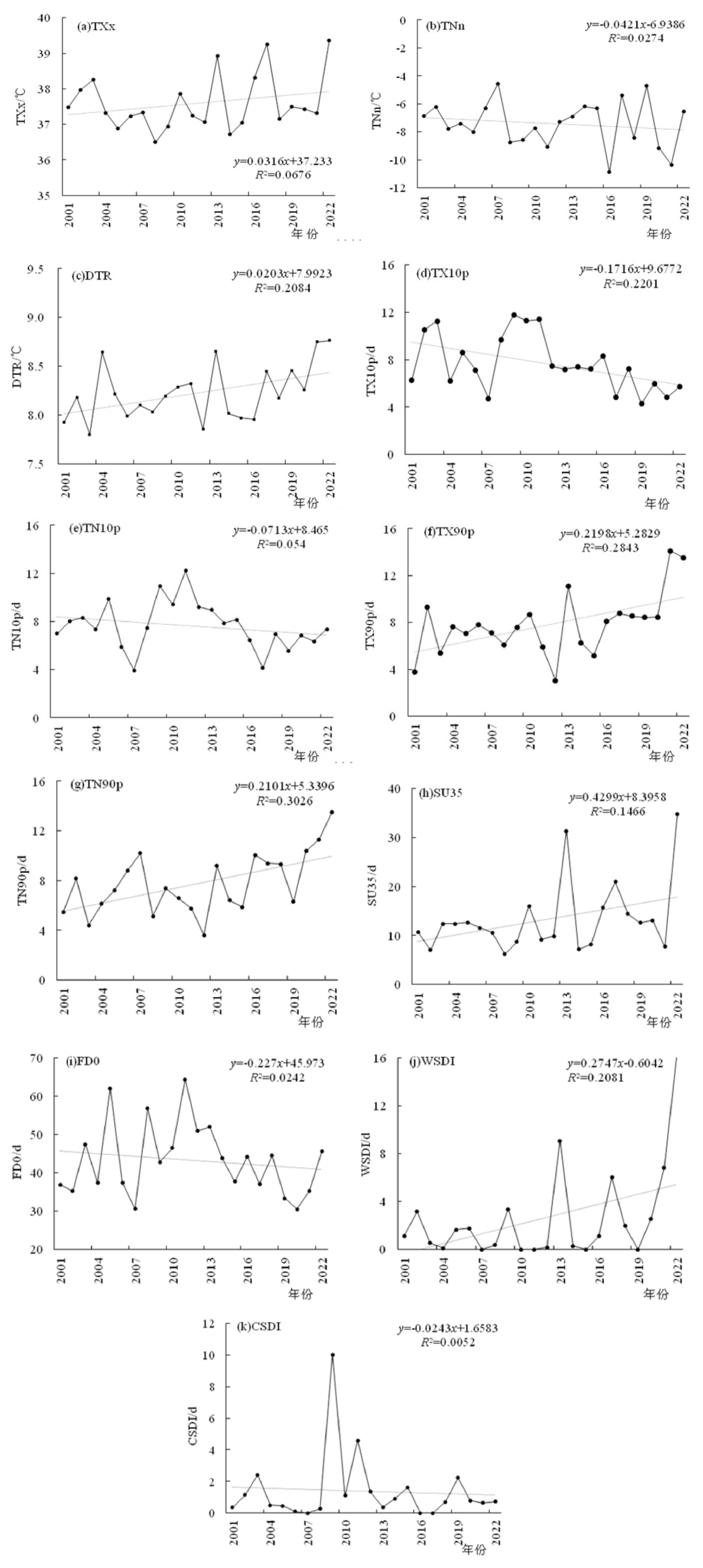
| 极端 气温 指数 | 强度指数 | 极端最高气温 | TXx | 年内日最高气温的最大值 | ℃ |
| 极端最低气温 | TNn | 年内日最低气温的最小值 | ℃ | ||
| 气温日较差 | DTR | 日最高气温与日最低气温的差值 | ℃ | ||
| 频率指数 | 冷昼日数 | TX10p | 日最高气温<10%分位值的天数 | d | |
| 冷夜日数 | TN10p | 日最低气温<10%分位值的天数 | d | ||
| 暖昼日数 | TX90p | 日最高气温>90%分位值的天数 | d | ||
| 暖夜日数 | TN90p | 日最低气温>90%分位值的天数 | d | ||
| 高温日数 | SU35 | 年内日最高气温>35℃的日数 | d | ||
| 霜冻日数 | FD0 | 年内日最低气温<0℃的日数 | d | ||
| 持续时间指数 | 暖持续日数 | WSDI | 连续6日最高气温>90%分位值的日数 | d | |
| 冷持续日数 | CSDI | 连续6日最低气温<10%分位值的日数 | d | ||
| 极端 降水 指数 | 强度指数 | 单日最大降水量 | RX1day | 年内最大日降水量 | mm |
| 5日最大降水量 | RX5day | 年内连续5日最大降水量 | mm | ||
| 强降水量 | R95p | 降水量>95%分位值的总量 | mm | ||
| 降水强度 | SDII | 降水量≥1 mm的总量与天数的比值 | mm/d | ||
| 频率指数 | 暴雨日数 | R50 | 年内日降水量>50 mm的日数 | d | |
| 持续时间指数 | 连续干旱日数 | CDD | 日降水量<1 mm最长连续日数 | d | |
| 连续湿润日数 | CWD | 日降水量≥1 mm最长连续日数 | d | ||
| 类型 | 名称 | 代码 | 定义 | 单位 | |
|---|---|---|---|---|---|
| 极端 气温 指数 | 强度指数 | 极端最高气温 | TXx | 年内日最高气温的最大值 | ℃ |
| 极端最低气温 | TNn | 年内日最低气温的最小值 | ℃ | ||
| 气温日较差 | DTR | 日最高气温与日最低气温的差值 | ℃ | ||
| 频率指数 | 冷昼日数 | TX10p | 日最高气温<10%分位值的天数 | d | |
| 冷夜日数 | TN10p | 日最低气温<10%分位值的天数 | d | ||
| 暖昼日数 | TX90p | 日最高气温>90%分位值的天数 | d | ||
| 暖夜日数 | TN90p | 日最低气温>90%分位值的天数 | d | ||
| 高温日数 | SU35 | 年内日最高气温>35℃的日数 | d | ||
| 霜冻日数 | FD0 | 年内日最低气温<0℃的日数 | d | ||
| 持续时间指数 | 暖持续日数 | WSDI | 连续6日最高气温>90%分位值的日数 | d | |
| 冷持续日数 | CSDI | 连续6日最低气温<10%分位值的日数 | d | ||
| 极端 降水 指数 | 强度指数 | 单日最大降水量 | RX1day | 年内最大日降水量 | mm |
| 5日最大降水量 | RX5day | 年内连续5日最大降水量 | mm | ||
| 强降水量 | R95p | 降水量>95%分位值的总量 | mm | ||
| 降水强度 | SDII | 降水量≥1 mm的总量与天数的比值 | mm/d | ||
| 频率指数 | 暴雨日数 | R50 | 年内日降水量>50 mm的日数 | d | |
| 持续时间指数 | 连续干旱日数 | CDD | 日降水量<1 mm最长连续日数 | d | |
| 连续湿润日数 | CWD | 日降水量≥1 mm最长连续日数 | d | ||
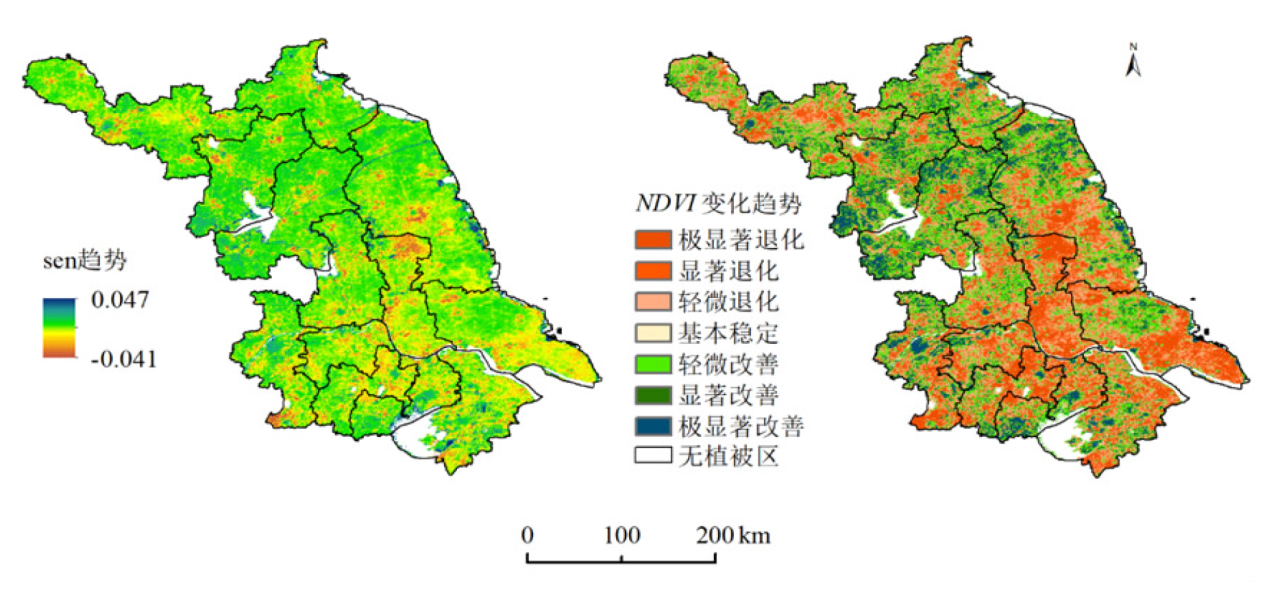
| 变化趋势类型 | 划分依据 | 像元数/个 | 面积占比/% |
|---|---|---|---|
| 极显著改善 | β>0,|Z|>2.58 | 144063 | 9.62 |
| 显著改善 | β>0,1.96<|Z|≤2.58 | 107040 | 7.15 |
| 轻微改善 | β>0,0≤|Z|≤1.96 | 435642 | 29.08 |
| 基本稳定 | β=0 | 2058 | 0.14 |
| 轻微退化 | β<0,0≤|Z|≤1.96 | 415547 | 27.74 |
| 显著退化 | β<0,1.96<|Z|≤2.58 | 116399 | 7.77 |
| 极显著退化 | β<0,|Z|>2.58 | 277129 | 18.50 |
| 变化趋势类型 | 划分依据 | 像元数/个 | 面积占比/% |
|---|---|---|---|
| 极显著改善 | β>0,|Z|>2.58 | 144063 | 9.62 |
| 显著改善 | β>0,1.96<|Z|≤2.58 | 107040 | 7.15 |
| 轻微改善 | β>0,0≤|Z|≤1.96 | 435642 | 29.08 |
| 基本稳定 | β=0 | 2058 | 0.14 |
| 轻微退化 | β<0,0≤|Z|≤1.96 | 415547 | 27.74 |
| 显著退化 | β<0,1.96<|Z|≤2.58 | 116399 | 7.77 |
| 极显著退化 | β<0,|Z|>2.58 | 277129 | 18.50 |
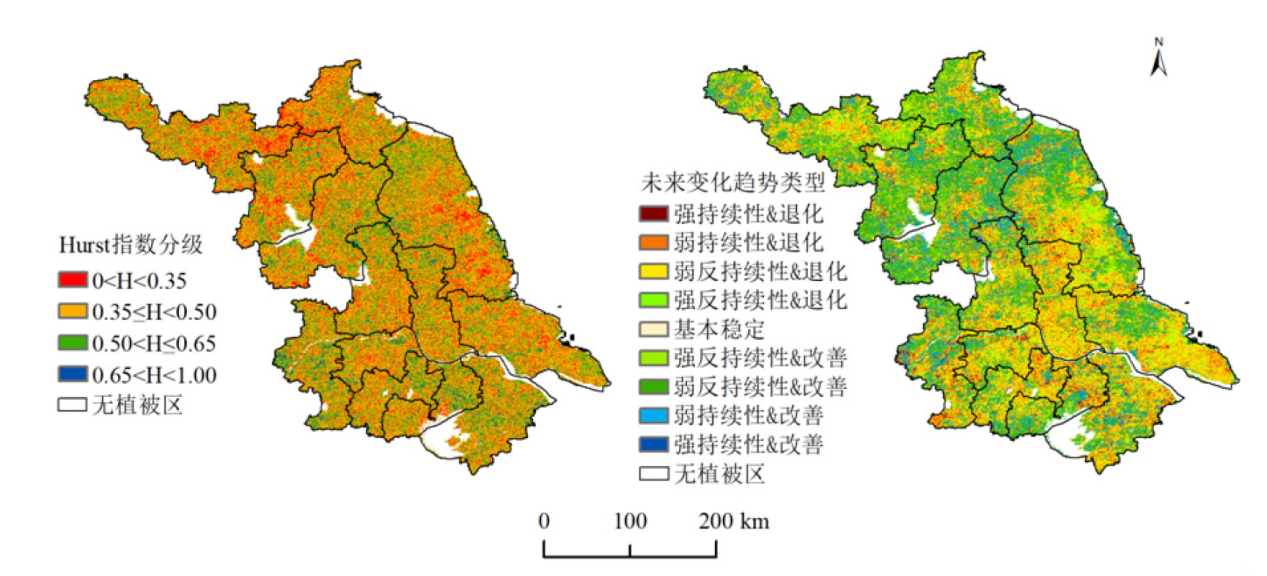
| 未来变化趋势类型 | 划分依据 | 像元数/个 | 面积占比/% |
|---|---|---|---|
| 强持续性&退化 | β<0,0.65<H<1.00 | 31187 | 2.08 |
| 弱持续性&退化 | β<0,0.50<H≤0.65 | 235958 | 15.76 |
| 弱反持续性&退化 | β<0,0.35≤H<0.50 | 435915 | 29.11 |
| 强反持续性&退化 | β<0,0<H<0.35 | 105822 | 7.07 |
| 基本稳定 | β=0 | 2056 | 0.14 |
| 强反持续性&改善 | β>0,0<H<0.35 | 115926 | 7.74 |
| 弱反持续性&改善 | β>0,0.35≤H<0.50 | 391092 | 26.12 |
| 弱持续性&改善 | β>0,0.50<H≤0.65 | 164841 | 11.01 |
| 强持续性&改善 | β>0,0.65<H<1.00 | 14734 | 0.98 |
| 未来变化趋势类型 | 划分依据 | 像元数/个 | 面积占比/% |
|---|---|---|---|
| 强持续性&退化 | β<0,0.65<H<1.00 | 31187 | 2.08 |
| 弱持续性&退化 | β<0,0.50<H≤0.65 | 235958 | 15.76 |
| 弱反持续性&退化 | β<0,0.35≤H<0.50 | 435915 | 29.11 |
| 强反持续性&退化 | β<0,0<H<0.35 | 105822 | 7.07 |
| 基本稳定 | β=0 | 2056 | 0.14 |
| 强反持续性&改善 | β>0,0<H<0.35 | 115926 | 7.74 |
| 弱反持续性&改善 | β>0,0.35≤H<0.50 | 391092 | 26.12 |
| 弱持续性&改善 | β>0,0.50<H≤0.65 | 164841 | 11.01 |
| 强持续性&改善 | β>0,0.65<H<1.00 | 14734 | 0.98 |
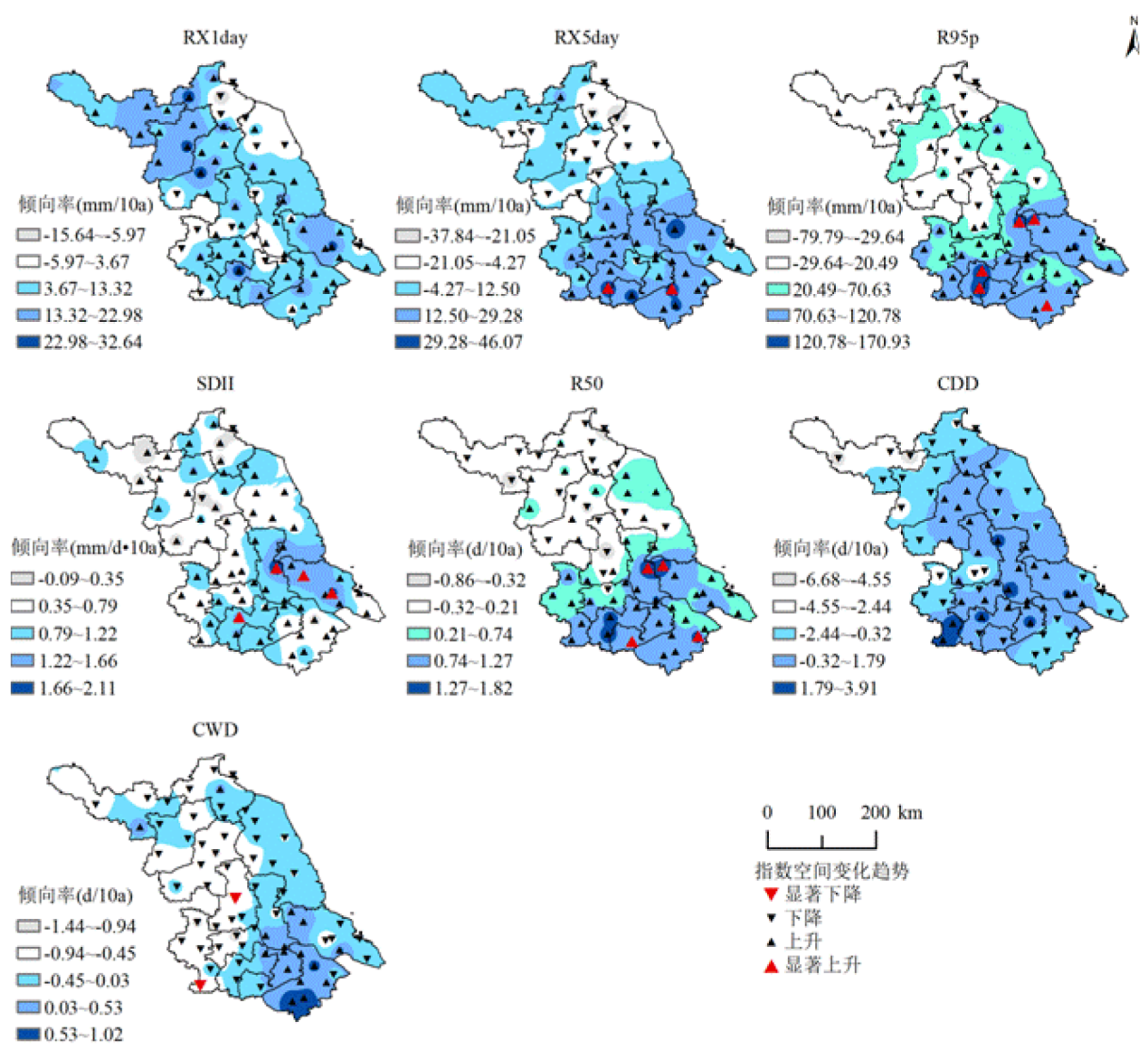
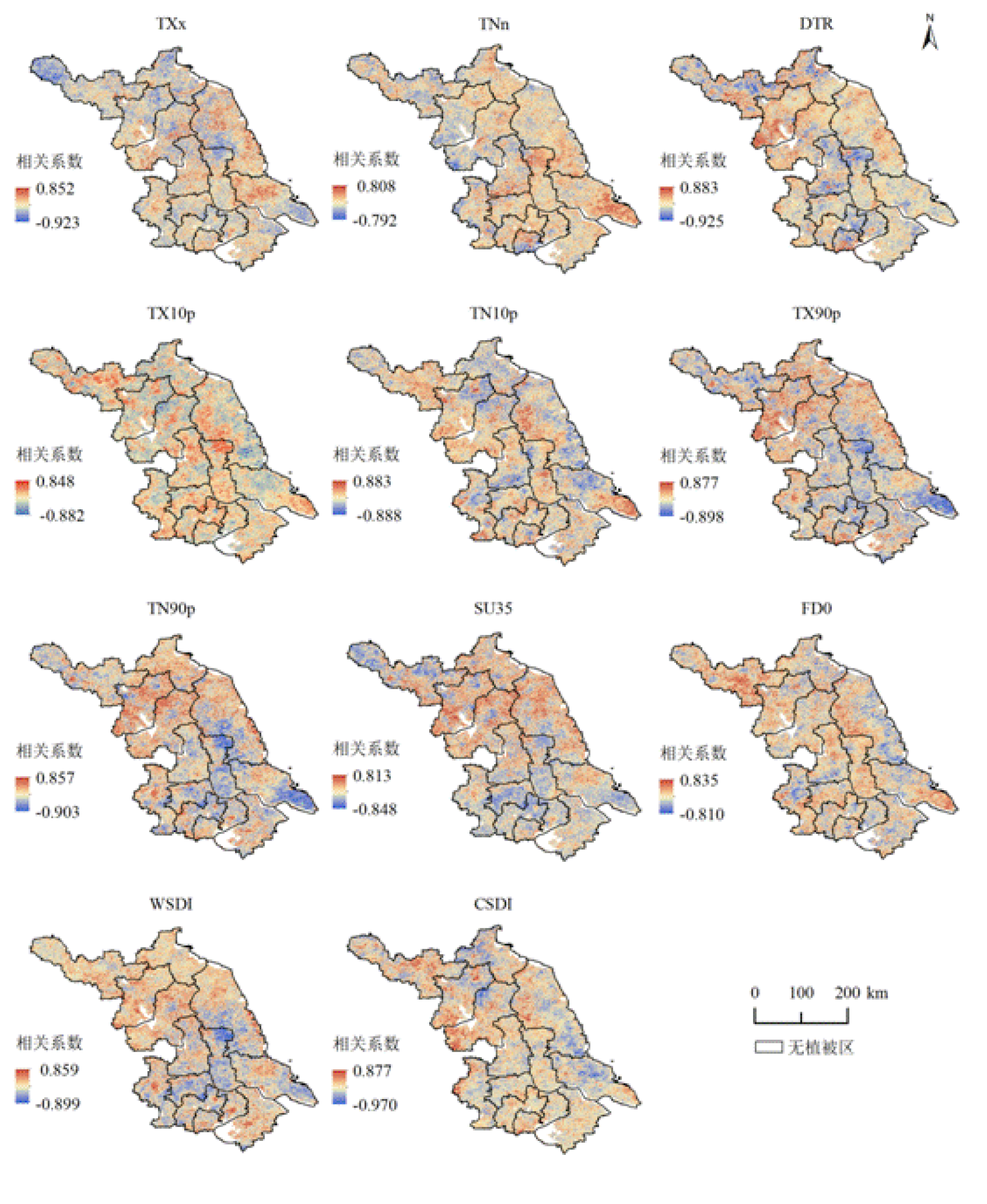
| [1] |
金凯, 王飞, 韩剑桥, 等. 1982—2015年中国气候变化和人类活动对植被NDVI变化的影响[J]. 地理学报, 2020, 75(5):961-974.
doi: 10.11821/dlxb202005006 |
| [2] |
钟鼎杰, 杨存建. 2001—2020年川西高原植被EVI时空变化特征及气候因子驱动力分析[J]. 水土保持研究, 2022, 29(4):223-230.
|
| [3] |
姚利苹, 王雪, 张佳华, 等. 基于MODIS数据的近20年海南岛叶面积指数时空变化及驱动力分析[J]. 中国生态农业学报:中英文, 2024, 32(10):1719-1730.
|
| [4] |
徐勇, 黄雯婷, 窦世卿, 等. 2000—2020年西南地区植被NDVI对气候变化和人类活动响应特征[J]. 环境科学, 2022, 43(6):3230-3240.
|
| [5] |
齐容镰, 李庆波, 任佳, 等. “三北”工程地区植被覆盖变化特征及其驱动力分析——以宁夏为例[J]. 干旱区研究, 2024, 41(10):1740-1752.
doi: 10.13866/j.azr.2024.10.12 |
| [6] |
刘慧丽, 陈浩, 董廷旭, 等. 川渝地区NDVI动态特征及其对气候变化的响应[J]. 生态学报, 2023, 43(16):6743-6757.
|
| [7] |
陈宽, 杨晨晨, 白力嘎, 等. 基于地理探测器的内蒙古自然和人为因素对植被NDVI变化的影响[J]. 生态学报, 2021, 41(12):4963-4975.
|
| [8] |
滑永春, 张恒, 王冰, 等. 1982—2015年内蒙古地区NDVI时空变化及驱动力分析[J]. 西南林业大学学报:自然科学, 2021, 41(6):175-182.
|
| [9] |
张衡, 马义娟, 李乐乐, 等. 汾河流域植被NDVI的时空变化特征及其对气候因子的响应[J]. 海南师范大学学报:自然科学版, 2022, 35(3):322-332.
|
| [10] |
韩丹丹, 穆兴民, 高鹏, 等. 黄土高原地区植被变化及其对极端气候的响应[J]. 水土保持通报, 2020, 40(2):247-254.
|
| [11] |
张晋霞, 徐长春, 杨秋萍. 2001—2017年新疆NDVI变化及其对极端气候的响应[J]. 水土保持通报, 2020, 40(5):250-256,275,341.
|
| [12] |
高滢, 孙虎, 徐崟尧, 等. 陕西省植被覆盖时空变化及其对极端气候的响应[J]. 生态学报, 2022, 42(3):1022-1033.
|
| [13] |
徐勇, 奚砚涛. 江苏省植被覆盖动态变化及其与气候因子的关系[J]. 水土保持通报, 2015, 35(4):2,195-201,329.
|
| [14] |
钱娅. 2006—2015年江苏省植被覆盖度的演变趋势与预测研究[D]. 南京: 南京信息工程大学, 2021.
|
| [15] |
高吉喜, 史园莉, 张宏伟, 等. 中国区域250米归一化植被指数数据集(2000—2022)[DS/OL]. 国家青藏高原科学数据中心.
|
| [16] |
易文莹, 王海洋, 董明明, 等. 山东省不同水土保持区划NDVI变化及影响因素[J]. 环境科学, 2024, 45(9):5329-5340.
|
| [17] |
戴声佩, 李茂芬, 罗红霞, 等. 华南地区极端气温事件时空变化及其因子分析[J]. 江苏农业科学, 2021, 49(14):194-203.
|
| [18] |
苗书玲, 曹艳萍, 李晴晴. 1951—2019年黄河流域极端气候事件时空变化规律分析[J]. 河南大学学报:自然科学版, 2022, 52(4):416-429.
|
| [19] |
李清清. 近60年来(1960—2019)川中丘陵地区气候变化及极端气候事件研究[D]. 成都: 四川师范大学,2021.
|
| [20] |
雷茜, 胡忠文, 王敬哲, 等. 1985—2015年中国不同生态系统NDVI时空变化及其对气候因子的响应[J]. 生态学报, 2023, 43(15):6378-6391.
|
| [21] |
张岳, 孙梦鑫, 辛宇, 等. 2000—2020年川东地区植被NDVI变化趋势及影响因素分析[J]. 水土保持研究, 2023, 30(6):247-254,263.
|
| [22] |
秦格霞, 芦倩, 孟治元, 等. 1982—2015年中国北方草地NDVI时空动态及其对气候变化的响应[J]. 水土保持研究, 2021, 28(1):101-108,117.
|
| [23] |
刘冬冬, 潘萍, 付佳, 等. 2000—2020年赣南植被覆盖时空变化特征及驱动因素[J]. 应用生态学报, 2023, 34(11):2919-2928.
doi: 10.13287/j.1001-9332.202311.023 |
| [24] |
王兴丽, 蒋友严, 张翼飞, 等. 2001—2020年甘南高原植被变化特征及驱动因素[J]. 草业科学, 2023, 40(9):2185-2198.
|
| [25] |
刘智源, 李继红. 2000—2020年黑龙江省植被时空变化对气候因子响应[J]. 森林工程, 2024, 40(1):85-97.
|
| [26] |
徐建华. 现代地理学中的数学方法(第三版)[M]. 北京: 高等教育出版社,2017:73-78.
|
| [27] |
柴文雯, 贾夏, 赵永华, 等. 黄土高原人类活动强度与植被覆盖的时空关联[J]. 生态学报, 2024, 44(15):6708-6721.
|
| [28] |
侯婉, 侯西勇, 董婷. 1999—2020年中国沿海植被覆盖多时空尺度变化特征[J]. 生态学报, 2024, 44(16):7249-7263.
|
| [29] |
张彬, 朱建军, 刘华民, 等. 极端降水和极端干旱事件对草原生态系统的影响[J]. 植物生态学报, 2014, 38(9):1008-1018.
doi: 10.3724/SP.J.1258.2014.00095 |
| [30] |
王晓利, 侯西勇. 1982—2014年中国沿海地区归一化植被指数(NDVI)变化及其对极端气候的响应[J]. 地理研究, 2019, 38(4):807-821.
doi: 10.11821/dlyj020180111 |
| [1] | 刘静, 王鹏, 张荣刚, 靳莉君. 黄河中游降水集中度的变化特征及其环流背景[J]. 中国农学通报, 2026, 42(5): 196-205. |
| [2] | 王君, 左希, 仇景涛, 杨武广, 钱晨诚. 晚播条件下不同小麦品种农艺性状和产量的差异性分析[J]. 中国农学通报, 2026, 42(2): 25-31. |
| [3] | 任春梅, 郭思思, 王海涛, 程兆榜, 陆芳, 杨柳, 季英华. 江苏省高粱炭疽病病原菌的分离鉴定[J]. 中国农学通报, 2025, 41(31): 95-101. |
| [4] | 徐宇, 许志强, 严维辉, 李佳佳, 黄鸿兵, 李旭光, 刘远柱, 潘建林. 基于全基因组SNP变异分析江苏克氏原螯虾7个天然群体的遗传多样性特征[J]. 中国农学通报, 2025, 41(17): 144-151. |
| [5] | 陈畅, 刘兴丽, 姜丽霞, 娄德君, 王永超, 祝玉梅, 李诣, 李雯婧. 1971—2020年松嫩平原易旱区气象因子与粮食作物的关系探究[J]. 中国农学通报, 2024, 40(29): 103-112. |
| [6] | 孟庆好, 汝艳, 张瑛, 王琛, 温雅, 法晓彤, 张耗. 中国水稻生产水足迹的时空特征及驱动因素研究进展[J]. 中国农学通报, 2024, 40(27): 52-59. |
| [7] | 尹佳琪, 张梅, 罗箭宇, 陈玉光, 杨欣虹, 董雨鑫. 像元尺度上薏米植被指数与气象因子的关系研究[J]. 中国农学通报, 2024, 40(26): 66-72. |
| [8] | 王青青, 赵梦薇, 罗晶晶, 刘伟伟. 安徽省农业碳排放时空变化分析与影响因素研究[J]. 中国农学通报, 2024, 40(16): 104-111. |
| [9] | 吴平, 陈志厚, 林勇, 陈爱国, 郑加玉, 郑国建. 南平烤烟大田生长期气候要素时空变化特征[J]. 中国农学通报, 2024, 40(14): 90-98. |
| [10] | 丁吉达, 蒲智, 唐芳, 田永强. 天山野果林分布区土地利用时空演变图谱研究[J]. 中国农学通报, 2023, 39(31): 96-105. |
| [11] | 张金峰, 陈农, 闫敏慧, 徐占胜, 杨宁, 高玲, 吕欣陆. 基于DEM的黑龙江省10℃界限温度时空变化特征分析[J]. 中国农学通报, 2023, 39(27): 81-85. |
| [12] | 陈伟, 宋锦花, 夏中华, 金彦刚, 刘海浪, 卫万娟, 赵其兵, 任仰涛, 杨永乐, 常东伟, 李珍富, 张凡, 郑雅月, 谢梦苹. 江苏省粳稻品种产量构成因素及抗病性与产量的相关分析[J]. 中国农学通报, 2023, 39(24): 13-17. |
| [13] | 李煜婧, 夏紫祎, 申桐, 王斐, 郑磊, 周建利, 张强, 孙楠, 徐明岗. 烟台市典型县域土壤pH时空变化特征及影响因素[J]. 中国农学通报, 2023, 39(21): 103-108. |
| [14] | 管雅芳, 焦阳, 臧传富. 韩江流域土地利用时空变化特征及其生态安全评估[J]. 中国农学通报, 2023, 39(20): 91-99. |
| [15] | 李自鹏, 欧向军, 朱杰, 周蓓蓓, 钱嘉琳, 朱虎啸. 江苏省人口与土地城镇化协调发展研究[J]. 中国农学通报, 2022, 38(8): 157-164. |
| 阅读次数 | ||||||
|
全文 |
|
|||||
|
摘要 |
|
|||||
