欢迎访问《中国农学通报》,

中国农学通报 ›› 2026, Vol. 42 ›› Issue (20): 118-126.doi: 10.11924/j.issn.1000-6850.casb2026-0275

• 资源·环境·生态·土壤·气象 • 上一篇    下一篇

基于熵权法的遵义高粱不同生育期气象风险评估

谢强1(), 谢璐繁1, 任青峰2(), 吴新豪1, 周艳艳1   

  1. 1 贵州省仁怀市气象局, 贵州仁怀 564500
    2 贵州省赤水市气象局, 贵州赤水 564700
  • 收稿日期:2026-04-07 修回日期:2026-07-28 出版日期:2026-10-25 发布日期:2026-10-26
  • 通讯作者:
    任青峰,男,1989年出生,四川广汉人,高级工程师,本科,研究方向:气候变化和气象应用。通信地址:564700 贵州省赤水市红军大道中路820号 市气象局,Tel:0851-22821832,E-mail:。
  • 作者简介:

    谢强,男,1984年出生,贵州务川人,工程师,本科,研究方向:气象服务与应用气象。通信地址:564500 贵州省仁怀市盐津街道陈香南路38号 市气象局,Tel:0851-22235141,E-mail:。

  • 基金资助:
    贵州省气象局科研登记项目“仁怀不同海拔高粱收获期预报和收晒期气象适宜度分析”(黔气科登[2023]12-04)

Meteorological Risk Assessment of Sorghum at Different Growth Stages in Zunyi Based on Entropy Weight Method

XIE Qiang1(), XIE Lufan1, REN Qingfeng2(), WU Xinhao1, ZHOU Yanyan1   

  1. 1 Renhuai Meteorological Bureau of Guizhou Province, Renhuai, Guizhou 564500
    2 Chishui Meteorological Bureau of Guizhou Province, Chishui, Guizhou 564700
  • Received:2026-04-07 Revised:2026-07-28 Published:2026-10-25 Online:2026-10-26

摘要:

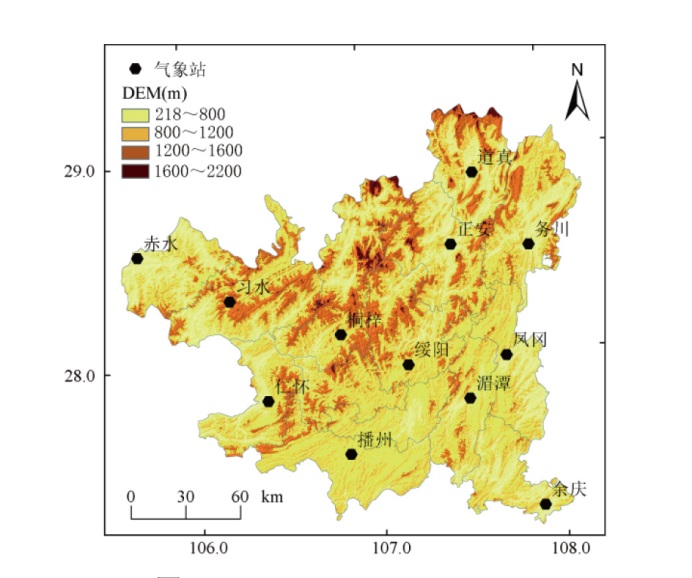
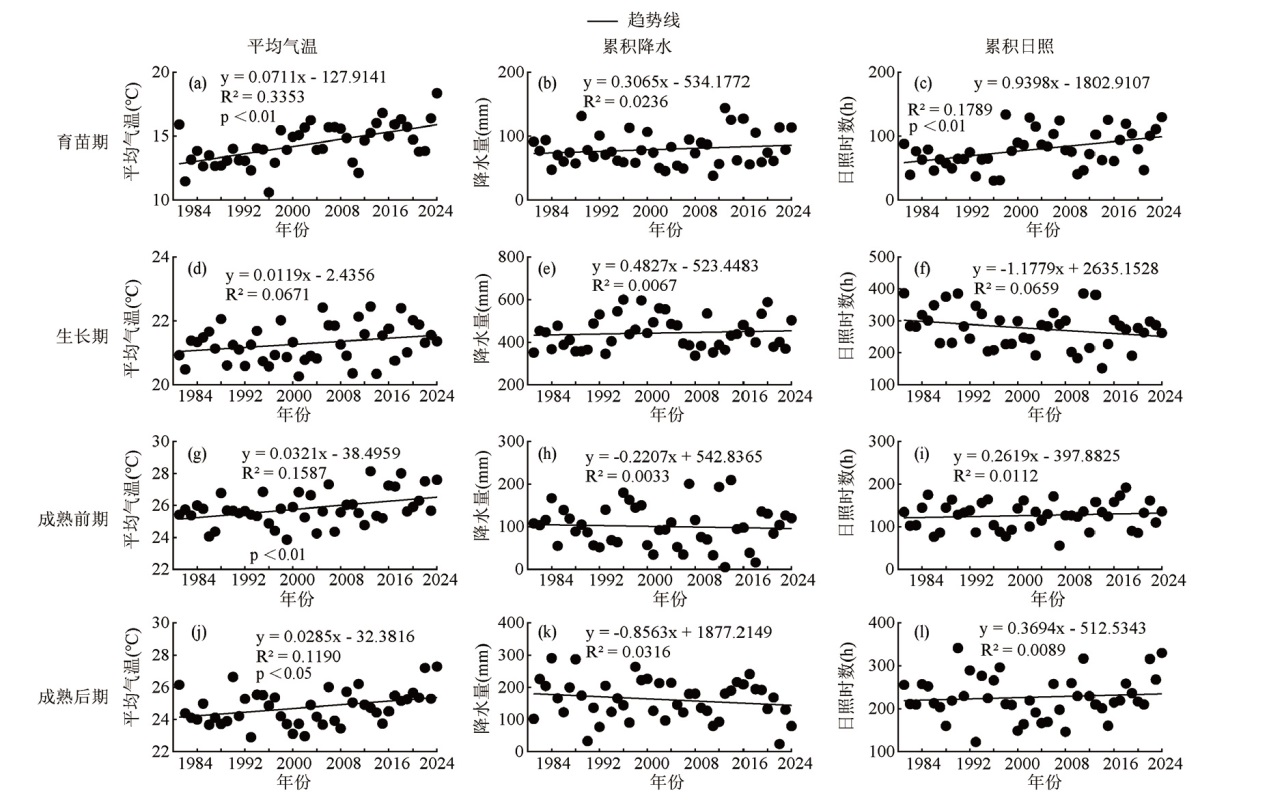
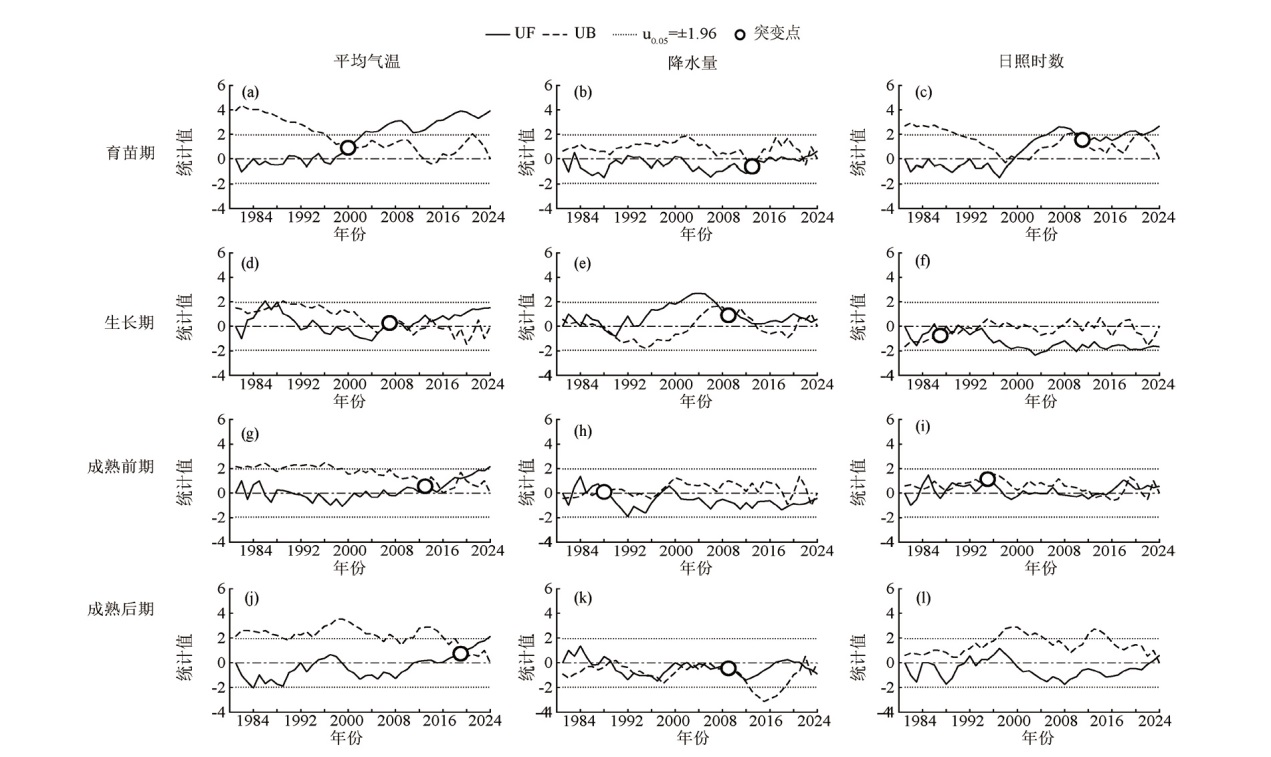
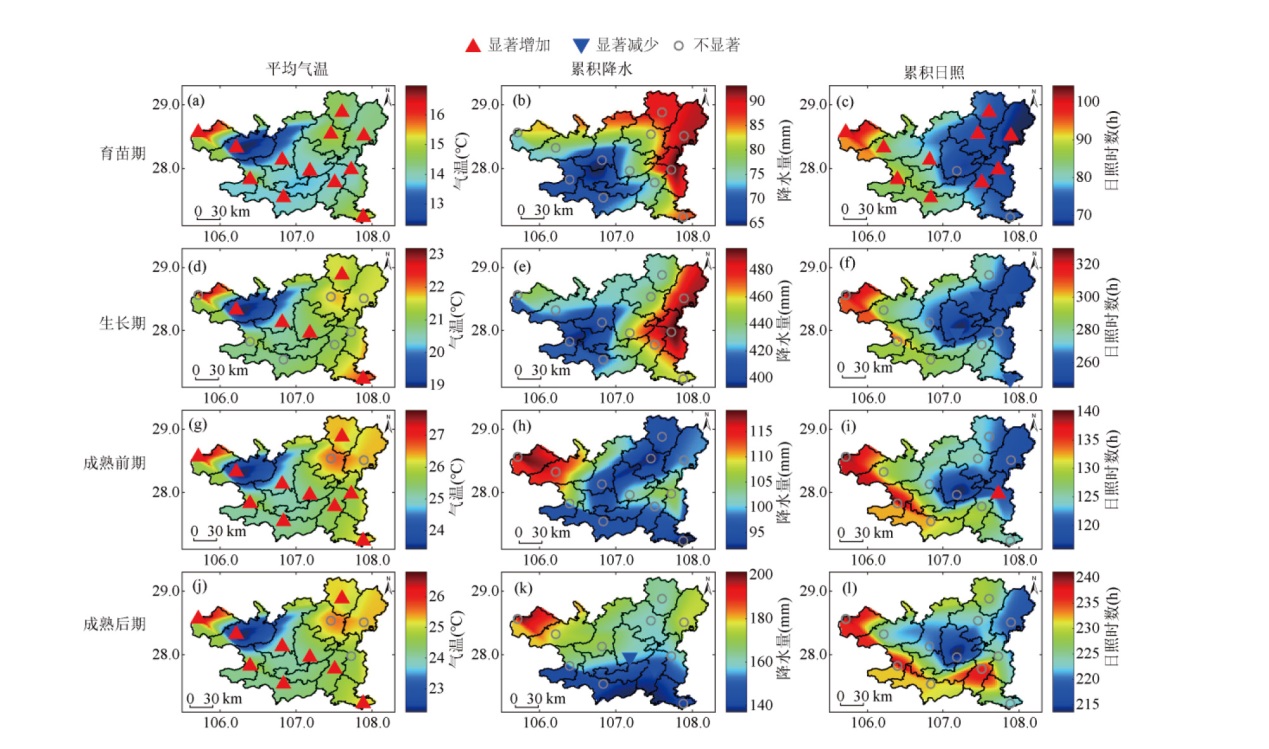
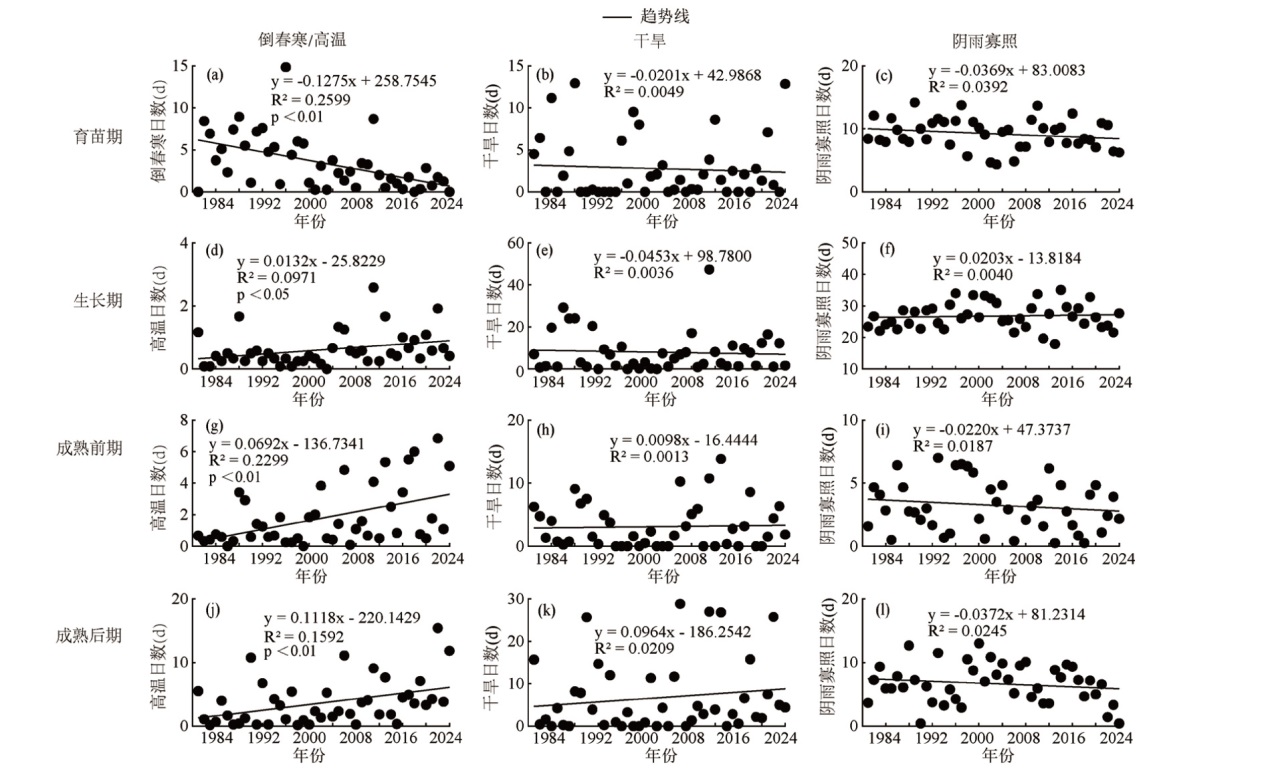
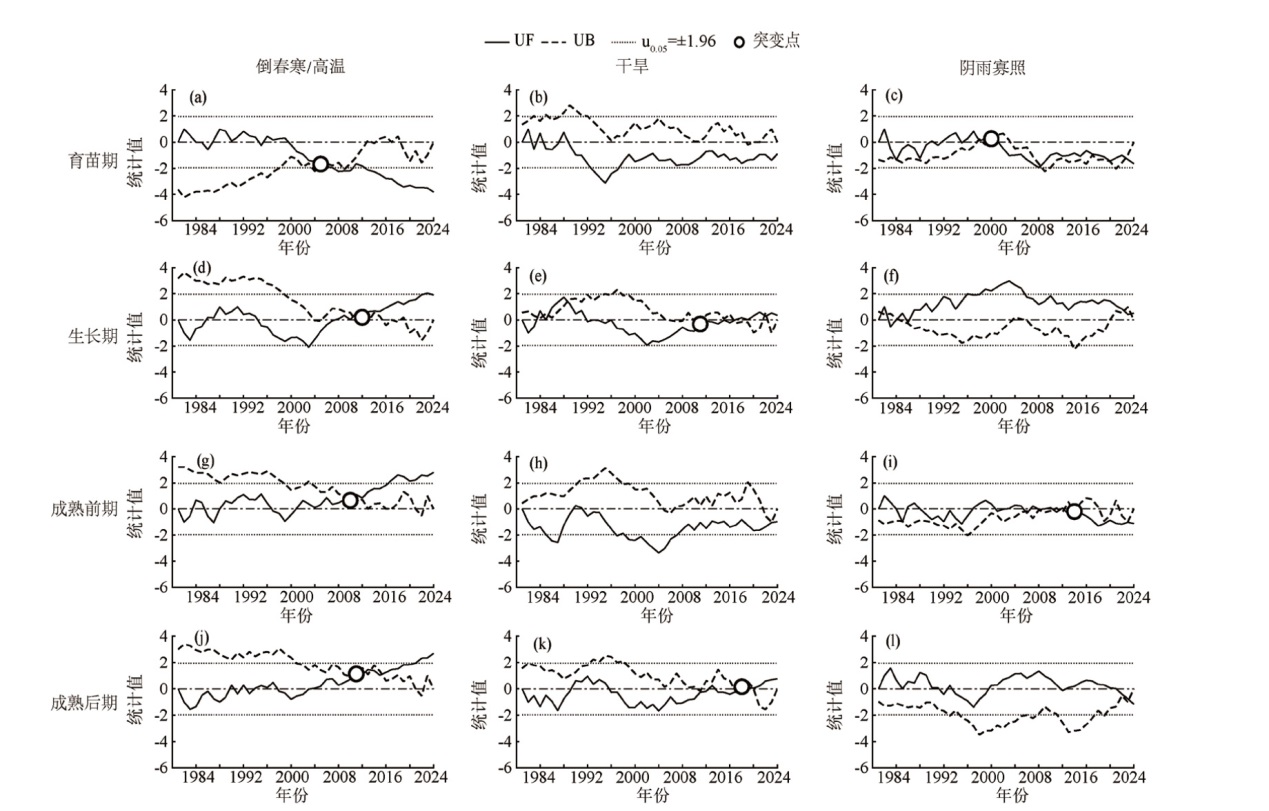
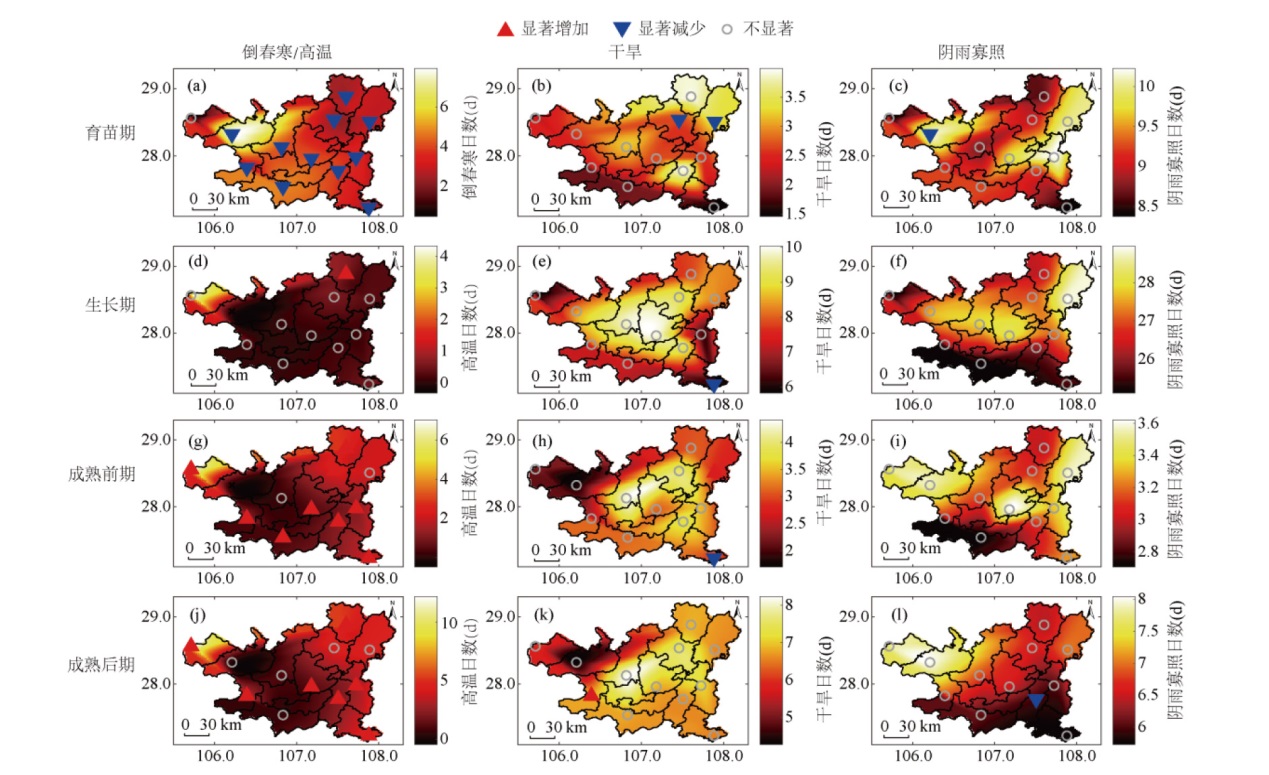
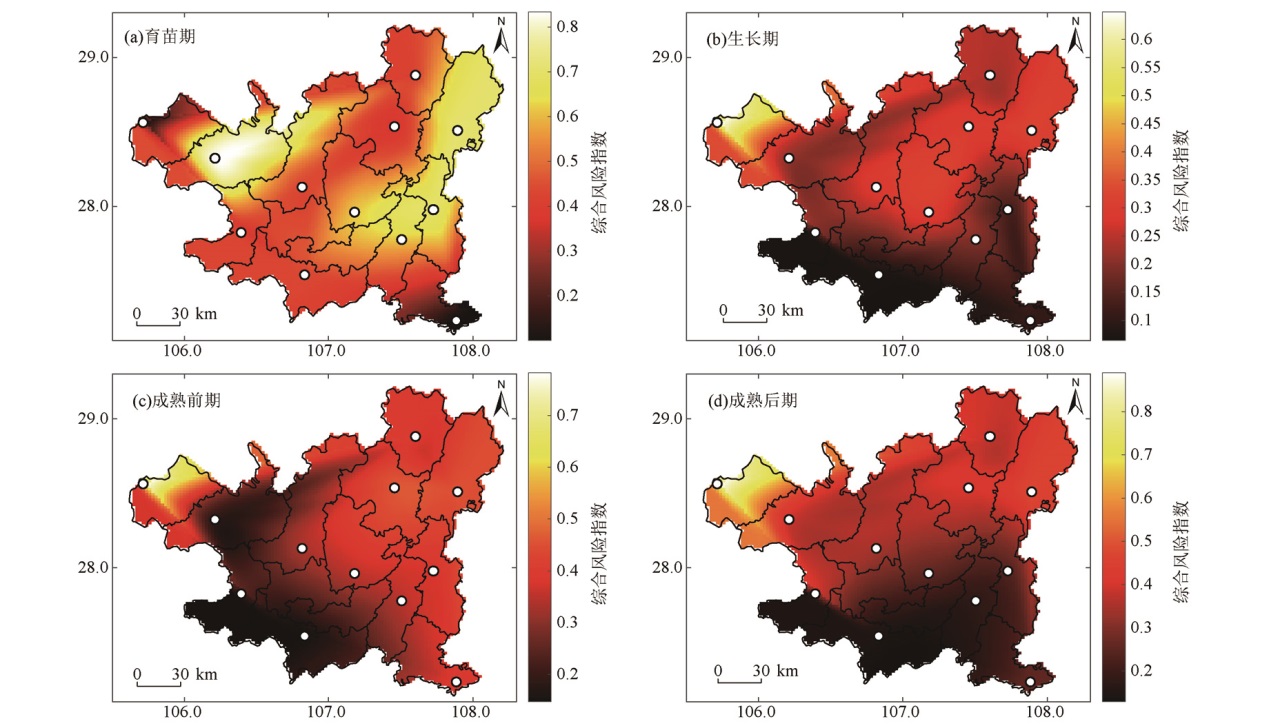
为探究贵州省遵义地区高粱在不同生育期的气象条件演变规律及灾害风险的时空分布特征,评估其综合气象风险,本研究基于1981—2024年遵义市12个国家气象站点数据,采用线性趋势分析、M-K突变检验、熵权法(entropy weight method, EWM)等方法,系统分析了高粱育苗期、生长期、成熟前期和成熟后期的气象要素变化趋势,重点关注了倒春寒/高温、干旱、阴雨寡照等主要气象灾害风险的时空演变特征,并进行了综合风险评估。结果表明:(1)1981—2024年间,遵义高粱各生育期气温普遍上升,其中育苗期增温最显著(0.7 ℃/10a, P<0.01);降水呈“前期增加、后期减少”特征,成熟后期减幅最大(-8.6 mm/10a);日照时数呈“育苗期增加、生长期减少”的波动变化。气象要素在2000年和2010年前后发生集中突变,气温突变后普遍上升0.3~1.8℃。(2)灾害风险呈现“低温风险下降、高温风险上升”的转换特征,育苗期倒春寒日数显著减少(-1.3 d/10a, P<0.01),生长期—成熟后期高温日数均显著增加(0.1~1.1 d/10a)。(3)各生育期主导风险差异显著,育苗期以倒春寒为核心(权重51.7%);生长期、成熟前期及成熟后期则以阴雨寡照为主导(权重36.2%~39.9%),高温与干旱权重接近(29.8%~32.4%)。育苗期以北部及东部风险较高(≥0.8),赤水市是中后期气象风险最突出的区域(≥0.6~0.8)。综上所述,遵义高粱生产呈“前期倒春寒、中后期阴雨寡照与高温干旱叠加”的时空分异格局,需实施分生育期、分区域、分灾种的精准气象防御策略。

关键词: 高粱, 生育期, 综合气象风险, 熵权法, 突变检验, 趋势分析

Abstract:

This study aims to investigate the spatiotemporal evolution of meteorological conditions and disaster risks during different growth periods of sorghum in the Zunyi region, and to assess the comprehensive meteorological risk. Based on data from 12 national meteorological stations in Zunyi from 1981 to 2024, methods including linear trend analysis, Mann-Kendall (M-K) mutation test, and entropy weight method were employed. The spatiotemporal evolution characteristics of meteorological conditions and major disaster risks (late spring cold/high temperature, drought, cloudy-rainy weather) during the sorghum nursery period, growth period, early maturation period, and late maturation period were systematically analyzed, followed by a comprehensive risk assessment. The main conclusions are as follows. (1) From 1981 to 2024, temperatures during all sorghum growth periods in Zunyi generally increased, with the most significant warming during the nursery period (0.7 ℃/10a, P<0.01). Precipitation exhibited a pattern of “increase in early stages, decrease in later stages”, with the largest decrease in the late maturation period (-8.6 mm/10a). Sunshine duration showed fluctuating changes, increasing during the nursery period and decreasing during the growth period. Concentrated mutations in meteorological elements occurred around 2000 and 2010, with temperatures generally rising by 0.3-1.8℃ after the mutations. (2) Disaster risks displayed a transition characteristic of “decreasing low-temperature risk and increasing high-temperature risk”. The number of late spring cold days during the nursery period decreased significantly (-1.3 d/10a, P<0.01), while the number of high-temperature days from the growth period to the late maturation period all increased significantly (0.1-1.1 d/10a). (3) Dominant risks varied significantly across different growth periods. Late spring cold was the core risk during the nursery period (weight 51.7%). During the growth period, early maturation period, and late maturation period, overcast, rainy and low-light weather became the dominant risk (weights 36.2%-39.9%), with high temperature and drought having similar weights (29.8%-32.4%). The northern and eastern parts of the region exhibited higher risks during the nursery period (≥0.8). Chishui City was identified as the area with the most prominent meteorological risks during the middle and late growth periods (≥0.6-0.8). The sorghum production in Zunyi exhibits a spatiotemporal differentiation pattern characterized by “late spring cold days in the early stage, and superimposed overcast, rainy and lowlight weather with high temperature and drought in the middle and late stages,” necessitating precision defense measures tailored to growth stage, region, and disaster type.

Key words: sorghum, reproductive period, comprehensive meteorological risk, entropy weight method, mutation test, trend analysis

中图分类号: