Welcome to Chinese Agricultural Science Bulletin,

Chinese Agricultural Science Bulletin ›› 2026, Vol. 42 ›› Issue (5): 83-91.doi: 10.11924/j.issn.1000-6850.casb2024-0621
Previous Articles Next Articles
ZHAO Hui( ), HE Xuemei, LI Biao, Feng Hui, DENG Li, SUN Chuanqi, MA Jie, FU Liang
Received:2024-09-27
Revised:2024-12-15
Online:2026-03-18
Published:2026-03-18
ZHAO Hui, HE Xuemei, LI Biao, Feng Hui, DENG Li, SUN Chuanqi, MA Jie, FU Liang. Agronomic Traits and Nutritional Components Analysis of Lepista sordida E70 Cultivated with Different Raw Materials[J]. Chinese Agricultural Science Bulletin, 2026, 42(5): 83-91.
Add to citation manager EndNote|Ris|BibTeX
URL: https://www.casb.org.cn/EN/10.11924/j.issn.1000-6850.casb2024-0621
| 配方 | 原基发生时间/d | 菌柄直径/cm | 菌柄长度/cm | 菌盖直径/cm | 菌盖厚度/cm | 子实体单重/g | 生物学效率/% |
|---|---|---|---|---|---|---|---|
| A | 55 | 1.82 | 8.43 | 6.65 | 1.95 | 20.33 | 35.64±0.18 b |
| B | 52 | 2.13 | 8.00 | 7.68 | 2.19 | 20.62 | 41.33±0.23 ab |
| C | 50 | 1.78 | 6.72 | 5.60 | 1.98 | 18.99 | 28.92±0.11 bc |
| D | 42 | 2.32 | 8.50 | 7.80 | 2.54 | 25.22 | 46.73±0.15 a |
| E | 42 | 1.69 | 5.53 | 9.03 | 1.73 | 15.31 | 21.56±0.08 c |
| 配方 | 原基发生时间/d | 菌柄直径/cm | 菌柄长度/cm | 菌盖直径/cm | 菌盖厚度/cm | 子实体单重/g | 生物学效率/% |
|---|---|---|---|---|---|---|---|
| A | 55 | 1.82 | 8.43 | 6.65 | 1.95 | 20.33 | 35.64±0.18 b |
| B | 52 | 2.13 | 8.00 | 7.68 | 2.19 | 20.62 | 41.33±0.23 ab |
| C | 50 | 1.78 | 6.72 | 5.60 | 1.98 | 18.99 | 28.92±0.11 bc |
| D | 42 | 2.32 | 8.50 | 7.80 | 2.54 | 25.22 | 46.73±0.15 a |
| E | 42 | 1.69 | 5.53 | 9.03 | 1.73 | 15.31 | 21.56±0.08 c |
| 氨基酸类型 | A | B | C | D | E |
|---|---|---|---|---|---|
| 苏氨酸* | 1.16 | 1.27 | 1.39 | 1.22 | 1.27 |
| 缬氨酸* | 1.05 | 1.21 | 1.27 | 1.18 | 1.18 |
| 甲硫氨酸(蛋氨酸)*# | 0.3 | 0.29 | 0.33 | 0.29 | 0.31 |
| 异亮氨酸* | 0.92 | 1.02 | 1.06 | 1.00 | 1.01 |
| 亮氨酸*# | 1.54 | 1.67 | 1.8 | 1.68 | 1.66 |
| 苯丙氨酸# | 0.94 | 1.05 | 1.1 | 1.14 | 1.04 |
| 赖氨酸*# | 1.56 | 1.67 | 1.74 | 1.57 | 1.60 |
| 天冬氨酸# | 2.33 | 2.53 | 2.64 | 2.70 | 2.64 |
| 酪氨酸# | 0.50 | 0.55 | 0.60 | 0.54 | 0.56 |
| 丝氨酸 | 1.22 | 1.25 | 1.36 | 1.25 | 1.27 |
| 谷氨酸# | 5.38 | 5.61 | 4.44 | 6.19 | 6.30 |
| 丙氨酸 | 1.76 | 2.05 | 2.25 | 1.59 | 1.86 |
| 甘氨酸# | 1.11 | 1.23 | 1.37 | 1.17 | 1.20 |
| 组氨酸 | 1.22 | 0.79 | 1.5 | 1.36 | 0.79 |
| 精氨酸# | 1.58 | 1.66 | 1.57 | 1.36 | 1.76 |
| 脯氨酸 | 0.91 | 0.92 | 1.04 | 0.85 | 0.92 |
| 必需氨基酸 | 7.47 | 8.18 | 8.69 | 8.08 | 8.07 |
| 非必需氨基酸 | 16.01 | 16.59 | 16.77 | 17.01 | 17.30 |
| 药用氨基酸 | 15.24 | 16.26 | 15.59 | 16.64 | 17.07 |
| 总氨基酸 | 23.5 | 24.8 | 25.6 | 25.1 | 25.4 |
| 必需氨基酸/总氨基酸 | 0.32 | 0.36 | 0.34 | 0.32 | 0.32 |
| 必需氨基酸/非必需氨基酸 | 0.47 | 0.49 | 0.52 | 0.48 | 0.47 |
| 氨基酸类型 | A | B | C | D | E |
|---|---|---|---|---|---|
| 苏氨酸* | 1.16 | 1.27 | 1.39 | 1.22 | 1.27 |
| 缬氨酸* | 1.05 | 1.21 | 1.27 | 1.18 | 1.18 |
| 甲硫氨酸(蛋氨酸)*# | 0.3 | 0.29 | 0.33 | 0.29 | 0.31 |
| 异亮氨酸* | 0.92 | 1.02 | 1.06 | 1.00 | 1.01 |
| 亮氨酸*# | 1.54 | 1.67 | 1.8 | 1.68 | 1.66 |
| 苯丙氨酸# | 0.94 | 1.05 | 1.1 | 1.14 | 1.04 |
| 赖氨酸*# | 1.56 | 1.67 | 1.74 | 1.57 | 1.60 |
| 天冬氨酸# | 2.33 | 2.53 | 2.64 | 2.70 | 2.64 |
| 酪氨酸# | 0.50 | 0.55 | 0.60 | 0.54 | 0.56 |
| 丝氨酸 | 1.22 | 1.25 | 1.36 | 1.25 | 1.27 |
| 谷氨酸# | 5.38 | 5.61 | 4.44 | 6.19 | 6.30 |
| 丙氨酸 | 1.76 | 2.05 | 2.25 | 1.59 | 1.86 |
| 甘氨酸# | 1.11 | 1.23 | 1.37 | 1.17 | 1.20 |
| 组氨酸 | 1.22 | 0.79 | 1.5 | 1.36 | 0.79 |
| 精氨酸# | 1.58 | 1.66 | 1.57 | 1.36 | 1.76 |
| 脯氨酸 | 0.91 | 0.92 | 1.04 | 0.85 | 0.92 |
| 必需氨基酸 | 7.47 | 8.18 | 8.69 | 8.08 | 8.07 |
| 非必需氨基酸 | 16.01 | 16.59 | 16.77 | 17.01 | 17.30 |
| 药用氨基酸 | 15.24 | 16.26 | 15.59 | 16.64 | 17.07 |
| 总氨基酸 | 23.5 | 24.8 | 25.6 | 25.1 | 25.4 |
| 必需氨基酸/总氨基酸 | 0.32 | 0.36 | 0.34 | 0.32 | 0.32 |
| 必需氨基酸/非必需氨基酸 | 0.47 | 0.49 | 0.52 | 0.48 | 0.47 |
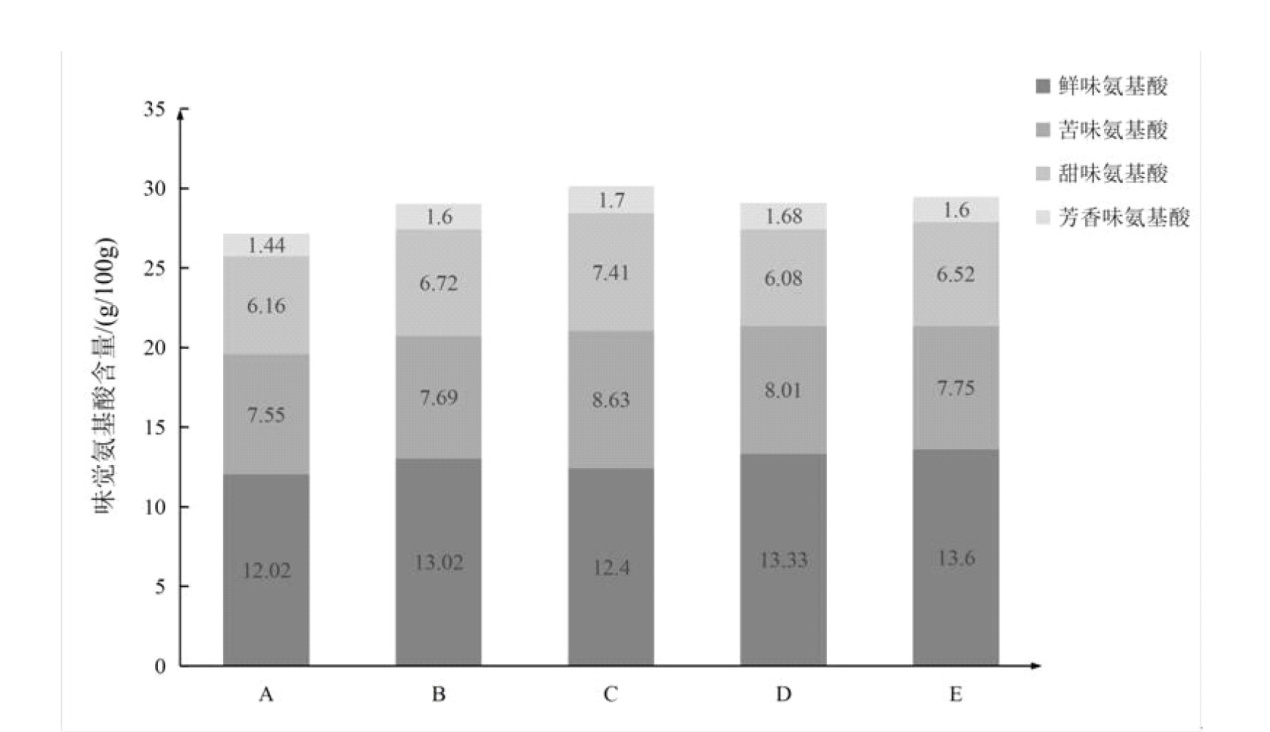
| 氨基酸类型 | 氨基酸 | 味觉氨基酸含量阈值比(RCT) | 味觉阈值/% | ||
|---|---|---|---|---|---|
| 最大值 | 最小值 | 平均值 | |||
| 甜味氨基酸 | 甘氨酸 | 1.25(C) | 1.00(E) | 1.09 | 1.10 |
| 丙氨酸 | 3.75(C) | 2.60(E) | 3.07 | 0.60 | |
| 丝氨酸 | 0.91(C) | 0.81(A) | 0.85 | 1.50 | |
| 苏氨酸 | 0.53(C) | 0.45(A) | 0.49 | 2.60 | |
| 脯氨酸 | 0.35(C) | 0.28(D) | 0.31 | 3.00 | |
| 苦味氨基酸 | 缬氨酸 | 0.85(C) | 0.70(A) | 0.78 | 1.50 |
| 亮氨酸 | 0.47(C) | 0.41(A) | 0.44 | 3.80 | |
| 异亮氨酸 | 1.17(C) | 1.02(A) | 1.11 | 0.90 | |
| 蛋氨酸 | 1.10(C) | 0.97(B) | 1.01 | 0.30 | |
| 精氨酸 | 16.60(B) | 13.60(D、E) | 15.06 | 0.10 | |
| 组氨酸 | 7.50(C) | 3.80(E) | 5.63 | 0.20 | |
| 苯丙氨酸 | 0.76(D) | 0.63(A) | 0.70 | 1.50 | |
| 鲜味氨基酸 | 谷氨酸 | 126(E) | 88.8(C) | 107.28 | 0.05 |
| 天冬氨酸 | 90.00(D) | 77.67(A) | 84.53 | 0.03 | |
| 苯丙氨酸 | 0.76(D) | 0.63(A) | 0.70 | 1.50 | |
| 酪氨酸 | 0.23(E) | 0.19(A) | 0.21 | 2.60 | |
| 甘氨酸 | 1.25(C) | 1.00(E) | 1.09 | 1.10 | |
| 丙氨酸 | 3.75(C) | 2.60(E) | 3.07 | 0.60 | |
| 芳香味氨基酸 | 苯丙氨酸 | 0.76(D) | 0.63(A) | 0.70 | 1.50 |
| 酪氨酸 | 0.23(E) | 0.19(A) | 0.21 | 2.60 | |
| 半胱氨酸 | — | — | — | 0.02 | |
| 氨基酸类型 | 氨基酸 | 味觉氨基酸含量阈值比(RCT) | 味觉阈值/% | ||
|---|---|---|---|---|---|
| 最大值 | 最小值 | 平均值 | |||
| 甜味氨基酸 | 甘氨酸 | 1.25(C) | 1.00(E) | 1.09 | 1.10 |
| 丙氨酸 | 3.75(C) | 2.60(E) | 3.07 | 0.60 | |
| 丝氨酸 | 0.91(C) | 0.81(A) | 0.85 | 1.50 | |
| 苏氨酸 | 0.53(C) | 0.45(A) | 0.49 | 2.60 | |
| 脯氨酸 | 0.35(C) | 0.28(D) | 0.31 | 3.00 | |
| 苦味氨基酸 | 缬氨酸 | 0.85(C) | 0.70(A) | 0.78 | 1.50 |
| 亮氨酸 | 0.47(C) | 0.41(A) | 0.44 | 3.80 | |
| 异亮氨酸 | 1.17(C) | 1.02(A) | 1.11 | 0.90 | |
| 蛋氨酸 | 1.10(C) | 0.97(B) | 1.01 | 0.30 | |
| 精氨酸 | 16.60(B) | 13.60(D、E) | 15.06 | 0.10 | |
| 组氨酸 | 7.50(C) | 3.80(E) | 5.63 | 0.20 | |
| 苯丙氨酸 | 0.76(D) | 0.63(A) | 0.70 | 1.50 | |
| 鲜味氨基酸 | 谷氨酸 | 126(E) | 88.8(C) | 107.28 | 0.05 |
| 天冬氨酸 | 90.00(D) | 77.67(A) | 84.53 | 0.03 | |
| 苯丙氨酸 | 0.76(D) | 0.63(A) | 0.70 | 1.50 | |
| 酪氨酸 | 0.23(E) | 0.19(A) | 0.21 | 2.60 | |
| 甘氨酸 | 1.25(C) | 1.00(E) | 1.09 | 1.10 | |
| 丙氨酸 | 3.75(C) | 2.60(E) | 3.07 | 0.60 | |
| 芳香味氨基酸 | 苯丙氨酸 | 0.76(D) | 0.63(A) | 0.70 | 1.50 |
| 酪氨酸 | 0.23(E) | 0.19(A) | 0.21 | 2.60 | |
| 半胱氨酸 | — | — | — | 0.02 | |
| 氨基酸类型 | A | B | C | D | E | FAO/WHO | 全鸡蛋模式 |
|---|---|---|---|---|---|---|---|
| 苏氨酸 | 4.94 | 5.12 | 5.45 | 4.86 | 5.50 | 4.00 | 5.10 |
| 缬氨酸 | 4.47 | 4.88 | 4.98 | 4.70 | 4.89 | 5.00 | 7.30 |
| 甲硫氨酸(蛋氨酸) | 1.28 | 1.17 | 1.29 | 1.16 | 1.34 | 3.50 | 5.50 |
| 异亮氨酸 | 3.91 | 4.11 | 4.16 | 3.98 | 4.37 | 4.00 | 6.60 |
| 亮氨酸# | 6.55 | 6.73 | 7.06 | 6.69 | 6.93 | 7.00 | 8.80 |
| 苯丙氨酸+酪氨酸 | 6.13 | 6.45 | 6.66 | 6.69 | 6.80 | 6.00 | 10.00 |
| 赖氨酸 | 6.64 | 6.73 | 6.82 | 6.25 | 6.93 | 5.50 | 6.40 |
| 总量 | 33.92 | 35.19 | 36.42 | 34.33 | 36.76 | 35.00 | 49.70 |
| 氨基酸类型 | A | B | C | D | E | FAO/WHO | 全鸡蛋模式 |
|---|---|---|---|---|---|---|---|
| 苏氨酸 | 4.94 | 5.12 | 5.45 | 4.86 | 5.50 | 4.00 | 5.10 |
| 缬氨酸 | 4.47 | 4.88 | 4.98 | 4.70 | 4.89 | 5.00 | 7.30 |
| 甲硫氨酸(蛋氨酸) | 1.28 | 1.17 | 1.29 | 1.16 | 1.34 | 3.50 | 5.50 |
| 异亮氨酸 | 3.91 | 4.11 | 4.16 | 3.98 | 4.37 | 4.00 | 6.60 |
| 亮氨酸# | 6.55 | 6.73 | 7.06 | 6.69 | 6.93 | 7.00 | 8.80 |
| 苯丙氨酸+酪氨酸 | 6.13 | 6.45 | 6.66 | 6.69 | 6.80 | 6.00 | 10.00 |
| 赖氨酸 | 6.64 | 6.73 | 6.82 | 6.25 | 6.93 | 5.50 | 6.40 |
| 总量 | 33.92 | 35.19 | 36.42 | 34.33 | 36.76 | 35.00 | 49.70 |
| 氨基酸类型 | RCAA | ||||
|---|---|---|---|---|---|
| A | B | C | D | E | |
| 苏氨酸 | 1.30 | 1.30 | 1.34 | 1.27 | 1.33 |
| 缬氨酸 | 0.94 | 0.99 | 0.98 | 0.98 | 0.95 |
| 甲硫氨酸(蛋氨酸) | 0.39 | 0.34 | 0.36 | 0.35 | 0.37 |
| 异亮氨酸 | 1.03 | 1.05 | 1.02 | 1.04 | 1.06 |
| 亮氨酸 | 0.99 | 0.98 | 0.99 | 1.00 | 0.96 |
| 苯丙氨酸+酪氨酸 | 1.08 | 1.09 | 1.09 | 1.17 | 1.10 |
| 赖氨酸 | 1.27 | 1.25 | 1.22 | 1.19 | 1.22 |
| SRCAA | 65.56 | 65.98 | 67.08 | 68.56 | 66.39 |
| 氨基酸类型 | RCAA | ||||
|---|---|---|---|---|---|
| A | B | C | D | E | |
| 苏氨酸 | 1.30 | 1.30 | 1.34 | 1.27 | 1.33 |
| 缬氨酸 | 0.94 | 0.99 | 0.98 | 0.98 | 0.95 |
| 甲硫氨酸(蛋氨酸) | 0.39 | 0.34 | 0.36 | 0.35 | 0.37 |
| 异亮氨酸 | 1.03 | 1.05 | 1.02 | 1.04 | 1.06 |
| 亮氨酸 | 0.99 | 0.98 | 0.99 | 1.00 | 0.96 |
| 苯丙氨酸+酪氨酸 | 1.08 | 1.09 | 1.09 | 1.17 | 1.10 |
| 赖氨酸 | 1.27 | 1.25 | 1.22 | 1.19 | 1.22 |
| SRCAA | 65.56 | 65.98 | 67.08 | 68.56 | 66.39 |
| [1] |
谢福全, 胡七金. 野生优良食药用菌花脸香蘑的研究进展[J]. 菌物研究, 2005, 3(4):52-56.
|
| [2] |
张秀伟, 鲍菊, 蔡甫格, 等. 4个贵州野生花脸香蘑菌株的菌丝体生物学特性研究[J]. 食药用菌, 2023, 31(3):182-186.
|
| [3] |
李传华, 曲明清, 曹晖. 中国食用菌普通名名录[J]. 食用菌学报, 2013, 20(3):50-72.
|
| [4] |
饶军, 周军清, 潘细义. 花脸香蘑的生物学特性[J]. 中国食用菌, 1997, 16(1):20-21.
|
| [5] |
doi: 10.1016/0031-9422(96)00327-5 URL |
| [6] |
彭卫红, 王勇, 甘炳成, 等. 野生珍稀食用菌花脸香蘑菌丝体培养研究[J]. 西南农业学报, 2004, 17(4):515-517.
|
| [7] |
张妍, 冯连荣, 矫丽曼, 等. 野生花脸香蘑的分离鉴定及生物学特性初探[J]. 林业科技通讯, 2020(7):30-33.
|
| [8] |
pmid: 15839104 |
| [9] |
郭海欣. 花脸香蘑(Lepista sordida)子实体化学成分研究及甾醇提取工艺优化[D]. 长春: 吉林农业大学, 2020.
|
| [10] |
连俊辉. 花脸香蘑菌丝体多糖的提取、抗氧化性及其益生活性研究[D]. 长春: 吉林大学, 2021.
|
| [11] |
王丽宁, 黄清铧, 蒋丽群, 等. 花脸香蘑过氧化氢酶基因鉴定及表达分析[J]. 食用菌学报, 2022, 29(5):12-21
|
| [12] |
徐宁, 彭思敏, 王小艳, 等. 采用顶空固相微萃取和气质联用法分析花脸香蘑菌丝体和子实体挥发性成分[J]. 食用菌学报, 2023, 30(4):78-87.
|
| [13] |
范敏, 吴克刚, 王丽宁, 等. 花脸香蘑荧光定量PCR内参基因筛选及多糖合成代谢相关基因表达量测定[J]. 食用菌学报, 2021, 28(5):20-28.
|
| [14] |
陆欢, 王小艳, 尚晓冬, 等. 不同碳氮源对花脸香蘑胞外酶活性的影响[J]. 菌物学报, 2021, 40(12):3286-3303.
doi: 10.13346/j.mycosystema.210346 |
| [15] |
doi: 10.1023/A:1016685530312 URL |
| [16] |
|
| [17] |
李智佳, 赵辉, 李彪, 等. 达州地区花脸香蘑人工栽培技术[J]. 现代农业科技, 2019(7):78-79.
|
| [18] |
姬钰粮, 王艳杰, 李颖卓, 等. 芦苇替代木屑基料化栽培平菇子实体营养成分分析[J]. 中国农学通报, 2023, 39(34):53-62.
doi: 10.11924/j.issn.1000-6850.casb2022-0985 |
| [19] |
谢春芹, 贾君, 何艳清. 不同栽培基料对姬菇营养成分的影响[J]. 江苏农业科学, 2013, 41(11):273-274.
|
| [20] |
杨月欣, 王光亚, 潘兴昌, 等. 中国食物成分表(第二版)[M]. 北京: 北京大学医学出版社, 2009.
|
| [21] |
余昌霞, 陈明杰, 李传华, 等. 不同培养基质对草菇营养成分及呈味物质的影响[J]. 菌物学报, 2018, 37(12):1731-1740.
doi: 10.13346/j.mycosystema.180226 |
| [22] |
李慧, 张秀伟, 鲍菊, 等. 茶树木屑栽培的花脸香蘑营养分析及评价[J]. 中国食用菌, 2023, 42(1):62-67.
|
| [23] |
刘芹, 闻诗歌, 刘阳, 等. 15种常见食用菌营养成分分析及评价[J]. 中国瓜菜, 2024, 37(11):67-74.
|
| [24] |
王宇, 王承明. 山桐子饼粕对3种食用菌子实体性状及营养成分的影响[J]. 食用菌, 2024, 46(6):61-68.
|
| [25] |
Energy and protein requirements: report of a joint FAO-WHO ad hoc expert committee[R]. Rome: World Health Organ Tech Rep Ser, 1971.
|
| [26] |
姜萍萍, 韩烨, 顾赛红, 等. 五种食用菌氨基酸含量的测定及营养评价[J]. 氨基酸和生物资源, 2009, 31(2):67-71.
|
| [1] | HU Mingzhu, ZHANG Junjie, SHI Xuerui, WANG Wei, DAI Jinxia. Study on Biological Characteristics and Optimization of Culture Conditions of Two Efficient Phosphate-Solubilizing Bacteria [J]. Chinese Agricultural Science Bulletin, 2026, 42(5): 42-49. |
| [2] | FAN Yongxin, SONG Yuyang, LI Ruirui, FAN Shaopeng, ZOU Xiaoxia, FAN Yijie, YU Xiaona, ZHANG Xiaojun, SI Tong, NI Yu. Study on Optimal Sowing Dates for Rapeseed in Saline-alkali Soil of Yellow River Delta and Effects of Wood Vinegar in Alleviating Salt Stress [J]. Chinese Agricultural Science Bulletin, 2026, 42(4): 27-33. |
| [3] | FU Kairui, SHI Haoliang, ZHOU Shunbao, WANG Zhongyuan, ZHOU Hongxia, LI Wenting, YANG Yunli, LI Guangyang, TIAN Minghui, FU Limei, YU Lei, HUANG Feiyan, ZHOU Houfa. Effects of Different Cultivation Measures on Growth and Quality of ‘Yunyan 116’ in Shuangjiang of Yunnan [J]. Chinese Agricultural Science Bulletin, 2026, 42(4): 34-45. |
| [4] | LI Xinjian, LEI Ting, WEI Xingqi, YOU Andi, ZHOU Yangheng, LUO Mingquan, MO Zegang, LIU Xiaoang, ZHU Yinghua, TANG Xinggui. Influence of Leaf Pruning on Key Indicators of Cellar Transplanting Tobacco Seedlings [J]. Chinese Agricultural Science Bulletin, 2026, 42(4): 46-51. |
| [5] | WANG Ping, WANG Lei, XIE Chengjun, SUN Zhenrong, CHEN Juan. Comprehensive Evaluation of Drought Resistance of Potato Varieties in Longzhong Region [J]. Chinese Agricultural Science Bulletin, 2026, 42(4): 8-16. |
| [6] | JI Bingyi. Evolution of Main Characteristics of Peanut Varieties Registered in Liaoning Province from 2017 to 2024 [J]. Chinese Agricultural Science Bulletin, 2026, 42(2): 40-49. |
| [7] | WANG Kexiu, TANG Mingxia, CHENG Mingjun, HU Jianjun, LI Bing, LIAO Feifei, LI Huapeng, YANG Wenting, GUO Zhan, CUI Kuoshu. Effects of Nitrogen Application Rate and Nitrogen Fertilizer Type on Growth and Development of Potato and Nitrogen Utilization [J]. Chinese Agricultural Science Bulletin, 2026, 42(1): 1-11. |
| [8] | JIANG Kunlian, FENG Changchun, HAN Lihong, SUN Long, HUANG Kanghui, JIANG Hong, CAI Yan. Effects of New Bio-organic Fertilizer on Growth of Flue-cured Tobacco [J]. Chinese Agricultural Science Bulletin, 2026, 42(1): 20-26. |
| [9] | MO Junjie, ZHENG Jiacheng, CAI Jiwei, LIU Jiawei, FENG Yongcheng. Effect of Individual Rice Plant Selection Based on Harvest Index [J]. Chinese Agricultural Science Bulletin, 2025, 41(7): 1-8. |
| [10] | ZHAO Na, LI Guoqing, LI Guoyu, CONG Xinjun, ZHANG Jibo, XU Huiyuan. Effects of Green Fertilizer Rotation on Agronomic Traits, Yield and Soil Nutrients of Millet [J]. Chinese Agricultural Science Bulletin, 2025, 41(7): 15-21. |
| [11] | ZHAO Fang, GAO Yunqing, GAO Shaobin, ZHENG Lizhen, LI Shutong, SHANG Qibing, XU Dongxu, GUAN Xiangyu. Genetic Diversity Analysis and Comprehensive Evaluation of Main Agronomic and Economic Characters of Mung Bean Germplasm Resources in Hebei Province [J]. Chinese Agricultural Science Bulletin, 2025, 41(5): 23-29. |
| [12] | SUN Guangtao, BAO Guirong, TAI Jicheng, SA Rula, LIU Naijia, YU Miao, LI Anning. Effect of Maize and Peanut Intercropping on Crop and Soil Characteristics [J]. Chinese Agricultural Science Bulletin, 2025, 41(5): 7-12. |
| [13] | ZHAO Guozhen, LIU Weihua, LIU Siyu, DONG Linbo, LI Lindong, CHEN Yumin. Stability Analysis of A New Japonica rice ‘Yunjing 37’ with Good Eating Quality [J]. Chinese Agricultural Science Bulletin, 2025, 41(5): 1-6. |
| [14] | QIN Yuhan, YANG Jing, ZHAO Linlin, ZENG Yujiao, ZHENG Lipeng, REN Jiandong, WANG Xiaoxing, MA Bin, ZHOU Wei, XU Lin, XIANG Jishan. Effect of Different Planting Densities on Agronomic Traits and Yield of ‘Tiansu 5’ [J]. Chinese Agricultural Science Bulletin, 2025, 41(36): 12-20. |
| [15] | WU Yadi, DAI Huirong, ZHANG Yan, XIN Mengqi, LIU Ruoxin, WANG Wenbo. Effects of Biochar Substitution on Properties of Cultivation Substrates and Crop Growth and Development [J]. Chinese Agricultural Science Bulletin, 2025, 41(36): 90-99. |
| Viewed | ||||||
|
Full text |
|
|||||
|
Abstract |
|
|||||
