Welcome to Chinese Agricultural Science Bulletin,

Chinese Agricultural Science Bulletin ›› 2026, Vol. 42 ›› Issue (7): 30-37.doi: 10.11924/j.issn.1000-6850.casb2025-0861
Previous Articles Next Articles
LIU Xingyu1,2( ), XU Haijun1,3(), WANG Xiaofei2, WU Qingsong2, ZHENG Xinran2, LIU Shuxia2, XIAO Yu2, GUAN Xiangjun2
Received:2025-10-16
Revised:2026-03-15
Online:2026-04-15
Published:2026-04-15
LIU Xingyu, XU Haijun, WANG Xiaofei, WU Qingsong, ZHENG Xinran, LIU Shuxia, XIAO Yu, GUAN Xiangjun. Analysis of Quality Changes in Two Astragalus Species at Different Growth Stages in North China[J]. Chinese Agricultural Science Bulletin, 2026, 42(7): 30-37.
Add to citation manager EndNote|Ris|BibTeX
URL: https://www.casb.org.cn/EN/10.11924/j.issn.1000-6850.casb2025-0861
| 因子 | PC1 | PC2 |
|---|---|---|
| 毛蕊异黄酮苷含量 | 0.922 | -0.072 |
| 刺芒柄花苷含量 | 0.898 | 0.012 |
| 毛蕊异黄酮含量 | 0.904 | -0.192 |
| 粗多糖含量 | 0.771 | -0.457 |
| 根长 | 0.885 | 0.027 |
| 根粗 | 0.781 | 0.192 |
| 根鲜重 | 0.74 | 0.572 |
| 根干重 | 0.894 | -0.017 |
| 贡献率/% | 72.642 | 7.698 |
| 累计贡献率/% | 72.642 | 80.340 |
| 因子 | PC1 | PC2 |
|---|---|---|
| 毛蕊异黄酮苷含量 | 0.922 | -0.072 |
| 刺芒柄花苷含量 | 0.898 | 0.012 |
| 毛蕊异黄酮含量 | 0.904 | -0.192 |
| 粗多糖含量 | 0.771 | -0.457 |
| 根长 | 0.885 | 0.027 |
| 根粗 | 0.781 | 0.192 |
| 根鲜重 | 0.74 | 0.572 |
| 根干重 | 0.894 | -0.017 |
| 贡献率/% | 72.642 | 7.698 |
| 累计贡献率/% | 72.642 | 80.340 |
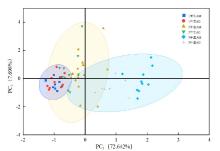
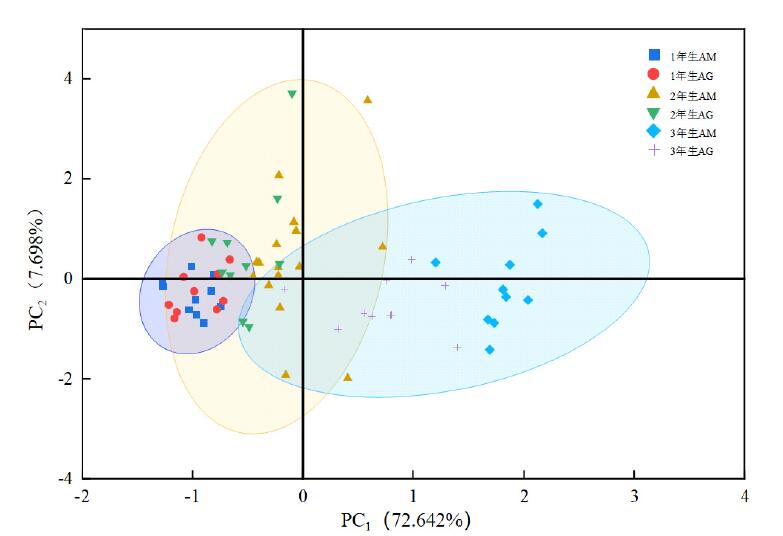
| 年限-品种 | F1 | F2 | 综合得分F | 综合排名 |
|---|---|---|---|---|
| 1年生AM | -1.802 | -0.361 | -1.336 | 5 |
| 1年生AG | -1.991 | 0.048 | -1.442 | 6 |
| 2年生AM | 0.178 | 0.493 | 0.167 | 3 |
| 2年生AG | -0.873 | 0.673 | -0.582 | 4 |
| 3年生AM | 4.926 | 0.099 | 3.586 | 1 |
| 3年生AG | 2.217 | -0.231 | 1.593 | 2 |
| 年限-品种 | F1 | F2 | 综合得分F | 综合排名 |
|---|---|---|---|---|
| 1年生AM | -1.802 | -0.361 | -1.336 | 5 |
| 1年生AG | -1.991 | 0.048 | -1.442 | 6 |
| 2年生AM | 0.178 | 0.493 | 0.167 | 3 |
| 2年生AG | -0.873 | 0.673 | -0.582 | 4 |
| 3年生AM | 4.926 | 0.099 | 3.586 | 1 |
| 3年生AG | 2.217 | -0.231 | 1.593 | 2 |
| [1] |
徐海军, 王化, 姚琴, 等. 北方地区养分调控对蒙古黄芪生长及药用成分的影响[J]. 东北林业大学学报, 2021, 49(1):38-43.
|
| [2] |
熊一峰, 秦雪梅, 李科, 等. 从黄芪化学成分测定分析药材商品品规的合理性[J]. 中草药, 2016, 47(12):2194-2198.
|
| [3] |
王亚鹏. 不同生产模式及生长年限黄芪的品质评价及其差异形成的分子机制研究[D]. 北京: 中国中医科学院, 2024.
|
| [4] |
戴昂勤, 邓煜, 马正政, 等. 基于代谢组学分析有机肥对蒙古黄芪生长发育的影响[J]. 北方园艺, 2024(16):116-124.
|
| [5] |
张浩博, 侯对虎, 吴宇涵, 等. 基于表型性状和TOPSIS模型联合分析的蒙古黄芪种质资源评价[J]. 中药材, 2024, 47(12):2974-2979.
|
| [6] |
黄沈辉, 李洋, 孙捷, 等. 基于HPLC-PDA-ELSD的炙黄芪特征成分一测多评适用性研究[J]. 中草药, 2024, 55(15):5230-5237.
|
| [7] |
王晓飞, 姚琴, 魏国江, 等. 氮磷钾养分对寒地膜荚黄芪生长及药用成分影响[J]. 中国土壤与肥料, 2021(2):149-155.
|
| [8] |
赵江怡, 田文仓, 冯紫薇, 等. 不同生长年限及粗度径级对黄芪饮片药效成分含量的影响[J]. 中草药, 2023, 54(20):6819-6826.
|
| [9] |
王强雄, 郭盛, 申柯欣, 等. 蒙古黄芪茎叶多类型资源性化学成分分析与价值评价[J]. 中国中药杂志, 2023, 48(24):6600-6612.
|
| [10] |
张倩倩, 李光跃, 苏优拉, 等. 干旱胁迫对蒙古黄芪和膜荚黄芪不同器官黄酮类成分积累的影响[J]. 西北植物学报, 2020, 40(7):1201-1208.
|
| [11] |
杨志城, 杨羽君, 鄂秀辉. 蒙古黄芪与膜荚黄芪差异性研究进展[J]. 中药材, 2020, 43(5):1261-1265.
|
| [12] |
何嘉郡, 秦晨, 贺廉清, 等. 黄芪黄酮类成分及其药理作用研究[J]. 辽宁中医药大学学报, 2024, 26(1):112-119.
|
| [13] |
顾东雅, 徐加应, 金绍娣, 等. 响应面优化低共熔溶剂提取黄芪多糖及其抗氧化活性研究[J]. 食品科技, 2024, 49(12):195-203.
|
| [14] |
张瑞, 曹庆伟, 李科, 等. 黄芪药材性状和化学特征与绝对生长年限的相关性分析研究[J]. 中草药, 2020, 51(2):451-460.
|
| [15] |
王悦, 毛欣颖, 丁宇, 等. 山东林下和大田种植西洋参生长与次生代谢产物积累的差异研究[J]. 中国中药杂志, 2025, 50(6):1524-1533.
|
| [16] |
朱三明, 郑敏敏, 田恬, 等. 植物次生代谢途径与调控研究进展[J]. 植物生理学报, 2023, 59(12):2188-2216.
|
| [17] |
王泽, 晋小军, 毛耀杰. 4个蒙古黄芪品种光合特性及其产量质量比较研究[J]. 中国野生植物资源, 2024, 43(3):60-66.
|
| [18] |
赵雅秋, 袁媛. 中药高价值活性成分的生物与化学合成研究进展[J]. 中国中药杂志, 2024, 49(15):3986-3997.
|
| [19] |
赖瑞联, 吴如健, 赖钟雄. 植物类黄酮的分类、药理活性及其生物合成调控研究进展[J]. 东南园艺, 2024, 12(2):81-99.
|
| [20] |
史汶龙, 王健, 马莹, 等. 中药活性成分生物合成途径解析研究方法进展[J]. 中国中药杂志, 2023, 48(9):2273-2283.
|
| [21] |
王恒, 王慧, 韩伟, 等. 桃果实的代谢途径和糖积累调控生理机制的研究进展[J]. 北方园艺, 2024(15):128-133.
|
| [22] |
徐海军, 姚琴, 程薪宇, 等. 北方地区黄芪根系发育、成分积累及表观生长种间差异[J]. 植物研究, 2021, 41(6):862-869.
doi: 10.7525/j.issn.1673-5102.2021.06.003 |
| [23] |
杨志城, 张福明, 孙彩虹, 等. 基于化学组分探究蒙古黄芪与膜荚黄芪药材及其蜜炙品之间物质基础差异[J]. 时珍国医国药, 2021, 32(11):2681-2684.
|
| [24] |
周仪. 蒙古黄芪与膜荚黄芪的生长参数、代谢组学及转录组学的比较[D]. 长春: 吉林农业大学, 2024.
|
| [25] |
胡艳改, 杜宇忠, 郝磊, 等. 中药材蒙古黄芪与膜荚黄芪优质种源的研究[J]. 山西农业科学, 2017, 45(10):1662-1666.
|
| [26] |
杨少杰, 樊良帅, 晋小军, 等. 生长年限对蒙古黄芪质量的影响[J]. 中国野生植物资源, 2021, 40(1):60-64.
|
| [27] |
doi: 10.1186/s12870-024-05030-7 |
| [1] | LI Chunlin, YANG Meili, WANG Bangtai, LU Hongwei, CHENG Cui, QIN Guiwen. Adaptive Preliminary Screening of Summer Sowing Maize Varieties (Lines) Suitable for Machine Harvest in Northern Henan Province [J]. Chinese Agricultural Science Bulletin, 2026, 42(6): 14-21. |
| [2] | LI Shimeng, NAN Zhiqiang, BAIMA Yangzhen, WANG Jinxiong. Comprehensive Evaluation and Adaptability Analysis of Rapeseed Agronomic Traits in Xizang [J]. Chinese Agricultural Science Bulletin, 2026, 42(6): 31-40. |
| [3] | LUO Jing, DU Shanshan, YAO Qingqing, WANG Dongli, HE Zhongsheng, SUN Huijian, WANG Ruijun. Effect of NaCl and Na2SO4 Salt Stress on the Germination of Upland Cotton Seeds and Screening of Salt-tolerant Germplasm [J]. Chinese Agricultural Science Bulletin, 2026, 42(3): 48-56. |
| [4] | QI Shuokun, ZHANG Yiyang, MA Yu, LIU Haolin, SHI Juncong, WU Longguo. Effect of Brackish Water on Growth and Quality of Cherry Tomatoes [J]. Chinese Agricultural Science Bulletin, 2026, 42(1): 56-69. |
| [5] | XU Cunfa, SUN Yiwen, WANG Ning, WANG Jialei, YANG Chenye, CHEN Liyang, SHAN Chengjun. Quality Analysis and Comprehensive Evaluation of Different Varieties of Small Fruit Watermelon [J]. Chinese Agricultural Science Bulletin, 2026, 42(1): 70-76. |
| [6] | HUANG Rong, TANG Ling, WANG Weicheng, CHANG Qiang, LI Kuanying, HE Huan, PAN Yanhua. Response of Morphological Traits and Chlorophyll Fluorescence of Paeonia lactiflora Leaves to Drought Stress and Evaluation of Drought Resistance [J]. Chinese Agricultural Science Bulletin, 2026, 42(1): 92-102. |
| [7] | ZHAO Fang, GAO Yunqing, GAO Shaobin, ZHENG Lizhen, LI Shutong, SHANG Qibing, XU Dongxu, GUAN Xiangyu. Genetic Diversity Analysis and Comprehensive Evaluation of Main Agronomic and Economic Characters of Mung Bean Germplasm Resources in Hebei Province [J]. Chinese Agricultural Science Bulletin, 2025, 41(5): 23-29. |
| [8] | ZHANG Bo, XIAO Ouli, WANG Tielin, WANG Dan, ZHAO Haoran, CHEN Jieyin, DAI Xiaofeng, WANG Yonggang, KONG Zhiqiang. Occurrence Pattern of Common Diseases and Integrated Control Strategy of Astragalus membranaceus [J]. Chinese Agricultural Science Bulletin, 2025, 41(4): 119-125. |
| [9] | LI Jing, LI Haixia, LI Zhenghua, GUO Chengbo, WANG Yanmin, SUN Peilin, BAI Hui. Genetic Diversity Analysis of Syringa Germplasm Resources on Phenotypic Traits [J]. Chinese Agricultural Science Bulletin, 2025, 41(4): 74-83. |
| [10] | LONG Libing, LIANG Wei, YU Guo, QIN Zhenghao, HUANG Rongshao, YAO Shaochang. Phenotypic Diversity Analysis of Guangxi Cinnamomum cassia Leaves and Screening for Excellent Germplasm [J]. Chinese Agricultural Science Bulletin, 2025, 41(34): 63-73. |
| [11] | ZHAO Jing, TUHANGULI Tuoheti, XU Lin, GAO Qiang, ZHENG Lipeng, ZHANG Yan, LUO Youpeng, YAN Qingqing, TANG Lisi, ZULKEYA Manaf, AYIJIAMALI Keranmu, YANG Yushuang, WANG Weiping. Principal Component Analysis and Cluster Analysis of Rubber Yield and Agronomic Traits of Taraxacum kok-saghyz in Xinjiang [J]. Chinese Agricultural Science Bulletin, 2025, 41(33): 51-58. |
| [12] | ZHENG Xinran, WU Qingsong, LIU Xingyu, LIU Shuxia, XIAO Yu, GUAN Xiangjun, ZHANG Pengju, WANG Jingjing, HU Ming, CHANG Yuan, WANG Xiaofei. Anatomical Characteristics and Environmental Adaptability of Astragalus membranaceus var. mongholicus Leaves from Different Geographical Sources [J]. Chinese Agricultural Science Bulletin, 2025, 41(32): 36-45. |
| [13] | SUN Lina, ZHAO Xingcai, YANG Shengtao, LIU Yuanyuan, HAN Liu. Study on Performance Evaluation of Low-carbon Utilization of Cultivated Land in Heilongjiang Province [J]. Chinese Agricultural Science Bulletin, 2025, 41(32): 74-81. |
| [14] | ZHANG Binghui, SUN Shihao, JIA Kai, WANG Yihui, ZHENG Chaoyuan, LI Wenqing. Study on Variation of Tobacco Leaf Full Aroma Components Contents by Multifactorial Variables Across Hemisphere Scale [J]. Chinese Agricultural Science Bulletin, 2025, 41(30): 137-146. |
| [15] | WANG Manman, FENG Lulu, ZHANG Huimin, YAN Honglang, WANG Kang. Screening and Comprehensive Evaluation of Fusarium Wilt-Resistant Melon Grafting Rootstocks [J]. Chinese Agricultural Science Bulletin, 2025, 41(30): 60-69. |
| Viewed | ||||||
|
Full text |
|
|||||
|
Abstract |
|
|||||
