欢迎访问《中国农学通报》,

中国农学通报 ›› 2026, Vol. 42 ›› Issue (20): 172-182.doi: 10.11924/j.issn.1000-6850.casb2025-0506
刘星佑1( ), 冯晓燕1, 龚月桦1(), 尹礼国2, 周万海1
收稿日期:2025-06-21
修回日期:2025-10-11
出版日期:2026-10-25
发布日期:2026-10-26
通讯作者:
作者简介:刘星佑,女,2000年出生,四川米易人,在读研究生,研究方向:农学。通信地址:611134 四川省成都市温江区惠民路211号 四川农业大学成都校区,Tel:0812-18782398307,E-mail:3261545268@qq.com。
基金资助:
LIU Xingyou1(), FENG Xiaoyan1, GONG Yuehua1(), YIN Liguo2, ZHOU Wanhai1
Received:2025-06-21
Revised:2025-10-11
Published:2026-10-25
Online:2026-10-26
摘要:
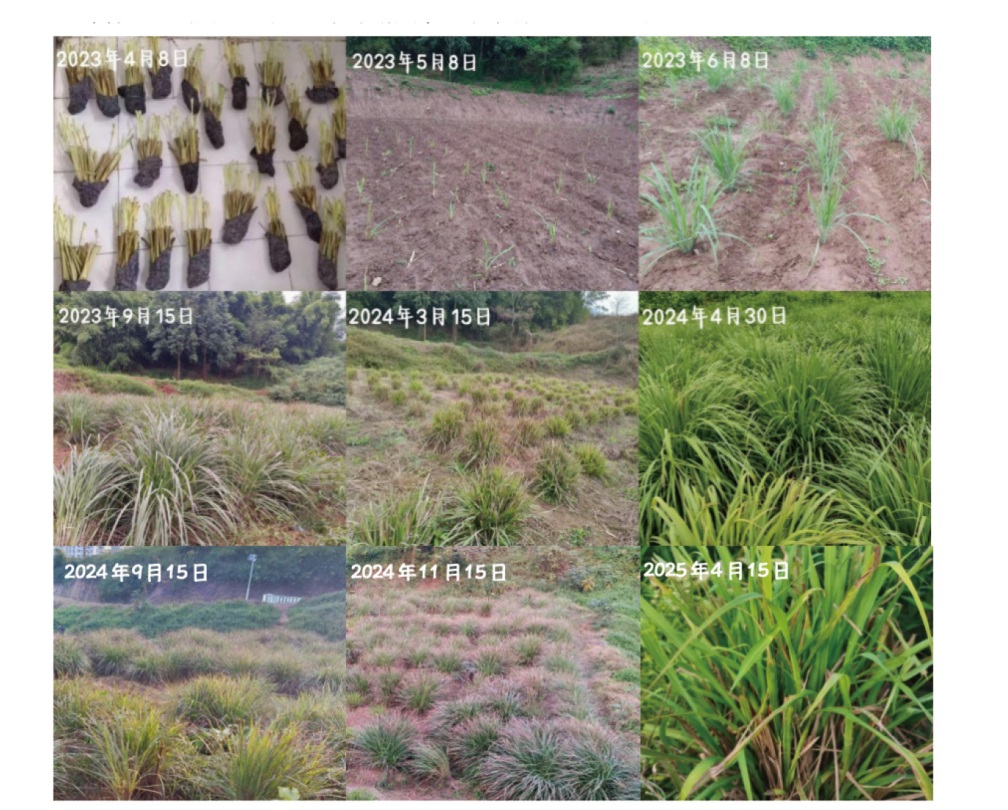
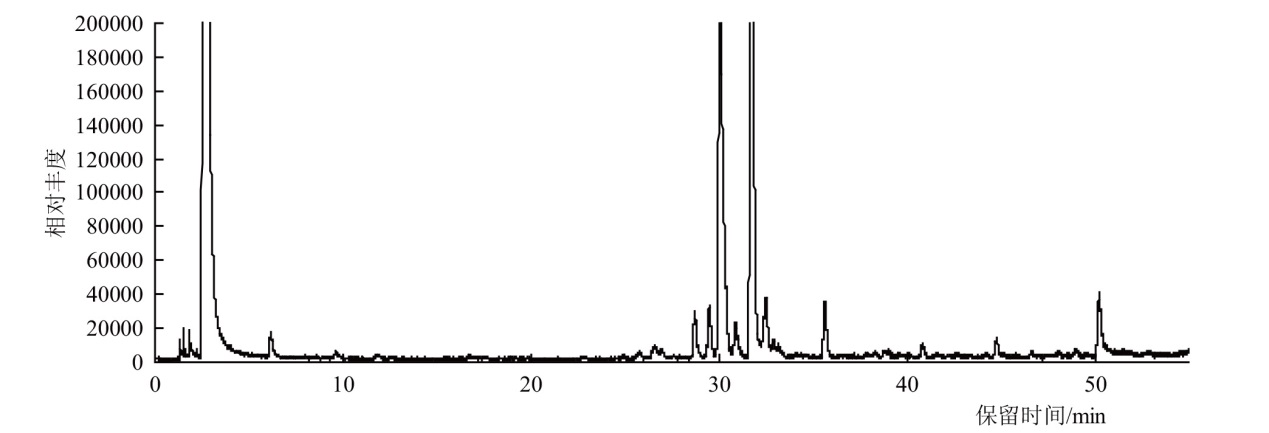
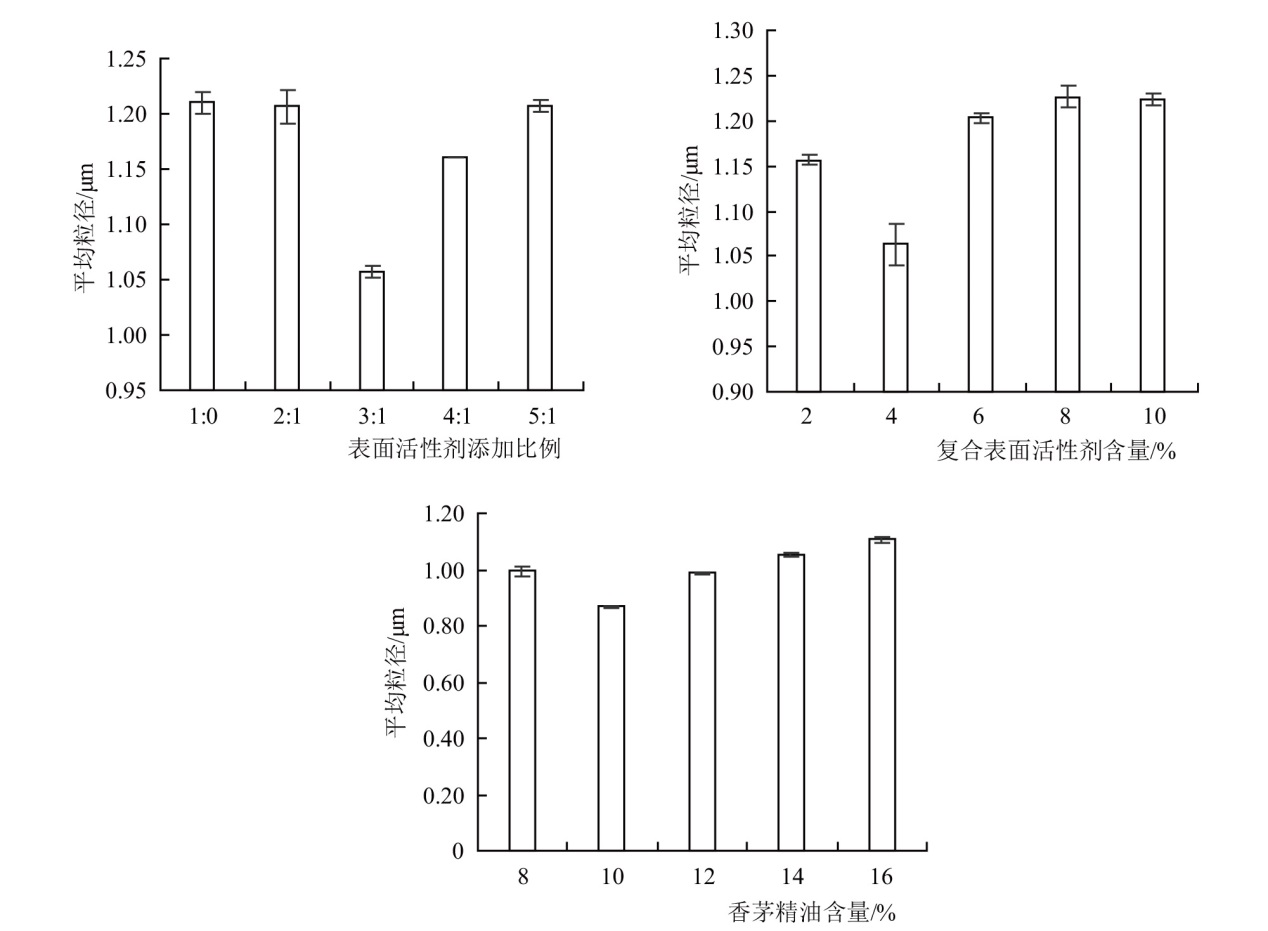
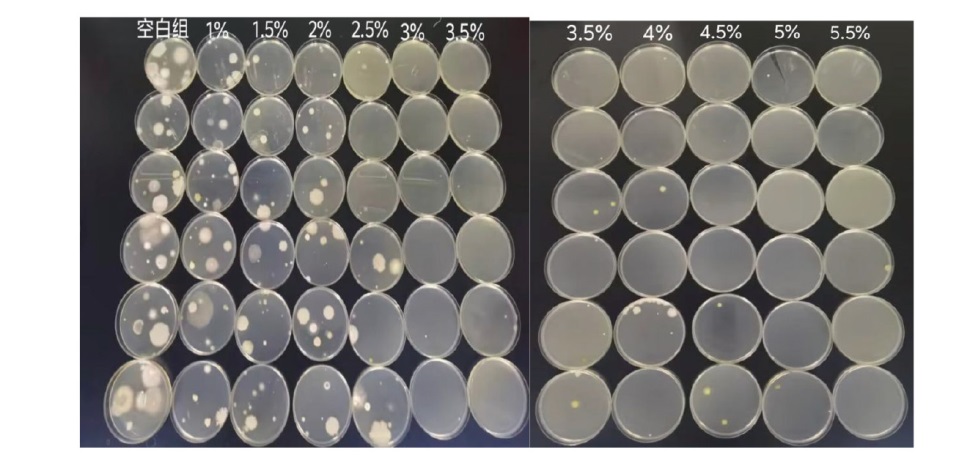
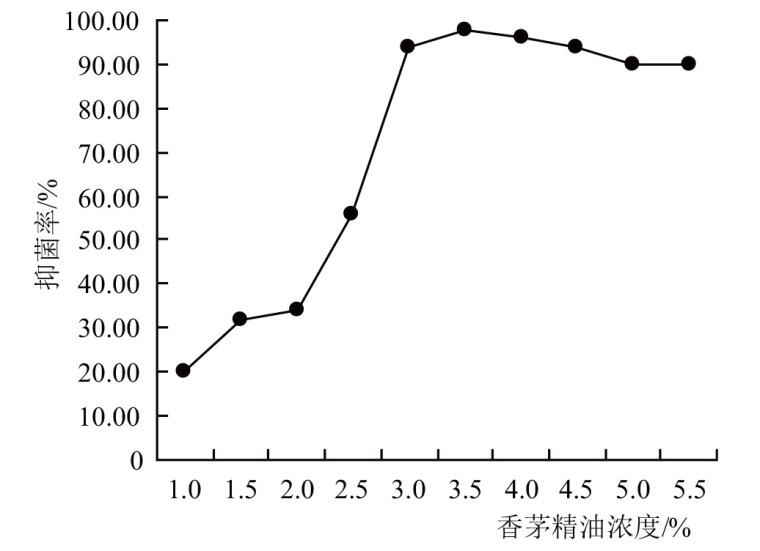
为了评价香茅草在四川省宜宾种植的适应性,并为香茅草及精油的开发利用提供参考。以广西香茅为试材,在宜宾栽培并测定其生长指标,采用超声波辅助水蒸气蒸馏法提精油,选用Tween-80和Span-80作为表面活性剂,并结合Box-Behnken响应面法优化了水乳剂配方,将制备的精油水乳剂加入PCA培养基,测定了其对空气自然菌落的抑制效果。研究结果表明,在宜宾地区栽培的香茅草表现出优良的生长势,其丛高约1.21 m,冠幅面积约1.2 m2,单丛分蘖数136个,单株鲜重约为1.9 kg。通过优化超声辅助水蒸气蒸馏工艺,在超声90 min,氯化钠浓度为11%,料液比为1:20 g/mL,蒸馏2 h的条件下,香茅精油的提取率为2.58%。GC-MS分析显示,香茅精油中有32种化学成分,其中主要成分为香叶醛(49.38%)、橙花醛(28.06%)、β-月桂烯(8.49%)。通过响应面法优化,当Tween-80与Span-80比例为3:1,复合表面活性剂含量为4.19%,香茅精油含量为9.91%时,所制备的香茅精油水乳剂稳定性最佳。该水乳剂在体积为35 μL/mL(浓度为3.5%)的条件下,对空气中的微生物抑菌率为98.0%。综合来看,本研究证明了香茅草在宜宾地区具有良好的气候适应性,长势良好,精油提取率较高,制备的水乳剂稳定性好,抑菌效果强,为香茅草及精油的资源化利用和产品开发奠定了基础。
中图分类号:
刘星佑, 冯晓燕, 龚月桦, 尹礼国, 周万海. 宜宾引种香茅草的精油提取、水乳剂制备及抑菌效果研究[J]. 中国农学通报, 2026, 42(20): 172-182.
LIU Xingyou, FENG Xiaoyan, GONG Yuehua, YIN Liguo, ZHOU Wanhai. Study on Essential Oil Extraction, Emulsion Preparation, and Antibacterial Activity of Lemongrass Introduced in Yibin[J]. Chinese Agricultural Science Bulletin, 2026, 42(20): 172-182.
| 日期 | 3月15日 | 4月1日 | 4月15日 | 4月30日 |
|---|---|---|---|---|
| 丛高/cm | 50.1±2.5 | 68.2±3.7 | 91.9±3.2 | 114.0±8.5 |
| 冠幅面积/m2 | 0.5±0.2 | 0.9±0.3 | 1.2±0.6 | 1.6±0.3 |
| 单丛分蘖数 | 40.5±5 | 72.1±15.2 | 117±9 | 136.2±11.6 |
| 日期 | 3月15日 | 4月1日 | 4月15日 | 4月30日 |
|---|---|---|---|---|
| 丛高/cm | 50.1±2.5 | 68.2±3.7 | 91.9±3.2 | 114.0±8.5 |
| 冠幅面积/m2 | 0.5±0.2 | 0.9±0.3 | 1.2±0.6 | 1.6±0.3 |
| 单丛分蘖数 | 40.5±5 | 72.1±15.2 | 117±9 | 136.2±11.6 |
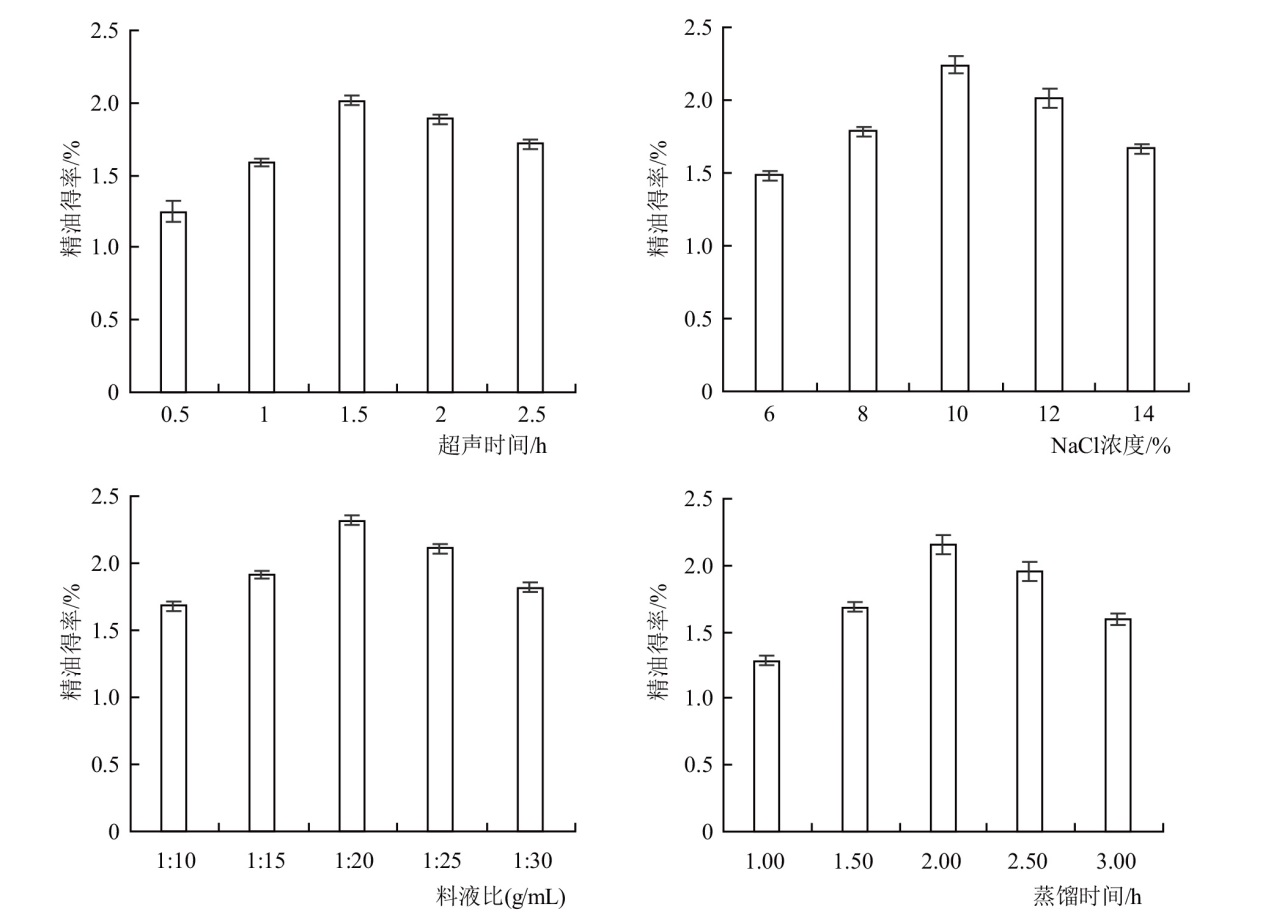
| 试验号 | 因素 | ||||
|---|---|---|---|---|---|
| A | B | C | D | 精油得率/% | |
| 1 | 1 | 1 | 1 | 1 | 1.55 |
| 2 | 1 | 2 | 2 | 2 | 2.1 |
| 3 | 1 | 3 | 3 | 3 | 1.81 |
| 4 | 2 | 1 | 2 | 3 | 2.24 |
| 5 | 2 | 2 | 3 | 1 | 1.96 |
| 6 | 2 | 3 | 1 | 2 | 2.34 |
| 7 | 3 | 1 | 3 | 2 | 1.68 |
| 8 | 3 | 2 | 1 | 3 | 1.76 |
| 9 | 3 | 3 | 2 | 1 | 2.00 |
| 均值 | 1.82 | 1.82 | 1.88 | 1.84 | |
| 均值 | 2.18 | 1.94 | 2.11 | 2.04 | |
| 均值 | 1.81 | 2.05 | 1.82 | 1.94 | |
| 极差 | 0.37 | 0.23 | 0.29 | 0.2 | |
| 因素 | 平方和(SS) | 自由度(df) | 均方(MS) | F值 | P值 | 显著性 |
|---|---|---|---|---|---|---|
| A.超声时间 | 0.215 | 2 | 0.108 | 18.2 | 0.003 | ** |
| B.NaCl浓度 | 0.095 | 2 | 0.048 | 8.1 | 0.023 | * |
| C.料液比 | 0.182 | 2 | 0.091 | 15.4 | 0.005 | ** |
| D.蒸馏时间 | 0.072 | 2 | 0.036 | 6.1 | 0.037 | * |
| 误差 | 0.035 | 6 | 0.006 |
| 序号 | 化合物名称 | 保留时间/min | 分子式 | 分子量 | 相对含量/% |
|---|---|---|---|---|---|
| 1 | β-月桂烯 | 18.394 | C10H16 | 136 | 8.49 |
| 2 | 柠檬烯 | 20.29 | C10H18O2 | 136 | 0.04 |
| 3 | 1,3,8-对甲苯三烯 | 21.577 | C10H14 | 134 | 0.17 |
| 4 | 反式β-罗勒烯 | 22.346 | C10H16 | 136 | 1.05 |
| 5 | (Z)-3,7-二甲基-1,3,6-十八烷三烯 | 23.366 | C10H16 | 136 | 0.55 |
| 6 | 邻伞花烃 | 24.779 | C10H14 | 134 | 0.15 |
| 7 | 环己硅氧烷 | 28.339 | C12H36O6Si6 | 444 | 0.03 |
| 8 | 呋喃,3-(4-甲基-3-戊烯基)- | 33.857 | C10H14O | 150 | 0.31 |
| 9 | 2,4-二甲基苯乙烯 | 35.047 | C10H12 | 132 | 0.07 |
| 10 | 香茅醛 | 37.644 | C10H18O | 154 | 0.19 |
| 11 | 附生柠檬醛A | 37.992 | C10H16O | 152 | 0.13 |
| 12 | 芳樟醇 | 41.871 | C10H18O | 154 | 1.23 |
| 13 | 1--石竹烯 | 45.073 | C15H24 | 204 | 0.42 |
| 14 | 橙花醛 | 50.398 | C10H16O | 152 | 28.06 |
| 15 | 香叶醛 | 53.475 | C10H16O | 152 | 49.38 |
| 16 | 乙酸香叶酯 | 54.06 | C12H20O2 | 196 | 1.76 |
| 17 | 香茅醇 | 54.606 | C10H20O | 156 | 1.07 |
| 18 | 橙花醇 | 56.473 | C10H18O | 154 | 0.43 |
| 19 | 2-十三烷酮 | 56.894 | C13H26O | 198 | 0.41 |
| 20 | 香叶醇 | 59.037 | C10H18O | 154 | 3.37 |
| 21 | 氧化石竹烯 | 65.716 | C15H24O | 220 | 0.05 |
| 22 | 6,10,14-三甲基-2-十五烷酮 | 72.744 | C18H36O | 268 | 0.26 |
| 23 | 长叶烯 | 76.768 | C15H24 | 204 | 0.10 |
| 24 | 棕榈酸乙酯 | 78.664 | C18H36O2 | 284 | 0.46 |
| 25 | 香叶酸 | 80.332 | C10H16O2 | 168 | 0.93 |
| 26 | 2,4-二叔丁基苯酚 | 81.024 | C14H22O | 206 | 0.06 |
| 27 | 3,7,11-三甲基-2,6,10-十二烷三烯-1-醇 | 83.06 | C15H26O | 222 | 0.08 |
| 28 | 十四烷 | 84.052 | C14H30 | 196 | 0.17 |
| 29 | 油酸乙酯 | 88.289 | C20H38O2 | 310 | 0.05 |
| 30 | 月桂酸 | 88.434 | C12H24O2 | 200 | 0.09 |
| 31 | 叶绿醇 | 93.638 | C20H40O | 296 | 0.10 |
| 32 | 棕榈酸 | 110.271 | C16H32O2 | 256 | 0.34 |
| 序号 | X1 | X2 | X3 | Y |
|---|---|---|---|---|
| 1 | 9 | 3 | 3 | 1.16 |
| 2 | 11 | 3 | 3 | 1.22 |
| 3 | 9 | 5 | 3 | 1.07 |
| 4 | 11 | 5 | 3 | 1.15 |
| 5 | 9 | 4 | 2 | 1.22 |
| 6 | 11 | 4 | 2 | 1.12 |
| 7 | 9 | 4 | 4 | 1.06 |
| 8 | 11 | 4 | 4 | 1.16 |
| 9 | 10 | 3 | 2 | 1.21 |
| 10 | 10 | 5 | 2 | 1.12 |
| 11 | 10 | 3 | 4 | 1.21 |
| 12 | 10 | 5 | 4 | 1.05 |
| 13 | 10 | 4 | 3 | 0.87 |
| 14 | 10 | 4 | 3 | 0.88 |
| 15 | 10 | 4 | 3 | 0.85 |
| 方差来源 | 平方和 | 均方 | F值 | P值 | 显著性 |
|---|---|---|---|---|---|
| 模型 | 0.2266 | 0.0252 | 29.67 | 0.0008 | ** |
| X1 | 0.0025 | 0.0025 | 2.89 | 0.1500 | |
| X2 | 0.0210 | 0.0210 | 24.77 | 0.0042 | * |
| X3 | 0.0045 | 0.0045 | 5.32 | 0.0692 | |
| X1X2 | 0.0001 | 0.0001 | 0.1179 | 0.7453 | |
| X1X3 | 0.0100 | 0.0100 | 11.79 | 0.0186 | * |
| X2X3 | 0.0012 | 0.0012 | 1.44 | 0.2833 | |
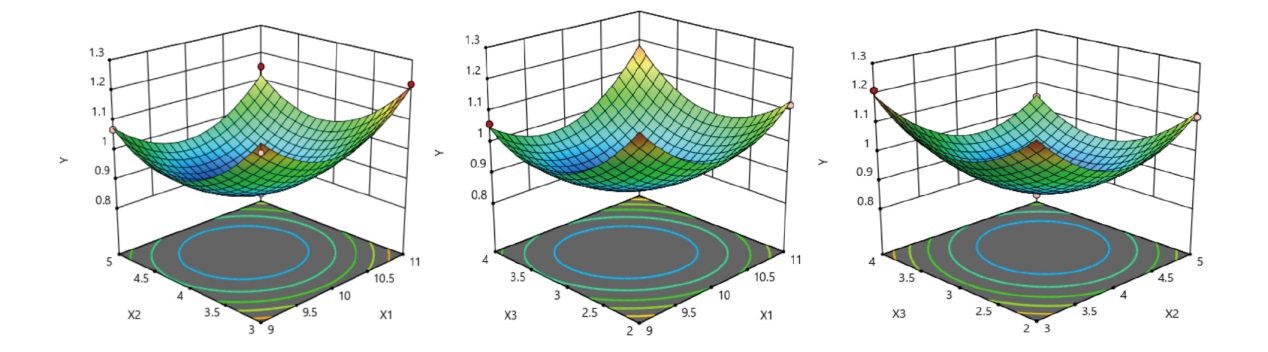
| X1² | 0.0702 | 0.0702 | 82.79 | 0.0003 | ** |
| X2² | 0.0781 | 0.0781 | 92.04 | 0.0002 | ** |
| X3² | 0.0677 | 0.0677 | 79.81 | 0.0003 | ** |
| 失拟项 | 0.0038 | 0.0013 | 5.39 | 0.1604 | 不显著 |
| [1] |
李佳屹, 高晓余, 胡一凡, 等. 香茅草种质资源功能性分析评价[J]. 热带作物学报, 2024, 45(9):1840-1850.
doi: 10.3969/j.issn.1000-2561.2024.09.008 |
| [2] |
南京中医药大学. 中药大辞典(2版)[M]. 上海: 上海科学技术出版社, 2006:3506.
|
| [3] |
郇树乾, 李岩, 王坚, 等. 不同施肥水平对香茅草生物量及香茅油产量的影响[J]. 热带农业科学, 2014, 34(10):33-35.
|
| [4] |
陈志洋, 唐雅婷, 吕泽, 等. 香茅油纳米乳剂的构建、表征、抗菌性能和细胞毒性(英文)[J]. 物理化学学报, 2022, 38(12):206-214.
|
| [5] |
秦荣秀, 周丽珠, 陈明江, 等. 不同种植模式对不同香茅品种产量和含油率的影响[J]. 热带农业科学, 2018, 38(3):109-111,117.
|
| [6] |
冷进松, 朱珠, 周跃勇. 超声波辅助水酶法提取啤酒花精油的研究[J]. 食品研究与开发, 2014, 35(1):34-41.
|
| [7] |
杜永华, 范静, 魏琴, 等. 油樟叶挥发油水乳剂制备工艺的优化[J]. 湖北农业学, 2014, 53(18):4381-4386.
|
| [8] |
doi: 10.1016/j.foodres.2008.02.006 URL |
| [9] |
程作慧, 段慧娟, 李婧婧, 等. 前沿科研成果融入药物化学实验教学—香茅精油微乳液的制备和理化性能研究[J]. 广东化工, 2024, 51(19):232-234.
|
| [10] |
何建国, 李少华, 熊国红, 等. 香茅精油微乳剂的制备及驱蚊效果评价[J]. 中华卫生杀虫药械, 2019, 25(1):7-9.
|
| [11] |
张晓宏, 赵秀峰, 张九龙, 等. Box-Behnken效应面法优化制备氯诺昔康柔性脂质体[J]. 沈阳药科大学学报, 2016, 33(4):264-270.
|
| [12] |
侯绪和, 杨梦娇, 韦升艳, 等. 7种植物精油对空气自然菌落抑制作用研究[J]. 广东化工, 2024, 51(6):137-140.
|
| [13] |
国家质检总局. 公共场所卫生检验方法第3部分:空气微生物:GX2/T 18204.3-2013[S]. 2013.
|
| [14] |
宓宇, 王晗毓, 郑家勤, 等. Box-Behnken响应面法优化二甲硅油乳剂的制备工艺[J]. 当代化工研究, 2022(7):150-152.
|
| [15] |
许智萍, 何璐, 范建成, 等. 干热河谷区香茅草的品种特性及栽培技术[J]. 中国热带农业, 2019(6):80-85.
|
| [16] |
黄俊葵, 杨启晟, 范雪雁, 等. 低月桂烯柠檬香茅和食材柠檬香茅的引种对比试验[J]. 饲料博览, 2022(3):48-5255.
|
| [17] |
梁宗武, 邹幸江, 陈明宇, 等. 不同提取条件对香茅草精油产量的影响[J]. 畜牧与饲料科学, 2017, 38(9):17-19.
|
| [18] |
丁华, 王建清. 香茅精油的超声辅助提取及成分分析[J]. 中国调味品, 2017, 42(3):141-145.
|
| [19] |
张洪军, 曹亚斌, 薛文博, 等. 香茅精油提取工艺优化及其气相抑菌性能研究[J]. 保鲜与加工, 2017(4):37-42.
|
| [20] |
邱珊莲, 林宝妹, 洪佳敏, 等. 3个香茅品种精油与鲜草挥发性成分分析[J]. 饲料研究, 2022, 45(24):117-121.
|
| [21] |
董晓敏, 刘布鸣, 林霄, 等. 广西产香茅草挥发油的化学成分分析[J]. 广西科学, 2009, 16(3):302-304.
|
| [22] |
欧阳婷, 杨琼梁, 颜红, 等. 不同产地香茅挥发油的化学成分比较研究[J]. 林产化学与工业, 2017, 37(1):141-148.
|
| [23] |
雷津美, 张莉, 杜凤沛. 表面活性剂类农药助剂在农药中的应用研究进展[J]. 日用化学工业(中英文), 2025, 55(2):131-141.
|
| [24] |
王子旋, 高园, 颛孙相勋, 等. 薄荷精油纳米乳剂制备及对耐药金葡菌抑制研究[J]. 扬州大学学报(农业与生命科学版), 2022, 43(3):40-46.
|
| [25] |
余海艳, 李康, 崔荣洽, 等. 迷迭香精油纳米乳的制备研究[J]. 中国食品添加剂, 2022, 33(8):28-36.
|
| [26] |
靳若宁, 钱雪, 赵孔发, 等. 青花椒精油纳米乳的制备及其体外抑菌活性研究[J]. 中国野生植物资源, 2022, 41(10):36-41,53.
|
| [27] |
钱雪, 王晓东, 陈斌, 等. 薰衣草精油纳米乳的制备及其体外抑菌活性研究[J]. 中国野生植物资源, 2022, 41(4):10-15,21.
|
| [28] |
白师茹, 唐璐, 范蓓, 等. 薄荷精油纳米乳液工艺优化及其稳定性研究[J]. 食品科技, 2025(1):265-274.
|
| [29] |
林霜霜, 邱珊莲, 郑开斌, 等. 香茅精油的成分分析及抑菌作用研究[J]. 中国农业科技导报, 2017, 19(10):89-95.
|
| [1] | 李施蒙, 南志强, 白玛央珍, 王晋雄. 西藏地区引种油菜的农艺性状综合评价与适应性分析[J]. 中国农学通报, 2026, 42(6): 31-40. |
| [2] | 孔祥彬, 杨红光, 郭文娟, 刘英, 侯正红, 张慧君, 李霞, 杨林, 徐立功, 张连晓, 路远, 秦美玲. 25个迷你南瓜品种(系)在重庆市开州区的引种评价[J]. 中国农学通报, 2026, 42(17): 56-66. |
| [3] | 党海红, 何克燕, 何丽丽, 李纪昀, 王佳豪, 王晓丽, 王倩, 魏小星. 8个燕麦品种在玛多地区的生产性能及营养品质综合评价[J]. 中国农学通报, 2025, 41(34): 112-120. |
| [4] | 卜会荣, 尹诗瑜, 徐伟洲, 常瑜池, 史雷, 贾建英. 风沙草滩区紫花苜蓿品种选择与综合性能评价[J]. 中国农学通报, 2025, 41(31): 149-158. |
| [5] | 刘威, 蔡卫佳, 王昊, 罗桂杰, 刘旭. 食叶草研究进展[J]. 中国农学通报, 2025, 41(3): 36-41. |
| [6] | 邵青龙, 马西青, 魏俊梅, 王万蓉, 姚小琴, 吴玉蓉, 张栋海, 邵明. 引进8个紫花苜蓿品种在图木舒克垦区的适应性分析[J]. 中国农学通报, 2025, 41(23): 117-124. |
| [7] | 韩红亮, 程蒙, 李颖, 陈宝妮, 叶嘉敏, 李洁, 纪瑞锋, 周修腾. 鹿药种子的无菌萌发及组织培养研究[J]. 中国农学通报, 2025, 41(19): 56-63. |
| [8] | 黄华希, 卢恩科, 臧青民, 徐世娟, 陈荣, 刘秦. 紫锥菊不同器官挥发性成分分析[J]. 中国农学通报, 2025, 41(19): 143-150. |
| [9] | 沈玉江, 杜春玉, 刘淑霞, 关向军, 徐海军, 王晓飞, 肖宇. 黑龙江省大庆地区黄芪引种适应性评价[J]. 中国农学通报, 2025, 41(1): 82-88. |
| [10] | 杨航, 李懿轩, 李强, 刘小铭, 杨涛, 罗竹梅, 刘江涛. 陕北毛乌素沙地柳枝稷生长特性研究[J]. 中国农学通报, 2024, 40(34): 42-49. |
| [11] | 姜艳, 严炜, 尼章光, 陈于福, 章勇, 王铁运, 张翠仙, 罗心平, 杨林圜, 王美存. 4个蛋黄果品种在孟连地区的引种表现及评价[J]. 中国农学通报, 2024, 40(28): 37-41. |
| [12] | 陈琴, 付卓锐, 肖兴翠, 辜云杰, 潘欣. 安息香属植物研究进展[J]. 中国农学通报, 2024, 40(22): 40-46. |
| [13] | 宋怡颖, 韦明月, 郝磊, 秦媛媛, 柴乖强, 史建国, 段义忠. 沙地蛋白桑引种栽培及其在陕北榆阳风沙区的适应性研究[J]. 中国农学通报, 2024, 40(22): 32-39. |
| [14] | 王连军. 柑橘引种实验及其在辰山植物园中的功能定位研究[J]. 中国农学通报, 2024, 40(13): 60-63. |
| [15] | 夏菲, 李慧, 白红彤, 石雷, 李奕浓. 阜阳地区6种杂薰衣草的引种栽培[J]. 中国农学通报, 2024, 40(10): 76-82. |
| 阅读次数 | ||||||
|
全文 |
|
|||||
|
摘要 |
|
|||||
