欢迎访问《中国农学通报》,

中国农学通报 ›› 2026, Vol. 42 ›› Issue (5): 109-116.doi: 10.11924/j.issn.1000-6850.casb2025-0876

• 资源·环境·生态·土壤·气象 • 上一篇    下一篇

苏尼特荒漠草原土壤主要养分变化特征及综合评价

苏岩1(), 赵晓英2(), 成日晟1, 薛淑琴3, 张英华4   

  1. 1 苏尼特左旗气象局, 内蒙古苏尼特左旗 011300
    2 锡林浩特国家气候观象台, 内蒙古锡林浩特026000
    3 锡林郭勒盟气象局, 内蒙古锡林浩特 026000
    4 西乌珠穆沁旗气象局, 内蒙古西乌珠穆沁旗 026200
  • 收稿日期:2025-10-20 修回日期:2025-12-24 出版日期:2026-03-18 发布日期:2026-03-18
  • 通讯作者:
    赵晓英,女,1976年出生,内蒙古锡林浩特人,副高级工程师,本科,研究方向:综合气象观测及应用气象。通信地址:026000 内蒙古锡林郭勒盟锡林浩特市团结大街600号 锡林浩特国家气候观象台,Tel:0479-8241604,E-mail:
  • 作者简介:

    苏岩,男,2001年出生,内蒙古锡林浩特人,助理工程师,本科,研究方向:综合气象观测及气象预报服务。通信地址:011300 内蒙古锡林郭勒盟苏尼特左旗气象局,Tel:0479-2522834,E-mail:

  • 基金资助:
    锡林郭勒盟气象科技研发基金项目“降水变化对苏尼特荒漠草原植被恢复影响机制研究”(xmqxjkyxm202509)

Characteristics and Comprehensive Evaluation of Major Soil Nutrient Changes in Sunite Desert Grassland

SU Yan1(), ZHAO Xiaoying2(), CHENG Risheng1, XUE Shuqin3, ZHANG Yinghua4   

  1. 1 Sunite Left Banner Meteorological Bureau, Sunite Left Banner, Inner Mongolia 011300
    2 Xilinhot National Climate Observatory, Xilinhot, Inner Mongolia 026000
    3 Xilingol League Meteorological Bureau, Xilinhot, Inner Mongolia 026000
    4 Xiwuzhumuqin Banner Meteorological Bureau, Xiwuzhumuqin Banner, Inner Mongolia 026200
  • Received:2025-10-20 Revised:2025-12-24 Published:2026-03-18 Online:2026-03-18

摘要:

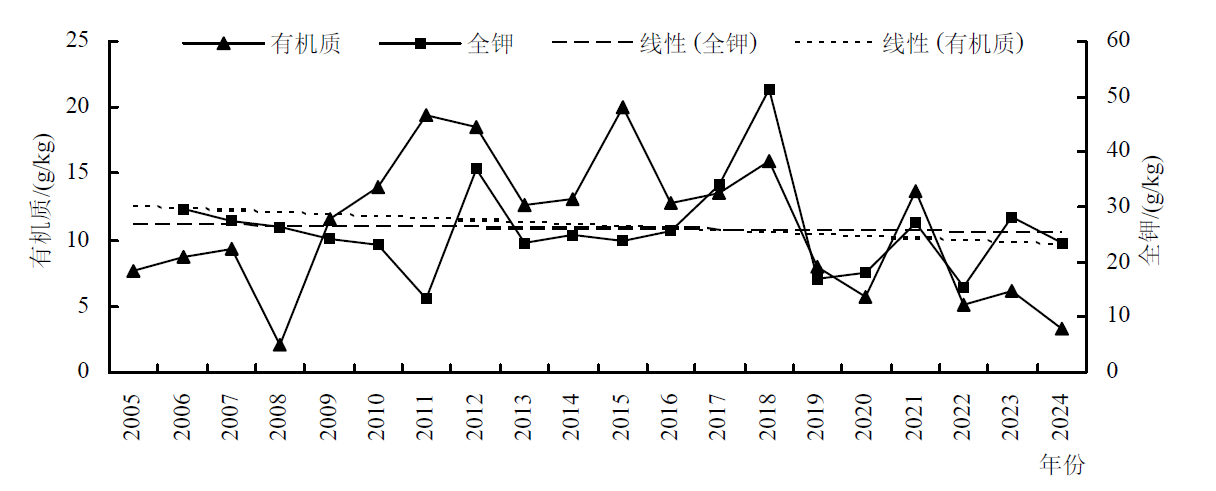
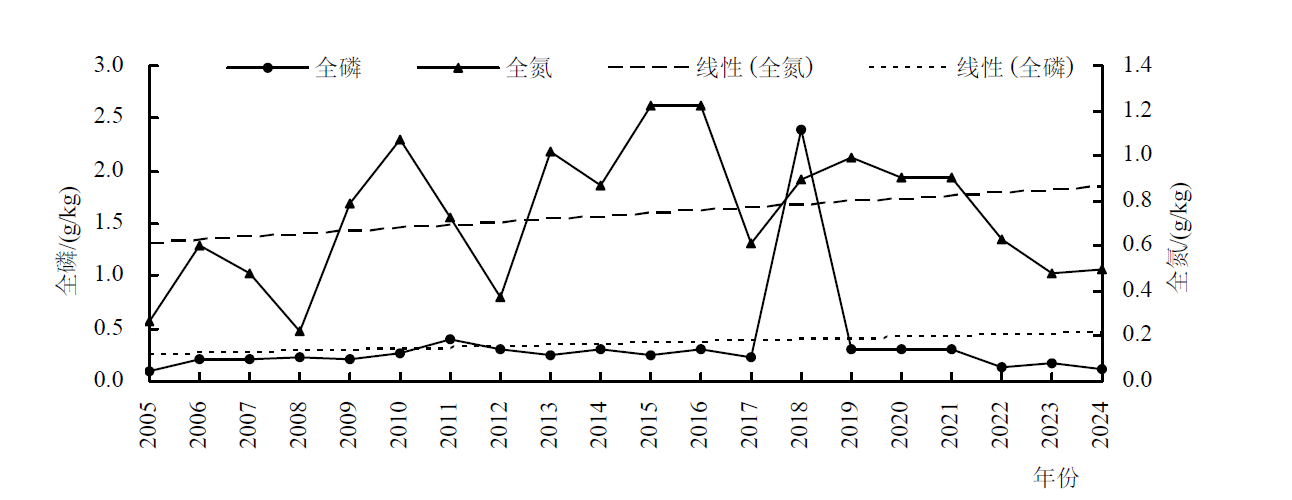
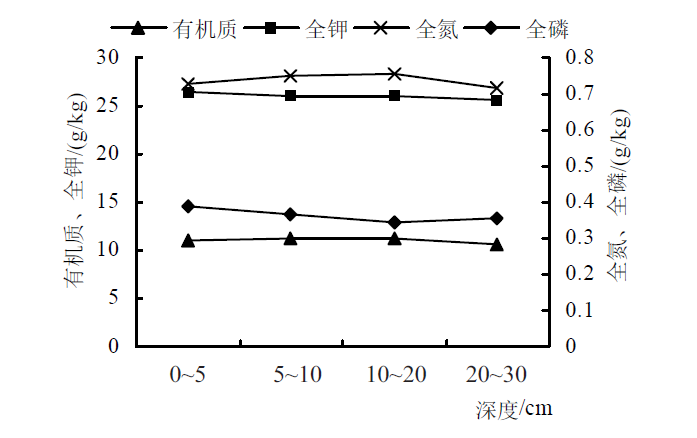
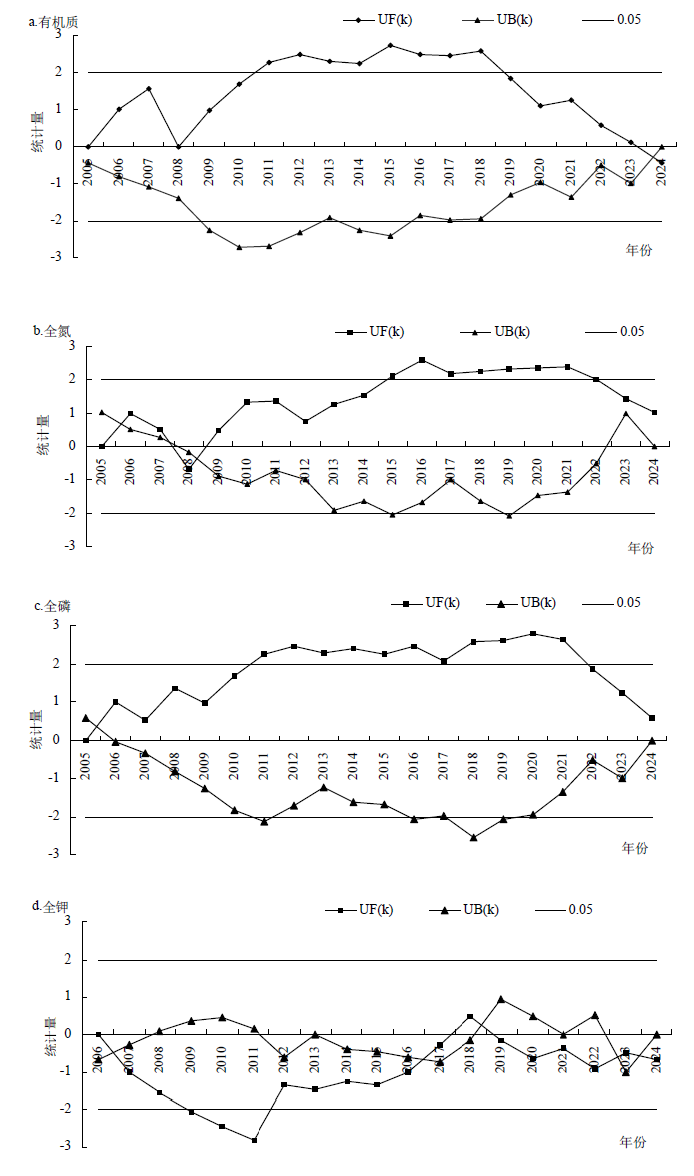
本研究基于2005—2024年内蒙古苏尼特荒漠草原土壤主要养分含量和牧草产量数据,利用M-K突变检验、主成分分析法等数理统计方法,系统分析了该区域土壤主要养分的时空变化特征。结果表明:苏尼特荒漠草原土壤主要养分年际变化不明显,表现为有机质和全钾含量呈不显著下降趋势,全氮和全磷含量呈弱上升趋势;随着土壤深度的加深,有机质和全钾含量呈弱下降趋势,全氮含量呈“低—高—低”的变化趋势,全磷含量呈“高—低—高”的变化趋势;土壤全量养分在时间序列中均发生了突变。土壤评价结果为:有机质含量缺乏(4级),全氮、全磷极度缺乏(5级),全钾含量丰富(1级)。主成分分析显示,第1、第2主成分累积方差贡献率达81.62%,有机质、全磷、全钾在第1主成分中有较高载荷,全氮在第2主成分上载荷较高。牧草产量与全氮呈不显著负相关,与全磷呈显著正相关,与全钾呈极显著正相关,与有机质呈不显著正相关。研究揭示了苏尼特荒漠草原土壤养分状况,可为当地草地资源合理利用和生态环境保护提供科学依据。

关键词: 土壤养分, 变化特征, 综合评价, 影响

Abstract:

Based on the data of soil major nutrient content and parallel observation of grass yield in the Sunite desert grassland in central Inner Mongolia from 2005 to 2024, the paper used mathematical statistical methods such as M-K mutation test and principal component analysis, to conduct a comprehensive analysis of the major soil nutrients in the Sunite desert grassland. The results showed that the interannual variation of the major nutrients in the soil of the Sunite desert grassland was not significant, manifested as an insignificant decrease in organic matter and total potassium content, and a weak upward trend in total nitrogen and total phosphorus content; as the soil depth increased, the organic matter and total potassium content showed a weak downward trend, the total nitrogen content showed a “low-high-low” trend, and the total phosphorus content showed a “high-low-high” trend; the total nutrients in the soil had undergone sudden changes in the time series; an evaluation was conducted on the major nutrients in the soil of the Sunite desert grassland. The soil showed a deficiency in organic matter content (level 4), a significant deficiency in total nitrogen and phosphorus content (level 5), and an abundance of total potassium content (level 1); the cumulative variance contribution rate of the first and second principal components reached 81.62%; the organic matter, total phosphorus, and total potassium had higher loadings in the first principal component, while the total nitrogen had higher loadings in the second principal component; the grass yield showed a non-significant negative correlation with total nitrogen, a significant positive correlation with total phosphorus, an extremely significant positive correlation with total potassium, and a non-significant positive correlation with organic matter. In short, soil nutrients play a crucial role in grassland ecosystems, affecting the growth, development and yield of grass. Studying the characteristics and impacts of soil nutrients changes in grassland provides a scientific basis for the rational utilization of local grassland resources and effective protection and restoration of the ecological environment.

Key words: soil nutrients, change characteristics, comprehensive evaluation, influence