欢迎访问《中国农学通报》,

中国农学通报 ›› 2026, Vol. 42 ›› Issue (5): 35-41.doi: 10.11924/j.issn.1000-6850.casb2025-0867

• 农学·农业基础科学 • 上一篇    下一篇

北京市微生物肥料登记现状分析

王艳平(), 张敬锁, 周洁, 张雪莲, 刘继远, 陈小慧, 王伊琨, 季卫, 张新刚, 高飞()   

  1. 北京市耕地建设保护中心, 北京 100101
  • 收稿日期:2025-10-10 修回日期:2025-12-23 出版日期:2026-03-18 发布日期:2026-03-18
  • 通讯作者:
    高飞,女,1972年出生,北京人,正高级农艺师,本科,研究方向:肥料质量安全。通信地址:100101 北京市朝阳区慧忠寺96号,Tel:010-84641097,E-mail:
  • 作者简介:

    王艳平,女,1984年出生,山东聊城人,高级农艺师,硕士,研究方向:土壤肥料。通信地址:100101 北京市朝阳区慧忠寺96号,Tel:010-84639255,E-mail:

Analysis on Registration Status of Microbial Fertilizers in Beijing

WANG Yanping(), ZHANG Jingsuo, ZHOU Jie, ZHANG Xuelian, LIU Jiyuan, CHEN Xiaohui, WANG Yikun, JI Wei, ZHANG Xingang, GAO Fei()   

  1. Beijing Cultivated Land Construction and Protection Center, Beijing 100101
  • Received:2025-10-10 Revised:2025-12-23 Published:2026-03-18 Online:2026-03-18

摘要:

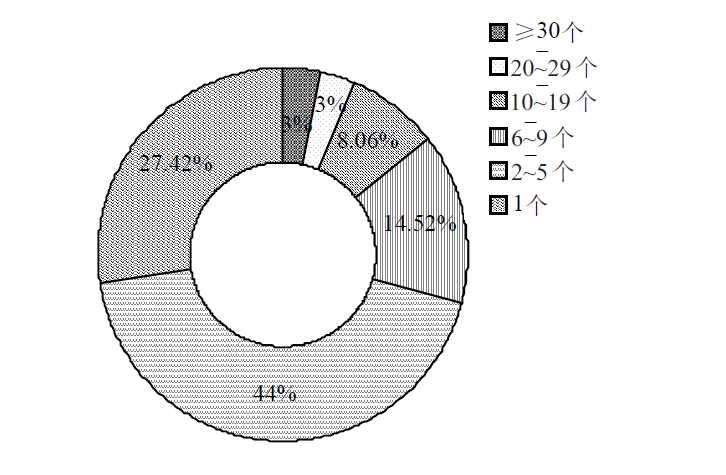
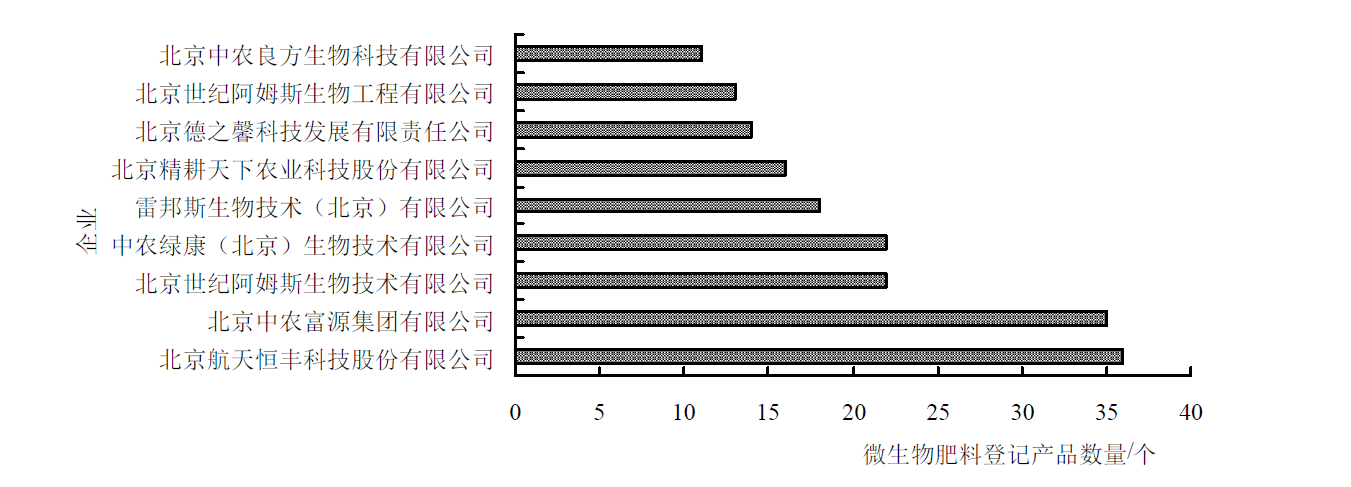
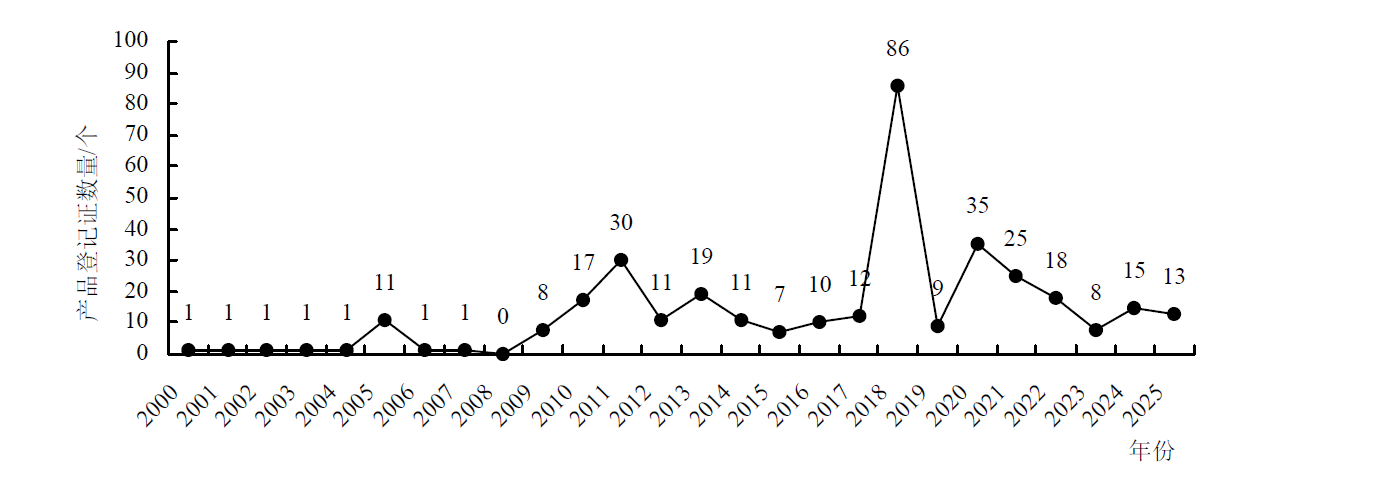
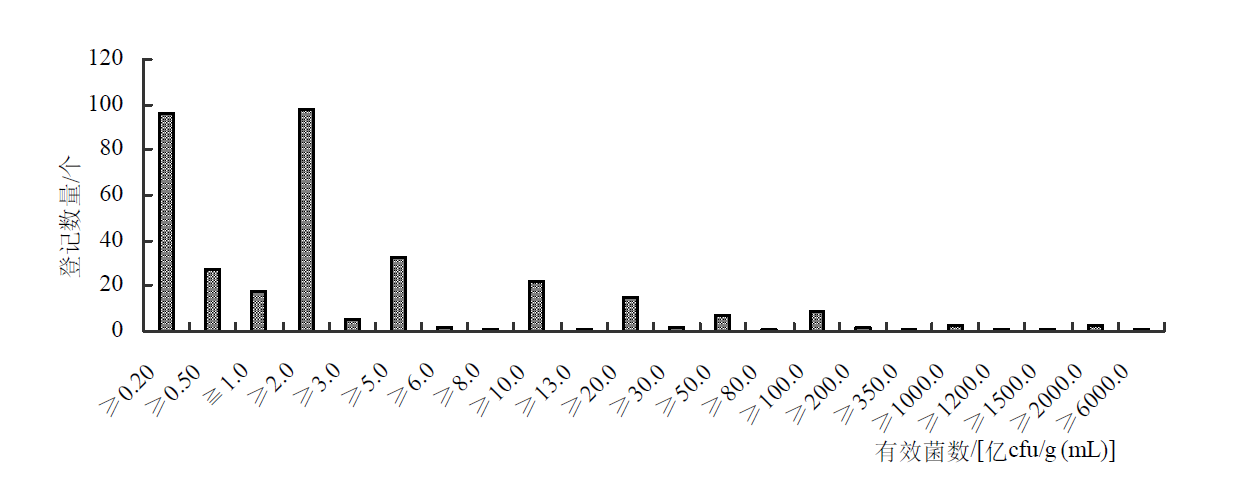
本研究基于北京市微生物肥料登记数据,从企业分布、产品结构及有效活菌组成等方面,系统分析了北京市微生物肥料产业发展现状。结果显示,截至2025年6月,北京市共有微生物肥料登记企业62家,累计登记产品352项,产业集中特征显著,9家重点企业登记产品占比达53.13%,但70%的企业产品数量不超过5项,27.42%的企业仅有1项产品。产品类型以微生物菌剂为主(48.58%),生物有机肥(20.45%)和复合微生物肥料(16.48%)次之。有效活菌组成以细菌为主导(87.13%),真菌(10.33%)和放线菌(2.25%)为辅,藻类应用极少(0.30%),菌种使用集中于芽孢杆菌属(58.53%)和类芽孢杆菌属(20.06%)。85.80%的产品登记活菌数≤10.0亿/g (mL),而≥200.0亿/g (mL)的高含量产品仅占3.41%。研究建议:建立北京市微生物菌种资源库,重点收集和保藏适应北方气候和土壤条件的菌株;加强合成菌群构建、作用机理解析、菌株活性保持、田间定殖与互作等关键技术攻关;强化企业的创新能力建设,鼓励产学研合作。本研究为客观评估北京市微生物肥料产业发展水平、科学研判未来发展方向提供了数据支撑与决策参考。

关键词: 微生物肥料, 肥料登记, 有效活菌, 产业分析, 北京市

Abstract:

This study analyzed the development status of Beijing’s microbial fertilizer industry using local registration data, focusing on enterprise distribution, product structure, and effective viable bacteria composition. As of June 2025, 62 enterprises in Beijing had registered 352 microbial fertilizer products, showing a distinct industrial concentration: 9 key enterprises contributed 53.13% of total registered products, while 70% of enterprises had ≤5 products and 27.42% had only 1 product. In product structure, microbial agents dominated (48.58%), followed by bio-organic fertilizers (20.45%) and compound microbial fertilizers (16.48%). For effective viable bacteria, bacteria were the primary component (87.13%), supplemented by fungi (10.33%) and actinomycetes (2.25%); algae application was minimal (0.30%). Strain usage was concentrated in Bacillus (58.53%) and Paenibacillus (20.06%). Notably, most products had low effective viable bacteria content: 85.80% of products had a registered count ≤1.0×10⁹ CFU/g (mL), while only 3.41% reached ≥2.0×10¹¹ CFU/g (mL). It is suggested to establish a microbial resource library in Beijing, focusing on the collection and preservation of strains adapted to the climate and soil conditions in the north, break technical bottlenecks (synthetic microbial community construction, action mechanism elucidation, strain activity maintenance, and field colonization-interaction), and enhance enterprise innovation capabilities.

Key words: microbial fertilizer, fertilizer registration, effective viable bacteria, industry concentration, Beijing