欢迎访问《中国农学通报》,

中国农学通报 ›› 2026, Vol. 42 ›› Issue (20): 88-97.doi: 10.11924/j.issn.1000-6850.casb2025-0821
黄建凤( ), 逄玉万, 吴昭云, 张木(), 黄巧义, 黄旭, 付弘婷, 李苹, 吴永沛
收稿日期:2025-09-29
修回日期:2026-01-11
出版日期:2026-10-25
发布日期:2026-10-26
通讯作者:
作者简介:黄建凤,女,1986年出生,广西桂林人,副研究员,博士,研究方向:土壤障碍因子改良及机理研究。通信地址:510640 广东省广州市天河区五山金颖路66号 广东省农业科学院农业资源与环境研究所,Tel:020-38615639,E-mail:hjf20051675@126.com。
基金资助:
HUANG Jianfeng(), PANG Yuwan, WU Zhaoyun, ZHANG Mu(), HUANG Qiaoyi, HUANG Xu, FU Hongting, LI Ping, WU Yongpei
Received:2025-09-29
Revised:2026-01-11
Published:2026-10-25
Online:2026-10-26
摘要:
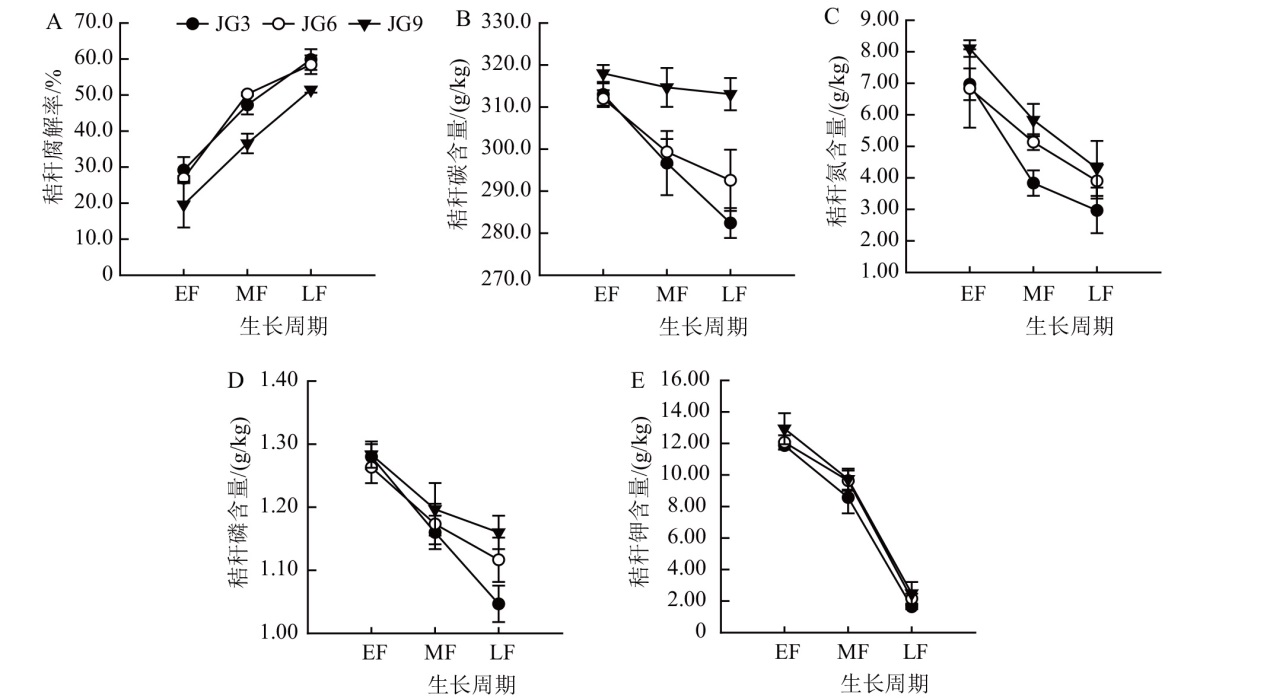
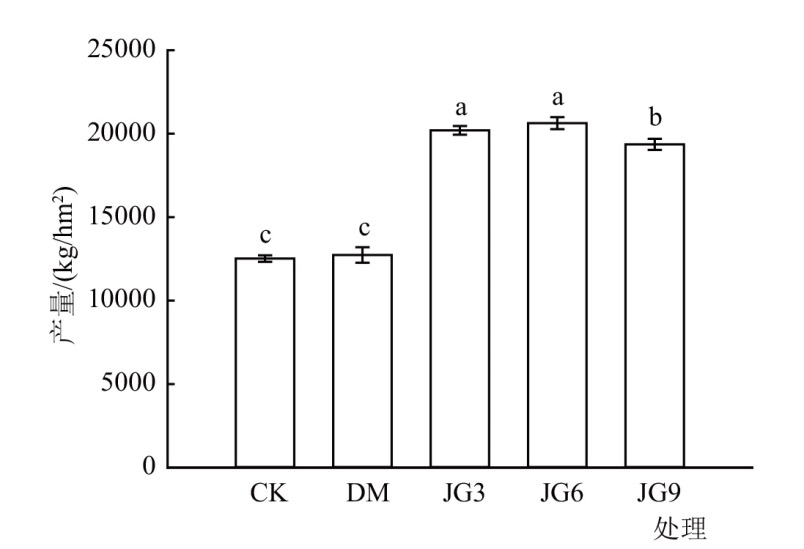
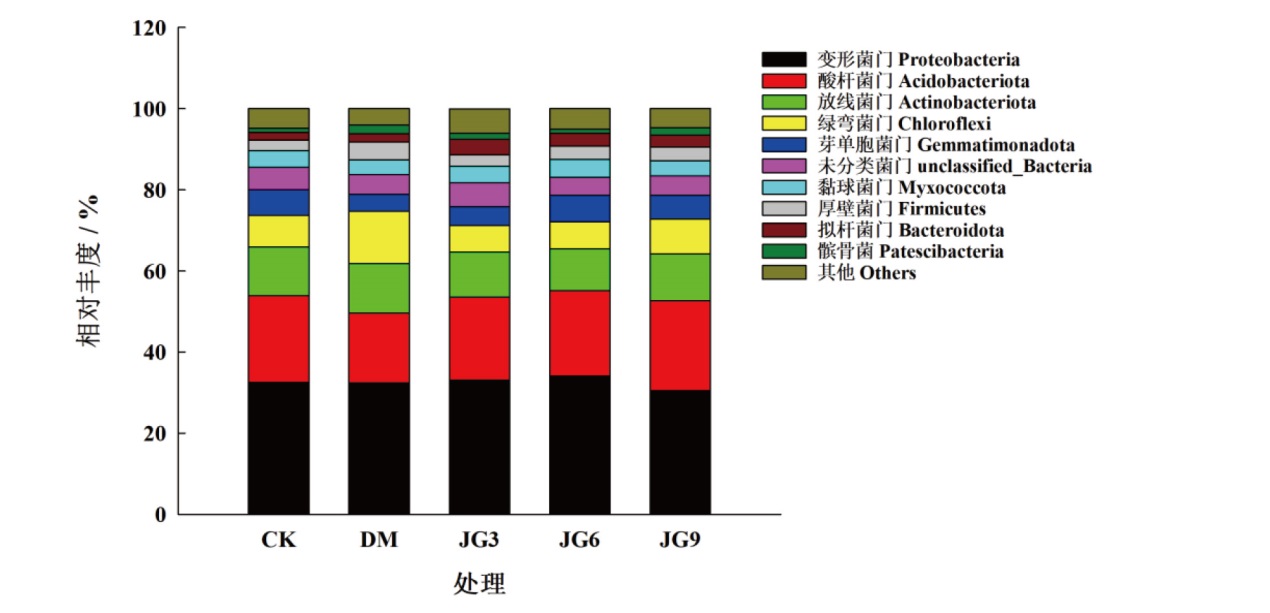
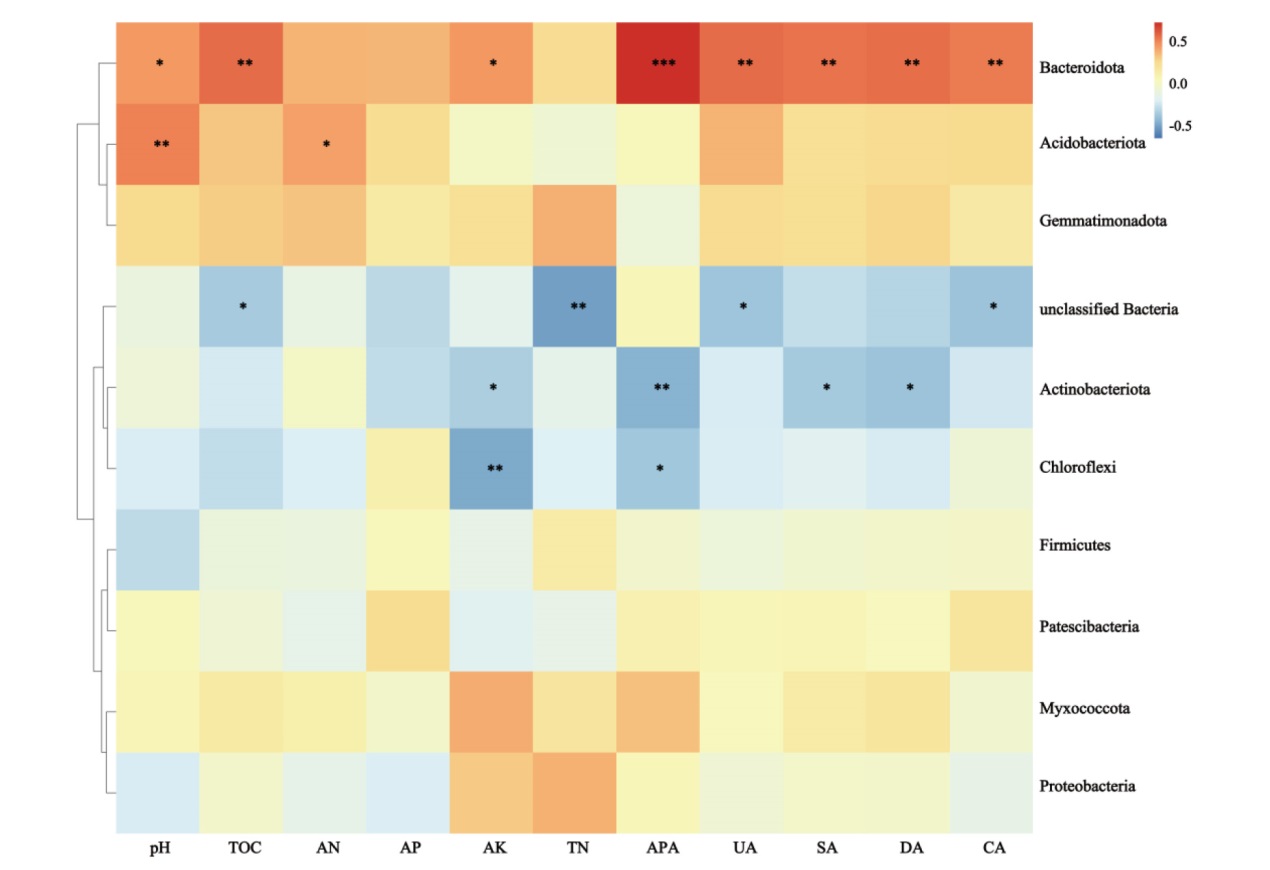
为探讨稻秆替代地膜覆盖辣椒的可行性及不同水稻秸秆覆盖量对辣椒生长和土壤环境的影响,本研究设置2种覆盖方式:地膜覆盖(DM)和稻秆覆盖,设置3个稻秆覆盖量[3000 kg/hm2(JG3)、6000 kg/hm2(JG6)和9000 kg/hm2(JG9)],以无覆盖作为对照(CK),对比不同处理辣椒产量、品质和土壤理化性质、酶活及细菌群落多样性的变化。结果显示,随着稻秆覆盖量的增加,稻秆的腐解率逐渐降低;然而,未完全降解的稻秆中积累的养分总量相对较高,JG9处理的稻秆碳、氮、磷、钾含量分别为313.07、4.30、1.16和2.48 g/kg,均高于JG3和JG6。稻秆覆盖显著提高了辣椒的株高、茎粗和产量,其中JG6处理的产量最高,达20627.90 kg/hm2。稻秆覆盖还有利于降低辣椒粗纤维含量、提高辣椒素含量、果长、鲜果重、果径和果肉厚,JG6处理的辣椒素含量、鲜果重、果径和果肉厚最高,达36.7 mg/kg、37.2 g、26.5 mm和3.56 mm。与地膜覆盖相比,稻秆覆盖显著提高了土壤酸性磷酸酶、蔗糖酶和脱氢酶活性,以及土壤pH、总有机碳和有效磷含量。而DM处理的土壤pH显著下降,脲酶活性、总有机碳、碱解氮、速效钾含量均低于CK,但其有效磷含量显著高于CK。高通量测序结果表明,DM处理的细菌OTU、Shannon多样性指数、Chao1指数和ACE指数均低于CK,而稻秆覆盖处理则高于CK;各处理的优势种群均为变形菌门(Proteobacteria)、酸杆菌门(Acidobacteria)和放线菌门(Actinobacteria),三者的相对丰度范围分别为30.49%~34.13%、17.19%~22.11%和10.26%~12.28%;DM处理的绿弯菌门(Chloroflexi)相对丰度显著高于其他处理,达12.95%。相关性分析表明,辣椒产量与OTU、Chao1、ACE、拟杆菌门(Bacteroidota)呈显著正相关,辣椒茎粗与绿弯菌门(Chloroflexi)和厚壁菌门(Firmicutes)呈显著负相关,土壤pH、总有机碳含量、酶活性、速效钾含量与拟杆菌门(Bacteroidota)呈正相关。综合研究结果表明,稻秆覆盖量为6000 kg/hm2时,辣椒产量和品质优于其他处理,与地膜覆盖相比,稻秆覆盖更有利于提高辣椒产量和品质,并改善土壤环境。
中图分类号:
黄建凤, 逄玉万, 吴昭云, 张木, 黄巧义, 黄旭, 付弘婷, 李苹, 吴永沛. 不同稻秆覆盖量对辣椒生长及土壤细菌群落的影响[J]. 中国农学通报, 2026, 42(20): 88-97.
HUANG Jianfeng, PANG Yuwan, WU Zhaoyun, ZHANG Mu, HUANG Qiaoyi, HUANG Xu, FU Hongting, LI Ping, WU Yongpei. Effects of Different Rice Straw Mulching Amounts on Pepper Growth and Soil Bacterial Community[J]. Chinese Agricultural Science Bulletin, 2026, 42(20): 88-97.
| 处理 | 株高/ cm | 茎粗/mm | 辣椒素/(mg/kg) | 粗纤维/% | 果长/cm | 鲜果重/g | 果径/mm | 果肉厚/mm |
|---|---|---|---|---|---|---|---|---|
| CK | 44.5±1.22c | 10.0±0.45bc | 22.4±1.80d | 1.53±0.115a | 14.3±0.13c | 34.1±0.33c | 24.9±0.48b | 3.31±0.037c |
| DM | 41.7±0.91c | 9.2±0.36c | 25.9±0.61c | 1.47±0.058ab | 14.3±0.10c | 34.0±0.14c | 24.8±0.49b | 3.33±0.039c |
| JG3 | 54.2±4.31ab | 11.1±0.71ab | 26.1±1.00c | 1.37±0.115ab | 15.0±0.13a | 36.9±0.20a | 26.3±0.56a | 3.47±0.043b |
| JG6 | 55.5±3.82a | 11.9±0.72a | 36.7±0.15a | 1.43±0.115ab | 14.9±0.12ab | 37.2±0.42a | 26.5±0.26a | 3.56±0.059a |
| JG9 | 50.2±0.45b | 11.2±0.62ab | 33.4±0.96b | 1.20±0.100b | 14.7±0.15b | 36.2±0.23b | 25.9±0.45a | 3.37±0.038c |
| 处理 | 酸性磷酸酶/[μmol/(d·g)] | 脲酶/[μg/(d·g)] | 蔗糖酶/[mg/(d·g)] | 脱氢酶/[μg/(d·g)] | 过氧化氢酶/[mL/(g·20min)] |
|---|---|---|---|---|---|
| CK | 14.8±0.46c | 127.3±2.01c | 2.40±0.032d | 36.2±0.23d | 0.49±0.023d |
| DM | 17.0±0.24b | 126.8±3.21c | 2.66±0.042c | 36.7±0.24c | 0.53±0.065cd |
| JG3 | 18.3±0.39a | 177.0±1.85b | 2.76±0.030b | 37.4±0.13b | 0.57±0.025bc |
| JG6 | 17.6±0.33ab | 178.0±0.71ab | 2.93±0.067a | 38.0±0.12a | 0.62±0.047ab |
| JG9 | 17.1±0.38b | 182.7±2.13a | 2.90±0.050a | 37.9±0.16a | 0.66±0.063a |
| 处理 | pH | 总有机碳/(g/kg) | 全氮/(g/kg) | 碱解氮/(mg/kg) | 有效磷/(mg/kg) | 速效钾/(mg/kg) |
|---|---|---|---|---|---|---|
| CK | 4.77±0.070b | 8.40±0.175d | 0.87±0.081a | 70.0±6.49ab | 80.7±5.25c | 44.0±3.48b |
| DM | 4.60±0.059c | 8.39±0.091d | 0.88±0.017a | 61.7±2.19b | 125.0±2.24b | 43.9±4.16b |
| JG3 | 4.86±0.057b | 8.98±0.100c | 0.85±0.081a | 69.8±1.70ab | 122.0±6.62b | 50.5±5.24ab |
| JG6 | 4.80±0.084b | 9.83±0.087a | 0.95±0.033a | 71.3±1.41ab | 181.9±8.48a | 56.6±4.20a |
| JG9 | 5.10±0.044a | 9.43±0.020b | 0.90±0.020a | 75.8±3.46a | 192.5±4.25a | 44.3±1.25b |
| 处理 | OTU | Shannon | Chao1 | ACE |
|---|---|---|---|---|
| CK | 2362±92.34c | 9.79±0.107bc | 2367±158.96bc | 2388±159.29bc |
| DM | 2287±77.12c | 9.70±0.130c | 2266±103.05c | 2285±102.27c |
| JG3 | 2782±69.58a | 10.15±0.079a | 2785±130.17a | 2804±130.07a |
| JG6 | 2625±92.50b | 9.99±0.102ab | 2631±130.35a | 2655±128.20a |
| JG9 | 2543±69.57b | 9.90±0.060bc | 2546±70.83ab | 2565±73.99ab |
| 指标 | 产量 | 株高 | 茎粗 | 辣椒素 | 粗纤维 | 果长 | 鲜果重 | 果径 | 果肉厚 |
|---|---|---|---|---|---|---|---|---|---|
| OTU | 0.033* | 0.019* | -0.234 | 0.499 | -0.438 | 0.005** | 0.024* | 0.025* | 0.124 |
| Shannon | 0.061 | 0.031* | -0.228 | 0.602 | -0.534 | 0.013* | 0.045* | 0.044* | 0.139 |
| Chao1 | 0.033* | 0.017* | -0.204 | 0.496 | -0.441 | 0.003** | 0.024* | 0.024* | 0.125 |
| ACE | 0.032* | 0.016* | -0.201 | 0.490 | -0.446 | 0.225 | 0.023* | 0.023* | 0.121 |
| Proteobacteria | 0.778 | 0.517 | -0.923 | 0.900 | 0.260 | 0.586 | 0.624 | 0.580 | 0.215 |
| Acidobacteriota | 0.405 | 0.348 | 0.015* | 0.570 | -0.476 | 0.509 | 0.418 | 0.413 | 0.717 |
| Actinobacteriota | -0.070 | -0.023* | 0.303 | -0.140 | 0.742 | -0.075 | -0.038* | -0.029* | -0.007** |
| Chloroflexi | -0.227 | -0.095 | -0.015* | -0.665 | 0.813 | -0.181 | -0.179 | -0.163 | -0.269 |
| Gemmatimonadota | 0.693 | 0.542 | -0.161 | 0.463 | -0.990 | 0.828 | 0.651 | 0.622 | 0.652 |
| unclassified_Bacteria | -0.678 | -0.797 | -0.824 | -0.078 | 0.701 | -0.918 | -0.703 | -0.703 | -0.570 |
| Myxococcota | 0.370 | 0.154 | -0.184 | 0.620 | 0.707 | 0.284 | 0.265 | 0.232 | 0.134 |
| Firmicutes | -0.692 | -0.472 | -0.054* | 0.742 | -0.923 | -0.587 | -0.632 | -0.610 | -0.788 |
| Bacteroidota | 0.029* | 0.050* | -0.435 | 0.450 | -0.321 | 0.007** | 0.032* | 0.037* | 0.149 |
| Patescibacteria | -0.699 | -0.409 | 0.148 | -0.838 | -0.561 | -0.636 | -0.582 | -0.537 | -0.436 |
| Others | 0.223 | 0.123 | -0.196 | 0.962 | -0.791 | 0.101 | 0.181 | 0.175 | 0.289 |
| [1] |
方智远. 中国蔬菜育种学[M]. 北京: 中国农业出版社, 2017:1113-1157.
|
| [2] |
李颖, 王恒明, 徐小万, 等. 华南地区辣椒品种选育及育种技术研究进展[J]. 广东农业科学, 2020, 47(11):60-69.
|
| [3] |
李红霞, 张芮, 银敏华, 等. 秸秆与地膜覆盖对农田土壤环境的影响[J]. 农业工程, 2020, 10(10):34-39.
|
| [4] |
刘顺国, 付时丰, 汪景宽, 等. 长期地膜覆盖对棕壤水分含量和储量动态变化影响[J]. 沈阳农业大学学报, 2006, 37(5):725-728.
|
| [5] |
周天美, 陆静, 李梦琳, 等. 不同类型农膜使用对温室土壤养分和辣椒产量的影响[J]. 中国农学通报, 2024, 40(21):61-68.
doi: 10.11924/j.issn.1000-6850.casb2023-0682 |
| [6] |
徐秋月, 董林林, 周天美, 等. 蔬菜地农用地膜残留及影响因素分析[J]. 中国农学通报, 2023, 39(26):109-115.
doi: 10.11924/j.issn.1000-6850.casb2022-0777 |
| [7] |
doi: 10.1016/j.soilbio.2020.107740 URL |
| [8] |
樊志龙, 赵财, 刘畅, 等. 一膜两年用少耕轮作对水氮减投小麦产量形成的促进效应[J]. 中国农业科学, 2018, 51(19):3651-3662.
doi: 10.3864/j.issn.0578-1752.2018.19.003 |
| [9] |
洪涛, 王保, 陈正洪, 等. 不同颜色全生物降解地膜增温效果及对辣椒产量的影响[J]. 湖北农业科学, 2024, 63(9):129-133.
|
| [10] |
张明明, 周迎鑫, 陈敬文, 等. 可降解地膜分类与研发应用现状[J]. 农业环境科学学报, 2024, 43(6):1278-1287.
|
| [11] |
吴健成, 田永超, 刘卿, 等. 秸秆还田与氮肥施用对稻田温室气体排放的影响[J]. 生态学报, 2024, 44(12):5328-5339.
|
| [12] |
赵记军, 于显枫, 张绪成. 地膜源头减量化技术可行路径探讨[J]. 中国农学通报, 2021, 37(9):57-63.
doi: 10.11924/j.issn.1000-6850.casb2020-0238 |
| [13] |
刘世平, 张洪程, 戴其根, 等. 免耕套种与秸秆还田对农田生态环境效应及小麦生长的影响[J]. 应用生态学报, 2005, 16(2):393-396.
|
| [14] |
范重秀, 崔同霞, 姚友旭, 等. 秸秆覆盖量和覆盖时间对土壤水热状况及党参产量的影响[J]. 北方园艺, 2022(21):82-88.
|
| [15] |
刘子涵, 黄方园, 黎景来, 等. 覆盖模式对旱作农田土壤微生物多样性及群落结构的影响[J]. 生态学报, 2021, 41(7):2750-2760.
|
| [16] |
刘燕青, 王计磊, 李子忠. 秸秆覆盖对土壤水分和侵蚀的影响研究进展[J]. 水土保持研究, 2021, 28(6):429-436.
|
| [17] |
林刚云, 肖健, 吴银秀, 等. 秸秆覆盖还田对桑园土壤生物学性状及其细菌群落结构的影响[J]. 南方农业学报, 2020, 51(10):2339-2347.
|
| [18] |
胡燕芳, 章明奎. 长期地表秸秆覆盖对果园土壤理化性状及有机碳积累的影响[J]. 农学学报, 2021, 11(7):37-43.
doi: 10.11923/j.issn.2095-4050.cjas20190400005 |
| [19] |
鲍士旦. 土壤农化分析[M]. 北京: 中国农业出版社, 2000.
|
| [20] |
霍瑞春, 王国泽, 姚慧静, 等. 19种加工辣椒辣椒素提取、纯化及其含量测定[J]. 中国调味品, 2022, 47(4):167-172.
|
| [21] |
林海龙, 李伟光, 闫险峰, 等. 中药废水污泥群落结构解析中PCR-DGGE引物的选择与评价[J]. 环境科学, 2011, 32(5):1505-1510.
|
| [22] |
|
| [23] |
doi: 10.1038/nmeth.2604 pmid: 23955772 |
| [24] |
doi: 10.1016/S0022-2836(05)80360-2 pmid: 2231712 |
| [25] |
吴传万, 杜小凤, 顾大路, 等. 覆盖方式对温室红椒生长发育及土壤环境的影响[J]. 江苏农业学报, 2015, 31(2):407-414.
|
| [26] |
杨帆, 董燕, 徐明岗, 等. 南方地区秸秆还田对土壤综合肥力和作物产量的影响[J]. 应用生态学报, 2012, 23(11):3040-3044.
|
| [27] |
李圆宾, 李鹏, 王舒华, 等. 稻麦轮作体系下有机肥施用对作物产量和土壤性质影响的整合分析[J]. 应用生态学报, 2021, 32(9):3231-3239.
doi: 10.13287/j.1001-9332.202109.024 |
| [28] |
黄巧义, 于俊红, 黄建凤, 等. 广东省主要农作物秸秆养分资源量及替代化肥潜力[J]. 生态环境学报, 2022, 31(2):297-306.
doi: 10.16258/j.cnki.1674-5906.2022.02.010 |
| [29] |
柴如山, 黄晶, 柳开楼, 等. 我国水稻秸秆钾资源分布及其还田对土壤钾平衡的重要性[J]. 植物营养与肥料学报, 2022, 28(10):1745-1754.
|
| [30] |
高金虎, 孙占祥, 冯良山, 等. 秸秆与氮肥配施对辽西旱区土壤酶活性与土壤养分的影响[J]. 生态环境学报, 2012, 21(4):677-681.
doi: 10.16258/j.cnki.1674-5906(2012)04-0677-05 |
| [31] |
许冬, 万鹏, 褚世海, 等. 小麦秸秆高量覆盖对棉花生长发育及产量形成的影响[J]. 南方农业学报, 2021, 52(5):1191-1197.
|
| [32] |
赵静. 土壤酸化对土壤有效养分、酶活性及黄金梨品质的影响[D]. 泰安: 山东农业大学, 2011.
|
| [33] |
孔雪静. 地膜覆盖和秸秆还田对玉米地与土壤氮素转化相关的土壤酶活性影响研究[D]. 兰州: 兰州大学, 2016.
|
| [34] |
党昆, 陈伟, 张洪淇, 等. 秸秆还田和地膜覆盖对稻区土壤理化性质及水稻产量的影响[J]. 东北农业科学, 2021, 46(4):11-16.
|
| [35] |
王晓航, 耿艳秋, 金峰, 等. 秸秆还田和地膜覆盖对土壤环境和水稻生长的影响[J]. 华南农业大学学报, 2018, 39(5):1-7.
|
| [36] |
白雪, 周怀平, 解文艳, 等. 不同类型地膜覆盖对玉米农田土壤酶活性的影响[J]. 农业资源与环境学报, 2018, 35(4):381-388.
|
| [37] |
万欣, 董元华, 王辉, 等. 番茄温室土壤碳氮磷的生态化学计量学特征及其与土壤酶活性的关系[J]. 江苏农业科学, 2013, 41(10):281-285.
|
| [38] |
doi: 10.1016/S0038-0717(03)00179-2 URL |
| [39] |
徐静, 张锡洲, 李廷轩, 等. 野生大麦对土壤磷吸收及其酸性磷酸酶活性的基因型差异[J]. 草业学报, 2015, 24(1):88-98.
doi: 10.11686/cyxb20150112 |
| [40] |
doi: 10.1093/jxb/erac456 URL |
| [41] |
周子军, 郭松, 陈琨, 等. 长期秸秆覆盖对免耕稻-麦产量、土壤氮组分及微生物群落的影响[J]. 土壤学报, 2022, 59(4):1148-1159.
|
| [42] |
沈鹏飞, 王威雁, 李彤, 等. 陕西洛川苹果园不同覆盖措施对土壤性质、细菌群落及果实产量和品质的影响[J]. 园艺学报, 2019, 46(5):817-831.
doi: 10.16420/j.issn.0513-353x.2018-0863 |
| [43] |
刘骁蒨, 涂仕华, 孙锡发, 等. 秸秆还田与施肥对稻田土壤微生物生物量及固氮菌群落结构的影响[J]. 生态学报, 2013, 33(17):5210-5218.
|
| [44] |
张婷婷, 王丽芳, 张德健, 等. 不同小麦秸秆还田覆盖度对旱作农田土壤微生物群落多样性的影响[J]. 北方农业学报, 2021, 49(1):77-87.
doi: 10.12190/j.issn.2096-1197.2021.01.12 |
| [45] |
doi: 10.1016/j.soilbio.2008.05.021 URL |
| [46] |
李明, 胡云, 黄修梅, 等. 生物炭对设施黄瓜根际土壤养分和菌群的影响[J]. 农业机械学报, 2016, 47(11):172-178.
|
| [47] |
|
| [48] |
胡志娥, 肖谋良, 丁济娜, 等. 长期覆膜条件下农田土壤微生物群落的响应特征[J]. 环境科学, 2022, 43(10):4745-4754.
|
| [49] |
|
| [50] |
doi: 10.1016/j.apsoil.2019.07.009 URL |
| [1] | 黄英梅, 吴家龙, 梁永鑫, 梁春梅, 张俊涛. 鱼蛋白肥对三角梅的生长和土壤养分的影响[J]. 中国农学通报, 2026, 42(9): 48-58. |
| [2] | 骆国辉, 俞世康, 翟扬妮, 顾会战, 李富程, 王彬, 吴涛. 不同连作障碍类型下植烟土壤化感物质和微生物多样性特征[J]. 中国农学通报, 2026, 42(5): 101-108. |
| [3] | 李静茹, 李卓晴, 向清清, 李磊福, 邹瑞娟, 雷鸣. 土壤镉砷复合污染对工业辣椒生长的影响[J]. 中国农学通报, 2026, 42(4): 117-125. |
| [4] | 叶晓梅, 牛晓卫, 王鹏, 薛睿哲, 韩侠, 徐伟洲, 陈书军. 陕北沿黄土石山区不同林分类型的土壤细菌群落特征[J]. 中国农学通报, 2026, 42(20): 54-63. |
| [5] | 陈宝珠, 黄继川, 许杨贵, 彭一平, 李珠娴, 梁健仪, 钟文亮, 晏育伟, 涂玉婷. 不同轮作模式对迟菜心种植土壤微生态的影响[J]. 中国农学通报, 2026, 42(2): 93-102. |
| [6] | 刘祥婷, 王晓苹, 洪自强, 王文秀, 郑国琦, 吴宏亮, 康建宏, 杨涓. 覆盖处理对枸杞根际微生物群落的影响及关键驱动因子解析[J]. 中国农学通报, 2026, 42(17): 97-105. |
| [7] | 高维亚, 陈幸宝, 萨如拉, 邰继承, 张艳婷, 王慧淼. 科尔沁沙地不同利用方式对土壤特性的影响研究[J]. 中国农学通报, 2026, 42(13): 135-142. |
| [8] | 孟嘉胥, 谢奇玕, 李若晨, 肖文丹, 叶雪珠. 不同有机肥对生姜生长品质及土壤性质的影响[J]. 中国农学通报, 2026, 42(10): 41-51. |
| [9] | 黄汕, 盘祥, 陈潇, 常静静, 张白鸽, 宋钊. 混池样本数量对辣椒果色基因定位的影响[J]. 中国农学通报, 2026, 42(1): 37-42. |
| [10] | 刘润梅, 周国平, 汪福正, 宋瑞瑚, 胡兴钢, 唐俊云. 土壤调理剂与微生物菌剂对镉砷复合污染旱地安全利用效果研究[J]. 中国农学通报, 2026, 42(1): 128-135. |
| [11] | 孙广涛, 包桂荣, 邰继承, 萨如拉, 刘乃嘉, 于淼, 李安宁. 玉米花生间作对作物及土壤特性的影响[J]. 中国农学通报, 2025, 41(5): 7-12. |
| [12] | 班彩鑫, 萨如拉, 邰继承, 赵廷超, 李安宁, 武程程, 阿润图雅. 厨余垃圾堆肥对间作土壤酶活性及玉米花生生理特性的影响[J]. 中国农学通报, 2025, 41(33): 74-80. |
| [13] | 彭定坤, 谷郡, 谭一帆, 朱臻, 韩永亮, 彭建伟. 硅肥用量对辣椒产量与品质的影响[J]. 中国农学通报, 2025, 41(31): 27-33. |
| [14] | 刘乃嘉, 萨如拉, 杨恒山, 邰继承, 乌云龙. 不同时期配施秸秆腐熟剂对土壤肥力和土壤酶活性的影响[J]. 中国农学通报, 2025, 41(27): 79-84. |
| [15] | 房佰涵, 刘晶晶, 郭晓雯, 叶扬, 杨茂琪, 张楠, 郭慧娟, 闵伟. 等碳量秸秆和秸秆炭还田对棉田土壤理化性质及酶活性的影响[J]. 中国农学通报, 2025, 41(2): 69-82. |
| 阅读次数 | ||||||
|
全文 |
|
|||||
|
摘要 |
|
|||||
