欢迎访问《中国农学通报》,

中国农学通报 ›› 2026, Vol. 42 ›› Issue (21): 23-36.doi: 10.11924/j.issn.1000-6850.casb2025-1005
董成艳1( ), 李正楠1, 邱炜铧1, 余静1, 陈一苇1, 张思颖1, 李小林2, 谭静1()
收稿日期:2025-12-21
修回日期:2026-03-20
出版日期:2026-11-10
发布日期:2026-11-10
通讯作者:
作者简介:董成艳,女,2001年出生,云南楚雄人,在读硕士,研究方向:玉米抗逆性遗传与改良。通信地址:650500 云南省昆明市呈贡区大学城东外环南路 云南大学农学院,Tel:0871-65031539,E-mail:2932720450@qq.com。
基金资助:
DONG Chengyan1(), LI Zhengnan1, QIU Weihua1, YU Jing1, CHEN Yiwei1, ZHANG Siying1, LI Xiaolin2, TAN Jing1()
Received:2025-12-21
Revised:2026-03-20
Published:2026-11-10
Online:2026-11-10
摘要:
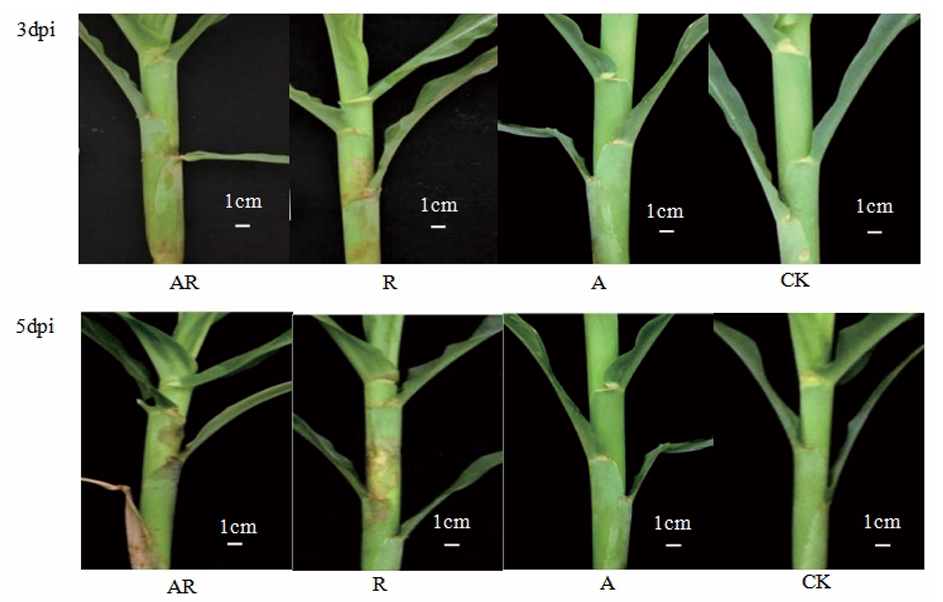
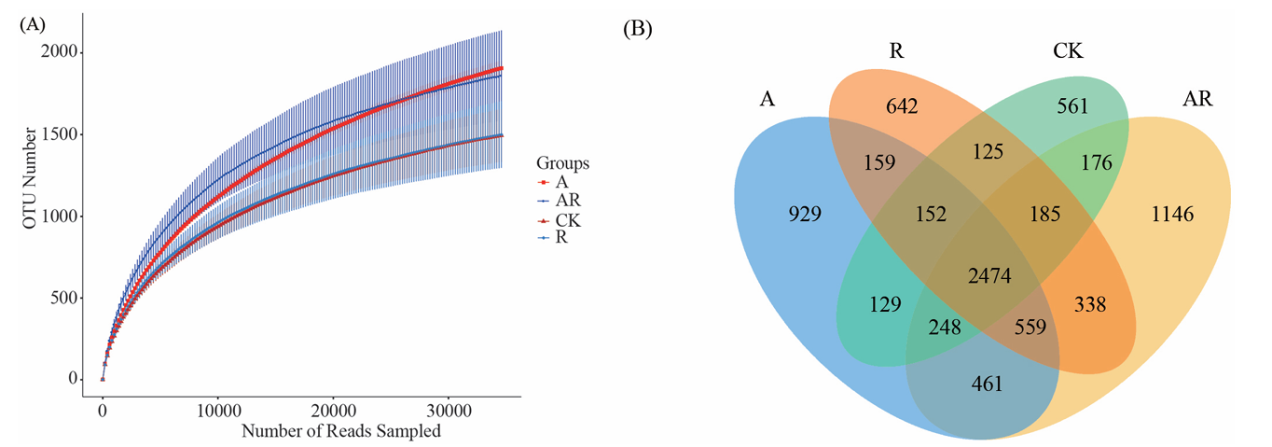
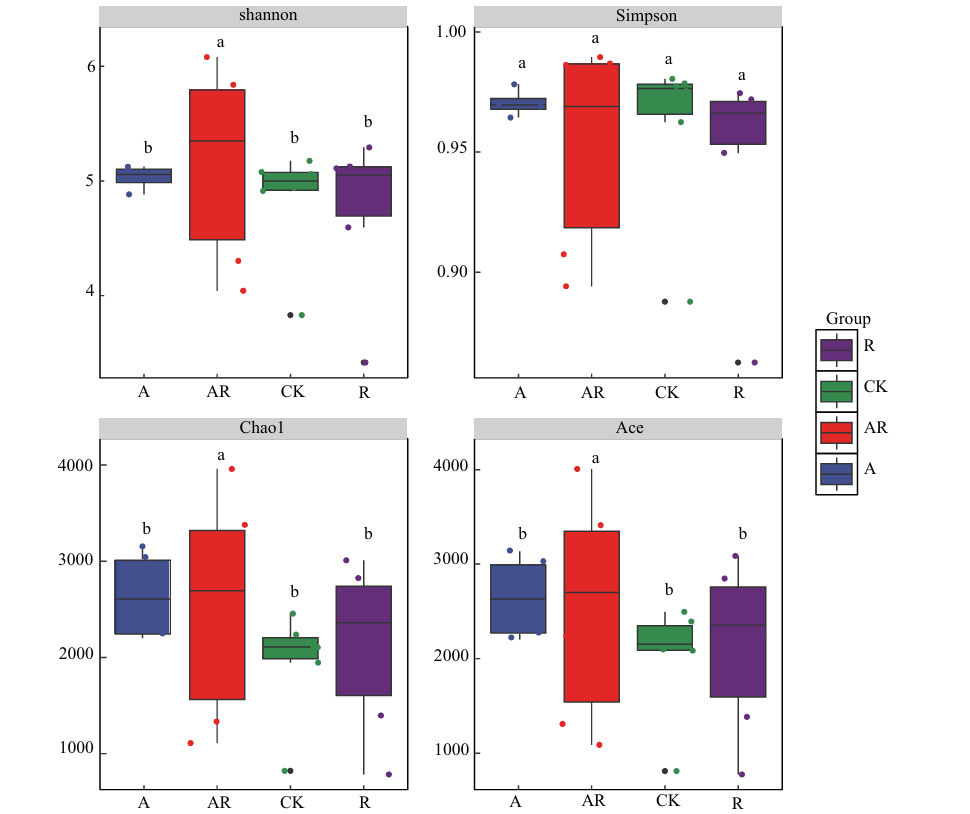
本研究探讨了接种丛枝菌根真菌(Arbuscular Mycorrhizal Fungi,AMF)对玉米纹枯病抗性的影响,旨在为玉米纹枯病的绿色防控及稳产高产提供依据。以玉米感病代表自交系‘B73’为试材,设置单接种纹枯病主要致病菌立枯丝核菌(Rhizoctonia solani Kuhn) (R)、单接种AMF (A)、双接种(AR)和不接种(CK)共4个处理,分析不同处理下玉米的表型、理化指标与根际土壤微生物群落。结果表明:接种AMF显著促进了玉米生长,在病原菌胁迫下,AR处理的地上部和地下部干重分别较未接种R处理提高了87.11%和51.17%;接种AMF也显著抑制了纹枯病的扩展:接种后3 d和5 d,AR处理的病斑长度较未接种R处理分别降低了55.39%和49.24%;接种AMF和病原菌都能显著提高玉米叶鞘和根系中茉莉酸(JA)、水杨酸(SA)的含量,以及超氧化物歧化酶(SOD)、过氧化物酶(POD)、苯丙氨酸解氨酶(PAL)和多酚氧化酶(PPO)的活性,双接种AR处理进一步提升了上述指标;接种AMF显著提高了玉米根际土壤细菌群落的多样性,深刻改变了群落组成和功能,其中拟杆菌门(Bacteroidota)、放线菌门(Actinobacteriota)和酸杆菌门(Acidobacteriota)等有益菌群的丰度显著增加。综上所述,AMF通过促进玉米生长、改善相关理化指标和优化根际土壤微生物群落等多重机制协同作用,增强了玉米对纹枯病的抗性。本研究结果为开发基于AMF的玉米纹枯病绿色生物防治策略提供了理论依据。
中图分类号:
董成艳, 李正楠, 邱炜铧, 余静, 陈一苇, 张思颖, 李小林, 谭静. 接种丛枝菌根真菌(AMF)对玉米纹枯病抗性的影响[J]. 中国农学通报, 2026, 42(21): 23-36.
DONG Chengyan, LI Zhengnan, QIU Weihua, YU Jing, CHEN Yiwei, ZHANG Siying, LI Xiaolin, TAN Jing. Effect of Arbuscular Mycorrhizal Fungi (AMF) Inoculation on Resistance to Banded Leaf and Sheath Blight Disease of Maize[J]. Chinese Agricultural Science Bulletin, 2026, 42(21): 23-36.
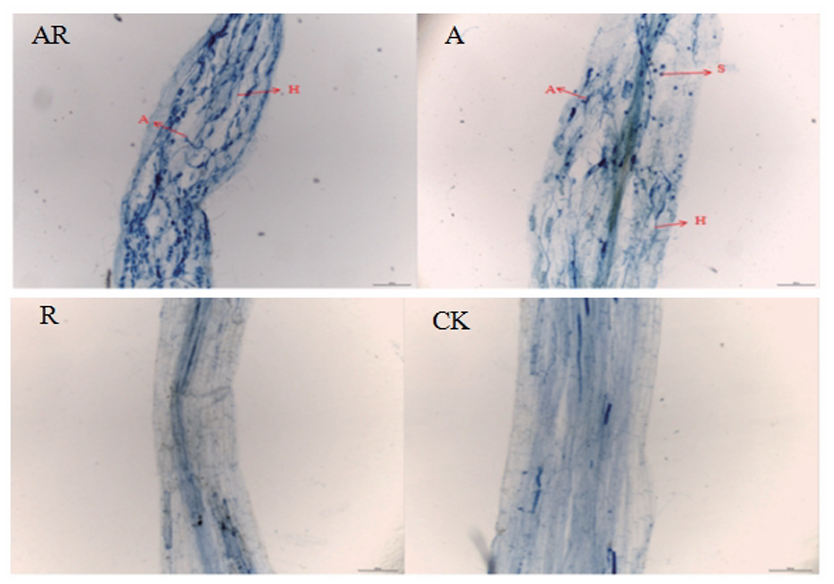
| 处理 | 根系侵染率/% | 病斑长度/cm | 株高/cm | ||||
|---|---|---|---|---|---|---|---|
| 3 dpi | 5 dpi | 1 dpi | 3d pi | 5 dpi | |||
| CK | 0.22±0.18c | - | - | 64.03±1.62a | 65.67±3.21a | 69.33±0.76a | |
| A | 61.3±5.88b | - | - | 61.43±2.00a | 64.67±1.53a | 66.17±3.82a | |
| R | 0.19±0.15c | 6.03±0.55a | 8.57±1.52a | 60.20±1.60a | 61.00±3.61a | 61.50±3.12c | |
| AR | 73.94±10.51a | 2.69±0.59b | 4.35±0.93b | 60.77±1.46a | 63.67±3.51a | 65.00±2.00ab | |
| 处理 | 茎粗/mm | 地上部干重/g | 地下部干重/g | ||||
| 1 dpi | 3 dpi | 5 dpi | |||||
| CK | 14.55±1.05a | 15.21±0.40a | 15.45±0.60a | 9.01±1.21b | 4.09±0.50a | ||
| A | 14.95±0.58a | 15.65±0.63a | 15.73±0.97a | 10.46±1.32a | 4.57±0.43a | ||
| R | 13.91±0.42a | 13.96±0.75b | 13.56±0.85c | 3.49±0.89d | 2.56±0.53c | ||
| AR | 14.61±0.49a | 14.96±0.52a | 14.44±0.90b | 6.53±1.47c | 3.87±0.42b | ||
| 处理 | JA/(pmol/g Fw) | SA/(µg/g Fw) | SOD/(U/g Fw) | ||||||||
|---|---|---|---|---|---|---|---|---|---|---|---|
| 1 dpi | 3 dpi | 5 dpi | 1 dpi | 3 dpi | 5 dpi | 1 dpi | 3 dpi | 5 dpi | |||
| CK | 2.41±0.26b | 2.47±0.42d | 2.49±0.29c | 3.69±0.40b | 3.96±0.58d | 4.22±0.16c | 366.26±45.27b | 370.41±14.73d | 393.53±44.61b | ||
| A | 2.62±0.26a | 3.00±0.37c | 3.14±0.14b | 3.94±0.53a | 4.88±0.24c | 5.31±0.46b | 399.98±30.54a | 478.70±24.31c | 505.64±40.69a | ||
| R | 2.63±0.23a | 3.39±0.17b | 3.22±0.29b | 4.09±0.64a | 6.26±0.82b | 5.72±0.37a | 415.92±25.32a | 595.44±68.50b | 523.94±39.71a | ||
| AR | 2.91±0.09a | 3.73±0.09a | 3.46±0.22a | 4.16±0.54a | 7.05±0.50a | 6.17±0.24a | 441.17±44.57a | 660.77±30.24a | 555.27±25.59a | ||
| 处理 | POD/(U/g Fw) | PAL/(U/g Fw) | PPO/(U/g Fw) | ||||||||
| 1 dpi | 3 dpi | 5 dpi | 1dpi | 3 dpi | 5 dpi | 1 dpi | 3 dpi | 5 dpi | |||
| CK | 416.00±74.63b | 441.41±25.51d | 450.33±38.99b | 412.92±34.14c | 421.44±55.18d | 409.91±74.61b | 528.92±29.09d | 517.23±29.30c | 506.47±32.10d | ||
| A | 508.67±52.52a | 583.32±69.09c | 632.33±39.88a | 461.76±49.77b | 549.97±36.95c | 559.01±50.67a | 575.72±50.45c | 607.89±20.09b | 650.15±45.54c | ||
| R | 526.67±36.23a | 670.23±24.27b | 652.33±45.39a | 478.68±31.20b | 594.44±31.68b | 552.04±20.39a | 724.16±90.56b | 636.01±68.08b | 704.03±54.45b | ||
| AR | 563.33±48.39a | 745.02±45.04a | 683.00±31.00a | 520.31±46.21a | 673.07±36.51a | 578.66±47.01a | 811.27±50.52a | 724.38±23.62a | 731.86±62.23a | ||
| 处理 | JA/(pmol/g Fw) | SA/(µg/g Fw) | SOD/(U/g Fw) | ||||||||
|---|---|---|---|---|---|---|---|---|---|---|---|
| 1 dpi | 3 dpi | 5 dpi | 1 dpi | 3 dpi | 5 dpi | 1 dpi | 3 dpi | 5 dpi | |||
| CK | 2.84±0.08b | 2.94±0.40c | 2.89±0.41d | 4.60±0.42c | 5.10±0.29d | 5.17±0.38b | 167.52±17.17b | 157.56±8.58d | 165.28±20.52d | ||
| A | 3.23±0.12a | 3.73±0.37b | 3.89±0.28b | 4.94±0.62b | 5.69±0.65c | 5.87±0.32a | 230.11±27.55a | 250.37±43.77c | 278.90±34.06c | ||
| R | 3.11±0.34a | 3.56±0.12b | 3.34±0.10c | 5.34±0.83a | 6.55±0.70b | 5.89±0.40a | 240.80±38.13a | 346.03±29.07b | 398.50±32.92b | ||
| AR | 3.28±0.30a | 4.51±0.25a | 4.13±0.32a | 5.97±0.76a | 8.13±0.65a | 5.96±0.30a | 263.79±14.71a | 384.43±21.19a | 435.75±16.31a | ||
| 处理 | POD/(U/g Fw) | PAL/(U/g Fw) | PPO/(U/g Fw) | ||||||||
| 1 dpi | 3 dpi | 5 dpi | 1 dpi | 3 dpi | 5 dpi | 1 dpi | 3 dpi | 5 dpi | |||
| CK | 348.66±40.38d | 356.23±47.06d | 364.67±52.31b | 250.41±14.06b | 263.85±7.15c | 255.47±10.64c | 371.60±39.75c | 394.42±57.41d | 414.41±31.43c | ||
| A | 424.33±39.80c | 487.06±49.27c | 502.00±26.46a | 289.30±19.28a | 305.85±24.77b | 327.21±22.31ab | 422.99±39.51b | 497.14±57.11c | 581.89±52.53b | ||
| R | 516.66±13.58b | 604.67±22.81b | 507.67±37.69a | 310.45±10.17a | 403.67±25.71a | 361.38±17.27a | 508.14±55.68a | 656.45±51.51b | 627.58±24.76a | ||
| AR | 584.33±65.90a | 673.66±58.53a | 538.00±44.03a | 306.79±9.01a | 428.54±8.38a | 373.58±7.06a | 517.72±54.41a | 721.36±60.69a | 657.27±41.60a | ||
| [1] |
|
| [2] |
陈捷, 唐朝荣, 高增贵, 等. 玉米纹枯病病菌侵染过程研究[J]. 沈阳农业大学学报, 2000(5):503-506.
|
| [3] |
崔丽娜. 西南地区玉米纹枯病菌(Rhizoctonia spp.)的种群组成及我国玉米种质资源对纹枯病的抗性评价[D]. 雅安: 四川农业大学, 2011.
|
| [4] |
杨子姗, 徐率, 赵苑伶, 等. 云南玉米产业发展状况与制约因素[J]. 耕作与栽培, 2022, 42(5):63-67,71.
|
| [5] |
doi: 10.36953/09723099 URL |
| [6] |
doi: 10.1007/s13313-020-00760-2 |
| [7] |
段海明, 李可文, 陆西辉, 等. 45个玉米杂交组合对玉米纹枯病的抗性鉴定[J]. 安徽科技学院学报, 2020, 34(1):25-31.
|
| [8] |
蒙成, 梁庆平, 蒋益敏, 等. 70份外引改良玉米种质对广西主要病害抗性鉴定[J]. 西南农业学报, 2019, 32(4):720-727.
|
| [9] |
陈文生. 玉米纹枯病抗性资源筛选及抗性QTL元分析[D]. 雅安: 四川农业大学, 2014.
|
| [10] |
林海建, 刘昌林, 沈亚欧, 等. 基于RIL群体的玉米纹枯病抗性QTL分析[J]. 核农学报, 2013, 27(7):895-903.
doi: 10.11869/hnxb.2013.07.0895 |
| [11] |
章慧敏, 宋旭东, 周广飞, 等. 玉米纹枯病研究进展[J]. 江苏农业科学, 2022, 50(2):8-14.
|
| [12] |
doi: 10.1038/s41588-019-0503-y pmid: 31570888 |
| [13] |
梁冠宇. U-box类E3泛素连接酶基因ZmPUB19调控玉米纹枯病抗性的机理研究[D]. 泰安: 山东农业大学, 2024.
|
| [14] |
马俊, 李珊, 顾鹏程, 等. 丛枝菌根真菌影响植物病害的研究进展[J]. 南方农业, 2023, 17(2):28-31.
|
| [15] |
doi: 10.1038/ncomms1831 |
| [16] |
pmid: 21045821 |
| [17] |
|
| [18] |
胡海玲, 马钰雯, 耿赫阳, 等. 丛枝菌根真菌AMF提高植物抗逆性的组学技术研究进展[J]. 植物营养与肥料学报, 2022, 28(10):1928-1936.
|
| [19] |
doi: 10.1007/s13205-019-1978-z |
| [20] |
储薇, 郭信来, 张晨, 等. 丛枝菌根真菌-植物-根际微生物互作研究进展与展望[J]. 中国生态农业学报, 2022, 30(11):1709-1721.
|
| [21] |
doi: 10.1007/s00572-011-0380-4 pmid: 21484338 |
| [22] |
黄京华, 曾任森, 骆世明. AM菌根真菌诱导对提高玉米纹枯病抗性的初步研究[J]. 中国生态农业学报, 2006(3):167-169.
|
| [23] |
doi: 10.1111/ejss.2017.68.issue-1 URL |
| [24] |
doi: 10.1186/s41938-017-0002-3 |
| [25] |
韩闯. 硒介导土壤微生物增强油菜对菌核病抗性的机制研究[D]. 武汉: 华中农业大学, 2024.
|
| [26] |
布伦德里特M, 布格尔N, 德尔B, 等. 农林业菌根研究技术[M]. 北京: 科学出版社, 2020.
|
| [27] |
赵蕾. 典型喀斯特区域土壤AMF与玉米纹枯病抗性关系探析[D]. 桂林: 广西师范大学, 2019.
|
| [28] |
吕亚茹, 严俊鑫, 王菲, 等. 茉莉酸介导的丛枝菌根真菌诱导植物抗病性研究进展[J]. 中国生物防治学报, 2022, 38(3):726-738.
doi: 10.16409/j.cnki.2095-039x.2022.02.018 |
| [29] |
doi: 10.1016/j.tplants.2013.06.004 URL |
| [30] |
doi: 10.1016/j.biocontrol.2020.104433 URL |
| [31] |
任禛, 张永福, 夏体渊, 等. AMF诱导玉米纹枯病抗性的生理机制研究[J]. 黑龙江农业科学, 2014(11):52-57.
|
| [32] |
doi: 10.1016/j.apsoil.2022.104524 URL |
| [33] |
陈晨颖. 青藏高原高寒草甸土壤生物多样性对土壤生态系统功能的影响[D]. 南京: 南京农业大学, 2018.
|
| [34] |
孙久云. 番茄根际微生物响应逆境胁迫规律与资源开发研究[D]. 天津: 天津科技大学, 2024.
|
| [35] |
番华彩, 魏薇, 曾莉, 等. 香蕉枯萎病和健康植株根际土壤细菌群落结构差异对比分析[J]. 西南农业学报, 2021, 34(9):1885-1891.
|
| [1] | 李欣宇, 吴志宇, 李维敏, 赵宏哲, 周林立, 沈东萍, 张玉芹. 持续秸秆还田下氮肥调控对西辽河平原春玉米物质积累及根系特征的影响[J]. 中国农学通报, 2026, 42(9): 1-8. |
| [2] | 程媛, 王慧, 董思源, 杨韦, 姜荣悦, 刘宁, 张从合. 玉米穗腐病概况及抗性遗传研究进展[J]. 中国农学通报, 2026, 42(9): 171-176. |
| [3] | 刘强力, 敖曼, 关义新, 韩可, 陈松, 陈鑫, 白玉梅, 陈志远, 崔震海. 热源种质驱动温带玉米遗传改良的研究进展[J]. 中国农学通报, 2026, 42(8): 1-10. |
| [4] | 颜宏, 陈太春, 冯志珍, 陈志杰, 徐进, 许西梅, 董振, 付博. 耕作措施对小麦土壤理化性质、微生物群落及产量的影响[J]. 中国农学通报, 2026, 42(8): 110-119. |
| [5] | 管西林, 田慎重, 刘振田, 董勤德, 董亮, 李强, 高新昊, 边文范, 张玉凤. 豆磷脂调理菌剂施用量对玉米-小麦轮作体系产量及养分吸收的影响[J]. 中国农学通报, 2026, 42(7): 8-14. |
| [6] | 李政葵, 夏玉红, 赵莎, 韩天凯, 孙龙, 刘嘉欣, 陈敏. 黄河水滴灌协同土壤调理技术对土壤理化性质及玉米产量的影响[J]. 中国农学通报, 2026, 42(6): 102-110. |
| [7] | 李春林, 杨美丽, 王帮太, 鹿红卫, 程翠, 秦贵文. 豫北地区夏播宜机收玉米品种(系)适应性初筛[J]. 中国农学通报, 2026, 42(6): 14-21. |
| [8] | 柴军发, 宋双, 吕建东, 张怡. 宁南山区旱作玉米-大豆带状复合种植田除草剂的筛选应用[J]. 中国农学通报, 2026, 42(6): 187-194. |
| [9] | 李东波, 赵晓宇, 青格尔, 赵文山, 韩旭珂, 李敏, 屈佳伟, 马达灵, 高聚林, 于晓芳. 耐盐碱复合菌系提升玉米幼苗抗逆促生的机制研究[J]. 中国农学通报, 2026, 42(6): 22-30. |
| [10] | 李星星, 欧欢, 杨健, 张永杰, 陈娟, 李春艳, 马辉, 刘荣森, 李金鸿. 新疆南疆正播玉米品种适应性筛选试验[J]. 中国农学通报, 2026, 42(4): 1-7. |
| [11] | 崔岭, 蒋晨炀, 牛世铎, 周萍, 郭剑, 陆大雷, 李广浩. 不同颜色鲜食糯玉米和甜糯玉米的品质差异[J]. 中国农学通报, 2026, 42(3): 20-27. |
| [12] | 刘桂民, 宿磊, 郑晓宁, 陈迪, 刘丙花, 孙铭婕, 刘幸红, 徐英梅. 中低产土壤接种根际促生细菌对玉米叶片生理特性的影响[J]. 中国农学通报, 2026, 42(3): 119-124. |
| [13] | 罗红星, 刘孝伟, 冯凡, 蒋仁敏, 唐巧巧, 江万尊, 伍勇, 张城铭. 有机肥替代化肥对土壤有机碳含量及玉米碳分配的影响[J]. 中国农学通报, 2026, 42(21): 141-148. |
| [14] | 李文议, 吴秋虞, 段璐瑶, 张海燕, 邹成佳, 章振羽, 李琳, 肖润甜, 李晓, 崔丽娜, 蔡伟莉. 镰刀菌毒素分类、检测技术及防控策略研究进展[J]. 中国农学通报, 2026, 42(21): 198-206. |
| [15] | 王琦, 崔茹莹, 王福利, 王天群, 裴志超, 曲明山, 卢霖, 李婷. 不同种类底肥处理对鲜食玉米产量、品质及氮磷钾含量的影响[J]. 中国农学通报, 2026, 42(21): 75-80. |
| 阅读次数 | ||||||
|
全文 |
|
|||||
|
摘要 |
|
|||||
