Welcome to Chinese Agricultural Science Bulletin,

Chinese Agricultural Science Bulletin ›› 2026, Vol. 42 ›› Issue (14): 147-157.doi: 10.11924/j.issn.1000-6850.casb2025-0441
• Original article • Previous Articles Next Articles
WANG Chenfei1,2( ), ZHANG Jingxin1, PU Xiaoming1, SHEN Huifang1, LIU Pingping1, YANG Qiyun1, WANG Wenyi2, SUN Dayuan1()
Received:2025-05-21
Revised:2025-10-11
Online:2026-07-25
Published:2026-07-24
CLC Number:
WANG Chenfei, ZHANG Jingxin, PU Xiaoming, SHEN Huifang, LIU Pingping, YANG Qiyun, WANG Wenyi, SUN Dayuan. Pathogen of Sweet Potato Southern Blight: Biological Characteristics, Infection Process and Fungicide Screening[J]. Chinese Agricultural Science Bulletin, 2026, 42(14): 147-157.
Add to citation manager EndNote|Ris|BibTeX
URL: https://www.casb.org.cn/EN/10.11924/j.issn.1000-6850.casb2025-0441
| 杀菌剂 | 剂型 | 生产商 | 供试浓度/(mg/L) |
|---|---|---|---|
| 50%咪鲜胺铜盐 | 悬浮剂 | 江苏辉丰 | 50、100、250、500、800 |
| 50%咯菌腈 | 可湿性粉剂 | 先正达 | 1、3、6、10、50 |
| 400g/L戊唑醇 | 悬浮剂 | 拜尔 | 0.01、0.05、0.1、0.5、1 |
| 25%吡唑醚菌酯 | 悬浮剂 | 山东福瑞德 | 0.05、0.1、0.5、1、5 |
| 250g/L嘧菌酯 | 悬浮剂 | 先正达 | 0.5、1、10、25、50 |
| 80%代森锰锌 | 可湿性粉剂 | 印度联合磷化物 | 10、25、50、100、200 |
| 80%多菌灵 | 可湿性粉剂 | 陕西先农 | 5、10、50、100、200 |
| 80%乙蒜素 | 乳油 | 开封大地生化 | 50、100、200、300、500 |
| 75%百菌清 | 可湿性粉剂 | 先正达 | 0.5、1、5、10、20 |
| 250g/L咪鲜胺 | 乳油 | 美国富美实 | 1、10、100、250、500 |
| 10%甲霜·20%噁霉灵 | 水剂 | 广东植物龙 | 25、50、100、250、500 |
| 75%三环唑 | 可湿性粉剂 | 上海沪联 | 350、500、650、800、1000 |
| 240 g/L噻呋酰胺 | 悬浮剂 | 江西中迅农化 | 0.1、0.05、0.01、0.005、0.001 |
| 杀菌剂 | 剂型 | 生产商 | 供试浓度/(mg/L) |
|---|---|---|---|
| 50%咪鲜胺铜盐 | 悬浮剂 | 江苏辉丰 | 50、100、250、500、800 |
| 50%咯菌腈 | 可湿性粉剂 | 先正达 | 1、3、6、10、50 |
| 400g/L戊唑醇 | 悬浮剂 | 拜尔 | 0.01、0.05、0.1、0.5、1 |
| 25%吡唑醚菌酯 | 悬浮剂 | 山东福瑞德 | 0.05、0.1、0.5、1、5 |
| 250g/L嘧菌酯 | 悬浮剂 | 先正达 | 0.5、1、10、25、50 |
| 80%代森锰锌 | 可湿性粉剂 | 印度联合磷化物 | 10、25、50、100、200 |
| 80%多菌灵 | 可湿性粉剂 | 陕西先农 | 5、10、50、100、200 |
| 80%乙蒜素 | 乳油 | 开封大地生化 | 50、100、200、300、500 |
| 75%百菌清 | 可湿性粉剂 | 先正达 | 0.5、1、5、10、20 |
| 250g/L咪鲜胺 | 乳油 | 美国富美实 | 1、10、100、250、500 |
| 10%甲霜·20%噁霉灵 | 水剂 | 广东植物龙 | 25、50、100、250、500 |
| 75%三环唑 | 可湿性粉剂 | 上海沪联 | 350、500、650、800、1000 |
| 240 g/L噻呋酰胺 | 悬浮剂 | 江西中迅农化 | 0.1、0.05、0.01、0.005、0.001 |
| 病原菌 | 扩增区域 | 引物名称 | 引物序列(5ʹ→3ʹ) |
|---|---|---|---|
| 菌株ZC-01 | ITS | ITS1 | TCCG TAGGTGAACCTGCGG |
| ITS4 | TCCTCCGCTTATTGATATGC | ||
| SSU | NS1 | GTAGTCATATGCTTGTCTC | |
| NS4 | CTTCCGTCAATTCCTTTA AG | ||
| LSU | LROR | ACCCGCTGAACTTAAGC | |
| LR5 | TCCTGAGGGAAACTTCG |
| 病原菌 | 扩增区域 | 引物名称 | 引物序列(5ʹ→3ʹ) |
|---|---|---|---|
| 菌株ZC-01 | ITS | ITS1 | TCCG TAGGTGAACCTGCGG |
| ITS4 | TCCTCCGCTTATTGATATGC | ||
| SSU | NS1 | GTAGTCATATGCTTGTCTC | |
| NS4 | CTTCCGTCAATTCCTTTA AG | ||
| LSU | LROR | ACCCGCTGAACTTAAGC | |
| LR5 | TCCTGAGGGAAACTTCG |
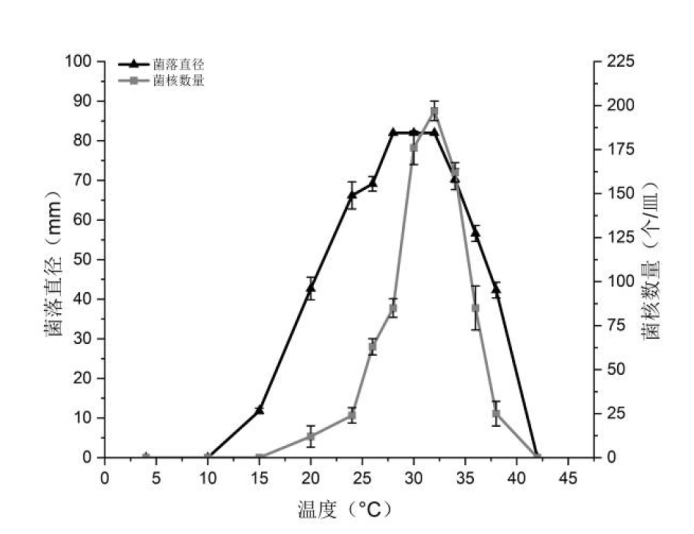
| 温度/℃ | 菌落直径/mm | 菌核数/(个/皿) | 菌核直径/mm | 气生菌丝丰富度 |
|---|---|---|---|---|
| 4 | 0f | - | - | - |
| 10 | 0f | - | - | - |
| 15 | 11.8e | - | - | - |
| 20 | 42.7d | 12h | 1.23a | + |
| 24 | 66.2b | 24f | 1.20a | ++ |
| 26 | 69.1b | 63e | 1.30a | +++ |
| 28 | 82a | 85d | 1.36a | +++ |
| 30 | 82a | 176b | 1.00b | ++++ |
| 32 | 82a | 197a | 0.80c | ++++ |
| 34 | 70.3b | 162c | 0.77c | +++ |
| 36 | 56.6c | 85d | 0.73c | ++ |
| 38 | 42.3d | 25g | 0.76c | + |
| 42 | 0f | - | - | - |
| 温度/℃ | 菌落直径/mm | 菌核数/(个/皿) | 菌核直径/mm | 气生菌丝丰富度 |
|---|---|---|---|---|
| 4 | 0f | - | - | - |
| 10 | 0f | - | - | - |
| 15 | 11.8e | - | - | - |
| 20 | 42.7d | 12h | 1.23a | + |
| 24 | 66.2b | 24f | 1.20a | ++ |
| 26 | 69.1b | 63e | 1.30a | +++ |
| 28 | 82a | 85d | 1.36a | +++ |
| 30 | 82a | 176b | 1.00b | ++++ |
| 32 | 82a | 197a | 0.80c | ++++ |
| 34 | 70.3b | 162c | 0.77c | +++ |
| 36 | 56.6c | 85d | 0.73c | ++ |
| 38 | 42.3d | 25g | 0.76c | + |
| 42 | 0f | - | - | - |
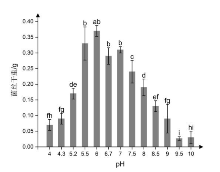
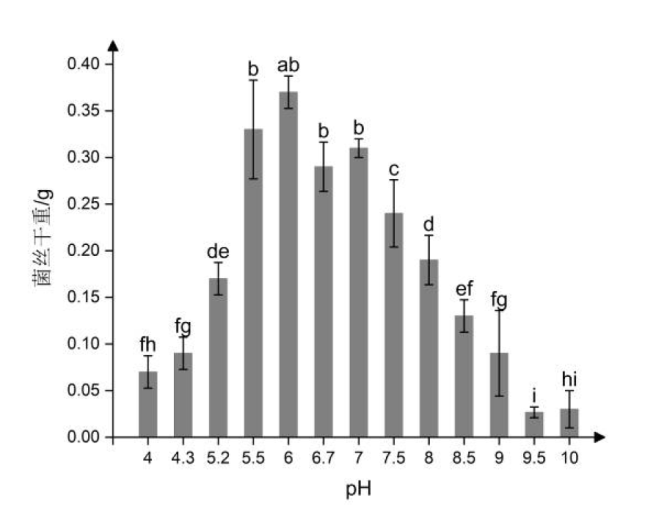
| 碳源 | 菌落直径/mm | 菌核数/(个/皿) |
|---|---|---|
| D-山梨醇 | 70.0a | 22a |
| D-葡萄糖 | 50.0de | 0d |
| 玉米淀粉 | 50.4de | 2cd |
| 麦芽糖 | 60.4bc | 0d |
| D-甘露醇 | 55.6cd | 15b |
| 甘油 | 38.7f | 0d |
| 蔗糖 | 60.3bc | 4c |
| 壳寡糖 | 0g | 0d |
| D-半乳糖 | 64.7ab | 25a |
| D-果糖 | 59.3bc | 0d |
| 木糖醇 | 42.6ef | 12b |
| 木糖 | 0g | 0d |
| 碳源 | 菌落直径/mm | 菌核数/(个/皿) |
|---|---|---|
| D-山梨醇 | 70.0a | 22a |
| D-葡萄糖 | 50.0de | 0d |
| 玉米淀粉 | 50.4de | 2cd |
| 麦芽糖 | 60.4bc | 0d |
| D-甘露醇 | 55.6cd | 15b |
| 甘油 | 38.7f | 0d |
| 蔗糖 | 60.3bc | 4c |
| 壳寡糖 | 0g | 0d |
| D-半乳糖 | 64.7ab | 25a |
| D-果糖 | 59.3bc | 0d |
| 木糖醇 | 42.6ef | 12b |
| 木糖 | 0g | 0d |
| 氮源 | 菌落直径/mm | 菌核数/(个/皿) |
|---|---|---|
| 尿素 | 0e | 0d |
| 甘氨酸 | 63.2ab | 6c |
| 氯化铵 | 59.8b | 10b |
| 硝酸钾 | 32.1d | 0d |
| 硫酸铵 | 66.9a | 4c |
| 硝酸钠 | 43.5c | 0d |
| 亚硝酸钠 | 0e | 0d |
| L-精氨酸 | 0e | 0d |
| 磷酸二氢铵 | 39.7c | 13a |
| L-脯氨酸 | 65ab | 0d |
| 氮源 | 菌落直径/mm | 菌核数/(个/皿) |
|---|---|---|
| 尿素 | 0e | 0d |
| 甘氨酸 | 63.2ab | 6c |
| 氯化铵 | 59.8b | 10b |
| 硝酸钾 | 32.1d | 0d |
| 硫酸铵 | 66.9a | 4c |
| 硝酸钠 | 43.5c | 0d |
| 亚硝酸钠 | 0e | 0d |
| L-精氨酸 | 0e | 0d |
| 磷酸二氢铵 | 39.7c | 13a |
| L-脯氨酸 | 65ab | 0d |
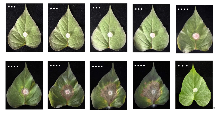
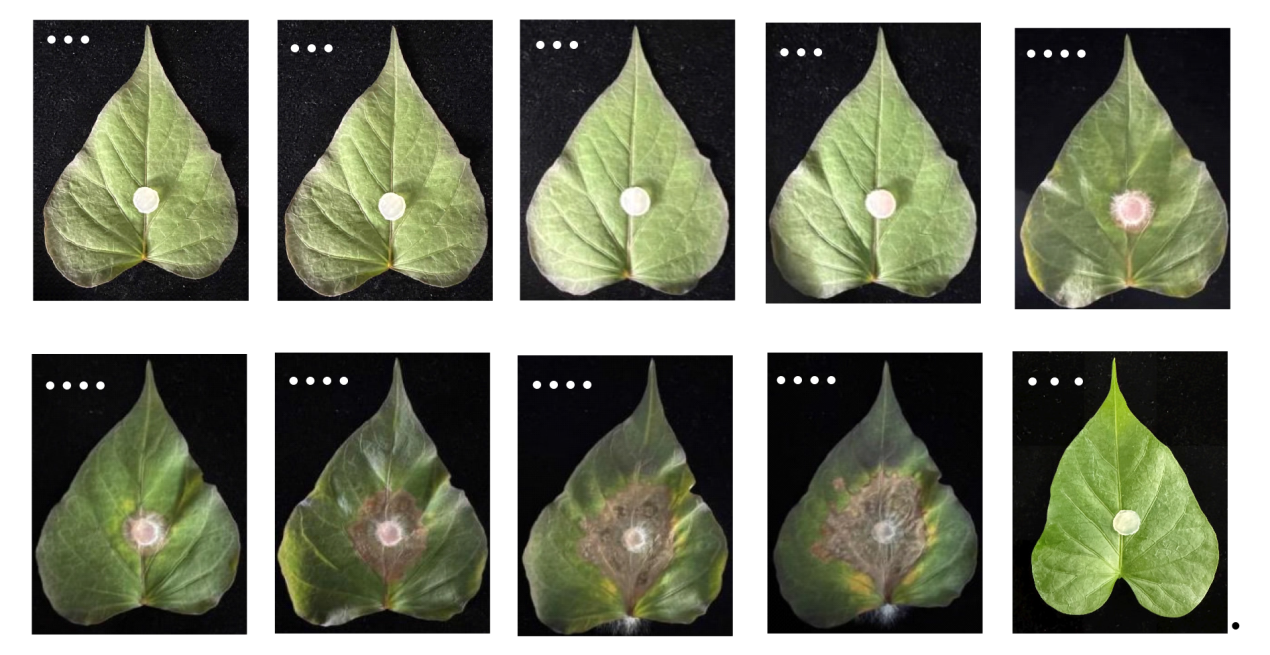
| 杀菌剂 | EC50/(mg/L) | 毒力回归方程 | 相关系数(r) | ||
|---|---|---|---|---|---|
| 咪鲜胺铜盐 | 324.57 | y = 1.0669x + 2.3208 | 0.9880 | ||
| 咯菌腈 | 3.68 | y = 1.4964x + 4.1534 | 0.9665 | ||
| 吡唑醚菌酯 | 0.14 | y = 0.7532x + 5.6511 | 0.9909 | ||
| 嘧菌酯 | 0.96 | y = 0.7265x + 5.0143 | 0.9651 | ||
| 代森锰锌 | 47.03 | y = 1.1303x + 3.1097 | 0.9143 | ||
| 多菌灵 | 79.72 | y = 0.6746x + 3.7172 | 0.8304 | ||
| 乙蒜素 | 174.80 | y = 2.0878x + 0.3180 | 0.9917 | ||
| 百菌清 | 1.79 | y = 1.6574x + 4.5809 | 0.9673 | ||
| 咪鲜胺 | 34.43 | y = 0.6721x + 3.9670 | 0.8587 | ||
| 甲霜·噁霉灵 | 69.54 | y = 1.0139x + 3.1321 | 0.9915 | ||
| 三环唑 | 534.44 | y = 4.3307x - 6.8136 | 0.9611 | ||
| 噻呋酰胺 | 0.01 | y = 1.4032x+ 7.9474 | 0.9862 | ||
| 戊唑醇 | 0.20 | y = 1.1196x + 5.7831 | 0.9865 | ||
| 杀菌剂 | EC50/(mg/L) | 毒力回归方程 | 相关系数(r) | ||
|---|---|---|---|---|---|
| 咪鲜胺铜盐 | 324.57 | y = 1.0669x + 2.3208 | 0.9880 | ||
| 咯菌腈 | 3.68 | y = 1.4964x + 4.1534 | 0.9665 | ||
| 吡唑醚菌酯 | 0.14 | y = 0.7532x + 5.6511 | 0.9909 | ||
| 嘧菌酯 | 0.96 | y = 0.7265x + 5.0143 | 0.9651 | ||
| 代森锰锌 | 47.03 | y = 1.1303x + 3.1097 | 0.9143 | ||
| 多菌灵 | 79.72 | y = 0.6746x + 3.7172 | 0.8304 | ||
| 乙蒜素 | 174.80 | y = 2.0878x + 0.3180 | 0.9917 | ||
| 百菌清 | 1.79 | y = 1.6574x + 4.5809 | 0.9673 | ||
| 咪鲜胺 | 34.43 | y = 0.6721x + 3.9670 | 0.8587 | ||
| 甲霜·噁霉灵 | 69.54 | y = 1.0139x + 3.1321 | 0.9915 | ||
| 三环唑 | 534.44 | y = 4.3307x - 6.8136 | 0.9611 | ||
| 噻呋酰胺 | 0.01 | y = 1.4032x+ 7.9474 | 0.9862 | ||
| 戊唑醇 | 0.20 | y = 1.1196x + 5.7831 | 0.9865 | ||
| [1] |
林海忠, 张民荣, 林飞荣, 等. 甘薯扦插防治甘薯茎基部腐烂病试验研究[J]. 中国农学通报, 2024, 40(17):114-119.
doi: 10.11924/j.issn.1000-6850.casb2023-0494 |
| [2] |
解备涛, 田一汝, 冯向阳, 等. 施肥和灌水量处理对菜用甘薯产量和营养品质的影响[J/OL]. 山东农业科学1-11[2025-11-28]. https://link.cnki.net/urlid/37.1148.S.20251114.1813.003.
|
| [3] |
王欣, 李强, 曹清河, 等. 中国甘薯产业和种业发展现状与未来展望[J]. 中国农业科学, 2021, 54(3):483-492.
doi: 10.3864/j.issn.0578-1752.2021.03.003 |
| [4] |
刘文静, 余华, 任丽花, 等. 甘薯营养成分与口感品质的相关性研究[J]. 食品工业科技, 2014, 35(12):91-95.
|
| [5] |
胡良龙, 胡志超, 谢一芝, 等. 我国甘薯生产机械化技术路线研究[J]. 中国农机化, 2011(6):20-25.
|
| [6] |
郎涛, 杨飞洋, 浦志刚, 等. 转录组测序技术在甘薯研究中的应用[J]. 中国农学通报, 2024, 40(30):94-102.
doi: 10.11924/j.issn.1000-6850.casb2023-0375 |
| [7] |
何元文, 姚俊豪, 聂虎子, 等. 广东省甘薯生产全程机械化现状与思考[J]. 现代农业装备, 2024, 45(3):84-87,100.
|
| [8] |
王欣东. 甘薯主要病害及其防控措施[J]. 基层农技推广, 2024, 12(8):122-124.
|
| [9] |
黄立飞, 刘伟明, 刘也楠, 等. 甘薯茎基部腐烂病调查及病原鉴定[J]. 中国农学通报, 2019, 35(18):135-141.
doi: 10.11924/j.issn.1000-6850.casb19030138 |
| [10] |
马媛媛, 罗金燕, 王艳丽, 等. 首次发现巴西果胶杆菌(Pectobacterium brasiliense)引起甘薯茎腐病[J]. 植物病理学报, 2022, 52(3):504-507.
doi: 10.13926/j.cnki.apps.000583 |
| [11] |
秦素研, 黄立飞, 葛昌斌, 等. 河南省甘薯茎腐病的分离与鉴定[J]. 作物杂志, 2013(6):52-55,157.
|
| [12] |
高波, 王容燕, 马娟, 等. 河北省甘薯茎腐病研究初报[J]. 植物保护, 2015, 41(3):119-122,137.
|
| [13] |
沈肖玲, 林钗, 钱俊婷, 等. 甘薯茎腐病症状及其病原鉴定[J]. 植物病理学报, 2018, 48(1):25-34.
doi: 10.13926/j.cnki.apps.000077 |
| [14] |
姚海峰, 仇智灵, 沈肖玲, 等. 甘薯茎腐病传播侵染途径与田间发病流行因子探讨[J]. 中国农学通报, 2020, 36(30):112-119.
doi: 10.11924/j.issn.1000-6850.casb20191000723 |
| [15] |
黄立飞, 罗忠霞, 房伯平, 等. 甘薯白绢病病原菌的鉴定[J]. 植物保护学报, 2013, 40(6):569-570.
|
| [16] |
王雅, 黄思良, 何朋朋, 等. 芝麻白绢病病原菌的分离鉴定及其生物学特性[J]. 中国油料作物学报, 2013, 35(1):84-91.
doi: 10.7505/j.issn.1007-9084.2013.01.015 |
| [17] |
肖翔, 陈晓兰, 邓铭光, 等. 广东省花生白绢病菌的分布和生物学性状研究初报[J]. 广东农业科学, 2012, 39(17):71-73,237.
|
| [18] |
薛彩云. 花生纹枯病病原学及其致病机制研究[D]. 沈阳: 沈阳农业大学, 2018:51-58.
|
| [19] |
王洁元. 甘薯白绢病品种抗性鉴定及室内药剂筛选研究[D]. 仲恺农业工程学院, 2014:30-35.
|
| [20] |
沈会芳, 张景欣, 杨祁云, 等. 剑兰叶斑病菌鉴定及其生物学特性研究[J]. 广东农业科学, 2021, 48(11):88-95.
|
| [21] |
|
| [22] |
李敏, 何磊鸣, 赵特, 等. 齐整小核菌研究进展[A].河南省植物保护学会,河南省昆虫学会,河南省植物病理学会.河南省植物保护学会第十二次、河南省昆虫学会第十一次、河南省植物病理学会第六次会员代表大会暨学术讨论会论文集[C]. 河南农业大学植物保护学院/河南省新型农药创制与应用重点实验室河南省绿色农药创制工程技术研究中心, 2022:70-81.
|
| [23] |
吴永红. 辣椒白绢病菌基因组分析及抗病种质鉴定[D]. 长沙: 湖南大学, 2022:1.
|
| [24] |
李金鑫, 陈巧环, 苗玉焕, 等. 柳叶白前白绢病病原菌的鉴定、生物学特性及其有效杀菌剂研究[J]. 中国中药志, 2021, 46(13):3303-3310.
|
| [25] |
李利军, 卢美欢, 马英辉, 等. 魔芋白绢病病原菌生物学特性及中药提取物药物筛选[J]. 西北农业学报, 2018, 27(10):1518-1525.
|
| [26] |
李河, 宋光桃, 周国英, 等. 油茶白绢病原菌齐整小核菌分子检测的研究[J]. 生物技术, 2009, 19(5):40-41.
|
| [27] |
戴芳澜. 中国真菌总汇[M]. 北京: 科学出版社, 1979:1070.
|
| [28] |
doi: 10.1139/b84-276 URL |
| [29] |
胡国悦, 杜婵娟, 曹宗鹏, 等. 艾白绢病病原鉴定及生物学特性研究[J]. 中国植保导刊, 2022, 42(4):5-10.
|
| [30] |
doi: 10.1094/Phyto-76-755 URL |
| [31] |
doi: 10.1093/gbe/evx030 URL |
| [32] |
王洪苏, 凡续晨, 魏家欣, 等. 乌头白绢病防治药剂的筛选[J]. 中药材, 2023, 46(3):576-580.
|
| [33] |
韩凤, 黄靖, 章文伟, 等. 多花黄精白绢病病原菌鉴定及室内药剂筛选[J]. 江苏农业学报, 2024, 40(12):2244-2253.
|
| [34] |
杨志强, 王彤彤, 王晓宇, 等. 木奶果白绢病病原菌鉴定、生物学特性研究及药剂筛选[J]. 中国南方果树, 2024, 53(6):108-113.
|
| [1] | XIAN Yunxi, HU Zijin, HUANG Xiaoqin, YU Yaoying, DENG Yue, SONG Pei, ZHOU Xiquan, LIU Yong, ZHANG Lei, ZHANG Zhongmei, YANG Xiaoxiang. Isolation and Identification of Pathogen Causing Black Mold Disease on Ginger During Storage and Study on Its Biological Characteristics [J]. Chinese Agricultural Science Bulletin, 2026, 42(12): 213-218. |
| [2] | BAI Mingsong, LUO Tingshun, XIONG Bin, LI Chenggong, XIONG Caiyun, ZHANG Yong, YUAN Pan. Determination of Nine Fungicides Residues in Carthamus tinctorius by GC-MS/MS [J]. Chinese Agricultural Science Bulletin, 2026, 42(10): 150-156. |
| [3] | LI Yangyang, CHEN Shuaimin, XU Minghong, CHI Chang, MA Wei, WANG Yinping, SONG Yan, FAN Zuowei, WU Haiyan. Effects of Microbial Product Coupling Urea on Straw Decomposition Rate and Yield of Rice [J]. Chinese Agricultural Science Bulletin, 2025, 41(9): 18-24. |
| [4] | QIN Jiao, YAO Dandan, PEI Shuaishuai, GUO Shuhong, FENG Zhiyong, QIN Meng, TIAN Hongling. Advances in Common Chinese Zokor, Myospalax fontanieri (Rodentia: Spalacidae) in China [J]. Chinese Agricultural Science Bulletin, 2025, 41(8): 111-115. |
| [5] | ZHANG Haiting, YE Jianrong, XU Bingzhi, ZENG Shuocheng, FU Huijuan, LI Xingyue, LI Qiyong, ZHANG Hong, YI Jun. Identification, Biological Characteristics and Field Control Efficacy of Venturia inaequalis in Yuexi County [J]. Chinese Agricultural Science Bulletin, 2025, 41(7): 115-120. |
| [6] | SHAO Zeyu, ZHANG Xiaojun, DU Xuedi, HAN Keke, JIANG Qun, WANG Ruyuan, LI Ping, WU Fei. Research Progress on Ecological and Healthy Aquaculture Technology of Macrobrachium Rosenbergii in China [J]. Chinese Agricultural Science Bulletin, 2025, 41(35): 133-139. |
| [7] | RAO Yongbin, ZHANG Junli. Molecular Identification, Biological Characteristics and Domestication of A Wild Strain of Peniophora incarnata [J]. Chinese Agricultural Science Bulletin, 2025, 41(3): 123-130. |
| [8] | WANG Jiafei, LYU Hangjun, XIE Jiale, CAI Jin. Inhibitory Activity and Mechanism of Honokiol Against Chinese Cabbage Soft Rot [J]. Chinese Agricultural Science Bulletin, 2025, 41(29): 99-106. |
| [9] | PAN Lianfu, LIN Shanyu, HUANG Kaihang, LI Zhanbo, LI Minglun. Field Efficacy Evaluation of 7 Compound Fungicides Against Leaf Spot in Cherimoya [J]. Chinese Agricultural Science Bulletin, 2025, 41(19): 126-131. |
| [10] | ZHANG Zongxia, LU Ming, LI Lina, ZHANG Maojin, CHEN Xiuna, WU Wenchen, MA Qinghui, LV Juan. Research Progress on Biological Characteristics and Control Measures of Semanotus bifasciatus [J]. Chinese Agricultural Science Bulletin, 2025, 41(17): 108-114. |
| [11] | HU Fuchu, LIU Yanping, DUAN Yun, CHEN Tangzuan, ZHOU Wenjing, WANG Xianghe, WANG Siwei. Detection of 9 Fungicides Residues in Lychee Based on High-performance Liquid Chromatography-tandem Quadrupole-time of Flight-mass Spectrometry [J]. Chinese Agricultural Science Bulletin, 2025, 41(16): 143-149. |
| [12] | ZHAO Yujiao, YANG Xiurong, LI Yuejiao, LI Guangsheng, SUN Shuqin, LI Zhibin. Effects of Varieties, Biocontrol Bacteria and Chemical Agents on Rice Sheath Blight [J]. Chinese Agricultural Science Bulletin, 2025, 41(15): 124-130. |
| [13] | LI Yaqi, LIU Huiqin, YANG Lijuan, WANG Yong, GAO Wei. Effect of Temperature on Infection Process of Pseudoperonospora cubensis in Cucumber [J]. Chinese Agricultural Science Bulletin, 2025, 41(13): 147-151. |
| [14] | ZHU Haixia, LI Huan, CHENG Liang. Study on Infection Mechanism of Botrytis spp. Strain HY-021 on Chenopodium album L. [J]. Chinese Agricultural Science Bulletin, 2025, 41(11): 146-151. |
| [15] | YANG Lijuan, GAO Wei, LI Haiyan, XUE Tao, ZHANG Chunxiang, WANG Yong. Pathogen Identification of Radish Black Rot and Fungicides Screening in Laboratory [J]. Chinese Agricultural Science Bulletin, 2024, 40(7): 129-134. |
| Viewed | ||||||
|
Full text |
|
|||||
|
Abstract |
|
|||||
