Welcome to Chinese Agricultural Science Bulletin,
Chinese Agricultural Science Bulletin ›› 2026, Vol. 42 ›› Issue (19): 30-37.doi: 10.11924/j.issn.1000-6850.casb2025-0902
Previous Articles Next Articles
SU Yujuan1( ), ZHONG Hailong1, TANG Huijuan1, LUAN Mingbao1,2, LI Jianjun1,2, HUANG Siqi1()
Received:2025-11-03
Revised:2026-07-30
Online:2026-10-15
Published:2026-10-15
CLC Number:
SU Yujuan, ZHONG Hailong, TANG Huijuan, LUAN Mingbao, LI Jianjun, HUANG Siqi. Promotive Effect of Brassinolide on Growth of Kenaf Seedlings Under Salt Stress[J]. Chinese Agricultural Science Bulletin, 2026, 42(19): 30-37.
Add to citation manager EndNote|Ris|BibTeX
URL: https://www.casb.org.cn/EN/10.11924/j.issn.1000-6850.casb2025-0902
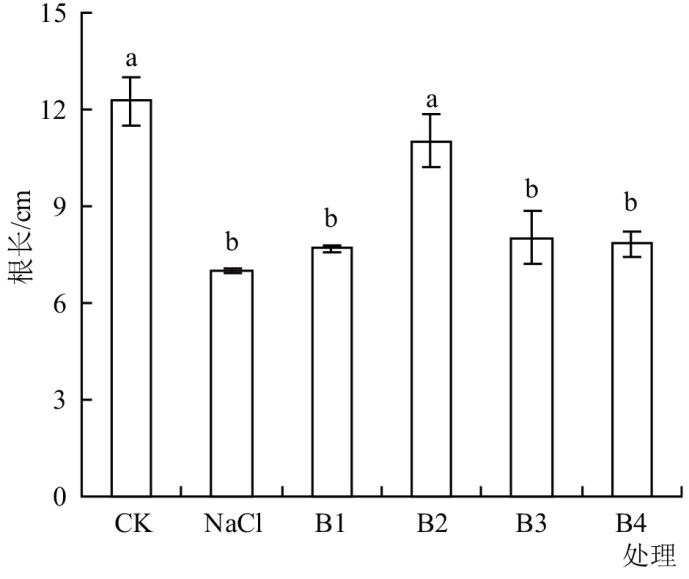
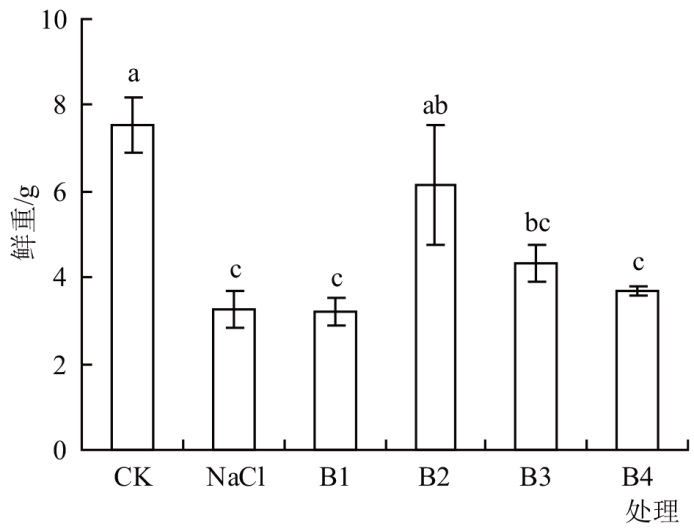
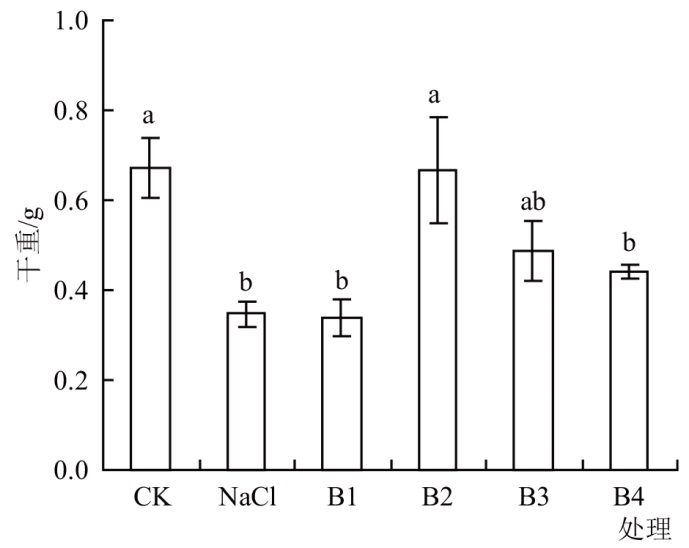
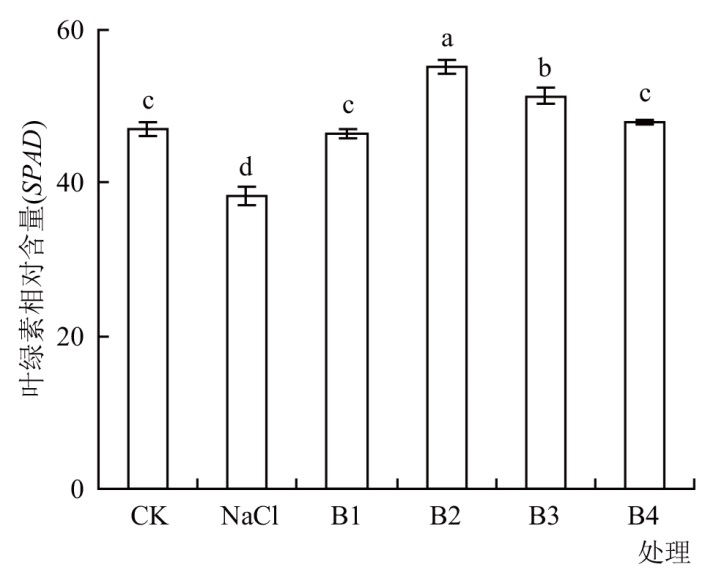
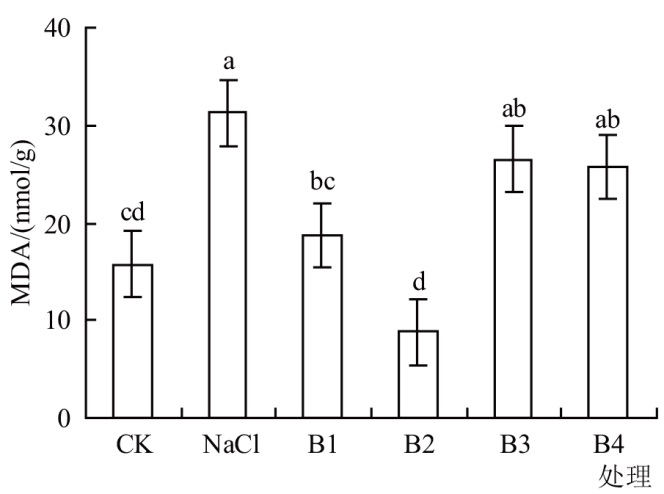
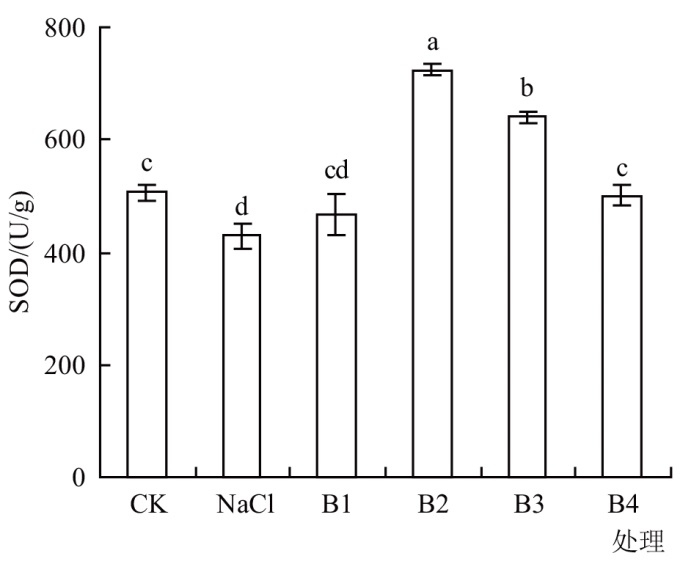
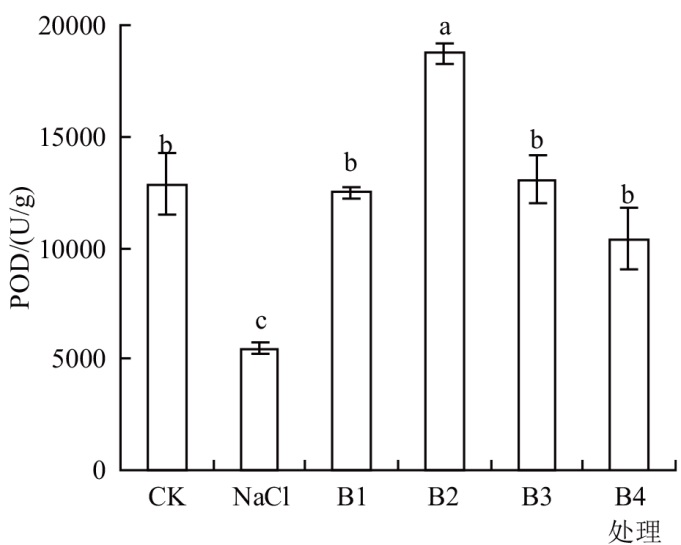
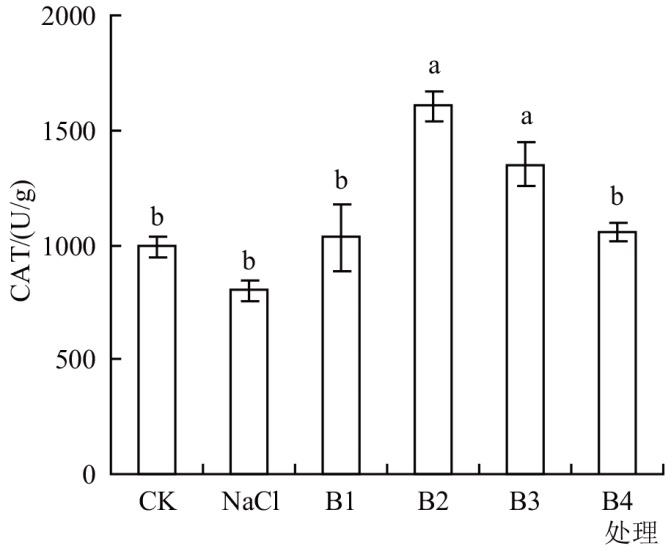
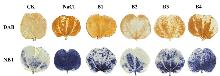
| [1] |
doi: 10.1016/j.jgg.2023.08.007 URL |
| [2] |
FAO. FAO launches first major global assessment of salt-affected soils in 50 years[EB/OL]. FAO Newsroom,2024-12-11/2026-05-26.
|
| [3] |
张越, 魏秋杨, 王鑫宇, 等. 29个黄瓜品种萌发期耐盐碱性分析[J]. 中国瓜菜, 2026, 39(3):75-83.
|
| [4] |
王佳丽, 黄贤金, 钟太洋, 等. 盐碱地可持续利用研究综述[J]. 地理学报, 2011, 66(5):673-684.
|
| [5] |
doi: 10.1016/j.chemosphere.2020.128211 URL |
| [6] |
|
| [7] |
熊和平. 我国麻类生产的现状与政策建议[J]. 中国麻业科学, 2010, 32(6):301-304.
|
| [8] |
刘淑丽, 张瑞,
doi: 10.16819/j.1001-7216.2023.220404 |
| [9] |
doi: 10.1038/2251065a0 |
| [10] |
陈慧泽, 刁丽曼, 周佳佳, 等. 油菜素内酯与其他植物激素互作调控植物生长发育及胁迫响应的研究进展[J]. 植物研究, 2024, 44(6):812-821.
doi: 10.7525/j.issn.1673-5102.2024.06.002 |
| [11] |
魏茜, 何敏, 胡小京. 外源油菜素内酯对盐胁迫下紫罗兰幼苗生长及生理特性的影响[J]. 西南农业学报, 2023, 36(6):1165-1171.
|
| [12] |
doi: 10.1016/j.eja.2022.126656 URL |
| [13] |
|
| [14] |
doi: 10.1007/s12298-020-00765-7 pmid: 32205926 |
| [15] |
高战武, 范春燕, 鄢上钦, 等. 盐碱胁迫下外源油菜素内酯与AM真菌对羊草光合特性及抗氧化酶系统的影响[J]. 山东农业科学, 2022, 54(05):44-52.
|
| [16] |
杨大为. NO缓解红麻盐胁迫的功能分析[D]. 长沙: 中国农业科学院,2022:7-15.
|
| [17] |
周倩文, 杨瑞芳, 王昕慧, 等. SPAD-502叶绿素计在苎麻高光效种质筛选上的应用研究[J]. 现代农业科技, 2022(3):40-43.
|
| [18] |
陈爱葵, 韩瑞宏, 李东洋, 等. 植物叶片相对电导率测定方法比较研究[J]. 广东教育学院学报, 2010, 30(5):88-91.
|
| [19] |
doi: 10.1007/s10343-016-0376-2 URL |
| [20] |
doi: 10.1111/pce.v43.12 URL |
| [21] |
doi: 10.1007/s00425-009-1016-1 URL |
| [22] |
郭小倩. 油菜素内酯作用于盐分胁迫条件下高粱的效应及机理研究[D]. 扬州: 扬州大学,2024:54-58.
|
| [23] |
王卓沛. 外源褪黑素和2,4-表油菜素内酯对无刺蔷薇盐碱胁迫的缓解效应[D]. 泰安: 山东农业大学,2023:33-47.
|
| [24] |
doi: 10.1016/j.indcrop.2007.10.003 URL |
| [25] |
doi: 10.1007/s11434-010-0092-8 URL |
| [26] |
|
| [27] |
doi: 10.2298/ABS171019001F URL |
| [28] |
doi: 10.1007/s11099-013-0021-6 URL |
| [29] |
束红梅, 郭书巧, 巩元勇, 等. 油菜素内酯对NaCl胁迫下棉花叶片生理特征和基因表达谱的影响[J]. 应用生态学报, 2016, 27(1):150-156.
|
| [30] |
doi: 10.1146/annurev.arplant.59.032607.092911 pmid: 18444910 |
| [31] |
毛爽, 周万里, 杨帆, 等. 植物根系应答盐碱胁迫机理研究进展[J]. 浙江农业学报, 2021, 33(10):1991-2000.
doi: 10.3969/j.issn.1004-1524.2021.10.23 |
| [32] |
doi: 10.1111/tpj.2006.45.issue-4 URL |
| [33] |
宋冰. 油菜素内酯对盐胁迫下紫羊茅生长的影响及其坪用性评价[D]. 乌鲁木齐: 新疆农业大学,2024:20-34.
|
| [34] |
王京华. 外源褪黑素对杜梨耐盐碱能力的影响[D]. 泰安: 山东农业大学,2024:33-43.
|
| [35] |
pmid: 16760489 |
| [36] |
雷新慧, 万晨茜, 陶金才, 等. 褪黑素与2,4-表油菜素内酯浸种对盐胁迫下荞麦发芽与幼苗生长的促进效应[J]. 作物学报, 2022, 48(5):1210-1221.
doi: 10.3724/SP.J.1006.2022.11040 |
| [37] |
doi: 10.1007/s12229-020-09231-1 |
| [38] |
doi: 10.1038/s41598-022-24747-9 |
| [1] | XU Mingwei, FENG Guojun, LIU Dajun, LIU Chang, YAN Zhishan, ZHANG Taifeng, XU Di, YANG Xiaoxu. Selection of Salt-tolerant Growth-promoting Bacteria and Their Effects on Growth of Common Beans Under Salt Stress [J]. Chinese Agricultural Science Bulletin, 2026, 42(9): 59-67. |
| [2] | LIU Xueling, LIANG Boquan, YAO Bin, YANG Yunhai, ZHAN Che, SHEN Shicai, ZHANG Fudou, YANG Shaosong, ZHENG Fengping, KONG Yan, YUAN Jingjing, YAN Peirui, YAN Maopeng, XU Gaofeng. Allelopathic Effects of Brassica juncea (YRab2) Root Exudates on Four Invasive Weeds [J]. Chinese Agricultural Science Bulletin, 2026, 42(8): 183-190. |
| [3] | BI Yanliang, QI Shihan, LI Qiongwei, ZOU Xiaoxia, SI Tong. Physiological Mechanism of Seed Coating Agent in Promoting Peanut Seed Germination and Seedling Growth Under Low Temperature [J]. Chinese Agricultural Science Bulletin, 2026, 42(8): 44-52. |
| [4] | ZHAO Qianyun, LI Delu, WANG Fei, LI Ya. Response of Mucilaginous and Non-mucilage Artemisia ordosica Seed Germination to Salt Stress [J]. Chinese Agricultural Science Bulletin, 2026, 42(8): 60-66. |
| [5] | LIU Guimin, SU Lei, ZHENG Xiaoning, CHEN Di, LIU Binghua, SUN Mingjie, LIU Xinghong, XU Yingmei. Effects of Inoculating Plant Growth-Promoting Rhizobacteria on Physiological Characteristics of Maize Leaves in Medium- and Low-yield Soils [J]. Chinese Agricultural Science Bulletin, 2026, 42(3): 119-124. |
| [6] | MA Xiang, MA Wenting, JU Zeliang, LIU Wenhui, LIANG Guoling, JIA Zhifeng. Evaluation of Salt Tolerance Performance of Oat Germplasm Resources and Screening of Salt Tolerance Germplasm [J]. Chinese Agricultural Science Bulletin, 2026, 42(20): 6-18. |
| [7] | ZHU Xiaojiang, BIAN Qingyong, FU Yanbo, MENG Ajing, WANG Zhiguo, RAO Xiaojuan, KAN Dexing, WU Chen, WU Yang, LI Ning. Effects of Different Functional Fertilizers on Cotton Seed Germination Characteristics [J]. Chinese Agricultural Science Bulletin, 2026, 42(16): 37-45. |
| [8] | WANG Yanan, LI Tao, HE Shihao, PALINUR·Aiwaili, WANG Jiafeng, WANG Xin, LI Zhiyuan, QIN Yong. Effects of Gibberellin and Salicylic Acid on Germination, Seedling Growth and Physiology of Tagetes erecta Under Salt Stress [J]. Chinese Agricultural Science Bulletin, 2026, 42(16): 100-109. |
| [9] | SHAO Mengyao, KONG Xiangjun, JIA Peipei, LI Hengbin, YAN Sihui, SUN Chenxin, LI Lijie, LI Zengqiang, ZHANG Zhiyong. Comparison of Salt Tolerance at Seedling Stage and Analysis of Physiological Response Mechanism in Different Peanut Varieties [J]. Chinese Agricultural Science Bulletin, 2026, 42(14): 46-56. |
| [10] | YANG Shibo, ZHU Yifan, WU Huiping, YU Dawen, TENG Shihua, HE Wangwei, WAN Jing, DUAN Hengxi, ZU Chaolong, DONG Qing, SHEN Jia, WANG Jitao. Influence of Exogenous Plant Regulators on Expansion and Quality of Upper Leaves of Flue-cured Tobacco in Yunnan Province [J]. Chinese Agricultural Science Bulletin, 2026, 42(1): 12-19. |
| [11] | LIANG Wenzhao, ZHOU Shiyi, WEI Ruiyan, SHI Linya, LIU Naixin, YU Qingtao. Effect of Graphene Oxide on Rice Seed Germination Under Salt Stress [J]. Chinese Agricultural Science Bulletin, 2025, 41(9): 1-7. |
| [12] | HUANG Wenyin, ZHANG Baige, CHANG Jingjing, CHEN Xiao, LI Jing, CHEN Lei, ZHAO Junhong, LUO Mouxiong, SONG Zhao. Effect of Exogenous Inositol on Yield and Quality of Tomatoes Under Salt Stress [J]. Chinese Agricultural Science Bulletin, 2025, 41(9): 73-80. |
| [13] | WANG Lili, ZHU Shijun, LU Xiaohong, JIN Shuquan. Biological Effects of Trichoderma W1 Bio-organic Fertilizer on Coastal Tomato Planting [J]. Chinese Agricultural Science Bulletin, 2025, 41(7): 100-106. |
| [14] | TIAN Qinyu, HU Huabing, WANG Ronghua, WANG Maoqian. Effects of L-ascorbic Selenite Immersion on Seed Germination of Sugar Beet Under Salt Stress [J]. Chinese Agricultural Science Bulletin, 2025, 41(6): 53-59. |
| [15] | LIU Chang, ZHANG Yu, LI Mengyu, FENG Guojun, LIU Dajun, YANG Xiaoxu, YAN Zhishan. Cloning of PvLEA Gene in Snap Bean and Identification of Salt Tolerance Function [J]. Chinese Agricultural Science Bulletin, 2025, 41(5): 44-49. |
| Viewed | ||||||
|
Full text |
|
|||||
|
Abstract |
|
|||||
