Welcome to Chinese Agricultural Science Bulletin,

Chinese Agricultural Science Bulletin ›› 2025, Vol. 41 ›› Issue (34): 53-62.doi: 10.11924/j.issn.1000-6850.casb2025-0225
Previous Articles Next Articles
XU Meihua( ), QUAN Changqian, WEI Fan, TANG Danfeng()
Received:2025-03-20
Revised:2025-10-25
Online:2025-12-04
Published:2025-12-04
XU Meihua, QUAN Changqian, WEI Fan, TANG Danfeng. Effect of Red Lighting Duration on Physio-biochemical Characteristics and Quality of Cuttings from Platostoma palustre[J]. Chinese Agricultural Science Bulletin, 2025, 41(34): 53-62.
Add to citation manager EndNote|Ris|BibTeX
URL: https://www.casb.org.cn/EN/10.11924/j.issn.1000-6850.casb2025-0225
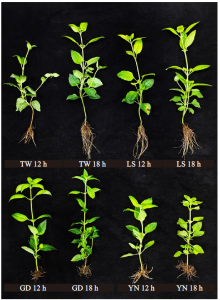
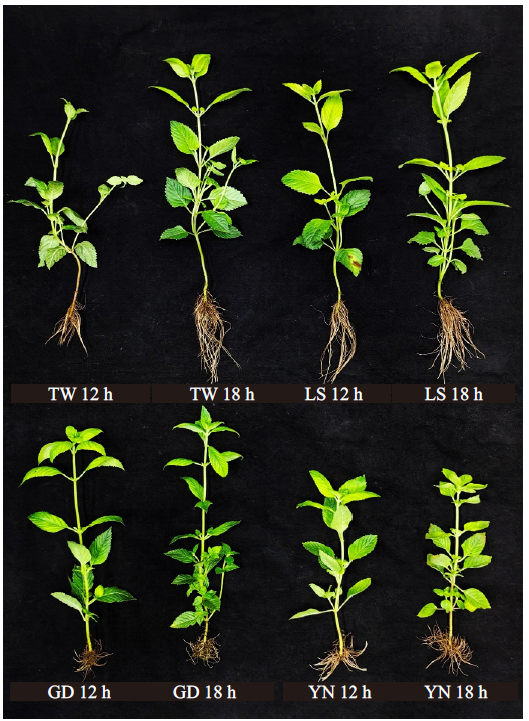
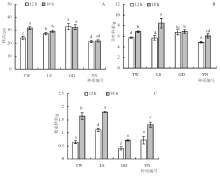
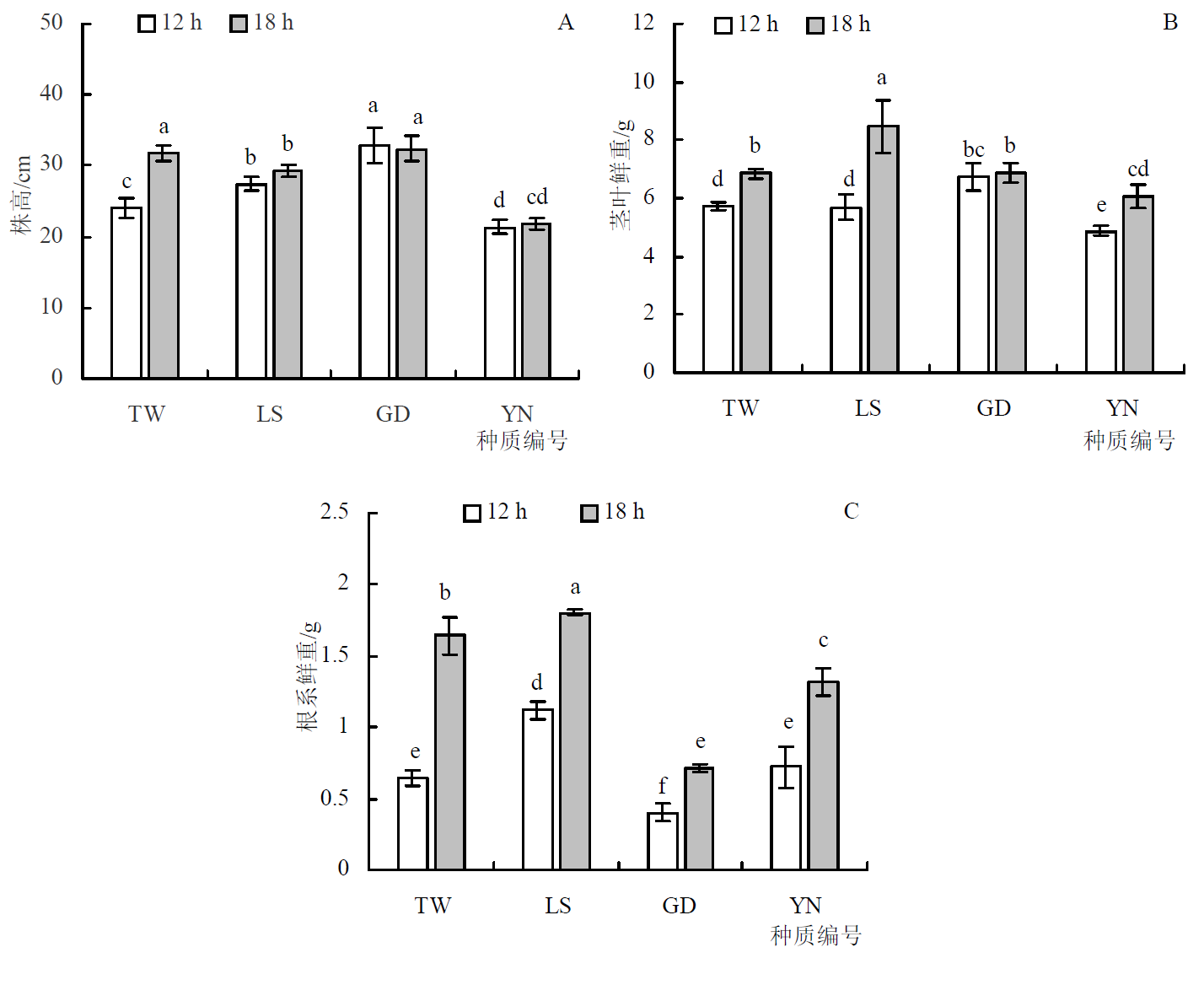
| 因素 | 株高 | 茎叶鲜重 | 根系鲜重 | 根长度 | 根表面积 | 根体积 | 根尖数 | 可溶性蛋白含量 | SOD活性 | 根系活力 | 黄酮含量 | 可溶性糖含量 | 可溶性果胶含量 |
|---|---|---|---|---|---|---|---|---|---|---|---|---|---|
| 种质 | *** | *** | *** | *** | *** | *** | *** | *** | *** | *** | *** | *** | *** |
| 光照时长 | ** | *** | *** | *** | *** | *** | ** | ns | *** | *** | ns | *** | *** |
| 种质×光照时长 | ** | ** | *** | *** | *** | *** | ns | ** | *** | *** | *** | ** | * |
| 因素 | 株高 | 茎叶鲜重 | 根系鲜重 | 根长度 | 根表面积 | 根体积 | 根尖数 | 可溶性蛋白含量 | SOD活性 | 根系活力 | 黄酮含量 | 可溶性糖含量 | 可溶性果胶含量 |
|---|---|---|---|---|---|---|---|---|---|---|---|---|---|
| 种质 | *** | *** | *** | *** | *** | *** | *** | *** | *** | *** | *** | *** | *** |
| 光照时长 | ** | *** | *** | *** | *** | *** | ** | ns | *** | *** | ns | *** | *** |
| 种质×光照时长 | ** | ** | *** | *** | *** | *** | ns | ** | *** | *** | *** | ** | * |
| [1] |
doi: 10.1080/1343943X.2020.1847667 URL |
| [2] |
doi: 10.3390/molecules27113423 URL |
| [3] |
doi: 10.3389/fpls.2021.761068 URL |
| [4] |
doi: 10.1111/jfds.2000.65.issue-6 URL |
| [5] |
doi: 10.1016/j.foodchem.2022.132531 URL |
| [6] |
doi: 10.1111/crf3.2018.17.issue-5 URL |
| [7] |
doi: 10.3390/foods13071134 URL |
| [8] |
|
| [9] |
doi: 10.1002/jsfa.v88:1 URL |
| [10] |
doi: 10.1080/14620316.2005.11511925 URL |
| [11] |
doi: 10.1111/j.1469-8137.2008.02681.x pmid: 19154317 |
| [12] |
doi: 10.1007/s00344-021-10337-y |
| [13] |
|
| [14] |
徐超华, 李军营, 崔明昆, 等. 延长光照时间对烟草叶片生长发育及光合特性的影响[J]. 西北植物学报, 2013, 33(4):763-770.
|
| [15] |
doi: 10.1016/j.scienta.2019.108630 URL |
| [16] |
doi: 10.1186/s12870-024-05448-z pmid: 39060976 |
| [17] |
doi: 10.1016/j.foodchem.2020.127991 URL |
| [18] |
邓丽莉, 潘晓倩, 生吉萍, 等. 考马斯亮蓝法测定苹果组织微量可溶性蛋白含量的条件优化[J]. 食品科学, 2012, 33(24):185-189.
doi: 10.7506/spkx1002-6630-201224038 |
| [19] |
doi: 10.1271/bbb.63.485 pmid: 27393255 |
| [20] |
白宝璋, 金锦子, 白崧, 等. 玉米根系活力TTC测定法的改良[J]. 玉米科学, 1994(4):44-47.
|
| [21] |
王丽娟, 张学英, 徐金娥, 等. 不同光质对草莓果实花青苷、酚类物质及类黄酮物质的影响[J]. 河北农业大学学报, 2009, 32(2):54-57.
|
| [22] |
doi: 10.1093/jxb/44.10.1627 URL |
| [23] |
doi: 10.1021/ac60070a036 URL |
| [24] |
doi: 10.1104/pp.107.101824 URL |
| [25] |
pmid: 18867618 |
| [26] |
doi: 10.1186/s12870-019-2170-7 |
| [27] |
doi: 10.1016/j.scienta.2020.109565 URL |
| [28] |
doi: 10.3390/plants9020155 URL |
| [29] |
杨舒贻, 陈晓阳, 惠文凯, 等. 逆境胁迫下植物抗氧化酶系统响应研究进展[J]. 福建农林大学学报(自然科学版), 2016, 45(5):481-489.
|
| [30] |
|
| [31] |
蔡宇宇, 朱仲龙, 贾忠奎, 等. 光周期对红花玉兰‘娇红1号’生理及光合特性的影响[J]. 经济林研究, 2024, 42(1):189-200.
|
| [32] |
doi: 10.3389/fpls.2021.781236 URL |
| [33] |
doi: 10.1186/s12864-019-6419-1 |
| [34] |
doi: 10.1016/j.scienta.2021.110258 URL |
| [35] |
doi: 10.1016/j.scienta.2012.04.005 URL |
| [36] |
doi: 10.1016/j.scienta.2023.112801 URL |
| [37] |
doi: 10.1016/j.pbi.2004.11.003 pmid: 15653406 |
| [38] |
doi: 10.1007/s00425-019-03293-1 |
| [39] |
doi: 10.1111/gcb.15078 pmid: 32162388 |
| [40] |
doi: S0981-9428(19)30454-1 pmid: 31710920 |
| [41] |
孙远明, 杨君, 施金风, 等. 凉粉草胶的性质及凝胶结构[J]. 浙江农业大学学报, 1997(S1):64.
|
| [42] |
朱新焰, 字淑慧, 唐宇, 等. 不同生长年限白及的多糖组织化学定位研究[J]. 西南农业学报, 2019, 32(3):511-515.
|
| [1] | JIANG Yongqiang, WU Yao, FANG Zhongjian, YE Guangying, HUI Jun’ai, ZHOU Rong, WANG Zaihua. Influence of LED Light Quality on Growth and Quality of Tissue Culture Plantets of Dendrobium officinale and D. nobile [J]. Chinese Agricultural Science Bulletin, 2025, 41(9): 65-72. |
| [2] | WANG Jie, YU Xiaoxia, HE Jianzhang, CHEN Jiantu, WU Meifang. Extraction Process and Antioxidant Activities Screening of Total Flavonoids from Citrus depressa Hayat Leaves [J]. Chinese Agricultural Science Bulletin, 2025, 41(8): 133-139. |
| [3] | ZHU Jiang, ZHOU Junniu, ZHENG Jixiang, MOU Haifei, WEI Guangtan, TAN Zuxiong, ZHANG Yingjun, TIAN Qinglan, WU Yanyan, HUANG Weihua, LIU Jieyun. Research on Anatomical Structure and Influencing Factors of Cuttage Rooting of Passiflora edulis [J]. Chinese Agricultural Science Bulletin, 2025, 41(7): 40-46. |
| [4] | CONG Tianyue, XING Xiangyu, YOU Mengyao, CHENG Li, ZHENG Chunying. Studies on Secondary Metabolites of Cannabis sativa L. Endophytic Fungus HMY07 Based on Flavonoid Biosynthesis [J]. Chinese Agricultural Science Bulletin, 2025, 41(5): 56-62. |
| [5] | WEI Xiaojuan, ZHANG Xing, WANG Kun, YANG Deren. Analysis of Active Components in Flowers and Leaves of 35 Species of Sect. Chrysantha [J]. Chinese Agricultural Science Bulletin, 2025, 41(33): 59-66. |
| [6] | ZHAO Zhihui, DAI Jiyun, LIU Yuning, FU Hui, YING Ying, HUANG Yiying, JIANG Xiaowei, LIU Jiangying, WEI Yuan, ZHANG Yandong, WANG Lixia, YU Haidong, WAN Yumeng, QIU Pengcheng, SHI Fu, LIU Tinglu, SUN Fengwu, WU Hongxin. Study on Antioxidant Activity of Extracts from 16 Plants in Inner Mongolia Grassland [J]. Chinese Agricultural Science Bulletin, 2025, 41(32): 116-123. |
| [7] | TANG Guimei, HUANG Guolin, ZHAO Fan, LIU Yang, ZHANG Li, LI Weidong, XIAO Xiaoling. Quantitative Evaluation on Stem Cutting Effectiveness of Medicinal Tea Chrysanthemum [J]. Chinese Agricultural Science Bulletin, 2025, 41(3): 42-47. |
| [8] | WU Dandan, WU Xiaoxing, LIN Menghua, LIANG Ying, GU Hongsheng. Fruit Quality Analysis of Pyrus bretschneideri ‘Laiyang’ at Different Tree Ages [J]. Chinese Agricultural Science Bulletin, 2025, 41(22): 156-164. |
| [9] | SHE Na, ZHANG Han, FENG Yue, CHEN Gongxuan, LI Jinghong. Effects of Exogenous Hormones Ratio on Rapid Propagation of Stem Segments of Dendrobium officinale [J]. Chinese Agricultural Science Bulletin, 2025, 41(19): 42-48. |
| [10] | MO Fangshu, HE Jiamin, LI Wenzhong, CHEN Qin, LIU Minhao, XIAO Xingcui. Effects of Substrate Ratio, Spike Type and Rooting Agent on Rooting of Styrax japonicas Cuttings [J]. Chinese Agricultural Science Bulletin, 2025, 41(18): 90-98. |
| [11] | LIU Tianfeng, LIAO Ruyu, LIU Zhicheng, JIANG Chunyan, CAI Jianrong, LAI Liting, QIU Qisong. Effects of Cyanamide on Early Flowering and Carbohydrates and Proline in Flower Buds of Prunus salicina var. cordata [J]. Chinese Agricultural Science Bulletin, 2025, 41(15): 59-64. |
| [12] | DAI Mingjun, JIANG Yi, CHEN Yuezhang, ZHANG Hua, SHI Minjing. Analysis of Main Chemical Compositions Content of Taraxacum grypodon in Linzhi of Tibet [J]. Chinese Agricultural Science Bulletin, 2025, 41(13): 71-79. |
| [13] | ZHANG Shuwei, HUANG Linli, ZONG Yingjie, GUO Huimin, GUO Guimei, YANG Bangwei, CHEN Zhiwei, XU Hongwei, LIU Chenghong. Optimization of Total Flavonoids Extraction from Quinoa Seedlings and Evaluation of Its Inhibitory Effect on Xanthine Oxidase and Antioxidant Activity [J]. Chinese Agricultural Science Bulletin, 2025, 41(12): 142-148. |
| [14] | DU Nianzhi. Effects of AM Fungi on Carotenoids and Flavonoids in Mulberry Trees [J]. Chinese Agricultural Science Bulletin, 2025, 41(11): 90-99. |
| [15] | GU Wenrui, HOU Yue, ZHOU Yun, HE Jihong, WANG Tianchi, CAO Xue. In Vitro Culture and Regeneration System of Solanum habrochaites ‘LA1777’ Leaves [J]. Chinese Agricultural Science Bulletin, 2025, 41(10): 52-57. |
| Viewed | ||||||
|
Full text |
|
|||||
|
Abstract |
|
|||||
