欢迎访问《中国农学通报》,

中国农学通报 ›› 2026, Vol. 42 ›› Issue (4): 185-192.doi: 10.11924/j.issn.1000-6850.casb2025-0596
翟瑶瑶1,2( ), 王琳2, 王娟2, 刘俊辉2, 刘中木2,3, 宁雪莹1,2, 王君玮2, 王建琳1(), 曲志娜2()
收稿日期:2025-07-16
修回日期:2025-11-06
出版日期:2026-02-27
发布日期:2026-02-27
通讯作者:
作者简介:翟瑶瑶,女,2000年出生,山东淄博人,硕士研究生,研究方向:预防兽医。通信地址:266032 山东省青岛市市北区南京路369号 中国动物卫生与流行病学中心,E-mail:3049557816@qq.com。
基金资助:
ZHAI Yaoyao1,2(), WANG Lin2, WANG Juan2, LIU Junhui2, LIU Zhongmu2,3, NING Xueying1,2, WANG Junwei2, WANG Jianlin1(), QU Zhina2()
Received:2025-07-16
Revised:2025-11-06
Published:2026-02-27
Online:2026-02-27
摘要:
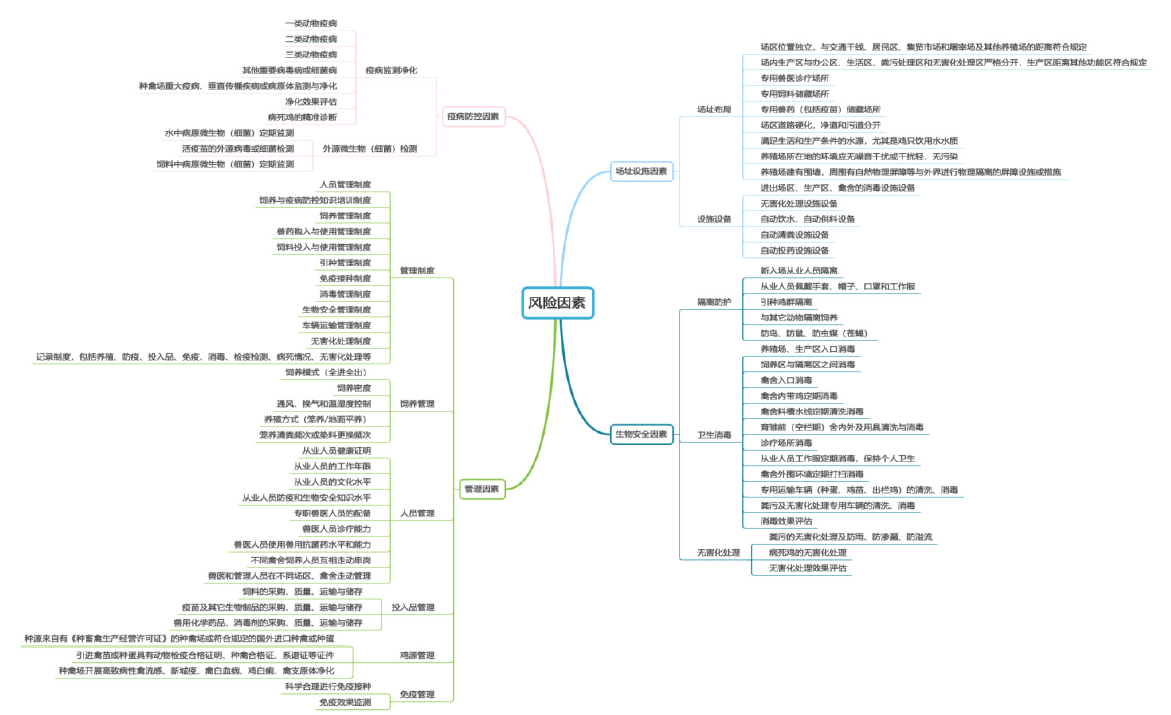
规模化肉鸡场食源性病原菌传播风险缺乏系统评估体系,为精准识别关键风险因素,结合文献研究与全国11省100家规模化肉鸡场实地调研,构建包含4个I级、13个II级、78个III级的规模化肉鸡场食源性病原菌传播风险指标体系,采用层次分析法确定指标权重并排序。结果表明:(1)指标体系通过一致性检验,科学性可靠;(2)核心风险因素排序为疫病防控>生物安全>场址设施>管理;(3)首要风险因素为疫病防控中的外源微生物检测(活疫苗、饲料和水),权重分别为4.205%、4.126%、3.999%,其次为病死鸡无害化处理(2.847%)和场区消毒设施设备(2.828%)。本调查填补了规模化肉鸡场食源性病原菌传播风险因素研究空白,明确了规模化肉鸡场食源性病原菌传播的核心风险点,构建了科学的风险评估体系。未来可结合实地监测数据验证指标有效性,针对不同地区、不同规模肉鸡场优化指标体系,为精准防控提供更具针对性的技术支撑。
翟瑶瑶, 王琳, 王娟, 刘俊辉, 刘中木, 宁雪莹, 王君玮, 王建琳, 曲志娜. 运用层次分析法对规模化肉鸡场食源性病原菌传播风险因素分析[J]. 中国农学通报, 2026, 42(4): 185-192.
ZHAI Yaoyao, WANG Lin, WANG Juan, LIU Junhui, LIU Zhongmu, NING Xueying, WANG Junwei, WANG Jianlin, QU Zhina. Analysis of Risk Factors for Foodborne Pathogen Transmission in Large-Scale Broiler Farm Using Analytic Hierarchy Process[J]. Chinese Agricultural Science Bulletin, 2026, 42(4): 185-192.
| 省份/自治区 | 肉鸡场数量 | 企业人员 | 行业专家 | 管理人员 | 小计 |
|---|---|---|---|---|---|
| 山东 | 11 | 7 | 1 | 6 | 14 |
| 辽宁 | 3 | 3 | 0 | 2 | 5 |
| 河北 | 5 | 3 | 3 | 1 | 7 |
| 重庆 | 17 | 12 | 1 | 7 | 20 |
| 江苏 | 6 | 4 | 5 | 0 | 9 |
| 吉林 | 4 | 4 | 0 | 1 | 5 |
| 宁夏 | 14 | 10 | 2 | 4 | 16 |
| 福建 | 9 | 0 | 0 | 17 | 17 |
| 黑龙江 | 15 | 12 | 4 | 4 | 20 |
| 浙江 | 11 | 7 | 0 | 4 | 11 |
| 安徽 | 5 | 3 | 0 | 2 | 5 |
| 合计 | 100 | 65 | 16 | 48 | 129 |
| 省份/自治区 | 肉鸡场数量 | 企业人员 | 行业专家 | 管理人员 | 小计 |
|---|---|---|---|---|---|
| 山东 | 11 | 7 | 1 | 6 | 14 |
| 辽宁 | 3 | 3 | 0 | 2 | 5 |
| 河北 | 5 | 3 | 3 | 1 | 7 |
| 重庆 | 17 | 12 | 1 | 7 | 20 |
| 江苏 | 6 | 4 | 5 | 0 | 9 |
| 吉林 | 4 | 4 | 0 | 1 | 5 |
| 宁夏 | 14 | 10 | 2 | 4 | 16 |
| 福建 | 9 | 0 | 0 | 17 | 17 |
| 黑龙江 | 15 | 12 | 4 | 4 | 20 |
| 浙江 | 11 | 7 | 0 | 4 | 11 |
| 安徽 | 5 | 3 | 0 | 2 | 5 |
| 合计 | 100 | 65 | 16 | 48 | 129 |
| 风险因素指标确立 | A1 | A2 | A3 | ... | An |
|---|---|---|---|---|---|
| A1 | 1 | A1/A2 | A1/A3 | ... | A1/An |
| A2 | A2/A1 | 1 | A2/A3 | ... | A2/An |
| A3 | A3/A1 | A3/A2 | 1 | ... | A3/An |
| ... | ... | ... | ... | 1 | ... |
| An | An/A1 | An/A2 | An/A3 | ... | 1 |
| 风险因素指标确立 | A1 | A2 | A3 | ... | An |
|---|---|---|---|---|---|
| A1 | 1 | A1/A2 | A1/A3 | ... | A1/An |
| A2 | A2/A1 | 1 | A2/A3 | ... | A2/An |
| A3 | A3/A1 | A3/A2 | 1 | ... | A3/An |
| ... | ... | ... | ... | 1 | ... |
| An | An/A1 | An/A2 | An/A3 | ... | 1 |
| 得分 | 风险指标权重确立 | 场址设施 | 管理 | 生物安全 | 疫病防控 |
|---|---|---|---|---|---|
| 7.375分 | 场址设施 | 1.000 | 1.042 | 1.022 | 0.965 |
| 7.080分 | 管理 | 0.960 | 1.000 | 0.981 | 0.927 |
| 7.217分 | 生物安全 | 0.979 | 1.019 | 1.000 | 0.945 |
| 7.639分 | 疫病防控 | 1.036 | 1.079 | 1.058 | 1.000 |
| 得分 | 风险指标权重确立 | 场址设施 | 管理 | 生物安全 | 疫病防控 |
|---|---|---|---|---|---|
| 7.375分 | 场址设施 | 1.000 | 1.042 | 1.022 | 0.965 |
| 7.080分 | 管理 | 0.960 | 1.000 | 0.981 | 0.927 |
| 7.217分 | 生物安全 | 0.979 | 1.019 | 1.000 | 0.945 |
| 7.639分 | 疫病防控 | 1.036 | 1.079 | 1.058 | 1.000 |
| 得分 | 管理因素 | 1 | 2 | 3 | 4 | 5 | 6 |
|---|---|---|---|---|---|---|---|
| 6.424分 | 管理制度 | 1.000 | 1.077 | 1.173 | 1.075 | 0.977 | 0.968 |
| 5.966分 | 饲养管理 | 0.929 | 1.000 | 1.090 | 0.998 | 0.907 | 0.899 |
| 5.475分 | 人员管理 | 0.852 | 0.918 | 1.000 | 0.916 | 0.832 | 0.825 |
| 5.976分 | 投入品管理 | 0.930 | 1.002 | 1.091 | 1.000 | 0.908 | 0.900 |
| 6.578分 | 鸡源管理 | 1.024 | 1.103 | 1.202 | 1.101 | 1.000 | 0.991 |
| 6.638分 | 免疫管理 | 1.033 | 1.113 | 1.212 | 1.111 | 1.009 | 1.000 |
| 得分 | 管理因素 | 1 | 2 | 3 | 4 | 5 | 6 |
|---|---|---|---|---|---|---|---|
| 6.424分 | 管理制度 | 1.000 | 1.077 | 1.173 | 1.075 | 0.977 | 0.968 |
| 5.966分 | 饲养管理 | 0.929 | 1.000 | 1.090 | 0.998 | 0.907 | 0.899 |
| 5.475分 | 人员管理 | 0.852 | 0.918 | 1.000 | 0.916 | 0.832 | 0.825 |
| 5.976分 | 投入品管理 | 0.930 | 1.002 | 1.091 | 1.000 | 0.908 | 0.900 |
| 6.578分 | 鸡源管理 | 1.024 | 1.103 | 1.202 | 1.101 | 1.000 | 0.991 |
| 6.638分 | 免疫管理 | 1.033 | 1.113 | 1.212 | 1.111 | 1.009 | 1.000 |
| II | III | 总权重/% | 总排名 | ||||||
|---|---|---|---|---|---|---|---|---|---|
| 指标 | 权重/% | 指标 | 权重/% | ||||||
| 场址设施 (25.161%) | 管理 (24.155%) | 生物安全 (24.622%) | 疫病防控 (26.062%) | ||||||
| 外源微生物检测 | 47.313 | 活疫苗的外源病毒或细菌检测 | 34.103 | 4.205 | 1 | ||||
| 外源微生物检测 | 47.313 | 水中食源性病原菌定期监测 | 33.462 | 4.126 | 2 | ||||
| 外源微生物检测 | 47.313 | 饲料中食源性病原菌定期监测 | 32.435 | 3.999 | 3 | ||||
| 无害化处理 | 33.495 | 病死鸡的无害化处理 | 34.523 | 2.847 | 4 | ||||
| 设施设备 | 48.204 | 进出场区、生产区、禽舍的消毒设施设备 | 23.317 | 2.828 | 5 | ||||
| 无害化处理 | 33.494 | 粪污的无害化处理 | 33.064 | 2.727 | 6 | ||||
| 无害化处理 | 33.496 | 无害化处理效果评估 | 32.412 | 2.673 | 7 | ||||
| 设施设备 | 48.205 | 无害化处理设施设备 | 20.905 | 2.535 | 8 | ||||
| 设施设备 | 48.206 | 自动饮水、自动供料设备 | 19.699 | 2.389 | 9 | ||||
| 疫病监测净化 | 52.688 | 一类动物疫病 | 16.645 | 2.285 | 10 | ||||
| 免疫管理 | 17.912 | 科学合理进行免疫接种 | 51.423 | 2.225 | 11 | ||||
| 设施设备 | 48.207 | 自动清粪设施设备 | 18.251 | 2.214 | 12 | ||||
| 设施设备 | 48.207 | 自动投药设施设备 | 17.829 | 2.162 | 13 | ||||
| 免疫管理 | 17.913 | 免疫效果监测 | 48.577 | 2.102 | 14 | ||||
| 疫病监测净化 | 52.688 | 二类动物疫病 | 15.295 | 2.100 | 15 | ||||
| 疫病监测净化 | 52.688 | 种禽场重大疫病、垂直传播疾病或病原体监测与净化 | 14.919 | 2.048 | 16 | ||||
| 疫病监测净化 | 52.688 | 病死鸡的精准诊断 | 13.975 | 1.919 | 17 | ||||
| 疫病监测净化 | 52.688 | 净化效果评估 | 13.535 | 1.858 | 18 | ||||
| 疫病监测净化 | 52.688 | 三类动物疫病 | 13.267 | 1.822 | 19 | ||||
| 隔离防护 | 33.569 | 引种鸡群隔离 | 21.262 | 1.757 | 20 | ||||
| 疫病监测净化 | 52.688 | 其他重要病毒病或细菌病 | 12.364 | 1.698 | 21 | ||||
| 隔离防护 | 33.570 | 与其他动物隔离饲养 | 20.066 | 1.658 | 22 | ||||
| 隔离防护 | 33.570 | 防鸟、防鼠、防虫媒(苍蝇) | 19.993 | 1.652 | 23 | ||||
| 隔离防护 | 33.570 | 新入场从业人员隔离 | 19.862 | 1.641 | 24 | ||||
| 场址布局 | 51.796 | 场区位置独立,与交通干线、居民区、集贸市场和 屠宰场及其他养殖场的距离符合规定 | 12.368 | 1.612 | 25 | ||||
| II | III | 总权重/% | 总排名 | ||||||
|---|---|---|---|---|---|---|---|---|---|
| 指标 | 权重/% | 指标 | 权重/% | ||||||
| 场址设施 (25.161%) | 管理 (24.155%) | 生物安全 (24.622%) | 疫病防控 (26.062%) | ||||||
| 外源微生物检测 | 47.313 | 活疫苗的外源病毒或细菌检测 | 34.103 | 4.205 | 1 | ||||
| 外源微生物检测 | 47.313 | 水中食源性病原菌定期监测 | 33.462 | 4.126 | 2 | ||||
| 外源微生物检测 | 47.313 | 饲料中食源性病原菌定期监测 | 32.435 | 3.999 | 3 | ||||
| 无害化处理 | 33.495 | 病死鸡的无害化处理 | 34.523 | 2.847 | 4 | ||||
| 设施设备 | 48.204 | 进出场区、生产区、禽舍的消毒设施设备 | 23.317 | 2.828 | 5 | ||||
| 无害化处理 | 33.494 | 粪污的无害化处理 | 33.064 | 2.727 | 6 | ||||
| 无害化处理 | 33.496 | 无害化处理效果评估 | 32.412 | 2.673 | 7 | ||||
| 设施设备 | 48.205 | 无害化处理设施设备 | 20.905 | 2.535 | 8 | ||||
| 设施设备 | 48.206 | 自动饮水、自动供料设备 | 19.699 | 2.389 | 9 | ||||
| 疫病监测净化 | 52.688 | 一类动物疫病 | 16.645 | 2.285 | 10 | ||||
| 免疫管理 | 17.912 | 科学合理进行免疫接种 | 51.423 | 2.225 | 11 | ||||
| 设施设备 | 48.207 | 自动清粪设施设备 | 18.251 | 2.214 | 12 | ||||
| 设施设备 | 48.207 | 自动投药设施设备 | 17.829 | 2.162 | 13 | ||||
| 免疫管理 | 17.913 | 免疫效果监测 | 48.577 | 2.102 | 14 | ||||
| 疫病监测净化 | 52.688 | 二类动物疫病 | 15.295 | 2.100 | 15 | ||||
| 疫病监测净化 | 52.688 | 种禽场重大疫病、垂直传播疾病或病原体监测与净化 | 14.919 | 2.048 | 16 | ||||
| 疫病监测净化 | 52.688 | 病死鸡的精准诊断 | 13.975 | 1.919 | 17 | ||||
| 疫病监测净化 | 52.688 | 净化效果评估 | 13.535 | 1.858 | 18 | ||||
| 疫病监测净化 | 52.688 | 三类动物疫病 | 13.267 | 1.822 | 19 | ||||
| 隔离防护 | 33.569 | 引种鸡群隔离 | 21.262 | 1.757 | 20 | ||||
| 疫病监测净化 | 52.688 | 其他重要病毒病或细菌病 | 12.364 | 1.698 | 21 | ||||
| 隔离防护 | 33.570 | 与其他动物隔离饲养 | 20.066 | 1.658 | 22 | ||||
| 隔离防护 | 33.570 | 防鸟、防鼠、防虫媒(苍蝇) | 19.993 | 1.652 | 23 | ||||
| 隔离防护 | 33.570 | 新入场从业人员隔离 | 19.862 | 1.641 | 24 | ||||
| 场址布局 | 51.796 | 场区位置独立,与交通干线、居民区、集贸市场和 屠宰场及其他养殖场的距离符合规定 | 12.368 | 1.612 | 25 | ||||
| [1] |
doi: 10.1016/j.psj.2025.104973 URL |
| [2] |
doi: 10.3389/fvets.2025.1612542 URL |
| [3] |
doi: 10.1038/s41598-025-97672-2 |
| [4] |
董权. 规模化生猪养殖场的疾病防控体系构建[J]. 吉林畜牧兽医, 2025, 46(2):31-33.
|
| [5] |
谢金祥. 畜牧养殖环境污染原因和解决对策[J]. 中文科技期刊数据库(全文版)农业科学, 2025(1):176-179.
|
| [6] |
李胜旭. 肉鸡养殖中疾病防控与生物安全体系的建立与优化[J]. 中文科技期刊数据库(全文版)农业科学, 2024(11):21-24.
|
| [7] |
唐梦君, 周倩, 唐修君, 等. 肉鸡养殖质量安全控制之生物安全技术[J]. 中国禽业导刊, 2023, 40(10):60-61.
|
| [8] |
doi: 10.3389/fmicb.2025.1519189 URL |
| [9] |
|
| [10] |
doi: 10.1016/j.prevetmed.2025.106446 URL |
| [11] |
凌俐, 司成, 张海霞, 等. 基于德尔菲和层次分析法构建重点监控药品合理用药管理指标体系[J]. 医药导报, 2025, 44(3):503-508.
doi: 10.3870/j.issn.1004-0781.2025.03.031 |
| [12] |
赵媛斐, 赵致远. 层次分析法在上市公司高级管理人员绩效考核中的应用研究[J]. 中国集体经济, 2025(2):133-136.
|
| [13] |
吴思甜, 杨佳奇. 层次分析法在中医干预技术评估指标权重中的应用[J]. 中医药管理杂志, 2025(3):247-249.
|
| [14] |
刘微, 田丽娟. 疫苗冷链运输过程中质量风险管理工具的应用研究[J]. 中国航务周刊, 2025(5):57-60.
|
| [15] |
doi: 10.1016/j.rvsc.2021.12.015 URL |
| [16] |
doi: 10.1016/j.toxrep.2024.101706 URL |
| [17] |
doi: 10.1016/j.jgar.2024.09.010 URL |
| [18] |
|
| [19] |
程帮照, 赵华宝, 张文, 等. 安徽省宣城市种鸡场禽白血病净化现状分析[J]. 中国禽业导刊, 2025, 42(3):37-39.
|
| [20] |
冯仕贵, 宋大军, 杨建, 等. 普安乌金鸡生物安全管理存在的问题及技术措施[J]. 养殖与饲料, 2025, 24(11).
|
| [21] |
袁林, 张海, 邓珊珊, 等. 贵阳市某种猪场FMD-O、CSF、PRRS和PR免疫效果评估与分析[J]. 山东畜牧兽医, 2025, 46(2):1-2.
|
| [22] |
班雪花, 黄丽娟, 黄色燕, 等. 田东县规模养殖场主要动物疫病净化措施与探索[J]. 广西畜牧兽医, 2025, 41(1):40-44.
|
| [23] |
陈护亚, 贾佳, 张莉. 陕西汉中市畜间布鲁氏菌病的流行趋势与防控措施[J]. 养殖与饲料, 2025, 24(2):107-110.
|
| [24] |
doi: 10.1016/j.psj.2025.104806 URL |
| [25] |
doi: 10.1016/j.jenvman.2025.124948 URL |
| [26] |
doi: 10.3390/jox14040104 pmid: 39728412 |
| [27] |
doi: 10.5713/ab.24.0641 URL |
| [28] |
doi: 10.1111/tbed.12882 pmid: 29673109 |
| [29] |
doi: 10.3390/s24103049 URL |
| [30] |
张亚文, 况钧耀, 黄日熙. 一种农村黑灰污水无害化用五段式FBBR处理装置[P]. 中国专利,CN202323480883.4,2024-07-23.
|
| [31] |
姚英茂, 唐欢, 程方平, 等. 智能化设施设备在现代养鸡场中的应用[J]. 四川畜牧兽医, 2024, 51(12):44-46.
|
| [32] |
牟海军, 任志强, 胡秀山, 等. 家禽免疫接种失败原因的综合分析[J]. 家禽科学, 2025, 47(1):111-113.
|
| [33] |
doi: 10.5713/ab.24.0794 URL |
| [1] | 张煜婷, 韩雪雪, 何芳霞, 严瑞. 50种园林小菊观赏性状综合评价[J]. 中国农学通报, 2025, 41(4): 56-65. |
| [2] | 陈木兰, 李云溪, 查养良, 缑耀武, 段昊, 武琼, 高芮. 咸阳北部地区苹果气候品质评价指标设计及区划研究[J]. 中国农学通报, 2025, 41(35): 88-96. |
| [3] | 张幸, 武建云, 韦晓娟, 李慧娟, 黄晓露, 杨德任. 6种珍稀山茶在南宁的引种适应性评价[J]. 中国农学通报, 2025, 41(13): 32-40. |
| [4] | 于复欣, 陈泽昌, 李鑫, 王钰森, 姜晴月, 唐艳艳, 王晶珊, 乔利仙. 适宜芽苗菜生产的花生品种筛选[J]. 中国农学通报, 2025, 41(10): 66-71. |
| [5] | 许金萍, 蒋晓梅, 胡波, 胡越, 李云, 程仡锴. 基于GIS的安吉县茶树栽培农业气候区划研究[J]. 中国农学通报, 2025, 41(1): 119-125. |
| [6] | 李浩宁, 任丽伟. 河南省夏玉米高温和干旱复合胁迫风险评估[J]. 中国农学通报, 2024, 40(36): 9-16. |
| [7] | 张鑫月, 周晓慧, 张悦, 史宝胜, 庞会娟, 刘嘉君. 基于层次分析法的胡枝子属植物观赏性综合评价[J]. 中国农学通报, 2024, 40(16): 83-88. |
| [8] | 张秋露. 基于层次分析法的京杭运河(淮安段)外引彩叶树种综合评价[J]. 中国农学通报, 2023, 39(8): 15-20. |
| [9] | 张辉, 蒋靖婉, 张钰箫, 林好, 徐雨晴, 崔玉莲, 马腾, 吴菲. 中国北方地区优良岩石园植物筛选[J]. 中国农学通报, 2023, 39(28): 54-61. |
| [10] | 张皓源, 杨粉莉, 杨联安, 张家铭. 基于GIS的秦巴山区茶树种植适宜性评价[J]. 中国农学通报, 2023, 39(17): 37-42. |
| [11] | 褚越, 薛晓萍, 张丽娟, 黄玉桃, 汪楠, 王楠, 姜美伊, 王雨萌, 郭喜慧, 杨艺萍, 赵余峰, 赵恩博. 山东省干旱灾害风险评估与区划[J]. 中国农学通报, 2023, 39(10): 101-112. |
| [12] | 任曙霞, 郝玲, 董京铭, 胡冬莉, 魏怡坤. 连云港市灌南县葡萄种植气象灾害分析和气候区划[J]. 中国农学通报, 2022, 38(8): 122-128. |
| [13] | 徐丹丹, 吴鑫成, 郑惠娴, 周围. 芳香植物在社区康养性植物景观中的评价与应用[J]. 中国农学通报, 2022, 38(10): 70-77. |
| [14] | 陈春燕, 林正雨, 刘远利, 高文波. 成德眉资农业农村同城化发展路径探讨[J]. 中国农学通报, 2021, 37(19): 151-157. |
| [15] | 王盼, 刘亚, 周钰鸿, 王康民, 陈子林. 浙江大盘山国家级自然保护区野果资源食用开发价值评价[J]. 中国农学通报, 2020, 36(25): 26-31. |
| 阅读次数 | ||||||
|
全文 |
|
|||||
|
摘要 |
|
|||||
