欢迎访问《中国农学通报》,

中国农学通报 ›› 2026, Vol. 42 ›› Issue (13): 208-213.doi: 10.11924/j.issn.1000-6850.casb2025-0984

• 水产·渔业 • 上一篇    下一篇

2022年与2024年夏季高温特征及其对河蟹生长影响的对比分析

张自强1(), 龚佳1, 吴芳1(), 袁昌洪2   

  1. 1 兴化市气象局, 江苏兴化 225700
    2 泰州市气象局, 江苏泰州 225300
  • 收稿日期:2025-12-12 修回日期:2026-03-28 出版日期:2026-07-15 发布日期:2026-07-09
  • 通讯作者:
    吴芳,女,1992年出生,江苏兴化人,工程师,硕士,研究方向:农业气象。通信地址:225700 江苏省泰州市兴化市中和路71号 兴化市气象局,Tel:0523-83262396,E-mail:
  • 作者简介:

    张自强,男,2000年出生,湖北随县人,助理工程师,本科,主要从事天气预报工作。通信地址:225700 江苏省泰州市兴化市中和路71号 兴化市气象局,Tel:0523-83262396,E-mail:

  • 基金资助:
    泰州市科技支撑计划“河蟹养殖水草管护气象服务关键技术研究与应用”(TN202509); 江苏省气象局指导性项目“江苏省河蟹养殖气候适宜度研究与应用”(ZD202618); 泰州市气象局科研项目“夏季持续高温天气对河蟹生长发育的影响”(202409)

Comparative Analysis of Summer High-temperature Characteristics in 2022 and 2024 and Their Impacts on Growth of River Crabs

ZHANG Ziqiang1(), GONG Jia1, WU Fang1(), YUAN Changhong2   

  1. 1 Xinghua Meteorological Bureau, Xinghua, Jiangsu 225700
    2 Taizhou Meteorological Bureau, Taizhou, Jiangsu 225300
  • Received:2025-12-12 Revised:2026-03-28 Published:2026-07-15 Online:2026-07-09

摘要:

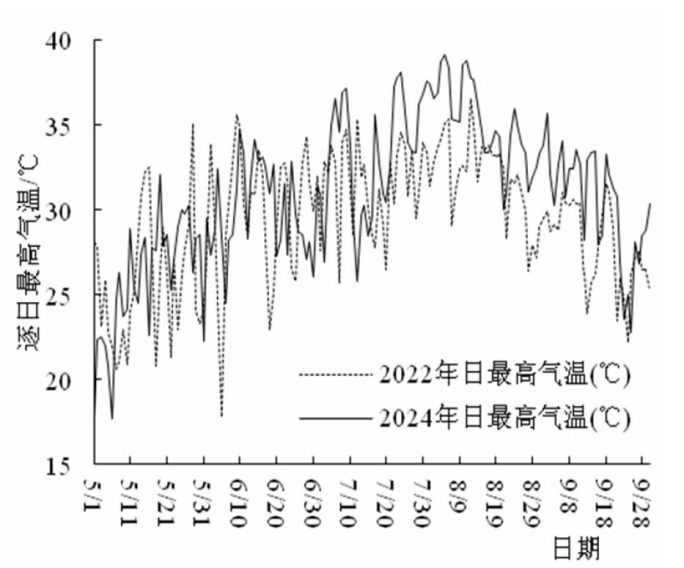
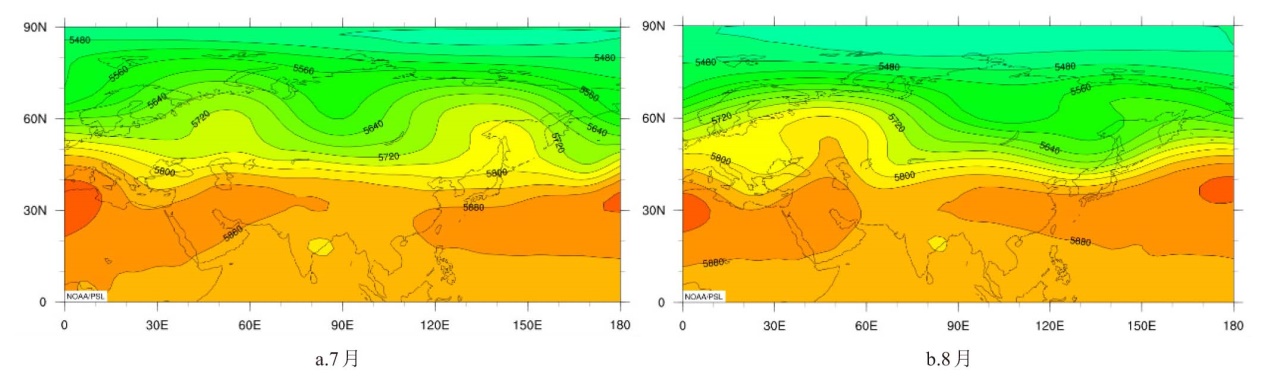
为探究不同夏季高温天气对河蟹生长发育的影响,围绕2022年和2024年兴化夏季极端高温,分析其高温天气特征、环流成因以及对河蟹生长发育的具体影响,并探讨导致河蟹减产的具体原因。结果表明,2022年由于西太平洋副热带高压异常偏西偏强以及南亚高压异常东伸,兴化夏季呈高温天气出现早、分布分散、极端性强和相对干燥的特征。但7月中下旬高温暂时中断,降水较少且雨量平稳,水体环境总体稳定,河蟹蜕壳相对有利,使得最终产量损失较小。2024年受高压系统增强和西风带暖高压共同影响,兴化夏季高温呈出现晚、分布集中、极端性强和极端降水较多的特征。高温集中在河蟹蜕壳期,暴雨频繁,蟹塘水温和溶氧变化剧烈,河蟹易发生应激反应,同时高温结束较晚,上市前的育肥期摄食量下降,使得最终产量损失较大。可以通过科学增氧、控制水位、调节水温、加强气象监测预警等防御措施应对高温热害,减小或避免损失,促进河蟹增产增收增质。

关键词: 河蟹养殖, 气象灾害, 高温成因, 防御措施, 江苏兴化

Abstract:

To study the effects of different types of summer high-temperature weather on the growth and development of river crabs, this article mainly focused on the extreme high temperatures in Xinghua during the summer of 2022 and 2024, analyzed the characteristics of high temperature, circulation causes, and specific impacts on the growth and development of river crabs, and studied the specific reasons leading to the yield reduction of river crabs. The results indicated that in 2022, due to the abnormally strong westward shift of the Western Pacific Subtropical High and the abnormally eastward extension of the South Asian High, Xinghua exhibited early occurrence, scattered distribution, strong extremism, and relatively dry characteristics of high temperature in summer. However, the high temperatures were temporarily interrupted in mid to late July, with less and stable precipitation. The overall water environment was stable, and the shedding of river crabs was relatively favorable, resulting in a relatively small loss of final yield; in 2024, influenced by the strengthening of the subtropical high and the warm high pressure of the westerly belt, the high temperature would show characteristics of late occurrence, concentrated distribution, strong extremism, and more extreme precipitation. The high temperature was concentrated in the molting period of river crabs. When the rainstorm was frequent, the water temperature and dissolved oxygen in crab ponds changed violently, so the river crabs were prone to stress reactions; at the same time, the high temperature ended lately, and the food intake in the fattening period before marketing decreased, resulting in a large loss of final yield. Defensive measures such as scientific oxygenation, water level control, water temperature regulation, and strengthening meteorological monitoring and warning can be taken to cope with high-temperature heat damage, reduce or avoid losses, and promote the increase in yield, income, and quality of river crabs.

Key words: river crab culture, meteorological disaster, high temperature causes, defensive measures, Xinghua, Jiangsu

中图分类号: