欢迎访问《中国农学通报》,

中国农学通报 ›› 2026, Vol. 42 ›› Issue (16): 86-93.doi: 10.11924/j.issn.1000-6850.casb2025-0494
梁文汇1,2( ), 黄晓露1,2, 伍思宇1,2, 岑绍荣3, 苏朝宝3, 陈婷4, 陆荣民5()
收稿日期:2025-06-18
修回日期:2026-06-15
出版日期:2026-08-25
发布日期:2026-08-20
通讯作者:
作者简介:梁文汇,男,1981年出生,广西玉林人,正高级工程师,硕士研究生,主要从事经济林育种与栽培研究。通信地址:530002 广西南宁市邕武路23号 广西林科院办公楼1002室,E-mail:l.wenhui@163.com。
基金资助:
LIANG Wenhui1,2(), HUANG Xiaolu1,2, WU Siyu1,2, CEN Shaorong3, SU Chaobao3, CHEN Ting4, LU Rongmin5()
Received:2025-06-18
Revised:2026-06-15
Published:2026-08-25
Online:2026-08-20
摘要:
为探究不同寄主植物对蒜头果幼苗生长的影响,通过混交种植试验筛选适宜的寄主植物。试验选择油茶、板栗、薄壳山核桃及木姜叶柯作为寄主,与蒜头果进行混交种植,观测蒜头果的苗高和地径。结果显示,蒜头果的生长过程符合典型的“S”型生长节律,即“慢—快—慢”的变化模式,该规律可由Logistic方程(R2>0.986)良好拟合。通过有序样本类聚分析,蒜头果的苗高和地径生长进程被划分为幼苗期、生长初期、速生期、生长后期4个时期。在所有寄主处理中,表现出最为显著的促进作用。当薄壳山核桃作为寄主时,蒜头果的苗高(69.34 cm)和地径(9.91 mm)均显著优于其他处理(P<0.01)。尤其是在速生期,其净生长量最大(苗高29.74 cm,地径2.52 mm)。油茶和板栗的寄主效果次之,木姜叶柯的处理与对照组(单独种植)无显著差异。方差分析表明,寄主植物的类型对蒜头果幼苗生长具有极显著影响(P<0.01)。在生长变异分析中,组间变异系数苗高为35.36%、地径为26.02%。值得注意的是,在组内稳定性方面,薄壳山核桃处理的蒜头果幼苗表现出最佳的稳定性。综上所述,薄壳山核桃是蒜头果人工林培育的理想寄主植物,可有效促进蒜头果的生长发育,为其人工培育提供技术支持。
中图分类号:
梁文汇, 黄晓露, 伍思宇, 岑绍荣, 苏朝宝, 陈婷, 陆荣民. 配置不同寄主植物的蒜头果苗木生长规律分析[J]. 中国农学通报, 2026, 42(16): 86-93.
LIANG Wenhui, HUANG Xiaolu, WU Siyu, CEN Shaorong, SU Chaobao, CHEN Ting, LU Rongmin. Analysis of Growth Law of Malania oleifera Seedling with Different Host Plants[J]. Chinese Agricultural Science Bulletin, 2026, 42(16): 86-93.
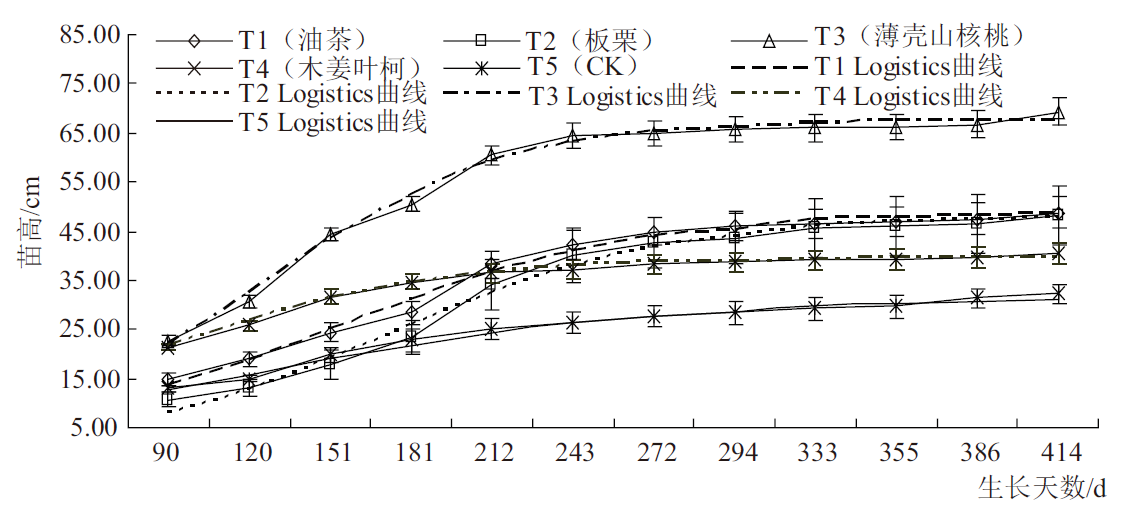
| 处理 | Logistic回归方程 | R2 |
|---|---|---|
| T1 | $y=\frac{49.176}{1+12.389 \mathrm{e}^{-0.017 t}}$ | 0.989 |
| T2 | $y=\frac{48.222}{1+27.177 \mathrm{e}^{-0.019 t}}$ | 0.990 |
| T3 | $y=\frac{67.669}{1+15.319 \mathrm{e}^{-0.022 t}}$ | 0.993 |
| T4 | $y=\frac{39.692}{1+4.664 \mathrm{e}^{-0.019 t}}$ | 0.993 |
| T5(CK) | $y=\frac{31.719}{1+4.821 \mathrm{e}^{-0.013 t}}$ | 0.988 |
| 处理 | Logistic回归方程 | R2 |
|---|---|---|
| T1 | $y=\frac{49.176}{1+12.389 \mathrm{e}^{-0.017 t}}$ | 0.989 |
| T2 | $y=\frac{48.222}{1+27.177 \mathrm{e}^{-0.019 t}}$ | 0.990 |
| T3 | $y=\frac{67.669}{1+15.319 \mathrm{e}^{-0.022 t}}$ | 0.993 |
| T4 | $y=\frac{39.692}{1+4.664 \mathrm{e}^{-0.019 t}}$ | 0.993 |
| T5(CK) | $y=\frac{31.719}{1+4.821 \mathrm{e}^{-0.013 t}}$ | 0.988 |
| 处理 | 生长时期 | 起止日期(年-月-日) | 累计时间/d | 生长时期在 总时间中的占比/% | 净生长量/cm | 净生长量在 总生长量中的占比/% |
|---|---|---|---|---|---|---|
| T1 | 幼苗期 | 2021-01-13—2021-04-13 | 90 | 21 | 14.91b | 31 |
| 生长初期 | 2021-04-13—2021-05-13 | 30 | 7 | 4.18bc | 9 | |
| 速生期 | 2021-05-13—2021-08-13 | 92 | 22 | 19.18b | 39 | |
| 生长后期 | 2021-08-13—2022-03-13 | 212 | 50 | 10.53a | 22 | |
| T2 | 幼苗期 | 2021-01-13—2021-04-13 | 90 | 21 | 10.59c | 23 |
| 生长初期 | 2021-04-13—2021-06-13 | 61 | 14 | 6.76b | 15 | |
| 速生期 | 2021-06-13—2021-09-13 | 92 | 22 | 20.85b | 45 | |
| 生长后期 | 2021-09-13—2022-03-13 | 181 | 43 | 8.25ab | 18 | |
| T3 | 幼苗期 | 2021-01-13—2021-04-13 | 90 | 21 | 22.63a | 33 |
| 生长初期 | 2021-04-13—2021-05-13 | 30 | 7 | 8.13a | 12 | |
| 速生期 | 2021-05-13—2021-08-13 | 92 | 22 | 29.74a | 43 | |
| 生长后期 | 2021-08-13—2022-03-13 | 212 | 50 | 8.86ab | 13 | |
| T4 | 幼苗期 | 2021-01-13—2021-04-13 | 90 | 21 | 21.36a | 53 |
| 生长初期 | 2021-04-13—2021-05-13 | 30 | 7 | 4.64bc | 12 | |
| 速生期 | 2021-05-13—2021-07-13 | 61 | 14 | 8.45d | 21 | |
| 生长后期 | 2021-07-13—2022-03-13 | 243 | 57 | 5.68b | 14 | |
| T5(CK) | 幼苗期 | 2021-01-13—2021-04-13 | 90 | 21 | 12.92b | 40 |
| 生长初期 | 2021-04-13—2021-05-13 | 30 | 7 | 2.13c | 7 | |
| 速生期 | 2021-05-13—2021-09-13 | 123 | 29 | 11.38c | 35 | |
| 生长后期 | 2021-09-13—2022-03-13 | 181 | 43 | 5.86b | 18 |
| 处理 | 生长时期 | 起止日期(年-月-日) | 累计时间/d | 生长时期在 总时间中的占比/% | 净生长量/cm | 净生长量在 总生长量中的占比/% |
|---|---|---|---|---|---|---|
| T1 | 幼苗期 | 2021-01-13—2021-04-13 | 90 | 21 | 14.91b | 31 |
| 生长初期 | 2021-04-13—2021-05-13 | 30 | 7 | 4.18bc | 9 | |
| 速生期 | 2021-05-13—2021-08-13 | 92 | 22 | 19.18b | 39 | |
| 生长后期 | 2021-08-13—2022-03-13 | 212 | 50 | 10.53a | 22 | |
| T2 | 幼苗期 | 2021-01-13—2021-04-13 | 90 | 21 | 10.59c | 23 |
| 生长初期 | 2021-04-13—2021-06-13 | 61 | 14 | 6.76b | 15 | |
| 速生期 | 2021-06-13—2021-09-13 | 92 | 22 | 20.85b | 45 | |
| 生长后期 | 2021-09-13—2022-03-13 | 181 | 43 | 8.25ab | 18 | |
| T3 | 幼苗期 | 2021-01-13—2021-04-13 | 90 | 21 | 22.63a | 33 |
| 生长初期 | 2021-04-13—2021-05-13 | 30 | 7 | 8.13a | 12 | |
| 速生期 | 2021-05-13—2021-08-13 | 92 | 22 | 29.74a | 43 | |
| 生长后期 | 2021-08-13—2022-03-13 | 212 | 50 | 8.86ab | 13 | |
| T4 | 幼苗期 | 2021-01-13—2021-04-13 | 90 | 21 | 21.36a | 53 |
| 生长初期 | 2021-04-13—2021-05-13 | 30 | 7 | 4.64bc | 12 | |
| 速生期 | 2021-05-13—2021-07-13 | 61 | 14 | 8.45d | 21 | |
| 生长后期 | 2021-07-13—2022-03-13 | 243 | 57 | 5.68b | 14 | |
| T5(CK) | 幼苗期 | 2021-01-13—2021-04-13 | 90 | 21 | 12.92b | 40 |
| 生长初期 | 2021-04-13—2021-05-13 | 30 | 7 | 2.13c | 7 | |
| 速生期 | 2021-05-13—2021-09-13 | 123 | 29 | 11.38c | 35 | |
| 生长后期 | 2021-09-13—2022-03-13 | 181 | 43 | 5.86b | 18 |
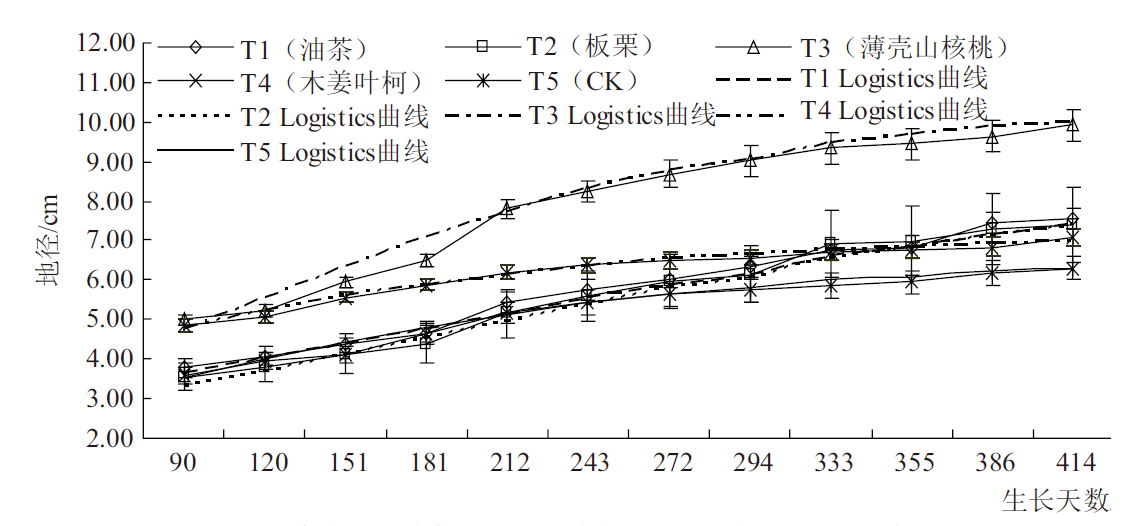
| 处理 | Logistic回归方程 | R2 |
|---|---|---|
| T1 | $y=\frac{9.901}{1+2.668 \mathrm{e}^{-0.005 t}}$ | 0.992 |
| T2 | $y=\frac{9.284}{1+3.092 \mathrm{e}^{-0.006 t}}$ | 0.990 |
| T3 | $y=\frac{10.472}{1+2.955 \mathrm{e}^{-0.010 t}}$ | 0.986 |
| T4 | $y=\frac{7.148}{1+1.101 \mathrm{e}^{-0.009 t}}$ | 0.990 |
| T5(CK) | $y=\frac{6.577}{1+0.913 \mathrm{e}^{-0.009 t}}$ | 0.987 |
| 处理 | Logistic回归方程 | R2 |
|---|---|---|
| T1 | $y=\frac{9.901}{1+2.668 \mathrm{e}^{-0.005 t}}$ | 0.992 |
| T2 | $y=\frac{9.284}{1+3.092 \mathrm{e}^{-0.006 t}}$ | 0.990 |
| T3 | $y=\frac{10.472}{1+2.955 \mathrm{e}^{-0.010 t}}$ | 0.986 |
| T4 | $y=\frac{7.148}{1+1.101 \mathrm{e}^{-0.009 t}}$ | 0.990 |
| T5(CK) | $y=\frac{6.577}{1+0.913 \mathrm{e}^{-0.009 t}}$ | 0.987 |
| 处理 | 生长时期 | 起止日期(年-月-日) | 累计时间/d | 生长时期在总时间中的占比/% | 净生长量/mm | 净生长量在总生长量中的占比/% |
|---|---|---|---|---|---|---|
| T1 | 幼苗期 | 2021-01-13—2021-04-13 | 90 | 21 | 3.84b | 51 |
| 生长初期 | 2021-04-13—2021-05-13 | 91 | 21 | 0.85b | 11 | |
| 速生期 | 2021-05-13—2021-08-13 | 162 | 38 | 2.32a | 31 | |
| 生长后期 | 2021-08-13—2022-03-13 | 81 | 19 | 0.53a | 07 | |
| T2 | 幼苗期 | 2021-01-13—2021-04-13 | 90 | 21 | 3.56b | 48 |
| 生长初期 | 2021-04-13—2021-06-13 | 91 | 21 | 0.81b | 11 | |
| 速生期 | 2021-06-13—2021-09-13 | 162 | 38 | 2.56a | 35 | |
| 生长后期 | 2021-09-13—2022-03-13 | 81 | 19 | 0.46a | 06 | |
| T3 | 幼苗期 | 2021-01-13—2021-04-13 | 90 | 21 | 5.00a | 50 |
| 生长初期 | 2021-04-13—2021-05-13 | 91 | 21 | 1.49a | 15 | |
| 速生期 | 2021-05-13—2021-08-13 | 123 | 29 | 2.52a | 25 | |
| 生长后期 | 2021-08-13—2022-03-13 | 120 | 28 | 0.90a | 09 | |
| T4 | 幼苗期 | 2021-01-13—2021-04-13 | 90 | 21 | 4.84a | 68 |
| 生长初期 | 2021-04-13—2021-05-13 | 30 | 07 | 0.20d | 03 | |
| 速生期 | 2021-05-13—2021-07-13 | 123 | 29 | 1.33b | 19 | |
| 生长后期 | 2021-07-13—2022-03-13 | 181 | 43 | 0.70a | 10 | |
| T5(CK) | 幼苗期 | 2021-01-13—2021-04-13 | 90 | 21 | 3.64b | 57 |
| 生长初期 | 2021-04-13—2021-05-13 | 61 | 14 | 0.49c | 08 | |
| 速生期 | 2021-05-13—2021-09-13 | 131 | 31 | 1.61b | 25 | |
| 生长后期 | 2021-09-13—2022-03-13 | 142 | 33 | 0.68a | 11 |
| 处理 | 生长时期 | 起止日期(年-月-日) | 累计时间/d | 生长时期在总时间中的占比/% | 净生长量/mm | 净生长量在总生长量中的占比/% |
|---|---|---|---|---|---|---|
| T1 | 幼苗期 | 2021-01-13—2021-04-13 | 90 | 21 | 3.84b | 51 |
| 生长初期 | 2021-04-13—2021-05-13 | 91 | 21 | 0.85b | 11 | |
| 速生期 | 2021-05-13—2021-08-13 | 162 | 38 | 2.32a | 31 | |
| 生长后期 | 2021-08-13—2022-03-13 | 81 | 19 | 0.53a | 07 | |
| T2 | 幼苗期 | 2021-01-13—2021-04-13 | 90 | 21 | 3.56b | 48 |
| 生长初期 | 2021-04-13—2021-06-13 | 91 | 21 | 0.81b | 11 | |
| 速生期 | 2021-06-13—2021-09-13 | 162 | 38 | 2.56a | 35 | |
| 生长后期 | 2021-09-13—2022-03-13 | 81 | 19 | 0.46a | 06 | |
| T3 | 幼苗期 | 2021-01-13—2021-04-13 | 90 | 21 | 5.00a | 50 |
| 生长初期 | 2021-04-13—2021-05-13 | 91 | 21 | 1.49a | 15 | |
| 速生期 | 2021-05-13—2021-08-13 | 123 | 29 | 2.52a | 25 | |
| 生长后期 | 2021-08-13—2022-03-13 | 120 | 28 | 0.90a | 09 | |
| T4 | 幼苗期 | 2021-01-13—2021-04-13 | 90 | 21 | 4.84a | 68 |
| 生长初期 | 2021-04-13—2021-05-13 | 30 | 07 | 0.20d | 03 | |
| 速生期 | 2021-05-13—2021-07-13 | 123 | 29 | 1.33b | 19 | |
| 生长后期 | 2021-07-13—2022-03-13 | 181 | 43 | 0.70a | 10 | |
| T5(CK) | 幼苗期 | 2021-01-13—2021-04-13 | 90 | 21 | 3.64b | 57 |
| 生长初期 | 2021-04-13—2021-05-13 | 61 | 14 | 0.49c | 08 | |
| 速生期 | 2021-05-13—2021-09-13 | 131 | 31 | 1.61b | 25 | |
| 生长后期 | 2021-09-13—2022-03-13 | 142 | 33 | 0.68a | 11 |
| 处理 | 苗高/cm | 地径/mm | |||||
|---|---|---|---|---|---|---|---|
| 最大值 | 最小值 | 平均值 | 最大值 | 最小值 | 平均值 | ||
| T1 | 61 | 27 | 48.80±10.32b | 8.99 | 6 | 7.49±0.94b | |
| T2 | 84 | 29 | 46.45±18.09b | 13.11 | 3.84 | 7.39±2.96b | |
| T3 | 86 | 53.5 | 69.34±10.76a | 12.59 | 7.53 | 9.91±1.61a | |
| T4 | 58 | 32 | 40.14±7.31bc | 8.1 | 5.96 | 7.08±0.64b | |
| T5(CK) | 43 | 21.3 | 32.28±6.91c | 8.5 | 5.18 | 6.41±1.00b | |
| 处理 | 苗高/cm | 地径/mm | |||||
|---|---|---|---|---|---|---|---|
| 最大值 | 最小值 | 平均值 | 最大值 | 最小值 | 平均值 | ||
| T1 | 61 | 27 | 48.80±10.32b | 8.99 | 6 | 7.49±0.94b | |
| T2 | 84 | 29 | 46.45±18.09b | 13.11 | 3.84 | 7.39±2.96b | |
| T3 | 86 | 53.5 | 69.34±10.76a | 12.59 | 7.53 | 9.91±1.61a | |
| T4 | 58 | 32 | 40.14±7.31bc | 8.1 | 5.96 | 7.08±0.64b | |
| T5(CK) | 43 | 21.3 | 32.28±6.91c | 8.5 | 5.18 | 6.41±1.00b | |
| 性状 | 变异来源 | 平方和 | 自由度 | 均方 | F | 显著性 |
|---|---|---|---|---|---|---|
| 苗高 | 组间 | 10908.265 | 4 | 2727.066 | 22.046 | 0.000 |
| 组内 | 6803.512 | 55 | 123.700 | |||
| 总计 | 17711.777 | 59 | ||||
| 地径 | 组间 | 103.031 | 4 | 25.758 | 9.996 | 0.000 |
| 组内 | 141.727 | 55 | 2.577 | |||
| 总计 | 244.759 | 59 |
| 性状 | 变异来源 | 平方和 | 自由度 | 均方 | F | 显著性 |
|---|---|---|---|---|---|---|
| 苗高 | 组间 | 10908.265 | 4 | 2727.066 | 22.046 | 0.000 |
| 组内 | 6803.512 | 55 | 123.700 | |||
| 总计 | 17711.777 | 59 | ||||
| 地径 | 组间 | 103.031 | 4 | 25.758 | 9.996 | 0.000 |
| 组内 | 141.727 | 55 | 2.577 | |||
| 总计 | 244.759 | 59 |
| [1] |
李洪果, 李武志, 邓硕坤, 等. 蒜头果种质资源及其研究利用现状[J]. 林业科技通讯, 2019(7):32-35.
|
| [2] |
龚茂佳, 王娟, 付小勇, 等. 云南广西蒜头果适生区预测及环境影响因子[J]. 南京林业大学学报(自然科学版), 2022, 46(2):44-52.
doi: 10.12302/j.issn.1000-2006.202109039 |
| [3] |
王敬文, 徐启江, 朱洪琴, 等. 百色市野生蒜头果典型分布区资源分布与环境分析[J]. 广西林业科学, 2025, 54(4):446-456.
|
| [4] |
傅立国. 中国植物红皮书——稀有濒危植物:第一册[M]. 北京: 科学出版社, 1991:480.
|
| [5] |
黄晓露, 李宝财, 骆相华, 等. 蒜头果种子形态特征及脂肪酸组成分析[J]. 森林与环境学报, 2022, 42(6):663-672.
|
| [6] |
doi: 10.1016/j.indcrop.2012.07.003 URL |
| [7] |
doi: 10.1007/s42114-021-00360-8 |
| [8] |
侯镜德, 陈至善. 神经酸与脑健康[M]. 北京: 中国科学技术出版社, 2006:9-14.
|
| [9] |
吴榕榕, 郭广正, 康专苗, 等. 蒜头果营养成分与产品开发研究进展[J]. 中国油脂, 2025, 50(6):111-114.
|
| [10] |
赵劲平, 欧乞鍼. 蒜头果仁油的应用研究[J]. 中国油脂, 2010, 35(7):12-16.
|
| [11] |
吴彦琼, 黎向东, 胡玉佳. 蒜头果生殖生物学特性研究[J]. 中山大学学报(自然科学版), 2004(2):81-83.
|
| [12] |
陈强, 常恩福, 李品荣, 等. 滇东南岩溶山区造林树种选择试验[J]. 云南林业科技, 2001(3):11-16.
|
| [13] |
瞿林. 广南县岩溶森林保护及石漠化治理[J]. 林业调查规划, 2001(4):70-75.
|
| [14] |
肖来云, 普正和. 珍稀濒危植物的迁地保护研究[J]. 云南林业科技, 1996(1):45-53.
|
| [15] |
doi: 10.1016/j.pld.2019.09.003 URL |
| [16] |
李勇鹏, 景跃波, 卯吉华, 等. 蒜头果半寄生特性研究[J]. 西部林业科学, 2019, 48(4):1-6.
|
| [17] |
袁晓红, 李际平. 杉木人工林南北坡向树高-胸径生长曲线研究[J]. 西北林学院学报, 2012, 27(2):180-183.
|
| [18] |
谢涛, 陈景艳, 潘德权, 等. 乐东拟单性木兰实生苗生长节律研究[J]. 种子, 2014, 33(3):75-78.
|
| [19] |
李宗俊, 莫燕卿, 莫晓勇, 等. 纸浆材桉树人工林生长与收获预估模型研究[J]. 林业资源管理, 2017(1):31-36.
|
| [20] |
唐瀛洲, 唐红燕. 思茅松嫁接苗接后萌发成活特性及施肥效应分析[J]. 南京林业大学学报(自然科学版), 2018, 42(3):199-203.
doi: 10.3969/j.issn.1000-2006.201708030 |
| [21] |
陈存及, 李生, 曹永慧, 等. 光皮桦苗高生长期划分有序样本聚类分析[J]. 福建林学院学报, 2002(3):197-200.
|
| [22] |
李悦. 养分和寄主选择在珍稀资源树种蒜头果育苗中的探索应用[D]. 北京: 中国科学院大学, 2021.
|
| [23] |
周凡, 王义平, 杨志军, 等. 五个种源观光木一年生苗生长规律分析[J]. 南方农业, 2024, 18(23):35-41.
|
| [24] |
廖海红, 郭昌庆, 郭建寰, 等. 银钟花一年生实生苗生长规律观测分析[J]. 温带林业研究, 2024, 7(3):57-60.
|
| [25] |
陈菊艳, 邓伦秀, 陈景艳, 等. 不同种源红花木莲实生苗年生长规律研究[J]. 中国农学通报, 2013, 29(31):8-14.
|
| [26] |
李秋荔, 黄寿先, 李志先, 等. 中国马褂木不同种源苗期生长规律研究[J]. 广西植物, 2012, 32(3):355-361.
|
| [27] |
张凌, 刘晶晶, 张芸香. 山西省不同种源文冠果苗期生长性状研究[J]. 山西农业科学, 2017, 45(7):1080-1083.
|
| [28] |
李云, 季蒙, 孙旭, 等. 9个种源兴安落叶松一年生实生苗生长规律[J]. 江苏农业科学, 2015, 43(6):139-142.
|
| [29] |
张玮, 林振清, 杨前宇, 等. 椽竹出笋与幼竹生长规律[J]. 浙江农林大学学报, 2015, 32(3):478-482.
|
| [30] |
余慧嵘. 珍稀濒危树种蒜头果引种育苗技术及生长节律研究[J]. 黄山学院学报, 2011, 13(3):50-52.
|
| [31] |
甘艳. 濒危树种蒜头果育苗技术及生长节律研究[J]. 林业勘查设计, 2023, 52(2):13-16.
|
| [32] |
乔栋, 刘勇, 田书勇, 等. 不同土壤水势对毛白杨苗木生长节律和苗木质量的影响[J]. 北京林业大学学报, 2022, 44(4):12-23.
|
| [33] |
和滢埝, 唐军荣, 李亚麒, 等. 氮磷添加对云南松苗木生长节律的影响[J]. 云南农业大学学报(自然科学), 2023, 38(3):465-475.
|
| [34] |
陈凯, 陈忠, 贺善安, 等. 板栗树和茶树间作的根际效应[J]. 科技通报, 1989(4):60.
|
| [35] |
唐明明, 苏粤, 魏怡帆, 等. 不同分隔方式下栗茶间作细根形态特征[J]. 农技服务, 2022, 39(8):30-35.
|
| [1] | 王敬文, 孟德威, 周天月, 陈勇辛, 郑林浩, 侯旭, 吴钰薇, 徐文静. 双斑长跗萤叶甲的研究现状[J]. 中国农学通报, 2026, 42(9): 177-189. |
| [2] | 张华英, 刘佳乐, 杨阳, 许鑫彤, 张硕, 时滢苑, 廖文佳, 董玉新. 干旱胁迫下施用不同保水剂对大豆苗期生长发育的影响[J]. 中国农学通报, 2025, 41(36): 28-34. |
| [3] | 刘永秀, 赵颖, 徐玲, 袁圆, 昂磊, 罗静, 杨涛, 张清华, 徐叶菊, 张石来. 多年生稻苗期耐盐性评价[J]. 中国农学通报, 2025, 41(23): 1-9. |
| [4] | 张梦媛, 王思玉, 徐凤, 刘一周, 管延安, 陈二影, 黎飞飞, 杨延兵, 秦岭. 外源褪黑素对盐碱胁迫下谷子萌发和幼苗抗氧化生理的影响[J]. 中国农学通报, 2025, 41(20): 60-66. |
| [5] | 王虹, 贾毛毛, 李金玲, 源朝政, 高小峰, 周晓静, 杨玉华, 郑明燕. 朝天椒苗期光合指标杂种优势分析[J]. 中国农学通报, 2025, 41(16): 35-39. |
| [6] | 韩小霞, 董文静, 闵子扬, 李勇奇, 卢亚楠, 杨建华, 胡新军, 朱宏建. 湖南丝瓜枯萎病病原菌的分离鉴定及种质抗性评价[J]. 中国农学通报, 2025, 41(15): 117-123. |
| [7] | 王璐瑶, 刘涛, 董朝阳, 李梦倩, 李静楠. 幼苗期温度胁迫对装配式日光温室栽植奶油生菜的影响[J]. 中国农学通报, 2025, 41(13): 49-55. |
| [8] | 梁嘉燕, 孔雷蕾, 胡晓丹, 杨旭健, 杨武, 白嵩. 广东丝苗米品种萌发幼苗期及苗期的耐盐性评价[J]. 中国农学通报, 2025, 41(11): 8-15. |
| [9] | 李星星, 阿布都艾尼·阿布都维力, 周仑, 马辉, 欧欢, 艾麦尔江·阿布力提甫, 田立文, 刘燕, 罗单, 阿孜古丽·阿布力孜. 基于壤土含水量的南疆“干播湿出”棉田出苗水调控研究[J]. 中国农学通报, 2025, 41(1): 25-32. |
| [10] | 徐奕琳, 徐东东, 张盼盼, 张逸康, 李鲜花. PEG模拟干旱胁迫下不同玉米品种萌芽期及苗期抗旱性鉴定[J]. 中国农学通报, 2025, 41(1): 13-18. |
| [11] | 肖长春, 韦新宇, 曾跃辉, 黄建鸿, 许旭明. 播期对黑米稻籽粒灌浆特性及产量构成的影响[J]. 中国农学通报, 2024, 40(36): 1-8. |
| [12] | 赵爱连, 范合琴, 杨豫龙, 温涛, 刘天学, 赵霞, 岳艳军. 水分与秸秆处理对玉米苗期素质及产量的影响[J]. 中国农学通报, 2024, 40(27): 1-6. |
| [13] | 宫慧慧, 崔新晓, 张玉娟, 王欣, 张秀荣, 赵军胜. 芝麻种质苗期耐盐性鉴定及耐盐材料筛选[J]. 中国农学通报, 2024, 40(24): 36-43. |
| [14] | 顿春垚, 李双龙, 吴代坤, 李春霖, 胡钧恩, 吴家刚. ‘鄂选1号’山桐子组培无性系种苗调查分析[J]. 中国农学通报, 2024, 40(19): 19-23. |
| [15] | 李晶晶, 王金秀, 曹议丹, 任建军, 许少辉, 唐艳艳, 王晶珊, 乔利仙. 高油酸花生萌发期和苗期耐盐碱性鉴定及评价[J]. 中国农学通报, 2024, 40(15): 44-52. |
| 阅读次数 | ||||||
|
全文 |
|
|||||
|
摘要 |
|
|||||
