欢迎访问《中国农学通报》,

中国农学通报 ›› 2026, Vol. 42 ›› Issue (17): 121-130.doi: 10.11924/j.issn.1000-6850.casb2026-0427
杨雯博( ), 夏权, 薛杨, 马佳宁
收稿日期:2026-05-25
修回日期:2026-07-06
出版日期:2026-09-09
发布日期:2026-09-09
作者简介:杨雯博,女,1991年出生,甘肃兰州人,讲师,硕士研究生,主要从事气象教学工作。通信地址:730021 甘肃省兰州市城关区窦家山36号 兰州资源环境职业技术大学,Tel:0931-8799685,E-mail:782140831@qq.com
基金资助:
YANG Wenbo(), XIA Quan, XUE Yang, MA Jianing
Received:2026-05-25
Revised:2026-07-06
Published:2026-09-09
Online:2026-09-09
摘要:
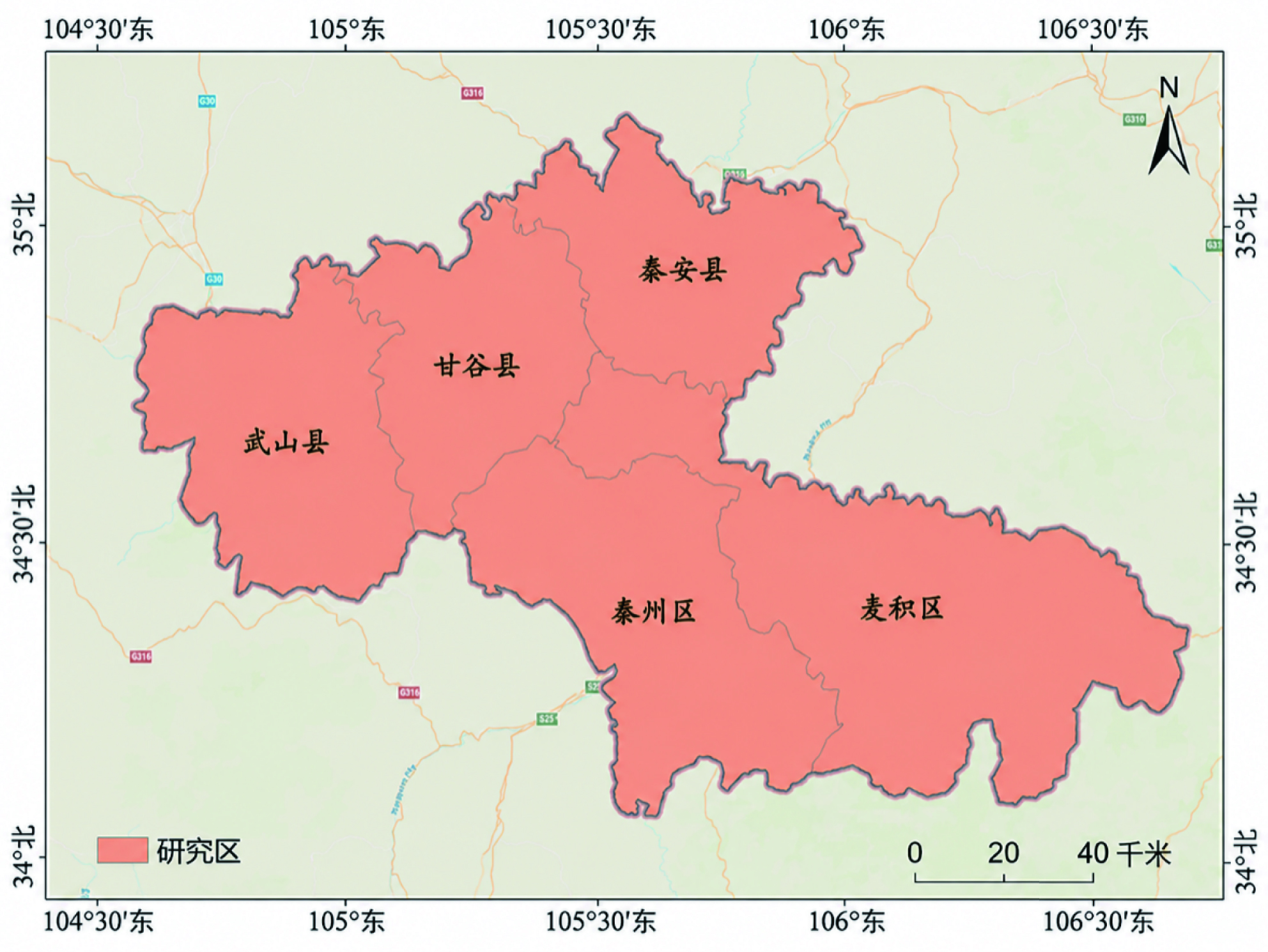
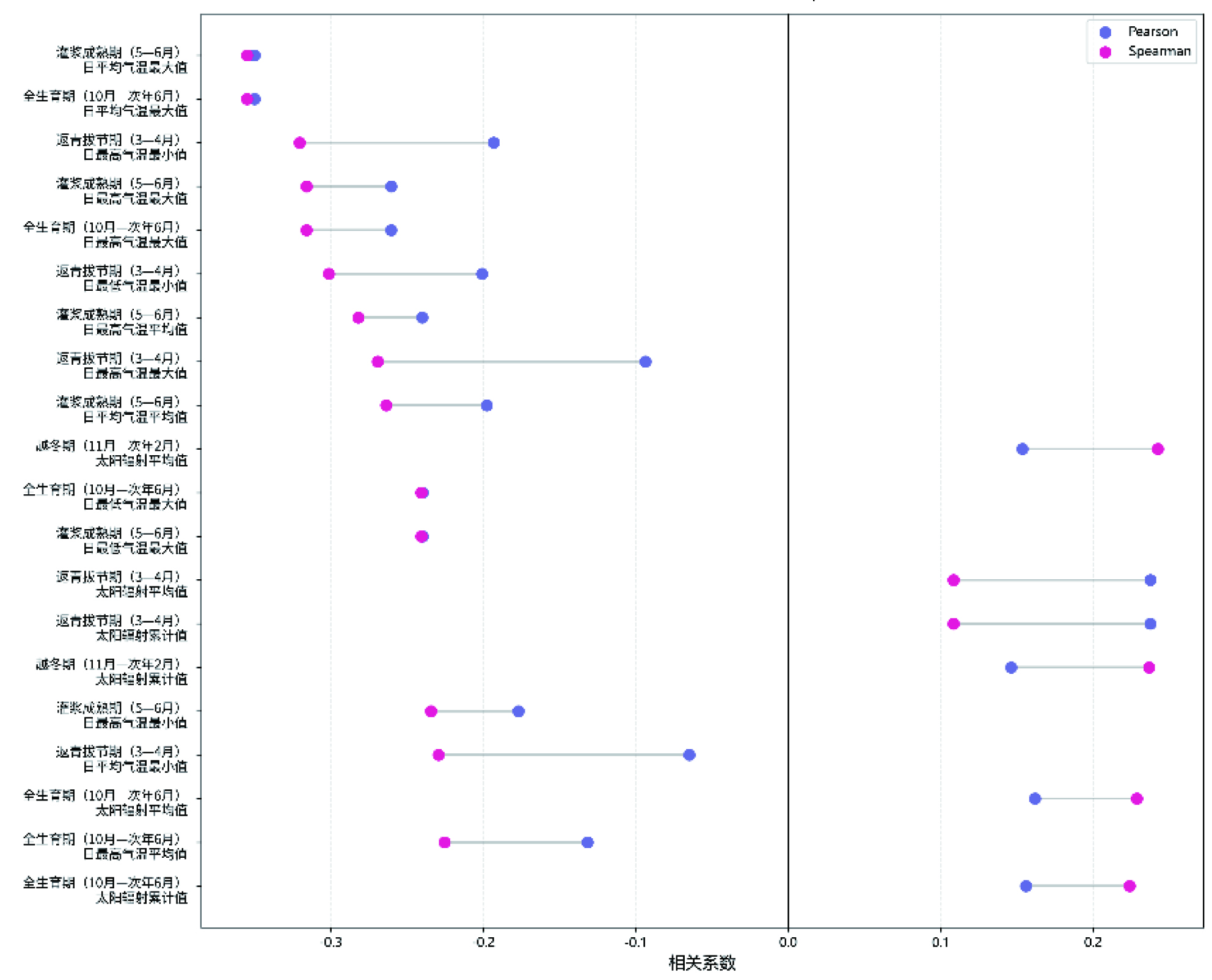
为识别甘肃东南部冬小麦产量对气象因子的响应特征,并评估近未来县域单产变化趋势,本文以天水市的秦州区、麦积区、秦安县、甘谷县和武山县为研究区,基于2015—2024年冬小麦单产数据、AgERA5农业气象再分析资料和CMIP6未来气候数据,构建涵盖不同生育阶段的气象指标体系,综合采用相关分析、偏相关、灰色关联、多元线性回归、随机森林及KNN等方法开展分析。结果表明:研究区冬小麦单产对热量条件较敏感,全生育期日平均气温最大值和灌浆成熟期日平均气温最大值与单产呈稳定负相关;返青拔节期的太阳辐射、极端低温及灌浆成熟期的降水等关键气象指标也对小麦产量具有较高影响。随机森林模型在历史数据拟合效果优于多元线性回归,KNN残差模型在2024年独立验证中表现较好。2025—2035年预测结果显示,研究区域内五县区的冬小麦单产总体呈波动变化,未表现出持续上升趋势,且县域之间的单产变化存在一定空间差异。研究表明,高温热胁迫是限制区域冬小麦稳产的重要气象风险因素,返青拔节期和灌浆成熟期是气候影响小麦产量的关键阶段。
中图分类号:
杨雯博, 夏权, 薛杨, 马佳宁. 基于AgERA5与CMIP6的甘肃天水冬小麦主产区产量气象响应及近未来情景预估[J]. 中国农学通报, 2026, 42(17): 121-130.
YANG Wenbo, XIA Quan, XUE Yang, MA Jianing. Meteorological Response of Winter Wheat Yield and Near-future Scenario Projection in Main Production Areas of Tianshui, Gansu Based on AgERA5 and CMIP6[J]. Chinese Agricultural Science Bulletin, 2026, 42(17): 121-130.
| 县区 | 样本数 | 平均单产/(t/hm2) | 最小值/(t/hm2) | 最大值/(t/hm2) | 平均面积/hm2 |
|---|---|---|---|---|---|
| 武山县 | 10 | 3.089 | 2.781 | 3.576 | 18992.5 |
| 甘谷县 | 10 | 3.120 | 2.512 | 4.990 | 10874.9 |
| 秦安县 | 10 | 2.745 | 2.556 | 2.971 | 19465.7 |
| 秦州区 | 10 | 3.085 | 2.717 | 3.537 | 28591.2 |
| 麦积区 | 10 | 3.019 | 2.457 | 3.894 | 27395.2 |
| 县区 | 样本数 | 平均单产/(t/hm2) | 最小值/(t/hm2) | 最大值/(t/hm2) | 平均面积/hm2 |
|---|---|---|---|---|---|
| 武山县 | 10 | 3.089 | 2.781 | 3.576 | 18992.5 |
| 甘谷县 | 10 | 3.120 | 2.512 | 4.990 | 10874.9 |
| 秦安县 | 10 | 2.745 | 2.556 | 2.971 | 19465.7 |
| 秦州区 | 10 | 3.085 | 2.717 | 3.537 | 28591.2 |
| 麦积区 | 10 | 3.019 | 2.457 | 3.894 | 27395.2 |
| 方法 | 气象指标 | 相关系数 | p值 | 显著性 |
|---|---|---|---|---|
| Pearson | 全生育期(10月—次年6月)日平均气温最大值 | -0.350 | 0.013 | * |
| Pearson | 灌浆成熟期(5—6月)日平均气温最大值 | -0.350 | 0.013 | * |
| Pearson | 全生育期(10月—次年6月)日最高气温最大值 | -0.260 | 0.068 | . |
| Spearman | 全生育期(10月—次年6月)日平均气温最大值 | -0.355 | 0.011 | * |
| Spearman | 灌浆成熟期(5—6月)日平均气温最大值 | -0.355 | 0.011 | * |
| Spearman | 返青拔节期(3—4月)日最高气温最小值 | -0.320 | 0.023 | * |
| Kendall | 全生育期(10月—次年6月)日平均气温最大值 | -0.252 | 0.010 | ** |
| Kendall | 灌浆成熟期(5—6月)日平均气温最大值 | -0.252 | 0.010 | ** |
| Kendall | 全生育期(10月—次年6月)日最高气温最大值 | -0.213 | 0.029 | * |
| 偏相关 | 全生育期(10月—次年6月)日平均气温最大值 | -0.370 | 0.008 | ** |
| 偏相关 | 灌浆成熟期(5—6月)日平均气温最大值 | -0.370 | 0.008 | ** |
| 偏相关 | 越冬期(11月—次年2月)日平均气温最大值 | 0.308 | 0.029 | * |
| 方法 | 气象指标 | 相关系数 | p值 | 显著性 |
|---|---|---|---|---|
| Pearson | 全生育期(10月—次年6月)日平均气温最大值 | -0.350 | 0.013 | * |
| Pearson | 灌浆成熟期(5—6月)日平均气温最大值 | -0.350 | 0.013 | * |
| Pearson | 全生育期(10月—次年6月)日最高气温最大值 | -0.260 | 0.068 | . |
| Spearman | 全生育期(10月—次年6月)日平均气温最大值 | -0.355 | 0.011 | * |
| Spearman | 灌浆成熟期(5—6月)日平均气温最大值 | -0.355 | 0.011 | * |
| Spearman | 返青拔节期(3—4月)日最高气温最小值 | -0.320 | 0.023 | * |
| Kendall | 全生育期(10月—次年6月)日平均气温最大值 | -0.252 | 0.010 | ** |
| Kendall | 灌浆成熟期(5—6月)日平均气温最大值 | -0.252 | 0.010 | ** |
| Kendall | 全生育期(10月—次年6月)日最高气温最大值 | -0.213 | 0.029 | * |
| 偏相关 | 全生育期(10月—次年6月)日平均气温最大值 | -0.370 | 0.008 | ** |
| 偏相关 | 灌浆成熟期(5—6月)日平均气温最大值 | -0.370 | 0.008 | ** |
| 偏相关 | 越冬期(11月—次年2月)日平均气温最大值 | 0.308 | 0.029 | * |
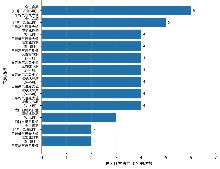
| 气象指标 | 进入前10次数 | 进入前15次数 | 平均排序 |
|---|---|---|---|
| 全生育期(10月—次年6月)日平均气温最大值 | 6 | 6 | 11.43 |
| 全生育期(10月—次年6月)日最高气温最大值 | 5 | 6 | 11.14 |
| 灌浆成熟期(5—6月)日最低气温最大值 | 4 | 6 | 16.86 |
| 灌浆成熟期(5—6月)日最高气温平均值 | 4 | 5 | 16.57 |
| 返青拔节期(3—4月)日最低气温最小值 | 4 | 5 | 17.86 |
| 返青拔节期(3—4月)日最高气温最小值 | 4 | 5 | 18.71 |
| 灌浆成熟期(5—6月)日最高气温最大值 | 4 | 4 | 12.40 |
| 灌浆成熟期(5—6月)日平均气温最大值 | 4 | 4 | 15.80 |
| 气象指标 | 进入前10次数 | 进入前15次数 | 平均排序 |
|---|---|---|---|
| 全生育期(10月—次年6月)日平均气温最大值 | 6 | 6 | 11.43 |
| 全生育期(10月—次年6月)日最高气温最大值 | 5 | 6 | 11.14 |
| 灌浆成熟期(5—6月)日最低气温最大值 | 4 | 6 | 16.86 |
| 灌浆成熟期(5—6月)日最高气温平均值 | 4 | 5 | 16.57 |
| 返青拔节期(3—4月)日最低气温最小值 | 4 | 5 | 17.86 |
| 返青拔节期(3—4月)日最高气温最小值 | 4 | 5 | 18.71 |
| 灌浆成熟期(5—6月)日最高气温最大值 | 4 | 4 | 12.40 |
| 灌浆成熟期(5—6月)日平均气温最大值 | 4 | 4 | 15.80 |

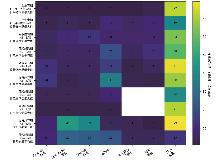
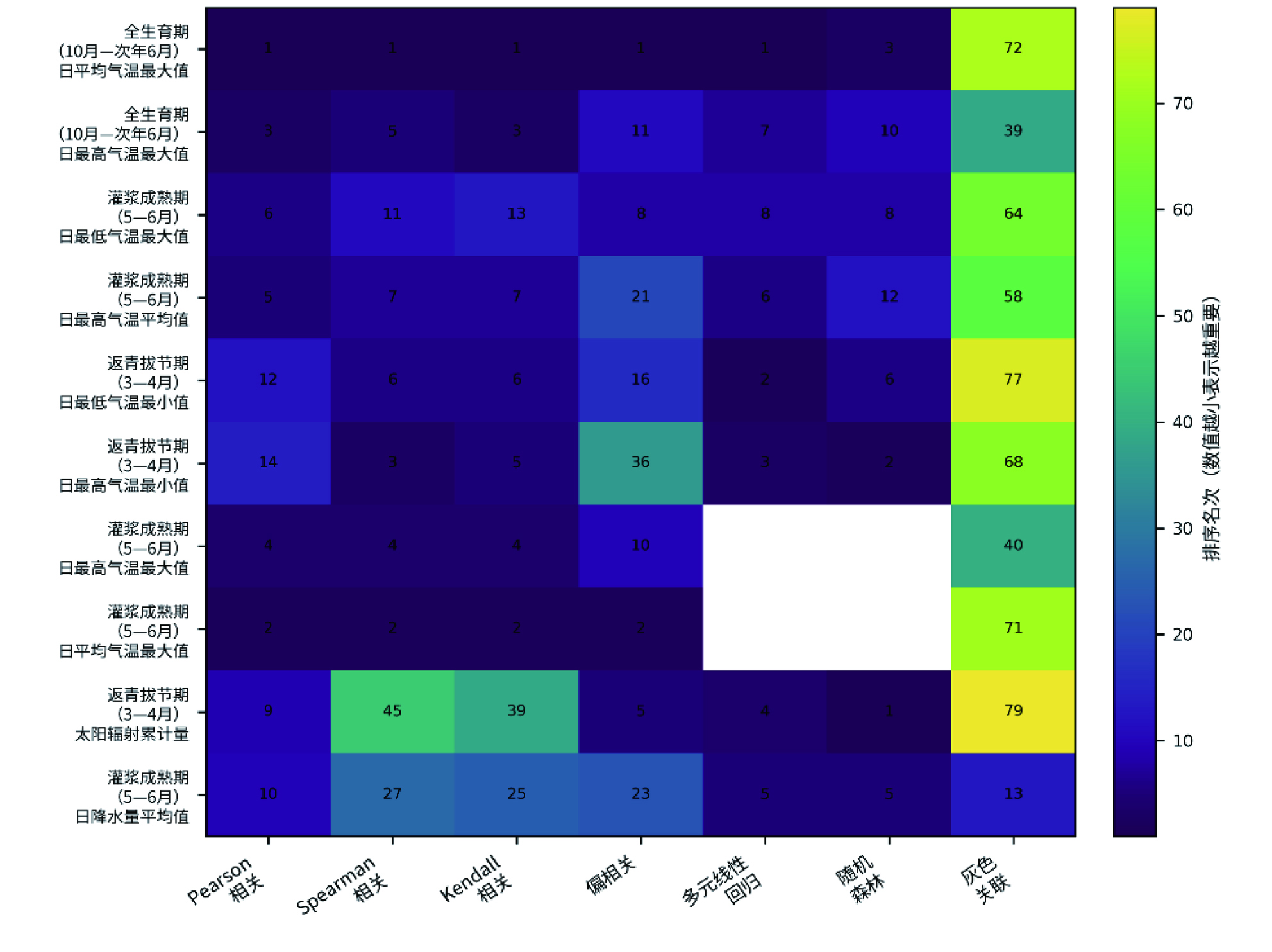
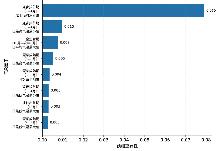
| 变量 | 重要性均值 | 重要性标准差 |
|---|---|---|
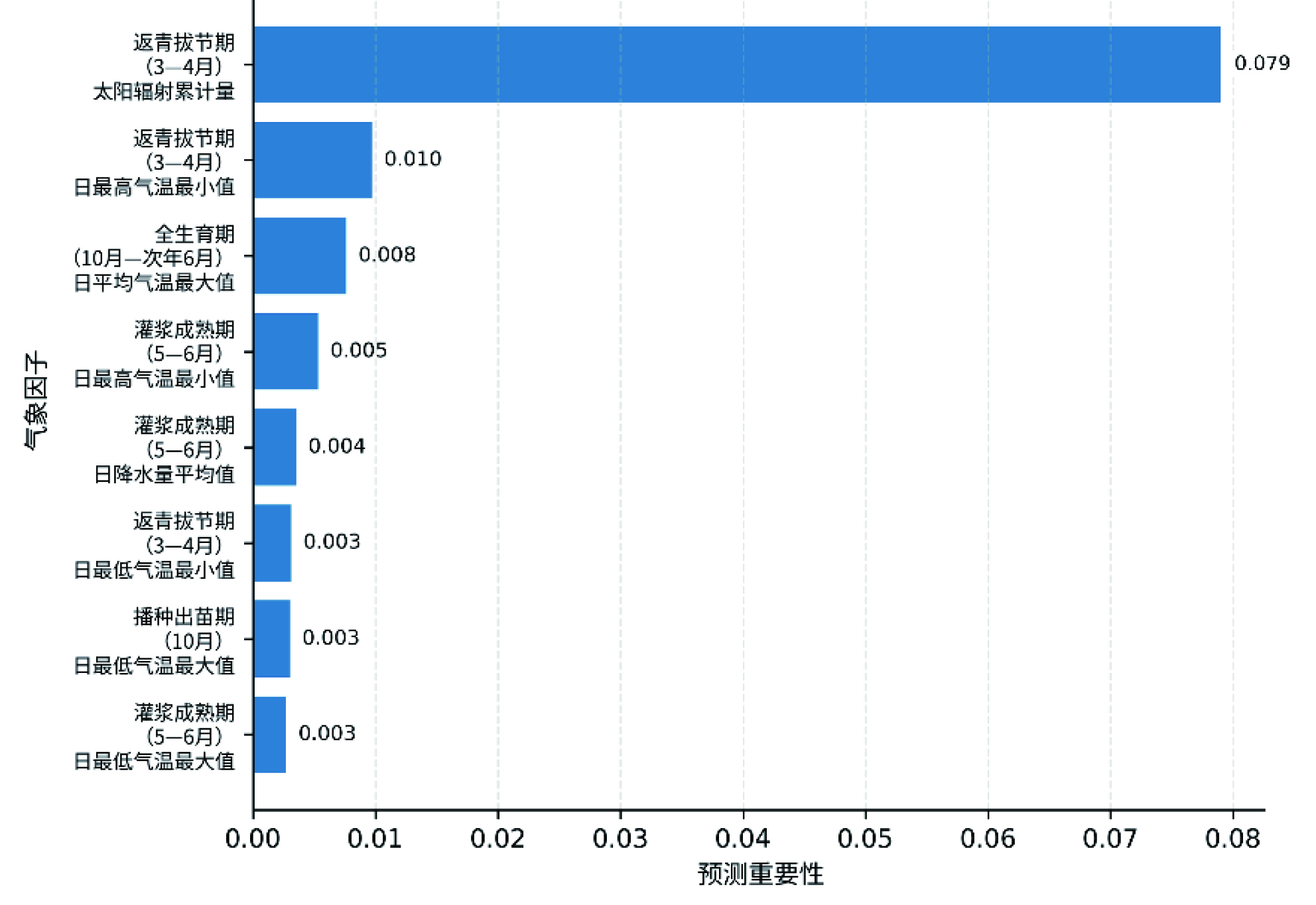
| 返青拔节期(3—4月)太阳辐射累计量 | 0.0790 | 0.0151 |
| 返青拔节期(3—4月)日最高气温最小值 | 0.0097 | 0.0036 |
| 全生育期(10月—次年6月)日平均气温最大值 | 0.0076 | 0.0025 |
| 灌浆成熟期(5—6月)日最高气温最小值 | 0.0053 | 0.0017 |
| 灌浆成熟期(5—6月)日降水量平均值 | 0.0035 | 0.0012 |
| 返青拔节期(3—4月)日最低气温最小值 | 0.0031 | 0.0014 |
| 播种出苗期(10月)日最低气温最大值 | 0.0030 | 0.0007 |
| 灌浆成熟期(5—6月)日最低气温最大值 | 0.0027 | 0.0008 |
| 变量 | 重要性均值 | 重要性标准差 |
|---|---|---|
| 返青拔节期(3—4月)太阳辐射累计量 | 0.0790 | 0.0151 |
| 返青拔节期(3—4月)日最高气温最小值 | 0.0097 | 0.0036 |
| 全生育期(10月—次年6月)日平均气温最大值 | 0.0076 | 0.0025 |
| 灌浆成熟期(5—6月)日最高气温最小值 | 0.0053 | 0.0017 |
| 灌浆成熟期(5—6月)日降水量平均值 | 0.0035 | 0.0012 |
| 返青拔节期(3—4月)日最低气温最小值 | 0.0031 | 0.0014 |
| 播种出苗期(10月)日最低气温最大值 | 0.0030 | 0.0007 |
| 灌浆成熟期(5—6月)日最低气温最大值 | 0.0027 | 0.0008 |


| 县区 | KNN均值 | KNN最小 | KNN最大 | RF均值 | RF最小 | RF最大 |
|---|---|---|---|---|---|---|
| 武山县 | 3.096 | 2.993 | 3.223 | 3.057 | 2.871 | 3.220 |
| 甘谷县 | 3.118 | 2.992 | 3.245 | 3.067 | 2.909 | 3.217 |
| 秦安县 | 2.921 | 2.864 | 2.965 | 2.829 | 2.732 | 2.942 |
| 秦州区 | 3.032 | 2.828 | 3.241 | 3.487 | 3.339 | 3.602 |
| 麦积区 | 3.012 | 2.865 | 3.184 | 3.259 | 3.159 | 3.370 |
| 县区 | KNN均值 | KNN最小 | KNN最大 | RF均值 | RF最小 | RF最大 |
|---|---|---|---|---|---|---|
| 武山县 | 3.096 | 2.993 | 3.223 | 3.057 | 2.871 | 3.220 |
| 甘谷县 | 3.118 | 2.992 | 3.245 | 3.067 | 2.909 | 3.217 |
| 秦安县 | 2.921 | 2.864 | 2.965 | 2.829 | 2.732 | 2.942 |
| 秦州区 | 3.032 | 2.828 | 3.241 | 3.487 | 3.339 | 3.602 |
| 麦积区 | 3.012 | 2.865 | 3.184 | 3.259 | 3.159 | 3.370 |
| 县区 | KNN 2025 | KNN 2030 | KNN 2035 | RF 2025 | RF 2030 | RF 2035 |
|---|---|---|---|---|---|---|
| 武山县 | 3.099 | 3.100 | 3.062 | 2.871 | 3.220 | 3.154 |
| 甘谷县 | 3.139 | 3.054 | 3.129 | 2.909 | 3.217 | 3.202 |
| 秦安县 | 2.924 | 2.949 | 2.921 | 2.732 | 2.927 | 2.914 |
| 秦州区 | 2.967 | 3.046 | 2.828 | 3.402 | 3.600 | 3.602 |
| 麦积区 | 2.900 | 3.139 | 2.865 | 3.202 | 3.337 | 3.370 |
| 县区 | KNN 2025 | KNN 2030 | KNN 2035 | RF 2025 | RF 2030 | RF 2035 |
|---|---|---|---|---|---|---|
| 武山县 | 3.099 | 3.100 | 3.062 | 2.871 | 3.220 | 3.154 |
| 甘谷县 | 3.139 | 3.054 | 3.129 | 2.909 | 3.217 | 3.202 |
| 秦安县 | 2.924 | 2.949 | 2.921 | 2.732 | 2.927 | 2.914 |
| 秦州区 | 2.967 | 3.046 | 2.828 | 3.402 | 3.600 | 3.602 |
| 麦积区 | 2.900 | 3.139 | 2.865 | 3.202 | 3.337 | 3.370 |
| [1] |
IPCC. Climate Change 2023: Synthesis report[M]. Geneva: Intergovernmental panel on climate change, 2023.
|
| [2] |
doi: 10.1016/j.eja.2023.127066 URL |
| [3] |
doi: 10.3389/fpls.2022.829580 URL |
| [4] |
|
| [5] |
徐亚楠, 吴玥, 柳斌辉, 等. 干热风对冬小麦不同穗粒位粒重的影响效应[J]. 中国农业气象, 2021, 42(7):583-595.
|
| [6] |
金丽惠, 杨海超, 王校益, 等. 增温背景下不同土壤对冬小麦产量品质影响评价[J]. 中国农业气象, 2024, 45(3):293-307.
|
| [7] |
陈佳俊, 史晓亮, 丁皓, 等. 基于DSSAT模型的关中地区冬小麦单产模拟及其影响因子[J]. 中国农业气象, 2023, 44(9):805-819.
|
| [8] |
王英楠. 基于随机森林的极端气候事件对黄淮海地区小麦产量的影响[J]. 地理科学研究, 2022, 11(3):372-385.
|
| [9] |
doi: 10.1038/s41597-022-01393-4 pmid: 35654862 |
| [10] |
doi: 10.1016/j.softx.2022.101267 URL |
| [11] |
doi: 10.3390/atmos16030263 URL |
| [12] |
张红妮, 李祥科, 张洪芬, 等. 陇东塬区春季气候变化对冬小麦产量的影响评估[J]. 中国农学通报, 2024, 40(11):78-83.
doi: 10.11924/j.issn.1000-6850.casb2023-0413 |
| [13] |
张诗祥, 马晓璐, 施红霞, 等. 甘肃省冬小麦干旱时空分布特征研究[J]. 气候变化研究快报, 2022, 11(6):943-956.
|
| [14] |
吴门新, 赵运成, 李祎君, 等. 2024年春季气象条件对农业生产的影响[J]. 中国农业气象, 2024, 45(8):938-941.
|
| [15] |
doi: 10.3390/agronomy14040839 URL |
| [1] | 李轲, 陈耿, 贾红, 孙雪. 不同播期冬小麦籽粒灌浆特性及其与气象因子的关系[J]. 中国农学通报, 2026, 42(8): 165-173. |
| [2] | 李亚莉, 路国梁, 吴正虎, 郭飞, 张喜生, 刘安. 不同改良剂对冬小麦产量、养分吸收及土壤养分的影响[J]. 中国农学通报, 2026, 42(2): 128-132. |
| [3] | 王君, 左希, 仇景涛, 杨武广, 钱晨诚. 晚播条件下不同小麦品种农艺性状和产量的差异性分析[J]. 中国农学通报, 2026, 42(2): 25-31. |
| [4] | 刘雪峰, 信海峰, 黄亚东, 王红梅, 吕继龙, 李平芳. 基于主成分和聚类分析的黄淮海麦区60个冬小麦品种筛选[J]. 中国农学通报, 2026, 42(17): 11-22. |
| [5] | 孙向伟, 刘佳, 王敏, 洪瑞琦, 陈晓平, 高飞翔. 基于气象因子的油用向日葵产量模型构建[J]. 中国农学通报, 2026, 42(14): 84-89. |
| [6] | 李俊玲, 冯雨, 邵淑贤, 陈志云, 高凤光, 胡锦潭, 蒋双丰. 信阳毛尖茶开采期预报模型的建立及分析[J]. 中国农学通报, 2026, 42(14): 100-105. |
| [7] | 刘桂珍, 陈鹏, 张光秀, 张留声, 张香粉, 刘海静, 周宁. 河南省夏玉米高产稳产新品种评价及产量影响因素研究[J]. 中国农学通报, 2026, 42(13): 12-21. |
| [8] | 刘迎霞, 郭海洋, 郭春辉, 高俊杰, 朱怀卫, 黄天文. 基于气候适宜度模型的晚稻适播期评价——以广东肇庆为例[J]. 中国农学通报, 2026, 42(13): 161-169. |
| [9] | 龚佳, 吴芳, 张自强, 袁昌洪. 基于随机森林回归的油菜盛花期预报模型[J]. 中国农学通报, 2026, 42(12): 23-28. |
| [10] | 张芳丽, 陈鑫, 张润花, 孟翠丽, 刘可群, 龚琳鑫, 黄兴学, 周国林, 李艺阳. 洪山菜薹区域性品质差异及关键气象因子响应特征分析[J]. 中国农学通报, 2026, 42(12): 127-135. |
| [11] | 田翠玲, 田家良. 不同生育期喷施海藻酸增效液对冬小麦光合特性及产量的影响[J]. 中国农学通报, 2025, 41(9): 25-31. |
| [12] | 夏彦, 刘凯文, 叶佩, 邓艳君, 肖潇, 耿一风, 吴启侠. 基于优化播期的江汉平原冬小麦种植气象适宜性研究[J]. 中国农学通报, 2025, 41(4): 102-107. |
| [13] | 樊鹏, 王国兵, 杨建波, 王磊, 杨喜会, 杨青伟. 河南省冬小麦、夏玉米耕地地类单产比特征及其与耕地等别和地形的关系研究[J]. 中国农学通报, 2025, 41(36): 108-118. |
| [14] | 胡娟, 郭涛, 徐宏斌, 郝睿, 王斌. 气象因子对麦长管蚜种群发生量影响分析[J]. 中国农学通报, 2025, 41(33): 88-95. |
| [15] | 贾媛媛, 王盈, 夏军波, 田鑫, 李海波, 宫子辉, 李璐. 播期调整对呼和浩特市玉米产量及气象条件适应性的影响[J]. 中国农学通报, 2025, 41(32): 95-101. |
| 阅读次数 | ||||||
|
全文 |
|
|||||
|
摘要 |
|
|||||
