欢迎访问《中国农学通报》,

中国农学通报 ›› 2026, Vol. 42 ›› Issue (19): 163-171.doi: 10.11924/j.issn.1000-6850.casb2026-0174
聂兆绪( ), 贾晨雪, 朱铁霞, 李涛, 张佳慧, 那佳乐, 赵若庄, 张秋池, 高凯()
收稿日期:2026-03-02
修回日期:2026-08-20
出版日期:2026-10-15
发布日期:2026-10-15
通讯作者:
作者简介:聂兆绪,男,2002年出生,内蒙古呼伦贝尔人,硕士研究生,研究方向为饲草高产栽培与利用。通信地址:028000 内蒙古自治区通辽市科尔沁区西拉木伦大街西996号 内蒙古民族大学,E-mail:3455469782@qq.com。
基金资助:
NIE Zhaoxu(), JIA Chenxue, ZHU Tiexia, LI Tao, ZHANG Jiahui, NA Jiale, ZHAO Ruozhuang, ZHANG Qiuchi, GAO Kai()
Received:2026-03-02
Revised:2026-08-20
Published:2026-10-15
Online:2026-10-15
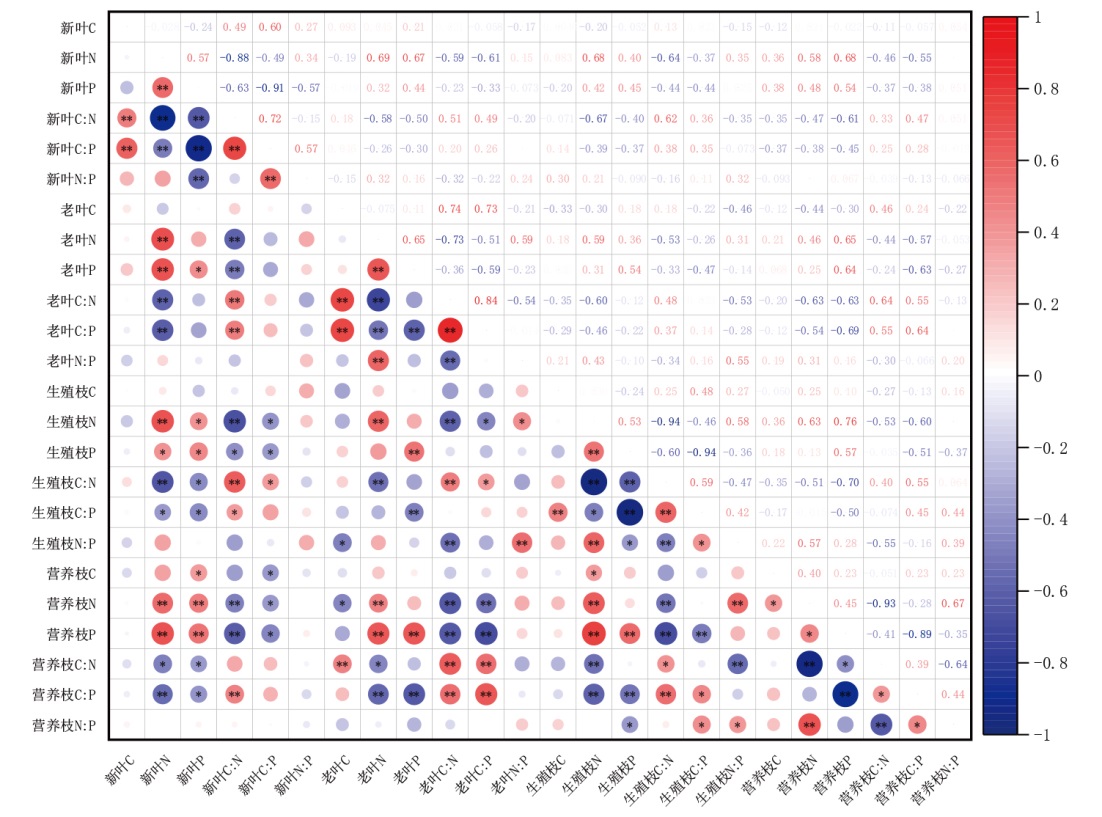
摘要: 测定紫花苜蓿茎、叶生物量及碳(C)、氮(N)、磷(P)含量,探讨刈割频次(3、4次,记为C3、C4)和施肥水平[N:P2O5:K2O配比(单位kg/hm2)依次为0:0:0(CK)、8.775:22.5:37.5(F1)、17.55:45:75(F2)、26.325:67.5:112.5(F3)及35:90:150(F4)]对科尔沁沙地紫花苜蓿各器官生物量及茎、叶C、N、P化学计量特征的影响规律,以期为其在科尔沁沙地实施高产栽培提供理论支撑。结果表明,刈割频次与施肥水平对紫花苜蓿生物量及各器官C、N、P含量与化学计量特征均产生了显著影响(P<0.05)。刈割3次条件下,地上生物量随施肥水平升高先增后减,F2处理达最大值(1825.50 g/m2),显著高于CK、F3、F4处理(P<0.05);刈割4次条件下,地上生物量呈“双峰”变化,F1与F3处理表现最优。各器官C、N、P含量及化学计量比在不同处理间差异明显,新叶、老叶、生殖枝、营养枝碳含量分别在C3F1、C3F4、C3F2、C3F2处理下最高,氮含量分别在C3F3、C3F1、C3F2、C3F2处理下最高,磷含量分别在C3F3、C3F1、C4F3、C4F2处理下最高,且各器官内部N与P含量均呈正相关;化学计量比主要受对应元素含量反向调控,C:N、C:P均与氮、磷含量呈负相关。隶属函数综合评价结果显示,在所有10个处理中,C3F2处理综合评价值最高(0.78),显示出其在促进紫花苜蓿总生物量累积和元素吸收方面的最佳综合效益。
中图分类号:
聂兆绪, 贾晨雪, 朱铁霞, 李涛, 张佳慧, 那佳乐, 赵若庄, 张秋池, 高凯. 刈割和施肥对科尔沁沙地紫花苜蓿各器官生物量及茎、叶化学计量特征的影响[J]. 中国农学通报, 2026, 42(19): 163-171.
NIE Zhaoxu, JIA Chenxue, ZHU Tiexia, LI Tao, ZHANG Jiahui, NA Jiale, ZHAO Ruozhuang, ZHANG Qiuchi, GAO Kai. Effects of Mowing and Fertilization on Biomass in Various Organs and Stoichiometric Characteristics in Stems and Leaves of Alfalfa in Horqin Sandy Land[J]. Chinese Agricultural Science Bulletin, 2026, 42(19): 163-171.
| 刈割频次 | 施肥水平 | 紫花苜蓿总生物量/(g/m2) |
|---|---|---|
| C3 | CK | 1413.27±70.68Ad |
| F1 | 1763.21±24.61Aab | |
| F2 | 1825.50±75.21Aa | |
| F3 | 1678.78±130.56Abc | |
| F4 | 1552.98±25.01Bc | |
| C4 | CK | 1557.28±59.56Ac |
| F1 | 1884.04±107.73Aa | |
| F2 | 1783.35±46.50Aab | |
| F3 | 1846.14±25.99Aa | |
| F4 | 1680.79±73.36Abc |
| 刈割频次 | 施肥水平 | 新叶 | 老叶 | 生殖枝 | 营养枝 |
|---|---|---|---|---|---|
| C3 | CK | 488.71±18.24Ab | 246.70±15.86Bc | 163.73±7.56Aa | 514.13±58.07Ac |
| F1 | 597.33±13.36Aa | 305.29±27.19Aab | 176.00±16.86Aa | 684.59±19.88Bb | |
| F2 | 573.23±21.48Aa | 268.80±4.65Bbc | 194.13±31.45Aa | 789.33±65.68Aa | |
| F3 | 493.16±37.87Bb | 326.79±41.35Aa | 154.40±40.46Aa | 704.43±67.37Aab | |
| F4 | 511.62±29.70Ab | 288.29±30.18Babc | 173.87±12.01Aa | 579.20±45.14Ac | |
| C4 | CK | 502.25±37.28Aa | 378.13±36.30Aa | 145.71±27.06Aab | 531.20±44.80Ad |
| F1 | 576.84±45.52Aa | 342.19±44.46Aa | 188.48±63.15Aa | 776.53±18.20Aa | |
| F2 | 583.35±22.11Aa | 377.17±9.09Aa | 113.49±12.25Bb | 709.33±9.78Ab | |
| F3 | 586.04±27.58Aa | 377.55±13.68Aa | 103.89±7.05Ab | 778.67±4.89Aa | |
| F4 | 538.87±75.17Aa | 372.53±16.06Aa | 127.25±9.14Bb | 642.13±28.68Ac |
| 刈割频次 | 施肥水平 | 碳 | 氮 | 磷 | |||||
|---|---|---|---|---|---|---|---|---|---|
| 新叶 | 老叶 | 新叶 | 老叶 | 新叶 | 老叶 | ||||
| C3 | CK | 377.09±19.56Aab | 378.07±14.03Aabc | 44.31±2.87Ab | 37.76±2.71Ad | 2.88±0.21Ab | 2.77±0.17Ab | ||
| F1 | 395.93±13.71Aa | 401.42±24.10Aab | 52.03±2.98Aa | 47.44±1.78Aa | 3.26±0.13Aab | 3.51±0.13Aa | |||
| F2 | 350.69±12.91Ab | 332.71±12.58Ac | 53.64±0.89Aa | 45.94±1.70Aab | 3.62±0.41Aa | 3.29±0.16Aa | |||
| F3 | 367.11±25.73Aab | 355.34±55.54Abc | 54.90±2.93Aa | 42.39±3.26Abc | 3.78±0.35Aa | 3.17±0.07Aa | |||
| F4 | 356.16±23.72Ab | 423.27±18.54Aa | 47.43±1.07Ab | 38.52±1.44Acd | 3.34±0.12Aab | 3.17±0.34Aa | |||
| C4 | CK | 359.06±8.10Aa | 377.70±3.55Aa | 42.40±2.59Ac | 38.29±1.46Ac | 3.14±0.09Abc | 2.83±0.08Ab | ||
| F1 | 354.16±7.43Ba | 387.32±14.91Aa | 48.37±0.29Ab | 42.28±3.77Abc | 3.67±0.24Aa | 3.16±0.07Ba | |||
| F2 | 362.50±9.02Aa | 349.78±27.87Aab | 51.67±2.65Aa | 46.57±1.75Aa | 3.62±0.29Aa | 3.19±0.05Aa | |||
| F3 | 353.15±16.14Aa | 369.45±27.53Aa | 48.52±0.22Bb | 43.87±1.78Aab | 3.44±0.11Aab | 3.14±0.02Aa | |||
| F4 | 366.11±12.21Aa | 330.86±12.64Bb | 44.40±0.77Bc | 39.70±0.82Ac | 2.98±0.24Ac | 2.92±0.09Ab | |||
| 刈割频次 | 施肥水平 | 碳 | 氮 | 磷 | |||||
|---|---|---|---|---|---|---|---|---|---|
| 生殖枝 | 营养枝 | 生殖枝 | 营养枝 | 生殖枝 | 营养枝 | ||||
| C3 | CK | 375.64±13.35Ab | 418.06±41.87Aa | 25.74±3.10Ab | 25.45±2.62Ab | 2.54±0.31Aa | 2.38±0.15Ac | ||
| F1 | 389.90±9.24Aab | 415.58±13.74Aa | 25.02±0.43Ab | 27.44±2.41Ab | 2.76±0.29Aa | 2.70±0.07Aabc | |||
| F2 | 415.54±24.30Aa | 431.61±12.93Aa | 31.97±2.74Aa | 34.20±2.47Aa | 2.85±0.32Aa | 3.06±0.24Aa | |||
| F3 | 391.78±11.20Aab | 430.52±16.54Aa | 30.69±1.96Aa | 32.73±0.99Aa | 2.63±0.10Aa | 2.93±0.09Aab | |||
| F4 | 388.99±6.83Bab | 406.80±12.19Aa | 22.83±1.12Ab | 21.04±0.62Bc | 2.71±0.28Aa | 2.56±0.34Abc | |||
| C4 | CK | 400.35±12.13Aab | 405.47±10.71Aab | 20.07±2.31Ac | 26.46±2.75Aa | 2.03±0.34Ab | 2.21±0.08Ac | ||
| F1 | 376.36±17.01Ab | 396.68±10.65Ab | 25.82±2.24Aab | 27.76±4.36Aa | 2.55±0.19Aa | 2.71±0.10Ab | |||
| F2 | 386.35±18.46Aab | 429.75±8.67Aa | 29.58±3.35Aa | 28.92±0.99Ba | 2.68±0.35Aa | 3.10±0.31Aa | |||
| F3 | 389.60±6.61Aab | 405.66±12.98Aab | 28.46±1.37Aa | 26.43±0.74Ba | 2.87±0.13Aa | 2.81±0.08Ab | |||
| F4 | 413.05±11.76Aa | 398.41±20.91Ab | 24.23±1.00Ab | 25.76±3.23Aa | 2.37±0.22Aab | 2.60±0.06Ab | |||
| 刈割频次 | 施肥水平 | C:N | C:P | N:P | |||||
|---|---|---|---|---|---|---|---|---|---|
| 新叶 | 老叶 | 新叶 | 老叶 | 新叶 | 老叶 | ||||
| C3 | CK | 8.52±0.23Aa | 10.03±0.47Aa | 131.29±11.82Aa | 136.60±9.54Aa | 15.41±1.22Aa | 13.62±0.85Aa | ||
| F1 | 7.63±0.63Aab | 8.47±0.62Ab | 121.33±0.72Aab | 114.46±7.39Aab | 15.98±1.41Aa | 13.52±0.13Aa | |||
| F2 | 6.54±0.34Ac | 7.25±0.30Ab | 97.75±11.36Ac | 101.55±8.57Ab | 14.96±1.78Aa | 14.01±1.01Aa | |||
| F3 | 6.71±0.80Abc | 8.38±1.23Ab | 97.60±10.21Ac | 111.99±17.39Aab | 14.65±1.96Aa | 13.35±0.74Aa | |||
| F4 | 7.51±0.56Aabc | 10.99±0.12Aa | 106.72±6.09Abc | 134.58±17.39Aa | 14.23±0.80Aa | 12.25±1.60Aa | |||
| C4 | CK | 8.50±0.71Aa | 9.88±0.42Aa | 114.48±5.75Aab | 133.73±4.82Aa | 13.50±0.65Aa | 13.55±0.66Aa | ||
| F1 | 7.32±0.17Ab | 9.20±0.79Aab | 96.77±8.06Bc | 122.72±4.86Ab | 13.21±0.92Ba | 13.41±1.42Aa | |||
| F2 | 7.03±0.53Ab | 7.51±0.47Ac | 100.75±10.05Abc | 109.57±7.06Ac | 14.33±1.03Aa | 14.60±0.48Aa | |||
| F3 | 7.28±0.37Ab | 8.44±0.82Abc | 102.50±1.75Abc | 117.82±8.65Abc | 14.10±0.52Aa | 13.99±0.68Aa | |||
| F4 | 8.24±0.13Aa | 8.33±0.15Bbc | 123.60±13.27Aa | 113.24±0.74Abc | 14.98±1.39Aa | 13.59±0.16Aa | |||
| 刈割频次 | 施肥水平 | C:N | C:P | N:P | |||||
|---|---|---|---|---|---|---|---|---|---|
| 生殖枝 | 营养枝 | 生殖枝 | 营养枝 | 生殖枝 | 营养枝 | ||||
| C3 | CK | 14.72±1.63Bbc | 16.60±2.79Aab | 149.62±19.24Aa | 177.03±28.28Aa | 10.16±0.50Aab | 10.75±1.34Aa | ||
| F1 | 15.58±0.27Aab | 15.25±1.79Abc | 142.22±16.10Aa | 153.88±2.76Aab | 9.12±0.88Ab | 10.18±1.07Aab | |||
| F2 | 13.06±1.44Ac | 12.65±0.55Bc | 147.32±23.87Aa | 141.65±15.41Ab | 11.32±1.89Aa | 11.25±1.73Aa | |||
| F3 | 12.81±1.15Ac | 13.16±0.70Bc | 148.85±3.39Aa | 147.14±6.43Aab | 11.67±0.91Aa | 11.19±0.68Aa | |||
| F4 | 17.05±0.57Aa | 19.36±1.08Aa | 144.56±14.81Aa | 161.03±22.47Aab | 8.49±1.01Ab | 8.30±0.83Ab | |||
| C4 | CK | 20.09±1.89Aa | 15.41±1.29Aa | 200.99±33.95Aa | 183.36±6.80Aa | 10.17±2.76Aa | 11.98±1.49Aa | ||
| F1 | 14.66±1.46Abc | 14.49±1.86Aa | 148.47±17.92Ab | 146.73±8.95Ab | 10.17±1.26Aa | 10.29±1.91Aa | |||
| F2 | 13.23±2.21Ac | 14.88±0.78Aa | 146.60±25.66Ab | 139.90±16.42Ab | 11.08±0.51Aa | 9.40±0.98Aa | |||
| F3 | 13.71±0.56Ac | 15.36±0.70Aa | 136.11±7.24Ab | 144.39±4.59Ab | 9.93±0.49Ba | 9.42±0.55Ba | |||
| F4 | 17.05±0.23Ab | 15.61±1.81Ba | 174.73±13.09Aab | 153.51±11.42Ab | 10.24±0.72Aa | 9.93±1.39Aa | |||
| 处理 | 隶属函数值 | 综合评价值 | 排序 | ||||||||||||
|---|---|---|---|---|---|---|---|---|---|---|---|---|---|---|---|
| 总生物量 | 新叶 碳含量 | 新叶 氮含量 | 新叶 磷含量 | 老叶 碳含量 | 老叶 氮含量 | 老叶 磷含量 | 生殖枝 碳含量 | 生殖枝 氮含量 | 生殖枝 磷含量 | 营养枝 碳含量 | 营养枝 氮含量 | 营养枝 磷含量 | |||
| C3CK | 0 | 0.58 | 0.15 | 0 | 0.51 | 0 | 0 | 0 | 0.48 | 0.61 | 0.61 | 0.34 | 0.19 | 0.27 | 9 |
| C3F1 | 0.74 | 1 | 0.77 | 0.42 | 0.76 | 1 | 1 | 0.36 | 0.42 | 0.87 | 0.54 | 0.49 | 0.56 | 0.69 | 2 |
| C3F2 | 0.88 | 0 | 0.9 | 0.82 | 0.02 | 0.85 | 0.7 | 1 | 1 | 0.99 | 1 | 1 | 0.97 | 0.78 | 1 |
| C3F3 | 0.56 | 0.36 | 1 | 1 | 0.26 | 0.48 | 0.54 | 0.4 | 0.89 | 0.71 | 0.97 | 0.89 | 0.82 | 0.68 | 3 |
| C3F4 | 0.3 | 0.12 | 0.4 | 0.51 | 1 | 0.08 | 0.54 | 0.33 | 0.23 | 0.81 | 0.29 | 0 | 0.4 | 0.39 | 7 |
| C4CK | 0.31 | 0.19 | 0 | 0.29 | 0.51 | 0.05 | 0.08 | 0.62 | 0 | 0 | 0.25 | 0.41 | 0 | 0.21 | 10 |
| C4F1 | 1 | 0.08 | 0.48 | 0.88 | 0.61 | 0.47 | 0.51 | 0.02 | 0.48 | 0.62 | 0 | 0.51 | 0.57 | 0.48 | 6 |
| C4F2 | 0.79 | 0.26 | 0.74 | 0.82 | 0.2 | 0.91 | 0.57 | 0.27 | 0.8 | 0.77 | 0.95 | 0.6 | 1 | 0.67 | 4 |
| C4F3 | 0.92 | 0.05 | 0.49 | 0.63 | 0.42 | 0.63 | 0.49 | 0.35 | 0.7 | 1 | 0.26 | 0.41 | 0.68 | 0.54 | 5 |
| C4F4 | 0.57 | 0.34 | 0.16 | 0.11 | 0 | 0.2 | 0.2 | 0.94 | 0.35 | 0.4 | 0.05 | 0.36 | 0.44 | 0.32 | 8 |
| [1] |
doi: 10.3389/fpls.2023.1326244 URL |
| [2] |
杨利烨, 杨天辉, 常生华, 等. 不同刈割频率对黄土高原陇东苜蓿产量及其品质的影响[J]. 草业科学, 2020, 37(1):117-125.
|
| [3] |
赵力兴, 高阳, 李天琦, 等. 施肥对科尔沁沙地苜蓿生长及产草量的影响[J]. 中国农业科技导报, 2019, 21(7):136-144.
doi: 10.13304/j.nykjdb.2018.0596 |
| [4] |
孔猛, 黄明镜, 张冬梅, 等. 黄土高原半干旱区覆膜和施磷对紫花苜蓿草地土壤磷组分的影响[J]. 中国生态农业学报, 2024, 32(8):1377-1388.
|
| [5] |
才璐, 罗珠珠, 王林林, 等. 施肥对苜蓿土壤水分、养分和产量的影响:基于定位试验数据的Meta分析[J]. 草业科学, 2021, 38(1):160-170.
|
| [6] |
余洋, 张志浩, 柴旭田, 等. 极端干旱区3种荒漠植物叶和根碳氮磷化学计量特征对氮添加的响应[J]. 草业科学, 2022, 39(11):2284-2296.
|
| [7] |
陈文燕, 张雪, 王奕璇, 等. 荒漠植物狭叶锦鸡儿不同地理居群叶片化学计量特征及其影响因子[J]. 应用生态学报, 2025, 36(1):31-38.
doi: 10.13287/j.1001-9332.202501.002 |
| [8] |
苏宇航, 宋晓倩, 郑晶文, 等. 呼伦贝尔盐生藜科植物不同器官C、N、P生态化学计量特征及其与土壤因子的关系[J]. 植物研究, 2022, 42(5):910-920.
doi: 10.7525/j.issn.1673-5102.2022.05.022 |
| [9] |
陈壹铭, 单立山, 马静, 等. 西北干旱区荒漠植物叶片和细根碳、氮、磷化学计量特征[J]. 生态学报, 2024, 44(9):3648-3659.
|
| [10] |
萨仁其力莫格, 荆佳强, 秦洁, 等. 不同利用方式下贝加尔针茅草原植物和土壤的生态化学计量特征[J]. 中国草地学报, 2022, 44(1):20-29.
|
| [11] |
doi: 10.1016/j.scitotenv.2023.168791 URL |
| [12] |
黄佳媛. 磷添加对紫花苜蓿生产性能、根系特性和化学计量特征的影响[D]. 通辽: 内蒙古民族大学, 2022.
|
| [13] |
doi: 10.2134/agronj2002.1094 URL |
| [14] |
杨秀芳, 梁庆伟, 娜日苏, 等. 年刈割次数对科尔沁沙地不同秋眠级紫花苜蓿品种产量、品质和越冬率的影响[J]. 草地学报, 2019, 27(3):637-643.
doi: 10.11733/j.issn.1007-0435.2019.03.016 |
| [15] |
刘晓静, 张进霞, 李文卿, 等. 施肥及刈割对干旱地区紫花苜蓿产量和品质的影响[J]. 中国沙漠, 2014, 34(6):1516-1526.
doi: 10.7522/j.issn.1000-694X.2014.00131 |
| [16] |
袁银颍, 吴嘉华, 宋家兴, 等. 施氮和刈割对紫花苜蓿品质的影响[J]. 西北农林科技大学学报(自然科学版), 2025, 53(8):125-136.
|
| [17] |
|
| [18] |
罗蓉, 曹国璠, 李金玲, 等. 草珊瑚不同部位碳氮磷化学计量特征研究[J]. 中国农学通报, 2022, 38(13):84-89.
doi: 10.11924/j.issn.1000-6850.casb2021-0973 |
| [19] |
李冰月, 南丽丽, 温素军, 等. 刈割强度对不同根型苜蓿营养器官化学计量特征的影响[J]. 中国草地学报, 2022, 44(1):114-120.
|
| [20] |
刘晓阳, 赵力兴, 朱铁霞, 等. 磷添加对科尔沁沙地紫花苜蓿生物量及化学计量特征的影响[J]. 中国草地学报, 2025, 47(3):10-19.
|
| [21] |
王凯, 高爽, 刘焕彬, 等. 施氮与增水对杨树幼苗不同器官碳氮磷化学计量的影响[J]. 生态学杂志, 2021, 40(12):3870-3880.
|
| [22] |
陆姣云, 杨惠敏, 田宏, 等. 水分对不同生育时期紫花苜蓿茎叶碳、氮、磷含量及化学计量特征的影响[J]. 中国草地学报, 2021, 43(6):25-34.
|
| [23] |
王振南, 赵梅, 杨燕, 等. 苜蓿叶片氮、磷和钾养分重吸收与化学计量比的偶联关系[J]. 草业学报, 2019, 28(11):177-183.
|
| [24] |
胡桂馨, 彭然, 崔晓宁, 等. 施磷对苜蓿光合产物在根茎叶的分配及抗蓟马的影响[J]. 中国生态农业学报(中英文), 2020, 28(7):969-978.
|
| [25] |
符佩斌, 干友民, 张洪轩, 等. 施肥对高寒草甸产草量和品质的影响[J]. 草业科学, 2015, 32(7):1137-1142.
|
| [26] |
doi: 10.1104/pp.112.1.281 URL |
| [27] |
丛龙丽, 高凯, 刘之浩, 等. 磷添加对紫花苜蓿生物量、根系特性及化学计量特征的影响[J]. 中国草地学报, 2024, 46(11):66-73.
|
| [28] |
王岩, 韩苗, 熊子怡, 等. 丛枝菌根真菌对玉米锌、磷拮抗作用的影响[J]. 植物营养与肥料学报, 2018, 24(1):279-284.
|
| [29] |
王继周, 王栋琨, 谢微, 等. 武夷山不同茶区茶青生态化学计量学特征比较[J]. 中国农学通报, 2025, 41(20):74-79.
doi: 10.11924/j.issn.1000-6850.casb2025-0003 |
| [30] |
余涵, 吴绍发, 蒋科毅, 等. 不同立地指数杉木人工林碳、氮、磷化学计量及养分重吸收特征[J]. 生态学报, 2025, 45(19):9606-9614.
|
| [31] |
谢军, 徐春丽, 陈轩敬, 等. 不同施肥模式对玉米各器官碳氮累积和分配的影响[J]. 草业学报, 2018, 27(8):50-58.
doi: 10.11686/cyxb2017370 |
| [32] |
doi: 10.1006/anbo.1997.0416 URL |
| [33] |
尤炜, 王斌, 王腾飞, 等. 施磷肥对退化苜蓿草地生产性能及磷利用效率的影响[J]. 中国草地学报, 2025, 47(11):38-48.
|
| [34] |
doi: 10.1111/nph.2004.164.issue-2 URL |
| [35] |
孙延亮, 赵宇哲, 魏孔钦, 等. 不同秋眠级紫花苜蓿茎和叶的碳、氮、磷化学计量特征[J]. 中国草地学报, 2022, 44(5):9-19.
|
| [36] |
王先之, 蒋海亮, 许可旺, 等. 磷添加对紫花苜蓿幼苗地上部及根系生长模式的影响[J]. 兰州大学学报(自然科学版), 2013, 49(1):87-91.
|
| [37] |
陆姣云, 段兵红, 杨梅, 等. 植物叶片氮磷养分重吸收规律及其调控机制研究进展[J]. 草业学报, 2018, 27(4):178-188.
doi: 10.11686/cyxb2017223 |
| [1] | 田琴, 丁新辉, 冯筱, 韩红江, 苟晨阳. 不同植被类型土壤-微生物生物量及其化学计量特征的比较研究[J]. 中国农学通报, 2026, 42(9): 40-47. |
| [2] | 黄剑, 靖吉越, 林浩瀚. 不同种类肥料在茶树上的应用研究进展[J]. 中国农学通报, 2026, 42(7): 97-104. |
| [3] | 商小兰, 李丹, 方文英, 徐著, 王强, 陈照明. 机插同步侧深施肥对水稻产量和氮肥利用及土壤氮的影响[J]. 中国农学通报, 2026, 42(7): 1-7. |
| [4] | 孙永生. 辽宁省西部地区设施土壤养分分析及施肥建议[J]. 中国农学通报, 2026, 42(5): 151-156. |
| [5] | 高鹏, 蒲志刚, 杨丹, 李明, 杜丹丹, 冯俊彦, 屈会娟, 郎涛, 任敏, 李昶蓥, 张聪. 菜用甘薯水培营养液和品种筛选[J]. 中国农学通报, 2026, 42(5): 50-54. |
| [6] | 商小兰, 陈翔, 刘永红, 徐星, 俞洲君, 朱为静, 李丹. 水稻秸秆炭化还田对稻田土壤有机碳稳定性的影响机制研究[J]. 中国农学通报, 2026, 42(4): 133-138. |
| [7] | 陆欣远, 钱玭, 徐勇贤, 王一柳, 王火焰, 卢殿君, 郑乐. 抚仙湖流域起垄施肥一体化机械应用对烤烟产量与养分吸收的影响[J]. 中国农学通报, 2026, 42(4): 52-58. |
| [8] | 赵加涛, 郭勉艳, 刘猛道, 付正波, 於琦. 种植密度和刈割期对‘保啤麦28号’饲草产量和品质的影响[J]. 中国农学通报, 2026, 42(3): 177-182. |
| [9] | 唐建鹏, 陈京都, 刘绍贵, 洪叶, 张彦, 辛海滨, 陆佩玲, 张明伟. 减量简化侧深施肥对水稻物质生产及品质的影响[J]. 中国农学通报, 2026, 42(2): 16-24. |
| [10] | 周道玮, 李强, 胡娟, 于达夫, 石记博. 黑土地平衡施肥数量及其种类配比研究[J]. 中国农学通报, 2026, 42(2): 103-112. |
| [11] | 徐兴阳, 杨宗云, 耿宇, 马左玉, 王晓云, 侯永强, 盘四光, 潘义宏. 紫花苜蓿-烤烟轮作模式下氮磷钾配施对植烟土壤性质与烟叶产质量的影响[J]. 中国农学通报, 2026, 42(19): 51-59. |
| [12] | 韩月, 徐冬, 陈程, 樊玉超, 赵瑞, 于鹏, 辛治坤, 刘光辉. 外源柠檬酸对紫花苜蓿种子萌发及其幼苗生长的影响[J]. 中国农学通报, 2026, 42(19): 172-178. |
| [13] | 安慧玥, 尚文鑫, 陈唱, 张明泽, 吴舒舒, 任洪建, 薄剑飚, 王良伟, 于李洋, 韩伟. 不同施肥种类对金银花产量、品质及土壤微生态的影响[J]. 中国农学通报, 2026, 42(17): 89-96. |
| [14] | 李一帆, 王维香, 裴志超, 王琦, 史亚兴, 曲明山, 李婷. 锌营养强化鲜食玉米技术现状与发展前景[J]. 中国农学通报, 2026, 42(16): 7-12. |
| [15] | 张敏, 王孟兰, 苏舜, 宁运旺. 新型肥料轻简化施用对水稻产量、效益和氮肥效率的影响[J]. 中国农学通报, 2026, 42(14): 63-68. |
| 阅读次数 | ||||||
|
全文 |
|
|||||
|
摘要 |
|
|||||
