欢迎访问《中国农学通报》,

中国农学通报 ›› 2026, Vol. 42 ›› Issue (2): 141-145.doi: 10.11924/j.issn.1000-6850.casb2025-0215

• 资源·环境·生态·土壤·气象 • 上一篇    下一篇

不同生物质炭基肥用量对土壤性状以及芹菜产量和品质的影响

刘瑜(), 张梦佳, 王睿, 张雪莲, 金强, 闫实, 王维瑞()   

  1. 北京市耕地建设保护中心, 北京 100101
  • 收稿日期:2025-03-12 修回日期:2025-12-08 出版日期:2026-01-25 发布日期:2026-01-22
  • 通讯作者:
    王维瑞,男,1973年出生,天津人,正高级农艺师,硕士,主要从事耕地质量提升工作。通信地址:100101 北京市朝阳区慧忠寺96号 北京市耕地建设保护中心,Tel:010-82994832,E-mail:
  • 作者简介:

    刘瑜,女,1985年出生,河北保定人,高级农艺师,硕士,主要从事施肥技术与土壤改良方面的工作。通信地址:100101 北京市朝阳区慧忠寺96号 北京市耕地建设保护中心,Tel:010-82078460,Email:

  • 基金资助:
    现代农业产业技术体系北京市设施蔬菜创新团队叶菜土壤栽培岗位专家工作经费项目(BAIC01-2025)

Effects of Different Amounts of Biochar-based Fertilizer on Soil Properties and Yield and Quality of Celery

LIU Yu(), ZHANG Mengjia, WANG Rui, ZHANG Xuelian, JIN Qiang, YAN Shi, WANG Weirui()   

  1. Beijing Cultivated Land Construction and Protection Center, Beijing 100101
  • Received:2025-03-12 Revised:2025-12-08 Published:2026-01-25 Online:2026-01-22

摘要:

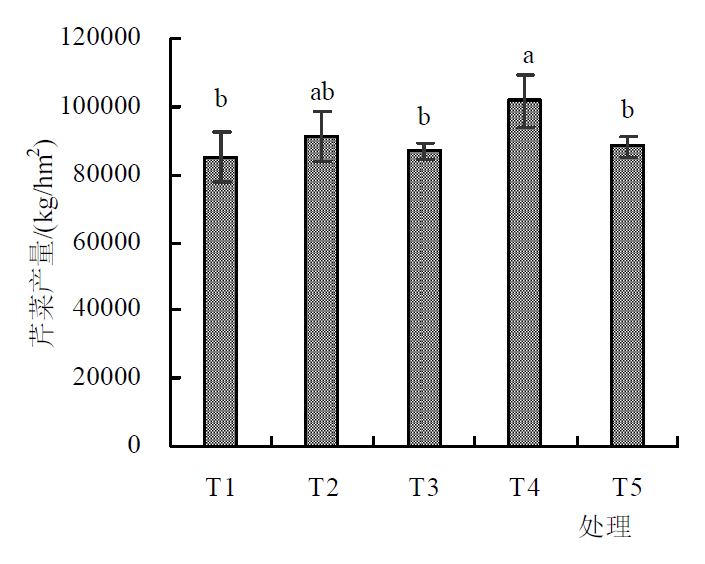
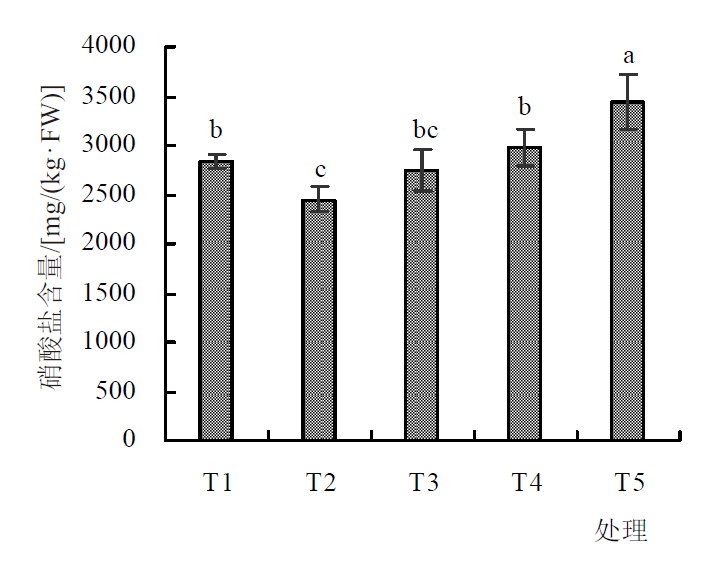
为探究不同生物质炭基肥用量对设施土壤性状及芹菜产量与品质的影响,本研究通过小区试验,对比分析了单施有机肥(T1)、单施生物质炭(T2,生物质炭用量12 t/hm2)、生物质炭与有机肥配施(T3~T5,生物质炭用量分别为1.5、3.0、6.0 t/hm2)等处理对土壤养分、芹菜产量和品质的影响。结果表明:T4处理(生物质炭3.0 t/hm² +有机肥12 t/hm²)的芹菜产量最高,硝酸盐含量较低,有利于提高产量和经济效益。在土壤养分方面,施用生物质炭均不同程度提高了土壤有机质和速效钾含量,但降低了土壤有效磷含量和EC值,对全氮含量影响不显著。与T1相比,有机质含量增幅为1.41%~12.54%,速效钾含量增幅为4.13%~9.81%。土壤微生物量方面,生物质炭与有机肥配施各处理(T3~T5)均显著提高了土壤微生物量氮,增幅分别为15.60%、3.24%和14.40%;只有T4处理较T1处理提高了土壤微生物量碳含量。综上,生物质炭与有机肥配合施用可在不同程度上改善土壤理化性状和微生物活性,进而提高芹菜产量和品质。在本试验条件下,以商品有机肥12 t/hm2与生物质炭3.0 t/hm2配施的综合效果最佳。

关键词: 生物质炭, 土壤性状, 产量, 品质, 芹菜

Abstract:

To explore the effects of different biochar-based fertilizers on soil properties and celery yield in facility settings, a plot experiment was used to compare the single application of organic fertilizer (T1), the single application of biochar (T2, the amount of biochar was 12 t/hm2), and the combined application of biochar and organic fertilizer (T3 to T5, with biochar application rates of 1.5, 3.0 and 6.0 t/hm2) on soil nutrients, celery yield and quality. The results showed that the T4 treatment had the highest celery yield and the lowest nitrate content, which was beneficial to increasing yield and income. In terms of soil nutrients, the application of biochar increased soil organic matter and available potassium to varying degrees, but reduced soil available phosphorus content and EC value, with little effect on total nitrogen content. The increase in organic matter content compared to T1 was 1.41% to 12.54%, and the increase in available potassium content was 4.13% to 9.81%. Regarding soil microbial biomass carbon and nitrogen, the combined application of biochar and organic fertilizer in all treatments (T3 to T5) significantly increased soil microbial biomass nitrogen by 15.60%, 3.24% and 14.40%, respectively; only the T4 treatment increased soil microbial biomass carbon content compared to T1. In conclusion, the combined application of biochar and organic fertilizer can improve soil physical and chemical properties and microbial activity to varying degrees, increase celery yield and quality. In the experiment, the application of 12 t/hm2 of commercial organic fertilizer and 3.0 t/hm2 of biochar had the best overall effect.

Key words: biochar, soil properties, yield, quality, celery