欢迎访问《中国农学通报》,

中国农学通报 ›› 2026, Vol. 42 ›› Issue (6): 180-186.doi: 10.11924/j.issn.1000-6850.casb2025-0542

• 植物保护·农药 • 上一篇    下一篇

蕲艾虫害多样性及发生规律研究

方响亮(), 丁思琪, 黄泰旭, 章富康, 柏云峰, 牟宇嫣, 傅悦()   

  1. 黄冈师范学院生物与农业资源学院经济林木种质改良与资源综合利用湖北省重点实验室, 湖北黄冈 438000
  • 收稿日期:2025-06-30 修回日期:2026-02-25 出版日期:2026-03-25 发布日期:2026-03-30
  • 通讯作者:
    傅悦,女,1982年出生,山东淄博人,教授,博士,主要从事动物分类及多样性研究。E-mail:
  • 作者简介:

    方响亮,男,1981年出生,湖北黄冈人,副教授,硕士,主要从事动植物资源保护与利用。E-mail:

  • 基金资助:
    国家自然科学基金项目“东亚环足摇蚊属(双翅目:摇蚊科)系统学和生物地理学研究”(32070483); 大别山特色资源开发湖北省协同创新中心联合开放课题基金“蕲艾主要害虫发生规律及防控机制研究”(202328404); 经济林木种质改良与资源综合利用湖北省重点实验室

Study on Diversity and Occurrence Patterns of Insect Pests of Artemisia argyi

FANG Xiangliang(), DING Siqi, HUANG Taixu, ZHANG Fukang, BAI Yunfeng, MU Yuyan, FU Yue()   

  1. Hubei Provincial Key Laboratory of Germplasm Improvement and Comprehensive Resource Utilization of Economic Forest Trees, College of Biology and Agricultural Resources, Huanggang Normal University, Huanggang, Hubei 438000
  • Received:2025-06-30 Revised:2026-02-25 Published:2026-03-25 Online:2026-03-30

摘要:

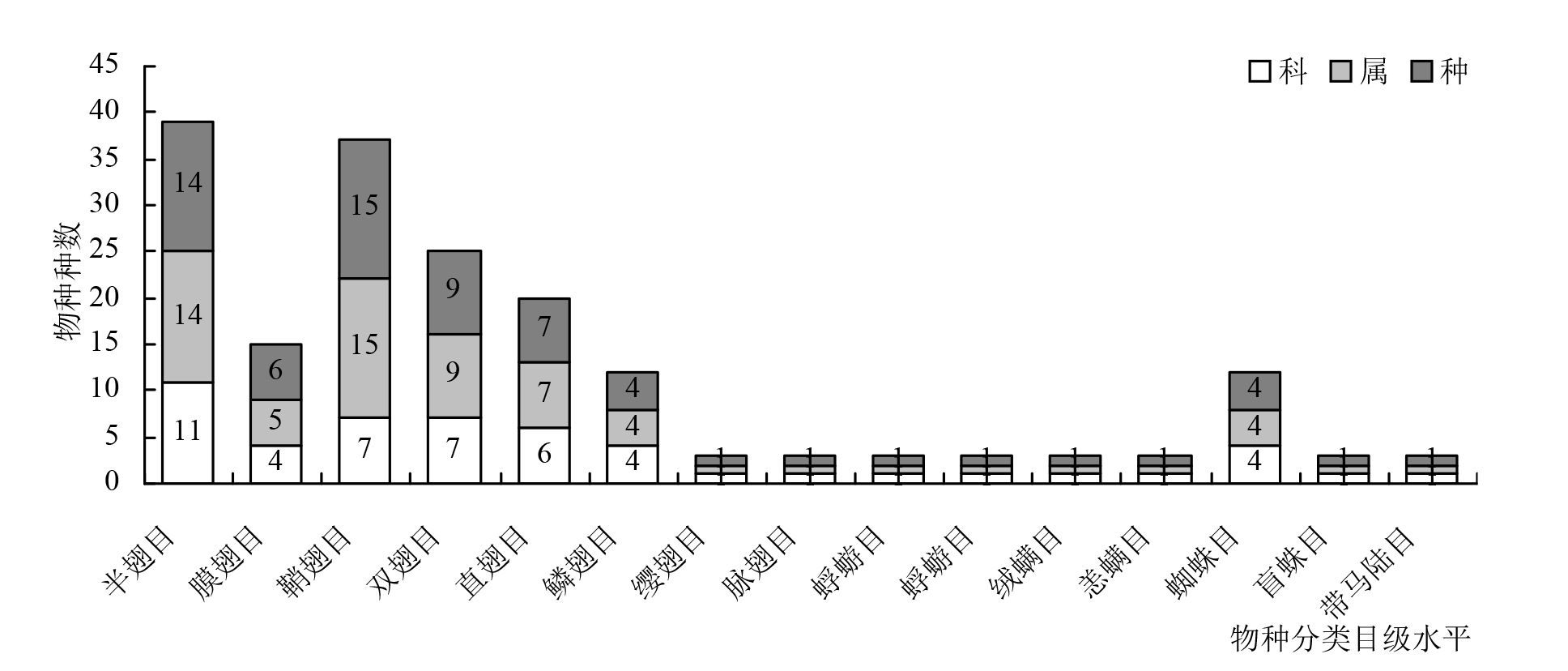
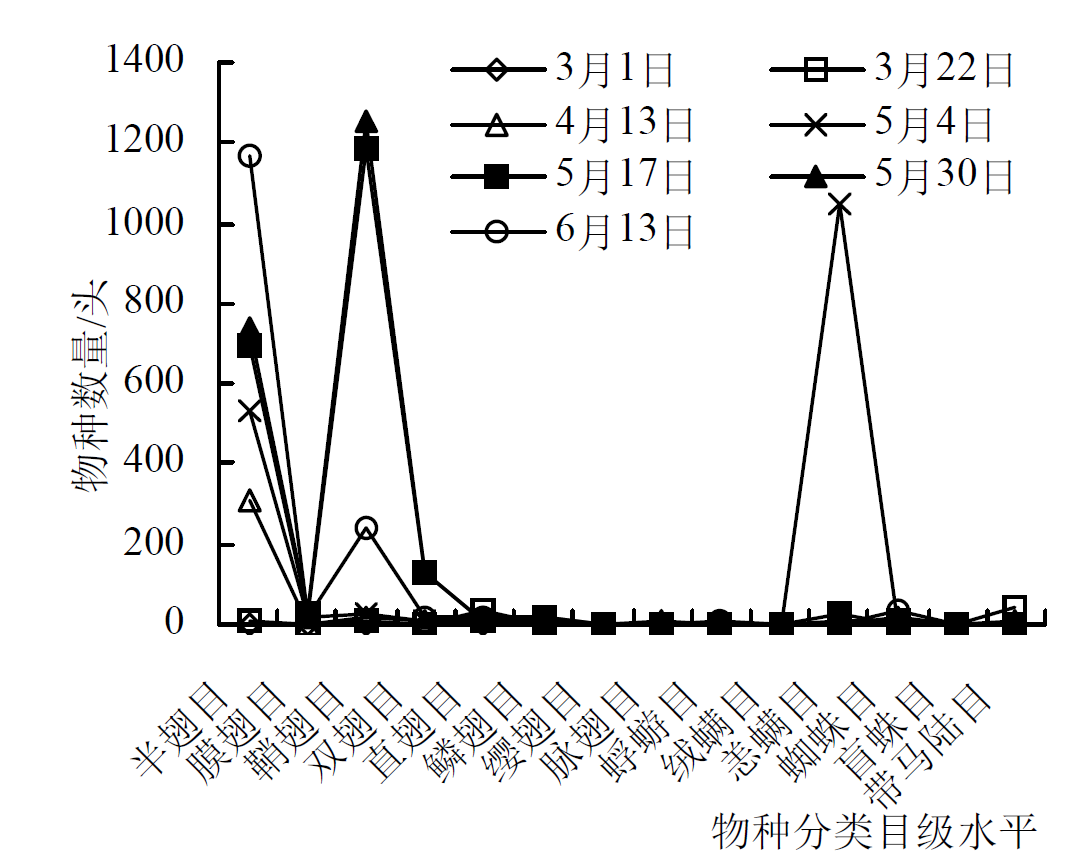
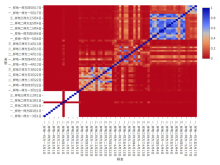
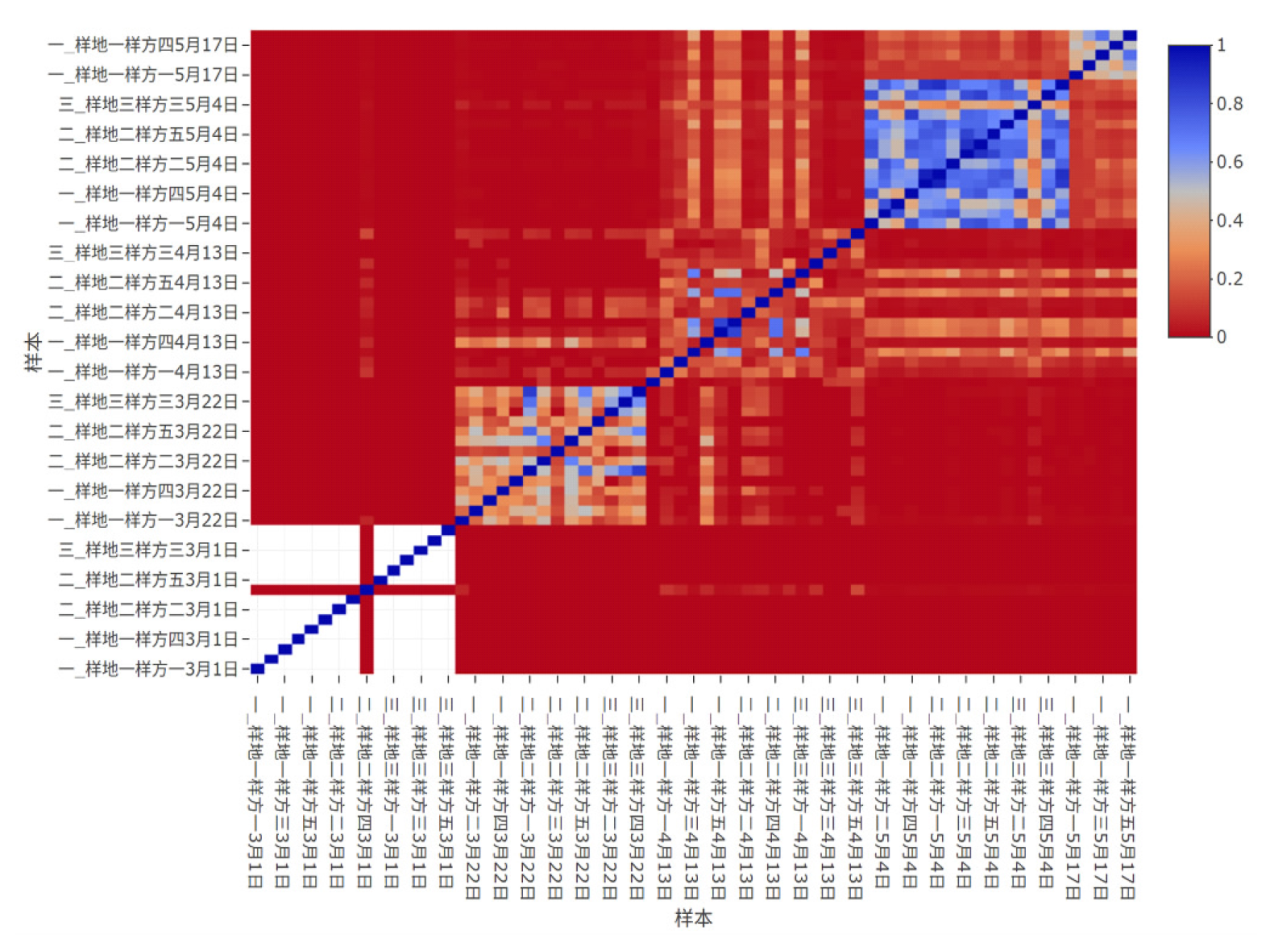
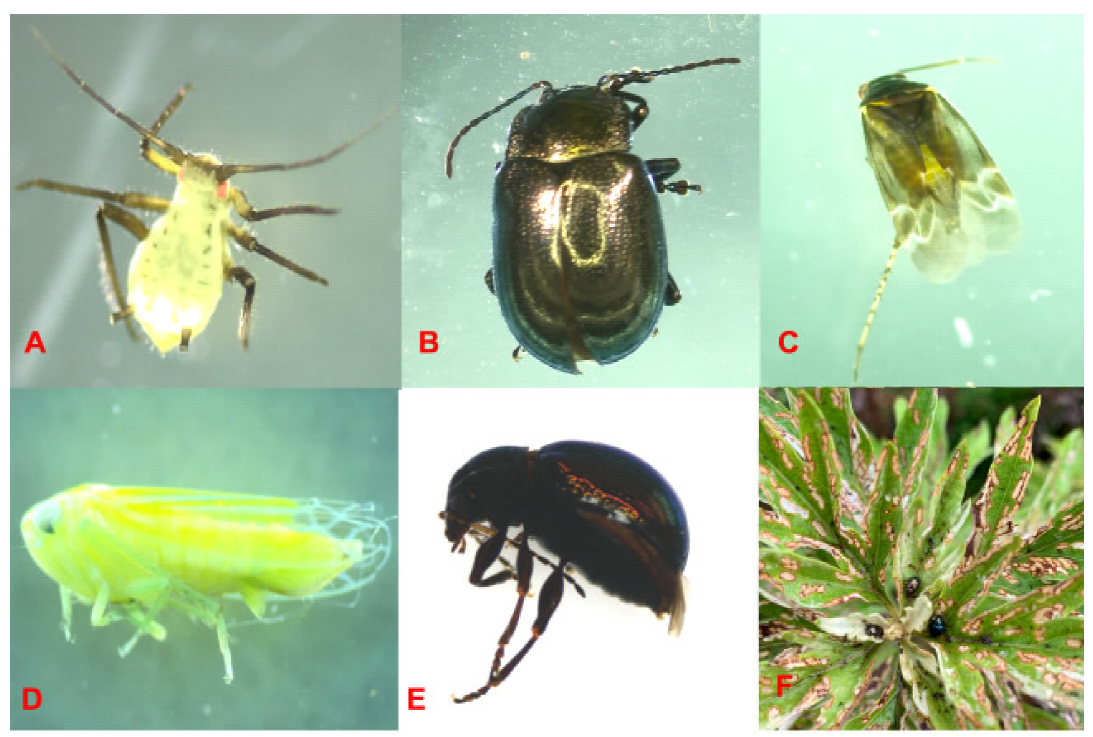
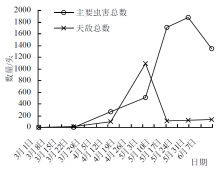
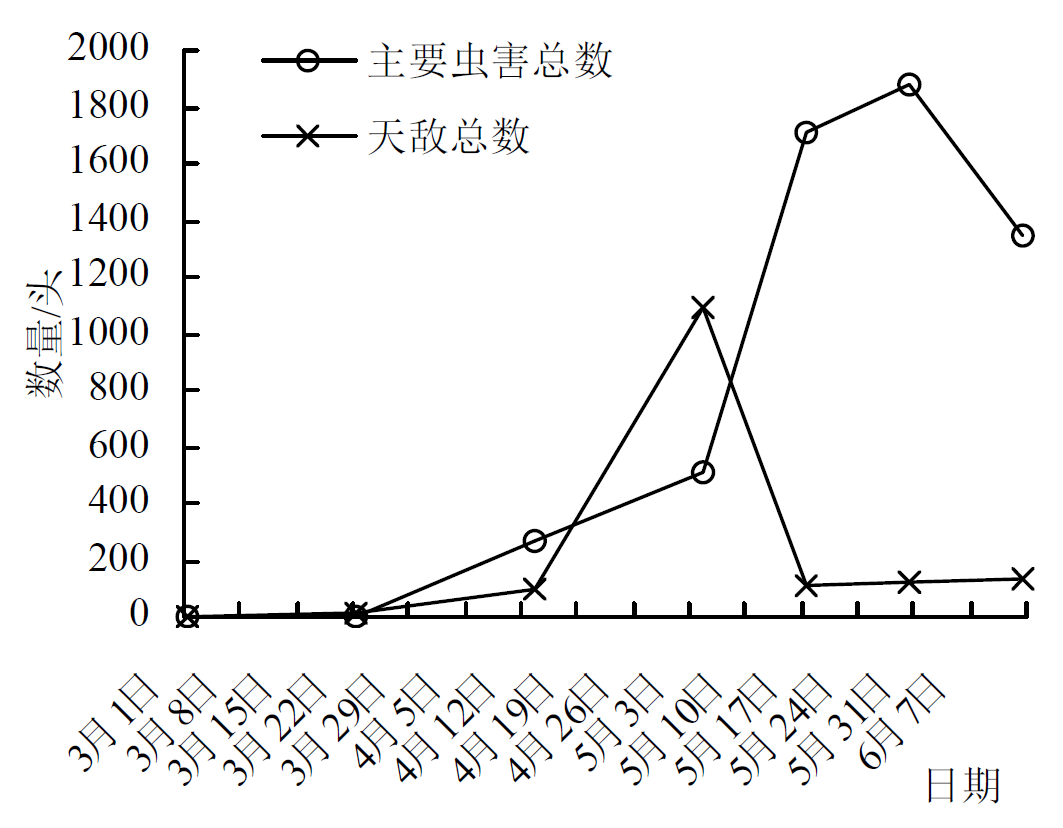
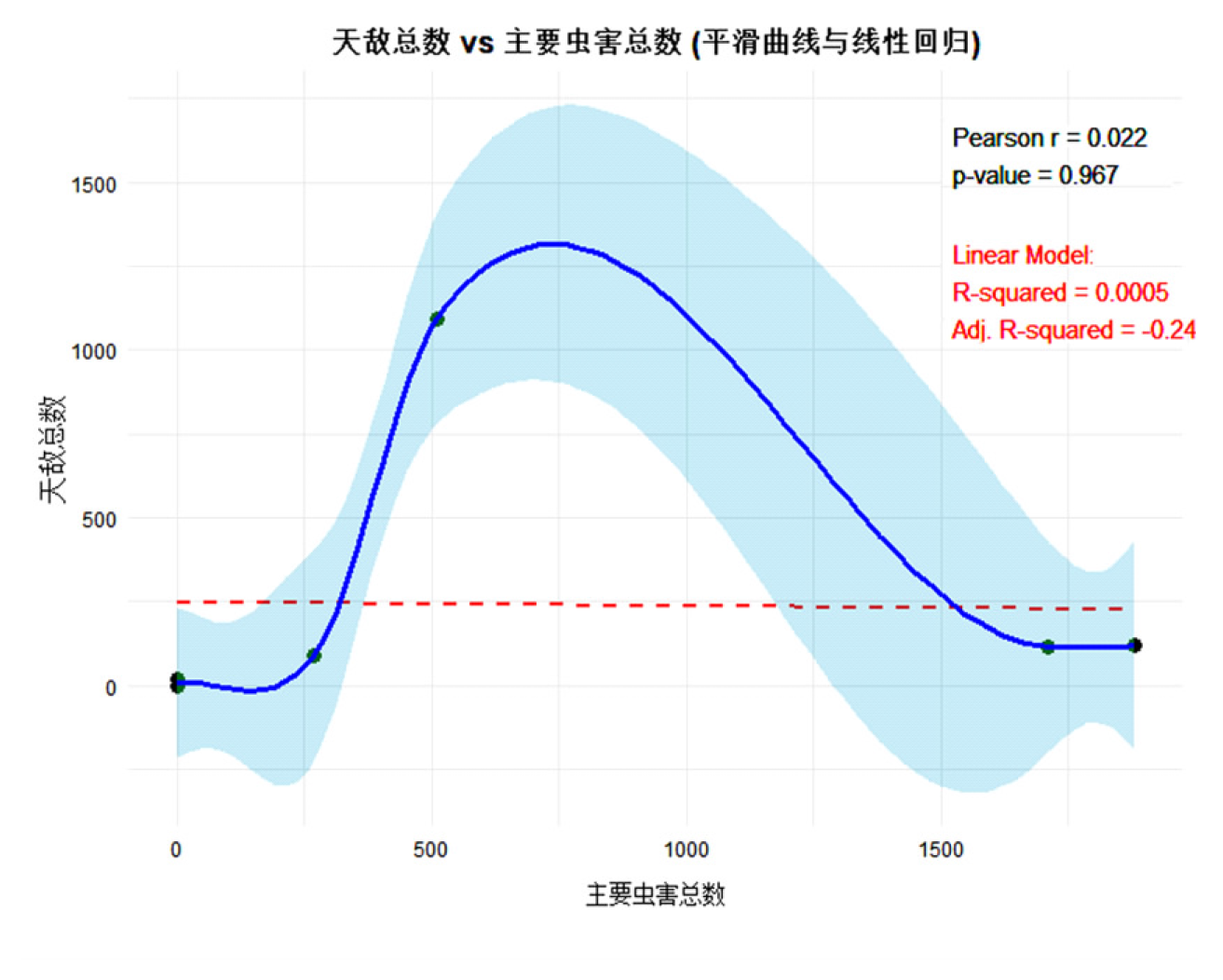
针对蕲艾(Artemisia argyi)规模化种植中虫害频发、绿色防控技术缺乏的问题,为明确其生长季虫害发生及天敌的物种组成、多样性与发生规律,于2025年3—6月选取7个时间点,对湖北黄冈蕲艾种植园进行系统调查,分析不同时期动态变化特征。采用样方法结合形态学与DNA条形码技术鉴定物种,通过多样性指数、相关性分析等方法解析群落动态及虫害与天敌的关系。结果表明:共记录66属67种节肢动物,涵盖昆虫59种、螨类2种、蜘蛛5种、马陆1种,其中鞘翅目(22.49%)、半翅目(20.90%)为优势类群。虫害优势种呈现显著演替特征:不同时期种植园内蕲艾的虫害种类、数量及其优势种发生显著变化,同时天敌群落组成和数量也呈现动态波动。早期(3月)节肢动物总数较低,虫害以中国蝈螽(Tettigonia chinensis)等直翅目若虫为主,进入4月,总个体数量显著增加,水蒿小长管蚜(Macrosiphoniella kuwayamai)爆发成为主要害虫;5月初,水蒿小长管蚜数量维持高位,同时天敌螨类[大赤螨(Anystis sp.)]数量爆发性增长;至5月中下旬,甘薯肖叶甲(Colasposoma dauricum)数量急剧增加,成为新的绝对优势害虫,水蒿小长管蚜数量仍高,而大赤螨数量则大幅下降;6月中旬小绿叶蝉(Empoasca flavescens)数量明显增多,其余虫害数量有所消减。由虫害和天敌的相关性分析结果得出,蕲艾生长季虫害和天敌的动态演替过程不存在统计上显著的线性关系,平滑曲线分析显示其是一种非常显著且复杂的非线性动态。本研究为蕲艾虫害监测预警及生态防控体系构建提供了科学依据,未来可进一步开展虫害与蕲艾化学成分的关联性及天敌控害效能研究。

关键词: 蕲艾, 虫害, 天敌, 物种多样性, 发生规律, 动态变化, 绿色防控

Abstract:

To elucidate the occurrence of insect pests in Artemisia argyi during different periods of its growing season, this study investigated the species composition, diversity, and temporal dynamics of pests and their natural enemies in Artemisia argyi plantations. Seven sampling points were selected from March to June 2025 for investigation, recording a total of 59 insect species, 2 mite species, 5 spider species, and 1 millipede species. Among them, Coleoptera (22.49 %) and Hemiptera (20.90 %) were the dominant groups. Significant temporal changes were observed in the types, population densities, and dominant species of pests, alongside dynamic fluctuations in the composition and abundance of natural enemy communities. In the early period (March), the total arthropod population was low, with pests primarily consisting of Orthoptera nymphs, such as Tettigonia chinensis. By April, the total individual count surged, and the outbreak of Macrosiphoniella kuwayamai emerged as the predominant pest. In early May, M. kuwayamai populations remained high, while a dramatic increase in natural enemy mites (Anystis sp.) was noted. By mid-May, Colasposoma dauricum became the new absolute dominant pest with a sharp increase in numbers. Concurrently, M. kuwayamai populations remained elevated, but Anystis sp. numbers significantly declined. In mid-June, Empoasca flavescens populations rose significantly, while other pest numbers decreased. Correlation analysis between pests and natural enemies indicated no statistically significant linear relationship in their dynamic succession during the Artemisia argyi growing season. However, smooth curve analysis revealed a very significant and complex non-linear dynamic. This study provides a scientific basis for the monitoring and early warning of Artemisia argyi pests and the construction of ecological prevention and control system. In the future, the correlation between pests and chemical components of Artemisia argyi and the control efficiency of natural enemies can be further studied.

Key words: Artemisia argyi, pests, natural enemies, species diversity, occurrence pattern, dynamic changes, green control