欢迎访问《中国农学通报》,

中国农学通报 ›› 2026, Vol. 42 ›› Issue (7): 130-140.doi: 10.11924/j.issn.1000-6850.casb2025-0592
彭翠仙1( ), 王灿1, 杨玉玲1, 李玲1, 李桂琳2, 孙宏伟1, 陶永宏1()
收稿日期:2025-07-15
修回日期:2026-03-04
出版日期:2026-04-15
发布日期:2026-04-15
通讯作者:
作者简介:彭翠仙,女,1988年出生,云南曲靖人,农艺师,硕士,主要从事中药资源收集及开发利用研究。通信地址:663000 云南省文山壮族苗族自治州文山市泰康西路2号,Tel:0876-3037538,E-mail:pengccxx1@163.com。
基金资助:
PENG Cuixian1(), WANG Can1, YANG Yuling1, LI Ling1, LI Guilin2, SUN Hongwei1, TAO Yonghong1()
Received:2025-07-15
Revised:2026-03-04
Published:2026-04-15
Online:2026-04-15
摘要:
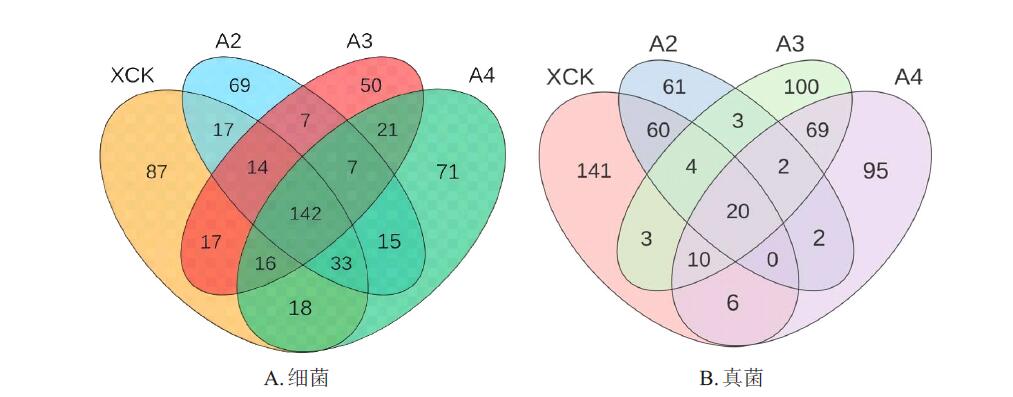
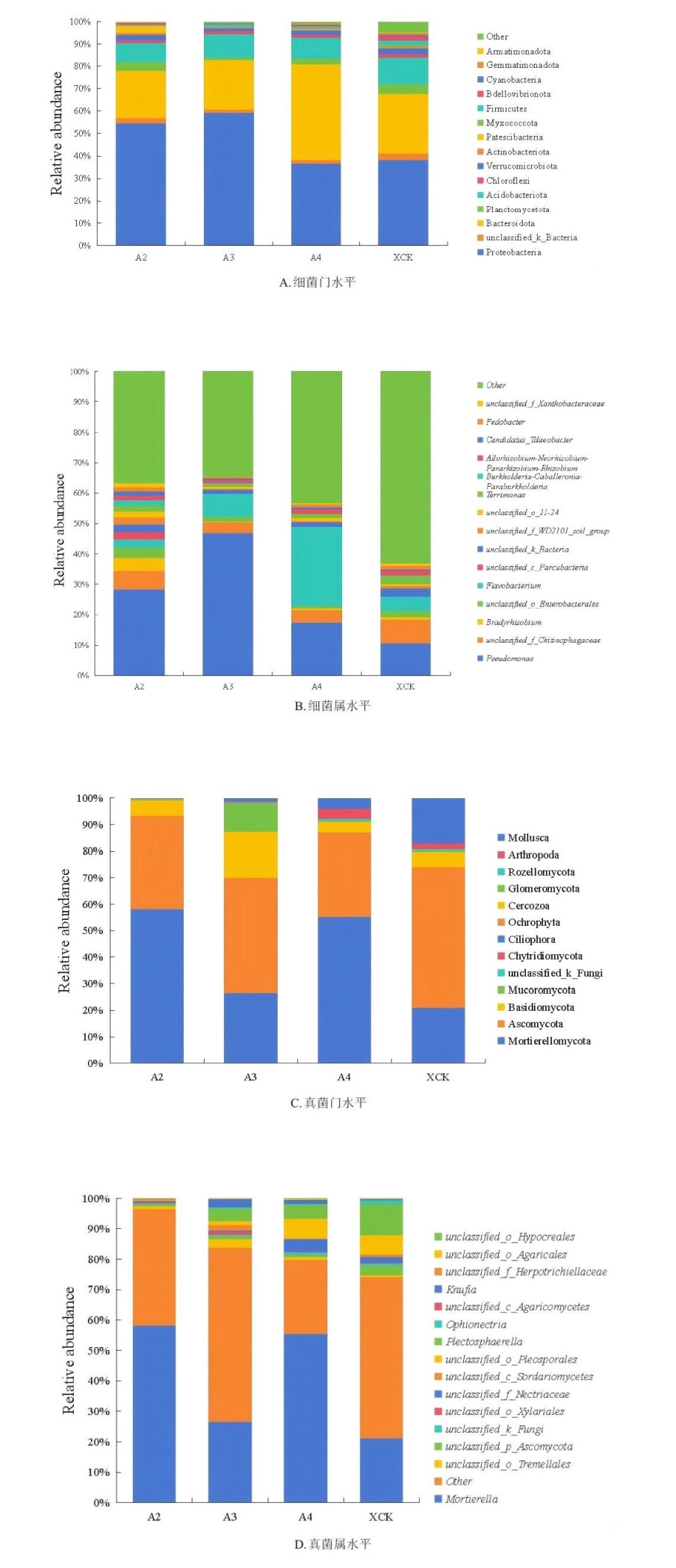
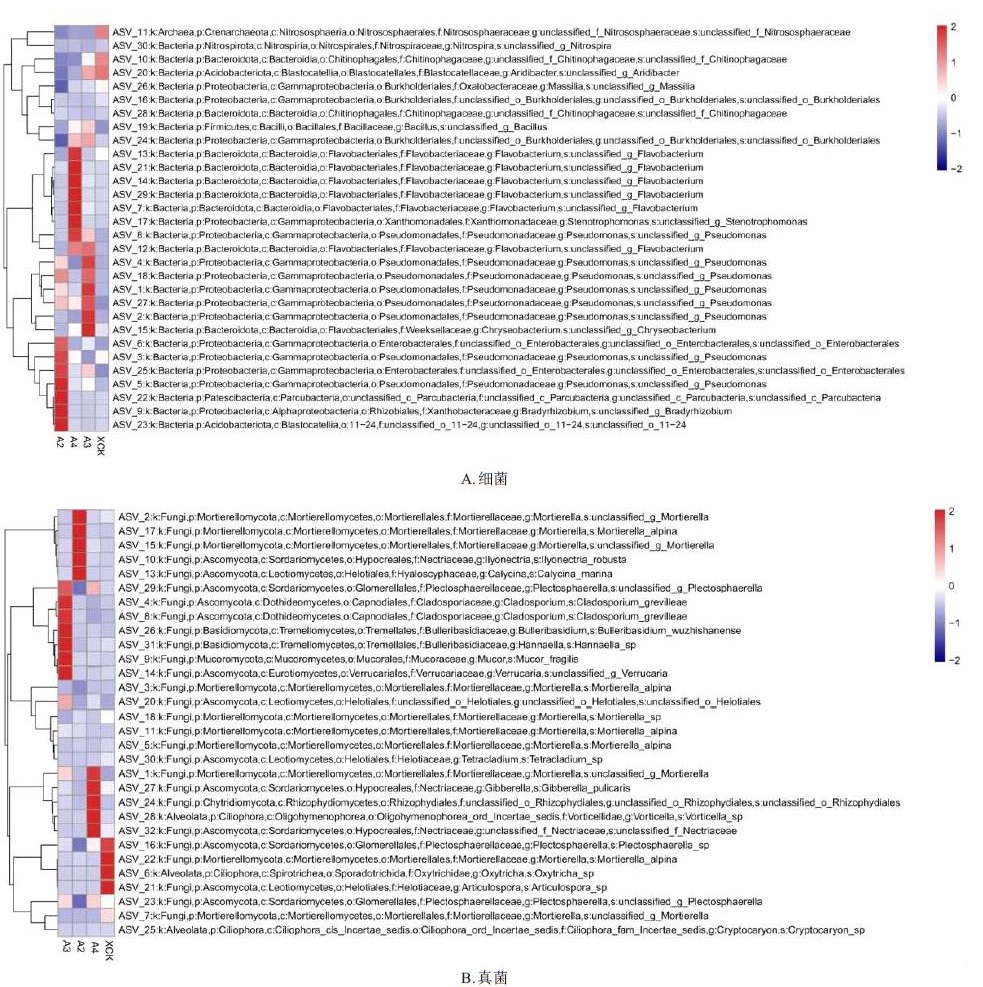
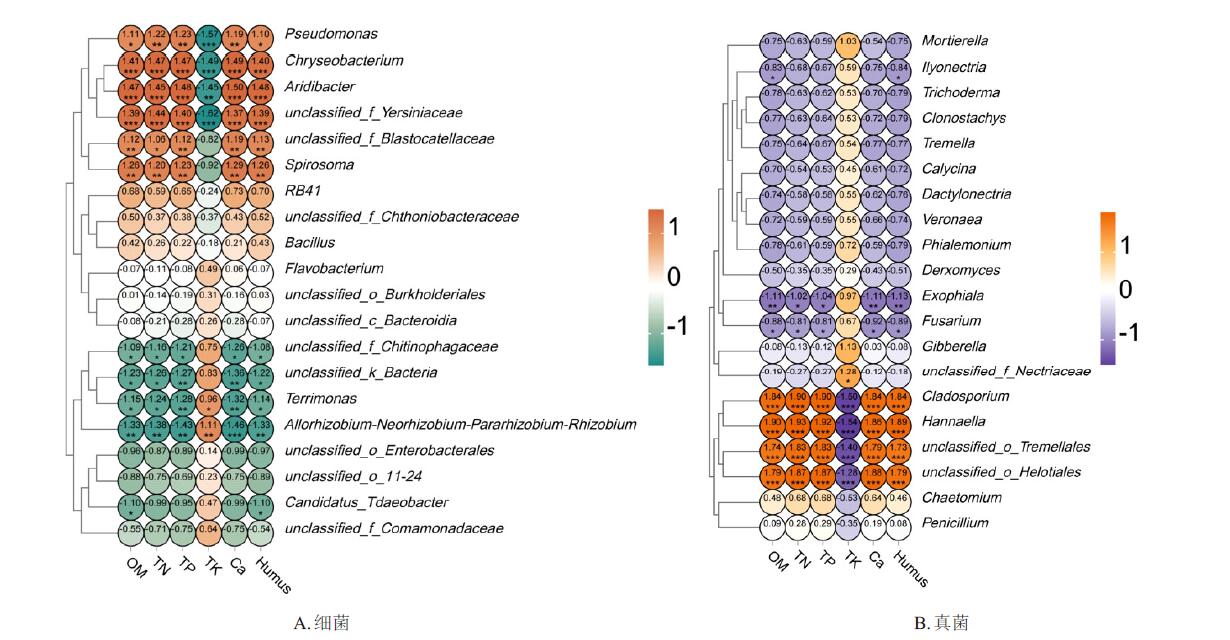
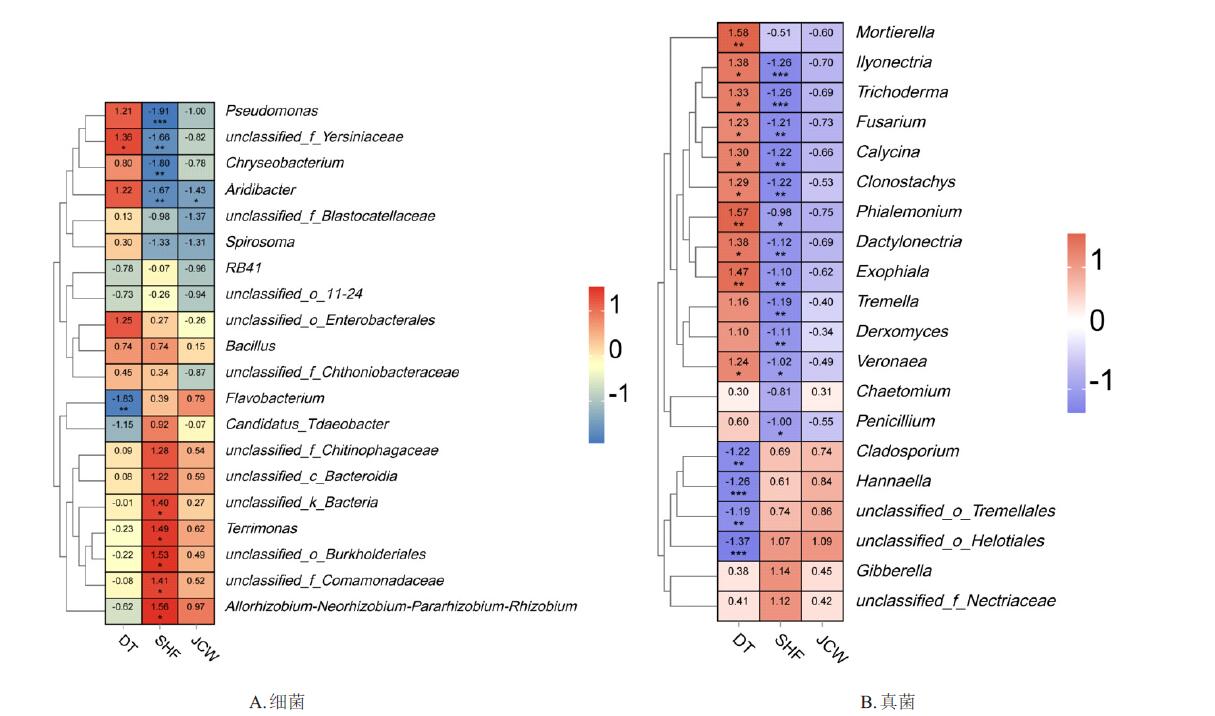
为了解目前野生叠鞘石斛不同生长年限其根际微生物群落结构状况问题,探究不同生长年限叠鞘石斛根际土壤微生物群落结构,以及微生物群落与药材有效成分和土壤养分的相关性。收集山脚未生长石斛的无处理土壤(XCK)以及叠鞘石斛生长2年的根际土壤(A2)、3年的根际土壤(A3)和4年的根际土壤(A4),测量各年份叠鞘石斛多糖、石斛酚、浸出物含量及土壤养分,并通过高通量测序对其根际微生物群落进行结构解析。结果表明,随着叠鞘石斛生长年限增加,叠鞘石斛根际土壤细菌丰富度和多样性先减少后增加,土壤真菌丰富度和多样性先增加后减少。在根际微生物群落分析中,细菌中相对丰度最高的是变形菌门(Proteobacteria),占比分别是XCK、A2、A3、A4分别为38.2%、54.3%、59.3%、36.5%;其次是拟杆菌门(Bacteroidota),A4处理为42.6%,高于XCK处理(26.4%)、A3处理(22.0%)和A2处理(21.0%);酸杆菌门(Acidobacteriota)中,XCK处理为11.9%,高于A3、A4、A2处理(10.3%、9.6%、8.8%)。真菌中丰度最高的是被孢霉门(Mortierellomycota),A2、A4、A3、XCK占比分别为58.1%、55.3%、26.6%、21.0%;其次是子囊菌门(Ascomycota),XCK为52.9%,高于A3处理(43.3%)、A2处理(35.2%)和A4处理(31.6%);在担子菌门(Basidiomycota)中,A3处理为17.3%,高于XCK、A2和A4处理(6.0%、5.7%、4.2%)。相关性分析表明,土壤有机质、腐殖质、全磷、全氮、钙等与叠鞘石斛根际土壤微生物群落有较大相关性。Mortierella、Trichoderma、Ilyonectria、Clonostachys、Phialemonium、Dactylonectria、Exophiala、Veronaea等属与叠鞘石斛部分有效成分显著正相关。不同生长年限叠鞘石斛根际土壤中的微生物种类差异较大,生长年限对微生物群落多样性具有显著影响。
彭翠仙, 王灿, 杨玉玲, 李玲, 李桂琳, 孙宏伟, 陶永宏. 不同生长年限野生叠鞘石斛根际土壤微生物群落的结构特征[J]. 中国农学通报, 2026, 42(7): 130-140.
PENG Cuixian, WANG Can, YANG Yuling, LI Ling, LI Guilin, SUN Hongwei, TAO Yonghong. Structural Characteristics of Rhizosphere Soil Microbial Communities in Wild Dendrobium denneanum with Different Growth Years[J]. Chinese Agricultural Science Bulletin, 2026, 42(7): 130-140.
| 处理 | 多糖 | 石斛酚 | 浸出物 |
|---|---|---|---|
| A2 | 6.6667±0.0407a | 0.0055±0.0001b | 14.2773±1.0984b |
| A3 | 5.2667±0.0517c | 0.0064±0.0004a | 15.4313±1.2547ab |
| A4 | 6.1666±0.0577b | 0.0066±0.0001a | 15.7643±0.3398a |
| 处理 | 多糖 | 石斛酚 | 浸出物 |
|---|---|---|---|
| A2 | 6.6667±0.0407a | 0.0055±0.0001b | 14.2773±1.0984b |
| A3 | 5.2667±0.0517c | 0.0064±0.0004a | 15.4313±1.2547ab |
| A4 | 6.1666±0.0577b | 0.0066±0.0001a | 15.7643±0.3398a |
| 处理 | 有机质 | 全氮 | 全磷 | 全钾 | 钙 | 腐殖质 |
|---|---|---|---|---|---|---|
| A2 | 522.78±3.25a | 22.52±1.11a | 3.08±0.07b | 3.68±0.17c | 16.36±0.66a | 302.36±0.84a |
| A3 | 166.59±4.04c | 6.29±0.58c | 2.11±0.01c | 9.70±0.21b | 7.48±0.42b | 99.65±2.90b |
| A4 | 494.04±1.60b | 15.70±0.01b | 6.04±0.03a | 26.45±0.01a | 16.93±0.08a | 298.90±0.29a |
| XCK | 39.59±0.94d | 2.08±0.01d | 1.84±0.05d | 8.52±0.15b | 3.77±0.20c | 25.30±0.65c |
| 处理 | 有机质 | 全氮 | 全磷 | 全钾 | 钙 | 腐殖质 |
|---|---|---|---|---|---|---|
| A2 | 522.78±3.25a | 22.52±1.11a | 3.08±0.07b | 3.68±0.17c | 16.36±0.66a | 302.36±0.84a |
| A3 | 166.59±4.04c | 6.29±0.58c | 2.11±0.01c | 9.70±0.21b | 7.48±0.42b | 99.65±2.90b |
| A4 | 494.04±1.60b | 15.70±0.01b | 6.04±0.03a | 26.45±0.01a | 16.93±0.08a | 298.90±0.29a |
| XCK | 39.59±0.94d | 2.08±0.01d | 1.84±0.05d | 8.52±0.15b | 3.77±0.20c | 25.30±0.65c |
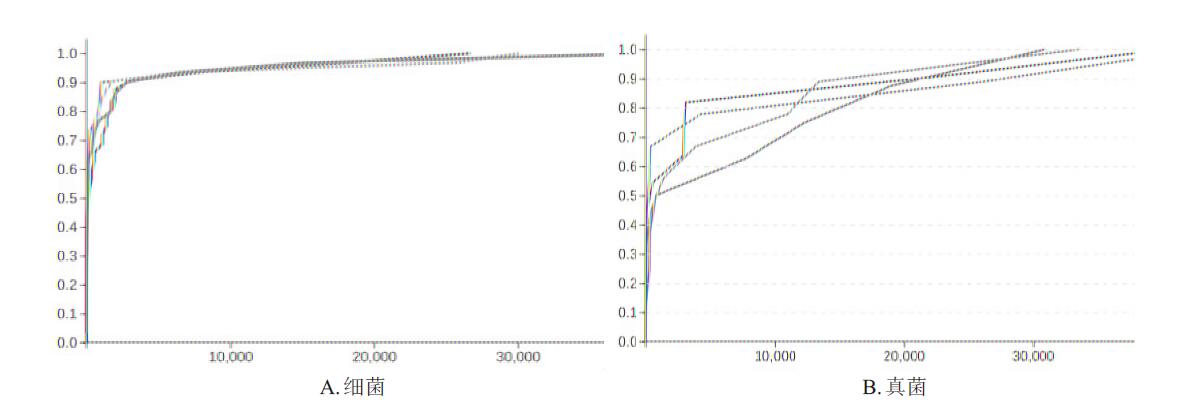
| 处理 | 细菌 | 真菌 | |||
|---|---|---|---|---|---|
| Chao1 | Simpson | Chao1 | Simpson | ||
| XCK | 2089.01±16.70a | 1.00±0.0001a | 541.33±22.55a | 0.97±0.005a | |
| A2 | 1684.33±98.36b | 0.97±0.0029b | 394.04±30.81b | 0.83±0.050b | |
| A3 | 1316.02±23.07c | 0.92±0.0053c | 439.33±33.65c | 0.93±0.009c | |
| A4 | 1628.67±138.54b | 0.99±0.0015b | 424.01±12.77b | 0.78±0.053b | |
| 处理 | 细菌 | 真菌 | |||
|---|---|---|---|---|---|
| Chao1 | Simpson | Chao1 | Simpson | ||
| XCK | 2089.01±16.70a | 1.00±0.0001a | 541.33±22.55a | 0.97±0.005a | |
| A2 | 1684.33±98.36b | 0.97±0.0029b | 394.04±30.81b | 0.83±0.050b | |
| A3 | 1316.02±23.07c | 0.92±0.0053c | 439.33±33.65c | 0.93±0.009c | |
| A4 | 1628.67±138.54b | 0.99±0.0015b | 424.01±12.77b | 0.78±0.053b | |
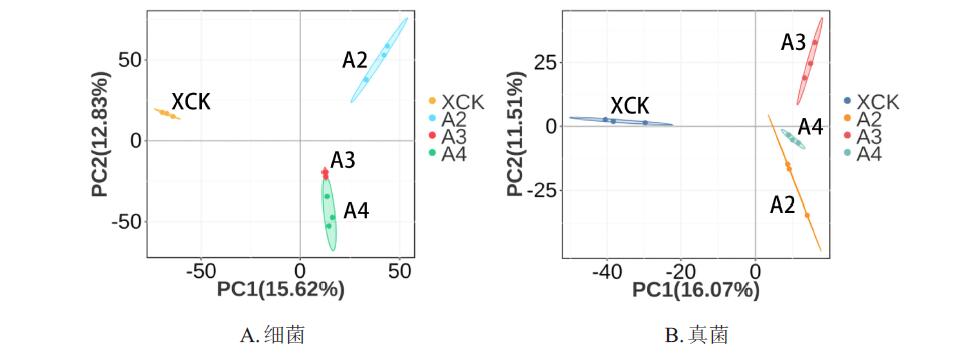
| [1] |
祝蕾, 严辉, 刘培, 等. 药用植物根际微生物对其品质形成的影响及其作用机制的研究进展[J]. 中草药, 2021, 52(13):4064-4073.
|
| [2] |
马晓晶, 郭娟, 唐金富, 等. 论中药资源可持续发展的现状与未来[J]. 中国中药杂志, 2015, 40(10):1887-1892.
|
| [3] |
杨毅, 田侃, 倪新兴, 等. 中药材品质影响因素实证研究[J]. 中药材, 2016, 39(6):1251-1256.
|
| [4] |
国家药典委员会. 中华人民共和国药典:2015年版一部[M]. 北京: 中国医药科技出版社, 2015:282-283.
|
| [5] |
四川省食品药品监督管理局. 四川省中药材标准[M]. 成都: 四川科学技术出版社, 2010:414-418.
|
| [6] |
四川省食品药品监督管理局. 四川省中药饮片炮制规范[M]. 成都: 四川科学技术出版社, 2016:375-376.
|
| [7] |
薛倩倩, 尹显梅, 尹鸿翔, 等. 叠鞘石斛多糖抗氧化作用研究[J]. 科学技术与工程, 2015, 15(12):153-156.
|
| [8] |
范益军, 淳泽, 罗傲雪, 等. 迭鞘石斛中性多糖DDP1-1的体内免疫活性[J]. 应用与环境生物学报, 2010, 16(3):376-379.
|
| [9] |
doi: 10.3389/fmicb.2018.01516 pmid: 30050510 |
| [10] |
doi: 10.1111/1574-6976.12028 pmid: 23790204 |
| [11] |
doi: 10.1094/MPMI-10-14-0334-FI pmid: 25514681 |
| [12] |
李熙英, 金海强, 贾斌. 不同生长年限人参地土壤微生物多样性研究初报[J]. 延边大学农学学报, 2011, 33(2):133-136.
|
| [13] |
doi: 10.1038/s41598-018-34177-1 |
| [14] |
母茂君, 张弟桂, 张华, 等. 太白贝母根际微生物分布与生物碱含量的相关性[J]. 中国中药杂志, 2019, 44(11):2231-2235.
|
| [15] |
唐彬彬, 董姚君, 贺密密, 等. 云南文山健康三七种植年限对根际微生物群落的影响[J]. 微生物学通报, 2020, 47(9):2857-2866.
|
| [16] |
张媛媛, 张彬. 苯酚-硫酸法与蒽酮-硫酸法测定绿茶茶多糖的比较研究[J]. 食品科学, 2016, 37(4):158-163.
doi: 10.7506/spkx1002-6630-201604028 |
| [17] |
鲍士旦. 土壤农化分析[M]. 北京: 中国农业出版社, 2000:11-23.
|
| [18] |
谭勇, 崔尹赡, 季秀玲, 等. 三七连作的根际、根内微生物变化与生态学研究进展[J]. 中草药, 2017, 48(2):391-399.
|
| [19] |
doi: 10.1016/j.apsb.2017.12.011 URL |
| [20] |
于春雷, 高嵩, 孙文松. 连作对辽细辛土壤理化性质和根际微生物群落特征的影响[J]. 江苏农业科学, 2022, 50(14):250-258.
|
| [21] |
王光华, 刘俊杰, 于镇华, 等. 土壤酸杆菌门细菌生态学研究进展[J]. 生物技术通报, 2016, 32(2):14-20.
doi: 10.13560/j.cnki.biotech.bull.1985.2016.02.002 |
| [22] |
丛微, 喻海茫, 于晶晶, 等. 人参种植对林地土壤细菌群落结构和代谢功能的影响[J]. 生态学报, 2021, 41(1):162-171.
|
| [23] |
pmid: 15107955 |
| [24] |
|
| [25] |
张嘉慧, 邢佳佳, 彭丽媛, 等. 丛枝菌根真菌提高感染青枯菌番茄根际土壤细菌群落多样性和稳定性及有益菌属相对丰度[J]. 植物营养与肥料学报, 2023, 29(1):120-131.
|
| [26] |
黄芳芳. 农药对三七根际土壤被孢霉的影响及其田间定殖能力[D]. 昆明: 云南大学, 2017.
|
| [27] |
张英英, 魏玉杰, 吴之涛, 等. 不同种植年限对特殊药材土壤化学性质和微生物多样性的影响[J]. 干旱地区农业研究, 2023, 41(1):150-159.
|
| [28] |
萨如拉, 于淼, 李媛媛, 等. 不同年限玉米秸秆还田对土壤微生物多样性的影响[J]. 中国土壤与肥料, 2023(11):34-40.
|
| [29] |
doi: 10.1007/s10327-017-0736-5 URL |
| [30] |
徐腾起. 生物有机肥对向日葵列当寄生的影响及其微生态机理研究[D]. 杨凌: 西北农林科技大学, 2024.
|
| [31] |
doi: 10.3389/fmicb.2023.1111087 URL |
| [32] |
纳小凡, 郑国琦, 彭励, 等. 不同种植年限宁夏枸杞根际微生物多样性变化[J]. 土壤学报, 2016, 53(1):241-252.
|
| [33] |
范寒雪, 邹世杰, 章圣龙, 等. 嗜冷假单胞菌BYAU-6的分离及低温秸秆降解能力解析[J]. 微生物学报, 2025, 65(8):3273-3286.
|
| [34] |
doi: 10.1016/S0734-9750(99)00014-2 URL |
| [35] |
doi: 10.1016/j.ecoenv.2022.113739 URL |
| [36] |
谢慧娜. 载体对腈纶废水生化处理过程中微生物群落结构影响[D]. 兰州: 兰州交通大学, 2018.
|
| [37] |
doi: 10.1016/j.ecoenv.2022.113452 URL |
| [38] |
巩婷, 温艳华, 陈尔东, 等. 担子菌类真菌新产物研究进展[J]. 菌物研究, 2017, 15(2):89-111.
|
| [39] |
doi: 10.3389/fbioe.2022.1054757 URL |
| [40] |
吴林坤, 林向民, 林文雄. 根系分泌物介导下植物-土壤-微生物互作关系研究进展与展望[J]. 植物生态学报, 2014, 38(3):298-310.
doi: 10.3724/SP.J.1258.2014.00027 |
| [41] |
栗圣榕, 谢巧, 廖莉, 等. 叠鞘石斛适宜采收期分析[J]. 中成药, 2020, 42(1):237-242.
|
| [42] |
|
| [43] |
冯璐, 李振凯, 王红, 等. 不同种植年限银柴胡根际土壤微生物群落结构变化[J]. 微生物学通报, 2024, 51(10):4132-4148.
|
| [44] |
doi: 10.1007/s11738-018-2798-1 |
| [1] | 刘星雨, 徐海军, 王晓飞, 吴青松, 郑歆然, 刘淑霞, 肖宇, 关向军. 北方地区2种黄芪不同生长期药材品质变化分析[J]. 中国农学通报, 2026, 42(7): 30-37. |
| [2] | 管西林, 田慎重, 刘振田, 董勤德, 董亮, 李强, 高新昊, 边文范, 张玉凤. 豆磷脂调理菌剂施用量对玉米-小麦轮作体系产量及养分吸收的影响[J]. 中国农学通报, 2026, 42(7): 8-14. |
| [3] | 骆国辉, 俞世康, 翟扬妮, 顾会战, 李富程, 王彬, 吴涛. 不同连作障碍类型下植烟土壤化感物质和微生物多样性特征[J]. 中国农学通报, 2026, 42(5): 101-108. |
| [4] | 苏岩, 赵晓英, 成日晟, 薛淑琴, 张英华. 苏尼特荒漠草原土壤主要养分变化特征及综合评价[J]. 中国农学通报, 2026, 42(5): 109-116. |
| [5] | 李晔男, 刘彬昕, 贾鹏博, 尹智勇, 隋金超, 张国栋. 黑龙江省3种林分类型土壤养分特征与肥力评价[J]. 中国农学通报, 2026, 42(4): 67-74. |
| [6] | 彭梓程, 李帅豪, 解世瑞, 杨海昌, 张凤华, 刘峰, 周中凯, 许运军. 密氮互作对盐碱地大豆生长及土壤养分的协同调控效应[J]. 中国农学通报, 2026, 42(3): 109-118. |
| [7] | 谷雨, 陈鸽, 刘琼峰, 周峻宇, 谢坚, 杨曾平, 饶中秀, 梁万栋, 张丽娜, 盛浩, 吴海勇. 有机肥施用对水稻产量及土壤理化性质的影响[J]. 中国农学通报, 2026, 42(2): 120-127. |
| [8] | 张冬敏, 黄婉莉, 陈心怡, 张朝坤, 肖世伟. 毛叶枣-大豆间作模式对毛叶枣土壤养分及果实品质的影响[J]. 中国农学通报, 2026, 42(1): 153-158. |
| [9] | 王丽丽, 朱诗君, 卢晓红, 金树权. 木霉菌W1生物有机肥对滨海番茄种植的影响[J]. 中国农学通报, 2025, 41(7): 100-106. |
| [10] | 李相花, 范彩英, 徐芹, 侯剑, 王慧, 刘艳艳, 王恒, 刘光亚, 韩伟. 不同玉米大豆种植模式对作物产量、经济效益与土壤养分的影响[J]. 中国农学通报, 2025, 41(6): 22-28. |
| [11] | 李艳兰, 蔡述江, 李晓亮, 胡新洲, 李成春, 李毅华, 高玉玺, 张玉荣, 业荣, 关翔, 杨进成. 有机肥替代部分化肥对鲜食蚕豆产量和土壤养分的影响[J]. 中国农学通报, 2025, 41(34): 82-86. |
| [12] | 李安宁, 王炎, 马金慧, 王慧淼, 萨如拉, 邰继承, 姜珊, 赵廷超. 氮磷交互配施对玉米大豆复合种植土壤及幼苗生理特性影响[J]. 中国农学通报, 2025, 41(33): 81-87. |
| [13] | 吴家龙, 黄雅芸, 梁春梅, 阮燕珠, 许昌超. 农林废弃物堆肥渗沥液替代部分化肥对园林苗木长势和土壤养分的影响[J]. 中国农学通报, 2025, 41(32): 46-53. |
| [14] | 赵鑫鑫, 韦云东, 周时艺, 陈蕊蕊, 李军, 郑华. 基于根袋法的不同木薯品种根际微生态差异研究[J]. 中国农学通报, 2025, 41(31): 60-71. |
| [15] | 张宁, 李雅洁, 王永栋, 李利利. 陇东旱塬区苹果园土壤养分含量与分布[J]. 中国农学通报, 2025, 41(31): 72-78. |
| 阅读次数 | ||||||
|
全文 |
|
|||||
|
摘要 |
|
|||||
