Welcome to Chinese Agricultural Science Bulletin,

Chinese Agricultural Science Bulletin ›› 2026, Vol. 42 ›› Issue (5): 35-41.doi: 10.11924/j.issn.1000-6850.casb2025-0867
Previous Articles Next Articles
WANG Yanping( ), ZHANG Jingsuo, ZHOU Jie, ZHANG Xuelian, LIU Jiyuan, CHEN Xiaohui, WANG Yikun, JI Wei, ZHANG Xingang, GAO Fei()
Received:2025-10-10
Revised:2025-12-23
Online:2026-03-18
Published:2026-03-18
CLC Number:
WANG Yanping, ZHANG Jingsuo, ZHOU Jie, ZHANG Xuelian, LIU Jiyuan, CHEN Xiaohui, WANG Yikun, JI Wei, ZHANG Xingang, GAO Fei. Analysis on Registration Status of Microbial Fertilizers in Beijing[J]. Chinese Agricultural Science Bulletin, 2026, 42(5): 35-41.
Add to citation manager EndNote|Ris|BibTeX
URL: https://www.casb.org.cn/EN/10.11924/j.issn.1000-6850.casb2025-0867
| 序号 | 肥料产品 | 登记数/个 | 占比/% |
|---|---|---|---|
| 1 | 微生物菌剂 | 171 | 48.58 |
| 2 | 生物有机肥 | 72 | 20.45 |
| 3 | 复合微生物肥料 | 58 | 16.48 |
| 4 | 有机物料腐熟剂 | 22 | 6.25 |
| 5 | 土壤修复菌剂 | 21 | 5.97 |
| 6 | 根瘤菌菌剂 | 5 | 1.42 |
| 7 | 内生菌根菌剂 | 2 | 0.57 |
| 8 | 微生物浓缩制剂 | 1 | 0.28 |
| 合计 | 352 | 100 |
| 序号 | 肥料产品 | 登记数/个 | 占比/% |
|---|---|---|---|
| 1 | 微生物菌剂 | 171 | 48.58 |
| 2 | 生物有机肥 | 72 | 20.45 |
| 3 | 复合微生物肥料 | 58 | 16.48 |
| 4 | 有机物料腐熟剂 | 22 | 6.25 |
| 5 | 土壤修复菌剂 | 21 | 5.97 |
| 6 | 根瘤菌菌剂 | 5 | 1.42 |
| 7 | 内生菌根菌剂 | 2 | 0.57 |
| 8 | 微生物浓缩制剂 | 1 | 0.28 |
| 合计 | 352 | 100 |
| 类别 | 菌属 | 菌种数/个 | 登记计次 | 菌种 |
|---|---|---|---|---|
| 细菌 | 芽孢杆菌 | 9 | 391 | 枯草芽孢杆菌、地衣芽孢杆菌、解淀粉芽孢杆菌、巨大芽孢杆菌、贝莱斯芽孢杆菌、 苏云金芽孢杆菌、坚强芽孢杆菌、短小芽孢杆菌、深褐芽孢杆菌 |
| 类芽孢杆菌 | 3 | 134 | 胶冻样类芽孢杆菌、多粘类芽孢杆菌、固氮类芽孢杆菌 | |
| 短芽孢杆菌 | 1 | 24 | 侧孢短芽孢杆菌 | |
| 乳杆菌 | 2 | 18 | 植物乳杆菌、嗜酸乳杆菌 | |
| 根瘤菌 | 4 | 8 | 大豆根瘤菌、花生根瘤菌、圆明园慢生根瘤菌、日本慢生根瘤菌 | |
| 假单胞菌 | 2 | 4 | 沼泽红假单胞菌、防御假单胞菌 | |
| 其他2个属细菌 | 2 | 3 | 巨大普里斯特氏菌、戊糖片球菌 | |
| 小计 | 8 | 23 | 582 | |
| 真菌 | 酵母 | 2 | 22 | 酿酒酵母、巴斯德毕赤酵母 |
| 木霉 | 4 | 19 | 绿色木霉、哈茨木霉、长枝木霉、加纳木霉 | |
| 拟青霉 | 1 | 10 | 淡紫紫孢菌 | |
| 曲霉 | 2 | 10 | 米曲霉、黑曲霉 | |
| 其他5个属真菌 | 6 | 8 | 球孢白僵菌、粉红螺旋聚孢霉、粉红粘帚霉、嗜热毁丝霉、异形根孢囊霉、球孢囊霉门真菌 | |
| 小计 | 9 | 15 | 69 | |
| 放线菌 | 链霉菌 | 4 | 15 | 弗氏链霉菌、细黄链霉菌、娄彻链霉菌、灰肉红链霉菌 |
| 小计 | 1 | 4 | 15 | |
| 藻类 | 鱼腥藻 | 1 | 1 | 水华鱼腥藻 |
| 小球藻 | 1 | 1 | 蛋白核小球藻 | |
| 小计 | 2 | 2 | 2 | |
| 合计 | 20 | 44 | 668 |
| 类别 | 菌属 | 菌种数/个 | 登记计次 | 菌种 |
|---|---|---|---|---|
| 细菌 | 芽孢杆菌 | 9 | 391 | 枯草芽孢杆菌、地衣芽孢杆菌、解淀粉芽孢杆菌、巨大芽孢杆菌、贝莱斯芽孢杆菌、 苏云金芽孢杆菌、坚强芽孢杆菌、短小芽孢杆菌、深褐芽孢杆菌 |
| 类芽孢杆菌 | 3 | 134 | 胶冻样类芽孢杆菌、多粘类芽孢杆菌、固氮类芽孢杆菌 | |
| 短芽孢杆菌 | 1 | 24 | 侧孢短芽孢杆菌 | |
| 乳杆菌 | 2 | 18 | 植物乳杆菌、嗜酸乳杆菌 | |
| 根瘤菌 | 4 | 8 | 大豆根瘤菌、花生根瘤菌、圆明园慢生根瘤菌、日本慢生根瘤菌 | |
| 假单胞菌 | 2 | 4 | 沼泽红假单胞菌、防御假单胞菌 | |
| 其他2个属细菌 | 2 | 3 | 巨大普里斯特氏菌、戊糖片球菌 | |
| 小计 | 8 | 23 | 582 | |
| 真菌 | 酵母 | 2 | 22 | 酿酒酵母、巴斯德毕赤酵母 |
| 木霉 | 4 | 19 | 绿色木霉、哈茨木霉、长枝木霉、加纳木霉 | |
| 拟青霉 | 1 | 10 | 淡紫紫孢菌 | |
| 曲霉 | 2 | 10 | 米曲霉、黑曲霉 | |
| 其他5个属真菌 | 6 | 8 | 球孢白僵菌、粉红螺旋聚孢霉、粉红粘帚霉、嗜热毁丝霉、异形根孢囊霉、球孢囊霉门真菌 | |
| 小计 | 9 | 15 | 69 | |
| 放线菌 | 链霉菌 | 4 | 15 | 弗氏链霉菌、细黄链霉菌、娄彻链霉菌、灰肉红链霉菌 |
| 小计 | 1 | 4 | 15 | |
| 藻类 | 鱼腥藻 | 1 | 1 | 水华鱼腥藻 |
| 小球藻 | 1 | 1 | 蛋白核小球藻 | |
| 小计 | 2 | 2 | 2 | |
| 合计 | 20 | 44 | 668 |
| 菌种组成 | 登记量/ 个 | 占比/ % | 有效活菌 类别量/个 | 占比/ % | 代表有效活菌及登记数量 |
|---|---|---|---|---|---|
| 单菌 | 118 | 33.52 | 25 | 28.41 | 枯草芽孢杆菌45个,地衣芽孢杆菌17个, 解淀粉芽孢杆菌13个,胶冻样类芽孢杆菌6个 |
| 双菌 | 181 | 51.42 | 31 | 35.23 | 枯草芽孢杆菌+胶冻样类芽孢杆菌76个,枯草芽孢杆菌+地衣芽孢杆菌34个, 解淀粉芽孢杆菌+胶冻样类芽孢杆菌12个 |
| 三菌 | 38 | 10.80 | 23 | 26.14 | 枯草芽孢杆菌+米曲霉+酿酒酵母4个,巨大芽孢杆菌+植物乳杆菌+酿酒酵母4个 |
| 四菌 | 8 | 2.27 | 7 | 7.95 | 枯草芽孢杆菌+解淀粉芽孢杆菌+侧孢短芽孢杆菌+胶冻样类芽孢杆菌2个 |
| 五菌 | 7 | 1.99 | 2 | 2.27 | 枯草芽孢杆菌+解淀粉芽孢杆菌+胶冻样类+侧孢短芽孢杆菌+巨大芽孢杆菌5个 |
| 总计 | 352 | 100 | 88 | 100 |
| 菌种组成 | 登记量/ 个 | 占比/ % | 有效活菌 类别量/个 | 占比/ % | 代表有效活菌及登记数量 |
|---|---|---|---|---|---|
| 单菌 | 118 | 33.52 | 25 | 28.41 | 枯草芽孢杆菌45个,地衣芽孢杆菌17个, 解淀粉芽孢杆菌13个,胶冻样类芽孢杆菌6个 |
| 双菌 | 181 | 51.42 | 31 | 35.23 | 枯草芽孢杆菌+胶冻样类芽孢杆菌76个,枯草芽孢杆菌+地衣芽孢杆菌34个, 解淀粉芽孢杆菌+胶冻样类芽孢杆菌12个 |
| 三菌 | 38 | 10.80 | 23 | 26.14 | 枯草芽孢杆菌+米曲霉+酿酒酵母4个,巨大芽孢杆菌+植物乳杆菌+酿酒酵母4个 |
| 四菌 | 8 | 2.27 | 7 | 7.95 | 枯草芽孢杆菌+解淀粉芽孢杆菌+侧孢短芽孢杆菌+胶冻样类芽孢杆菌2个 |
| 五菌 | 7 | 1.99 | 2 | 2.27 | 枯草芽孢杆菌+解淀粉芽孢杆菌+胶冻样类+侧孢短芽孢杆菌+巨大芽孢杆菌5个 |
| 总计 | 352 | 100 | 88 | 100 |
| 排名 | 菌种 | 登记计次 | 单菌登记量/个 | 复合菌登记量/个 | 单菌:复合菌 | 组成有效活菌类别量/个 |
|---|---|---|---|---|---|---|
| 1 | 枯草芽孢杆菌 | 220 | 45 | 175 | 1:3.89 | 40 |
| 2 | 胶冻样类芽孢杆菌 | 126 | 6 | 120 | 1:20.00 | 16 |
| 3 | 地衣芽孢杆菌 | 75 | 17 | 58 | 1:3.41 | 12 |
| 4 | 解淀粉芽孢杆菌 | 59 | 13 | 46 | 1:3.54 | 17 |
| 5 | 侧孢短芽孢杆菌 | 24 | 4 | 20 | 1:5.00 | 11 |
| 6 | 巨大芽孢杆菌 | 19 | 3 | 16 | 1:5.33 | 8 |
| 7 | 酿酒酵母 | 19 | 0 | 19 | / | 10 |
| 8 | 植物乳杆菌 | 11 | 0 | 11 | / | 6 |
| 9 | 贝莱斯芽孢杆菌 | 10 | 3 | 7 | 1:2.33 | 5 |
| 10 | 淡紫紫孢菌 | 10 | 3 | 7 | 1:2.33 | 3 |
| 排名 | 菌种 | 登记计次 | 单菌登记量/个 | 复合菌登记量/个 | 单菌:复合菌 | 组成有效活菌类别量/个 |
|---|---|---|---|---|---|---|
| 1 | 枯草芽孢杆菌 | 220 | 45 | 175 | 1:3.89 | 40 |
| 2 | 胶冻样类芽孢杆菌 | 126 | 6 | 120 | 1:20.00 | 16 |
| 3 | 地衣芽孢杆菌 | 75 | 17 | 58 | 1:3.41 | 12 |
| 4 | 解淀粉芽孢杆菌 | 59 | 13 | 46 | 1:3.54 | 17 |
| 5 | 侧孢短芽孢杆菌 | 24 | 4 | 20 | 1:5.00 | 11 |
| 6 | 巨大芽孢杆菌 | 19 | 3 | 16 | 1:5.33 | 8 |
| 7 | 酿酒酵母 | 19 | 0 | 19 | / | 10 |
| 8 | 植物乳杆菌 | 11 | 0 | 11 | / | 6 |
| 9 | 贝莱斯芽孢杆菌 | 10 | 3 | 7 | 1:2.33 | 5 |
| 10 | 淡紫紫孢菌 | 10 | 3 | 7 | 1:2.33 | 3 |
| 肥料产品 | 液体/(亿/mL) | 粉剂/(亿/g) | 颗粒/(亿/g) | 执行标准 |
|---|---|---|---|---|
| 复合微生物肥料 | ≥0.50 | ≥0.20 | ≥0.20 | NY/T 798—2015[ |
| 生物有机肥 | / | ≥0.20 | ≥0.20 | NY 884—2012[ |
| 农用微生物菌剂 | ≥2.0 | ≥2.0 | ≥1.0 | GB 20287—2006[ |
| 有机物料腐熟剂 | ≥1.0 | ≥0.50 | ≥0.50 | GB 20287—2006[ |
| 农用微生物浓缩制剂 | ≥200.0 | ≥200.0 | ≥200.0 | NY/T 3083—2017[ |
| 肥料产品 | 液体/(亿/mL) | 粉剂/(亿/g) | 颗粒/(亿/g) | 执行标准 |
|---|---|---|---|---|
| 复合微生物肥料 | ≥0.50 | ≥0.20 | ≥0.20 | NY/T 798—2015[ |
| 生物有机肥 | / | ≥0.20 | ≥0.20 | NY 884—2012[ |
| 农用微生物菌剂 | ≥2.0 | ≥2.0 | ≥1.0 | GB 20287—2006[ |
| 有机物料腐熟剂 | ≥1.0 | ≥0.50 | ≥0.50 | GB 20287—2006[ |
| 农用微生物浓缩制剂 | ≥200.0 | ≥200.0 | ≥200.0 | NY/T 3083—2017[ |
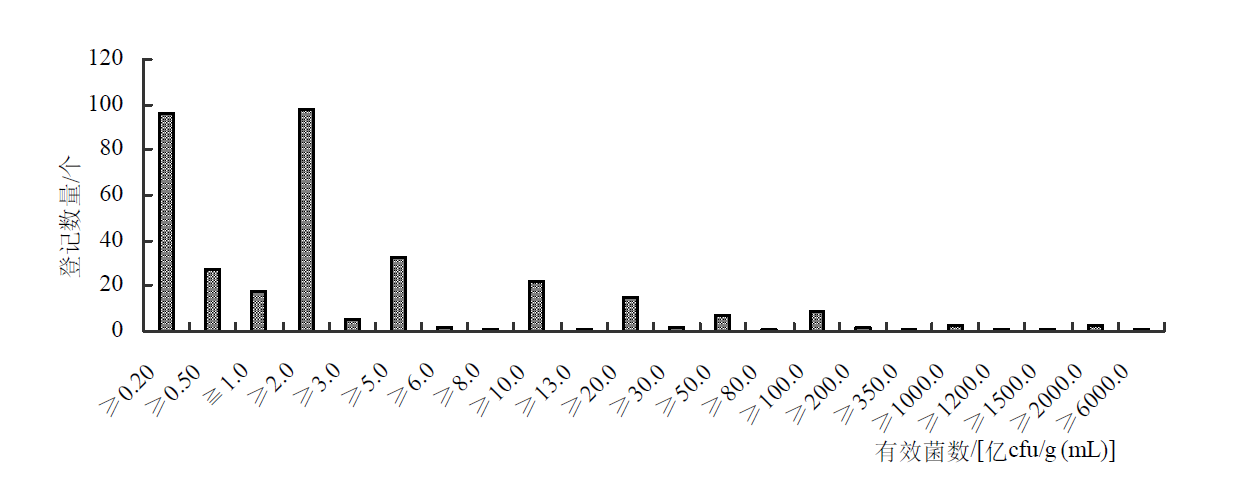
| 有效活菌数/(亿/g) | 登记数量/个 | 产品形态 | 有效活菌种及登记量 |
|---|---|---|---|
| ≥200.0 | 2 | 粉剂 | 枯草芽孢杆菌1个,巨大芽孢杆菌1个 |
| ≥350.0 | 1 | 粉剂 | 解淀粉芽孢杆菌 |
| ≥1000.0 | 3 | 粉剂 | 枯草芽孢杆菌2个,解淀粉芽孢杆菌1个 |
| ≥1200.0 | 1 | 粉剂 | 枯草芽孢杆菌 |
| ≥1500.0 | 1 | 粉剂 | 枯草芽孢杆菌 |
| ≥2000.0 | 3 | 粉剂 | 枯草芽孢杆菌1个、地衣芽孢杆菌1个、贝莱斯芽孢杆菌1个 |
| ≥6000.0 | 1 | 粉剂 | 解淀粉芽孢杆菌 |
| 有效活菌数/(亿/g) | 登记数量/个 | 产品形态 | 有效活菌种及登记量 |
|---|---|---|---|
| ≥200.0 | 2 | 粉剂 | 枯草芽孢杆菌1个,巨大芽孢杆菌1个 |
| ≥350.0 | 1 | 粉剂 | 解淀粉芽孢杆菌 |
| ≥1000.0 | 3 | 粉剂 | 枯草芽孢杆菌2个,解淀粉芽孢杆菌1个 |
| ≥1200.0 | 1 | 粉剂 | 枯草芽孢杆菌 |
| ≥1500.0 | 1 | 粉剂 | 枯草芽孢杆菌 |
| ≥2000.0 | 3 | 粉剂 | 枯草芽孢杆菌1个、地衣芽孢杆菌1个、贝莱斯芽孢杆菌1个 |
| ≥6000.0 | 1 | 粉剂 | 解淀粉芽孢杆菌 |
| [1] |
杨小红, 李俊, 沈德龙, 等. NY/T1113-2006,微生物肥料术语[S]. 北京: 中国标准出版社, 2006.
|
| [2] |
仝倩倩, 祝英, 崔得领, 等. 我国微生物肥料发展现状及在蔬菜生产中的应用[J]. 中国土壤与肥料, 2022(4):259-266.
|
| [3] |
刘文志, 田先武, 张亚楠, 等. 土地类芽胞杆菌NK3-4和有机肥对水稻产量及根际微生物的影响[J]. 土壤通报, 2025, 56(1):238-253.
|
| [4] |
甘元炜, 冯小杰, 李永华, 等. 施用微生物肥料对我国玉米产量影响的Meta分析[J]. 植物营养与肥料学报, 2023, 29(12):2247-2257.
|
| [5] |
李可可, 陈腊, 米国华, 等. 微生物肥料在玉米上的应用研究进展[J]. 玉米科学, 2021, 29(3):111-122.
|
| [6] |
撖冬荣, 姚拓, 李海云, 等. 微生物肥料与化肥减量配施对多年生黑麦草生长的影响[J]. 草业学报, 2022, 31(3):136-143.
doi: 10.11686/cyxb2020581 |
| [7] |
王兰梦, 郑立昊, 郎多勇, 等. 微生物肥料及其在中药生态农业中的前景分析[J]. 北方园艺2022(2):141-147.
|
| [8] |
库永丽, 徐国益, 赵骅, 等. 微生物肥料对猕猴桃高龄果园土壤改良和果实品质的影响[J]. 应用生态学报, 2018, 29(8):2532-2540.
|
| [9] |
王觉萱, 李洁, 徐周, 等. 以副地衣芽孢杆菌HS6 强化的有机肥料对盐碱地花生生长和产量的作用[J]. 微生物学报. 2025, 65(12):5590-5604.
|
| [10] |
鲁凯珩, 金杰人, 肖明. 微生物肥料在盐碱土壤中的应用展望[J]. 微生物学通报, 2019, 46(7):1695-1705.
|
| [11] |
沈德龙, 李俊, 姜昕. 我国微生物肥料产业现状及发展方向[J]. 中国农业信息, 2014(18):41-43.
|
| [12] |
张瑞福, 陈玉, 孙新丽, 等. 中国生物肥料与有机肥料研究三十年:回顾与展望[J]. 植物营养与肥料学报, 2024, 30(7):1262-1273.
|
| [13] |
张瑞福, 沈其荣. 微生物肥料新型功能作用机理与根际定殖增强策略[J]. 微生物学杂志, 2024, 44(01):1-11.
|
| [14] |
北京市科学技术委员会, 中关村科技园区管理委员会. 北京市加快合成生物制造产业创新发展行动计划(2024-2026年)[R]. 北京, 2024.
|
| [15] |
翟修彩. 微生物肥料登记现状的初步分析[J]. 浙江农业科学, 2024, 65(9):2214-2218.
doi: 10.16178/j.issn.0528-9017.20230673 |
| [16] |
李华. 农业农村部负责的肥料产品登记管理现状分析[J]. 中国土壤与肥料, 2022(12):213-217.
|
| [17] |
沈德龙, 李俊, 姜昕. 等. GB 20287—2006,农用微生物菌剂[S]. 北京: 中国标准出版社, 2006.
|
| [18] |
申望平, 沈德龙, 李俊. 等. NY 884—2012,生物有机肥[S]. 北京: 中国标准出版社, 2012.
|
| [19] |
孟庆伟, 白启云, 张少骅. 等. NY/T 798—2015,复合微生物肥料[S]. 北京: 中国标准出版社, 2015.
|
| [20] |
李俊, 姜昕, 马鸣超. 新形势下微生物肥料产业运行状况及发展方向[J]. 植物营养与肥料学报, 2020, 26(12):2108-2114.
|
| [21] |
周璇, 沈欣, 辛景树. 我国微生物肥料行业发展状况[J]. 中国土壤与肥料, 2020(6):293-298.
|
| [22] |
陈晓燕. 微生物肥料有效活菌登记现状[J]. 浙江农业科学, 2023, 64(6):1412-1416.
doi: 10.16178/j.issn.0528-9017.20221133 |
| [23] |
沈德龙, 李俊, 葛诚, 等. NY 609—2002,有机物料腐熟剂[S]. 北京: 中国标准出版社, 2022.
|
| [24] |
马鸣超, 李俊, 姜昕, 等. NY/T 3083—2017,农用微生物浓缩制剂[S]. 北京: 中国标准出版社, 2017.
|
| [1] | XU Peizhi, LI Haifeng, LI Wenguang, DONG Yun, ZHANG Jiexin, GU Wenjie, LU Yusheng. Technological Innovation and Prospects of Fertilizer Industry in Guangdong Province over Past 20 Years [J]. Chinese Agricultural Science Bulletin, 2026, 42(7): 163-170. |
| [2] | XIAO Ting, NIE Qing, LIU Lei, LI Ting, YANG Meng, QU Mingshan. Effects of Combined Application of Compound Microbial Fertilizer and Chemical Fertilizer on Yield and Quality of Mini Chinese Cabbage [J]. Chinese Agricultural Science Bulletin, 2026, 42(4): 90-96. |
| [3] | YE Weiwei, TAN Xinfeng, HOU Wenhe, WEI Shanqiang, YAN Xiaoxiao, ZHANG Long. Bacillus licheniformis: Fermentation Medium Optimization and Preservation of Its Liquid Preparation [J]. Chinese Agricultural Science Bulletin, 2025, 41(22): 110-116. |
| [4] | SU Ming, LIU Pingtao, HONG Ziqiang, LI Fangou, SUN Yixin, LIU Xiangting, YANG Juan, KANG Jianhong. Effects of Compound Application of Organic Fertilizer and Microbial Fertilizer on Leaves Physiological Characteristics and Yield and Quality of Organic Lycium barbarum in Saline and Alkaline Land [J]. Chinese Agricultural Science Bulletin, 2025, 41(19): 87-94. |
| [5] | LI Yongli, CHEN Lei, ZHOU Zhou, GENG Shubao, QIAO Li, ZHANG Fangmei, CHEN Lijun, WANG Lijuan. Research on Control Effect of Streptomyces costaricanus Strain A-m1 on Wheat Scab [J]. Chinese Agricultural Science Bulletin, 2024, 40(30): 128-134. |
| [6] | LIU Binghua, WU Yujian, LIU Fangchun, DING Yanqin, LIU Xinghong, MA Shengguo, PENG Lin, YU Lianjia, MA Hailin. Effect of Different Organic Wastes as Carrier on Effectiveness of Bacillus megaterium [J]. Chinese Agricultural Science Bulletin, 2024, 40(30): 55-60. |
| [7] | GUO Xinsong, WEI Juhua, SHA Chunyan, GAO Han, SONG Zhi, FAN Zhongqing, YIN Jing, DING Fangjun. Effect of Optimizing Fertilization on Yield and Quality of Potato and Soil Nutrient Supply [J]. Chinese Agricultural Science Bulletin, 2024, 40(2): 84-90. |
| [8] | JIANG Jiao, DONG Shuai, JIA Wenhong, JIN Kaiye, YU Qi, PAN Lin, LI Chan, ZHANG Yang, CUI Guanglu, LU Jinsheng, HA Xuejiao. Study on Storability of Small Fruit Watermelon [J]. Chinese Agricultural Science Bulletin, 2024, 40(19): 47-51. |
| [9] | ZHOU Meng, ZHANG Jiajun, LUO Yang. The Mechanism, Current Status and Prospects of Microbial Fertilizers [J]. Chinese Agricultural Science Bulletin, 2023, 39(33): 68-75. |
| [10] | ZHU Shijun, WANG Lili, JIN Shuquan, WANG Feng, ZHOU Jinbo, LU Xiaohong. The Alleviating Effect of Microbial Fertilizer on Watermelon Continuous Cropping Obstacles [J]. Chinese Agricultural Science Bulletin, 2023, 39(28): 48-53. |
| [11] | YU Jiayue, CHEN Rao, JIA Tianyu. Farmers’ Satisfaction with Professional Cooperatives and Its Influencing Factors: A Survey of Huairou District in Beijing [J]. Chinese Agricultural Science Bulletin, 2022, 38(6): 141-148. |
| [12] | WANG Chunling, YE Caihua, JIANG Jiang. Study on the Prediction Model of the Pollen Initiation Period of Woody Plants in Beijing [J]. Chinese Agricultural Science Bulletin, 2022, 38(28): 89-97. |
| [13] | WANG Zhen, LIN Tuanrong, WANG Wei, WANG Yufeng, LUO Xiaobo, YAO Bin. Double Reduction of Chemical Fertilizer and Pesticide in Potato Production [J]. Chinese Agricultural Science Bulletin, 2022, 38(21): 51-57. |
| [14] | DU Qian, LI Lin, LIU Tienan, LIANG Suyu. Effects of Compound Microbial Fertilizer on Soil Microbial Diversity in Saline Soil [J]. Chinese Agricultural Science Bulletin, 2022, 38(2): 38-43. |
| [15] | Guo Meirong, Li Jin. Practice and Exploration of the Digital Village—An Example of Beijing [J]. Chinese Agricultural Science Bulletin, 2021, 37(8): 159-164. |
| Viewed | ||||||
|
Full text |
|
|||||
|
Abstract |
|
|||||
