欢迎访问《中国农学通报》,

中国农学通报 ›› 2025, Vol. 41 ›› Issue (34): 63-73.doi: 10.11924/j.issn.1000-6850.casb2025-0436
龙丽冰1( ), 梁伟1, 余果1, 覃政豪2, 黄荣韶1, 姚绍嫦1()
收稿日期:2025-06-06
修回日期:2025-09-25
出版日期:2025-12-04
发布日期:2025-12-04
通讯作者:
作者简介:龙丽冰,女,2001年出生,广西陆川人,在读研究生,研究方向为中药(壮瑶药)资源开发。通信地址:530200 广西壮族自治区南宁市青秀区仙葫经济开发区五合大道13号 广西中医药大学药学院,E-mail:2654269949@qq.com。
基金资助:
LONG Libing1(), LIANG Wei1, YU Guo1, QIN Zhenghao2, HUANG Rongshao1, YAO Shaochang1()
Received:2025-06-06
Revised:2025-09-25
Published:2025-12-04
Online:2025-12-04
摘要:
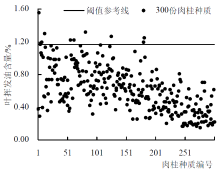
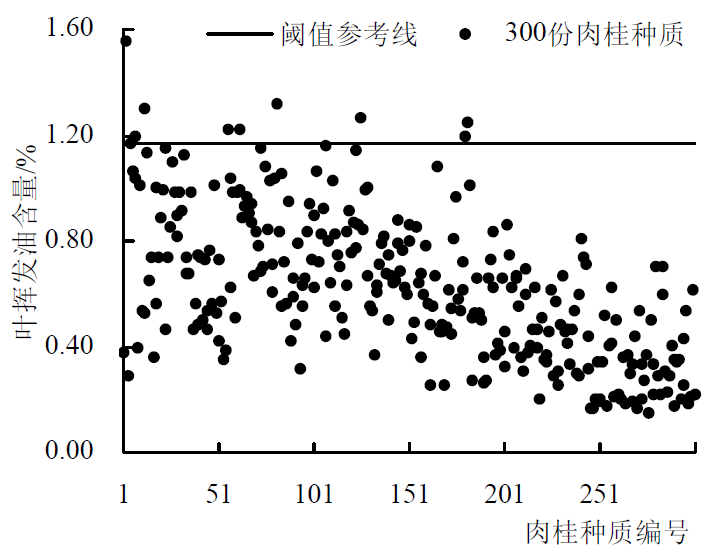
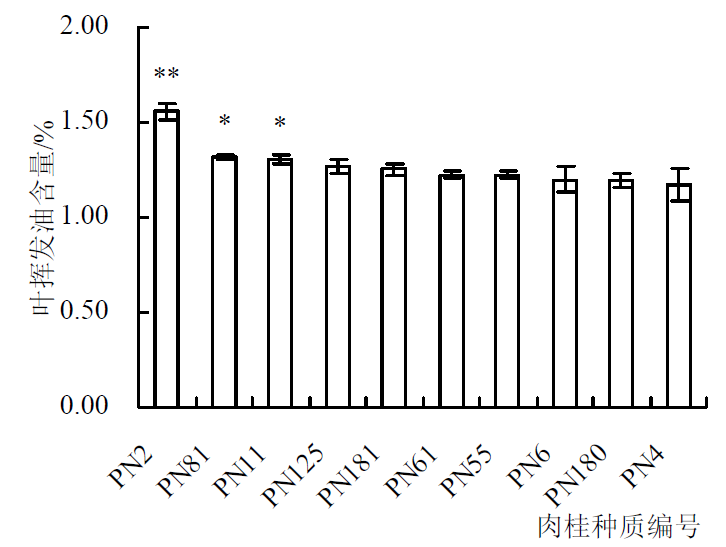
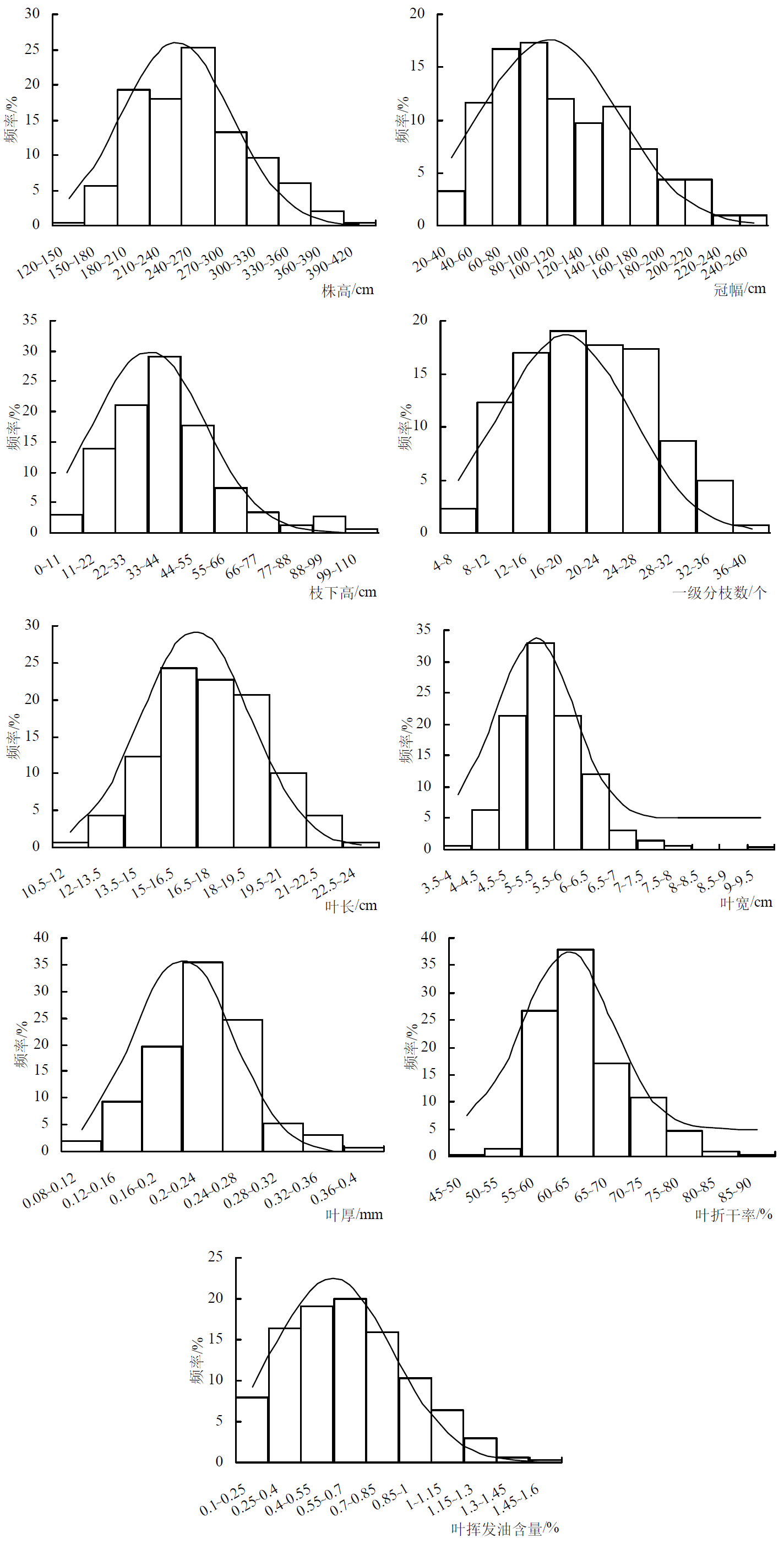
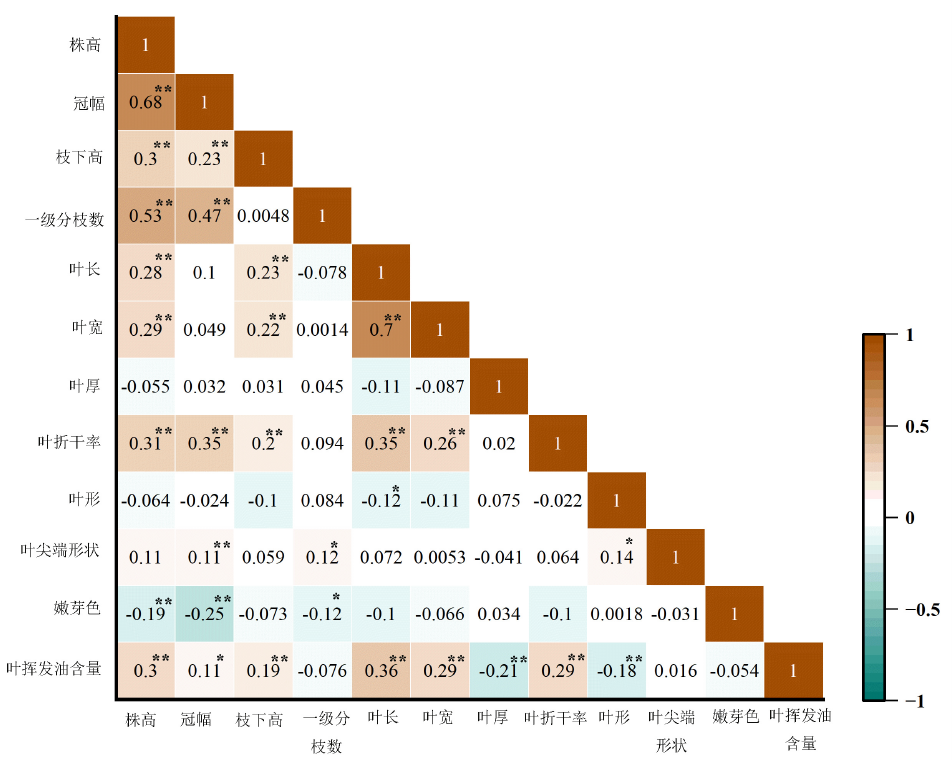
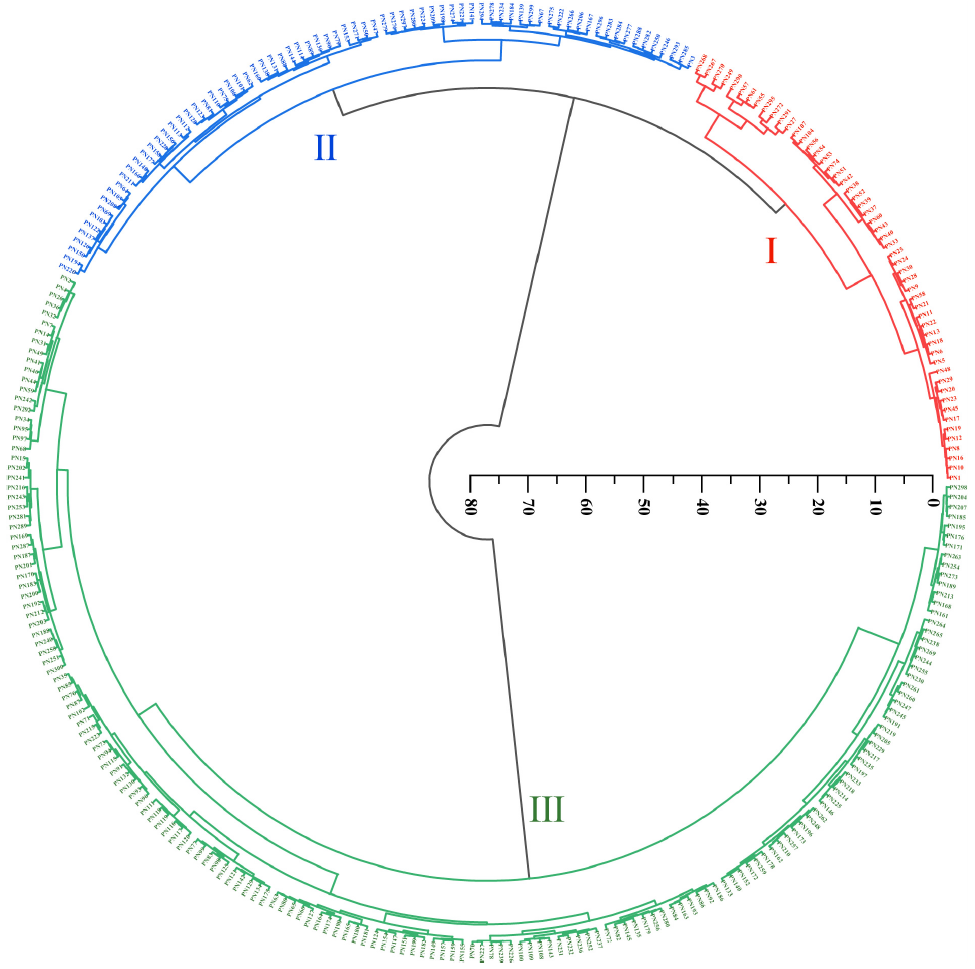
肉桂叶是肉桂挥发油提取的主要原料,但目前生产上缺乏叶用型肉桂的优异种质资源,制约了肉桂产业的高质量发展。为探究肉桂种质资源叶表型性状和挥发油含量的多样性,筛选出高含油量的叶用型种质,以广西主产区300份F1代生长期为3年的实生苗为试验材料,系统测定12个表型性状(9个数量性状、3个质量性状),结合多元统计分析解析表型多样性并筛选优异种质。结果表明:(1)叶挥发油含量变化幅度为0.15%~1.56%,均值0.62%,其中PN2种质含量最高(1.56%)。(2)数量性状遗传多样性显著高于质量性状,9个数量性状的变异系数(CV)为9.54%~48.11%(枝下高CV最高)、多样性指数(H’)为1.968~2.729(叶挥发油含量H’最高),3个质量性状的CV为12.61%~30.88%、H’为0.085~0.678。9个数量性状的遗传多样性指数远高于3个质量性状。(3)相关性分析显示,叶挥发油含量与株高、枝下高、叶长、叶宽、叶折干率呈极显著正相关(P<0.01),与冠幅呈显著正相关(P<0.05),与叶厚呈极显著负相关(P<0.01)。(4)主成分分析提取8个主成分,累计贡献率为86.706%,反映肉桂种质大部分遗传信息,其中株高、冠幅、叶长为核心影响因子。(5)聚类分析将300份肉桂种质分成3类,Ⅰ类群(53份)综合表现最优(平均挥发油含量0.70%、综合得分0.53),经综合考虑评价得分与叶挥发油含量,从中筛选出PN5、PN11、PN18、PN20等9份种质(挥发油含量0.885%~1.305%,综合得分0.563~0.691)。本研究为肉桂叶用型品种选育提供了优质种质与理论支撑。
龙丽冰, 梁伟, 余果, 覃政豪, 黄荣韶, 姚绍嫦. 广西肉桂叶表型多样性分析及优异种质筛选[J]. 中国农学通报, 2025, 41(34): 63-73.
LONG Libing, LIANG Wei, YU Guo, QIN Zhenghao, HUANG Rongshao, YAO Shaochang. Phenotypic Diversity Analysis of Guangxi Cinnamomum cassia Leaves and Screening for Excellent Germplasm[J]. Chinese Agricultural Science Bulletin, 2025, 41(34): 63-73.
| 性状 | 数量性状测量标准及质量性状赋值标准 | |
|---|---|---|
| 株型数量性状 | 株高 | 植株根茎部到主茎顶部之间的距离 |
| 冠幅 | 树冠南北和东西方向宽度平均值 | |
| 枝下高 | 树干上第1个一级主枝以下的高度 | |
| 一级分枝数 | 主茎上的分支数 | |
| 叶数量性状 | 叶长 | 叶尖到叶柄前的距离 |
| 叶宽 | 叶最宽处的宽度 | |
| 叶厚 | 叶片中部的厚度,不包含叶脉 | |
| 叶折干率 | 叶干重与叶鲜重的比值;每株取10片生长状况良好的叶子称量其鲜重,取平均值作为单叶鲜重;阴干10 d后称量干重 | |
| 叶挥发油含量 | 精油体积与样品的重量的比值 | |
| 叶质量性状 | 叶形 | 椭圆形=1,长椭圆形=2 |
| 叶尖端形状 | 短渐尖=1,渐尖=2 | |
| 嫩芽色 | 白色=1,红色=2 | |
| 性状 | 数量性状测量标准及质量性状赋值标准 | |
|---|---|---|
| 株型数量性状 | 株高 | 植株根茎部到主茎顶部之间的距离 |
| 冠幅 | 树冠南北和东西方向宽度平均值 | |
| 枝下高 | 树干上第1个一级主枝以下的高度 | |
| 一级分枝数 | 主茎上的分支数 | |
| 叶数量性状 | 叶长 | 叶尖到叶柄前的距离 |
| 叶宽 | 叶最宽处的宽度 | |
| 叶厚 | 叶片中部的厚度,不包含叶脉 | |
| 叶折干率 | 叶干重与叶鲜重的比值;每株取10片生长状况良好的叶子称量其鲜重,取平均值作为单叶鲜重;阴干10 d后称量干重 | |
| 叶挥发油含量 | 精油体积与样品的重量的比值 | |
| 叶质量性状 | 叶形 | 椭圆形=1,长椭圆形=2 |
| 叶尖端形状 | 短渐尖=1,渐尖=2 | |
| 嫩芽色 | 白色=1,红色=2 | |

| 性状 | 株型数量性状 | 叶数量性状 | 叶质量性状 | |||||||||
|---|---|---|---|---|---|---|---|---|---|---|---|---|
| 株高/ cm | 冠幅/ cm | 枝下高/ cm | 一级分枝数/ 个 | 叶长/ cm | 叶宽/ cm | 叶厚/ mm | 叶折干率/ % | 叶挥发油含量/ % | 叶形 | 叶尖端形状 | 嫩芽色 | |
| 最大值 | 407.00 | 254.50 | 100.0 | 38.00 | 22.78 | 9.01 | 0.39 | 85.40 | 1.56 | |||
| 最小值 | 146.00 | 25.50 | 0.00 | 5.00 | 11.39 | 3.95 | 0.10 | 49.96 | 0.15 | |||
| 中位数 | 248.00 | 100.00 | 36.00 | 19.00 | 17.11 | 5.36 | 0.23 | 62.45 | 0.60 | |||
| 平均值 | 250.42 | 111.05 | 38.62 | 19.63 | 17.17 | 5.41 | 0.22 | 63.84 | 0.62 | |||
| 标准差 | 50.95 | 50.1 | 18.58 | 7.11 | 2.24 | 0.69 | 0.05 | 6.09 | 0.28 | |||
| 频率 | 1 | 98.33 | 97.33 | 41.33 | ||||||||
| 2 | 1.67 | 2.67 | 58.67 | |||||||||
| 变异系数/% | 20.35 | 45.12 | 48.11 | 36.21 | 13.06 | 12.79 | 21.85 | 9.54 | 44.42 | 12.61 | 15.72 | 30.88 |
| 多样性指数 | 2.041 | 2.009 | 1.975 | 2.065 | 2.081 | 2.022 | 2.064 | 1.968 | 2.729 | 0.085 | 0.123 | 0.678 |
| 性状 | 株型数量性状 | 叶数量性状 | 叶质量性状 | |||||||||
|---|---|---|---|---|---|---|---|---|---|---|---|---|
| 株高/ cm | 冠幅/ cm | 枝下高/ cm | 一级分枝数/ 个 | 叶长/ cm | 叶宽/ cm | 叶厚/ mm | 叶折干率/ % | 叶挥发油含量/ % | 叶形 | 叶尖端形状 | 嫩芽色 | |
| 最大值 | 407.00 | 254.50 | 100.0 | 38.00 | 22.78 | 9.01 | 0.39 | 85.40 | 1.56 | |||
| 最小值 | 146.00 | 25.50 | 0.00 | 5.00 | 11.39 | 3.95 | 0.10 | 49.96 | 0.15 | |||
| 中位数 | 248.00 | 100.00 | 36.00 | 19.00 | 17.11 | 5.36 | 0.23 | 62.45 | 0.60 | |||
| 平均值 | 250.42 | 111.05 | 38.62 | 19.63 | 17.17 | 5.41 | 0.22 | 63.84 | 0.62 | |||
| 标准差 | 50.95 | 50.1 | 18.58 | 7.11 | 2.24 | 0.69 | 0.05 | 6.09 | 0.28 | |||
| 频率 | 1 | 98.33 | 97.33 | 41.33 | ||||||||
| 2 | 1.67 | 2.67 | 58.67 | |||||||||
| 变异系数/% | 20.35 | 45.12 | 48.11 | 36.21 | 13.06 | 12.79 | 21.85 | 9.54 | 44.42 | 12.61 | 15.72 | 30.88 |
| 多样性指数 | 2.041 | 2.009 | 1.975 | 2.065 | 2.081 | 2.022 | 2.064 | 1.968 | 2.729 | 0.085 | 0.123 | 0.678 |


| 性状 | PC1 | PC2 | PC3 | PC4 | PC5 | PC6 | PC7 | PC8 |
|---|---|---|---|---|---|---|---|---|
| 株高 | 0.474 | 0.268 | -0.125 | -0.051 | -0.005 | 0.167 | 0.152 | 0.026 |
| 冠幅 | 0.403 | 0.389 | -0.132 | 0.018 | 0.056 | 0.028 | -0.028 | 0.084 |
| 枝下高 | 0.212 | -0.133 | -0.128 | 0.274 | 0.750 | -0.073 | 0.420 | -0.127 |
| 一级分枝数 | 0.238 | 0.506 | 0.000 | -0.042 | -0.244 | 0.258 | 0.129 | -0.077 |
| 叶长 | 0.360 | -0.425 | 0.210 | 0.086 | -0.206 | -0.016 | 0.118 | -0.120 |
| 叶宽 | 0.335 | -0.357 | 0.219 | 0.131 | -0.392 | 0.093 | 0.271 | -0.210 |
| 叶厚 | -0.060 | 0.185 | 0.093 | 0.828 | -0.019 | 0.019 | -0.234 | -0.157 |
| 叶折干率 | 0.334 | -0.101 | 0.154 | 0.224 | 0.026 | -0.131 | -0.519 | 0.487 |
| 叶形 | -0.093 | 0.212 | 0.651 | -0.003 | 0.060 | -0.195 | 0.430 | 0.507 |
| 叶尖端形状 | 0.120 | 0.118 | 0.606 | -0.290 | 0.344 | 0.097 | -0.375 | -0.499 |
| 嫩芽色 | -0.188 | -0.151 | 0.107 | 0.098 | 0.130 | 0.906 | 0.024 | 0.236 |
| 叶挥发油含量 | 0.310 | -0.263 | -0.153 | -0.256 | 0.201 | 0.074 | -0.208 | 0.295 |
| 特征值 | 2.873 | 1.880 | 1.130 | 1.064 | 0.955 | 0.925 | 0.796 | 0.782 |
| 贡献率/% | 23.945 | 15.667 | 9.414 | 8.868 | 7.961 | 7.706 | 6.632 | 6.513 |
| 累计贡献率/% | 23.945 | 39.612 | 49.026 | 57.894 | 65.855 | 73.561 | 80.193 | 86.706 |
| 性状 | PC1 | PC2 | PC3 | PC4 | PC5 | PC6 | PC7 | PC8 |
|---|---|---|---|---|---|---|---|---|
| 株高 | 0.474 | 0.268 | -0.125 | -0.051 | -0.005 | 0.167 | 0.152 | 0.026 |
| 冠幅 | 0.403 | 0.389 | -0.132 | 0.018 | 0.056 | 0.028 | -0.028 | 0.084 |
| 枝下高 | 0.212 | -0.133 | -0.128 | 0.274 | 0.750 | -0.073 | 0.420 | -0.127 |
| 一级分枝数 | 0.238 | 0.506 | 0.000 | -0.042 | -0.244 | 0.258 | 0.129 | -0.077 |
| 叶长 | 0.360 | -0.425 | 0.210 | 0.086 | -0.206 | -0.016 | 0.118 | -0.120 |
| 叶宽 | 0.335 | -0.357 | 0.219 | 0.131 | -0.392 | 0.093 | 0.271 | -0.210 |
| 叶厚 | -0.060 | 0.185 | 0.093 | 0.828 | -0.019 | 0.019 | -0.234 | -0.157 |
| 叶折干率 | 0.334 | -0.101 | 0.154 | 0.224 | 0.026 | -0.131 | -0.519 | 0.487 |
| 叶形 | -0.093 | 0.212 | 0.651 | -0.003 | 0.060 | -0.195 | 0.430 | 0.507 |
| 叶尖端形状 | 0.120 | 0.118 | 0.606 | -0.290 | 0.344 | 0.097 | -0.375 | -0.499 |
| 嫩芽色 | -0.188 | -0.151 | 0.107 | 0.098 | 0.130 | 0.906 | 0.024 | 0.236 |
| 叶挥发油含量 | 0.310 | -0.263 | -0.153 | -0.256 | 0.201 | 0.074 | -0.208 | 0.295 |
| 特征值 | 2.873 | 1.880 | 1.130 | 1.064 | 0.955 | 0.925 | 0.796 | 0.782 |
| 贡献率/% | 23.945 | 15.667 | 9.414 | 8.868 | 7.961 | 7.706 | 6.632 | 6.513 |
| 累计贡献率/% | 23.945 | 39.612 | 49.026 | 57.894 | 65.855 | 73.561 | 80.193 | 86.706 |

| 性状 | 类型 | 类群Ⅰ | 类群Ⅱ | 类群Ⅲ | ||||||
|---|---|---|---|---|---|---|---|---|---|---|
| 平均值 | 变异系数/% | 频率/% | 平均值 | 变异系数/% | 频率/% | 平均值 | 变异系数/% | 频率/% | ||
| 株型数量性状 | 株高 | 301.13 cm | 17.12 | 235.65 cm | 15.68 | 241.23 cm | 19.12 | |||
| 冠幅 | 165.68 cm | 27.63 | 99.05 cm | 39.09 | 99.45 cm | 44.53 | ||||
| 枝下高 | 42.32 cm | 29.22 | 37.36 cm | 52.50 | 38.02 cm | 51.39 | ||||
| 一级分枝数 | 24.74 | 22.74 | 18.21 | 40.92 | 18.68 | 35.67 | ||||
| 叶数量性状 | 叶长 | 17.88 cm | 10.41 | 16.98 cm | 13.24 | 17.03 cm | 13.52 | |||
| 叶宽 | 5.59 cm | 12.85 | 5.35 cm | 11.97 | 5.37 cm | 12.93 | ||||
| 叶厚 | 0.21 mm | 15.35 | 0.22 mm | 21.68 | 0.22 mm | 23.40 | ||||
| 叶折干率 | 69.07% | 9.22 | 61.33% | 7.16 | 63.33% | 8.99 | ||||
| 叶挥发油含量 | 0.70% | 44.61 | 0.58% | 45.40 | 0.61% | 43.05 | ||||
| 叶质量性状 | 叶形 | 1 | 90.57 | 100.00 | 100.00 | |||||
| 2 | 9.43 | 0.00 | 0.00 | |||||||
| 叶尖端形状 | 1 | 84.91 | 100.00 | 100.00 | ||||||
| 2 | 15.09 | 0.00 | 0.00 | |||||||
| 嫩芽色 | 1 | 88.68 | 100.00 | 0.00 | ||||||
| 2 | 11.32 | 0.00 | 100.00 | |||||||
| 综合得分 | 0.53 | 14.59 | 0.34 | 25.61 | 0.41 | 24.02 | ||||
| 性状 | 类型 | 类群Ⅰ | 类群Ⅱ | 类群Ⅲ | ||||||
|---|---|---|---|---|---|---|---|---|---|---|
| 平均值 | 变异系数/% | 频率/% | 平均值 | 变异系数/% | 频率/% | 平均值 | 变异系数/% | 频率/% | ||
| 株型数量性状 | 株高 | 301.13 cm | 17.12 | 235.65 cm | 15.68 | 241.23 cm | 19.12 | |||
| 冠幅 | 165.68 cm | 27.63 | 99.05 cm | 39.09 | 99.45 cm | 44.53 | ||||
| 枝下高 | 42.32 cm | 29.22 | 37.36 cm | 52.50 | 38.02 cm | 51.39 | ||||
| 一级分枝数 | 24.74 | 22.74 | 18.21 | 40.92 | 18.68 | 35.67 | ||||
| 叶数量性状 | 叶长 | 17.88 cm | 10.41 | 16.98 cm | 13.24 | 17.03 cm | 13.52 | |||
| 叶宽 | 5.59 cm | 12.85 | 5.35 cm | 11.97 | 5.37 cm | 12.93 | ||||
| 叶厚 | 0.21 mm | 15.35 | 0.22 mm | 21.68 | 0.22 mm | 23.40 | ||||
| 叶折干率 | 69.07% | 9.22 | 61.33% | 7.16 | 63.33% | 8.99 | ||||
| 叶挥发油含量 | 0.70% | 44.61 | 0.58% | 45.40 | 0.61% | 43.05 | ||||
| 叶质量性状 | 叶形 | 1 | 90.57 | 100.00 | 100.00 | |||||
| 2 | 9.43 | 0.00 | 0.00 | |||||||
| 叶尖端形状 | 1 | 84.91 | 100.00 | 100.00 | ||||||
| 2 | 15.09 | 0.00 | 0.00 | |||||||
| 嫩芽色 | 1 | 88.68 | 100.00 | 0.00 | ||||||
| 2 | 11.32 | 0.00 | 100.00 | |||||||
| 综合得分 | 0.53 | 14.59 | 0.34 | 25.61 | 0.41 | 24.02 | ||||
| 编号 | 综合得分 | 叶挥发油含量/% | 类群 | 排名 |
|---|---|---|---|---|
| PN27 | 0.691 | 0.982 | Ⅰ | 2 |
| PN29 | 0.636 | 0.901 | Ⅰ | 3 |
| PN57 | 0.631 | 1.039 | Ⅰ | 4 |
| PN5 | 0.615 | 1.066 | Ⅰ | 8 |
| PN11 | 0.614 | 1.305 | Ⅰ | 9 |
| PN20 | 0.614 | 0.885 | Ⅰ | 10 |
| PN55 | 0.596 | 1.222 | Ⅰ | 12 |
| PN18 | 0.582 | 1.004 | Ⅰ | 14 |
| PN48 | 0.563 | 1.014 | Ⅰ | 18 |
| 编号 | 综合得分 | 叶挥发油含量/% | 类群 | 排名 |
|---|---|---|---|---|
| PN27 | 0.691 | 0.982 | Ⅰ | 2 |
| PN29 | 0.636 | 0.901 | Ⅰ | 3 |
| PN57 | 0.631 | 1.039 | Ⅰ | 4 |
| PN5 | 0.615 | 1.066 | Ⅰ | 8 |
| PN11 | 0.614 | 1.305 | Ⅰ | 9 |
| PN20 | 0.614 | 0.885 | Ⅰ | 10 |
| PN55 | 0.596 | 1.222 | Ⅰ | 12 |
| PN18 | 0.582 | 1.004 | Ⅰ | 14 |
| PN48 | 0.563 | 1.014 | Ⅰ | 18 |
| [1] |
国家药典委员会. 中华人民共和国药典(一部)[M]. 北京: 中国医药科技出版社,2020:191.
|
| [2] |
梁晓静, 安家成, 黎贵卿, 等. 肉桂特色资源加工利用产业发展现状[J]. 生物质化学工程, 2020, 54(6):18-24.
doi: 10.3969/j.issn.1673-5854.2020.06.004 |
| [3] |
黄国林. 广西防城港市肉桂产业发展现状及对策研究[D]. 南宁: 广西大学, 2022.
|
| [4] |
张笮晦, 童永清, 黄广智, 等. 肉桂叶化学成分及药理作用研究进展[J]. 广州化工, 2019, 47(1):20-22.
|
| [5] |
张亚伦, 朱研洁, 代向阳, 等. 肉桂叶化学成分研究[J]. 天然产物研究与开发, 2024, 36(7):1142-1148.
|
| [6] |
李国良, 刘香萍. 肉桂叶精油/β-环糊精微胶囊的制备及缓释特性[J]. 林产化学与工业, 2021, 41(4):35-41.
|
| [7] |
楚超. 天然香辛料,增香又保健[N]. 保健时报,2025-02-06(008).
|
| [8] |
彭世异, 韦平让, 李荣. 贵港市肉桂产业发展现状及对策[J]. 南方农业, 2023, 17(20):180-182.
|
| [9] |
|
| [10] |
刘进, 勒思, 周慧颖, 等. 江西省水稻地方品种资源的收集与鉴定评价[J]. 植物遗传资源学报, 2023, 24(5):1267-1276.
|
| [11] |
李淑芳, 李鹤南, 刘晓冬, 等. 205份玉米种质资源表型性状遗传多样性分析及优异种质筛选[J]. 玉米科学, 2023, 31(5):1-10.
|
| [12] |
孟珊, 徐婷婷, 朱小品, 等. 江苏大豆地方种质资源表型多样性分析[J]. 植物遗传资源学报, 2023, 24(2):419-436.
|
| [13] |
孙东雷, 卞能飞, 陈志德, 等. 花生种质资源表型性状的综合评价及指标筛选[J]. 植物遗传资源学报, 2018, 19(5):865-874.
doi: 10.13430/j.cnki.jpgr.20180105001 |
| [14] |
田胜平, 汪阳东, 陈益存, 等. 山苍子天然种群叶片和种实性状的表型多样性[J]. 生态学杂志, 2012, 31(7):1665-1672.
|
| [15] |
齐季. 山胡椒果实生长发育规律及遗传多样性分析[D]. 北京: 北京林业大学, 2015.
|
| [16] |
王婧. 黄樟种源及家系的早期选择与遗传多样性研究[D]. 广州: 华南农业大学, 2018.
|
| [17] |
梁晓静, 李开祥, 梁文汇, 等. 不同品种肉桂叶表型性状分析[J]. 广西林业科学, 2016, 45(1):40-44.
|
| [18] |
梁文汇, 刘凯, 黄开顺, 等. 肉桂家系遗传背景的ISSR分析[J]. 广西林业科学, 2016, 45(1):35-39.
|
| [19] |
张笮晦, 钱信怡, 黄广智, 等. 不同生长环境和生长年限肉桂的出油率、挥发油成分及抑菌活性研究[J]. 中草药, 2019, 50(12):2990-2996.
|
| [20] |
张凡, 刘国涛, 杨春玲. 620份小麦种质资源农艺性状调查及其遗传多样性分析[J]. 山东农业科学, 2022, 54(3):15-21.
|
| [21] |
李清超, 陈小翠, 刘朝峰, 等. 辣椒种质资源表型性状多样性分析及综合评价[J]. 江苏农业科学, 2024, 52(14):141-148.
|
| [22] |
姚肖, 鲁黎明, 李依婷, 等. 不同类型烟草种质资源重要农艺及品质性状遗传多样性分析[J]. 中国烟草科学, 2024, 45(3):12-18.
|
| [23] |
路子峰, 苏峻冬, 徐麟, 等. 110份鹰嘴豆种质品质性状遗传多样性分析与综合评价[J]. 西北农业学报, 2024, 33(6):1041-1048.
|
| [24] |
徐泽俊, 齐玉军, 邢兴华, 等. 黄淮海大豆种质农艺与品质性状分析及综合评价[J]. 植物遗传资源学报, 2022, 23(2):468-480.
doi: 10.13430/j.cnki.jpgr.20210915001 |
| [25] |
施桂萍, 王佳恩, 马莉, 等. 药材品质与药用植物表型性状间相关性研究进展[J]. 中药材, 2024(7):1853-1861.
|
| [26] |
|
| [27] |
李艳, 马庆州, 姬东华, 等. 68份甜樱桃种质资源表型性状多样性分析及评价[J]. 陕西农业科学, 2024, 70(10):62-67.
|
| [28] |
doi: 10.1186/s12870-024-05373-1 pmid: 39244564 |
| [29] |
doi: 10.1038/s41598-021-03775-x |
| [30] |
苏万龙, 赵爱玲, 王永康, 等. 枣果实质地性状多样性分析[J]. 植物遗传资源学报, 2024, 25(11):1830-1850.
|
| [31] |
罗小婷, 刘行发, 蔡长福, 等. 福建武平朱砂根种质资源表型性状遗传多样性分析[J]. 植物遗传资源学报, 2025, 26(2):296-308.
|
| [32] |
宋全昊, 金艳, 宋佳静, 等. 35份人工合成六倍体小麦的综合评价[J]. 作物杂志, 2022(4):69-76.
|
| [33] |
张映萍, 吉训志, 余少洪, 等. 云南怒江州不同地区草果种质资源农艺表型性状的遗传多样性分析[J]. 热带作物学报, 2024, 45(6):1157-1166.
doi: 10.3969/j.issn.1000-2561.2024.06.007 |
| [34] |
胡标林, 万勇, 李霞, 等. 水稻核心种质表型性状遗传多样性分析及综合评价[J]. 作物学报, 2012, 38(5):829-839.
|
| [35] |
董胜君, 孙永强, 陈建华, 等. 野杏无性系表型性状多样性分析及综合评价[J]. 植物遗传资源学报, 2020, 21(5):1156-1166.
doi: 10.13430/j.cnki.jpgr.20200305001 |
| [36] |
郜战宁, 杨永乾, 王树杰, 等. 143份大麦种质资源的综合评价[J]. 作物杂志, 2023(5):59-65.
|
| [37] |
侯献飞, 张云, 刘雨馨, 等. 基于主要农艺性状的686份红花种质资源遗传多样性分析[J]. 植物遗传资源学报, 2024, 25(9):1468-1479.
|
| [1] | 张小红, 鄢铮, 魏广彪. 不同品系甘薯对外源有机硒富集能力比较[J]. 中国农学通报, 2025, 41(8): 31-38. |
| [2] | 赵芳, 高运青, 高韶斌, 郑丽珍, 李姝彤, 尚启兵, 徐东旭, 关翔宇. 河北省绿豆种质资源主要农艺性状、经济性状遗传多样性分析及综合评价[J]. 中国农学通报, 2025, 41(5): 23-29. |
| [3] | 李静, 李海霞, 李正华, 郭成博, 王艳敏, 孙培琳, 白卉. 丁香种质资源表型性状遗传多样性分析[J]. 中国农学通报, 2025, 41(4): 74-83. |
| [4] | 李婷, 彭楚雲, 马道承, 甘雯, 杨梅, 龙敏. 7种樟科植物生长、生理与养分积累的特性[J]. 中国农学通报, 2025, 41(34): 30-38. |
| [5] | 赵晶, 吐汗姑丽·托合提, 徐麟, 高强, 郑立鹏, 张龑, 骆友鹏, 严青青, 汤丽斯, 祖力克艳·麻那甫, 阿依加马力·克然木, 杨玉双, 王伟平. 新疆橡胶草农艺性状与橡胶产量的主成分和聚类分析[J]. 中国农学通报, 2025, 41(33): 51-58. |
| [6] | 郑歆然, 吴青松, 刘星雨, 刘淑霞, 肖宇, 关向军, 张鹏举, 王菁菁, 胡明, 常远, 王晓飞. 不同地理种源蒙古黄芪叶片解剖结构特征及其环境适应性[J]. 中国农学通报, 2025, 41(32): 36-45. |
| [7] | 孙丽娜, 赵星财, 杨胜涛, 刘媛媛, 韩鎏. 黑龙江省耕地低碳利用绩效评价研究[J]. 中国农学通报, 2025, 41(32): 74-81. |
| [8] | 高芮, 武琼, 李云溪, 陈木兰, 崔祎娢, 查养良. 关中地区气象条件对甜樱桃品质影响的综合模糊评价及分析[J]. 中国农学通报, 2025, 41(32): 88-94. |
| [9] | 张炳辉, 孙世豪, 贾凯, 王以慧, 郑朝元, 李文卿. 跨半球尺度背景下的多因素变量对烟草烟叶全组分致香物质成分变化的研究[J]. 中国农学通报, 2025, 41(30): 137-146. |
| [10] | 王曼曼, 冯路路, 张惠敏, 闫洪朗, 王康. 抗枯萎病甜瓜嫁接砧木筛选及综合评价[J]. 中国农学通报, 2025, 41(30): 60-69. |
| [11] | 何柳, 原小燕, 张玉松, 刘丽晶, 钟丽琼, 赵凯琴, 张立帆, 何晓莹, 符明联. 花生蔗糖含量与气象因素和品质性状的相关性分析[J]. 中国农学通报, 2025, 41(3): 18-24. |
| [12] | 罗静, 杜珊珊, 孙绘健, 姚青青, 何忠盛, 王东力. 陆地棉种质资源种子萌发期耐盐性综合评价[J]. 中国农学通报, 2025, 41(3): 25-35. |
| [13] | 唐桂梅, 黄国林, 赵凡, 刘洋, 张力, 李卫东, 肖晓玲. 药茶用菊花扦插效果的量化评价[J]. 中国农学通报, 2025, 41(3): 42-47. |
| [14] | 任金萍, 白新明, 白小东, 陈燕玲, 冯文霞, 张继梅. 陇东关山区域独活质量评价及成分测定[J]. 中国农学通报, 2025, 41(29): 122-129. |
| [15] | 张钰婧, 张庆奥, 贺宇欣, 谭霄, 谭博. 模拟深地封闭环境中本氏烟草环境敏感期动态演变与适应性调控规律[J]. 中国农学通报, 2025, 41(27): 135-141. |
| 阅读次数 | ||||||
|
全文 |
|
|||||
|
摘要 |
|
|||||
