欢迎访问《中国农学通报》,

中国农学通报 ›› 2026, Vol. 42 ›› Issue (12): 48-59.doi: 10.11924/j.issn.1000-6850.casb2025-0608
刘嘉雯1( ), 顾沛雯2, 张亮1,3(), 赵智鹏1, 曹凌霄1, 杨琼1
收稿日期:2025-07-21
修回日期:2025-12-11
出版日期:2026-06-25
发布日期:2026-06-23
通讯作者:
作者简介:刘嘉雯,女,2001年出生,陕西西安人,硕士,研究方向:葡萄根际微生物及土壤矿质营养。通信地址:750021 宁夏回族自治区银川市,宁夏大学,E-mail:12024131733@stu.nxu.edu.cn。
基金资助:
LIU Jiawen1(), GU Peiwen2, ZHANG Liang1,3(), ZHAO Zhipeng1, CAO Lingxiao1, YANG Qiong1
Received:2025-07-21
Revised:2025-12-11
Published:2026-06-25
Online:2026-06-23
摘要:
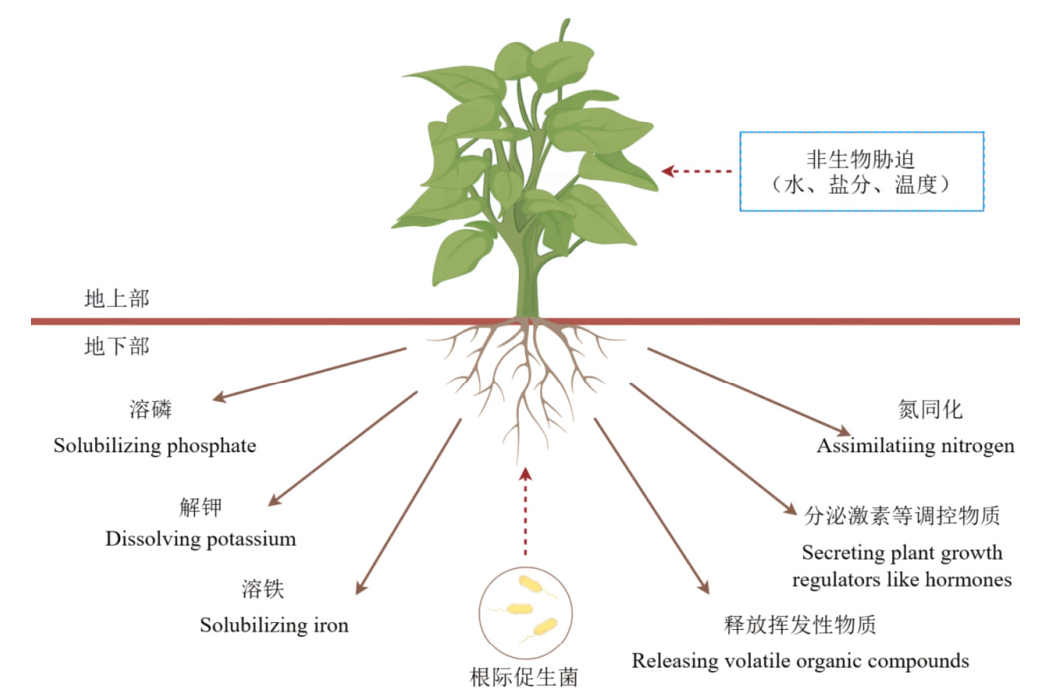
化学肥料过度施用引发土壤退化与生态污染,开发生物绿色替代技术已成为农业可持续发展的迫切需求。植物根际促生菌(PGPR)可通过养分活化、激素调控、信号通讯等途径促进作物生长与抗逆,是生态化栽培的关键生物资源。为系统梳理PGPR 筛选方法、促生机制及研究前沿,支撑宁夏贺兰山东麓产区酿酒葡萄绿色生产需求,本文综述了传统单菌筛选与合成菌群构建策略,总结了PGPR调控根系发育、活化土壤养分、介导激素网络、释放挥发性物质(VOCs)等四大核心促生途径,阐述了转录组学在解析互作分子机制中的应用进展。研究表明,PGPR可通过多重促生途径使作物产量提升14.96%~56.67%,并显著增强抗旱、耐盐、抗病能力;合成菌群能克服单菌定殖不稳、功能单一等短板,表现出更稳定的促生防效。且已鉴定出一批优良菌株及关键功能基因。本文指出,当前研究存在PGPR田间定殖稳定性差、分子互作机制不明确等问题,提出未来需结合多组学技术优化菌群配方、强化田间验证,推动PGPR在精准生态化农业中的可持续应用。
中图分类号:
刘嘉雯, 顾沛雯, 张亮, 赵智鹏, 曹凌霄, 杨琼. 根际促生菌筛选及促生机制研究进展[J]. 中国农学通报, 2026, 42(12): 48-59.
LIU Jiawen, GU Peiwen, ZHANG Liang, ZHAO Zhipeng, CAO Lingxiao, YANG Qiong. Screening of Plant Growth-promoting Rhizobacteria and Research Progress on Growth-Promoting Mechanisms[J]. Chinese Agricultural Science Bulletin, 2026, 42(12): 48-59.
| PGPR名称 | 来源 | 研究植物 | 促生结果 | 参考文献 |
|---|---|---|---|---|
| 贝莱斯芽孢杆菌 SQR9 | 中国某地区黄瓜 根际土壤 | 拟南芥、 水稻、 玉米、 黄瓜 | 与拟南芥共培养8 d,植株总氮含量约增2~3倍,根部氮浓度提升18%。处理6 d后,拟南芥总侧根原基数量增加33%。和水稻共培养两周,地上部氮浓度增加57%,根部及地上部干物质含量均显著上升。在与拟南芥共培养实验中,根系对低浓度硝酸盐吸收速率提升效果最为突出,0.5 mmol/L磷酸盐浓度下吸收速率增加9倍 | [ |
| Sinomonas gamaensis NEAU- HV1 | 中国黑龙江省哈尔滨市 某棉花田土壤 | 生菜、小麦、玉米、花生、拟南芥 | 该菌株可显著促进生菜、小麦、玉米、花生生长,增加茎长、根长及生物量, 以109 CFU/mL浓度处理花生,果实成熟期株高、茎粗和SPAD值分别 较对照增加56.4%、9.6%和12.3% | [ |
| XKG001 | 中国某地区桉树人工林 根际土壤 | 玉米、桉树 | 该菌株促生潜力显著,溶解无机磷能力为172.65 mg/L,且具备产淀粉水解酶、蛋白酶和过氧化氢酶的能力。其菌液可以显著促进玉米种子的萌芽,菌液及菌肥施用于桉树幼苗上后可有效促进植株生长 | [ |
| F05-44 | 中国某地区人参 根际土壤 | 人参 | 不施肥条件下,该菌株能使人参株高和根长分别提高38.53%、24.65%, 展叶期提前3~4 d | [ |
| 大肠杆菌0208 | 广西亚热带植物 根际土壤 | 番茄、 玉米 | 与对照组相比,番茄盆栽株高、茎粗、根长、地上部鲜重和地下部鲜重分别增加53.51%、14.90%、12.28%、43.12%和48.62%。玉米盆栽株高、茎粗、根长、地上部鲜重和地下部鲜重分别增加21.49%、19.35%、42.98%、19.58%和56.67% | [ |
| 假单胞菌sp. CM11 | 长寿树种板栗 根际土壤 | 拟南芥、 生菜、 番茄 | 接种该菌株后,拟南芥主根生长在24 h后受抑制并逐渐停滞,侧根数量显著增加;植株地上部分生物量增加,叶面积增大,抽薹时间提前1.7 d,株高增加1.6倍,种子数量增加2.5倍,单粒种子重量增加1.3倍。与生菜和番茄后,侧根数量分别增加1.5倍和1.4倍。土壤实验中,生菜地上和地下部分鲜重分别增加8.2倍和2.4倍,番茄地上和地下部分鲜重分别增加2.2倍和1.6倍 | [ |
| 粘质 沙雷氏菌 | 稗草根际土 (盐碱土壤) | 紫花苜蓿 | 在盐碱胁迫下,PGPR促进紫花苜蓿生长,提高植物高度、根系长度、 地上与地下组织鲜干重;改善根系状态、叶绿素水平 | [ |
| 荧光 假单胞菌 | 甘肃省兰州市永登县 设施葡萄栽培试验基地 | 葡萄(欧亚葡萄品种“红地球”) | 轻度水分胁迫下,少量菌肥处理的葡萄产量较充分供水提高56.34%,充分 供水条件下,多量菌肥处理产量较不添加菌肥提高42.48%;可促进果粒 纵横茎生长;提高叶片丙二醛含量,促进叶绿素合成;提升产量 | [ |
| 枯草芽孢杆菌R3、泛菌FJ-1 | 西北农林科技大学大学 五泉综合试验示范站 单层薄膜拱棚内 | 草莓 (‘天仙醉’) | 随着菌肥用量增加,草莓生长、产量和品质指标先升后降,小区产量增加14.96%,多项果实品质指标提升,病情指数降低40.14% | [ |
| 淡紫拟青霉菌(DZ) | 贵阳市乌当区3个典型 样地土壤 | 蕹菜 | PGPR提高了土壤有机质、硝态氮、有效磷、速效钾和pH,对铵态氮无显著影响,总鲜重和叶面积在处理组均显著高于对照组 | [ |
| 嗜热球形 脲芽胞杆菌 | 小兴安岭红松原始林林下土壤、绥化市北林区裕奎县卫星镇烤烟种植四年烟地土壤、绥化市望奎县达牧业牧场牛粪采集土样 | 烟草 (龙江911) | 确定最佳配比为1000 kg牛粪+ 25 kg秸秆+ 7.5 kg菌液+ 2.5 kg水。该配比 可显著改善土壤理化性质,提升孔隙度,并将pH调节至作物适宜范围,增加 土壤水解氮、有效磷、速效钾、有机碳和有机质含量,提高土壤酶活性,改变 土壤细菌群落结构,提高细菌多样性并明确了关键菌属及其作用 | [ |
| PGPR名称 | 来源 | 研究植物 | 促生结果 | 参考文献 |
|---|---|---|---|---|
| 贝莱斯芽孢杆菌 SQR9 | 中国某地区黄瓜 根际土壤 | 拟南芥、 水稻、 玉米、 黄瓜 | 与拟南芥共培养8 d,植株总氮含量约增2~3倍,根部氮浓度提升18%。处理6 d后,拟南芥总侧根原基数量增加33%。和水稻共培养两周,地上部氮浓度增加57%,根部及地上部干物质含量均显著上升。在与拟南芥共培养实验中,根系对低浓度硝酸盐吸收速率提升效果最为突出,0.5 mmol/L磷酸盐浓度下吸收速率增加9倍 | [ |
| Sinomonas gamaensis NEAU- HV1 | 中国黑龙江省哈尔滨市 某棉花田土壤 | 生菜、小麦、玉米、花生、拟南芥 | 该菌株可显著促进生菜、小麦、玉米、花生生长,增加茎长、根长及生物量, 以109 CFU/mL浓度处理花生,果实成熟期株高、茎粗和SPAD值分别 较对照增加56.4%、9.6%和12.3% | [ |
| XKG001 | 中国某地区桉树人工林 根际土壤 | 玉米、桉树 | 该菌株促生潜力显著,溶解无机磷能力为172.65 mg/L,且具备产淀粉水解酶、蛋白酶和过氧化氢酶的能力。其菌液可以显著促进玉米种子的萌芽,菌液及菌肥施用于桉树幼苗上后可有效促进植株生长 | [ |
| F05-44 | 中国某地区人参 根际土壤 | 人参 | 不施肥条件下,该菌株能使人参株高和根长分别提高38.53%、24.65%, 展叶期提前3~4 d | [ |
| 大肠杆菌0208 | 广西亚热带植物 根际土壤 | 番茄、 玉米 | 与对照组相比,番茄盆栽株高、茎粗、根长、地上部鲜重和地下部鲜重分别增加53.51%、14.90%、12.28%、43.12%和48.62%。玉米盆栽株高、茎粗、根长、地上部鲜重和地下部鲜重分别增加21.49%、19.35%、42.98%、19.58%和56.67% | [ |
| 假单胞菌sp. CM11 | 长寿树种板栗 根际土壤 | 拟南芥、 生菜、 番茄 | 接种该菌株后,拟南芥主根生长在24 h后受抑制并逐渐停滞,侧根数量显著增加;植株地上部分生物量增加,叶面积增大,抽薹时间提前1.7 d,株高增加1.6倍,种子数量增加2.5倍,单粒种子重量增加1.3倍。与生菜和番茄后,侧根数量分别增加1.5倍和1.4倍。土壤实验中,生菜地上和地下部分鲜重分别增加8.2倍和2.4倍,番茄地上和地下部分鲜重分别增加2.2倍和1.6倍 | [ |
| 粘质 沙雷氏菌 | 稗草根际土 (盐碱土壤) | 紫花苜蓿 | 在盐碱胁迫下,PGPR促进紫花苜蓿生长,提高植物高度、根系长度、 地上与地下组织鲜干重;改善根系状态、叶绿素水平 | [ |
| 荧光 假单胞菌 | 甘肃省兰州市永登县 设施葡萄栽培试验基地 | 葡萄(欧亚葡萄品种“红地球”) | 轻度水分胁迫下,少量菌肥处理的葡萄产量较充分供水提高56.34%,充分 供水条件下,多量菌肥处理产量较不添加菌肥提高42.48%;可促进果粒 纵横茎生长;提高叶片丙二醛含量,促进叶绿素合成;提升产量 | [ |
| 枯草芽孢杆菌R3、泛菌FJ-1 | 西北农林科技大学大学 五泉综合试验示范站 单层薄膜拱棚内 | 草莓 (‘天仙醉’) | 随着菌肥用量增加,草莓生长、产量和品质指标先升后降,小区产量增加14.96%,多项果实品质指标提升,病情指数降低40.14% | [ |
| 淡紫拟青霉菌(DZ) | 贵阳市乌当区3个典型 样地土壤 | 蕹菜 | PGPR提高了土壤有机质、硝态氮、有效磷、速效钾和pH,对铵态氮无显著影响,总鲜重和叶面积在处理组均显著高于对照组 | [ |
| 嗜热球形 脲芽胞杆菌 | 小兴安岭红松原始林林下土壤、绥化市北林区裕奎县卫星镇烤烟种植四年烟地土壤、绥化市望奎县达牧业牧场牛粪采集土样 | 烟草 (龙江911) | 确定最佳配比为1000 kg牛粪+ 25 kg秸秆+ 7.5 kg菌液+ 2.5 kg水。该配比 可显著改善土壤理化性质,提升孔隙度,并将pH调节至作物适宜范围,增加 土壤水解氮、有效磷、速效钾、有机碳和有机质含量,提高土壤酶活性,改变 土壤细菌群落结构,提高细菌多样性并明确了关键菌属及其作用 | [ |
| [1] |
周益帆, 白寅霜, 岳童, 等. 植物根际促生菌促生特性研究进展[J]. 微生物学通报, 2023, 50(2):644-666.
|
| [2] |
李宇聪. 根际促生菌挥发性物质促进根系发育与氮素吸收的分子机制[D]. 南京: 南京农业大学, 2022:6-7.
|
| [3] |
兰晓君. 六种甘肃乡土草根际促生菌资源筛选、评价及促生机理研究[D]. 兰州: 甘肃农业大学, 2020:1.
|
| [4] |
doi: 10.1080/713610853 URL |
| [5] |
黄涛. 玉米根际促生细菌的筛选及其促生机理初步研究[D]. 沈阳: 沈阳农业大学, 2020:5.
|
| [6] |
姚晨阳. 红芸豆根际土壤促生细菌的筛选及鉴定[D]. 晋中: 山西农业大学, 2020:3-6.
|
| [7] |
何勇, 许淑雅, 胡贤君, 等. 白术中一株植物促生细菌的分离鉴定及培养条件优化[J]. 微生物学通报, 2023, 50(9):3983-3996.
|
| [8] |
郑雪玲. 植物根际促生细菌的分离筛选与应用[D]. 南阳: 南阳师范学院, 2020:2-4.
|
| [9] |
李江, 靳艳玲, 赵海. 根际促生菌对植物生长的影响及其作用机制[J]. 黑龙江农业科学, 2023(10):132-137.
|
| [10] |
|
| [11] |
doi: 10.1111/nph.v245.5 URL |
| [12] |
吴诗唯, 王琼梅, 钟凤仙, 等. 桉树根际溶磷菌的筛选鉴定及应用[J]. 桉树科技, 2024, 41(4):31-39.
|
| [13] |
关雪梅, 刘思雨, 王义, 等. 人参根际PGPR的分离鉴定及其促生效果[J]. 吉林农业大学学报, 2023, 45(6):716-724.
|
| [14] |
王晶, 李波, 黎柳萍, 等. 广西亚热带植物根际促生菌的筛选、鉴定及促生作用研究[J]. 南京农业大学学报, 2024, 47(3):468-476.
|
| [15] |
doi: 10.1111/nph.v235.4 URL |
| [16] |
朱金滔. 根际促生菌Serratia marcescens LJL--11缓解紫花苜蓿盐碱胁迫作用的分子机制研究[D]. 哈尔滨: 哈尔滨师范大学,2020:5.
|
| [17] |
杨昌钰, 张芮, 蔺宝军, 等. 水分胁迫对设施延迟栽培葡萄根际土壤有机氮及土壤酶活性的影响[J]. 干旱区研究, 2021, 38(5):1376-1384.
doi: 10.13866/j.azr.2021.05.19 |
| [18] |
樊黎. 微生物菌肥对草莓的促生效果及对根腐病防治效果研究[D]. 杨凌: 西北农林科技大学,2023:39.
|
| [19] |
张萍萍. 微生物菌肥对土壤及作物的改良效果研究[D]. 厦门: 厦门大学,2022:19-42.
|
| [20] |
张煜. 微生物菌肥对烟草品质及土壤细菌多样性影响的研究[D]. 哈尔滨: 东北林业大学, 2020:58-102.
|
| [21] |
刘文佳, 刘天一, 张俐敏, 等. PGPR微胶囊菌剂研发及其对玉米的促生效果评价[J]. 福建农业学报, 2024, 39(3):266-275.
|
| [22] |
doi: 10.1021/acs.jafc.4c09421 URL |
| [23] |
doi: 10.1186/s13568-022-01502-x |
| [24] |
doi: 10.1038/s41467-024-55289-5 |
| [25] |
丁涛. 水稻根际促生菌的筛选及其促生机制研究[D]. 成都: 四川大学,2021:45-78.
|
| [26] |
doi: 10.1007/s11274-024-04225-2 |
| [27] |
doi: 10.1111/mee3.v13.7 URL |
| [28] |
doi: 10.1038/s41396-021-01125-3 URL |
| [29] |
宋金秋, 刘淑娇, 崔丽红, 等. 根际细菌溶磷、产IAA及其抑菌作用的研究[J]. 基因组学与应用生物学, 2017, 36(11):4722-4728.
|
| [30] |
doi: 10.3389/fmicb.2021.761972 URL |
| [31] |
doi: 10.1071/SR18128 URL |
| [32] |
doi: 10.1128/AEM.02239-08 pmid: 19060168 |
| [33] |
doi: 10.1080/07352680500196108 URL |
| [34] |
康贻军, 程洁, 梅丽娟, 等. 植物根际促生菌的筛选及鉴定[J]. 微生物学报, 2010, 50(7):853-861.
|
| [35] |
doi: 10.1007/s00374-015-0996-1 URL |
| [36] |
doi: 10.1094/MPMI-20-2-0207 URL |
| [37] |
付严松, 李宇聪, 徐志辉. 根际促生菌调控植物根系发育的信号与分子机制研究进展[J]. 生物技术通报, 2020, 36(9):42-48.
doi: 10.13560/j.cnki.biotech.bull.1985.2020-0997 |
| [38] |
doi: 10.1007/s11104-004-5047-x URL |
| [39] |
doi: 10.1016/S0038-0717(99)00113-3 URL |
| [40] |
doi: 10.1139/w01-029 pmid: 11400730 |
| [41] |
doi: 10.4161/psb.3.4.5204 URL |
| [42] |
doi: 10.1111/nph.2014.201.issue-3 URL |
| [43] |
doi: 10.1007/s00374-002-0462-8 URL |
| [44] |
doi: 10.3839/jksabc URL |
| [45] |
doi: 10.1104/pp.112.212597 URL |
| [46] |
doi: 10.1128/aem.45.6.1775-1779.1983 URL |
| [47] |
doi: 10.1139/w99-137 URL |
| [48] |
doi: 10.1007/s00425-005-0106-y URL |
| [49] |
doi: 10.1111/nph.2013.198.issue-2 URL |
| [50] |
荣良燕, 柴强, 姚拓, 等. 复合微生物接种剂替代部分化肥对豌豆间作玉米的促生效应[J]. 草业学报, 2015, 24(2):22-30.
doi: 10.11686/cyxb20150203 |
| [51] |
高晓星, 满百膺, 陈秀蓉, 等. 东祁连山线叶嵩草内生细菌X4的产吲哚乙酸、解磷、抗菌和耐盐特性研究及分子鉴定[J]. 草业学报, 2013, 22(4):137-146.
doi: 10.11686/cyxb20130417 |
| [52] |
doi: 10.1007/s004250000384 URL |
| [53] |
蔡美杰, 张恩慧, 张鑫鑫, 等. 盐胁迫甘蓝DH幼苗添加细胞分裂素效果研究[J]. 东北农业大学学报, 2019, 50(5):19-25,34.
|
| [54] |
|
| [55] |
|
| [56] |
黄先忠, 蒋才富, 廖立力, 等. 赤霉素作用机理的分子基础与调控模式研究进展[J]. 植物学通报, 2006(5):499-510.
|
| [57] |
doi: 10.1016/s1360-1385(00)01790-8 pmid: 11120474 |
| [58] |
|
| [59] |
doi: 10.1016/j.soilbio.2004.08.030 URL |
| [60] |
|
| [61] |
doi: 10.1007/s00709-017-1109-9 URL |
| [62] |
|
| [63] |
doi: 10.1105/tpc.113.114744 URL |
| [64] |
|
| [65] |
doi: 10.1071/CP15110 URL |
| [66] |
doi: 10.1016/j.jbiotec.2014.10.021 URL |
| [67] |
doi: 10.1038/s41467-018-06429-1 |
| [68] |
doi: 10.1104/pp.103.026583 URL |
| [69] |
doi: 10.1126/science.adl4685 pmid: 38513014 |
| [70] |
|
| [71] |
doi: 10.1111/pce.v40.10 URL |
| [72] |
doi: 10.1111/jam.12866 URL |
| [73] |
doi: 10.1128/AEM.01078-07 URL |
| [74] |
doi: 10.1093/femsre/fuu013 pmid: 25725014 |
| [75] |
|
| [76] |
doi: 10.1038/ncomms7279 |
| [77] |
doi: 10.1111/pce.2014.37.issue-4 URL |
| [78] |
|
| [79] |
doi: 10.1590/1678-4685-gmb-2017-0284 URL |
| [80] |
|
| [1] | 夏佳淼, 邓晓霞, 林芮竹, 杜亚彤, 王竞红, 蔺吉祥. 种子休眠与解除休眠的组学技术研究进展[J]. 中国农学通报, 2026, 42(1): 43-59. |
| [2] | 刘海涛, 邓权清, 顾艳, 王继华. 广藿香土传病害及其连作根际微生态研究进展[J]. 中国农学通报, 2026, 42(1): 184-193. |
| [3] | 刘宇, 李新新, 潘兴亮, 王重庆, 张闻, 梁静泊, 李复煌, 刘钧. 基于转录组技术揭示酵母菌提高蛋鸡生产性能的潜在机制[J]. 中国农学通报, 2025, 41(24): 104-110. |
| [4] | 常长越, 颜宏, 卢雨欣, 秦涛, 白亚妮. 植物盐胁迫研究进展[J]. 中国农学通报, 2025, 41(22): 82-88. |
| [5] | 张曼, 黎健龙, 周波, 陈义勇, 农红秋, 崔莹莹, 刘嘉裕, 唐劲驰. 松针提取液对茶树生长和虫害防治的影响机制[J]. 中国农学通报, 2024, 40(25): 103-112. |
| [6] | 梁展图, 全林发, 梁盛曦, 陈炳旭, 马群, 姚琼. 基于CiteSpace的鳞翅目昆虫转录组学研究态势分析[J]. 中国农学通报, 2023, 39(8): 142-148. |
| [7] | 薛守宇, 李涛涛, 李冰冰. 组学技术在葱属植物中的研究进展[J]. 中国农学通报, 2023, 39(34): 22-31. |
| [8] | 季元, 于冰, 陈偲学. 多组学技术在植物应答非生物胁迫中的研究进展[J]. 中国农学通报, 2023, 39(23): 1-7. |
| [9] | 李媛媛, 德力格尔, 刘晶, 石凯. 单细胞转录组在昆虫学研究的应用[J]. 中国农学通报, 2023, 39(17): 79-85. |
| [10] | 华雪铭, 康鹏, 魏翔, 陈晨, 潘韵超, 王潜潜. 饲料维生素K3对大口黑鲈生长和健康的代谢转录调节机制研究[J]. 中国农学通报, 2023, 39(17): 113-123. |
| [11] | 陈柳宏, 赵春雷, 王希, 李彦丽, 丁广洲, 陈丽. 单细胞转录组测序技术及其在植物研究中的应用[J]. 中国农学通报, 2022, 38(3): 87-93. |
| [12] | 陈明月, 姜涛, 赵冬梅, 白莉, 张雪琦, 孟姣. 先进的组学技术在植物抗病研究中的应用[J]. 中国农学通报, 2022, 38(24): 86-91. |
| [13] | 路正禹, 王堽, 李任任, 崔汝菲, 耿贵. 基于组学技术探究甜菜耐盐机理研究进展[J]. 中国农学通报, 2021, 37(15): 92-98. |
| [14] | 耿 贵,吕春华,於丽华,李任任,王宇光. 甜菜组学技术研究进展[J]. 中国农学通报, 2019, 35(12): 124-129. |
| [15] | 廉 洁,张喜春,谷建田. 转录组学及其在蔬菜学上应用研究进展[J]. 中国农学通报, 2015, 31(8): 118-122. |
| 阅读次数 | ||||||
|
全文 |
|
|||||
|
摘要 |
|
|||||
