欢迎访问《中国农学通报》,

中国农学通报 ›› 2026, Vol. 42 ›› Issue (3): 20-27.doi: 10.11924/j.issn.1000-6850.casb2025-0152
崔岭1( ), 蒋晨炀2, 牛世铎2, 周萍1, 郭剑2, 陆大雷2, 李广浩2()
收稿日期:2025-03-04
修回日期:2025-09-11
出版日期:2026-02-15
发布日期:2026-02-09
通讯作者:
作者简介:崔岭,男,1975年出生,江苏建湖人,大专,主要从事粮油作物栽培方面的研究。通信地址:224600 江苏省盐城市响水县双园路24号响水县粮油作物栽培技术指导站,E-mail:781012776@qq.com。
基金资助:
CUI Ling1(), JIANG Chenyang2, NIU Shiduo2, ZHOU Ping1, GUO Jian2, LU Dalei2, LI Guanghao2()
Received:2025-03-04
Revised:2025-09-11
Published:2026-02-15
Online:2026-02-09
摘要:
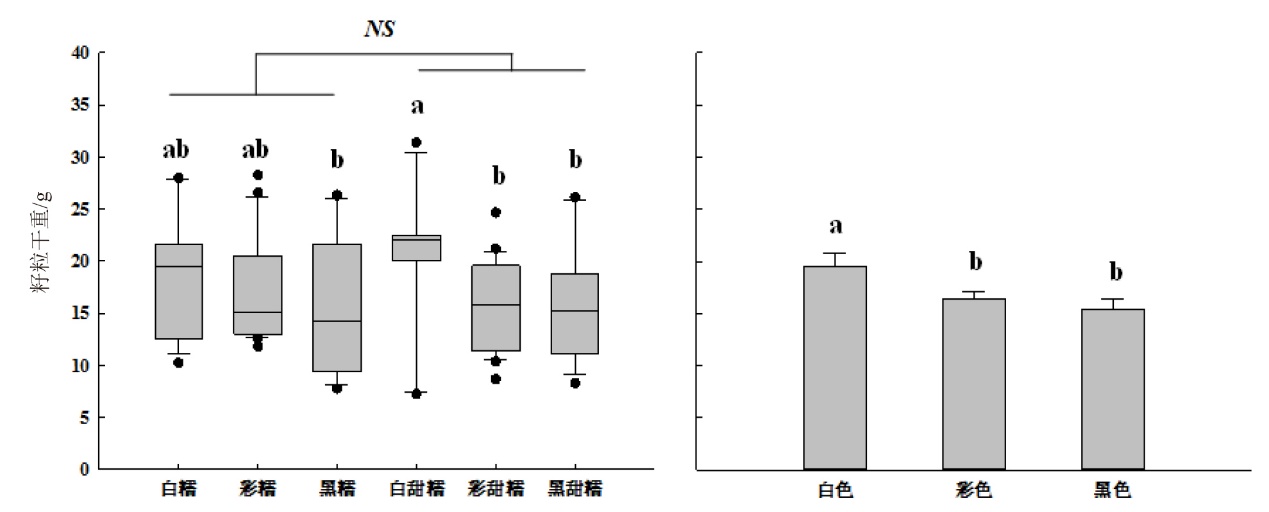
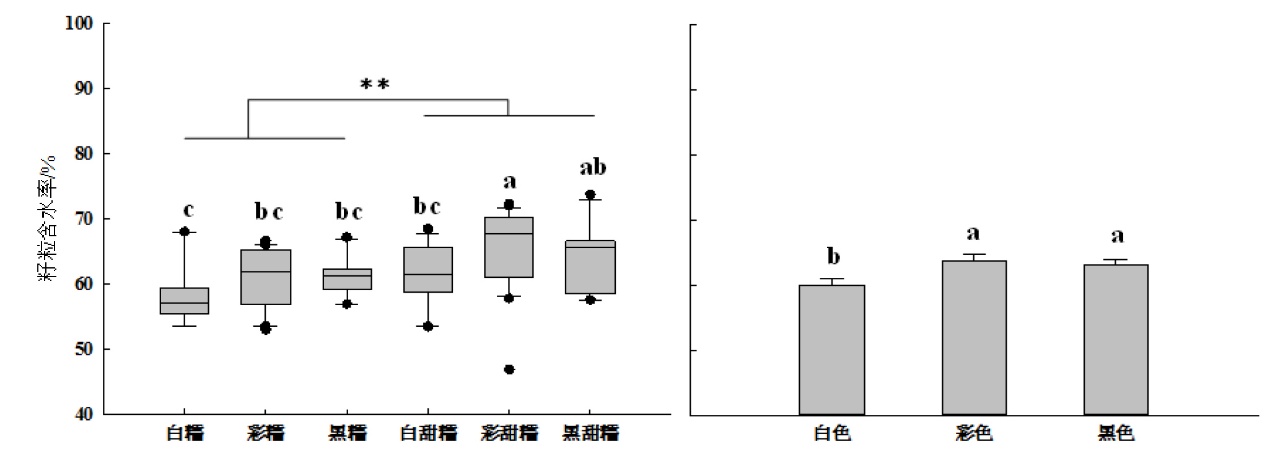
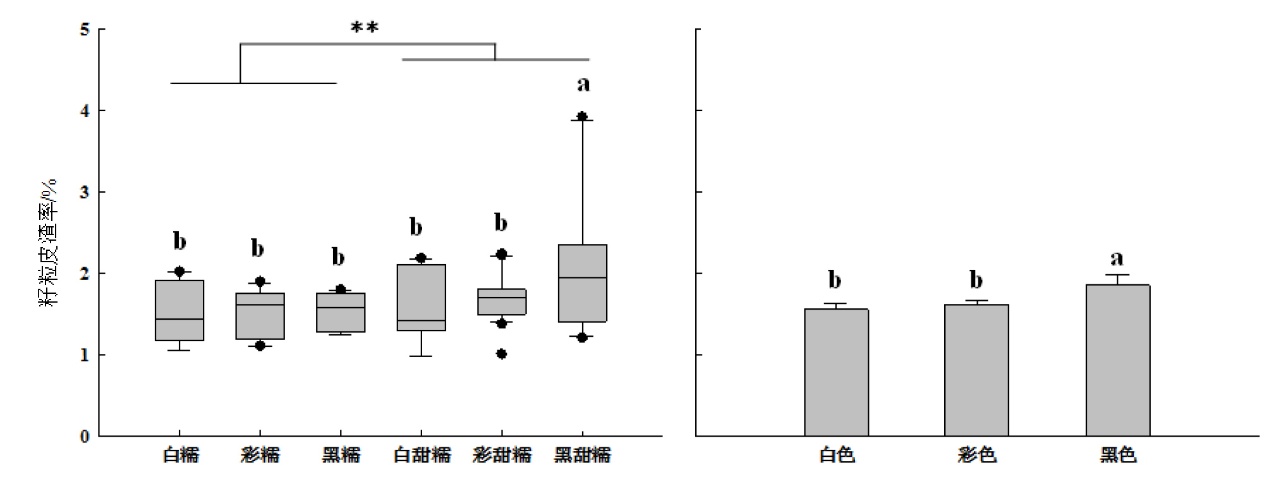
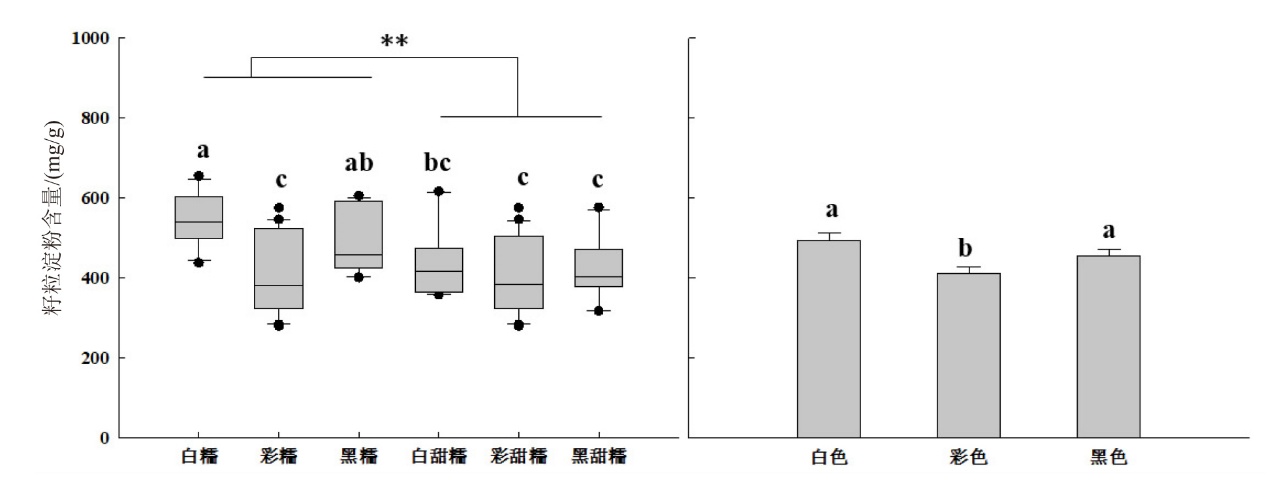
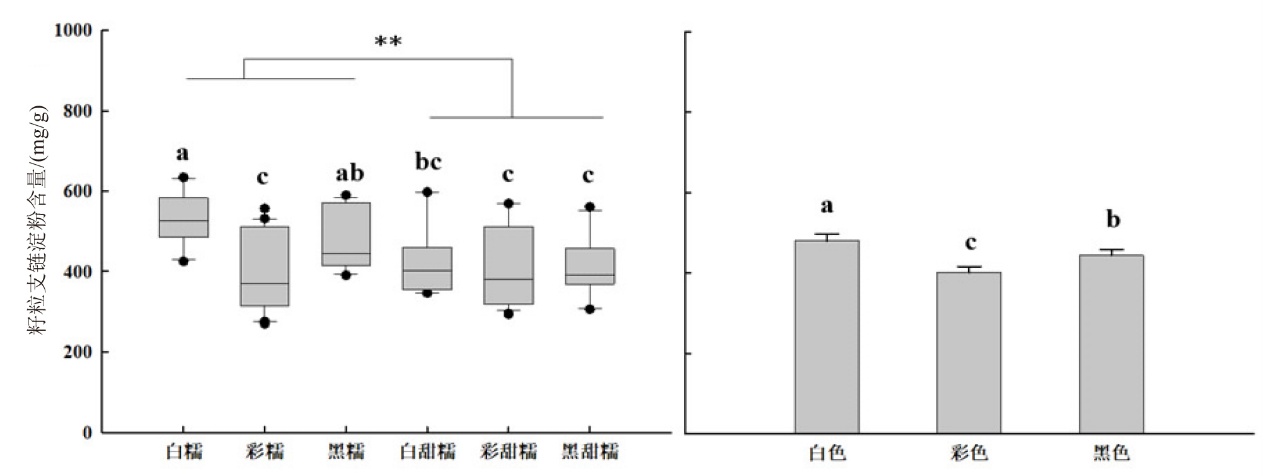
旨在探究不同颜色糯及甜糯类型玉米品质差异,科学指导生产中品种选择。以江苏省区试中6个类型(白糯、白甜糯、彩糯、彩甜糯、黑糯、黑甜糯)36个鲜食玉米品种为材料,测定籽粒干重、含水率、皮渣率、淀粉和支链淀粉含量等品质指标,分析基因型差异。结果显示:(1)型间品质分化显著,白甜糯品种的百粒干重最高(20.5 g),彩甜糯品种的籽粒含水率最高(66.0%),黑甜糯品种皮渣率最高(2.1%)。(2)颜色维度差异明显,白色玉米淀粉和支链淀粉含量最高;黑色玉米品种皮渣率最高(较白色、彩色玉米分别高0.3%、0.2%),彩色玉米淀粉含量最低(较白色、黑色玉米分别低16.6%、9.6%),支链淀粉含量表现为白色玉米>黑色玉米>彩色玉米。(3)甜糯玉米与糯玉米相比,籽粒含水率更高,淀粉及支链淀粉含量更低。其中白糯玉米淀粉含量最优,白甜糯籽粒干重优势突出,彩甜糯含水率表现最佳,黑甜糯皮渣率相对较高。综上,不同类型鲜食玉米品质指标各具特色,生产中可根据不同的市场和消费需求,针对性选用适宜的鲜食玉米品种。
崔岭, 蒋晨炀, 牛世铎, 周萍, 郭剑, 陆大雷, 李广浩. 不同颜色鲜食糯玉米和甜糯玉米的品质差异[J]. 中国农学通报, 2026, 42(3): 20-27.
CUI Ling, JIANG Chenyang, NIU Shiduo, ZHOU Ping, GUO Jian, LU Dalei, LI Guanghao. Quality Difference Analysis of Fresh Waxy and Sweet-waxy Maize with Different Colors[J]. Chinese Agricultural Science Bulletin, 2026, 42(3): 20-27.
| 类型 | 品种名称 |
|---|---|
| 白糯玉米 | 白糯101、华成白糯5号、润扬白糯、皖白糯201、云泽白糯1号 |
| 白甜糯玉米 | 白甜糯21、白甜糯900、白甜糯911、白甜糯玉景、理想白甜糯16 |
| 彩糯玉米 | 理科彩006、彩糯606、水彩糯、天彩糯1号、新美彩糯500、彩珠糯928、金彩58 |
| 彩甜糯玉米 | 追丰彩甜糯101、彩甜糯1916A、彩甜糯510、彩甜糯520、徽彩甜糯1号、徽彩甜糯3号、新美彩甜糯、颐彩甜糯308 |
| 黑糯玉米 | 美玉黑303、闽黑糯1号、尚黑糯1号、浙黑糯702、黑糯178 |
| 黑甜糯玉米 | 润扬黑甜糯、黑甜糯188、黑甜糯5201、黑甜糯7号、黑甜糯904、连黑甜糯2110 |
| 类型 | 品种名称 |
|---|---|
| 白糯玉米 | 白糯101、华成白糯5号、润扬白糯、皖白糯201、云泽白糯1号 |
| 白甜糯玉米 | 白甜糯21、白甜糯900、白甜糯911、白甜糯玉景、理想白甜糯16 |
| 彩糯玉米 | 理科彩006、彩糯606、水彩糯、天彩糯1号、新美彩糯500、彩珠糯928、金彩58 |
| 彩甜糯玉米 | 追丰彩甜糯101、彩甜糯1916A、彩甜糯510、彩甜糯520、徽彩甜糯1号、徽彩甜糯3号、新美彩甜糯、颐彩甜糯308 |
| 黑糯玉米 | 美玉黑303、闽黑糯1号、尚黑糯1号、浙黑糯702、黑糯178 |
| 黑甜糯玉米 | 润扬黑甜糯、黑甜糯188、黑甜糯5201、黑甜糯7号、黑甜糯904、连黑甜糯2110 |
| 品种 | 百粒干重/g | 籽粒含水率/% | 籽粒皮渣率/% | 淀粉含量/(mg/g) | 支链淀粉含量/(mg/g) | ||
|---|---|---|---|---|---|---|---|
| 白糯 | 白糯101 | 20.9 | 57.9 | 1.43 | 639.4 | 623.0 | |
| 华成白糯5号 | 14.1 | 57.5 | 1.20 | 507.6 | 493.8 | ||
| 润扬白糯 | 11.5 | 67.7 | 2.00 | 443.1 | 430.3 | ||
| 皖白糯201 | 19.1 | 55.7 | 1.05 | 597.1 | 580.0 | ||
| 云泽白糯1号 | 27.6 | 54.1 | 1.89 | 540.9 | 526.5 | ||
| 白甜糯 | 白甜糯21 | 10.8 | 59.3 | 1.28 | 327.4 | 319.2 | |
| 白甜糯900 | 18.7 | 72.0 | 1.65 | 549.6 | 532.5 | ||
| 白甜糯911 | 15.7 | 67.7 | 1.80 | 447.3 | 436.4 | ||
| 白甜糯玉景 | 10.7 | 66.8 | 1.59 | 459.7 | 448.0 | ||
| 理想白甜糯16 | 18.1 | 60.2 | 1.29 | 574.7 | 557.8 | ||
| 彩糯 | 理科彩006 | 10.0 | 70.8 | 2.22 | 281.4 | 266.4 | |
| 彩糯606 | 18.6 | 68.8 | 1.71 | 318.9 | 310.5 | ||
| 水彩糯 | 14.8 | 68.7 | 1.43 | 529.8 | 517.0 | ||
| 天彩糯1号 | 22.1 | 58.4 | 1.68 | 381.4 | 374.2 | ||
| 新美彩糯500 | 16.0 | 62.2 | 1.87 | 385.5 | 377.8 | ||
| 彩珠糯928 | 21.4 | 61.3 | 1.30 | 361.1 | 350.3 | ||
| 金彩58 | 8.1 | 67.6 | 2.07 | 414.0 | 402.8 | ||
| 彩甜糯 | 追丰彩甜糯101 | 14.4 | 61.0 | 1.72 | 599.1 | 583.5 | |
| 彩甜糯1916A | 23.3 | 57.2 | 1.79 | 405.0 | 395.1 | ||
| 彩甜糯510 | 8.3 | 62.1 | 1.24 | 437.9 | 426.4 | ||
| 彩甜糯520 | 12.9 | 61.4 | 1.69 | 529.8 | 516.9 | ||
| 徽彩甜糯1号 | 13.6 | 66.3 | 1.89 | 381.4 | 370.2 | ||
| 徽彩甜糯3号 | 14.5 | 61.7 | 1.35 | 385.5 | 377.0 | ||
| 新美彩甜糯 | 26.5 | 53.5 | 1.18 | 327.4 | 320.4 | ||
| 颐彩甜糯308 | 15.6 | 64.1 | 1.75 | 549.6 | 535.0 | ||
| 黑糯 | 美玉黑303 | 29.7 | 53.8 | 1.00 | 612.6 | 596.5 | |
| 闽黑糯1号 | 21.9 | 59.4 | 2.18 | 367.9 | 358.1 | ||
| 尚黑糯1号 | 21.4 | 65.3 | 1.42 | 457.8 | 446.1 | ||
| 浙黑糯702 | 14.2 | 65.5 | 1.62 | 281.4 | 274.5 | ||
| 黑糯178 | 20.7 | 56.8 | 1.11 | 318.9 | 310.6 | ||
| 黑甜糯 | 润扬黑甜糯 | 10.0 | 72.4 | 1.67 | 468.0 | 455.8 | |
| 黑甜糯188 | 10.6 | 66.0 | 1.41 | 400.6 | 391.3 | ||
| 黑甜糯5201 | 25.9 | 58.6 | 2.35 | 566.2 | 552.1 | ||
| 黑甜糯7号 | 16.8 | 66.0 | 1.22 | 317.4 | 308.0 | ||
| 黑甜糯904 | 18.6 | 57.9 | 3.89 | 377.5 | 368.0 | ||
| 连黑甜糯2110 | 12.9 | 66.0 | 2.21 | 405.7 | 394.2 | ||
| 品种 | 百粒干重/g | 籽粒含水率/% | 籽粒皮渣率/% | 淀粉含量/(mg/g) | 支链淀粉含量/(mg/g) | ||
|---|---|---|---|---|---|---|---|
| 白糯 | 白糯101 | 20.9 | 57.9 | 1.43 | 639.4 | 623.0 | |
| 华成白糯5号 | 14.1 | 57.5 | 1.20 | 507.6 | 493.8 | ||
| 润扬白糯 | 11.5 | 67.7 | 2.00 | 443.1 | 430.3 | ||
| 皖白糯201 | 19.1 | 55.7 | 1.05 | 597.1 | 580.0 | ||
| 云泽白糯1号 | 27.6 | 54.1 | 1.89 | 540.9 | 526.5 | ||
| 白甜糯 | 白甜糯21 | 10.8 | 59.3 | 1.28 | 327.4 | 319.2 | |
| 白甜糯900 | 18.7 | 72.0 | 1.65 | 549.6 | 532.5 | ||
| 白甜糯911 | 15.7 | 67.7 | 1.80 | 447.3 | 436.4 | ||
| 白甜糯玉景 | 10.7 | 66.8 | 1.59 | 459.7 | 448.0 | ||
| 理想白甜糯16 | 18.1 | 60.2 | 1.29 | 574.7 | 557.8 | ||
| 彩糯 | 理科彩006 | 10.0 | 70.8 | 2.22 | 281.4 | 266.4 | |
| 彩糯606 | 18.6 | 68.8 | 1.71 | 318.9 | 310.5 | ||
| 水彩糯 | 14.8 | 68.7 | 1.43 | 529.8 | 517.0 | ||
| 天彩糯1号 | 22.1 | 58.4 | 1.68 | 381.4 | 374.2 | ||
| 新美彩糯500 | 16.0 | 62.2 | 1.87 | 385.5 | 377.8 | ||
| 彩珠糯928 | 21.4 | 61.3 | 1.30 | 361.1 | 350.3 | ||
| 金彩58 | 8.1 | 67.6 | 2.07 | 414.0 | 402.8 | ||
| 彩甜糯 | 追丰彩甜糯101 | 14.4 | 61.0 | 1.72 | 599.1 | 583.5 | |
| 彩甜糯1916A | 23.3 | 57.2 | 1.79 | 405.0 | 395.1 | ||
| 彩甜糯510 | 8.3 | 62.1 | 1.24 | 437.9 | 426.4 | ||
| 彩甜糯520 | 12.9 | 61.4 | 1.69 | 529.8 | 516.9 | ||
| 徽彩甜糯1号 | 13.6 | 66.3 | 1.89 | 381.4 | 370.2 | ||
| 徽彩甜糯3号 | 14.5 | 61.7 | 1.35 | 385.5 | 377.0 | ||
| 新美彩甜糯 | 26.5 | 53.5 | 1.18 | 327.4 | 320.4 | ||
| 颐彩甜糯308 | 15.6 | 64.1 | 1.75 | 549.6 | 535.0 | ||
| 黑糯 | 美玉黑303 | 29.7 | 53.8 | 1.00 | 612.6 | 596.5 | |
| 闽黑糯1号 | 21.9 | 59.4 | 2.18 | 367.9 | 358.1 | ||
| 尚黑糯1号 | 21.4 | 65.3 | 1.42 | 457.8 | 446.1 | ||
| 浙黑糯702 | 14.2 | 65.5 | 1.62 | 281.4 | 274.5 | ||
| 黑糯178 | 20.7 | 56.8 | 1.11 | 318.9 | 310.6 | ||
| 黑甜糯 | 润扬黑甜糯 | 10.0 | 72.4 | 1.67 | 468.0 | 455.8 | |
| 黑甜糯188 | 10.6 | 66.0 | 1.41 | 400.6 | 391.3 | ||
| 黑甜糯5201 | 25.9 | 58.6 | 2.35 | 566.2 | 552.1 | ||
| 黑甜糯7号 | 16.8 | 66.0 | 1.22 | 317.4 | 308.0 | ||
| 黑甜糯904 | 18.6 | 57.9 | 3.89 | 377.5 | 368.0 | ||
| 连黑甜糯2110 | 12.9 | 66.0 | 2.21 | 405.7 | 394.2 | ||
| [1] |
李少昆, 赵久然, 董树亭, 等. 中国玉米栽培研究进展与展望[J]. 中国农业科学, 2017, 50(11):1941-1959.
doi: 10.3864/j.issn.0578-1752.2017.11.001 |
| [2] |
黄晓琴. 不同鲜食糯玉米品种主要农艺性状灰色关联度分析[J]. 中国种业, 2023, 335(2):94-99,105.
|
| [3] |
|
| [4] |
刘鹏飞, 王晓明, 王汉宁, 等. 鲜食型糯玉米的香味品质及育种应用的探讨[J]. 玉米科学, 2008, 66(2):44-45,49.
|
| [5] |
|
| [6] |
doi: 10.1111/pbr.v139.3 URL |
| [7] |
doi: 10.3390/agriculture13020342 URL |
| [8] |
|
| [9] |
doi: 10.1038/543322a URL |
| [10] |
doi: 10.1016/S2095-3119(19)62715-2 |
| [11] |
虞旭娟, 兰国防. 江苏省区域试验不同鲜食糯玉米品种农艺性状和鲜穗产量的灰色关联度分析[J]. 农业科技通讯, 2022(10):46-50.
|
| [12] |
张垚, 杨跃华, 孔亮亮, 等. 鲜食型糯玉米果皮厚度和皮渣率的配合力及相关性分析[J]. 河北农业科学, 2018, 22(1):67-70.
|
| [13] |
doi: 10.1007/s11356-018-3571-0 |
| [14] |
doi: 10.3390/foods11172636 URL |
| [15] |
范文广, 陈少青, 周新原, 等. 不同品种鲜食糯玉米采后贮藏品质及抗氧化酶活性的变化[J]. 食品工业科技, 2024, 45(2):307-315.
|
| [16] |
刘萍. 中国鲜食甜、糯玉米品种试验产量与品质评价体系的建设[D]. 扬州: 扬州大学, 2007.
|
| [17] |
张力, 李伟, 桑志勤, 等. 南疆鲜食甜糯玉米麦后复播高产高效栽培技术[J]. 新疆农垦科技, 2022, 45(4):6-8.
|
| [18] |
胡君霞. 有机肥与化肥不同比例配施对鲜食玉米产量和品质的影响[D]. 秦皇岛: 河北科技师范学院, 2022.
|
| [19] |
肖金宝, 杨丽, 梁宇鹏, 等. 收获后贮藏时间对鲜食玉米品质的影响[J]. 玉米科学, 2020, 28(6):71-80.
|
| [20] |
董宗宗, 乔勇进, 刘晨霞, 等. 不同采收期对鲜食糯玉米品质影响的研究[J]. 上海农业学报, 2020, 36(4):19-24.
|
| [21] |
韩晴, 田东, 施标, 等. 优质鲜食甜糯玉米新品种‘沪红糯1号’的选育[J]. 上海农业学报, 2022, 38(3):30-34.
|
| [22] |
刘萍, 陆卫平, 陆大雷. 鲜食糯玉米品质差异及适宜采收指标的研究[J]. 玉米科学, 2009, 17(6):5-8.
|
| [23] |
张凯迪. 鲜食玉米籽粒皮渣率的差异及其与品质和产量的关系[D]. 扬州: 扬州大学, 2008.
|
| [24] |
张书萍, 吴玉群, 常程, 等. 糯玉米产量与品质对密度与采收期的响应研究[J]. 辽宁农业科学, 2022, 327(5):1-6.
|
| [25] |
高伦江, 赵国华, 赵小皖, 等. 采收期对渝糯系列鲜食糯玉米品质的影响研究[J]. 食品工业科技, 2015, 36(8):148-151.
|
| [26] |
马紫微, 李武. 不同播期对华南鲜食糯玉米产量及品质的影响[J]. 广东农业科学, 2023, 50(5):21-29.
|
| [27] |
王义雄, 秦焕荣, 武蓉, 等. 渭南市临渭区夏种鲜食甜糯玉米品种筛选试验初报[J]. 陕西农业科学, 2021, 67(2):62-65.
|
| [28] |
张超, 史红丽, 戴佳锟, 等. 鲜食黑糯玉米新品种陕K8143的选育[J]. 中国种业, 2023, 36(3):106-108.
|
| [29] |
doi: 10.1146/food.2020.11.issue-1 URL |
| [30] |
赵永平, 赵盟, 朱亚, 等. 不同氮素形态配比对鲜食甜糯玉米光合特性和农艺指标的影响[J]. 江西农业学报, 2019, 31(12):38-42.
|
| [31] |
范瑞, 陈永欣, 董立红, 等. 黑果皮糯玉米的营养保健功能及食品开发利用[J]. 农产品加工, 2020, 507(13):66-68,72.
|
| [32] |
doi: 10.1080/00103624.2017.1411513 URL |
| [33] |
王丽冬, 冯一新, 徐建, 等. 13个鲜食甜、糯玉米品种(系)在黑龙江省比较研究试验[J]. 中国农学通报, 2019, 35(35):24-30.
doi: 10.11924/j.issn.1000-6850.casb18090092 |
| [34] |
杨丽, 陈天宇, 王怀鹏, 等. 寒地半干旱区鲜食玉米品种适应性和品质性状分析[J]. 玉米科学, 2019, 27(3):54-60.
|
| [35] |
王綦. 鲜食糯玉米食用品质评价及影响机制研究[D]. 无锡: 江南大学, 2022.
|
| [36] |
董策. 鲜食糯玉米籽粒品质的基因型差异及其对花后逆境的响应[D]. 扬州: 扬州大学, 2012.
|
| [37] |
刘岩一, 王敬锋, 王溯, 等. 不同淀粉含量玉米品种籽粒淀粉积累特性比较[J]. 山东农业科学, 2010, 8:34-37.
|
| [38] |
曹庆军, 姜晓莉, 杨粉团, 等. 种植密度对甜玉米与鲜食糯玉米产量与品质性状的影响[J]. 玉米科学, 2018, 26(6):94-98.
|
| [1] | 赵加涛, 郭勉艳, 刘猛道, 付正波, 於琦. 种植密度和刈割期对‘保啤麦28号’饲草产量和品质的影响[J]. 中国农学通报, 2026, 42(3): 177-182. |
| [2] | 闫素云, 张碧蓉, 段敏仙, 史文斌, 刘承浪, 潘黎, 李雪佳, 周先艳. BC涂膜剂对不同成熟度柠檬果实贮藏品质的影响[J]. 中国农学通报, 2026, 42(3): 65-72. |
| [3] | 唐建鹏, 陈京都, 刘绍贵, 洪叶, 张彦, 辛海滨, 陆佩玲, 张明伟. 减量简化侧深施肥对水稻物质生产及品质的影响[J]. 中国农学通报, 2026, 42(2): 16-24. |
| [4] | 刘瑜, 张梦佳, 王睿, 张雪莲, 金强, 闫实, 王维瑞. 不同生物质炭基肥用量对土壤性状以及芹菜产量和品质的影响[J]. 中国农学通报, 2026, 42(2): 141-145. |
| [5] | 张冬敏, 黄婉莉, 陈心怡, 张朝坤, 肖世伟. 毛叶枣-大豆间作模式对毛叶枣土壤养分及果实品质的影响[J]. 中国农学通报, 2026, 42(1): 153-158. |
| [6] | 王春峰, 程嘉宝, 熊清, 秦飞, 张峰. 生草对库尔勒香梨园微域温湿度及果实品质的影响[J]. 中国农学通报, 2026, 42(1): 167-175. |
| [7] | 齐永杰, 徐文兵, 赵东杰, 张晓龙, 赵锦超, 农正斌, 吕仁南, 路小改, 潘武宁, 徐茂华, 彭博. 打叶复烤加工温度对烟叶化学成分的影响[J]. 中国农学通报, 2026, 42(1): 200-205. |
| [8] | 祁烁锟, 张祎洋, 马玉, 刘浩琳, 石俊聪, 吴龙国. 微咸水对樱桃番茄生长与品质的影响[J]. 中国农学通报, 2026, 42(1): 56-69. |
| [9] | 徐寸发, 孙以文, 王宁, 汪佳蕾, 杨晨晔, 陈厉洋, 单成俊. 不同品种小果型西瓜品质分析与综合评价[J]. 中国农学通报, 2026, 42(1): 70-76. |
| [10] | 周春艳, 陶宁, 樊梅娜, 王丽荣. 喷施微生物菌剂对果实着色及品质的影响[J]. 中国农学通报, 2026, 42(1): 77-83. |
| [11] | 杨世波, 朱一帆, 吴会平, 余达文, 滕世华, 和旺伟, 万静, 段恒曦, 祖朝龙, 董庆, 沈嘉, 汪季涛. 外源植物调节剂对云南烤烟上部叶开片及品质的影响[J]. 中国农学通报, 2026, 42(1): 12-19. |
| [12] | 任庆国, 吴广俊, 林平, 张继雨, 张鑫, 张永珊, 海涛. 小麦新品种‘菏麦26’的产量及品质特性研究[J]. 中国农学通报, 2025, 41(9): 32-37. |
| [13] | 黄文茵, 张白鸽, 常静静, 陈潇, 李静, 陈雷, 赵俊宏, 罗谋雄, 宋钊. 外源肌醇对盐胁迫下番茄产量和品质的影响[J]. 中国农学通报, 2025, 41(9): 73-80. |
| [14] | 李林, 晏云, 亢江飞, 孟琦翰, 方社法, 陈颖民, 郭建秋. 播期和密度对‘洛豆1304’生育进程、光合特性、农艺性状、产量及品质的影响[J]. 中国农学通报, 2025, 41(8): 11-18. |
| [15] | 马卓, 周韩冰, 赵满兴, 张霞, 王欣, 马丹妮. 黄腐酸钾对延安山地苹果养分吸收、产量及品质的影响[J]. 中国农学通报, 2025, 41(8): 63-68. |
| 阅读次数 | ||||||
|
全文 |
|
|||||
|
摘要 |
|
|||||
