Welcome to Chinese Agricultural Science Bulletin,

Chinese Agricultural Science Bulletin ›› 2026, Vol. 42 ›› Issue (19): 179-186.doi: 10.11924/j.issn.1000-6850.casb2026-0241
Previous Articles Next Articles
ZHANG Lu1( ), LIU Xuejiao1, LIU Hanlin1, ZHANG Huiwen2, CHENG Sucai3(), GAO Yuhong1()
Received:2026-04-02
Revised:2026-06-15
Online:2026-10-15
Published:2026-10-15
CLC Number:
ZHANG Lu, LIU Xuejiao, LIU Hanlin, ZHANG Huiwen, CHENG Sucai, GAO Yuhong. Isolation and Identification of Lactococcus lactis and Its in Vitro Gastrointestinal Tolerance and Adhesion[J]. Chinese Agricultural Science Bulletin, 2026, 42(19): 179-186.
Add to citation manager EndNote|Ris|BibTeX
URL: https://www.casb.org.cn/EN/10.11924/j.issn.1000-6850.casb2026-0241
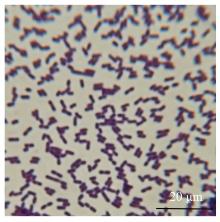
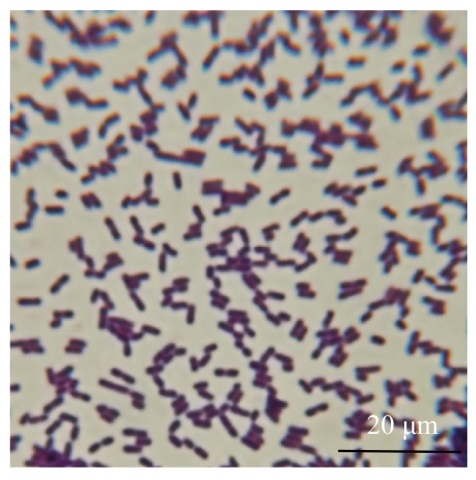
| 项目 | H1 | H2 | H3 | H4 | H5 | H6 |
|---|---|---|---|---|---|---|
| 葡萄糖 | + | + | + | + | + | + |
| 蔗糖 | + | + | + | + | + | + |
| 乳糖 | + | + | + | + | + | + |
| 半乳糖 | + | + | + | + | + | + |
| 麦芽糖 | + | + | + | + | + | + |
| 阿拉伯糖 | + | + | + | + | + | + |
| 胆汁七叶苷水解试验 | + | + | + | + | + | + |
| 精氨酸双水解酶 | + | + | + | + | + | + |
| 甲基红试验 | + | + | + | + | + | + |
| 甘露醇 | + | + | + | + | + | + |
| 山梨醇 | + | + | + | + | + | + |
| 硝酸盐还原试验 | - | - | - | - | - | - |
| 明胶液化试验 | - | - | - | - | - | - |
| 吲哚试验 | - | - | - | - | - | - |
| 接触酶 | - | - | - | - | - | - |
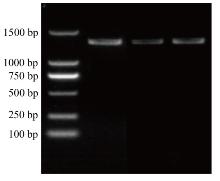
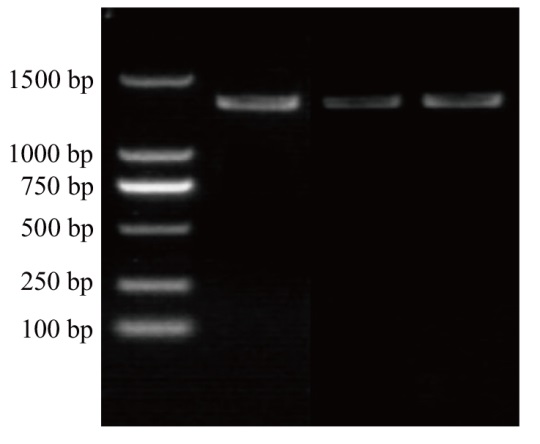
| 菌株编号 | 中文名 | 覆盖率/% | 同源性/% | 序列号 |
|---|---|---|---|---|
| H1 | 乳酸乳球菌(Lactococcus lactis) | 100 | 99.43 | PQ835559 |
| H2 | 乳酸乳球菌(Lactococcus lactis) | 100 | 100 | OR083495 |
| H3 | 乳酸乳球菌(Lactococcus lactis) | 100 | 99.93 | MG754644 |
| 菌株编号 | 中文名 | 覆盖率/% | 同源性/% | 序列号 |
|---|---|---|---|---|
| H1 | 乳酸乳球菌(Lactococcus lactis) | 100 | 99.43 | PQ835559 |
| H2 | 乳酸乳球菌(Lactococcus lactis) | 100 | 100 | OR083495 |
| H3 | 乳酸乳球菌(Lactococcus lactis) | 100 | 99.93 | MG754644 |
| 抗菌药物种类 | H1 | H2 | H3 |
|---|---|---|---|
| 恩诺沙星(ENR) | S | S | S |
| 红霉素(E) | S | S | S |
| 氨苄西林(AMP) | R | R | R |
| 环丙沙星(CIP) | R | R | R |
| 强力霉菌素(DO) | I | I | I |
| 青霉素(PEN) | S | S | S |
| 卡那霉素(KAN) | R | R | R |
| 链霉素(S) | I | I | I |
| 新霉素(N) | R | R | R |
| 多黏菌素B(PB) | R | R | R |
| 抗菌药物种类 | H1 | H2 | H3 |
|---|---|---|---|
| 恩诺沙星(ENR) | S | S | S |
| 红霉素(E) | S | S | S |
| 氨苄西林(AMP) | R | R | R |
| 环丙沙星(CIP) | R | R | R |
| 强力霉菌素(DO) | I | I | I |
| 青霉素(PEN) | S | S | S |
| 卡那霉素(KAN) | R | R | R |
| 链霉素(S) | I | I | I |
| 新霉素(N) | R | R | R |
| 多黏菌素B(PB) | R | R | R |
| [1] |
|
| [2] |
茹媛媛. 乳酸乳球菌影响红螯螯虾生长和免疫性能及其肠道菌群的研究[D]. 泰安: 山东农业大学, 2021.
|
| [3] |
孔祎頔, 李民, 吴雪芹, 等. 乳酸乳球菌L19对乌鳢生长、免疫功能及抗氧化能力的影响[J]. 饲料工业, 2021, 42(24):25-30.
|
| [4] |
|
| [5] |
方琼亚, 杨炳坤, 刘铁钢, 等. 乳酸乳球菌L22对泥鳅生长、免疫功能及抗氧化能力的影响[J/OL]. 经济动物学报,1-9[2026-06-15].https://link.cnki.net/urlid/22.1258.s.20251209.1837.002.
|
| [6] |
杨求华. 乳酸乳球菌XP-15对仿刺参生长、免疫及肠道菌群结构的影响[J]. 应用海洋学学报, 2022, 41(3):407-413.
|
| [7] |
doi: 10.1016/j.fsi.2017.07.004 URL |
| [8] |
张丰薇, 林敏, 区海蕴, 等. 鸡源乳酸乳球菌的分离鉴定与抑菌实验[J]. 江西畜牧兽医杂志, 2019(3):7-10.
|
| [9] |
黄桂东, 唐素婷, 程云辉, 等. 酱油渣中乳酸乳球菌分离鉴定及对模拟胃肠环境的耐受性[J]. 食品与机械, 2019, 35(8):15-19.
|
| [10] |
doi: 10.3390/nu9091021 URL |
| [11] |
doi: 10.12938/bmfh.2020-033 pmid: 33117624 |
| [12] |
doi: 10.1007/s12602-019-09536-7 |
| [13] |
韩佳临. 种猪肠道微生物分析、益生菌筛选及发酵豆粕的初步研究[D]. 南宁: 广西大学, 2020.
|
| [14] |
刘小贝, 刘莎莎, 崔文姗, 等. 饲料中添加单株和多株乳酸乳球菌对鲤肠道健康、先天免疫和抗氧化能力的影响[J]. 中国水产科学, 2023, 30(6):711-722.
|
| [15] |
|
| [16] |
陈珂可, 朱建国, 姜甜, 等. 具有降解胆固醇能力的益生菌菌株筛选[J]. 食品科技, 2018, 43(11):7-11.
|
| [17] |
赵乐, 赵鹏昊, 孟祥晨. 环境胁迫调控植物乳杆菌细菌素合成的研究进展[J]. 食品工业科技, 2021, 42(8):396-403.
|
| [18] |
doi: 10.1016/j.rvsc.2016.08.009 URL |
| [19] |
付永岩, 赵悦含, 王毅超, 等. 降胆固醇乳酸菌的益生特性及其作用机理[J]. 中国乳品工业, 2019, 47(7):23-27.
|
| [20] |
赵世义. 罗伊氏乳杆菌调控雏鸡肠黏膜屏障机制的研究[D]. 南京: 南京农业大学, 2019.
|
| [21] |
原梦. 产芽孢乳酸乳球菌育种及其实验室安全性评价[D]. 晋中: 山西农业大学, 2024.
|
| [22] |
doi: 10.3390/antiox12020238 URL |
| [23] |
doi: 10.1128/AEM.65.11.4881-4886.1999 URL |
| [24] |
肖春进, 岳秀英, 吴晓岚, 等. 羊源卷曲乳杆菌DY38的体外益生特性及抗氧化活性研究[J]. 动物营养学报, 2025, 37(2):1340-1353.
doi: 10.12418/CJAN2025.115 |
| [25] |
张庆丽. 牦牛阴道益生性乳酸菌的筛选及其对子宫内膜炎的作用研究[D]. 兰州: 甘肃农业大学, 2022.
|
| [26] |
doi: 10.1007/s00284-009-9545-1 URL |
| [27] |
doi: 10.1007/s10295-012-1204-z URL |
| [28] |
黄一倍, 杨求华, 李忠琴, 等. 仿刺参(Apostichopus japonicus)肠道源乳酸乳球菌(Lactococcus lactis)的分离鉴定及其益生特性分析[J]. 海洋与湖沼, 2023, 54(3):875-884.
|
| [29] |
张明辉, 王光强, 夏永军, 等. 植物乳杆菌粘附性与其表面特征关系的探究[J]. 工业微生物, 2017, 47(1):37-42.
|
| [30] |
赵敏. 高黏附性禽源乳酸菌的筛选及其表面蛋白生物信息学预测[D]. 合肥: 安徽农业大学, 2023.
|
| [1] | HUANG Ju, DENG Hua, HOU Yuee, BA Juan, YANG Hong. Common Bacterial Diseases of Litopenaeus vannamei and Biological Control Measures [J]. Chinese Agricultural Science Bulletin, 2025, 41(12): 158-164. |
| [2] | ZHANG Hongyan, WU Ying, GU Shaobin. Study on Application of Probiotics Fermented Traditional Chinese Medicine in Animal Breeding [J]. Chinese Agricultural Science Bulletin, 2024, 40(33): 157-164. |
| [3] | ZENG Tianyu, CHEN Xi, MENG Shunlong, HU Gengdong, LI Dandan, QIU Liping, SONG Chao, FAN Limin, XU Huimin, XU Pao. Advances in Environmental Control Technology for Aquaculture Through Synergistic Regulation of Bacteria and Algae [J]. Chinese Agricultural Science Bulletin, 2024, 40(12): 142-149. |
| [4] | Pan Yue, Yang Zhixin, Yang Xiaoli, Wang Xu, Song Gang. The Heterologous Expression and Antibacterial Properties of the Bacteriocin Paracin1.7 in Lactococcus Lactis NZ9000 [J]. Chinese Agricultural Science Bulletin, 2021, 37(26): 15-23. |
| [5] | Du Yinghui, Zhang Yifan, Wang Shuquan. Effect of Surface-displayed TGEV-S Epitopes in Lactococcus Lactis on the Immune Function of Experimental Mice [J]. Chinese Agricultural Science Bulletin, 2020, 36(23): 130-133. |
| [6] | Han Sha, Qu Hongxia, Li Chenglin, Hu Wei, Zhao Bin, Liu Zhaocun. The Application Strategy of Probiotics Affects Growth and Cultural Water Quality of Apostichopus japonicus [J]. Chinese Agricultural Science Bulletin, 2020, 36(2): 144-148. |
| [7] | . Research Progress of Competitive Advantage and Stress Tolerance of Weedy Rice [J]. Chinese Agricultural Science Bulletin, 2019, 35(31): 115-123. |
| [8] | . Stress Tolerance Improvement by BvM14-CCoAOMT Gene in Sugar Beet M14 Strain [J]. Chinese Agricultural Science Bulletin, 2018, 34(34): 30-35. |
| [9] | . Effects of Acidifier, Probiotics and Oligosaccharide on Growth Performance and Digestive Enzyme Activity of ‘Frizzled’ Chicken [J]. Chinese Agricultural Science Bulletin, 2015, 31(23): 19-24. |
| [10] | . Preliminary Evaluation on Stress Resistance and Leaf Microstructure Characteristics of Fagopyrum dibotrys(D.Don) Hara mutant Strains [J]. Chinese Agricultural Science Bulletin, 2014, 30(19): 151-156. |
| [11] | . solation and Primary Identification of Bacillus for Probiotics [J]. Chinese Agricultural Science Bulletin, 2012, 28(18): 276-281. |
| [12] | . Advances on the Mechanisms of Phospholipase D Regulating Stress Tolerance of Plants [J]. Chinese Agricultural Science Bulletin, 2011, 27(21): 13-17. |
| [13] | . Overexpression of a Cotton GhACO2 Gene Enhance the Stress Tolerance of Ababidopsis Thaliana [J]. Chinese Agricultural Science Bulletin, 2011, 27(12): 255-260. |
| [14] | . Isolation , Identification and Tolerability of Rabbit Intestinal Probiotics Strains Tu-1 [J]. Chinese Agricultural Science Bulletin, 2009, 25(23): 1-6. |
| [15] | Chen Lu, Su Mingxing, Liu Bo, Huang Sufang, Ge Cibin, Zhu Yujing. Optimization of fermentation conditions for animal feed probiotics, Brevibacillus brevis YSJ-0401, inhibiting against Escherichia coli [J]. Chinese Agricultural Science Bulletin, 2009, 25(16): 13-16. |
| Viewed | ||||||
|
Full text |
|
|||||
|
Abstract |
|
|||||
